Article Contents:
- St. Petersburg as the Cradle of Carved Art: Historical Context
- Peter the Great's Traditions and European Influences
- Evolution of Styles in the Imperial Era
- Modernism and the Search for National Identity
- Climate Characteristics and Their Impact on Carved Decoration
- Struggle Against Humidity: Technological Solutions
- Selection of Wood Species for the Northern Climate
- Seasonal Features of Use
- Architectural Specificity of the Northern Capital
- Integration with Historical Heritage
- Stylistic Diversity of Districts
- Modern Reconstruction and Restoration
- Workshops and Producers: Map of Carved Petersburg
- Traditional Master Craftsmen Dynasties
- Modern manufacturing centers
- Educational Centers and Schools of Craftsmanship
- Technologies and Materials: Petersburg School of Quality
- Innovative Woodworking Methods
- Author-Developed Wood Protection Formulas
- Computer Modeling and 3D Printing
- Stylistic Directions of Modern St. Petersburg Decoration
- Technological processes: from concept to realization
- Petersburg Modernism: Second Wave
- Minimalism in the Petersburg Style
- Eclecticism and Fusion
- Application of Carved Decoration in Various Types of Rooms
- Historic Apartments in the City Center
- Modern Apartments in New Constructions
- Country houses and cottages
- Commercial interiors
- Economic Aspects of the Carved Decoration Market in St. Petersburg
- Pricing and cost factors
- Investment attractiveness
- Support for Traditional Crafts
- Technical Requirements and Standards
- Requirements for Wood Quality
- Standards for Surface Treatment
- Requirements for Protective Coatings
- Trends in development and prospects
- Production digitization
- Ecological innovations
- Online Trade Development
- Practical Tips for Selection and Ordering
- Defining stylistic concept
- Working with a designer
- Choosing the Craftsman
- Quality Control
- Care and Maintenance of Carved Decor
- Regular maintenance
- Seasonal maintenance
- Professional Maintenance
- Conclusion: Art That Lives in the Heart of the City
Strolling through the historic streets of Saint Petersburg, one cannot help but notice how the city breathes history through every architectural detail. But do you know that it is carved decor SPb that transforms ordinary buildings into masterpieces of architecture, and standard apartments into cozy nests with a unique character?
In the city of white nights, where every stone is imbued with centuries of culture, wooden carving occupies a special place. It is like a bridge between the imperial grandeur of palaces and the cozy warmth of private interiors. Here, among the mists of the Neva and golden domes, a unique style emerges — refined, elegant, deeply thought out.



Saint Petersburg as the cradle of carved art: historical context




Peter's traditions and European influences
When Peter I envisioned a new capital, he dreamed of a city that would rival the finest European capitals. It was then that elements entered Russian architecture that we now consider classical. Wooden carved appliqués appeared in Petersburg interiors as a reflection of Baroque opulence, but acquired a distinctive, northern character.
Artisans arriving from Holland, Germany, France brought not only technical knowledge but also an understanding of decoration as an inseparable part of architectural ensembles. However, encountering Russian woodworking traditions, these influences gave rise to something entirely new — the Petersburg style of carving.
By the 18th century, carved rosettes of wood adorned not only the palaces of the nobility but also the homes of wealthy merchants. Every family sought to emphasize its status through architectural details, and carved decoration became a language of social prestige.
Our factory also produces:


Evolution of styles in the imperial era
The 19th century brought the peak of Neoclassicism and Empire style to Petersburg. Carved capitals of columns became a mandatory element of grand entrances, while decorative panels made of solid wood turned into artworks adorning the walls of aristocratic salons.
The peculiarity of Petersburg Empire style is its restraint compared to Moscow Baroque. The northern capital leaned toward noble simplicity, elegance of lines, perfection of proportions. This was reflected in carved decoration as well: here, classical motifs — palmettes, meanders, laurel wreaths — were preferred, all emphasizing imperial grandeur without shouting about it.
Get Consultation
Modernism and the search for national identity
The end of the 19th — beginning of the 20th century marked a search for a unique architectural style. Petersburg Modernism, unlike Moscow Modernism, was more restrained, intellectual. Carved elements for furniture of this period were distinguished by refinement, elegance of lines, almost graphic clarity of ornament.
It was precisely then that interest in Russian folk motifs began to revive, but in a reinterpreted, stylized form. Traditional images — birds, plants, geometric patterns — acquired a new sound in the hands of Petersburg masters.
Climate-specific features and their influence on carved decoration
Struggling with humidity: technological solutions
The Petersburg climate presents special challenges to woodcarvers. High humidity, frequent rains, mists — all of this requires a special approach to material selection and processing techniques.
Carved wooden trim for Petersburg homes is manufactured using special impregnations that not only protect wood from moisture but also allow it to 'breathe.' This is critically important under conditions of sharp temperature and humidity fluctuations.
Modern workshops use vacuum impregnation — a technology in which protective compounds penetrate deeply into the wood structure. Such treatment guarantees the longevity of items even under the most adverse conditions.
Choosing wood species for a northern climate
In the Petersburg climate, not every tree species is capable of preserving its qualities. Carved wooden balusters made of oak remain the benchmark of reliability — this species is not afraid of moisture, temperature fluctuations, and maintains dimensional stability for decades.
Larch is another favorite of Petersburg craftsmen. Its natural resinous quality provides protection against rot, and its beautiful texture requires no additional decorative treatment.
Ash and beech, when properly processed, also show excellent results under high humidity. The key is proper drying and professional impregnation with protective compounds.
Seasonal Usage Characteristics
The Petersburg winter is a real test for any material. Sharp temperature fluctuations, from positive during the day to serious negative at night, can cause cracking in poorly processed wood.
Carved appliqués for furniture in Petersburg apartments must be designed to function under central heating, which significantly dries the air. Therefore, pre-acclimatization of items and use of special compounds that maintain optimal wood moisture levels are crucial.
Architectural Specifications of the Northern Capital
Integration with Historical Heritage
Saint Petersburg is a city-museum where every building is under state protection. This imposes special requirements on the use of carved decoration. Wooden facade decoration must not only meet modern quality standards but also harmoniously fit into the historical context.
The Committee for State Control, Use, and Protection of Historical and Cultural Monuments strictly monitors to ensure that any changes to the appearance of historical buildings do not compromise their authenticity. Therefore, masters of wood carving must not only be technically proficient but also have a deep understanding of architectural history.
Stylistic Diversity of Districts
Each district of Saint Petersburg has its own architectural character. The city center features grand neoclassicism and empire styles. The Petrograd side showcases modernism and constructivism of the 1920s. The Vasilievsky Island district is characterized by the strict lines of Peter's baroque.
Wooden interior decoration in each of these districts must take into account the stylistic specificity. What looks beautiful in a mansion on Kamennoy Island may be inappropriate in a residential house on Zagorodny Prospekt.
Modern Reconstruction and Restoration
Saint Petersburg is currently experiencing a real boom in the reconstruction of historical buildings. Many homes, long neglected for decades, are receiving a second life. Here, carved decoration plays a key role in recreating the historical appearance.
Modern technologies allow for the recreation of lost elements with remarkable precision. Laser scanning of surviving fragments, computer modeling, high-precision processing — all of this serves to preserve the city’s cultural heritage.
Workshops and Manufacturers: The Map of Carved Saint Petersburg
Traditional Master Families
In Saint Petersburg, workshops established as early as the 19th century are still active. Here, craftsmanship secrets are passed down from generation to generation, traditional techniques are preserved, and invaluable experience in working with historical buildings is accumulated.
The Fedorov family has been engaged in wood carving for the fourth generation. Their workshop on Vasilievsky Island is a true museum of woodworking tools. Here, you can see chisels from the 18th century, still used for particularly delicate work.
Modern Production Centers
Alongside traditional workshops, Saint Petersburg also hosts modern production centers equipped with the latest machinery. Here, artistic wood carving is created using computer numerical control machines, but the final finishing is still done by hand.
This approach allows combining the high precision of machine processing with the individuality of handcrafting. The result — products that meet the strictest quality standards while preserving the soul of handmade artistry.
Educational Centers and Schools of Craftsmanship
The Stieglitz Art and Industry Academy is the main center for training specialists in decorative and applied arts in the Northwestern region. Here, they train not just artisans, but artists capable of creating artworks from wood.
Students study not only the technical aspects of carving, but also the history of styles, principles of composition, and characteristics of different wood species. This comprehensive approach ensures a high level of graduates, many of whom become leading masters of the city.
Technologies and Materials: The Saint Petersburg School of Quality
Innovative Wood Processing Methods
Saint Petersburg masters were among the first in Russia to apply vacuum drying of wood. This technology allows reducing the material’s moisture content to 6–8%, guaranteeing the stability of products under urban climate conditions.
Cryogenic treatment — another specialty of Saint Petersburg manufacturers. Wood is cooled to -196°C, which destroys the cellular structure of potential pests and increases the material’s density. Carved items made from solid wood processed using this technology last significantly longer than ordinary ones.
Custom Formulations for Wood Protection
In the aggressive urban environment, conventional protective coatings often prove insufficiently effective. Therefore, Saint Petersburg masters have developed their own formulations, adapted to local conditions.
These formulations are based on natural oils and waxes enriched with modern additives. They not only protect wood from moisture and ultraviolet radiation, but also enhance its natural beauty, imparting a noble sheen.
Computer Modeling and 3D Printing
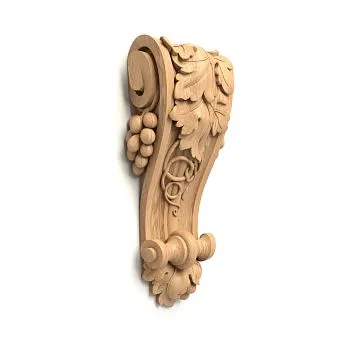
Modern Saint Petersburg workshops actively use computer technologies to design complex decorative elements. Decorative carved brackets are first created as 3D models, carefully calculated for all loads, and analyzed for aesthetic components.
3D printing of prototypes allows the client to see the future product in real size and make adjustments before production begins. This saves time and guarantees that the final product meets the client’s expectations.
Stylistic directions of modern Petersburg decoration
Neoclassicism: return to origins
Modern Petersburg neoclassicism is not a blind copying of historical samples, but a creative reinterpretation of classical forms. Carved wooden cornices are executed with traditional proportions, but using modern materials and technologies.
Characteristic features of Petersburg neoclassicism — strict lines, noble proportions, restraint in the use of decorative elements. Here, every detail is thought out, and each element has its place and purpose.
Petersburg Modern: Second Wave
In recent years, there has been a revival of interest in modernism — a style that defined the face of many Petersburg buildings at the beginning of the 20th century. Modern interpretations of modernism retain the characteristic plasticity of forms, but adapt them to contemporary needs.
Decorative furniture appliqués in the modern style are characterized by flowing lines, natural motifs, and asymmetrical compositions. They combine beautifully with both historical furniture and modern interior items.
Petersburg Minimalism
Petersburg minimalism differs from Scandinavian minimalism in its greater emotional expressiveness, and from Japanese minimalism in its lesser asceticism. Here, the value lies not in the emptiness of space, but in its meaningfulness.
Carved elements in minimalist interiors become focal points that draw attention to the beauty of the material and craftsmanship. Every detail is carefully thought out — nothing is superfluous.
Eclecticism and fusion
St. Petersburg is a city where different eras and styles peacefully coexist. This characteristic is reflected in modern decoration as well. Carved appliqués for kitchens can combine classical motifs with modern forms, creating unique compositions.
Such an approach requires a special sense of proportion and artistic taste. A successful fusion is not a chaotic mixing of styles, but a conscious creation of a new aesthetic based on the best traditions of the past.
Application of carved decoration in various types of rooms
Historical apartments in the city center
Apartments in historic buildings in the center of Petersburg are a special world, where every detail must correspond to the spirit of the era. High ceilings, large windows, and gallery rooms create a unique atmosphere that needs to be supported and emphasized.
Carved ceiling rose fixtures in such interiors are not merely concealing the points of chandelier attachment — they become compositional centers organizing the perception of the entire space. Classical rose fixtures with radial ornaments visually increase ceiling height, creating a sense of grandeur.
Modern apartments in new developments
New residential complexes in Petersburg are often styled after historical buildings, but their interior layouts correspond to modern needs. Here, wooden interior decoration should create a connection with the city's architectural tradition without compromising the functionality of modern housing.
Applied elements are especially popular, allowing for quick changes to the character of a standard interior. Decorative appliqués on furniture transform a typical setting into a unique, authorial one.
Country houses and cottages
The Leningrad region is rich in forests, and suburban homes here are traditionally built of wood. Carved home decoration in such constructions should emphasize the connection with nature, creating a sense of unity with the surrounding landscape.
Verandas and terraces adorned with carved columns and balustrades look especially effective. They create a smooth transition from the interior of the house to the garden, uniting architecture with nature.
Commercial interiors
Restaurants, hotels, and executive-class offices increasingly use carved decoration to create a unique atmosphere. Wood carving in such interiors should not only decorate but also support the brand, creating a memorable image.
Themed restaurants styled after various historical periods are especially popular. Here, carved decoration becomes part of the theatrical performance, helping visitors immerse themselves in the atmosphere of another time.
Economic aspects of the carved decoration market in St. Petersburg
Pricing and cost factors
Cost carved decoration St. Petersburg is formed under the influence of many factors. The main ones are the complexity of the ornament, the type of wood, the size of the item, and the urgency of the order.
Simple pine appliqués with geometric ornamentation may cost from 800 rubles per piece. Complex handcrafted oak compositions — tens of thousands of rubles. However, it should be noted that a quality item serves for decades, paying for its initial cost.
Investment Appeal
Quality carved decoration is not only interior decoration, but also a profitable investment. Apartments and houses with unique decorative elements always enjoy higher demand in the real estate market.
Statistics show that the presence of quality carved decoration increases the value of real estate by 10-15%. In the Petersburg market, where a square meter costs hundreds of thousands of rubles, this means a significant increase in the property's value.
Support for traditional crafts
By purchasing items from St. Petersburg artisans, you support not only a specific producer but also the city's tradition of craftsmanship. This is especially important in the context of globalization, when local characteristics may be lost under the pressure of mass production.
Many workshops receive grants from municipal authorities to preserve traditional techniques, train young artisans, and create museum exhibits. Your order is a contribution to preserving the city's cultural heritage.
Technical requirements and standards
Requirements for wood quality
St. Petersburg standards for carved decoration are among the strictest in Russia. The wood must be dried to a moisture content of 8±2%, free of hidden defects, fungal damage, or signs of pest activity.
Special attention is paid to the direction of the wood grain. Carved balusters are made exclusively from radial cuts, ensuring maximum dimensional stability and minimal warping.
Surface treatment standards
Finished items must have a surface cleanliness class not lower than 2 according to GOST 7016-82. This means no visible marks from cutting tools, chips, or unevenness. Permissible dimensional deviations must not exceed ±0.5 mm.
Requirements for protective coatings
All items intended for use in high-humidity conditions must have moisture-resistant coatings with a water absorption rate not exceeding 3% by volume. Coatings for outdoor use must contain UV filters and bioprotective additives.
Trends and prospects
Digitalization of production
St. Petersburg workshops actively adopt digital technologies. CNC machines allow creating items of complexity unattainable by hand methods. At the same time, the possibility of individual customization of each element is preserved.
Carved moldings can now be manufactured according to individual drawings with precision down to tenths of a millimeter. This opens new opportunities for restoring historical buildings, where exact reproduction of lost elements is required.
Ecological Innovations
Demand for eco-friendly materials and technologies is growing. St. Petersburg manufacturers were the first in Russia to use water-soluble varnishes and paints that do not emit harmful substances.
The use of reclaimed wood — material obtained during the reconstruction of historical buildings — is also developing. Such wood has a unique patina of time and is especially valued by designers.
Development of online retail
The pandemic accelerated the transition of many workshops to online platforms. Now you can order carved ornaments for your home via the internet, receive a 3D visualization of the future item, and track the progress of your order.
Virtual reality allows you to 'try on' decorative elements against your interior before they are manufactured. This saves time and guarantees alignment with the client's expectations.
Practical tips for choosing and ordering
Defining stylistic concept
Before ordering carved decoration, it is important to determine the stylistic concept of the interior or exterior. Wooden carved panels should harmonize with the overall design, complement it, rather than contradict it.
Study the history of your home, the architectural features of the district. Often, a building has hidden potential that can be revealed with the right decorative choices.
Working with a designer
For complex projects, it is recommended to involve professional designers specializing in historical interiors. They will help avoid stylistic mistakes, select optimal solutions, and coordinate the project with municipal authorities.
Choosing an installer
When choosing a workshop, pay attention not only to prices, but also to the portfolio, customer reviews, and presence of quality certificates. A good workshop is always ready to show examples of their work and explain their production technologies.
Quality control
Do not hesitate to ask questions about materials, technologies, and manufacturing timelines. A serious workshop will always provide detailed information, show wood samples, and explain processing specifics.
Care and maintenance of carved decoration
Regular Maintenance
Wooden carved elements require regular but simple care. The main procedure is removing dust with a soft brush or vacuum cleaner with a brush attachment. This should be done no less than once a week, especially during the heating season.
Seasonal maintenance
Twice a year — in spring and autumn — carved decoration should be inspected for cracks, chips, or color changes. Minor defects can be repaired using special repair compounds.
Professional Maintenance
Every 3-5 years, professional maintenance is recommended — updating protective coatings, deep cleaning, and if necessary, localized restoration. This extends the lifespan of the decoration and preserves its original appearance.
Conclusion: art that lives in the heart of the city
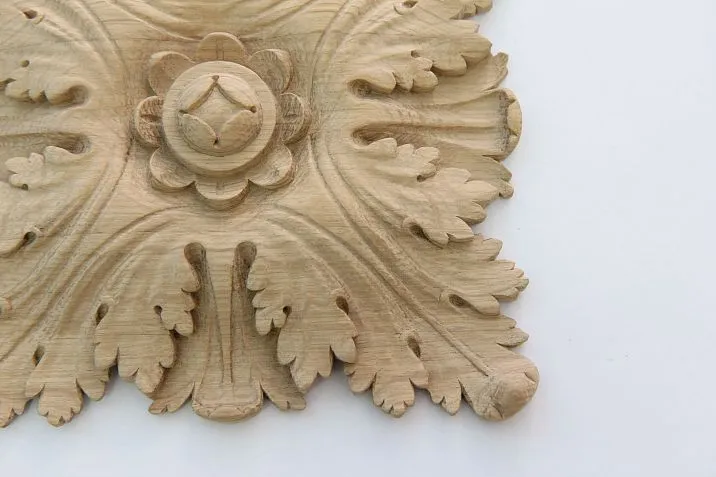
carved decor SPb It is not just decoration for interiors and facades. It is a living connection with the city's history, embodiment of its cultural traditions, expression of the unique Petersburg spirit. In every swirl of ornament, in every carved rosette, the soul of the Northern capital is reflected — refined, elegant, full of hidden meanings.
Choosing wooden decoration for your home, we become part of this great tradition. We do not merely decorate our dwelling — we create a space where the past meets the present, where beauty serves as a daily source of inspiration.
Carved window casings, carved wooden inlays, wood carving — all these elements are united by one thing: they transform an ordinary home into a work of art, a place where one wants to live and for which one wants to be proud.
In a modern world where mass production often strips things of individuality, carved decoration remains an island of genuine craftsmanship. Each item is unique, every detail bears the imprint of the artisan’s hand and vision of beauty.
For many years, the company STAVROS has preserved and developed the traditions of St. Petersburg carved art. By combining modern technologies with classical techniques, using premium materials, and attracting talented artisans, the company creates items that become ornaments of the city and sources of pride for owners. Choosing STAVROS means choosing quality proven by time, beauty embodied in wood, and traditions that will endure for centuries.