Article Contents:
- The Soul of Wood: Why Carved Decor
- Touch of Tradition
- Perception Psychology
- Anatomy of Beauty: Types of Carved Decor
- Inlays: Small Forms of Great Art
- Architectural Elements: Grandeur in Details
- Furniture Decor: When Function Meets Art
- Geography of Craftsmanship: Where the Best Decor is Made
- Russian traditions
- European Schools
- Asian Motifs
- Material Science: Choosing Wood Species
- Fine Hardwoods
- Softwoods
- Exotic species
- Production Technologies: From Sketch to Finished Product
- Design and modeling
- Machine Production
- Finishing and protection
- Stylistic directions
- Classical styles
- Modern Interpretations
- Ethnic Motifs
- Practical Considerations for Selection
- Defining Interior Style
- Calculating Quantity of Elements
- Budget planning
- Secrets of Installation and Maintenance
- Surface Preparation
- Adhesive Joining
- Mechanical Fastening
- Operation and Maintenance
- Market Trends
- Ecological requirements
- Personalization
- Technology integration
- Geography of Styles
- Northern Motifs
- Southern Luxury
- Eastern Philosophy
- Psychology of Space
- Influence on mood
- Creating an atmosphere
- Status component
- Economic Aspects
- Investment attractiveness
- Impact on property value
- Return on Investment
- The Future of Carved Decor
- Technological Innovations
- New Materials
- Ecological Trend
- Conclusion: Art in Every Detail
Imagine an interior where every detail tells a story. Where walls do not merely define space, but create poetry of form. Where furniture becomes a work of art. This is the magic crafted by quality carved decor buy which can be found at trusted masters.
In the era of digital technology and mass production, when identical interiors fill our homes, carved decor made from natural wood becomes an island of authenticity. This is not merely decoration — it is a philosophy of beauty, embodied by human hands in living material.
But how not to get lost in the variety of offerings? How to distinguish genuine craftsmanship from imitation? How to choose elements that will delight for decades? Let's explore this together.



The Soul of Wood: Why Exactly Carved Decor




Touching Traditions
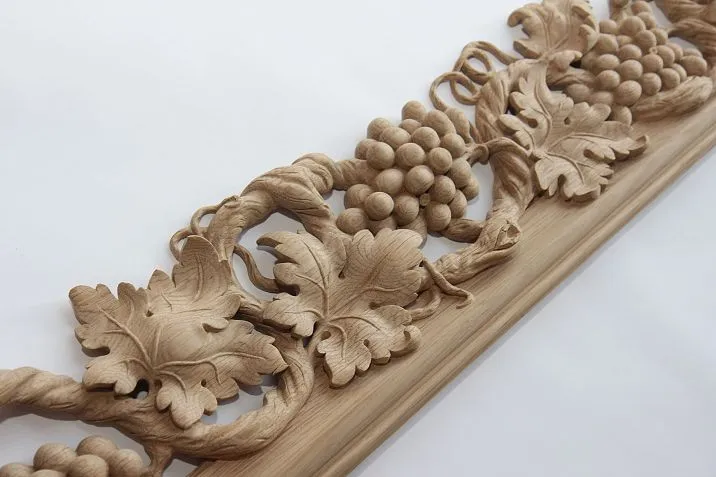
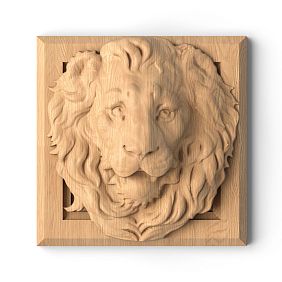
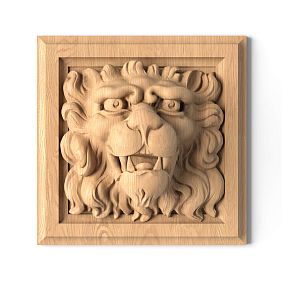
Wood carving is an art passed down from generation to generation. Each applique, each rosette carries echoes of centuries when beauty was created not by machines, but by the hands of the master. Modern wooden appliques combine ancient techniques with contemporary aesthetics.
When you touch a carved surface, you feel not only the smoothness of polished wood, but also the warmth of human hands that created this artwork. Natural material lives its own life — changes hue over time, reacts to temperature and humidity, creating a unique atmosphere in the home.
Our factory also produces:


Psychology of Perception
Scientific research confirms: natural wood positively affects a person's mental state. Relief surfaces stimulate tactile receptors, creating a sense of comfort and security. Carved elements for furniture do not merely decorate — they heal the urban soul, bringing us back to natural origins.
Visual perception also plays a role. The play of light and shadow on a carved surface creates a dynamic image that changes throughout the day. This gives the interior liveliness, making it less static and more engaging to observe.
Get Consultation
Anatomy of Beauty: Types of Carved Decor
Appliques: Small Forms of Great Art
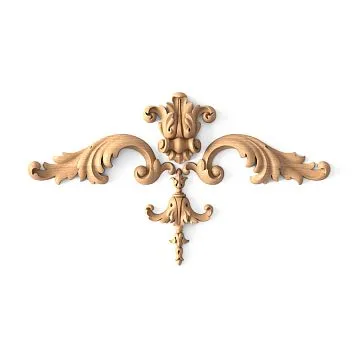
Decorative appliques made from solid wood are the foundation of carved decor. They transform ordinary furniture into works of art, adding depth to flat surfaces. The size range varies from miniature rosettes with a diameter of 30 mm to large panels covering several square meters.
Simple geometric appliques suit minimalist interiors. Their strict beauty does not overload space, but adds necessary refinement. Floral motifs create a sense of closeness to nature, especially relevant in city apartments.
Baroque compositions with cherubs, cartouches, acanthus leaves — a choice for those who are not afraid of luxury. Such elements require appropriate surroundings, but can transform an ordinary room into palace chambers.
Architectural Elements: Grandeur in Details
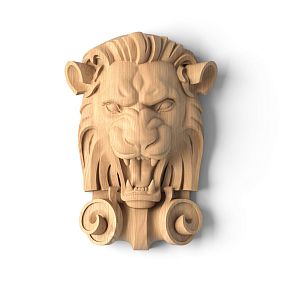
Capitals, pilasters, cornices — these elements create architectural logic within interiors. Carved wooden panels can completely transform the character of a room, creating a sense of historical significance and solidity.
Ceiling rosettes occupy a special place. They not only conceal the mounting point of chandeliers, but also become the compositional center of the room. A properly chosen rosette can visually increase ceiling height, creating a sense of grandeur.
Staircase elements — balusters, columns, handrails — transform a functional structure into an architectural centerpiece. Each baluster can be unique, creating a rhythmic composition that accompanies movement along the staircase.
Furniture Decor: When Function Meets Art
Furniture appliques offer the opportunity to personalize mass-produced furniture. A simple chest becomes an antique chest, a standard wardrobe becomes a work of a master woodworker. Wooden decor for interiors allows creating a cohesive stylistic concept.
Appliques on kitchen facades are especially effective. They add warmth to modern kitchens, creating a sense of a home hearth. At the same time, modern protective coatings make such decor absolutely practical.
Geography of Craftsmanship: Where the Best Decor is Made
Russian Traditions
Russia has rich traditions in woodworking. Vologda, Kostroma, and Arkhangelsk regions are areas where wood carving is passed down from generation to generation. Local masters know the secrets of processing northern wood, understand the character of each species.
Bogorodskaya carving, Gorodets painting, Хохлома motifs — these folk crafts have found new expression in modern decor. Elements stylized after folk traditions fit organically into contemporary interiors.
European Schools
European manufacturers of carved decor are distinguished by technical perfection and attention to detail. German workshops are renowned for the precision of geometric ornaments, while Italian ones are known for the elegance of floral compositions.
The French school of decoration pays special attention to the elegance of lines and refinement of forms. Baroque and Rococo motifs executed by French masters are distinguished by exceptional elegance.
Asian motifs
Eastern carving traditions introduce a unique philosophy into European interiors. Chinese dragons, Japanese stylizations of natural forms, Indian mandalas create a meditative atmosphere.
Woodworking: Choosing the wood species
Fine hardwoods
Oak is the king among wood species for carving. Its dense structure allows creating the finest details, which retain clarity for decades. Oak items darken over time, acquiring a noble patina.
Beech is distinguished by uniform structure and excellent working qualities. Its light tone is ideally suited for staining in any color. Beech inlays hold paint and varnish well.
Ash combines the strength of oak with beautiful texture. Its contrasting growth rings create an expressive pattern even without additional toning.
Softwoods
Linden is favored by carvers due to its softness and uniformity. Delicate, intricate details can be carved in linden. However, this species requires mandatory protective treatment.
Pine and other coniferous species are used to create decor in Scandinavian style. Resin pockets and vibrant texture create a distinctive character.
Exotic species
Teak, mahogany, rosewood — these species transform carved decor into true treasures. They are used to create exclusive items intended for elite interiors.
Production technologies: from sketch to finished product
Designing and modeling
Modern production of carved decor begins with computer modeling. Designers create three-dimensional models of future items, calculating every detail. This allows avoiding errors during production and achieving an ideal result.
Special attention is paid to scaling. An ornament that looks perfect on a small element may lose its expressiveness when enlarged, or vice versa.
Machine production
Modern CNC machines are capable of performing the most complex operations with jewel-like precision. They ensure perfect repeatability of elements, which is especially important for mass-produced items.
However, machine processing is only the first stage. True beauty emerges in the manual finishing process, when the craftsman gives the item vitality, removes technological marks, and highlights the material's beauty.
Finishing and Protection
Final finishing determines the durability and appearance of the item. Multi-stage sanding removes the smallest imperfections, preparing the surface for coatings.
Modern varnishes and oils not only protect wood from external influences but also highlight its natural beauty. The right coating can dramatically change the perception of the item.
Stylistic directions
Classic styles
Baroque demands opulence and ornamentation. Baroque inlays are rich with scrolls, cartouches, and botanical motifs. They create a sense of luxury and grandeur.
Empire is characterized by strictness and monumentality. Eagles, laurel wreaths, military symbols — typical motifs of this style. Such decor suits representative rooms.
Classicism prefers harmony and proportion. Botanical ornaments here are more restrained, geometry — more rigorous.
Modern Interpretations
Modernism brought natural forms into decor — stylized plants, insects, marine motifs. Lines become more fluid, compositions — more dynamic.
Art Deco combines luxury with geometry. Sun rays, zigzags, stylized flowers create the recognizable style of the jazz era.
Modern minimalism requires simplicity. Simple geometric forms, clean lines, absence of unnecessary details — this is the decor for contemporary interiors.
Ethnic motifs
Russian style embodies folk traditions in a modern interpretation. Хохлома scrolls, Городец flowers, Богородская carving find new life in interior decor.
Scandinavian style prefers simplicity and functionality. Stylized natural motifs, restrained color palette create a sense of northern beauty.
Eastern motifs introduce philosophy and symbolism. Chinese dragons, Japanese stylizations, Indian ornaments create a unique atmosphere.
Practical aspects of selection
Interior style definition
Before purchasing carved decor, clearly define the stylistic concept of the interior. Baroque appliqués will be inappropriate in a minimalist space, while minimalist geometric forms will be lost in a luxurious classical interior.
Study the characteristics of the chosen style, its typical motifs and techniques. This will help make the right choice and create a harmonious composition.
Calculation of elements quantity
Do not overload the interior with decorative elements. It is better to choose a few high-quality appliqués rather than many small details. Remember: in carved decor, the key is not quantity, but quality and appropriateness.
Create a plan for placing elements, taking into account lighting, color scheme, and functional features of the room. This will help avoid mistakes and create a cohesive composition.
Budget Planning
Quality carved decor is an investment for many years. It is better to buy a few expensive but high-quality elements rather than many cheap imitations. Remember: a miser pays twice.
When planning the budget, consider not only the cost of the items themselves, but also expenses for delivery, installation, and additional processing. This will help avoid unpleasant surprises.
Installation and care secrets
Surface preparation
The quality of installation largely determines the longevity of carved decor. The surface must be perfectly clean, dry, and degreased. Any unevenness, dust, or traces of old coatings may lead to detachment of elements.
For some types of surfaces, special primers are required to improve adhesive bonding.
Adhesive bonding
Modern adhesive compositions provide durability for decades. However, it is important to correctly choose the type of adhesive depending on the base material and operating conditions.
Water-resistant compositions are used for humid rooms, and frost-resistant ones for outdoor use. Violation of technology may lead to rapid destruction of the bond.
Mechanical fastening
Large decorative elements require additional mechanical fastening. Hidden screws, dowels, and special fasteners ensure reliability while preserving aesthetics.
It is important to correctly calculate loads and choose the appropriate type of fastener. Underestimating loads may lead to collapse of elements.
Operation and Maintenance
Carved decor requires regular but simple maintenance. Removing dust with a soft brush or vacuum cleaner with a brush attachment, periodic treatment with special wood compositions — this is sufficient to maintain the original appearance.
Avoid aggressive cleaning agents, abrasives, excessive humidity. Sudden temperature and humidity changes may cause deformation of wooden elements.
Market trends
Ecological Requirements
Modern consumers are increasingly paying attention to the ecological safety of materials. Certified wood from sustainably managed forests, safe coatings, absence of harmful substances — this is not just a trend, but a necessity.
Manufacturers invest in eco-friendly technologies and obtain international certifications confirming the safety of their products.
Personalization
Consumers increasingly demand personalized solutions. Family crests, monograms, personal symbols find expression in carved decor. This turns decoration into part of family history.
Modern technologies allow creating unique items without significant cost increase. 3D modeling, CNC machines make personalization accessible.
Integration of technologies
Carved decor begins to integrate with modern technologies. Hidden lighting, built-in sensors, smart home elements — all this finds application in traditional carving art.
Such solutions are especially relevant for younger consumer generations who value both traditions and innovations.
Geography of styles
Northern motifs
Scandinavian woodworking traditions brought minimalism and functionality to global decor. Simple, yet expressive forms, light wood species, minimal decorative elements — this is the Scandinavian approach.
Carved solid wood pieces in Scandinavian style are perfect for modern interiors where simplicity and naturalness are valued.
Southern Luxury
Mediterranean traditions brought opulence and ornamentation to decoration. Italian artisans create true works of art, where every detail is crafted with jewel-like precision.
Spanish motifs are characterized by expressiveness and vibrancy. Moorish influences introduced geometric complexity and symbolism.
Eastern Philosophy
Asian carving traditions are distinguished by deep symbolism. Each element carries a specific meaning, creating energetic harmony in the space.
Chinese carving impresses with complexity and detail. Dragons, phoenixes, and clouds create dynamic compositions full of movement and life.
Japanese aesthetics lean toward minimalism and symbolism. Simple forms carry deep philosophical meaning, creating an atmosphere conducive to contemplation.
Psychology of Space
Impact on Mood
Carved decoration exerts a powerful psychological effect. Plant motifs create a sense of closeness to nature, calming the nervous system. Geometric patterns, on the contrary, stimulate intellectual activity.
The size and scale of elements also influence perception. Large elements create a sense of monumentality, while small ones convey elegance and refinement.
Creating Atmosphere
Properly selected carved decoration can dramatically change the atmosphere of a room. Strict classical forms create a formal setting suitable for offices. Soft botanical motifs add coziness to living rooms and bedrooms.
Lighting plays a key role in perceiving carved decoration. Side lighting creates dramatic shadow play, while under-lighting adds mystery.
Status component
Quality carved decoration is always perceived as a sign of wealth and good taste. This is especially important in reception areas, where making the right impression is crucial.
However, moderation is important. An excess of decorative elements may create a sense of tastelessness, nullifying the entire effect.
Economic Aspects
Investment Appeal
Quality carved decoration is a long-term investment. Unlike trendy finishing materials that quickly become outdated, classical carving remains relevant for decades.
Moreover, antique carved elements only increase in value over time. Works by renowned masters become collectible items.
Impact on property value
A well-chosen carved decoration can increase property value by 5-15%, especially in the premium segment. Unique interiors are always valued higher than standard ones.
This is especially relevant for country properties, where individuality and exclusivity play an important role.
Return on Investment
With the right approach, investments in carved decoration pay off not only aesthetically but also through increased property value. Quality items serve for 50-100 years, effectively becoming family heirlooms.
The Future of Carved Decoration
Technological Innovations
The development of digital technologies opens new possibilities for carved art. 3D printing on wood, robotic carving, and artificial intelligence in design — all of this is already reality.
However, technology does not replace craftsmanship but complements it. Manual finishing, artistic vision, and understanding of materials remain the domain of humans.
New materials
Composite materials that mimic natural wood are becoming increasingly sophisticated. They combine the beauty of natural material with the practicality of artificial ones.
However, they cannot fully replace natural wood. The energy of living material and its ability to change character over time remain unique.
Ecological Trend
Growing ecological awareness stimulates demand for natural materials. Wood, as a renewable resource, is becoming increasingly attractive.
Manufacturers invest in sustainable technologies, obtain ecological certifications, and develop reforestation programs.
Conclusion: Art in Every Detail
The world of carved decoration is a universe where every detail matters. Where traditions meet innovations, and beauty becomes accessible to everyone. Choosing carved decor buy remember: you are not just buying a decoration, but a piece of art that will delight generations.
Carved wooden trim, artistic wood carving, carved capitals, and decorative panels from solid wood — each element requires careful attention and a professional approach. Only then will it reveal its true beauty and become a worthy adornment for your home.
In today's world, where speed often matters more than quality, carved decoration remains a bastion of traditional values. This is the choice of those who understand the difference between price and value, between fashion and style, between decoration and art.
For many years, the company STAVROS has remained faithful to the principles of quality and craftsmanship. Each item is created with the understanding that it will become part of someone's life, part of a family's history. This is not just production — it is a service to beauty, which enriches and deepens our lives.