Article Contents:
- Origins of Grandeur in Stone and Wood
- Golden Age of Decorative Arts
- Climate-Specific Features: A Challenge Turned Advantage
- Struggle Against Humidity as a Catalyst for Perfection
- Adaptation to the Conditions of White Nights
- Architectural Context: Decoration as Part of the Urban Ensemble
- Harmony with Historical Heritage
- Modern Interpretation of Classical Motifs
- Material Science in the St. Petersburg Style: Choosing Wood for the Northern Capital
- Traditional Woods of Northern Forests
- Fine Woods for Special Projects
- Stylistic Palette: From Peter the Great’s Baroque to Contemporary Minimalism
- Peter the Great’s Legacy in Modern Interpretation
- Modernism: Northern Interpretation of European Style
- Empire grandeur
- Contemporary Minimalism with a St. Petersburg Character
- Technological Innovations: Where Traditions Meet the Future
- Digital Modeling of Historical Ornamentation
- Laser Technologies in Service of Tradition
- Nanotechnologies in Protective Coatings
- Geographic Specificity: Workshops and Production in the Northern Capital
- Historical Centers of Craftsmanship
- Designer Ateliers: Art on Commission
- Modern manufacturing centers
- Application in Interiors of the Northern Capital
- Historic Apartments: Returning to Origins
- Modern Apartments: Classicism in a New Context
- Suburban Residences: St. Petersburg Style Beyond the City
- Commercial Interiors: Branding Through Decoration
- Commercial Interiors: Branding Through Decoration
- Economic Aspects of the Market
- Pricing Policy: Quality Has a Price
- Investment attractiveness
- Support for Municipal Authorities
- Educational Traditions: Schools of Craftsmanship
- Academic Education
- Workshops at Production Facilities
- International Exchanges
- Restoration and preservation of heritage
- Scientific Restoration
- Museum Collections
- Private Collections
- Modern Trends and Development Prospects
- Ecological requirements
- Digitalization of processes
- Personalization
- Conclusion: Heritage Alive in the Present
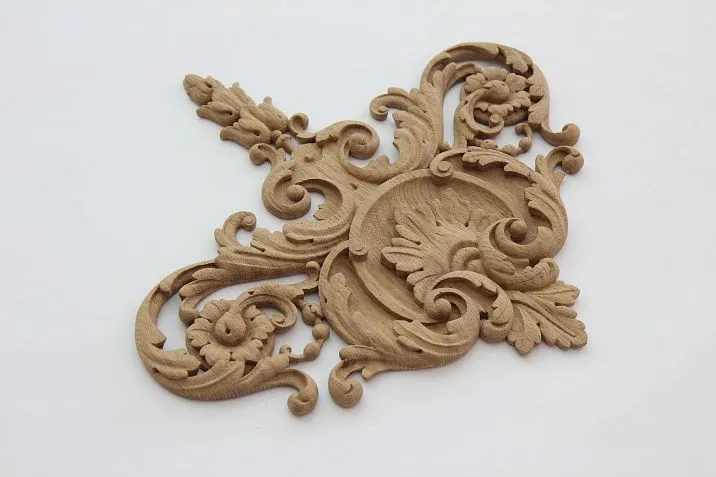
Saint Petersburg — a city where every stone breathes history, and every architectural detail tells of imperial traditions. It is here, among palaces and mansions, where aesthetics are elevated to a cult, carved wooden decoration of St. Petersburg acquires a special resonance and unique character.
The White Nights reflect in carved cornices, the mists of the Neva envelop the reliefs of old mansions, and golden domes create a backdrop for wooden masterpieces adorning the interiors of modern Petersburgers. What makes carved decoration in the Northern capital so special? Why is it precisely here that this ancient art is experiencing a true renaissance?


Saint Petersburg School of Carving: Imperial Heritage Reinterpreted in the Modern Era




The Origins of Grandeur in Stone and Wood
Saint Petersburg was conceived as 'a window to Europe,' and European traditions of decorative arts seamlessly blended here with Russian craftsmanship. Already under Peter I, masters from Holland, Germany, and France began arriving in the city, bringing with them the secrets of Baroque carving and classical ornamentation.
But the Petersburg school did not become mere copying of Western models. The harsh northern climate, the characteristics of local wood species, and above all — the Russian soul of the craftsmen — created a unique style, where European refinement combines with Russian solidity.
Carved wooden inlays from St. Petersburg of the 18th century impress with technical perfection and artistic expressiveness. Masters of the Admiralty shipyards, who created decoration for ships, brought into interior art a particular precision and reliability of execution.
Our factory also produces:


Golden Age of Decorative Arts
The 19th century became the period of flourishing of Petersburg carving. Empire-style mansions required appropriate decoration — solemn, monumental, emphasizing the greatness of the Russian Empire. It was precisely then that the canons were formed, which define the appearance of carved wooden items from St. Petersburg to this day.
Workshops on Vasilievsky Island and Petrograd Side operated at full capacity, creating not only furniture and architectural elements, but also complete interior ensembles. Every detail was thought out to the smallest detail, every swirl carried semantic meaning.
Get Consultation
Climate-specific features: a challenge turned into an advantage
Struggle with humidity as a stimulus for perfection
The Petersburg climate, with its high humidity, mists, and sharp temperature fluctuations, could have become an obstacle to the development of woodworking. But local masters turned these difficulties into advantages, developing unique technologies for processing and protecting wood.
Carved decorative elements from St. Petersburg undergo special preparation, including multi-stage drying, impregnation with protective compounds, and final finishing with special varnishes. These technologies, refined over generations of masters, ensure exceptional longevity of the items.
Adaptation to the conditions of the White Nights
The unique lighting conditions in Petersburg — from bright White Nights to gray winter days — require a special approach to the design of carved decoration. Carved wooden panels from St. Petersburg are created taking into account variable lighting, capable of highlighting the beauty of the ornament at any time of the year.
Craftsmen have learned to use the play of light and shadow, creating reliefs that appear expressive under any lighting. This art of chiaroscuro has become the hallmark of the St. Petersburg school of carving.
Architectural context: decoration as part of the urban ensemble
Harmony with historical heritage
Each district of Saint Petersburg has its own architectural character, and carved wooden decoration from St. Petersburg should correspond to this context. In the city center, among neoclassical mansions, strict neoclassical motifs are appropriate. On the Petrograd side, where modernism predominates, flowing plant forms are relevant.
Carved wooden appliqués for historical apartments in St. Petersburg are created with special care. Designers study archival documents, photographs from the era, and preserved samples to recreate an authentic atmosphere.
Modern interpretation of classical motifs
But St. Petersburg craftsmen do not limit themselves to copying historical samples. Modern technologies allow creating decorative wooden appliqués in St. Petersburg that preserve the spirit of the era while meeting today's needs.
Laser cutting allows achieving jewel-like precision in the smallest details. Computer modeling enables creating complex compositions where each element perfectly fits the overall concept.
Material science in the St. Petersburg style: choosing wood for the Northern capital
Traditional northern forest species
The Leningrad region is rich in forests, and local craftsmen have used species ideally adapted to the region's climate since ancient times. Karelian pine, with its dense resinous wood, became the basis for creating durable items. Its natural resistance to moisture makes it ideal for St. Petersburg conditions.
Siberian spruce, delivered by waterways, is distinguished by its exceptional softness and workability. It is used to create intricately carved moldings in St. Petersburg with delicate details unattainable when working with harder species.
Karelian birch — the gem of northern forests. Its unique texture with characteristic 'eyes' turns every item into a work of art. Carved capitals in St. Petersburg made from Karelian birch are always of the highest exclusivity.
Luxury species for special projects
For elite interiors, imported species are used, but their processing is adapted to local conditions. Oak processed using St. Petersburg technologies acquires special stability and longevity.
Walnut and ash undergo special acclimatization in local workshops, where the wood 'gets used' to the St. Petersburg climate before processing begins.
Stylistic palette: from Peter's Baroque to modern minimalism
Peter's heritage in modern interpretation
Peter's Baroque, with its grandeur and European elegance, remains one of the most sought-after styles in wooden carving in St. Petersburg. However, modern craftsmen do not blindly copy historical samples — they creatively reinterpret classical motifs.
Carved balusters in St. Petersburg in the Peter's style are distinguished by their particular massiveness and solidity. Each detail is worked with mathematical precision, yet retains the liveliness and expressiveness of handcrafting.
Empire grandeur
The Alexandrian Empire left an indelible mark on St. Petersburg's architecture, and this style continues to live in the works of modern masters. Wooden carved columns in St. Petersburg in the Empire style adorn modern interiors, bringing into them the spirit of victorious celebrations and imperial grandeur.
Eagles, laurel wreaths, fasces — symbols of Empire — find new life in the hands of St. Petersburg carvers. These motifs are especially popular for decorating representative interiors — offices, meeting rooms, banquet halls.
Modernism: a northern interpretation of European style
St. Petersburg modernism differs from its European counterparts by its particular restraint and intellectualism. Carved casings in St. Petersburg in the modern style do not shout about themselves, but create a refined atmosphere of elegance.
Plant motifs — irises, lilies, stylized seaweed — evoke the aquatic element surrounding the city. These images are especially popular for decorating bathrooms and spa zones.
Modern minimalism with a St. Petersburg character
Modern St. Petersburg minimalism is not Scandinavian austerity, but intellectual restraint. Carved rosettes in St. Petersburg in a minimalist style impress with the purity of lines and perfection of proportions.
Every detail here is significant, nothing is superfluous, yet there is deep meaning and cultural context. This is art for those who understand the beauty of understatement.
Technological innovations: where traditions meet the future
Digital modeling of historical ornaments
Modern workshops in St. Petersburg actively use 3D scanning of historical samples to create precise digital copies. This allows for the recreation of lost decorative elements with maximum accuracy.
Carved brackets from St. Petersburg, created using such technologies, are indistinguishable from historical originals, yet surpass them in durability thanks to modern materials and protective coatings.
Laser Technologies in Service of Tradition
Laser cutting allows creating wooden carved elements from St. Petersburg with details unattainable through manual processing. The cut thickness is as little as 0.1–0.2 mm, opening new possibilities for creating delicate compositions.
But the laser does not replace the craftsman — it merely performs the rough work. Final finishing, sanding, and fitting are still done by hand.
Nanotechnology in Protective Coatings
St. Petersburg manufacturers were among the first in Russia to begin using nanocoatings to protect wood. These compositions create an invisible film that repels water but allows air to pass, enabling the wood to 'breathe'.
Wooden facade decorations from St. Petersburg, treated with such compositions, retain their original appearance for decades without requiring complex maintenance.
Geographical Specificity: Workshops and Production in the Northern Capital
Historical Centers of Craftsmanship
Traditionally, Vasilievsky Island was the center of woodworking in St. Petersburg. Here, near the Admiralty shipyards, craftsmen worked creating decorations for ships and palaces. Some workshops have been operating at the same locations for more than two centuries.
Historic workshops preserve not only traditions but also unique tools, recipes of compositions, and secrets of processing. Here, wooden carved decorations from St. Petersburg are created using time-tested technologies.
Modern Production Centers
New production facilities are located in the suburbs, where space is available for modern equipment and storage facilities. Here, advanced technologies combine with traditional craftsmanship.
Modern production workshops in St. Petersburg create solid wood carved items that meet the strictest quality standards. Multi-stage quality control ensures perfect geometry and flawless finish for each item.
Design Ateliers: Art on Commission
Design ateliers occupy a special place in the St. Petersburg ecosystem, creating exclusive items based on individual projects. Here, it’s not just artisans — it’s artists, for whom each commission is an opportunity to create a work of art.
Original carved panels from St. Petersburg workshops adorn the finest interiors of the city. Each piece is unique and irreplaceable.
Application in the Interiors of the Northern Capital
Historic Apartments: Returning to the Roots
Apartments in historic buildings in St. Petersburg are a unique world, where every detail must correspond to the spirit of the era. Carved ceiling rose outlets from St. Petersburg here are not merely decoration — they restore historical authenticity, returning interiors to their original appearance.
Working with historic interiors requires special delicacy. Craftsmen study archival documents, consult with art historians, and use only authentic materials and technologies.
Modern Apartments: Classicism in a New Context
New residential complexes in St. Petersburg often stylize themselves after historic buildings, but their interior layouts meet modern needs. Decorative wood appliqués from St. Petersburg help create a connection with the city’s architectural tradition while maintaining modern comfort.
Suburban Residences: St. Petersburg Style Beyond the City
Suburban homes of St. Petersburg residents often become extensions of urban interiors. Wooden carved decorative elements from St. Petersburg fit organically into suburban interiors, creating a sense of stylistic continuity.
Commercial Interiors: Branding Through Decoration
Restaurants, hotels, and offices use carved wooden decoration from St. Petersburg to create a recognizable image associated with the city. St. Petersburg carving becomes part of branding, highlighting the establishment’s status and cultural level.
Economic Aspects of the Market
Pricing Policy: Quality Has a Price
The cost of carved wooden decoration from St. Petersburg is determined by multiple factors: the skill level of the craftsmen, quality of materials, complexity of the work, and prestige of the workshop. St. Petersburg items traditionally cost more than similar items from other regions, but this difference is fully justified by quality.
Investment Appeal
High-quality carved decoration produced in St. Petersburg is not only interior decoration, but also a profitable investment. Works by renowned masters increase in value and become collectible items.
Support from municipal authorities
The Government of St. Petersburg actively supports traditional crafts through a system of grants, tax benefits, and educational programs. This contributes to preserving traditions and developing new technologies.
Educational traditions: schools of craftsmanship
Academic education
St. Petersburg’s Stieglitz Academy of Arts and Industry is the main center for training specialists in decorative and applied arts in the Northwestern region. Students study not only the technical aspects of carving, but also the history of styles and principles of composition.
Workshops at production facilities
Many large workshops have their own schools, where experienced masters pass on knowledge to younger generations. Such training is especially valuable, as it includes not only theory but also practical skills for working on specific commissions.
International exchanges
St. Petersburg masters actively participate in international exchanges, study the experience of colleagues from other countries, introduce new technologies, while preserving their unique identity.
Restoration and preservation of heritage
Scientific restoration
St. Petersburg is a city-museum, where thousands of historical buildings require restoration. Carved elements often require special attention — they must not only be restored, but also preserve their historical authenticity.
Restorers use special methods of wood analysis, study past technologies, recreate historical compositions for wood treatment.
Museum collections
St. Petersburg museums possess unique collections of carved decoration from different eras. These samples serve as benchmarks for modern masters, sources of inspiration and knowledge.
Private collections
Many residents of St. Petersburg collect collections of historical carved decoration. These collections not only preserve cultural heritage, but also stimulate the development of modern carving art.
Modern trends and prospects for development
Ecological Requirements
Modern consumers increasingly pay attention to ecological safety. Carved wooden decoration from St. Petersburg fully meets these requirements — only certified wood, safe coatings, energy-efficient technologies are used.
Process digitization
The introduction of digital technologies not only improves product quality, but also opens up new opportunities for interaction with clients. Virtual tours of workshops, online configurators, augmented reality — all of this is already a reality for St. Petersburg workshops.
Personalization
Modern clients want uniqueness. Custom projects are becoming increasingly popular. Masters create personalized ornaments, including initials, coats of arms, commemorative dates.
Conclusion: heritage living in the present
St. Petersburg remains a city where traditions live and develop. carved wooden decoration of St. Petersburg — it is not a museum exhibit, but living art that continues to evolve, absorbing new technologies and responding to the challenges of time.
Each item made by St. Petersburg masters carries the imprint of a great cultural tradition. It is not merely interior decoration — it is a connection to history, a way to express one’s belonging to a great culture.
St. Petersburg carved decoration is an art that unites generations. In it, one can hear echoes of Peter the Great’s reforms and Catherine’s balls, the Pushkin era and the Silver Age. But it is also modern art, responding to the needs of today.
Choosing carved wooden items from St. Petersburg, you become part of this great tradition. You are not merely decorating your home — you are supporting living culture, contributing to its development and passing it on to future generations.
Wooden carved inlays from St. Petersburg, carved wooden panels from St. Petersburg, carved furniture inlays from St. Petersburg — each of these elements can transform an interior, endowing it with character and individuality. But most importantly, they create a connection to the great cultural tradition of the Northern capital.
In a modern world where globalization often erases regional characteristics, St. Petersburg carved decoration remains a symbol of uniqueness, craftsmanship, and cultural continuity. It is the choice of those who understand true values and are willing to support them.
For many years, the company STAVROS has remained one of the leaders in creating high-quality carved decoration. By combining the traditions of the St. Petersburg school of craftsmanship with modern technologies, a team of professionals creates items that become ornaments of the most refined interiors. Every STAVROS creation is a guarantee of quality, durability, and unique beauty worthy of the great city on the Neva.