Article Contents:
- What people usually search for with the query 'wood carving in Moscow'
- Ready-made carved elements for furniture
- Wall and door decor
- Trims, cornices, moldings, and millwork
- Decor for classic and neoclassical interiors
- What types of wood carving can be purchased for interiors
- Carved overlays for facades and furniture
- Rosettes, capitals, and pilasters
- Carved panels and wall decor
- Wooden moldings, cornices, architraves
- How to choose carved decor for your project
- For kitchen, wardrobe, chest of drawers and facades
- For doors and portals
- For walls and accent zones
- For ceiling and classic finishing
- Which material to choose: oak, beech or MDF
- When oak is better
- When beech is better
- When to use MDF, for example
- What to consider regarding finishing and further installation
- What is more cost-effective in Moscow: ready-made carved decor or custom-made
- When a standard catalog item is sufficient
- When an individual project is needed
- How not to overpay for custom where a ready-made solution fits
- How to choose the size and scale of carving
- For small furniture fronts
- For large wall surfaces
- For doorways and architraves
- How to avoid overloading with ornamentation
- What is available in stock in Moscow
- Linear Products
- Moldings and Cornices
- Casing, battens, corner pieces
- What is convenient to take for an urgent project
- Common mistakes when choosing wood carving
- Choosing only by photo
- Not considering the scale of the facade or wall
- Mixing too many ornaments
- Not considering the wood species
- Ignoring adjacent elements: moldings, cornices, casings
- Where is wood carving especially appropriate in interior design
- Classic
- Neoclassicism
- Eclecticism
- Modern interior with spot accents
- Where to see wood carving in Moscow in person
- How to order carved decor in Moscow without mistakes
- Take measurements
- Select product type
- Determine material
- Check style and scale
- Clarify installation and compatibility with base
- Why wood carving remains in demand in Moscow interiors
- FAQ: Answers to Popular Questions About Wood Carving in Moscow
- About the Company STAVROS

When a Moscow designer or apartment owner types "wood carving Moscow" into the search bar, they are rarely looking for a workshop with a knife and chisel. More often, this query is driven by a very specific task: to find ready-made solid wood carved decor that will transform a kitchen facade, adorn a doorway, or enliven a classic wall with moldings. That is why this article is not about the history of the craft or handcrafting techniques. It is about how to choose, where to look, and how to orderwood carving in Moscowfor a specific task — for furniture, doors, walls, and classic interiors.
The market for carved decor in Moscow is vast and heterogeneous. Some offer custom handcrafted work that takes several months. Others sell cheap, stamped MDF products of questionable quality. Still others — and this is precisely the option that interests the majority — offer a wide catalog of solid wood carved products with the ability to choose the needed element today and receive it in the coming days. Understanding what to choose, which material is preferable, and how to avoid typical mistakes — that is the purpose of this text.


What People Usually Search for with the Query "Wood Carving in Moscow"
The semantics of this query are much broader than they seem. Search engine algorithms honestly show that people are looking for courses, tools, craftsmen's services, and ready-made decor. But if you are involved in furniture, renovation, or interior design — you are interested in a completely different sub-cluster. Let's examine it in more detail.




Ready-made Carved Elements for Furniture
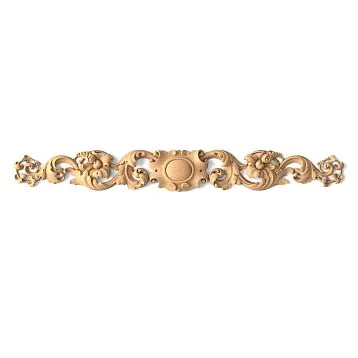
The most common and pragmatic query. Furniture makers, designers, and private clients are looking for decorative overlays, rosettes, corner elements, and frame details that can be installed on a ready-made facade or furniture carcass. Here, dimensional accuracy, cut quality, and compatibility with the base wood species are crucial. Goodwooden carved inlaydoes not just decorate: it changes the perception of the entire furniture group, turning a mass-produced item into a unique piece.
Our factory also produces:


Wall and door decor
This intent is slightly different. The person wants an expressive accent wall, a rich door portal, or a mirror frame. For such tasks, carved panels, trims, portal decor, pilasters, and architectural overlays are suitable. The visual weight of such elements is higher than that of furniture decor, so it is especially important to consider the scale and style of the room.
Get Consultation
Trims, cornices, moldings, and millwork
A separate and very extensive segment:Wooden trim— moldings, cornices, baseboards, battens, trims, and decorative strips — is used both in finishing and for structuring walls and ceilings. Oak and beech solid wood millwork items are often in stock in Moscow, which is especially important for urgent projects.
Decor for classic and neoclassical interiors
This subcluster combines everything related to the 'grand style': capitals, pilasters, columns, cornices with complex profiles, carved panels with ornamentation. It is here that wooden carved decor reveals its full potential — creating a sense of scale, historical depth, and handcrafted work, even when the item is made with high-precision equipment.
What types of wood carving can be purchased for interiors
Before searching for 'where to buy,' you need to clearly understand 'what to buy.' The market offers several fundamentally different categories of carved decor — and each of them solves its own tasks.
Carved overlays for facades and furniture
This is the most in-demand category for furniture applications. Solid wood overlays — rectangular, oval, shaped — are mounted on the surface of a cabinet front, drawer, door, or chest. They can be central (accentuating the center of the panel) or corner (framing joints and edges). Made of beech or oak, they take stain, varnish, or wax excellently, matching the finish of the main piece. A key requirement when choosing: the overlay must be proportionate to the front — neither smaller nor larger than the desired visual accent.
Rosettes, capitals, and pilasters
Wooden capitals— these are architectural carved decor in its pure form. They complete columns and pilasters, creating a focal point. Rosettes are used as standalone accents: on the ceiling, in the center of a panel, above a doorway. Pilasters structure a wall, giving the surface volume and meaning. All these elements work well both in formal rooms and in offices with a representative interior.
Carved panels and wall decor
Panels are a large format. They set the tone for the entire space and require more careful planning: it's important to consider wall proportions, ceiling height, and combination with moldings and cornices. Carved wooden panels can serve as a full-fledged cladding element or as an accent fragment — for example, behind a bed headboard or in a niche.
Wooden moldings, cornices, architraves
Wooden moldings and cornices— this is linear decor that creates rhythm and order in an interior. They divide walls into zones, frame the transition from wall to ceiling, and trim doors and windows. Carved architraves give a doorway a finished and rich appearance. Solid oak or beech wood trim available in Moscow is especially convenient for designers working with tight project deadlines.
How to choose carved decor for your project
One of the most frequent questions at the selection stage is: 'Where to start?' The answer is simple: with the task, not the product. Determine exactly what you want to decorate — and then select the type of carved decor to match that.
For kitchen, wardrobe, chest of drawers, and cabinet fronts
For furniture applications, three parameters are most important: size, base profile, and wood species. The overlay should harmonize with the thickness of the facade: thin relief elements go on flat facades, more voluminous ones go on panels with milling. For kitchens, hardwoods like oak or beech are preferable: they are resistant to humidity and temperature fluctuations. If the furniture is lacquered, the decor should have the same type of finish or be compatible with it.
For doors and portals
A door portal is the face of the interior. Carved architraves, decorative corner elements, cornices above the door—all this forms an accent opening that is perceived as an architectural element, not just a passage. It is important to maintain scale: wider doors require wider architraves and more pronounced relief; for narrow ones, thin, elegant decor is needed.Carved Mouldingsmade from solid oak or beech look organic in both classic and transitional styles.
For walls and accent zones
A wall with carved wood requires a clear concept. If the goal is to create a panel or accent fragment, a few large elements are enough: a carved rosette, framing, or a decorative insert in a molding frame. If the goal is to structure the entire wall, a set is needed: a bottom baseboard, moldings, a cornice at the top, and inside the frames—carved overlays or textured panels. This is a classic approach that works in both historical and modern interiors.
For ceilings and classic finishes
Ceiling decor is the zone of maximum expressiveness. Rosettes for chandeliers, cornices, ceiling baseboards made of solid wood—all this creates a sense of completeness and weightiness in the space. For ceilings, the weight of the product and the type of fastening are especially important: lightweight MDF products are easier to install, but solid wood looks richer. Pilasters are also appropriate here, which visually raise the ceiling and give the walls a vertical rhythm.
Which material to choose: oak, beech, or MDF
The question of material is one of the key ones. It affects not only the appearance but also durability, installation method, compatibility with finishes, and the project budget.
When is oak best
Oak is the benchmark among wood species for decorative applications. Hard, dense, with a pronounced texture and noble tone — it cuts well, takes stain, lacquer, and oil-wax excellently, and holds its shape for a long time. Carved oak decor is appropriate wherever maximum expressiveness and durability are needed: in studies, living rooms, hallways, kitchens. Oak is especially good where the product will be used actively or be in conditions of variable humidity.Wood and MDF Productsin the STAVROS catalog are also available in oak — it is one of the main species in the assortment.
When is beech best
Beech is slightly lighter than oak, with a more uniform and fine texture. It also belongs to hardwoods, is easy to work with and takes tinting well. Beech decor is especially good where preserving the delicacy of the pattern is needed: on furniture fronts in light palettes, on door panels, in children's rooms and bedrooms. Beech is a bit softer than oak to work with, allowing for finer and more elegant relief. It also takes paint well in any tone — from natural to dark espresso.
When is MDF acceptable
MDF is not a compromise, but an independent material with its own advantages. It is dimensionally stable, not afraid of humidity fluctuations, does not crack, mills and paints well. For large decorative panels, ceiling decor, and elements in rooms with unstable microclimates, MDF is often preferable to solid wood. It's important to understand: MDF is not about cheapness, but about technological appropriateness. High-quality carved MDF decor is indistinguishable from wood to the eye, while behaving more stably in challenging operating conditions.
What to consider regarding finishing and further installation
Before ordering, clarify: in what form you receive the product — 'raw' for finishing or already with a coating. If you want the decor to match the tone of your furniture or finish, it's better to take the product without a coating and tint it yourself or with a craftsman. If the product will be painted white — MDF will also work. For clear lacquer or oil, only solid wood is needed. Installation of most carved elements is done with PVA glue, liquid nails, or screws through mounting holes — clarify this point when ordering.
What is more cost-effective in Moscow: ready-made carved decor or custom manufacturing
It's not a matter of taste, but of logic. Each option has its own niche—mixing them is pointless.
When a standard catalog item is sufficient
If the task is standard—decorating a kitchen facade, adding frame molding in the living room, installing door trims—ready-made decor from the catalog solves it faster, cheaper, and more predictably. You see the product, know its dimensions, can order the required quantity, and receive it without waiting. STAVROS has over 4,000 models and 20,000 modifications in its catalog—this practically guarantees coverage for any typical task. Important: ready-made items can be trimmed, adapted, and combined.
When an individual project is needed
If the space is non-standard, the scale is large, or the task goes beyond the catalog—an individual project is needed. For example, carved decor for stair balusters in a specific house, ornamental wall cladding based on an author's drawing, or capitals for columns of non-standard diameter. In this case, the manufacturer works with your drawings, photographs, or measurements.
How not to overpay for custom where a ready-made solution fits
The most common mistake: ordering custom manufacturing where a catalog item with minimal modification would yield the same result. Before placing an individual order, review the entire assortment of the category—often the needed element already exists, just in a different size or with a slight difference in ornament. Adjusting the size of a ready-made item will cost significantly less than manufacturing from scratch.
How to choose the size and scale of carving
Scale is where mistakes are most often made. A beautiful product in the wrong scale turns into a decorative curiosity. There are several simple rules.
For small furniture facades
A facade up to 400 mm high is a zone of delicate decor. The overlay should not occupy more than 60–70% of the panel area. The optimal choice is a central element or corner accents with subtle relief. An overloaded facade looks heavy and deprives the furniture of lightness.
For large wall planes
A wall over 3 meters wide requires either several rhythmically placed elements or a structured molding layout with carved inserts within frames. A solitary decorative element in the center of a large wall looks lost. An ensemble is needed here: a cornice at the top, a baseboard at the bottom, several molding frames, and carved accents within them.
For doorways and architraves
A standard doorway 800–900 mm wide accommodates architraves 60–90 mm wide well. Wider decor is suitable for double doors and grand openings. Architrave cornices above the door should extend 20–40 mm beyond the width of the architraves on each side—this creates the correct architectural 'step'.
How to avoid overloading with ornament
The main rule: one dominant per zone. If a door portal is richly decorated, the adjacent wall should be calm. If kitchen facades have carved overlays, choose a simple profile cornice above them without ornament. Carving works where it is allowed to 'breathe'—against a background of smooth planes and simple forms.
What can be found in stock in Moscow
For Moscow projects, product availability in the warehouse is often a critical parameter. Designers and foremen know well: a 2–3 week delay in decor can shift the deadlines of the entire project.
Molding products
Specifically, trim—moldings, cornices, baseboards, battens, architraves, and decorative corners—is most often available in stock. This is because it is produced in series and is in constant demand.solid wood millwork— oak, beech — these are options you can choose, order, and receive within the nearest days, even for an urgent Moscow project.
Moldings and cornices
Moldings are the most versatile linear decor. They can be assembled into frame systems, used to design transitions, and frame doors and windows. Solid wood cornices define the upper boundary of a wall and create a visual 'cap' for any finishing composition. Typically, several profiles and heights are available — from delicate to formal.
Casing, battens, corner pieces
Casing serves both a function (covering the gap between the door frame and the wall) and decoration (creating an architectural accent). STAVROS's assortment includes carved casings of varying complexity — from simple classic profiles to products with rich relief ornamentation. Battens and corner pieces are used for finishing joints and as additional decorative elements.
What is convenient to choose for an urgent project
For an urgent Moscow project, the optimal strategy is: first, check availability at the Moscow showroom or warehouse, then place an order for the specific volume. This helps avoid a situation where part of the decor is already installed, but a needed item unexpectedly turns out to be on backorder with a long lead time.
Common mistakes when choosing wood carving
Over years of working with wooden decor, a clear list of mistakes that repeat again and again has crystallized. Knowing them makes it easy to avoid them.
Choosing based only on photos
Photography lies. It conveys neither the real scale, nor the relief, nor the texture. A carved element that appears delicate and elegant on screen may turn out to be massive and heavy in reality. That is why, before a large order, it's worth seeing samples in person — at a showroom or by requesting a sample.
Ignore the scale of the facade or wall
This error has already been discussed above, but it is so common that it deserves repeating. A small overlay on a large facade looks lost. A large element on a small one feels oppressive and overloaded. Take measurements before ordering, not after.
Mixing too many ornaments
An acanthus leaf, geometric interlacing, floral garlands, and abstract relief in one interior is not eclecticism, it's chaos. Choose one ornamental system and stick to it. A maximum of two ornaments, if one is accent and the other is a neutral background.
Ignore the wood species
If the furniture is made of light beech and the overlay is made of dark stained oak, it will visually look like a foreign element. Even with the same tint, different species give different tones and textures. Clarify the species and tone with the manufacturer.
Ignore adjacent elements: moldings, cornices, trims
Carved decor is not a soloist, but part of an ensemble. An overlay on a kitchen facade should echo the profile of the cornice above the cabinets. A carved door trim should correspond with the molding frame on the adjacent wall. It is this coordination that creates the feeling of a professionally built interior.
Where wood carving is especially appropriate in the interior
Carved decor is not the privilege of huge palaces. With the right selection, it works both in a 60-square-meter Moscow apartment and in a country house with panoramic windows.
Classic
Classic interiors are the natural habitat for carved wood. Rich cornices, capitals on pilasters, carved panels, architrave-adorned window surrounds are all appropriate here. Ornaments—acanthus, laurel garlands, meanders, rosettes—are organic and justified by the style. The material is oak or beech, finished with varnish or stain. The color palette consists of warm natural tones or white with gilding.
Neoclassicism
Neoclassicism is classicism with space and air. There is less decoration, lines are cleaner, but the accents are no less expressive. Here, carved overlays serve as focal points: a single rosette on the wall instead of an entire panel, a cornice without additional relief, a capital without excessive detailing. The preferred wood species is oak, finished with light varnish or white enamel.
Eclecticism
In eclectic interiors, carved wood decor becomes an 'anchor'—an element that adds depth and a sense of history to a contemporary space. A few carved overlays on a white cabinet, an ornamented door surround in a loft-style setting, a ceiling rosette in a study with industrial lighting—all of this works if moderation is observed and there is a clear visual concept.
Contemporary interior with focal accents
Yes, wood carving is appropriate even in contemporary interiors—provided it is presented as a deliberate accent, not decorative noise. A single carved panel behind a bed's headboard, a decorative ornamental frame above a fireplace, carved table legs against minimalist cabinet fronts—these are techniques that work even in 2025. The main thing is not to overdo it.
Where to see wood carving in person in Moscow
Let's be direct here: an online catalog is convenient but insufficient for a serious choice. Carved decor needs to be held in your hands, viewed under different lighting, and its relief and carving quality assessed up close. Only this way can you understand how well the piece suits your task—and avoid disappointment after installation.
STAVROS has a showroom in Moscow where you can inspect solid wood product samples, discuss your project with a manager, and select the needed items from the catalog. This is especially important for large-scale projects: designers and foremen can visit with plans and measurements to receive specific consultation on selecting product types, wood species, and finishing options. The contacts for the Moscow showroom are available onstavros.ru/contacts_all—and this is perhaps one of the most compelling arguments for working specifically with STAVROS on Moscow projects.
How to order carved decor in Moscow without mistakes
The ordering process seems simple only until the first mistake. Here is an algorithm that minimizes risks.
Take measurements
This is the first and most important step. Do not measure "by eye" or from memory—use a tape measure. Record the width and height of the facade or wall panel, the width of the doorway, and the ceiling height. For molding systems, measure the perimeter of each wall separately.
Choose the product type
Decide: overlay, molding, casing, cornice, rosette, capital, panel? Each type serves its own purpose—and mixing them without understanding their function is not advisable. If the task is complex or you are working with multiple zones at once, it is better to start with a consultation.
Determine the material
Solid oak, beech, or MDF—the choice depends on operating conditions, type of finish, and budget. For active zones and surfaces that will be sanded or tinted—solid wood. For paintable and ceiling elements—MDF is also acceptable.
Check style and scale
Before submitting the order, double-check: does the selected ornament suit the style of the room, will the decor be too small or too large for the specific surface. Print an image of the product at a 1:1 scale and place it against the surface—this is a simple but very effective verification method.
Clarify installation and compatibility with the base
Check with the manufacturer: what the product is mounted on, whether a recess for the profile is needed, and whether there are pre-drilled mounting holes. If the base is an MDF facade, ensure the adhesive is compatible with this material. If the base is drywall, it may be necessary to provide embedded supports.
Why wood carving remains in demand in Moscow interiors
One might attribute the popularity of carved wooden decor to fashion or nostalgia. But reality is more pragmatic: carved decor made from solid wood solves specific aesthetic and spatial challenges that neither ceramics, metal, nor plaster can handle.
First, wood is a living material. Its texture, relief, and warmth create a sensation that cannot be replicated by synthetic alternatives. Second, carved decor adds depth to a space: the shadow in the relief of the pattern changes depending on the lighting angle, making the interior three-dimensional and expressive. Third, it is durable: quality solid wood, with proper care, lasts for decades—and does not lose its appearance.
For the Moscow market, there is an additional argument: natural materials are now perceived as a sign of quality and taste. In an era when most interiors are assembled from laminated boards and plastic, an interior with carved wooden decor is instantly recognized as thoughtful and non-standard.
FAQ: answers to popular questions about wood carving in Moscow
Where to buy wood carving in Moscow?
In Moscow, you can buy carved wood decor through the STAVROS catalog at stavros.ru — over 4000 models and 20,000 modifications in 39 product groups. The company has a Moscow showroom where you can inspect samples and get a consultation.
What is better for furniture: an appliqué or a molding?
It depends on the task. An overlay is an accent element: it decorates the center or corner of a facade. A molding is a linear decor that creates a frame or divides zones. They are often used together: the molding forms a frame, and the overlay becomes an accent inside it.
What types of wood are most often chosen for carved decor?
Oak and beech are the two main options. Oak is harder, more expressive in texture, and holds stain better. Beech is softer in appearance, more uniform, and accepts any finish well. For ceiling and wall decor in conditions of variable humidity, MDF is suitable.
Can wood carving be used for walls?
Yes, and it is one of the most effective applications. Carved panels, molding systems with ornamental inserts, rosettes, and pilasters — all of this creates an expressive accent on the wall. It is important to correctly calculate the scale and number of elements.
What is in stock in Moscow?
Typically, solid wood millwork is available in stock: moldings, cornices, baseboards, casings, battens, and corner pieces. Some decorative overlays are also available immediately. It's better to check availability on the website or with a manager.
Can carved decor be combined with smooth facades?
Not only can you — it is one of the best techniques. Smooth facades create a neutral background on which carved decor looks most advantageous. White smooth panels with several carved overlays — this is already a classic of modern interior.
What is better for doors: casings or overlays?
Casings are for framing the door opening around the perimeter. Overlays are for decorating the door leaf itself. Both options are often used simultaneously: a rich casing on the outside, a carved insert on the door leaf.
How to choose decor for a classic interior?
Focus on classical architectural ornaments: acanthus leaf, meander, rosettes, laurel garlands, egg-and-dart profiles. Material — oak or beech, finish — warm-toned stain or white enamel with patina. Link the decor with all elements of the room: cornice, baseboard, trim.
When should you choose a ready-made product over a custom one?
Almost always, if the task is standard. The STAVROS catalog covers the vast majority of typical furniture and interior tasks. A custom product is justified only for non-standard sizes or an author's ornament.
Is carved decor suitable for an apartment, not just a house?
Absolutely. Properly selected carved decor is equally appropriate in both a city apartment and a country house. In an apartment, the key rule is moderation: a few precise accents instead of continuous decor. This creates depth without overloading the space.
About the company STAVROS
STAVROS is a Russian manufacturer and seller of carved decor made from solid wood, MDF, and polyurethane for furniture and interiors, operating on the market for over 24 years. The company offers one of the widest catalogs of wooden decor in Russia:over 4000 models, 20,000 modifications in 39 product groups — from decorative overlays and moldings to capitals, pilasters, balusters, and carved trim.
In production, STAVROS uses oak, beech, pine, and linden wood; products are manufactured using high-precision equipment, ensuring consistent cutting quality and geometry. The company delivers from a single item across all of Russia, and for Moscow clients, a convenient showroom is provided where you can personally evaluate samples, discuss a project, and receive professional consultation on selection.wood carving in Moscowfor a specific task.
STAVROS is not just a decor store. It is a manufacturing company with its own product range, helping designers, furniture makers, and private clients find the exact solution—quickly, with availability, and with the possibility of live selection in Moscow.