Article Contents:
- 1. Historical perspective and the role of wood in interior design
- 1.1 Ancient traditions of wood processing
- 1.2 Fusion of traditions with innovations
- 2.1 Unmatched aesthetics and natural harmony
- 2.2 Strength, stability, and durability
- 2.3 Ecological safety
- 2.4 Universality and versatility of application
- 3.1 Wall cladding and creation of decorative panels
- 3.2 Door and window trim
- 3.3 Mouldings, cornices and skirting boards
- 3.4 Furniture and decorative structures
- 4.1 Laser cutting and computer modeling
- 4.2 Automated planing and sanding
- 4.3 Natural Protective Coatings
- 5.1 How to choose quality items
- 5.2 Installation and Integration into Interior
- 5.3 Care for wooden rails
- 6.1 Durability and cost savings
- 6.2 Ecological safety and healthy environment
- 6.3 Support for artisanal traditions
- 7. Conclusion

Natural wood has always been valued as one of the most aesthetic, durable, and warm materials for interior decoration. Today, as more people pay attention to ecology, harmony, and the individuality of space, solid wood products are in high demand. One interesting design option is a thin wooden slat — an elegant decorative element capable of transforming a room, highlighting its style, and adding originality. If you wantbuy thin wooden slatIn this article, you will find a detailed guide on selecting, applying, and caring for thin wooden slats, as well as learn how modern production combines centuries-old artisanal traditions with innovative technologies to offer you a product of the highest quality.






1. Historical perspective and the role of wood in interior design
Our factory also produces:



1.1 Ancient traditions of wood processing
The use of wood for decorative and finishing purposes has a multi-century history. Even in ancient times, craftsmen made wooden doors, windows, partitions, carved panels, and other decorative elements. Hand carving, planing, and sanding helped reveal the natural beauty of the material, reflecting the unique character of each piece of wood. Thin slats, although not as popular before, were still used to decorate small interior details or create decorative ornaments, emphasizing the richness of wood's texture and tones.
Centuries have passed, yet natural wood continues to play a significant role in architecture and interior design. Technological advancements have allowed the reprocessing of classical material handling methods and expanded the range of products. Nevertheless, every wooden item, including a thin slat, carries part of the artisanal heritage, reflecting centuries of master craftsmanship and the connection between humans and nature.
Get Consultation
1.2 Fusion of traditions with innovations
Modern production of thin wooden slats is the result of integrating traditional craftsmanship with advanced technologies. Laser cutting, digital modeling, automated planing, and sanding help create products that combine the natural beauty of wood with geometric precision. Hand finishing ensures the preservation of the authentic structure and individuality of the item.
This combination allows obtaining wood that not only supports national artisanal traditions but also meets today's design requirements — durability, ecological safety, aesthetic expressiveness, and harmony with any interior concept. If you want buy thin wooden slatyou can be sure that modern technologies and manufacturing quality will meet your needs in creating a beautiful and practical space.
2. Advantages of thin wooden slat
2.1 Unmatched aesthetics and natural harmony
One of the main advantages of natural wood is its unique appearance. A thin slat made of solid wood has numerous aesthetic benefits:
● Unique texture: Each section of wood has its own natural fiber pattern, giving the item a distinctive character.
● Warm tones: Natural wood colors range from light golden hues to deep browns, and this range allows harmonious integration into any interior concept.
● Visual lightness: A thin slat does not overwhelm space but rather adds elegance and airiness, highlighting the unique style of the room.
Natural wood is capable of transforming interiors, creating an atmosphere of coziness and warmth, which is especially important in the context of modern urban environments. Decorative thin slats used in wall, door, or window frame finishes add additional expressiveness to the space while preserving the feeling of relaxed naturalness.
2.2 Strength, Stability, and Durability
Properly processed wood exhibits high resistance to external factors. A thin wooden strip, manufactured using modern technologies, guarantees:
● Wear resistance: Quality treatment ensures high strength and resistance to mechanical damage.
● Protection against moisture and temperature fluctuations: The application technology of protective coatings (oils, waxes, varnishes) prevents moisture penetration and maintains the stability of the product.
● Long service life: Wooden strips retain their beauty and functionality with proper care for decades, making them a worthwhile investment in interior design.
2.3 Ecological safety
Choosing natural wood supports ecological responsibility and a healthy lifestyle. Thin wooden strips:
● Do not contain toxic components: Properly manufactured wood does not emit harmful substances, ensuring health safety.
● Renewability: Wood is a renewable resource, promoting sustainable material use.
● Create a favorable microclimate: Natural wood helps maintain a healthy atmosphere in rooms by absorbing and releasing moisture depending on air humidity.
2.4 Versatility and Multi-Purpose Applications
Thin natural wood strips can be used in various interior elements:
● Wall cladding: Creating decorative panels and accent zones that add depth and structure to the space.
● Door and window frame finishing: Highlighting openings and giving them a finished look.
● Molding, cornices, and baseboards: Final touches in interior design, unifying space into a cohesive composition.
● Integration into furniture structures: Wooden strips can serve as decorative inserts or structural elements, giving furniture a unique character.
3. Applications of Thin Wooden Strips
3.1 Wall cladding and creation of decorative panels
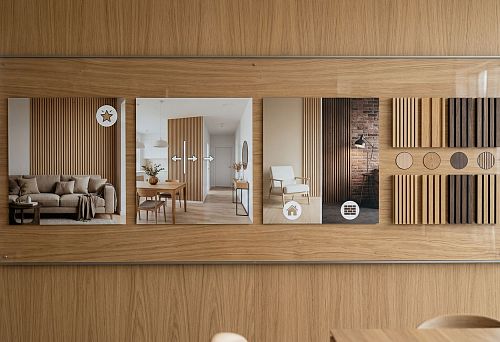
One of the most common applications of thin wooden strips is wall cladding. Thin strips allow walls to achieve a "living surface" effect through the natural wood texture and depth of relief.
● Decorative panels: Full panels can be created on specific wall sections or cover entire surfaces. This forms a unique visual accent that attracts attention and sets the style for the entire room.
● Geometric patterns: Strips can be laid in various directions, creating geometric patterns or repeating motifs, adding elegance and individuality to the wall.
● Space zoning: Thin strips easily define separate functional zones within a single room, without resorting to bulky partitions.
3.2 Door and Window Trim
Natural wood door and window casings not only protect the opening but also form a striking decorative element. Thin strips are ideal for such tasks, thanks to their versatility and expressiveness:
● Framing: Strips can be used to create neat frames around doors and windows, emphasizing their shape and giving them a finished look.
● Coordination with other decorative elements: Wooden strips used in door and window framing can harmonize with other interior elements, creating a unified stylistic image.
3.3 Mouldings, cornices, and skirting boards
Molding, cornices, and baseboards made from thin wooden strips play an important role in forming a cohesive interior design:
● Molding: Highlight transitions between walls and ceilings, creating smooth lines and concealing technical seams.
● Cornices: Highlight the upper part of walls, visually increasing room height, adding volume and elegance.
● Baseboards: Complete floor finishing and protect lower wall sections from damage, making the overall design neat and finished.
3.4 Furniture and Decorative Structures
Thin wooden strips can be used not only in wall cladding but also in furniture manufacturing, adding a decorative aspect and natural charm to furniture structures:
● Decorative inserts: Strips can be used to create original fragments in cabinet, table, chair, and other furniture constructions.
● Light partitions: Thin slats are suitable for creating decorative partitions that separate certain areas of a room while maintaining transparency and lightness.
● Wall accessories: Slats can serve as a base for hooks, shelves, and other functional elements that complement the interior design.
4. Modern processing and finishing technologies
4.1 Laser cutting and computer modeling
Combining traditional craftsmanship with modern technologies allows achieving incredible precision and neatness in manufacturing wooden slats:
● Laser cutting: Provides clean lines and high detail, which is especially important for decorative elements with complex patterns and geometric designs.
● Computer modeling: Allows designing and optimizing the dimensions and shapes of the product in advance, eliminating defects during production.
4.2 Automated planing and sanding
Using automated processes in planing and sanding increases efficiency and quality when working with wood:
● Uniform planing: Allows creating perfectly flat slats without defects, which is important for neat installation and a finished appearance.
● High-precision sanding: Provides a smooth surface without defects, making the product pleasant to touch and improving the application of protective coatings.
4.3 Natural Protective Coatings
Protective coatings used in manufacturing wooden slats help preserve their original properties and attractiveness for a longer time:
● Natural oils: Improve the external characteristics of wood and highlight its natural texture.
● Lacquers and waxes: Create a strong and reliable barrier against moisture, ultraviolet rays, and mechanical damage, while preserving the material's natural appearance.
5. Practical recommendations: selection, installation, and maintenance
5.1 How to choose quality products
When choosing, buy thin wooden slat, pay attention to the following aspects:
- Wood quality: It is preferable to choose species with high strength and distinctive texture, such as oak, beech, walnut, or other valuable species.
- Processing accuracy: The product's surface should be smooth, without burrs or defects. Slats should have straight edges and neat ends.
- Ecological safety: Ensure that environmentally friendly technologies and natural compositions were used during production, guaranteeing the safety of the products for health and the environment.
- Style compatibility with interior design: The product should fit into the overall design concept, harmonizing with furniture and other decorative elements.
- Price and manufacturer reputation: Analyze the market and choose proven suppliers, such as STAVROS, where quality combines with affordable pricing.
5.2 Installation and Integration into Interior
- Surface preparation: Before installation, ensure that walls or other surfaces are flat, clean, and dry. This is necessary for secure mounting and long-term service of the product.
- Use of quality fastening materials: Proper selection of fasteners according to the characteristics of the base prevents peeling and deformation of the slats.
- Stylistic harmony: Integrate slats into the overall interior, combining them with furniture, door casings, cornices, skirting boards, and decorative inserts. This will achieve a unified and cohesive design.
- Following manufacturer instructions: Adhering to installation and usage recommendations will extend the product's lifespan and preserve its original appearance.
5.3 Care for wooden rails
To ensure products maintain an attractive appearance and excellent performance characteristics, it is recommended:
● Regular cleaning: Use soft cloths and neutral wood care products to wipe slats clean of dust and dirt.
● Reapplying protective coatings: Depending on usage conditions, periodically apply natural oils, waxes, or lacquers to restore the protective layer and enhance the texture.
● Monitoring climate conditions: Maintain stable humidity and temperature in the room, avoiding sudden changes that could cause wood deformation.
● Periodic inspection: Regularly check fasteners and overall condition of the slats to promptly identify and address minor damage.
6. Economic and Environmental Efficiency
6.1 Durability and Cost Savings
Properly processed and protected natural wood can serve for decades. This means that long-term costs for repairs or replacement of finishing materials will be significantly lower, allowing you to save money. You are choosing a product that not only decorates the interior but also represents an investment-worthy solution, preserving its decorative qualities for many years.
Natural wood meets modern ecological requirements. Products made from solid wood, created in accordance with ecological standards, minimize environmental pollution and ensure a safe microclimate indoors. This approach is especially important for residential interiors, where air quality and material safety are paramount for human health.
6.3 Support for artisanal traditions
By purchasing items made of natural wood, you support not only local production but also centuries-old traditions of material processing passed down from generation to generation. These traditions embody love for wood, respect for nature, and a pursuit of perfection, giving the item not only material but also cultural value.
Thin wooden plank — a universal and stylish solution for interior finishing, combining the elegance of natural wood, durability, and ecological safety. Thanks to modern manufacturing technologies and deep ties with traditional craftsmanship, the product meets high standards of quality and longevity. If you want
7. Conclusion
to choose a natural material that not only decorates the interior but also highlights your care for the environment and your commitment to high-quality finishing.buy thin wooden slatThin plank can be used for wall cladding, decorating door and window openings, creating moldings, cornices, skirting boards, as well as integrating into furniture solutions. Its versatility allows it to adapt to any style, from classic to minimalist, and its durability and reliability ensure long-term economic benefits.
Proper installation and regular maintenance will preserve all aesthetic and functional qualities of the product for many years, while the rich texture and natural wood tones will delight the eye, creating a cozy and warm atmosphere in the room.
Wooden planks reflect a connection with nature, highlight the uniqueness of the space, and at the same time uphold high ecological standards. By purchasing such items, you support age-old traditions combined with innovation and receive a product with unique beauty and history.
Thus, thin wooden plank is not just a decorative element, but a full-fledged part of a harmonious interior, where coziness, naturalness, and beauty combine with functionality and reliability. Let your space be imbued with the natural warmth and elegance that only natural wood can provide.
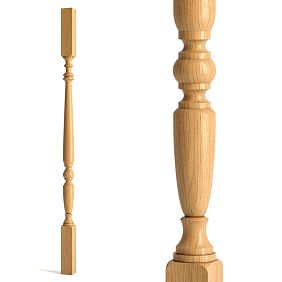
Wooden balusters 100x100: architectural power in every centimeter