Article Contents:
- Wooden plank: technical analysis of a universal material
- Definition and classification
- Technical parameters and standards
- Wood Species: Selection for the Petersburg Climate
- Coniferous species — tradition of northern construction
- Broadleaf species — standard of quality and prestige
- Dimensional series and technical specifications
- Standard sizes for various applications
- Calculation of strength characteristics
- Applications in St. Petersburg conditions
- Construction structures
- Finishing works
- Furniture manufacturing
- Modern trends in interior design
- Ecological Trend
- Minimalist solutions
- Technology of producing quality planks
- Raw Material Preparation and Processing
- Kiln drying — key to stability
- Mechanical processing
- Features of St. Petersburg climate and material selection
- Climate factors
- Recommendations for material selection
- Installation and mounting technology
- Preparatory work
- Mounting methods
- Features of installation under various conditions
- Final Finishing and Protection
- Types of Protective Coatings
- Decorative Finishing
- Quality control and certification
- Quality standards
- Methods of Control
- Economic Aspects of Usage
- Cost analysis
- Comparative economic efficiency
- Innovations in Production and Processing
- Modern Technologies
- Production Automation
- Ecological aspects and sustainability
- Ecological advantages
- Certification of sustainable forestry
- Market development trends
- Market situation in St. Petersburg
- Development prospects
- FAQ — Answers to popular questions
- What size of wooden planks is most universal?
- Which wood species is best suited for St. Petersburg climate?
- Is it necessary to buy planed planks or can one do without them?
- What moisture content is optimal for planks?
- How to properly store wooden planks?
- Can wooden planks be used in a bathroom?
- What tools are needed to work with wooden planks?
- How to determine the quality of wooden planks when purchasing?
- What is the approximate cost per square meter of wooden plank cladding?
- Is special treatment of planks required before installation?
- Conclusion

In the world of modern building materials, wooden plank occupies a special place, being a symbol of reliability, eco-friendliness, and enduring beauty. St. Petersburg, with its unique climatic conditions and rich architectural traditions, imposes special requirements on the quality of timber. That is why the decisionbuying wooden planks in St. Petersburgrequires a deep understanding of all the subtleties of choosing this universal material.
What makes wooden plank indispensable in the northern capital of Russia? The answer lies in the remarkable combination of natural wood strength with the precision of modern processing technologies. Each quality plank is the result of a multi-stage manufacturing process, including careful selection of raw material, controlled drying to optimal moisture content, and precision mechanical processing.
In the variable northwestern climate, especially important is the correct choice of material capable of resisting high humidity, significant temperature fluctuations, and other adverse factors. Professional builders and designers in St. Petersburg have long appreciated the advantages of qualitysolid wood trimwhich become the basis for creating durable and aesthetically pleasing structures.


Wooden plank: technical analysis of a universal material




Definition and classification
A wooden plank is a sawn timber of rectangular or square cross-section, obtained by longitudinal cutting of tree trunks followed by mechanical processing. The main difference between planks and other types of sawn timber is their relatively small cross-sectional dimensions combined with significant length, which defines their specific operational characteristics and areas of application.
According to the method of processing, wooden planks are classified as sawn (planed) and sanded. The first type is obtained solely by cutting while preserving the natural surface roughness, while the second undergoes additional processing on planers, acquiring a perfectly smooth surface and precise geometric dimensions.
Moisture content is a critical parameter determining the dimensional stability and longevity of products. Planks with natural moisture (20–25%) require additional drying before use, whereas kiln-dried material (8–12% moisture) is ready for immediate application.
Our factory also produces:



Technical parameters and standards
Modern technical requirements for wooden planks are regulated by state standards establishing tolerances for geometric dimensions, moisture content, grade, and surface finish quality. For sanded planks, allowable deviations in thickness and width must not exceed ±1 mm, ensuring the possibility of creating structures with minimal gaps.
Straightness of products is controlled by measuring deflection, which must not exceed 2 mm per meter of length. This parameter is especially important for long planks used in critical structures, where even minor deviations can significantly affect the quality of the final work.
Surface roughness of sanded planks must not exceed 40 micrometers, ensuring excellent adhesion of coatings and creating pleasant tactile sensations. End finish quality is also regulated by standards — they must be flat, free of chips or scratches.
Get Consultation
Wood Species: Selection for the Petersburg Climate
Coniferous species — tradition of northern construction
Coniferous wood species form the basis of the sawn timber industry in the Northwest region due to their availability, excellent technical properties, and natural resistance to biological damage.
Spruce is an undisputed leader among coniferous species for producing wooden planks. This species features a straight-grained structure, uniform density of about 500 kg/m³, and a characteristic golden color with clearly defined annual rings. High resin content provides natural wood preservation, making it resistant to moisture and microorganisms.
Spruce planks are easily processed by cutting tools, hold fasteners well, and practically do not crack upon proper drying. Resin content may be considered an advantage (natural protection) or a drawback (difficult painting), depending on the specific application.
Pine is characterized by a lighter, almost white color and lower resin content compared to spruce. Pine wood density is 450–500 kg/m³, making products lighter. Pine has excellent workability and dimensional stability, which is especially valued in furniture production and precision carpentry.
Larch deserves special attention as a material with unique operational characteristics. Larch wood density is 650–700 kg/m³, bringing it close to hardwoods in strength. The main advantage of larch is its exceptional resistance to moisture and biological damage, making it ideal for outdoor applications and high-humidity environments.
Hardwood species — standard of quality and prestige
Hardwood species are used to produce premium planks intended for exclusive projects, where both technical and aesthetic properties of the material are important.
Oak is rightfully considered the king among wood species. Oak density is 700–750 kg/m³, and hardness by Brinell reaches 3.7–4.0 units. Oak planks feature a distinctive texture with clear annual rings and medullary rays, creating a unique pattern on each plank.
Tannins present in oak wood provide natural protection against moisture, insects, and fungal damage. Oak’s color palette is impressive in variety — ranging from light golden to dark brown tones — allowing material selection to match any design concept.
Beech is an excellent alternative to oak at a more affordable price. Beech density is 680–720 kg/m³, and hardness is 3.8–4.2 units. Beech wood has a uniform fine-pored structure and a soft light color with a barely noticeable pinkish tint.
Beech is highly suitable for all types of processing — planing, drilling, milling, staining, and painting. High density ensures excellent ability to hold thin details and create sharp profiles.
Ash stands out for its unique combination of strength and elasticity, surpassing even oak in some indicators. Ash density is 650–700 kg/m³. The wood has a light color with a beautiful wavy texture, creating elegant patterns on planed surfaces.
Dimensional series and technical specifications
Standard Sizes for Various Applications
The modern market offers a wide variety of wooden planks in different sizes, allowing optimal selection for any technical task. Dimensions are classified by thickness, width, and length of the product.
Thin planks (thickness 5–15 mm):
-
5×10 mm — for miniature decorative elements
-
8×18 mm — popular size for trim and molding
-
10×20 mm — universal size for light structures
-
10×30 mm — for creating elegant lattice structures
-
15×25 mm — optimal size for finishing work
Medium planks (thickness 15–30 mm):
-
15×40 mm — for medium-load frame structures
-
20×40 mm — the most popular size in construction
-
20×50 mm - for structures with increased stiffness requirements
-
25×50 mm - for creating strong frames
Large planks (thickness over 30 mm):
-
30×40 mm - for serious construction tasks
-
30×50 mm - similar in properties to beams
-
40×60 mm - for structures with high loads
Strength characteristics calculation
The strength characteristics of wooden planks are determined not only by the wood species but also by the geometric parameters of the cross-section. To choose the correct size, it is necessary to understand the main calculated parameters.
The bending resistance moment characterizes the beam's ability to resist bending loads and is calculated by the formula W = b×h²/6, where b is the width and h is the height of the section. This parameter shows what load the plank can withstand without failure.
The moment of inertia determines the stiffness of the structure and resistance to deformation. It is calculated as I = b×h³/12. It is important to understand that doubling the height of the section increases the bending resistance moment by four times and the moment of inertia by eight times.
The critical length determines the maximum length of the plank at which it can operate as a compressed rod without losing stability. This parameter is especially important when calculating frame structures and roof trusses.
Applications in Saint Petersburg conditions
Structural constructions
buying wooden planks in St. PetersburgMost often used to create various construction structures where a combination of strength, lightness, and material economy is required.
Frame systems - the main area of application of wooden planks in modern construction. They are used to create load-bearing frames for walls, partitions, and ceiling structures. The precise geometry of quality planks ensures perfect element alignment, which is critically important for the strength and airtightness of the entire structure.
In the Saint Petersburg climate, it is especially important to correctly calculate the cross-section of frame elements taking into account snow and wind loads. High air humidity requires the use of material from kiln-dried and properly protective-treated wood.
Roof and facade sheathing - traditional area of use for planks. Under metal roofing, profiled sheeting, and flexible tiles, high-quality sheathing is required to ensure even load distribution and necessary ventilation under the roof space.
For facade systems, planks are used as elements of counter-sheathing, creating a ventilated gap between insulation and cladding. This is especially important in the high humidity conditions of the Saint Petersburg climate.
Roof truss systems in low-rise construction often use planks as auxiliary elements - braces, ties, elements of rafter connections. High surface processing quality ensures precise fitting of parts and reliable connections.
Finishing works
In interior finishing, wooden planks play an important role, ensuring high-quality finish coatings and creating a basis for various decorative solutions.
Gypsum board frames made of wooden planks remain a popular solution due to their eco-friendliness, ease of processing, and ability to create structures of complex geometry. Unlike metal profiles, a wooden frame does not create thermal bridges and provides a better microclimate in the room.
Veneer sheathing requires special attention to material quality.wooden plankMust be attached to a perfectly flat base, ensuring correct geometry of the entire surface. Planed planks with precise dimensions guarantee a high-quality result.
Ceiling structures of various complexity are created using plank frames. Multi-level ceilings, decorative niches, cornices - all these elements require precise dimensions and high-quality material processing.
Furniture manufacturing
The furniture industry imposes special requirements on the quality of wooden planks used in various structural elements.
Soft furniture frames require material of high strength with flawless surface processing. Planks from hardwoods ensure the longevity of structures that withstand significant loads.
Cabinet furniture elements - shelves, partitions, facade frames are made from planks of various sizes. Precision of geometric parameters is critically important for quality assembly of products.
Decorative furniture elements are often made from planks of special profiles or standard sizes with subsequent decorative shaping.
Modern Trends in Interior Design
Ecological Trend
Modern interior design trends increasingly favor the use of natural, eco-friendly materials, and wooden planks occupy a special place in this movement.
Biophilic design strives to bring urban environments as close as possible to nature.buying wooden planks in St. PetersburgOften used specifically to create interiors that imitate natural forms and textures.
Wooden planks allow creating associations with bamboo groves, tree trunks, natural lattice structures. It is important not only the visual aspect, but also tactile sensations and the natural smell of wood.
Green construction involves using materials with minimal carbon footprint. Wood, especially local species, meets these requirements as a renewable resource with low energy consumption during production.
Minimalist solutions
Modern minimalism values clean lines, functionality, and material quality. Wooden planks fit perfectly into this aesthetic due to their simplicity and naturalness.
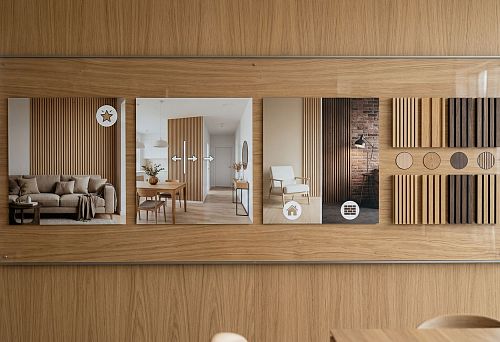
Plank partitions have become a hallmark of modern interiors. They allow zoning of space without creating solid walls, preserving the feeling of light and air. In Saint Petersburg apartments, where natural sunlight is often limited, this is especially important.
Ceiling plank structures add volume and dynamism to interiors. Integrating lighting systems into plank ceilings creates unique lighting effects, transforming the ceiling into an active design element.
Accent walls made of planks with different configurations allow creating focal points in the interior. Vertical planks visually increase the height of a room, while horizontal planks expand the sense of space.
Technology of producing high-quality planks
Log Preparation and Raw Material Preparation
The production of high-quality wooden planks begins long before the wood arrives at processing machines. Proper preparation of raw material is the foundation of the final product's quality.
The preparation time is critical for the quality of future products. Winter is considered optimal, as sap movement in wood is minimal, and moisture content in trunks is at its lowest level. This ensures better dimensional stability and less tendency to crack during drying.
Log selection is carried out considering species, tree age, growing conditions, and absence of visible defects. Preference is given to trees from northern regions with slow growth, which provide denser and stronger wood.
Primary processing includes debarking, trimming, and cutting into blanks. At this stage, it is important to correctly choose the cutting scheme — radial, semi-radial, or tangential — depending on the wood species and intended use of the finished products.
Kiln drying — key to stability
The process of drying wood to optimal moisture content is one of the most critical stages of production, largely determining the quality of the finished products.
Drying regimes are individually selected for each wood species, taking into account the thickness of blanks, initial moisture content, and quality requirements. Excessive drying can lead to internal stresses, cracking, and warping of blanks.
Parameter control is performed by automated systems maintaining optimal temperature, air humidity, and air circulation speed. Modern drying chambers allow programming complex regimes with gradual parameter changes.
Conditioning — the final stage of drying, aimed at equalizing moisture throughout the blank and relieving internal stresses. This process may take up to 20-30% of the total drying time but is critically important for the quality of the finished product.
Mechanical processing
The final production stage — mechanical processing of blanks to obtain finished products with required geometric parameters and surface quality.
Planing is performed on four-sided planers, simultaneously processing all faces of the blank. The quality of planing depends on the sharpness and correct adjustment of blades, material feed rate, its moisture content, and grain direction.
Calibration ensures the accuracy of finished product dimensions. Tolerance for thickness and width of quality planks should not exceed ±0.5 mm, achieved through the use of high-precision equipment and continuous parameter control.
Quality control includes visual inspection of each item, checking geometric parameters, moisture content, and sorting by quality class. Defective items are rejected or downgraded to a lower grade.
Features of Saint Petersburg's climate and material selection
Climate factors
Saint Petersburg is located in a moderately continental climate zone with marine influences, creating special conditions for the operation of wooden structures.
High air humidity throughout most of the year (average annual relative humidity is 78%) creates favorable conditions for fungal decay of wood. In autumn-winter, humidity may reach 85-90%, requiring effective protective measures.
Temperature fluctuations — both daily and seasonal — cause cyclic wood deformation. Transitional periods in spring and autumn are especially critical, as temperature may vary widely within a short time.
Frequent freeze-thaw cycles during transitional seasons create additional stresses in the material, especially when moisture is present in wood pores. This requires careful material preparation and high-quality protective treatment.
Insufficient solar radiation during winter reduces natural drying of structures, which may lead to moisture accumulation and biological damage.
Recommendations for material selection
In Saint Petersburg's climate, proper selection of wood species and material treatment quality is especially important.
For outdoor use, larch is recommended as the most moisture-resistant coniferous species. Alternatives may include high-quality spruce or pine, with mandatory antiseptic treatment and application of weather-resistant coatings.
For indoor use in rooms with normal humidity, any species is suitable, but preference should be given to kiln-dried material with moisture content not exceeding 12%. This ensures dimensional stability during the heating season.
For humid areas (bathrooms, saunas), use species with enhanced moisture resistance — larch, oak, or specially treated wood of other species.
Mounting and Fixing Technology
Preparation Work
Quality installation of wooden planks begins with careful preparation of both the material and the installation site.
Acclimatization of the material is a critically important stage, often ignored by unprofessional installers. Planks must rest under future operating conditions for at least 48-72 hours to equalize moisture with the surrounding environment.
Quality inspection of each plank includes visual examination for compliance with the declared grade, absence of mechanical damage, verification of geometric dimensions and moisture content. Defective items should be rejected or used in less critical areas.
Foundation preparation involves cleaning the surface of contaminants, checking strength, and leveling if necessary. For humid rooms, the foundation must be waterproofed and treated with antiseptic compounds.
Marking is performed using laser levels, ensuring ideal accuracy. A base line (usually horizontal) is established, from which all structural elements are further marked.
Methods of mounting
The choice of fastening method depends on the structure's purpose, operating conditions, aesthetic requirements, and allowable loads.
Mechanical fastening with screws or nails is the most common and reliable method. To prevent cracking in hardwoods, it is recommended to pre-drill holes with a diameter of 0.8-0.9 times the screw diameter.
When fastening with screws, it is important to correctly select their length — it should exceed the thickness of the attached element by 2.5-3 times. Screw heads can be countersunk and concealed using wooden plugs or special putty.
Adhesive joints are primarily used in furniture manufacturing and decorative elements, where the visibility of fasteners is undesirable. Modern woodworking adhesives based on PVA or polyurethane provide joint strength exceeding the strength of the wood itself.
Hidden fastening systems are used when visible fasteners are not permitted. Various types of hidden fasteners exist — from simple metal brackets to complex locking systems.
Features of installation under various conditions
Outdoor installation requires use of stainless steel fasteners or those with quality anti-corrosion coating. All metal components must be protected from direct contact with atmospheric precipitation.
It is recommended to install vapor-permeable gaskets between planks and the base to prevent condensation buildup. The construction must allow free air circulation for natural ventilation.
Internal installation in humid rooms requires special attention to waterproofing. A vapor barrier membrane is installed between the wall and planks to prevent moisture from reaching the base.
Installation on uneven surfaces involves using leveling shims or creating a leveling frame. This allows achieving a perfectly flat plank structure regardless of the base quality.
Final finishing and protection
Types of Protective Coatings
The choice of finish depends on the wood species, operating conditions, aesthetic preferences, and project budget.
Varnish coatings create a durable protective film on the wood surface, highlighting its natural beauty. Polyurethane varnishes offer high wear and chemical resistance, but may impart excessive gloss to the surface.
Water-based acrylic varnishes are eco-friendly, odorless, dry quickly, and are easy to apply. They are ideal for interior work in residential spaces, especially in children's rooms.
Oil coatings penetrate the wood structure, emphasize texture, and preserve the material's natural tactile qualities. Oils create a breathable coating that does not hinder the wood's natural moisture regulation.
Natural oils (linseed, tung) provide an eco-friendly coating but require more frequent reapplication. Synthetic oils are more durable but may contain chemical additives.
Wax coatings create a soft, silky surface, very pleasant to the touch. Waxes highlight the natural beauty of wood, giving it a noble matte sheen, but are less resistant to mechanical impacts.
Decorative processing
Modern technologies allow for a radical change in the appearance of wooden planks while preserving their primary functional properties.
Staining with stains changes the wood color while preserving texture visibility. Water-based stains are easy to apply, dry quickly, but may raise wood fibers. Alcohol-based stains do not raise fibers but require rapid application due to fast drying.
Patination creates an effect of noble antiquity, especially popular in classic interiors. The technique involves applying a base color followed by partial removal of the top layer to simulate natural wear.
Brushing highlights wood texture by removing soft fibers with special brushes. This technique is especially effective on coniferous species with contrasting annual ring structures.
Quality control and certification
Quality standards
The quality of wooden planks is regulated by state standards establishing requirements for dimensions, moisture content, grade, and other parameters.
GOST 8486-86 'Plywood of coniferous species. Technical specifications' establishes basic requirements for coniferous lumber, including planks. The standard defines allowable dimensions, moisture content, and wood defects for various grades.
GOST 2695-83 'Plywood of deciduous species. Technical specifications' regulates requirements for deciduous lumber. Special attention is given to species with increased density and hardness.
European standards EN 14081 and EN 338 establish requirements for structural lumber, including methods for determining strength characteristics and classification by load-bearing capacity.
Methods of control
Quality control of wooden planks includes checking geometric parameters, moisture content, grade, and surface finish quality.
Dimensional control is performed using measuring tools — calipers, micrometers, rulers. Compliance with nominal dimensions, section rectangularity, and straightness of products are checked.
Moisture content is determined by various types of moisture meters - pin-type, non-contact, and weighing. The most accurate result is obtained using the weighing method, but it requires sample destruction.
Sorting by quality includes identifying wood defects, assessing surface processing quality, and checking for biological damage.
Economic aspects of use
Cost analysis
The cost of wooden planks is influenced by numerous factors, and understanding these mechanisms helps make informed decisions when purchasing material.
Wood species is the primary pricing factor. Coniferous species of local origin (pine, spruce) are the most cost-effective due to the absence of transportation costs and a well-developed regional raw material base. Hard deciduous species (oak, beech, ash) are significantly more expensive due to limited resources and more complex processing.
Surface processing quality significantly affects price. Unprocessed planks with natural moisture content are the least expensive; planed, dry planks of the highest grade may cost 3-4 times more. Intermediate options (dry unplaned, planed with natural moisture) occupy a middle price range.
Cross-sectional dimensions also affect cost. Non-standard sizes are usually more expensive than standard ones due to the need for equipment retooling and lower production volumes. Very thin planks require special care during processing, which increases their cost.
Comparative economic efficiency
When evaluating economic efficiency, it is important to consider not only the initial cost of the material but also the total lifecycle costs.
The durability of quality wooden planks significantly exceeds the service life of more affordable alternatives. Properly processed and installed oak planks can last 50-80 years, pine planks 25-40 years, making them economically advantageous in the long term.
Maintenance costs for natural wood are usually lower than for composite materials. Wooden structures can be easily repaired, restored, or partially replaced with damaged elements. Artificial materials often require complete replacement upon significant damage.
Wooden structures are more energy-efficient due to the material's low thermal conductivity. This can lead to savings on heating and air conditioning, especially noticeable in Saint Petersburg's long heating season.
Disposal of wooden products at the end of their service life requires no special costs - wood is fully biodegradable or can be used as fuel. Disposal of composite materials often involves additional expenses.
Innovations in Production and Processing
Modern technologies
Production of wooden planks continuously improves due to the introduction of new technologies and equipment.
Thermal modification of wood allows significantly improved material performance. Processing at 160-220°C in an oxygen-free environment increases dimensional stability, reduces hygroscopicity, and enhances resistance to biological damage.
Thermally modified wood acquires a beautiful brown color, becomes more stable against moisture, but slightly loses strength. This method is especially effective for coniferous species, making them more suitable for outdoor use.
Pressure impregnation ensures deep penetration of protective compounds into the wood structure. Modern autoclave installations allow impregnating material with antiseptics, fire retardants, and water-repellent compounds to a depth of 10-15 mm.
Joining short segments into long products allows more efficient use of raw material and obtaining long planks from relatively short blanks. Micro-dowel joints provide joint strength equal to solid wood.
Production automation
Modern production of high-quality boards is unthinkable without the use of high-tech equipment and automation systems.
Laser control systems allow real-time monitoring of the geometric parameters of products, automatic rejection of defective items, and quality statistics tracking.
CNC equipment ensures the highest processing accuracy, enables manufacturing of items with complex profiles, and minimizes production waste.
Automated lines include all processing stages—from blank feeding to finished product packaging—eliminating human factors and ensuring consistent quality.
Environmental aspects and sustainability
Environmental advantages
Using wooden boards aligns with modern principles of sustainable development and responsible consumption of natural resources.
Renewability of the resource is the main ecological advantage of wood. With proper forest management, trees regenerate faster than they are used, ensuring long-term sustainability of the resource base.
Carbon neutrality of wood means that when it burns or decomposes, it releases only the amount of carbon dioxide that the tree absorbed during growth. This does not increase the overall concentration of CO2 in the atmosphere.
Low energy consumption in the production of lumber is significantly less than for metals, plastics, or composite materials. Most energy is spent on drying wood, but this can also be obtained from renewable sources.
Biodegradability of wood ensures its complete disposal at the end of its service life without polluting the environment. Wood processing waste can be used to produce other materials or as biofuel.
Certification of sustainable forestry
Modern certification systems guarantee that wood originates from properly managed forests.
FSC (Forest Stewardship Council) — an international certification system establishing standards for responsible forestry. Certified products are marked with a special logo guaranteeing compliance with ecological and social standards.
PEFC (Programme for the Endorsement of Forest Certification) — another recognized certification system covering over 240 million hectares of forests in 37 countries worldwide.
Local production reduces transportation costs and associated CO2 emissions, supports the local economy and job opportunities.
Market Development Trends
Market situation in Saint Petersburg
The market for wooden boards in Saint Petersburg is characterized by high competition and continuous growth in quality requirements.
Import substitution has stimulated the development of local high-quality lumber production. Saint Petersburg enterprises actively adopt modern technologies and improve production culture.
Growing quality requirements are linked to the development of the construction industry, increased consumer awareness, and the spread of European quality standards.
Environmental requirements are becoming increasingly important for consumers. Demand for certified products from sustainable sources is steadily rising.
Development Prospects
The future of the wooden board market is linked to several key trends.
Production automation will continue, enabling improved product quality, reduced cost, and increased productivity.
New wood processing technologies will open additional opportunities to enhance material performance characteristics.
Product customization — the ability to order items to individual dimensions and specifications will become more accessible thanks to flexible production systems.
Integration with digital technologies will optimize the entire chain from order to delivery, improving customer service.
FAQ - Answers to popular questions
What size of wooden boards is the most universal?
The most universal size is a 20×40 mm board, 3000 mm long. This size is optimally balanced in terms of strength, weight, and cost, suitable for most construction and finishing tasks. When deciding,buying wooden planks in St. Petersburgthis size should be considered first.
Which wood species is best suited for the Saint Petersburg climate?
For outdoor work in high humidity, larch is best due to its natural moisture resistance. For indoor work, kiln-dried pine is ideal—it combines affordable cost with good performance characteristics. For prestigious projects, oak or beech is recommended.
Is it necessary to buy planed boards, or can one do without them?
Planed boards provide significantly better construction quality due to precise dimensions and smooth surfaces. Saving on material quality often results in additional labor costs and inferior results. For responsible work, planed boards are preferable.
What is the optimal moisture content for wooden boards?
For most applications, optimal moisture content is 8-12%, achieved through kiln drying. Such material is dimensionally stable, resistant to cracking and warping. Boards with natural moisture (20-25%) are cheaper but require additional drying and may deform after installation.
How to properly store wooden boards?
Boards should be stored in a dry, well-ventilated room, laid on supports with air gaps between rows. Material must be protected from direct sunlight and atmospheric precipitation. For long-term storage, recommend treating ends with special anti-cracking compounds.
Can wooden boards be used in bathrooms?
Yes, but under certain conditions. Choose moisture-resistant species (larch, oak), ensure good ventilation, use moisture-protective coatings. Antiseptic treatment and use of stainless steel fasteners are mandatory.
What tools are needed for working with wooden boards?
Basic set includes: saw (hand or electric), drill with bit set, screwdriver, level, tape measure, square, pencil for marking. For quality work, you will also need a sander and a set of abrasive paper of different grits.
How to determine the quality of wooden boards when purchasing?
Pay attention to moisture content (should be 8-12%), absence of large knots and cracks, accuracy of geometric dimensions, surface finish quality. Quality boards should have uniform color, be straight, without warping or other deformations.
What is the approximate cost per square meter for wooden board finishing?
Material cost ranges from 800 rubles (pine) to 2500 rubles (oak) per square meter depending on species and quality. Installation costs 400-800 rubles per square meter. Final finishing cost is 1200-3300 rubles per square meter.
Is special treatment of boards required before installation?
High-quality kiln-dried planed boards are usually ready for use. However, for outdoor work, antiseptic treatment is recommended, and for humid areas—moisture-protective impregnation. Final finishing (varnishing, painting) can be done either before or after installation.
Conclusion
Choosing high-quality wooden boards for construction and finishing work in Saint Petersburg requires a comprehensive approach, considering multiple factors—from material technical characteristics to local climate peculiarities.buying wooden planks in St. PetersburgHigh quality means investing in durability, functionality, and aesthetic appeal of the constructed structures.
Modern wood production and processing technologies allow obtaining materials with outstanding performance characteristics, meeting the strictest requirements of professional builders and designers. The variety of species, sizes, and finishing options makes wooden boards a universal solution for a wide range of tasks.
Special climatic conditions of the northern capital impose additional requirements on material quality, but with proper selection and adherence to installation technology, wooden boards demonstrate excellent durability and stability. The ecological advantages of natural wood make it the preferred choice for creating a healthy and comfortable living environment.
In the context of growing requirements for construction materials and services, choosing a reliable supplier capable of guaranteeing product compliance with stated characteristics becomes especially important. STAVROS, with extensive experience in the Saint Petersburg market, offers a full range ofwooden trim productsof the highest quality. Strict control at all production stages, modern equipment, and deep understanding of customer needs make STAVROS an ideal partner for implementing projects of any complexity and scale.