Article Contents:
- Evolution of Louvered Decor: From Functionality to Art
- From Traditions to Modernity
- Technological Breakthrough
- Variety of Louvered Structures: Types and Applications
- Materials of Manufacture
- Natural Wood
- MDF and Veneer
- Metal and Composite Materials
- Shapes and Sizes
- Creative Ways to Use Louvers in Interior Design
- Wall Panels and Accent Walls
- Ceiling structures
- Partitions and Space Zoning
- Furniture and interior items
- Psychology of Louvered Decor Perception
- Rhythm and Order
- Play of Light and Shadow
- Connection with Nature
- Practical Aspects of Choosing and Installing Louvers
- Material Selection Based on Room Type
- Calculating Quantity and Dimensions
- Installation Methods
- Maintenance and care
- Trends in Louvered Decor for 2025
- Ecological sustainability and development
- Combining Different Materials
- Color solutions
- Geometric Patterns and 3D Effects
- Louvered Decor for Various Interior Styles
- Scandinavian Style
- Modern minimalism
- Loft and Industrial Style
- Eco Style and Japanese Minimalism
- Louvered Decor DIY: From Idea to Realization
- Material Selection and Preparation
- Tools and Fasteners
- Step-by-Step Process for Creating a Louvered Structure
- Ideas for Beginner Crafters
- Conclusion: Creating a Harmonious Space with Louvered Decor

The space in which we live shapes our mood, affects our productivity, and even determines the quality of our rest. Walls, ceilings, partitions — all these elements create the architectural framework of our home, but it is precisely the decorative details that imbue it with individuality and character. In recent years, designers have increasingly turned to louvered structures as a universal tool for creating expressive and functional interiors.
Vertical lines, rhythmic repetitions, play of light and shadow — slat decoration can transform even the most ordinary space, giving it depth and dimension. But how to choose the right slats? Which materials to prefer? And most importantly — Where to Buy Decorative Plankswhich will perfectly fit your interior?
After half a century of work in interior design, I have observed how trends have changed, new materials and technologies have emerged. But one thing remains unchanged: quality details always make a space special. Let’s dive into the world of slat decoration and uncover all the secrets of creating a stylish and harmonious interior.



Evolution of slat decoration: from functionality to art
The history of using wooden slats in interior design spans more than one century. Initially, they served exclusively practical purposes: reinforcing structures, protecting walls from damage, concealing joints and irregularities. But over time, architects and designers recognized the enormous decorative potential in these simple elements.




From traditions to modernity
In traditional Japanese architecture, wooden slats were used to create sliding partitions — shoji — that allowed light to pass through while ensuring privacy. In Scandinavian countries, vertical wooden slats were used to clad facades, protecting homes from harsh weather conditions. In classic European interiors, moldings and cornices structured the space, giving it elegance and sophistication.
Today, slat decoration is experiencing a true renaissance. Modern designers reinterpret traditional techniques, creating minimalist yet expressive interiors. Slats are used not only for wall and ceiling finishes, but also for zoning, creating accent elements, concealing utilities, and even as standalone art objects.
Our factory also produces:



Technological breakthrough
Advancements in manufacturing technology have opened new possibilities for slat decoration. Previously, slats were made exclusively from solid wood; today, designers have a wide range of materials at their disposal: from MDF and veneered panels to metal, plastic, and composite materials.
Modern slats feature perfect geometry, resistance to deformation and moisture, and ease of installation. They can imitate various wood species, have complex textures, or unusual colors. This allows slat decoration to be used in any room, including bathrooms and kitchens, where high humidity traditionally limited the use of wooden elements.
When considering — Where to Buy Decorative Planksit is important to consider not only aesthetic preferences, but also the technical characteristics of materials, their compatibility with the conditions of use in a specific room.
Get Consultation
Variety of slat constructions: types and applications
The modern market offers a vast variety of slat elements, differing in material, shape, size, and installation method. Let’s examine the main types of slats and their applications in interior design.
Materials of Construction
Natural wood
Solid wood slats — a classic option that never goes out of style. They bring warmth and coziness to interiors, emphasizing a connection with nature. Each wood species has its own characteristics:
- Spruce and pine — affordable options with pronounced texture. Spruce has an amber tone and a distinctive grain with knots, while pine has a more uniform structure. These species are ideal for Scandinavian and eco-interiors.
- Oak — a noble species with pronounced texture and high strength. Oak slats give interiors a solid and prestigious look. They look great in both classic and modern interiors.
- Ash — a hard species with a beautiful grain. Ash slats are distinctive, each one has a unique pattern.
- Larch — a strong and durable species with clearly visible annual rings. Siberian larch is especially prized for its high resistance to moisture and temperature fluctuations.
MDF and veneer
MDF slats — a more affordable alternative to solid wood. They feature perfect geometry, resistance to deformation, and ease of processing. MDF slats can be painted in any color or covered with veneer, imitating various wood species.
Veneered slats combine the advantages of natural wood and MDF. They have a top layer of natural veneer, providing an authentic appearance, yet they are more stable and affordable.
Metal and composite materials
Metal slats (aluminum, steel) are ideal for modern interiors in loft, high-tech, or minimalist styles. They can have various finishes and colors, from natural metallic sheen to matte and textured surfaces.
Composite slats are made from a blend of polymers and natural materials. They exhibit high resistance to moisture, temperature fluctuations, and mechanical damage, making them an ideal choice for humid environments.
Shapes and sizes
The variety of slat shapes and sizes allows for creating unique decorative solutions:
- Rectangular slats — a classic option suitable for most interiors. Depending on proportions, they can appear substantial or elegant.
- Square slats — create a more graphic, modern look. Often used in minimalist interiors.
- Slanted rails add dynamism and play of light and shadow to the interior.
- Profiled rails have complex cross-sections, allowing for unique decorative effects.
Rail sizes also vary widely: from thin strips 10-20 mm wide to massive elements 60-100 mm and wider. The choice of size depends on the specific task and room scale.
If you are considering Where to Buy Decorative Planks a specific shape and size, pay attention to companies that offer a wide range and the possibility of custom manufacturing.
Creative Ways to Use Rails in Interior Design
Rail decor opens up boundless creative possibilities. Let’s consider the most popular and effective ways to use rails in modern interiors.
Wall Panels and Accent Walls
Wall-mounted rail panels are one of the most common ways to use this decorative element. They can cover the entire wall surface or just part of it, creating an accent zone.
Vertical placement of rails visually increases ceiling height, which is especially relevant for rooms with low ceilings. Horizontal placement, on the contrary, visually expands the space, making it feel more spacious.
An interesting effect is created by diagonal or zigzag rail placement. This technique adds dynamism and originality to the interior, turning an ordinary wall into a true work of art.
Rails can be arranged with uniform spacing or create variable density, where they are closely spaced in some areas and spaced apart in others. This allows for creating a gradient or directional movement effect.
Ceiling Structures
A rail ceiling is an effective solution that can completely transform a room. Unlike traditional suspended ceilings, rail structures appear light and airy, not 'eating' the room’s height.
Rails on the ceiling can serve not only decorative but also practical functions, concealing communications, ventilation channels, and lighting elements. At the same time, they allow air to circulate freely, which is especially important for rooms with high humidity.
Ceiling structures with integrated lighting look especially effective, when LED strips or spotlights are placed between or behind the rails. This creates soft, diffused light and enhances the play of light and shadow.
Partitions and Space Zoning
Rail partitions are an ideal solution for zoning open spaces. They visually divide the room into functional zones without blocking natural light or creating a sense of enclosure.
Such partitions can be stationary or movable, fully or partially transparent. By changing the density of rail placement and their orientation, you can regulate the degree of privacy and visual connection between zones.
Rail partitions are especially relevant in small apartments and studios, where it is important to maximize the use of every square meter. They allow separating a sleeping area from a living room or a workspace from a relaxation zone, while maintaining a sense of spaciousness.
Furniture and Interior Items
Rail decor is actively used in furniture design. Cabinet and chest facades, headboards, tabletops, and shelves — all these elements can be decorated with rails, creating a unified stylistic ensemble with wall and ceiling finishes.
Furniture items where rails serve not only decorative but also structural functions are especially interesting. For example, shelves where shelves rest on vertical rails, or tables with rail bases.
Even small accessories, such as photo frames, book stands, lamp shades, can be made using rail elements, complementing the overall interior concept.
Psychology of Perceiving Rail Decor
Rail structures affect not only the visual perception of space but also our psychological state. Understanding these mechanisms will help create an interior that is not only beautiful but also comfortable for living.
Rhythm and Order
Evenly spaced rails create a sense of rhythm and order, positively affecting our psychological state. Ordered structures are perceived by the brain as safe and predictable, reducing stress and anxiety levels.
This is especially relevant for workspaces and rooms requiring concentration. Rhythmic vertical lines help structure thinking and increase productivity.
Play of Light and Shadow
Rail structures create expressive play of light and shadow, which changes throughout the day depending on the sun’s position. This adds dynamism and life to the interior, making it more interesting and multifaceted.
Soft shadows from the slats create a sense of depth and volume, making the space more expressive. This effect is especially striking when combined with directional lighting, which enhances the contrast between light and shadow.
Connection with nature
Wooden slats, especially those retaining their natural texture, create a sense of connection with nature, which is particularly important for city dwellers. Studies show that the presence of natural materials in interiors reduces stress levels and improves overall well-being.
Vertical lines of slats are associated with trees in the forest, creating a subconscious sense of safety and comfort. This explains why slat decor is often used in spas, yoga studios, and other spaces designed for relaxation.
Practical aspects of choosing and installing slats
Creating an effective slat decor begins with the proper selection of materials and correct installation. Let's consider the key points to consider at each stage.
Material selection depending on the room
Material selection for slats should take into account the specific characteristics of the room:
- Living room and bedroom - here you can use almost any materials, including natural wood, MDF, veneer. The choice mainly depends on the interior style and budget.
- Kitchen - for this room, it is better to choose materials resistant to moisture and temperature changes. Suitable are slats made of hardwood with protective coating, MDF with moisture-resistant impregnation, metal or composite slats.
- Bathroom - here, the most moisture-resistant materials are required. The optimal choice is metal, plastic, or special moisture-resistant composite slats. If you still wish to use wooden elements, choose species with high natural moisture resistance (teak, larch) and always treat them with special protective compounds.
- Children's room - here it is important to use environmentally friendly materials free of harmful additives. Natural wood or high-quality MDF with safe coatings will be the optimal choice.
Calculating quantity and dimensions
Before purchasing slats, it is necessary to carefully calculate their quantity and dimensions. For this:
- Determine the total surface area you plan to decorate.
- Decide on the optimal spacing between slats for your project.
- Calculate the required number of slats, taking into account their width and gaps between them.
- Add 10-15% for trimming and possible defects.
For complex geometric patterns, it is recommended to first create a detailed drawing or 3D model to accurately determine the required amount of materials and avoid errors during installation.
Installation methods
There are several main ways to install slat structures:
- Direct mounting - slats are attached directly to the wall or ceiling surface using glue, nails, screws, or special fasteners. This method is the simplest but requires a perfectly flat surface.
- Mounting on a subframe - first, a subframe made of wooden beams or metal profiles is attached to the surface, and then the slats are mounted onto it. This method allows leveling uneven surfaces and creating space for running utilities.
- Mounting on special fastening systems - there are various systems for attaching slats that ensure perfect geometry and simplify the installation process. They are especially convenient for ceiling structures and partitions.
The choice of installation method depends on the type of structure, material of the slats, and characteristics of the room. In some cases, a combination of different methods may be required.
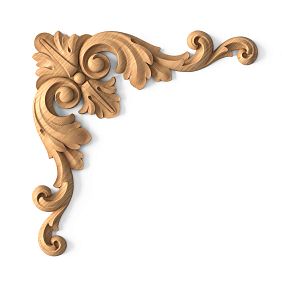
corner trim
The durability and attractive appearance of slat decor largely depend on proper maintenance:
- Wooden slats require periodic renewal of protective coatings (varnish, oil, wax) to maintain color and protect against moisture. The frequency of renewal depends on the intensity of use and conditions in the room.
- MDF and veneered slats require less maintenance but also need protection from moisture and mechanical damage. For cleaning, it is sufficient to use a soft dry or slightly damp cloth.
- Metallic and composite slats require the least maintenance. They can be cleaned using regular household cleaning agents without abrasive particles.
Regardless of the material, all slat structures require regular cleaning from dust. For hard-to-reach areas, you can use a vacuum cleaner with a soft brush or special dust brooms.
Trends in Lattice Decoration for 2025
The world of interior design is constantly evolving, and lattice decoration is no exception. Let's consider the main trends that will be relevant in 2025.
Ecological sustainability
Environmental care is becoming not just a fashionable trend, but a necessity. In lattice decoration, this is reflected in the use of:
- Wood from responsibly managed forests, certified by FSC or PEFC.
- Recycled and recyclable materials.
- Natural, non-toxic coatings and dyes.
- Locally produced materials, which reduces the carbon footprint from transportation.
More and more manufacturers are offering lattices made from alternative materials, such as bamboo, recycled plastic, or composites based on agricultural waste.
Combination of different materials
Modern design strives for diversity of textures and finishes. The trend involves combining different materials within a single lattice structure:
- Wood and metal — a classic combination that takes on a new sound in modern interiors.
- Wood and glass — creates an interesting interplay of transparency and opacity.
- Different wood species with contrasting textures and shades.
- Integration of glowing elements or mirrored inserts between the lattices.
Such combinations allow creating unique, memorable interiors that reflect the owner's individuality.
Color solutions
In the color palette of lattice decoration for 2025, the following dominate:
- Natural, earthy tones — from light beige to deep terracotta.
- Muted, complex colors — olive, ochre, burgundy, dark blue.
- Contrasting combinations of light and dark wood.
- Black color combined with natural textures — a trend that continues to gain popularity.
At the same time, it is important that the color of the lattices harmonizes with the overall color scheme of the interior, creating a cohesive composition.
Geometric patterns and 3D effects
Modern production and installation technologies allow creating complex geometric patterns and three-dimensional effects using lattices:
- Wavy and curved structures that add dynamism and organic feel to the interior.
- Multi-layered compositions that create an effect of depth and volume.
- Parametric patterns inspired by natural forms and mathematical algorithms.
- Gradient transitions, where the density of lattice placement or their color gradually changes.
Such solutions transform ordinary walls and ceilings into true works of art, becoming the central element of the interior.
Lattice decoration for various interior styles
The versatility of lattice decoration allows using it almost in any interior style, from classic to ultra-modern minimalism. Let's consider how lattices can complement and emphasize the features of various stylistic directions.
Scandinavian Style
Scandinavian style, with its love for natural materials and light tones, combines perfectly with slat decoration. Characteristics of this style:
- Slatting made from light-colored wood species (pine, spruce, birch) with minimal processing, preserving the natural texture.
- Vertical slat arrangement, reminiscent of Scandinavian forests.
- Even spacing between slats, creating a sense of order and calm.
- Combination with white walls and ceilings, enhancing the feeling of light and spaciousness.
In Scandinavian interiors, slat decoration can be used for accent walls in the living room, headboards in bedrooms, or as partitions between functional zones.
Modern minimalism
In minimalist interiors, slat decoration becomes a striking accent, adding depth and texture to a restrained space:
- Slatting with clear geometric shapes, often painted in monochromatic colors (white, black, gray).
- Simple compositions emphasizing rhythm and proportions.
- Integration with built-in lighting to create dramatic lighting effects.
- Combination with other minimalist materials - concrete, glass, metal.
In such interiors, slat structures often serve not only decorative but also functional roles, for example, concealing storage systems or technical utilities.
Loft and Industrial Style
In loft-style interiors, the combination of rough industrial elements with warm, cozy details is characteristic. Slat decoration here can act as a softening element, balancing the harshness of concrete, brick, and metal:
- Slatting made from aged or roughly processed wood, preserving traces of time and use.
- Combination of wooden slats with metallic elements - pipes, profiles, fasteners.
- Unconventional compositions with disrupted rhythm and asymmetry.
- Use of slats to create functional elements - shelves, partitions, bar counters.
In loft interiors, slat decoration can become a connecting element between the industrial past of the space and its modern use, adding warmth and coziness without compromising the authenticity of the style.
Eco-style and Japanese minimalism
Eco-style and Japanese minimalism (wabi-sabi), with their philosophy of closeness to nature and mindful simplicity, find perfect expression in slat decoration:
- Slatting made from unprocessed or minimally processed wood, preserving the natural beauty of the material.
- Uneven spacing between slats, resembling the natural growth of trees in the forest.
- Combination with other natural materials - stone, clay, bamboo, rice paper.
- Use of slats to create traditional Japanese elements - shoji (sliding partitions), kumiko lattices, decorative screens.
In such interiors, slat decoration becomes not just decoration, but an expression of a life philosophy based on respect for nature and acceptance of its imperfections as part of beauty.
DIY slat decoration: from idea to realization
Creating slat decoration yourself is an engaging process that not only saves money but also allows you to realize unique ideas perfectly suited to your interior.
Material selection and preparation
The first step is choosing suitable materials. For a home handyman, the most accessible options are:
- Wooden slats of various cross-sections, available at hardware stores or ordered from carpentry workshops.
- MDF planks with ideal geometry and easy processing.
- Ready-made decorative trim, moldings, and casings that can be adapted for your project.
Before starting work, materials must be prepared:
- Sand the surface of the planks to avoid splinters and ensure even application of finishing materials.
- Treat the wood with protective compounds against moisture, mold, and insects if necessary.
- Paint or cover with varnish, oil, or wax according to the chosen design.
- Cut planks to the required length, taking into account the construction features and the need for fitting.
Tools and fasteners
To create a plank-based decoration, you will need:
- Saw (hand or electric) for cutting planks.
- Sanding machine or sandpaper for surface treatment.
- Drill or screwdriver for making holes and attaching planks.
- Level and tape measure for precise measurements and alignment.
- Pencil and ruler for marking.
- Wood glue, screws, nails, or special fasteners.
The choice of fasteners depends on the type of construction and the material of the base. For attaching to wooden surfaces, nails or screws are suitable; for concrete or brick, anchors are required; for gypsum board, special fasteners for hollow structures are needed.
Step-by-step process for creating a plank structure
Let's consider the process of creating a simple plank panel for an accent wall:
- Surface preparation. Clean the wall of dust and dirt; level and prime if necessary.
- Marking. Using a level, tape measure, and pencil, mark the positions for the planks. Determine the spacing between planks and mark the mounting lines.
- Creating a subframe (if necessary). If the wall surface is uneven or you plan to conceal utilities behind the planks, first install a subframe made of wooden beams or metal profiles.
- Installing the first plank. Mount the first plank carefully aligned with the level. This will serve as the reference for the entire structure.
- Installing the remaining planks. Gradually attach the remaining planks, maintaining the specified spacing and checking verticality or horizontality (depending on the chosen design).
- Final finishing. After installing all planks, check the structure for strength and stability. Adjust the position of individual elements if necessary. Then cover visible fasteners (e.g., recessed screw heads can be masked with wood-colored putty).
- Final coating (optional). If the planks were not pre-treated, apply a protective coating—varnish, oil, or wax—to protect against moisture and dirt.
Ideas for beginner craftsmen
If you are just starting to work with wood, begin with simple projects:
- Plank headboard. Attach planks to a rectangular base made of plywood or MDF, creating a simple geometric pattern. Such a headboard will become a striking accent in the bedroom.
- Decorative entryway panel. A small plank panel with hooks for clothes combines functionality and aesthetics.
- Plank radiator screen. A simple structure made of vertical planks not only hides an unattractive radiator but also becomes a decorative interior element.
- Plant stand. A lath construction in the form of a ladder or shelf will become a stylish home for your indoor plants.
As you gain experience, you will be able to move on to more complex projects - lath partitions, ceiling structures, built-in furniture with lath facades.
Conclusion: Creating a harmonious space with lath decoration
Lath decoration is not just a fashionable trend, but a universal tool for creating expressive, functional, and cozy interiors. It allows you to transform a space, add depth and individuality to it, without resorting to major renovations.
The key to successfully using lath decoration is harmonious integration with the overall interior concept. Laths should complement and emphasize the chosen style, rather than conflict with it. It is also important to consider practical aspects: room characteristics, material quality, installation methods, and maintenance.
Regardless of whether you decide to create lath decoration yourself or prefer ready-made solutions, it is important to carefully plan the design and choose quality materials. If you are wondering, Where to Buy Decorative Plankspay attention to companies that offer a wide range, professional consultation, and quality guarantees.
Remember that lath decoration is not only an aesthetic solution, but also a way to create a space that supports your emotional well-being, reflects your individuality, and inspires you every day. Experiment with shapes, materials, colors, and textures to find a solution that perfectly matches your lifestyle and concept of comfort.