Article Contents:
- What intent stands behind a geo-query: what a Minsk resident is looking for
- Online vs local market
- What is searched together with slat panels
- Typical situations of a Minsk buyer
- Which slat panels are suitable for walls: detailed analysis
- Rigid panels on MDF backing
- Flexible Slatted Panels
- Panels made of solid wood
- MDF for painting
- Wall slat panels for high humidity areas
- Slat panels for ceiling: special application logic
- Full Ceiling Coverage
- Partial Slatted Overlay
- Slatted Ceiling as an Acoustic Tool
- Polyurethane stucco decor: a contemporary perspective
- Polyurethane vs. Plaster: An Honest Comparison
- Cornices: From Minimalism to Empire Style
- Moldings: A Ceiling That "Speaks"
- Overlay Relief Decor: Accents in the Right Places
- Baseboards and Pilasters
- How to Combine Slatted Panels and Polyurethane Molded Decor
- Style as a Coordinate System
- Principle of scale proportionality
- Color Strategies
- Specific schemes for Minsk interior
- How to compare texture, dimensions and quality
- For slatted panels: what to check
- For polyurethane decor: what to pay attention to
- Sample as the main selection tool
- What not to do when combining
- Do not mix stylistically incompatible elements
- Do not skimp on samples
- Do not ignore scale
- Do not install without acclimatization
- Do not forget about lighting
- Practical selection tips: a concise checklist
- FAQ: questions from Minsk buyers
- About the Company STAVROS

The query 'buy slatted panels in Minsk' is not just a product search. Behind it lies a specific task: a person is renovating, they have a space, they have an idea of what it should become — and they are looking for materials that will bring the result closer to that image. Next to slatted panels in this image often lives another element —molded decoration made of polyurethanecornices, moldings, applied relief elements that give the space architectural completeness.
Minsk is a city with good architectural taste. Soviet constructivism, Stalinist Empire style on Independence Avenue, modern residential complexes and office buildings — all this forms an audience with an understanding of scale, proportions, and detail. A Minsk buyer, as a rule, understands the difference between 'a beautiful photo' and 'a beautiful interior in reality.' They want a result, not an experiment.
This article is about conscious choice. About how not to get confused in the abundance of offers, how to combine linear and relief decor competently, and how to get an interior that will delight — not disappoint after the very first year of use.


What intent lies behind the geo-query: what a Minsk resident is looking for
When a person adds the word 'Minsk' to a query — they are looking not just for information, but for the opportunity to buy here and now. Or with delivery that is realistic. Or from a supplier who is responsible for quality and allows asking a question to a real person. A geo-query is a query for reliability.




Online vs. Local Market
The Minsk market for finishing materials includes both local suppliers and online trade with delivery from Russia and other countries. Both options have their advantages: a local supplier allows you to touch a sample, while online trade offers a wider range and often better quality from direct manufacturers.
What's important to understand when buying slatted panels online for delivery to Minsk: the delivery cost for wooden products can be significant due to volume and fragility. Be sure to clarify the packaging conditions. A quality manufacturer packs panels in film and cardboard crating—this protects against moisture and impacts during transportation.
Our factory also produces:


What people search for together with slatted panels
Search query statistics show: people who search forslatted panels buy in Minsk, also search for ceiling cornices, moldings, and floor skirting boards. This is logical: renovation is a complex task, and the buyer wants to cover the entire perimeter of the room at once. That's why manufacturers offering both slatted panels and polyurethane trim decor are convenient: there's no need to coordinate colors between products from different suppliers.
Get Consultation
Typical situations of a Minsk buyer
Apartment in a new building: open floor plan, smooth walls ready for finishing, ceiling height 2.7–3 m. The task is to create an interior with character from a standard space. Slatted panels on an accent wall + cornice around the perimeter = a minimal set of architectural solutions that works.
Private house in the suburbs of Minsk: more area, non-standard layouts, often high ceilings. Here, decor can be more expressive: moldings, coffers, pilasters.
Commercial property: restaurant, office, showroom. Here, aesthetics work for business: the atmosphere creates an impression, and the impression retains the customer.
Which slatted panels are suitable for walls: a detailed breakdown
A slatted panel is not a homogeneous product. Under this name, several different designs are hidden, with different characteristics, prices, and areas of application.
Rigid panels on MDF backing
The most common option. Construction: slats (solid wood or MDF) are attached to an MDF base. This is a ready-made modular element that is mounted on the wall as a whole — with adhesive, dowels, or on a frame.
Advantages:
-
Simple installation: the panel as a unit of installation, without the need to align each slat separately
-
Stable geometry: the distance between the slats is fixed during production
-
Possibility of pre-assembly and fitting
-
Good surface for lighting: the tape behind the slats is mounted in the gap on the base
Limitations: suitable only for flat walls without radii. For curved surfaces — only flexible solutions.
Flexible slat panels
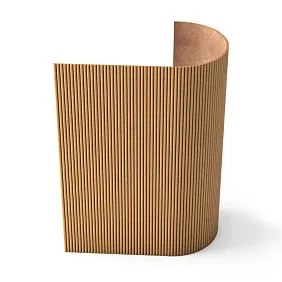
A base made of flexible material allows the panel to follow radius surfaces — curved walls, columns, niches with rounded corners. For a Minsk apartment with a non-standard layout or for a restaurant interior with architectural curves — this is a key option.
Solid wood panels
Highest category in material quality. Slats made of solid wood with visible natural wood grain texture. Oak, ash, walnut — each species carries its own visual character and tactile quality.
For Minsk interiors in modern classic style — oak in warm tones: honey, tobacco, natural light. For Scandinavian minimalism — whitewashed or natural ash. For neoclassicism in a private house — ash or oak toned to resemble dark walnut.
Important parameter: wood moisture content. For Minsk, with its moderately continental climate and variable humidity, the optimal moisture content of panels upon delivery is 8–12%. With higher moisture content, panels will dry out after installation and develop gaps.
MDF for painting
MDF slatted panels for painting — maximum freedom in color choice. Paint in any shade from any palette, achieve precise color matching to the overall interior concept. White slats on a white wall create texture without color — only light and shadow. This is the highest level of architectural restraint.
For Minsk interiors in a neutral palette — one of the most popular options. Gray, beige, cream, anthracite — all these shades harmonize organically with white.with polyurethane molding decorationon the ceiling.
Wall slatted panels for high-humidity areas
For kitchen areas and bathrooms — only panels with moisture-resistant coating. MDF without special treatment is unacceptable in these areas. Slats made of larch with oil coating or MDF with lacquered moisture-resistant finish are correct options. When purchasingwall slatted panelsfor wet areas, always clarify with the manufacturer the type of coating and its moisture resistance.
Slatted ceiling panels: special application logic
Ceiling slatted solutions are a separate field, with their own rules of proportion and installation requirements.
Full ceiling coverage
A full-area slatted ceiling is an expressive architectural solution for a living room in a private house or a spacious loft. Visually lowers the height, creates a sense of coziness, and introduces natural texture.
For Minsk apartments with ceilings of 2.7–2.8 m, this option is used with caution. A slatted ceiling 'eats up' a minimum of 50–80 mm of height (frame + gap). In a room with a low ceiling, this can create a feeling of pressure. Solution: narrow slats (30–40 mm) with a minimal gap (10–15 mm) — a more delicate surface that does not create excessive visual load.
Partial slatted covering
A slatted ceiling over a specific zone — over the dining table, over the sofa group, over the workspace — is an architectural 'dome' that unites the zone without physical partitions. In an apartment with an open layout, this is an elegant way to create a sense of separate rooms within a single volume.
Wooden ceiling 'island' over the dining table +molded cornicearound the perimeter of the main ceiling — this is a two-level solution that creates spatial depth without construction.
Slatted ceiling as an acoustic tool
Ceiling slats with gaps create a diffuse surface that scatters sound. For open-plan spaces with high echo — this is a partial but real acoustic solution. For more serious results — a sound-absorbing layer is placed behind the slats. But even without it, a slatted ceiling sounds noticeably better than smooth drywall.
Polyurethane stucco decor: a contemporary perspective
A conversation aboutfoam decor made of polyurethaneWe need to start with one question: why polyurethane, not plaster? This is not just a marketing question — it's a technical one, and the answer is specific.
Polyurethane vs. plaster: an honest comparison
| Parameter | Polyurethane | Gypsum |
|---|---|---|
| Weight | Lightweight (0.3–0.8 kg/m) | Heavy (2–5 kg/m) |
| Installation | Adhesive ± anchors | Professional work |
| Moisture resistance | High | Low |
| Fragility | Flexible, does not crumble | Brittle |
| Detailing | Good | Good |
| Price | Affordable | Significantly more expensive |
| Self-installation | Yes | Difficult |
Gypsum makes sense in two situations: when painting directly on the material is needed (gypsum holds artistic techniques better) and when 'historical authenticity' is crucial in a restoration project. In most modern interiors—both new builds and private homes—polyurethane works just as well visually and is significantly more practical to work with.
Cornices: from minimalism to empire style
Polyurethane Moldingsin the form of cornices covers the entire range of shapes—from a clean rectangular profile 40 mm wide to rich classical cornices with a projection of 150 mm and a full set of architectural elements.
For a Minsk interior depending on the style:
Scandinavian minimalism (popular in new builds): smooth cove 50–60 mm, without ornament. A clean diagonal line. Installs quickly, looks neat and modern.
Modern classic: cornice with a moderate profile—cavetto, fillet, ovolo. Width 80–120 mm. Creates an expressive horizontal line with good chiaroscuro.
Neoclassicism in private homes: cornice with a full set of architectural profiles—straight fillet, cyma, ovolo, cymatium. Width 120–180 mm. Requires ceilings from 3 meters.
Empire and baroque: only for special projects. Cornice projection 150–200 mm, rich ornamentation. In a standard-height apartment—overkill.
Moldings: The Ceiling That 'Speaks'
Ceiling moldings create a coffered effect without construction. This is one of the most affordable architectural techniques in terms of cost and labor. Properly placed moldings can transform an empty ceiling into a structured plane in just a few hours of work.
Placement rule: cells should be rectangular—not square (a square on the ceiling is perceived as tile) and not too narrow (a coffer should be at least 40–50 cm wide). The optimal width/length ratio of a cell is 1:1.3 to 1:2.
Wall moldings create a paneling effect—dividing the wall into rectangular fields with clear lines. This is a technique well-known in classical architecture: the lower plinth zone, the middle main zone, and the upper frieze. Reproducing this structure with moldings is a quick way to give a wall architectural dignity without construction.
Applied relief decor: accents in the right places
Relief overlays, medallions, decorative inserts—these are point tools. They are used for:
-
Ceiling rosette above a chandelier: a traditional and still effective technique
-
Overlay on a fireplace portal or shelf
-
Decorative medallion on an accent wall (combined with slatted paneling or on its own)
-
Framing a mirror in the hallway or bathroom
-
Door leaf decor in a classic interior
The main rule for applied elements: one accent in one place. Several overlays in one room is not decor, it's fuss.
Baseboards and pilasters
Polyurethane baseboards are a practical alternative to MDF analogues. They are not afraid of moisture, do not deform during wet cleaning, and accept any paint. For Minsk with its moderately humid climate, this is a real advantage in hallways, bathrooms, and kitchens.
Pilasters — decorative vertical elements on walls — are used in classic and neoclassic interiors to create a sense of load-bearing architecture. On the sides of a fireplace, in wall spaces between windows, on an accent wall in a symmetrical scheme — pilasters create solemnity and scale.
How to combine slatted panels and polyurethane stucco decor
This is the central question of the entire topic. Beautiful panels and beautiful cornices are not a guarantee of a beautiful interior. The guarantee is a system in which all elements are connected by a single concept.
Style as a coordinate system
The first step is to define the style. Not 'modern with elements of classic', but a specific direction:
-
Minimalism: minimum decor, emphasis on form and material
-
Scandinavian: natural materials, light palette, functionality
-
Modern classic: moderate decor, warm materials, strict proportions
-
Neoclassical: pronounced architectural structure, rich decor, symmetry
Each style has its permissible slat proportions, its own types of cornices, its own color logic. Mixing styles within one room is a source of chaos that neither quality materials nor expensive furniture can save.
Principle of proportional scale
The width of the slat and the scale of the cornice must be coordinated. Thin slats 30–40 mm with a 10 mm gap + a massive cornice with a 120 mm projection = a scale conflict. Wide slats 80–100 mm + a delicate 50 mm cove = the same thing, just in the opposite direction.
Approximate coordination table:
| Batten width | Optimal cornice width |
|---|---|
| 30–40 mm | 50–70 mm |
| 50–70 mm | 70–100 mm |
| 80–100 mm | 90–130 mm |
| 100+ mm | 120–160 mm |
Color strategies
Contrast strategy: battens in natural warm wood + white plaster decor. A classic pair that works flawlessly. The warmth of the wood and the purity of white mutually enhance each other.
Monochromatic strategy: battens and decor in one shade or close tones. The space speaks only through form. The most challenging path—requires absolute precision in shade selection. But the result is architectural purity that makes a strong impression.
Tonal contrast: dark battens + a dark but slightly lighter cornice. A rich 'cabinet-style' interior. For rooms with sufficient natural light and ceiling heights from 2.9 m.
Specific schemes for a Minsk interior
Scheme 1. Minimalism in a 50 sq. m studio apartment:
Vertical MDF battens 50 mm in white tone on the wall behind the sofa → smooth 55 mm cove molding in white around the perimeter → no additional elements. Result: a clean, airy space with architectural depth.
Scheme 2. Modern classic in a three-room apartment:
Vertical oak battens in a honey tone on the accent wall of the living room → cornice with a moderate 100 mm profile in white around the perimeter → ceiling moldings creating three rectangular fields → ceiling rosette above the chandelier.
Scheme 3. Neoclassical in a private house (ceilings 3.2 m):
Wide ash battens in a dark stain on the accent wall → cornice with a classic 140 mm profile in a cream tone → moldings create coffers on the ceiling → pilasters on the sides of the fireplace portal → ceiling rosette above the center of the room.
Scheme 4. Office in business style:
Horizontal dark oak slats on the wall behind the workspace → 90mm white geometric cornice → moldings divide the ceiling into three fields → no ornament. Strictness, concentration, professionalism.
How to compare texture, dimensions, and quality
When a buyer has several offers for slatted panels and stucco decor — a specific comparison tool is needed. Not 'like/dislike', but technical parameters.
For slatted panels: what to check
Material species. Exact name: 'oak', 'ash', 'MDF', 'larch'. Not 'wood', not 'natural material'.
Moisture content. 8–12% for interior use. The manufacturer must specify this value — if not, it's a reason to question.
Dimensions. Slat width, spacing (gap), overall panel thickness, length. All four values are needed for calculation and proportion assessment.
Surface type. 'Unfinished', 'sanded', 'stained + oil', 'varnish', 'paint-ready'. Each option requires a different finishing step.
Availability of a sample. A serious manufacturer sends a sample. Without a sample, it's impossible to assess the actual wood shade from a photo.
For polyurethane decor: what to look for
Material density. Quality polyurethane: 280–350 kg/m³. With density below 200 kg/m³, detailing suffers, ornament 'smears', sharp edges become rounded.
Profile dimensions. Width, height, projection — all three parameters. Without them, proportional suitability for the room cannot be assessed.
Surface readiness. Primed or not. A primed surface requires no additional processing — ready for painting immediately.
Element length. Standard: 1–2 meters. Long 2 m elements result in fewer joints. Joints are the weak point of any linear decor.
Sample as the main selection tool
If you are choosing a slatted panel made of natural wood — be sure to order a sample. Wood is a living material. The same 'natural' oak can look different depending on the cut (radial or tangential), surface treatment, and photography conditions. The sample must be evaluated in your room under your lighting — only then will you get an honest idea of how it will look on the wall.
What not to do when combining
This is the section that will save more than one renovation from costly reworks.
Do not mix stylistically incompatible elements
A dark oak slatted panel in loft style + a classic cornice with acanthus leaves = a conflict that is instantly visible and cannot be resolved except by dismantling. Style is a system, and violating its logic is always noticeable.
Don't skimp on the sample
Buying a large batch of slatted panels 'from a photo' without a sample is a gamble with a high probability of losing. Especially if you coordinated the color with a designer or matched it to a specific fabric or flooring. A sample costs a few hundred rubles and 3-5 days of waiting. A redo costs a month and significant money.
Don't ignore scale
A cornice 150 mm wide in a 12 sq. m room with a 2.6 m ceiling is too much. Slats 100 mm wide with a 30 mm gap in a narrow corridor 90 cm wide is also too much. The scale of the elements must correspond to the scale of the room. The rule: the smaller the room, the more delicate the elements.
Don't install without acclimatization
For wooden panels, acclimatization in the room is not a recommendation, but a requirement. 5-7 days under operating conditions. Without acclimatization, there is a risk of deformation after installation.
Don't forget about lighting
A slatted panel without lighting is one thing. A slatted panel with an LED strip in the gap is something completely different. Light passing through the gaps between the slats creates an expressive play of shadows. Lighting must be planned before installation - otherwise, laying cables will require partial dismantling of the finished structure.
Practical selection tips: a concise checklist
Before purchasing, go through this checklist:
-
Is the interior style clearly defined?
-
Is the surface area calculated with a 12–15% margin?
-
Has a panel sample been requested?
-
Has the wood moisture content been clarified?
-
Are the scales of the battens and cornice coordinated?
-
Is the lighting planned before installation?
-
Have the delivery conditions (packaging, timelines) been clarified?
-
Has one supplier been chosen for all elements, or have shades been coordinated between different suppliers?
Eight points. If the answer to each is 'yes'—you are ready to purchase.
FAQ: Questions from Minsk Buyers
Can IBuy slatted panels in Minskwith delivery directly from a Russian manufacturer?
Yes, this is a common practice. Most major Russian manufacturers of slatted panels offer delivery to Belarus. It's important to clarify customs clearance (if applicable), delivery cost and conditions, as well as the packaging of wooden products.
What is the visual difference between solid wood and MDF slatted panels?
From a distance — practically none, if both are properly finished. The difference is noticeable up close: solid wood shows the natural grain texture, while MDF has a uniform surface without a natural pattern. Tactilely: solid wood is warm and 'alive,' MDF is more neutral.
Is a cornice needed if the ceiling is low?
Yes — but a delicate one. A smooth 40–50 mm cove molding creates a finished look without 'eating up' height. Skipping the cornice on a low ceiling doesn't solve the problem — it simply leaves the wall/ceiling transition unfinished.
Can MDF slatted panels be painted over an existing coating?
Yes, with proper primer between layers. Repainting is one of the advantages of MDF: when changing the interior concept, you can change the color of the panels without dismantling. Water-based acrylic paint, preliminary sanding, and primer are sufficient conditions for quality repainting.
How long does it lastmolded decoration made of polyurethanein the interior?
Under normal operating conditions — indefinitely. Polyurethane is stable, does not rot, does not dry out, and does not crumble over time. The only thing that requires renewal is the paint: every 10–15 years depending on the intensity of use and the quality of the initial coating.
Can slatted panels be installed over wallpaper?
Technically possible with rigid, dense wallpaper. But the correct way is on a clean, leveled wall or on plaster. Wallpaper under panels can become damp over time and cause problems. Recommendation: remove wallpaper before installation.
Are dowels needed for mounting a cornice, or is glue sufficient?
For lightweight cornices (weight up to 0.5 kg/linear meter) — glue is sufficient on a properly prepared surface (dust-free, primed). For cornices with a projection over 80 mm and weight from 0.8 kg/linear meter — additional fastening with dowels every 40–50 cm is recommended.
How to calculate the number of moldings for a coffered ceiling in a 5×4 m room?
Calculate the coffered plan: for example, 3 rows × 2 columns of cells. Measure the total length of all moldings according to the plan, add 10% for cutting. Don't forget the perimeter cornice, which is calculated separately.
About the company STAVROS
Choosing finishing materials is a choice you will live with every day. A good interior does not tire: it is calm, proportionate, and well-thought-out. There are no random decisions in it — every element is in its place and works as part of a system.
The company STAVROS manufacturesSlatted wall panels buy in Minsk— made from oak, ash, and MDF arrays in various formats and designs, with precise geometric parameters and stable quality from batch to batch.molded decoration made of polyurethane— from delicate smooth covings to rich classic cornices, relief overlays, and millwork products — in a full range for any style and budget.
Technical consultation, samples before ordering, quantity calculation based on your room dimensions — standard STAVROS service. Delivery to Minsk with proper packaging of wooden products. Real characteristics, not just beautiful photos.
STAVROS — because an interior with architectural character starts with the right materials.