Article Contents:
- Why a plain TV background no longer works
- How a slatted panel on the wall behind the TV brings the composition together
- Slatted field across the entire width of the wall
- Zoned slatted field only behind the screen
- Slat material: what to choose for a TV wall
- Where wall molding enhances the effect — and how exactly
- Which specific molding elements are suitable for a TV wall
- How to combine a modern slatted plane and classical architectural graphics
- Three working combinations for different living room styles
- Lighting in the TV zone: why it needs to be planned before installation, not after
- How to hide cables: three working solutions
- TV zone proportions: how to calculate down to the millimeter
- Four TV zone scenarios with slatted panels and molding
- Living room in modern neoclassicism
- Living room in Scandinavian style
- Bedroom with a TV
- Study with a TV zone
- Overloaded TV zone mistakes: what ruins the result
- Slats without molding, molding without slats
- Mixing scales
- Cables after installation
- Overloaded with decoration
- Incorrect TV height
- Wrong choice of slat background tone
- How to choose elements in three steps
- Frequently Asked Questions
- STAVROS: A TV wall you don't want to hide behind a curtain
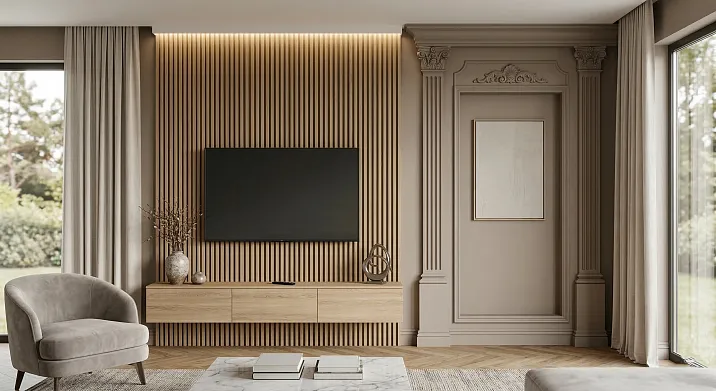
There is one wall in every living room that people are afraid to touch. The one with the TV. It would seem—hang the screen, connect the cables, push in the cabinet—and you're done. But it is this wall that becomes the main focal point in the room: sofas face it, guests' eyes fall on it, it defines the character of the entire space. And it is this wall that most often ends up resolved poorly, hastily, without architectural thought.
A gray painted plane with a black rectangle in the middle. Or—a dark panel with backlighting that everyone has already seen a thousand times. Or—built-in shelves with books and decor that try to 'fill' the wall but don't make it alive. None of these solutions answer the main question: how to make the TV zone part of the interior architecture, not just a functional wall with a screen?
A slatted panel for the TV on the wall combined with polyurethane wall molding—this is an answer that works. Not because it's trendy. But because it's architecturally sound: slats create rhythm and depth, molding creates boundaries and completeness, together they turn a functional wall into a full-fledged architectural backdrop. A wall you want to look at even when the TV is off.
This text is for those renovating a living room and wanting a TV wall with character. For those choosing between just a slatted panel and a slatted panel with architectural framing. For those tired of banal solutions and ready to think deeper.



Why the ordinary TV background stopped working
Think back to how many times you've seen the same thing: vertical slats from floor to ceiling, a black background behind them, and a TV in the middle. Three years ago, this was fresh. Today, it's a mass standard—recognizable, predictable, lacking individuality. The same effect as white brick wallpaper in the 2000s or a decorated pallet on the wall in the 2010s. The technique has been replicated so much that it has ceased to be a solution and become a template.
The problem isn't the slatted panel itself. The problem is how it's applied: without context, without boundaries, without architectural logic. Just slats from floor to ceiling across the entire width of the wall—that's not design. It's texture without an idea. A beautiful surface without meaning.
A real TV zone is not a background for a TV. It's an architectural composition where the TV takes its place as one of the elements, not as the sole purpose of the entire wall. And this is where the conversation begins about why, next to a slatted panel, you needPolyurethane wall molding.
Molding is not decoration. Molding is architectural graphics. A molding that frames the slatted field doesn't just create a frame—it creates a boundary between 'where the slats are' and 'where the wall is.' This boundary gives the TV zone completeness, scale, and visual weight. Without it, the slats simply 'float' on the wall—without a beginning, without an end, without architectural meaning.
It's precisely the combination of a slatted panel and molding that turns a wall with a TV into what can be called a TV zone with character.




How a slatted panel on the wall behind the TV brings the composition together
Let's start with the mechanics. A slat is a linear element. A row of parallel slats creates rhythm. Rhythm is the movement of the gaze. In a TV zone, this movement should be directed toward the TV—toward the center of the wall, toward the main focal point.
Vertical slats behind the screen create an upward movement—the gaze flies upward, and the TV becomes 'inscribed' in this vertical as an accent. Horizontal slats create a calm, wide movement—the wall appears wider, the TV becomes part of the horizontal rhythm. Diagonal slats are a rare but expressive technique for small TV zones in modern interiors: they create dynamism without heaviness.
slatted panel for the televisioncan occupy the entire width of the wall or only the area behind the screen. Let's honestly examine both options.
Our factory also produces:


Slatted wall covering across the entire wall width
Slats spanning from edge to edge is a bold gesture that works in spacious living rooms with long walls. Here, the slatted surface becomes an architectural backdrop for the entire zone, not just the screen. Against such a backdrop, the TV doesn't 'stand out'—it becomes part of the rhythm.
However, without molding, this technique creates one serious problem: a wall with slats from floor to ceiling across its entire width is perceived as an endless surface without stops. The eye glides over it and finds no point of reference. This is precisely wherepolyurethane wall moldingsmolding performs a key function: a horizontal molding at the level of the top edge of the console or screen divides the slatted surface into two registers—upper and lower. The upper one is the main one, with the TV. The lower one is secondary, utilitarian. This division creates a hierarchy that makes the wall legible and organized.
Get Consultation
Zoned slatted field only behind the screen
A slatted panel with a width equal to the screen width plus a forty-to-sixty centimeter offset on each side is an accent solution. The surrounding wall remains smooth; the slatted field acts as an architectural medallion: a highlighted zone, clearly defined and self-sufficient.
In this variation, molding works as a frame:Polyurethane wall decor—molding around the perimeter of the slatted field—transforms it from simply 'glued-on slats' into an architectural object. The frame sets the scale, creates completeness, and visually 'elevates' the significance of this zone. A TV within such a frame is not just a mounted screen, but an object in an architectural context.
Slat material: what to choose for a TV wall
The choice of material is not a decorative question. It is a question of durability, precision of execution, and possibilities for refinement.
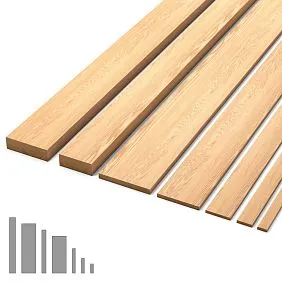
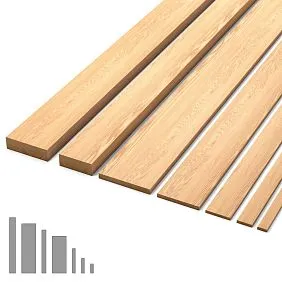
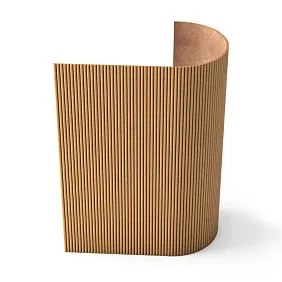
MDF is the optimal material for a TV wall in a living space. Perfectly smooth surface, precise geometry, ability to paint in any color—from warm walnut to matte anthracite.Lath MDF PanelsThey have no natural defects, do not react to changes in humidity in a living space, and accept painting without pore priming. Important: MDF for painting allows precise matching of the slat tone with the tone of polyurethane moldings—achieving a monochrome architectural surface without color mismatch.
Solid wood is a more expensive choice with a pronounced natural texture.Wooden slat panelsOak, ash, or walnut on a TV wall provide a sense of warmth and natural authenticity that MDF fundamentally lacks. But the scale of work is different: solid wood requires acclimatization, precise calculation of thermal expansion, and edge treatment. The result is a living, breathing surface you want to touch. It works especially well in combination with white polyurethane moldings: dark wood and white architectural graphics over it—a classic interior contrast with centuries of history.
Paintable lath panelsMDF with pre-applied white primer is the most versatile choice for those who want to precisely match the finish color to the rest of the interior. Painting is done after installation, already assembled, allowing joints to be painted over for a perfectly unified surface without visible seams.
Where wall molding enhances the effect—and how exactly
Molding on a TV wall is not the usual 'classical' story with curls and rosettes. It's about the modern use of polyurethane profiles as tools of architectural graphics. And here it's important to understand what exactly it gives to a wall with a slatted panel.
First—framing. Molding around the perimeter of the slatted field creates a frame. A frame is a boundary between 'relief' and 'background.' Without a frame, slats on a wall are texture. With a frame—it's an architectural object. The difference between them is like between a paint stain on canvas and a painting in a frame.
Second—hierarchy. A horizontal molding dividing the slatted surface into zones—upper under the screen and lower above the cabinet or floor—creates a readable vertical hierarchy. The eye understands where the main and secondary elements are.
Third—scale. Polyurethane molding has its own linear dimensions—width and profile projection. This size interacts with the slat width and creates a scale dialogue between the two elements. Properly chosen scale gives a sense of architectural coherence. Incorrect—a sense of randomness.
Fourth is shadow. The molding profile is a protruding surface that casts a shadow. On a slatted surface, which is itself rich in the play of shadows between the slats, molding adds another level of depth — larger, slower. This enhances the three-dimensional perception of the entire wall.
Which specific molding elements are suitable for a TV wall
Not everything in the polyurethane decor catalog is appropriate for a TV wall. The principle of strict selection is important here — only what works for architectural logic, not for mere decoration.
A straight frame molding around the perimeter of the slatted field is a mandatory basic element. Width is twenty to fifty millimeters depending on the scale of the slatted field. The profile is simple — one or two steps, without ornament. It is this detail that turns the slatted surface into an architectural object.
A horizontal molding belt at the level of the lower edge of the screen or the upper edge of the cabinet is a functional divider. It breaks up the tall slatted surface into zones. Used if the slats occupy the entire height of the wall — from the baseboard to the ceiling.
Corner blocks at the corners of the frame — this is a solution for a forty-five-degree joint without complex cutting. Standard rosette or square corner blocks are placed in each of the four corners of the frame and simultaneously create a visual accent at the points of direction change.
Ceiling molding at the junction of the TV wall and the ceiling — not mandatory, but desirable. It completes the vertical composition from the top just as the baseboard completes it from the bottom. Without this completion, the slats 'butt' against the ceiling technically — with it, they transition into the ceiling architecturally.
Full range of profiles and wall overlays — in the section polyurethane products. When selecting, pay attention to the profile width and projection — both parameters affect the shadow the molding casts on the slat surface.
How to combine a modern slatted plane and classical architectural graphics
Here's the main question that stops many: slats are modern, molding is classic. Are they even compatible? Won't the wall look contradictory?
The answer depends on what exactly you call 'molding.' Baroque garlands, acanthus leaves, putti—yes, they clash with modern slats. But those aren't the elements we're talking about. Polyurethane molding with a clean geometric profile isn't 'classic' in the museum sense. It's an architectural line. Horizontal. Vertical. Frame. These elements have existed in architecture for thousands of years precisely because they work outside stylistic eras: the eye always reads a frame as a boundary, a horizontal line as a divider, a vertical line as a support.
A modern minimalist molding profile—thirty to forty millimeters, two steps without ornamentation—isn't 'classic' in the decorative sense. It's architectural in a functional sense. And it's precisely this profile that works perfectly with slat panels in a modern interior.
The style conflict doesn't arise when slats meet molding. It arises when molding with ornamentation that doesn't match the spirit of the interior is chosen. A thin, clean profile and a laconic slat—that's modern classic, not a contradiction.
Three working combinations for different living room styles
Modern neoclassicism. MDF slats in a warm white or cream tone. A polyurethane frame molding in the same tone—a profile with a bead, thirty to fifty millimeters. Square corner blocks. TV in the center. Below it—a cabinet matching the slats or with a contrasting countertop. This is a solution that looks expensive and finished. It's not 'overloaded' by decor, nor impoverished by minimalism.
Scandinavian style. Vertical solid oak slats in a natural light tone. White frame molding with a thin profile, twenty to thirty millimeters. The frame fixes the slatted field on a white wall. The contrast of natural wood and a white architectural line is a classic of Scandinavian interiors. No corner blocks, no additional belts—just the frame and the slats.
Modern eclecticism. Horizontal MDF slats in matte anthracite. White moldings as a contrasting accent: a frame around the perimeter of the slatted field and a horizontal divider. Dark slats and white architectural graphics on top—this is an interior contrast that creates tension and modernity.TV area with slatted panelsIn such an execution, it works as the main visual accent of the entire living room.
Lighting in the TV zone: why it needs to be thought out before installation, not after
TV wall lighting is not just a 'beauty' option. It is a functional element that affects viewing comfort, texture perception, and the overall atmosphere of the area. And it must be planned before the first slat is installed—because cables cannot be run later without dismantling.
LED strip in the gaps between slats is the most organic way to light a slatted surface. Light emerges through the gaps and creates a soft, diffused glow from within the slatted field.Slatted panels with lighting— is one of the most requested features for TV zones. The effect: the slats glow, the boundary between slat and gap disappears, and the surface gains an almost theatrical depth.
Perimeter lighting along the frame molding is the second level of the lighting solution. An LED channel behind the molding, attached to the wall, directs light onto the surface of the slats and creates a glowing effect along the frame's contour. The TV is framed not just by molding, but by a luminous architectural line.
An important technical point: for lighting in slat gaps, a diffuser or a strip with a wide dispersion angle is needed—otherwise, you'll see a dotted line of individual LEDs, not a uniform glowing line. LED type: warm white three thousand Kelvin for warm wood, neutral white four thousand Kelvin for cool tones and lacquered MDF.
A dimmer is a must. The TV zone is used in different lighting scenarios: daytime viewing with open curtains, evening viewing in a dark room, ambient lighting without viewing. A dimmer allows you to change the lighting intensity for each scenario without replacing equipment.
How to hide cables: three working solutions
Cables are the Achilles' heel of any TV zone. A beautiful slatted wall with dangling HDMI and power cords instantly loses half its value. There are three solutions, and each requires planning before installation.
First—cable channel in the wall. Before installing the slatted surface, vertical channels for cables are chased into the wall: one for power, one for HDMI and other signal cables. Outlets and connectors are routed to a niche behind the TV or to the console. After installing the slats, the cables are hidden behind the surface—nothing is visible from the outside.
Second—hidden channels in the slatted frame. If slats are mounted on a wooden or metal frame with a gap from the wall, cables are routed horizontally and vertically within this gap. Outlets are made at the required points through the gaps between the slats. This method does not require chasing walls, but it does require precise planning even before the frame is installed.
Third — a decorative cable duct made of polyurethane molding. A vertical molding-pilaster along the edge of the slatted field with a hollow cross-section — and cables run inside it. Externally, it looks like an architectural element, functionally — like a cable duct. This is the most aesthetic solution for those who want a clean surface without opening the walls.
TV zone proportions: how to calculate down to the millimeter
Proportion is what separates 'correct' from 'almost correct'. In the TV zone, incorrect proportions are immediately visible: the slatted field is too narrow and 'cramped' around the screen, or too wide and 'diluted'. Molding too thick — feels oppressive. Too thin — unnoticeable.
Rule for slatted field width: the width of the field should be at least the width of the screen plus forty to eighty centimeters on each side. For fifty to fifty-five inch screens, this is approximately one hundred twenty to one hundred forty centimeters plus eighty on each side — totaling about two meters eighty to three meters width of the slatted field. If the wall is wider, the field can occupy the entire width with a transition to the side walls or stop several tens of centimeters from the corners.
Height rule: the height of the slatted field is determined from the floor level or the top edge of the cabinet to the ceiling level or the top edge of the decorative molding. In living rooms with ceilings above two eighty, a slatted field from floor to ceiling is organic. In rooms with lower ceilings — the field is limited at a level of one hundred eighty to two hundred centimeters from the floor with a horizontal molding on top.
Molding rule: the width of the frame molding should be from one third to one half of the slat width. Slats forty millimeters — molding fourteen to twenty millimeters. Slats sixty millimeters — molding twenty to thirty millimeters. Violation of this ratio is the main cause of scale dissonance.
Screen height rule: the center of the screen should be at a height of one hundred ten to one hundred twenty centimeters from the floor when viewing while seated. This is not a designer's whim, but physiology: the neck in a neutral position when looking at the screen. If there is no cabinet and the TV is mounted directly to the slatted panel, the height is calculated from the lower edge of the screen, not from the center.
Four scenarios for TV zones with slatted panels and molding
Theory is good. Practice is more convincing.
Living room in modern neoclassicism
Wall three meters wide, ceiling height two seventy. Slatted panel two meters eighty wide, floor to ceiling. MDF slats in matte cream tone, slat width forty millimeters, gap eight millimeters. Molding frame around the perimeter of the panel — thirty-five millimeters with a bead, matching the slats. Corner square blocks forty by forty millimeters in the corners of the frame. Horizontal molding at a height of thirty-five centimeters from the floor — separates the baseboard zone from the main panel. TV on a bracket in the center of the panel. TV console matching the slats. Warm white LED lighting in the gaps of the lower third of the slatted panel. Wall to the left and right of the slatted panel — smooth, painted in the same cream tone.
Result: a monochrome architectural wall with soft relief, subtle bottom lighting, and a clear molding outline. The TV is at the center of the architectural object, not just on a wall.
Living Room in Scandinavian Style
Wall three and a half meters wide. Slatted panel two meters twenty wide, from the console level to the ceiling. Solid oak slats in a natural light tone with matte oil — vertical, slat width thirty millimeters, gap ten millimeters. White polyurethane molding frame twenty-five millimeters — clean rectangular profile without ornament. No corner blocks: joints at forty-five degrees. White wall around the slatted panel. Console in white. Frameless TV in the center.
Contrast of warm oak and white architectural line — and nothing extra. This is the Scandinavian principle: wood and white as the foundation, pure geometry as the only decoration.
Bedroom with TV
A bedroom differs from a living room fundamentally: here the TV is not the main object, but an additional one. The slatted wall behind the bed serves as a headboard. The TV is integrated into it as one of the elements.
slatted panels in the bedroomBedrooms with a TV require a special approach to proportions: the slatted panel occupies the entire width of the headboard — from wall to wall. The molding frame defines the panel as an independent architectural element. The TV is integrated into the upper third of this panel. The lower two thirds are slats without a screen, only relief and lighting.
A fundamental point for the bedroom: lighting must be only dimmable and warm — three thousand Kelvin or lower. Cold light in the bedroom disrupts falling asleep, and unmanaged lighting without a dimmer makes a bedroom atmosphere impossible.
Home office with TV zone
A home office requires architectural restraint. HereSlatted panels in interior designThey don't work as atmospheric decor, but as a functional background: a wall with slats behind a desk or a video conferencing area creates a professional yet lively backdrop.
For a study: wide horizontal slats sixty to eighty millimeters with a twenty-millimeter gap — a calm, substantial rhythm. A polyurethane molding frame matching the slats — strict, without ornament. No bottom lighting — only spotlights from above for even surface illumination. A television for video conferences in the upper part of the slatted field.
It is in the study that this combination is especially valuable: the slatted panel removes the 'office' cold look of the video background and creates a warm architectural context, which reads on the video call screen as a professional, well-appointed work environment.
Mistakes of an overloaded TV zone: what ruins the result
No conversation about a TV zone will be honest without analyzing mistakes. They are encountered more often than correct solutions.
Slats without molding, molding without slats
The first mistake is a half-hearted solution. Either slats without architectural framing, or moldings without a slatted background. Both options separately are weaker than together. Slats without a frame are texture without completion. Moldings without a slatted background are decor on a bare wall, which looks random.
Mixing scales
Narrow slats twenty millimeters and a massive molding eighty millimeters. Or wide slats eighty millimeters with a thin molding fifteen millimeters. Scale dissonance is a violation of proportion that the brain perceives as an error, even if a person cannot articulate it. They simply feel that 'something is wrong'.
Cables after installation
The most painful mistake is dealing with cables after the slatted wall is already installed. Result: visible cables along the slats, plastic cable channels over the decor, ruining the entire aesthetic. Cables are the first consideration when designing a TV zone, not the last.
Over-decorated
Frame plus horizontal molding plus vertical pilaster moldings plus corner blocks plus ceiling cornice plus lighting plus decorative shelves. All of this on one wall—it's not rich, it's heavy. Decor on a TV wall works on pauses: a clean slatted surface is a pause, molding is an accent. Fill all pauses with decor—and the accents disappear.
Incorrect TV height
A screen at one and a half meters from the floor or higher is a mistake made for a 'beautiful picture.' In practice, when watching while seated, you have to tilt your head back, which strains the neck. The center of the screen should be one hundred to one hundred ten centimeters from the floor for a sofa zone. This is a mandatory condition that cannot be violated for the sake of wall proportions.
Incorrect choice of slat background tone
Dark-toned slats in a small living room—and the wall starts to 'loom.' Especially critical in rooms lacking natural light. For such spaces, warm neutral tones: cream, linen, light gray, natural oak in light species. Dark slats are for large spaces with good natural light, where a dark TV wall creates proper contrast, not crampedness.
How to choose elements in three steps
For those who have already decided—a short algorithm without extra words.
Step one: determine the style and tone. Modern neoclassicism—cream or white MDF slats with matching molding. Scandinavian—natural wood with white molding. Eclectic—dark slats with white moldings.
Step two: calculate the proportions. Width of the slatted field, height, screen placement, molding size. All on paper or in a simple sketch before purchasing materials.
Step three: plan cables and lighting before installation. Where cables run, where outlets are, whether lighting is needed and what type. Answers to these questions determine the frame installation technology.
Full rangeof slatted panelsfor walls — in the catalog, with width, material, and finish parameters.moldings, cornices, and baseboardsmade of polyurethane with profiles of different widths and projections — a separate section for selecting framing elements.Polyurethane appliqués— corner blocks, outlets, and decorative details for accent points of the composition.
Detailed guide toinstalling slatted panels on the wall— with a step-by-step breakdown of the frame, fasteners, thermal gaps, and finishing elements.How to install slatted panels— all in the same material.
Frequently asked questions
Is a frame needed for installing a slatted panel on a TV wall?
Depends on the wall's evenness and the presence of hidden wiring. If the wall is even and cables are already in the wall — slats can be mounted with adhesive and anchors directly on the surface. If you need to hide cables in the space behind the slats or the wall is uneven — a frame is mandatory. The frame provides a uniform plane and hidden cable space.
Can MDF slat panels be installed behind a TV without a frame?
Yes, if the wall is even — with a deviation of no more than three millimeters over two meters. The slats are glued with acrylic mounting adhesive and additionally secured with finishing nails. After installation, paint the assembly to fill the gaps between the slats and the wall.
Can a TV be mounted directly on an MDF slat panel?
MDF is not a load-bearing material for heavy loads. The TV bracket must be secured to the wall or to the frame's load-bearing elements through the slat body — all the way through, with anchors into concrete or brick. Do not attach the bracket only to the MDF — the slat will not hold the screen's weight under vibration.
How to determine the appropriate slat width for a TV wall?
Base it on the wall width and screen size. For walls up to three meters — slats thirty to forty millimeters wide. For walls three to four meters — forty to sixty millimeters. The wider the wall and larger the screen, the wider the slat can be. A small pattern on a wide wall creates 'busyness,' a large pattern on a narrow wall creates heaviness.
How much light warmth is needed for TV zone lighting?
For atmospheric evening viewing — a strip with a power of four to six watts per meter with a dimmer. For active lighting that works even in daylight — eight to ten watts per meter. Warm white three thousand Kelvin — for wood and warm interiors. Neutral white four thousand Kelvin — for white MDF and cool neutral interiors.
What is the service life of polyurethane moldings in a residential space?
Under normal residential conditions — twenty to thirty years without changes in shape or color, provided they are painted properly. Polyurethane does not yellow from ordinary household lighting, does not deform from room temperature, and requires no maintenance.
Should the wall be primed before installing a slatted panel?
Yes, if the wall is plastered or puttied. Priming improves the adhesion of the mounting adhesive and prevents the slat from peeling off the surface due to humidity changes. Use a deep-penetration acrylic primer, one coat. Without primer, on a dusty or chalky surface, the adhesive will not provide reliable bonding.
STAVROS: A TV wall you won't want to hide behind a curtain
A TV zone is not a design problem. It's an opportunity. A wall that everyone always sees can either be a dull backdrop for the screen or an architectural statement that brings the entire living room to life. A slatted panel for the TV on the wall and polyurethane wall molding together achieve exactly this result: rhythm, depth, completeness, and individuality.
STAVROS producesRafter panelsmade from solid wood and MDF with precise geometric parameters and a finish for painting or with a final tone. STAVROS offers a full rangeof moldings, cornices, and polyurethane decorfor creating architectural framing for a TV zone of any scale and style.
The TV will turn off. The wall will remain. Let it be worth looking at. STAVROS knows how to do it.