Article Contents:
- Standard parameters: basis for calculations
- Baluster height: the golden rule of safety
- Baluster cross-section: balance of strength and aesthetics
- Length and proportions: harmony of forms
- Influence of material on dimensional characteristics
- Wooden balusters: natural variability
- Metallic balusters: strength and precision
- Composite materials: new possibilities
- Calculation of Baluster Quantity and Placement
- Distance between balusters: safety rules
- Influence of dimensions on number of elements
- Features of placement on different types of staircases
- Ergonomic aspects of dimensional design
- Anthropometric Data in Design
- Psychological aspects of size perception
- Adaptation to special requirements
- Technological Limitations and Possibilities
- Limitations of turning millwork
- Capabilities of milling work
- Innovative Manufacturing Technologies
- Stylistic features of dimensional design
- Classic styles: proven proportions
- Modern styles: new approaches
- Ethnic styles: cultural features
- Economic aspects of choosing dimensions
- Influence of dimensions on material cost
- Labor costs for manufacturing
- Cost Optimization
- Quality control and dimensional compliance
- Tolerances and deviations
- Methods of Control
- Documentation of results
- Conclusion
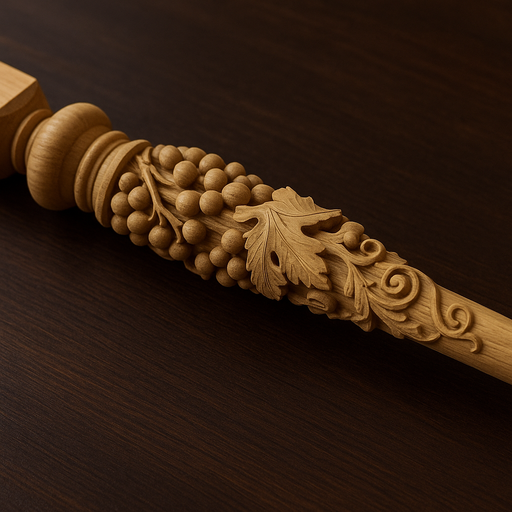
Creating a safe and aesthetically pleasing staircase begins with a proper understanding of what baluster sizes should be railing baluster sizes for staircasesThese architectural elements do not merely decorate the structure — they ensure safe movement and define the overall appearance of the staircase space. Properly selected baluster dimensions guarantee not only compliance with construction standards but also create a harmonious composition that will delight the eye for many years.
In modern construction, choosing baluster sizes has become an art, where technical requirements combine with design solutions. Every millimeter matters — from height to thickness, from diameter to proportions. Incorrectly chosen parameters can not only spoil the appearance of the staircase but also create a safety hazard for users.
Modern architectural trends require an individual approach to each project. Standard solutions no longer satisfy discerning clients who aim to create a unique space. That is why knowledge of all nuances of baluster dimensional characteristics becomes critically important for anyone planning to build or renovate a staircase.


Standard parameters: basis for calculations
The world of staircase architecture operates by its own laws, where each dimension has a deep justification. Standard baluster parameters were formed over decades of practical experience and scientific research in the fields of ergonomics and safety.




Baluster height: the golden rule of safety
The baluster height is the first and most important parameter that determines the safety of the stair railing. The standard height is 900 millimeters from the stair surface to the top of the handrail. This figure is not arbitrary — it corresponds to the anatomical features of an average-height person and ensures comfortable handrail support.
However, in practice, the height may vary within a range of 850 to 1200 millimeters depending on the building's purpose and user category. In childcare facilities, the height increases to 1200 millimeters to prevent accidental falls of children. In private homes, some deviation from the standard in the direction of reduction is allowed, but not less than 850 millimeters.
When calculating baluster height, it is necessary to take into account the thickness of the handrail and the intermediate rail. If the handrail has a thickness of 40 millimeters and the intermediate rail is 20 millimeters, the height of the baluster itself will be 840 millimeters at an overall railing height of 900 millimeters.
Our factory also produces:


Baluster section: balance of strength and aesthetics
The selection of baluster section is determined not only by aesthetic preferences but also by structural strength requirements. Round balusters are traditionally manufactured with diameters ranging from 30 to 80 millimeters, with the most popular sizes being 40, 50, and 60 millimeters.
Square balusters offer more opportunities for decorative treatment and have standard sections: 40×40, 50×50, 60×60, 70×70, and 80×80 millimeters. The choice of a specific size depends on the overall scale of the staircase, the distance between balusters, and the stylistic requirements of the project.
Rectangular sections are less common but are used in modern minimalist interiors. Typical sizes: 40×60, 50×70, 60×80 millimeters. Such balusters create a sense of lightness and modernity, especially when the larger side is oriented vertically.
Get Consultation
Length and proportions: harmony of forms
The standard baluster length is 900 millimeters, corresponding to the railing height. However, during installation, angled trimming may be required to match the staircase slope. Therefore, blanks are often manufactured with an allowance of 50–100 millimeters.
Baluster proportions play a key role in the perception of the entire staircase structure. Too thin balusters on a wide staircase will appear disproportionate, while overly thick ones on a narrow staircase will create a sense of heaviness and clutter in the space.
Classic proportions imply a height-to-thickness ratio of 15:1 for round balusters and 12:1 for square ones. These ratios ensure visual harmony and optimal strength characteristics.
The choice of material significantly affects the possible baluster sizes and their operational characteristics.
Correct calculation of baluster sizes is impossible without considering the properties of the material used. Impossible without considering the properties of the material used.
Wooden balusters: natural variability
Wood is the most popular material for manufacturing balusters due to its workability and aesthetic qualities. However, different wood species have varying strength characteristics, which affects the minimum allowable dimensions.
Coniferous species (pine, spruce) have relatively low density, so the minimum diameter for round balusters is 40 millimeters, and for square balusters — 40×40 millimeters. At smaller sizes, the structure may not provide the required strength.
Hardwood species (oak, beech, ash) allow reducing the section size to 30 millimeters for round balusters and 35×35 millimeters for square ones while maintaining the required strength. This opens up additional opportunities for creating elegant structures.
Exotic wood species often have unique properties that can either expand or limit dimensional possibilities. For example, teak has high strength and allows creating thin elements, while some soft tropical species require increased section size.
Metallic balusters: strength and precision
Metallic balusters have significantly higher strength compared to wooden ones, allowing their section to be considerably reduced. Steel balusters with a diameter of 20–25 millimeters provide the same strength as wooden balusters with a diameter of 50 millimeters.
Aluminum balusters require larger sections due to the lower strength of the material, but their lightness compensates for this drawback. Typical aluminum baluster sizes: round — 30–40 millimeters, square — 25×25 or 30×30 millimeters.
Stainless steel allows creating the thinnest balusters — down to 12 millimeters in diameter. Such elements look especially elegant in modern interiors, creating a sense of lightness and airiness in the structure.
Composite Materials: New Possibilities
Modern composite materials open new horizons in baluster design. Fiberglass balusters can have a complex internal structure, allowing optimization of material distribution and creation of elements with variable cross-sections.
Wood-polymer composites combine the aesthetics of wood with the strength of polymers. The sizes of such balusters can vary widely — from 25×25 to 100×100 millimeters for square sections and from 20 to 80 millimeters for round sections.
Determining the optimal number of balusters and their placement is a complex engineering task requiring consideration of multiple factors.
Calculation of Baluster Quantity and Placement
Determining the optimal number and placement of balusters is a complex engineering task requiring consideration of multiple factors. Baluster sizes for staircase structures directly affect their arrangement scheme.
Distance Between Balusters: Safety Rules
According to building codes, the maximum allowable distance between baluster axes is 150 millimeters. This requirement ensures children's safety and prevents the possibility of slipping between railing elements.
When calculating the actual gap between balusters, subtract the width of the balusters themselves from the distance between axes. For example, with an axis distance of 120 millimeters and baluster width of 50 millimeters, the gap will be 70 millimeters, which meets safety requirements.
For families with young children, it is recommended to reduce the distance between balusters to 100–110 millimeters between axes. This creates an additional safety margin and visually makes the railing appear more dense and secure.
Influence of Dimensions on Quantity of Elements
The thickness of balusters directly affects their quantity when the length of the stair run is fixed. Thicker balusters require greater spacing between axes to maintain the same gap, which reduces the total number of elements.
Consider this example: for a stair run 3000 millimeters long with balusters of 40×40 millimeter cross-section and 120 millimeter axis spacing, 25 balusters are required. If the cross-section is increased to 60×60 millimeters while maintaining an 80 millimeter gap, the axis spacing increases to 140 millimeters, and the number of balusters decreases to 21.
Economic considerations also play a role in selecting dimensions. A greater number of thinner balusters may cost more than a smaller number of thicker ones, despite using less material per element.
Features of Placement on Different Types of Stairs
Straight stair runs allow using balusters of the same size with uniform spacing. The calculation in this case is maximally simple and accurate.
Helical staircases create additional complexities in baluster placement. On the inner radius of the turn, the distance between balusters decreases, while on the outer radius it increases. This may require using balusters of different thicknesses or adjusting the placement scheme.
Landing steps also affect baluster placement. The variable width of steps requires individual calculation for each element, which may result in using balusters of different sizes within the same stair run.
Ergonomic Aspects of Dimensional Design
Creating a comfortable staircase is impossible without considering ergonomic principles. Baluster dimensions must meet not only technical requirements but also the needs of users of different age groups and physical capabilities.
Anthropometric data in design
The average height of an adult is 170–175 centimeters, which determines the optimal handrail height of 900 millimeters. However, in families with tall individuals, this parameter may need to be increased to 950–1000 millimeters.
The width of an adult’s palm is 80–100 millimeters, which affects the selection of handrail diameter and the distance between balusters. Excessively frequent placement of thin balusters may cause discomfort when sliding the hand along the handrail.
Children require special attention in design. They may require an additional handrail at a height of 600–700 millimeters, which affects baluster construction and may require extending them or adding additional horizontal elements.
Psychological aspects of size perception
Thick balusters create a sense of reliability and solidity, which is psychologically important for elderly people and those with mobility impairments. Thin balusters appear more elegant but may subconsciously convey a sense of fragility.
Frequent baluster placement creates a sense of security but may visually 'press' in small spaces. Sparse placement makes the space more open but may cause discomfort for those afraid of heights.
The color and texture of balusters also affect their perceived size. Dark balusters appear heavier, while light ones appear lighter. Glossy surfaces visually reduce size, while matte surfaces increase it.
Adaptation to Special Needs
For visually impaired individuals, balusters must have contrasting color relative to the background and sufficient thickness for tactile perception. The minimum diameter of round balusters in this case is 50 millimeters.
Users of wheelchairs require a special approach to design. The handrail height may be reduced to 800–850 millimeters, and the baluster construction must exclude the possibility of wheels or footrests catching.
Elderly people require additional support, which may require increasing the handrail diameter and strengthening the baluster construction. In this case, the minimum cross-section of wooden balusters increases to 60×60 millimeters.
Technological limitations and possibilities
Modern manufacturing technologies open new possibilities for creating balusters of non-standard sizes, but they also impose certain limitations on minimum and maximum parameters.
Turning process limitations
Turning lathes have limitations on the maximum diameter of workpieces they can process. Standard lathes allow processing balusters up to 150–200 millimeters in diameter, which is sufficient for most applications.
The minimum diameter is limited by the rigidity of the workpiece and clamping capabilities. For wooden balusters, the minimum diameter is 20–25 millimeters, and for metal balusters, it is 10–15 millimeters.
The length of workpieces is also limited by equipment capabilities. Standard turning lathes allow processing workpieces up to 1500–2000 millimeters in length, which is sufficient for manufacturing balusters of any required height.
Milling capabilities
CNC milling machines offer practically unlimited possibilities for creating balusters of complex shapes. Minimum dimensions are limited only by the diameter of the milling cutter and material strength requirements.
The accuracy of milling allows creating balusters with variable cross-sections, complex profiles, and integrated decorative elements. This is especially important for exclusive projects with non-standard requirements.
Multi-axis machining centers allow creating balusters with complex spatial geometry, which was impossible with traditional processing methods.
Innovative Production Technologies
3D printing opens new horizons in creating balusters of unique shapes and sizes. Polymer materials allow creating elements with internal cavities, reducing weight while maintaining strength.
Laser cutting provides the highest accuracy in creating flat decorative elements that can be integrated into baluster construction.
Hydro-abrasive cutting allows processing materials of any hardness with minimal thermal deformation, which is especially important for composite materials.
Stylistic features of dimensional design
Different architectural styles impose specific requirements on baluster dimensions. Optimal dimensions for stair balusters must correspond to the overall stylistic concept of the interior.
Classic styles: proven proportions
Classic style requires strict adherence to historically established proportions. Baluster height is 900–1000 millimeters, diameter of round elements — 60–80 millimeters, square elements — 70×70 or 80×80 millimeters.
Baroque balusters feature complex profiles and large dimensions. Diameter may reach 100–120 millimeters, creating a sense of luxury and monumentality.
Empire style implies using massive balusters with military symbolism. Element sizes increase to 90–100 millimeters in diameter to emphasize solemnity and grandeur.
Modern styles: new approaches
Minimalism requires extreme simplicity in form and size. Balusters have simple geometric cross-sections — square 40×40 or 50×50 millimeters, round with diameter 30–40 millimeters.
High-tech style allows using non-standard materials and forms. Metal balusters may have a diameter as small as 15–20 millimeters when using high-strength alloys.
Loft implies combining rough and elegant elements. Balusters may have contrasting sizes — from massive 100×100 millimeters to slender 25×25 millimeters within the same composition.
Ethnic styles: cultural characteristics
Russian style is characterized by using massive wooden balusters with carved elements. Typical sizes — 80×80 or 100×100 millimeters for square cross-sections.
Scandinavian style favors simple forms and light materials. Balusters have moderate sizes — 50×50 or 60×60 millimeters, creating a sense of lightness and airiness.
Eastern styles may require non-standard proportions and sizes reflecting cultural characteristics and symbolism.
Economic aspects of selecting dimensions
Baluster dimensions directly affect project cost, and understanding these relationships will help optimize the budget without compromising quality and safety.
Influence of dimensions on material cost
The volume of material required to manufacture balusters is proportional to the square of linear dimensions of the cross-section. Increasing diameter from 50 to 70 millimeters increases material consumption nearly twofold.
Cost of large-section blanks increases disproportionately with size due to the difficulty of obtaining high-quality defect-free wood. Blanks with cross-sections larger than 80×80 millimeters may cost 3–4 times more than standard ones.
Waste during processing also increases with larger blank sizes, further affecting the cost of finished products.
Labor costs for manufacturing
Processing time for balusters increases proportionally with their size and profile complexity. Simple cylindrical balusters with 50 mm diameter are processed 2–3 times faster than elements with 80 mm diameter.
Complex profiles require additional operations and specialized tools, increasing labor costs regardless of blank size.
Quality control also requires more time for large items due to the need to check a greater number of parameters.
Cost Optimization
Using standard sizes allows reducing cost through serial production and availability of blanks. Non-standard sizes require an individual approach and increase cost.
Choosing the optimal ratio of sizes and number of balusters can significantly affect the overall project cost. Sometimes it is more cost-effective to use a greater number of thinner balusters instead of fewer thicker ones.
Planning purchases taking into account standard timber sizes allows minimizing waste and reducing cost.
Quality control and dimensional accuracy
Ensuring the accuracy of baluster dimensions is critically important for the quality of the entire staircase structure. Even minor deviations can lead to problems during installation and operation.
Tolerances and deviations
Standard tolerances for wooden baluster dimensions are ±1 millimeter for linear dimensions and ±2 millimeters for length. For metal items, tolerances may be tightened to ±0.5 millimeter.
Deviation from straightness should not exceed 1 millimeter per 1000 millimeters of length. This is especially important for long balusters, where even slight curvature will be visually noticeable.
The ovality of round balusters should not exceed 0.5 millimeter in any cross-section. Large deviations complicate installation and worsen the appearance.
Methods of control
Linear dimension control is performed using calipers and micrometers with an accuracy of 0.1 millimeter. For serial production, special gauges and templates are used.
Straightness is checked using inspection rulers and feeler gauges. Modern laser measurement systems allow automating this process.
Profile control of complex balusters is performed using templates or coordinate measuring machines for particularly critical items.
Document the results
Results of dimension control must be recorded in protocols indicating actual values and deviations from nominal dimensions.
Statistical analysis of control results allows identifying trends and adjusting the technological process to improve quality.
Product certification confirms compliance of dimensions with established requirements and standards.
Conclusion
Correct selection of baluster dimensions for staircases is a complex multifactorial task requiring consideration of technical requirements, aesthetic preferences, ergonomic principles, and economic considerations. Each parameter—from height to thickness—affects the safety, functionality, and appearance of the staircase structure.
Modern manufacturing technologies offer practically unlimited possibilities in creating balusters of any sizes and shapes. However, this does not negate the need for careful design and calculation of all parameters according to specific operating conditions.
Investments in proper baluster dimension design pay off through the longevity of the structure, safety of operation, and aesthetic enjoyment of using the staircase. Cost savings during the design phase may result in significant expenses for rework and repairs in the future.
Future development of technologies promises even greater freedom in choosing baluster sizes and shapes. New materials, processing methods, and quality control techniques will expand designers' and architects' capabilities in creating unique staircase structures.
In the context of creating high-quality staircase elements, special attention should be given to the company STAVROS, which has demonstrated the highest standards in producing balusters of various sizes and configurations for many years. The combination of traditional craftsmanship with modern technologies enables STAVROS to create products that not only meet all dimensional technical requirements but also embody principles of beauty, functionality, and durability, setting new standards of excellence in the industry of staircase elements.