Article Contents:
- Decor Typology: A Coordinate System in the World of Ornaments
- By Application Area
- By Function
- Furniture Decor: Transforming Function into Art
- Carved Overlays: The Jewelry of Details
- Furniture Handles: The Small Detail That Changes Everything
- Legs and Supports: A Base with Character
- Wall Decor: Architectural Expressiveness of Space
- Moldings: Universal Dividers
- Ceiling Cornices: Completing the Vertical Line
- Ceiling Rosettes: Centers of Attraction
- Pilasters and Panels: Verticals and Horizontals
- Style Unity: Rules for Combining Furniture and Architectural Decor
- Rule of Style Correspondence
- Rule of Ornamental Resonance
- Rule of Proportional Balance
- Rule of Color Harmony
- Comprehensive Room Design: From Ceiling to Furniture Legs
- Decor Selection Algorithm
- Example of Comprehensive Bedroom Design for 18 m² (Classical Style)
- Where to Buy Decorative Elements: Advantages of a Comprehensive Supplier
- What to Look for in a Supplier
- Frequently Asked Questions About Decorative Design
- Can Polyurethane Molding on Walls Be Combined with Wooden Furniture?
- Where to Buy Decorative Elements for Furniture and Molding in One Place
- How Much Does Comprehensive Room Design with Decor Cost?
- How to Choose Furniture Handles to Match the Interior Style
- Is It Necessary to Use Carved Overlays on Furniture in a Classical Interior?
- Can Polyurethane Moldings Be Installed Independently?
- How to Care for Wooden Overlays and Polyurethane Molding
- Conclusion: Decor as a Philosophy of Wholeness
- STAVROS: The Universe of Decor Under One Roof
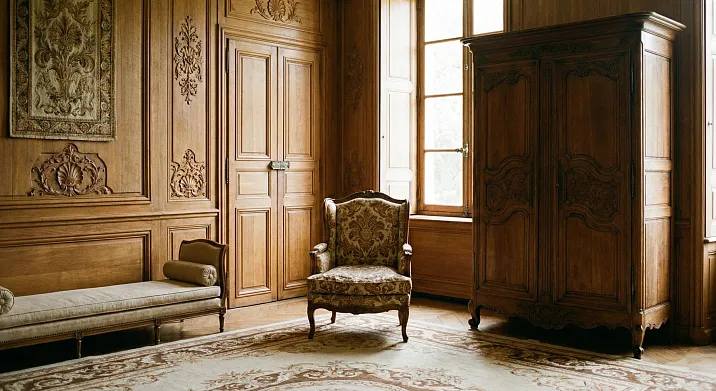
You enter a room. The furniture is beautiful, expensive, carved. The walls are smooth, featureless, empty. Something is wrong. The furniture shouts about classicism, tradition, craftsmanship. The walls are silent. There is no dialogue. No unity. The space is torn apart.
Now imagine something else. The same furniture, but the walls are framed with moldings, the ceiling is adorned with a rosette, the corners of the room are accentuated with pilasters. Furniture appliqués echo the patterns of the stucco. The handles of the chest of drawers resonate with the shape of the wall consoles. Everything is part of a single whole, notes of one symphony.
This is the secret of a harmonious interior:various decorative elementsmust work together. Not in parallel, not independently, but as an ensemble.Elements of decorative finishingfor furniture (appliqués, carved details, handles) and elements for walls (moldings, cornices, rosettes) must be connected by style, era, proportions, and ornamentation.
But how to achieve this unity? Whichdecorative elements for furnitureto choose so that they harmonize with the wall stucco? WhichMoldings made of polyurethaneare suitable for solid wood carved furniture? How to selectFurniture Handlesso that they do not stand out from the overall concept?
This article is a guide to creating comprehensive decorative finishing for a space. We will break down the typology of decor (what belongs to what, what functions they perform). We will study decor for furniture (carved appliqués, handles, legs, moldings for facades). We will delve into decor for walls and ceilings (moldings, cornices, rosettes, panels). We will formulate combination rules (how to connect elements by style, color, proportions). And we will find out where to buy all this decor in one place (saving time, guaranteeing stylistic unity).
Ready to create an interior where every detail is in its place? Where furniture and walls are not competitors, but partners? Let's dive in.


Typology of Decor: A Coordinate System in the World of Ornaments
Before choosing specific elements, you need to understand the system.various decorative elementsare divided into categories by application area and function.




By Application Area
Decor for walls and ceilings (architectural decor): Moldings (horizontal and vertical applied strips framing panels, doors, mirrors), ceiling cornices (separate the ceiling from the walls), floor skirting boards (transition wall-floor), ceiling rosettes (framing for chandeliers), pilasters and half-columns (vertical elements imitating columns), consoles (decorative protruding brackets), panels (large wall elements covering part of the wall).
Materials: polyurethane (light, moisture-resistant, cheap, imitates plaster), plaster (traditional, heavy, fragile, elite), wood (warm, natural, expensive, for carved decor).
Decor for furniture (furniture decor): Carved appliqués (rosettes, cartouches, leaves, scrolls — glued onto the facades of cabinets, chests of drawers, doors), furniture moldings (thin strips framing door panels, creating frames), carved legs (furniture supports, turned or carved), handles (hardware for opening doors, drawers), capitals and bases (decorative elements for furniture columns, built-in shelving).
Materials: solid wood (oak, beech, ash — classic), carved or milled MDF (budget alternative to solid wood), metal (bronze, brass, iron — for handles, legs), polyurethane (rarely for furniture, mainly for architectural decor).
Decor for doors and windows: Architraves (framing openings), pediments (elements above doors/windows), decorative windowsills, interior shutters.
Our factory also produces:


By Function
Structuring decor: Moldings, pilasters, cornices — divide the plane of the wall/ceiling into zones, create structure, rhythm, hierarchy. Without them, the wall is a flat void. With them — an architectural composition.
Accenting decor: Rosettes, keystones, large carved appliqués — attract attention, create focal points. Placed in the centers of compositions (ceiling rosette around a chandelier, carved appliqué in the center of a cabinet facade).
Functional decor: Handles, furniture legs, skirting boards — perform a utilitarian function (opening, support, masking gaps), but are also decorative (shape, material, finish affect perception).
Masking decor: Moldings cover joints (of wallpaper, panels, different materials), rosettes mask holes in the ceiling from old chandeliers, furniture appliqués hide defects in facades (knots, cracks, texture mismatches).
Get Consultation
Decor for Furniture: Transforming Function into Art
Furniture — utilitarian objects (storage, seating, reclining). But in a classic interior, furniture is also a work of art.decorative elements for furnitureturn a wardrobe into an exhibit, a chest of drawers into a sculpture.
Carved appliqués: the jewelry-like quality of details
Carved appliqués are small (50×50 mm to 300×400 mm) wooden elements with three-dimensional relief, glued onto furniture fronts.
Types of ornaments:
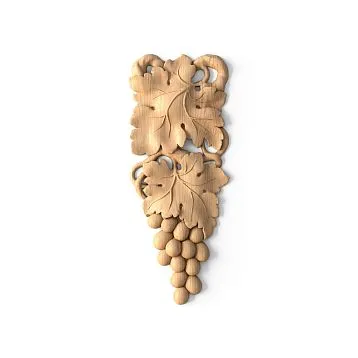
Floral (acanthus, laurel, grapevine, roses): Classical motifs originating from antiquity. Acanthus leaves — a symbol of Mediterranean architecture (Greece, Rome), lush, with curved edges. Laurel wreaths — a symbol of victory, honor, used in Empire style. Grapevines — Baroque, Rococo (opulence, abundance). Roses — Romanticism, Art Nouveau (softness, femininity).
Geometric (rosettes, meander, rhombuses, braids): Rosettes are round (radial symmetry, petals from the center) — a universal motif, suitable for all styles. Meander (broken line, repeating pattern) — strict classicism, Greek style. Rhombuses and squares — Gothic, Art Nouveau (geometricism).
Narrative (masks, putti, cartouches, coats of arms): Masks of lions, satyrs — Baroque (theatricality, drama). Putti (little angels) — Baroque, Rococo (lightness, playfulness). Cartouches (scrollwork shields) — a place for monograms, coats of arms (personalization of furniture).
Appliqué installation: Glued onto fronts with wood glue (PVA, polyurethane). The front surface must be clean, degreased. Glue is applied to the back of the appliqué, the appliqué is pressed onto the front (firmly, but without fanaticism — don't break it), fixed with painter's tape for 4-6 hours (until the glue sets). After removing the tape, the appliqué holds fast.
Finishing: Appliqués are supplied unfinished (bare wood) or primed. Finishing after installation: sanding with P220 (if there are burrs), priming (if not done), painting/varnishing/patinating to match the front or in contrast. Classic option: dark lacquered front (dark oak), gilded appliqué (imitation gold leaf, composition leaf) — contrast, accentuation.
Furniture handles: a small detail that changes everything
Furniture Handles— functional hardware (for opening doors, pulling out drawers), but visually they are disproportionately important. The eye catches handles (the first thing the hand reaches for), their style, material, finish set the tone for the entire piece of furniture.
Types of handles by shape:
Knobs (round, oval, square): Small (diameter 30-50 mm), protrude from the front by 20-40 mm. Mounting: screw through the front from inside. Style: classic (knobs with threading, patinated), Provence (ceramic with painting), modern (simple metal). Application: small drawers, doors.
Bail pulls (arc-shaped): Two mounting points (distance between them 64, 96, 128, 160 mm — standard intervals). Shape: simple arc (modern), figured with scrolls (classic, Baroque), twisted (Provence). Material: metal (bronze, brass, patinated iron), wood (rare, for eco-friendly interiors). Application: chest of drawers drawers, wardrobe doors.
Recessed pulls (scoop, half-round recess): Handle without a protruding part (fingers insert into the recess from below, pull). Mounting: recessed into the front edge. Style: strict classicism (Empire, English style), minimalism. Material: metal (polished brass, bronze). Application: writing desk drawers, chest of drawers (where a protruding handle is in the way).
Ring pulls (round hanging): Ring diameter 50-80 mm, suspended from a bracket (lion mask, rosette). Style: Baroque, Oriental (Arabic, Chinese). Material: metal (bronze, brass). Application: massive wardrobes, sideboards (where a large, noticeable handle is needed).
Choosing handles based on furniture style:
Classical carved furniture (Baroque, Rococo) — figured metal handles (with scrolls, patina, gilding). Strict classical furniture (Empire, English style) — brass polished recessed pulls or simple bronze knobs. Provence furniture — ceramic painted handles or twisted metal ones. Modern minimalist furniture — straight metal bail pulls (chrome, stainless steel, black metal) or concealed (push-to-open mechanisms, handle visually absent).
Legs and supports: a base with character
Furniture legs (sofas, armchairs, tables, chests of drawers) — supporting elements, but their shape radically changes the perception of the object.
Types of legs:
Turned classic: Cylinder with decorative elements (beads, reels, balusters). Diameter 60-100 mm, height 100-250 mm. Wood species: oak, beech. Style: Classicism, Empire, English.
Cabriole (curved): S-shaped form (thickening at the top, narrowing in the center, widening at the bottom, ending in a foot — lion's, eagle's, scroll). Baroque, Rococo, royal interiors. Production: hand carving or CNC milling. Expensive (3-10 thousand per leg, depending on complexity).
Straight tapered: Cone (tapering downwards). Height 150-300 mm, top cross-section 80×80 mm, bottom 50×50 mm. Style: Art Nouveau, Art Deco, modern classic. Simple production (sawing, sanding), affordable price (500-1500 rubles per leg).
Carved: Complex three-dimensional form (scrolls, leaves, masks). Baroque, Neo-Rococo. Custom production, high price (10-30 thousand for a set of 4 legs).
Installation: Legs are attached to the furniture body (bottom, apron) with screws with internal threads (furniture bolts M8, M10) or with dowels+glue. Important: legs must be the same height (deviation more than 1 mm — furniture wobbles). Quality leg manufacturers guarantee a deviation of ±0.5 mm.
Wall decor: architectural expressiveness of space
Walls are the background of an interior. But a background can be active or passive. A smooth painted wall — a passive background (neutral, doesn't attract attention). A wall withpolyurethane moldings, panels, pilasters — an active background (structured, rhythmic, contributing to the overall composition).
Moldings: Universal Dividers
Moldings are overlay strips (width 20-150 mm, thickness 10-30 mm, length 2000-2500 mm) that are glued onto walls/ceilings. Profile: flat with relief (ornament on the front side) or three-dimensional (protrusions, curves creating a play of light and shadow).
Application of moldings:
Creating wall panels: Moldings form rectangular frames on walls (panels 100-180 cm high from the floor). Inside the panels: wallpaper different from the rest of the wall, painting with a contrasting color, fabric (silk, velvet — luxurious interiors). Effect: breaking up the plane, rhythm, structure (instead of a blank wall — a composition of panels).
Framing doors and windows: Moldings around openings create architectural frames (portals), emphasize the importance of the door/window, and connect the opening with the overall wall decor.
Dividing a wall by height: A horizontal molding at a height of 90-120 cm from the floor (chair back level) divides the wall into two zones: lower (dark panel or wallpaper with an active pattern) and upper (light, calm). A classic technique that visually lowers the room's height (suitable for rooms with ceilings 3+ meters).
Decorating furniture built into the wall: Sliding wardrobes, built-in shelving are framed with moldings (facades cease to be flat, gain volume, relief).
Molding material: Polyurethane (90% of the market — lightweight, cheap, moisture-resistant, easy to install, does not rot), MDF (for furniture and walls, painted or veneered, heavier than polyurethane, more expensive), solid wood (exclusive, carved moldings, very expensive).
Ceiling cornices: finishing the vertical
Cornice — a molding installed at the junction of the wall and ceiling. Width 40-200 mm (the higher the ceiling, the wider the cornice). Functions: separating the ceiling from the walls (visual increase in height), masking an uneven joint, concealing lighting (an LED strip is hidden behind the cornice — light is directed upwards onto the ceiling, creating a floating effect).
Cornice styles:
Simple smooth (width 4-8 cm) — minimalism, modernity. Classic with ornament (egg-and-dart, meander, width 10-15 cm) — classicism, neoclassicism. Baroque lavish (garlands, cartouches, width 15-25 cm) — Baroque, Rococo. Modern (smooth plant lines, width 8-12 cm) — Modern, Art Nouveau.
Installation: Glued with acrylic adhesive (technology described earlier). Joints in corners are cut at 45 degrees in a miter box, filled, sanded (should disappear). Painted to match the ceiling color (monochrome, the cornice is read through the relief) or in contrast (white cornice on colored walls).
Ceiling rosettes: centers of attraction
Rosette — a round or oval element (diameter 300-1500 mm), installed on the ceiling around a chandelier. Function: accentuating the center of the composition (chandelier — focal point, the rosette emphasizes it), masking ceiling defects (old hole from a removed chandelier, unevenness), decorative (ornament, relief, radial symmetry).
Rosette styles:
Classical (radial petals, symmetry, moderate detailing, diameter 600-1000 mm) — classicism, Empire. Baroque (lavish, multi-layered, putti, garlands, diameter 1000-1500 mm) — Baroque, Rococo. Minimalist (simple circle with light relief, diameter 300-600 mm) — modernity, neoclassicism.
Size selection: The rosette diameter depends on the chandelier diameter and room area. The rosette should be 1.5-2 times larger than the chandelier diameter (chandelier 600 mm — rosette 900-1200 mm). For a room 15-20 m² — rosette 700-1000 mm, for 25-35 m² — 1000-1300 mm, for 40+ m² — 1300-1500 mm.
Pilasters and panels: verticals and horizontals
Pilasters: Vertical overlay elements (imitation of flat columns), installed in room corners, on the sides of fireplaces, doors, built-in wardrobes. Height from floor to ceiling (or to cornice), width 80-150 mm. Composition: base (at the floor), shaft (central part, smooth or with fluting), capital (at the ceiling, with ornament). Effect: vertical division of walls, creating rhythm, emphasizing room height.
Decorative panels: Large elements (rectangular or shaped), covering part of the wall (height 1000-2000 mm, width 500-1500 mm). Material: polyurethane with relief (imitation of carved wooden panels, plaster stucco), carved MDF, carved solid wood (exclusive). Application: accent walls (panel behind the bed headboard, behind the TV, behind the sofa in the living room), creating rhythm (a row of identical panels along a long wall).
Style unity: rules for combining furniture and architectural decor
Main rule:Elements of decorative finishingFurniture and walls must belong to the same era, the same style, the same aesthetic system.
Rule of stylistic correspondence
Classical interior (classicism, Empire): Furniture with turned legs, symmetrical carved overlays (rosettes, acanthus leaves), brass shell-shaped handles. Walls with moldings creating panels, classic cornice (egg-and-dart, meander), pilasters with Ionic capitals. Ornaments of moldings and carved overlays from the same era (ancient motifs — acanthus, laurel, meander).
Baroque interior: Furniture with cabriole legs, lavish overlays (cartouches, garlands, putti), ring handles on lion masks. Walls with wide cornices (garlands, scrolls), large rosettes, pilasters with Corinthian capitals. Everything is lavish, multi-layered, demonstratively decorative.
Modern interior (minimalism, contemporary): Furniture with straight legs, without carved overlays or with minimalist geometric ones, straight metal bracket handles. Walls with thin moldings (or without), simple cornice (or hidden), absence of rosettes and pilasters. Decor is minimal, works on structure, not on ornamentation.
Rule of ornamental resonance
Ornaments of carved overlays on furniture and the relief of moldings on walls should resonate (not be identical, but belong to the same ornamental family).
Example: overlays on a chest of drawers facade — acanthus leaves. Moldings on walls — also with acanthus (or meander, or egg-and-dart — all are classical ancient ornaments, they combine). Overlays + moldings with different ornaments (acanthus + Baroque rocaille) — dissonance (mixing eras).
Rule of Proportional Balance
The size of decoration on furniture and walls should be comparable (avoid extremes: small overlays + huge cornices or large carved overlays + thin moldings).
If the furniture is massive, richly decorated (large carved elements 200×300 mm), then the wall decor should be corresponding (cornice width 15+ cm, moldings 8-10 cm, rosette 1000+ mm). If the furniture is light, with small overlays (50×50 mm), the wall decor is also restrained (cornice 8-10 cm, moldings 4-6 cm, rosette 600-800 mm).
Rule of Color Harmony
The color of furniture and wall decor should be coordinated.
Option 1 (monochrome): All stucco (cornices, moldings, rosettes, pilasters) + all furniture overlays are painted one color (white — classic, beige — softness, gray — modernity). Furniture handles and legs can be contrasting (metal, dark wood).
Option 2 (contrast): Stucco is white, furniture is dark (dark oak, walnut), furniture overlays either match the wood tone (dark lacquered) or are contrasting (gilded). Handles are bronze/brass (warm metal, harmonizes with gilding on overlays and classic style).
Option 3 (nuance): Everything in close shades (beige walls, beige stucco, light wood furniture or painted beige, overlays patinated beige-brown). Soft transitions, no sharp contrasts.
Comprehensive room design: from ceiling to furniture legs
Creating a harmonious interior is a sequential process where each element is chosen considering already selected ones.
Decor selection algorithm
Step 1: Style definition. Choose a basic interior style (classical, baroque, Provence, modern, eclectic). The style dictates everything else (forms, ornaments, materials, colors).
Step 2: Furniture selection. Furniture — large items setting the tone for the space. Purchase or choose furniture (wardrobes, dressers, sofas, tables) of the corresponding style. If furniture already exists (inherited, antique) — the style is determined by the furniture, everything else is selected to match it.
Step 3: Architectural decor selection (stucco for walls/ceiling). Based on the furniture style, choose cornices, moldings, rosettes. Ornaments should resonate with furniture decor (if furniture has acanthus — stucco also with antique motifs). Stucco size is proportional to furniture massiveness.
Step 4: Furniture decor selection (overlays, handles). If furniture is neutral (without decor or minimal), complement it with carved overlays (glue onto facades), change standard handles to style ones. Overlays and handles should match the style of already chosen stucco.
Step 5: Color solution. Determine the color scheme (monochrome, contrast, nuance). Paint stucco, furniture (if needed), patina/gild overlays. Everything should work towards overall harmony.
Step 6: Final integration (textiles, accessories). Curtains, pillows, paintings, lighting are chosen last (when main decor is already in place). They complement, accentuate, but do not change the style (it is already set by architectural and furniture decor).
Example of comprehensive bedroom design 18 m² (classical style)
Furniture: Double bed with high carved headboard (acanthus leaves, headboard height 1400 mm), dark oak dresser (5 drawers, size 1200×500×900 mm), two bedside tables (600×400×600 mm), built-in sliding wardrobe (width 2400 mm, height to ceiling).
Architectural decor: Classical ceiling cornice (width 120 mm, egg-and-dart ornament), room perimeter 18 m — cornice 18 meters. Ceiling rosette (diameter 800 mm, classical style, radial petals), installed in the center of the ceiling. Moldings on the wall behind the bed headboard (create a panel 2400×1400 mm framing the headboard), molding width 60 mm, panel perimeter length 7.6 meters. Moldings frame sliding wardrobe facades (doors cease to be flat, gain relief).
Furniture decor: Carved overlays on bed headboard (already present, factory). Overlays on dresser facades (rosettes diameter 80 mm in drawer centers — 5 pieces). Dresser handles — bronze figured brackets (length 128 mm, curls at ends — 5 pieces). Sliding wardrobe handles hidden (profiles without handles, push-to-open).
Color solution: Walls — beige (matte paint). Stucco (cornice, rosette, moldings) — white (acrylic paint, 2 coats). Furniture — dark oak (matte varnish, wood grain visible). Overlays on dresser — gilded (imitation gold leaf). Handles — patinated bronze (warm metal, harmonizes with gold on overlays). Textiles (bedding, curtains, bedspread) — beige-gold (damask, jacquard).
Effect: The room is harmonious, everything is connected by style (18th-century classicism), color (beige-golden-brown palette), ornaments (antique motifs in stucco, carving, textiles). No random elements, each works towards the overall atmosphere of nobility, calm, classical beauty.
Where to buy decorative elements: advantages of a comprehensive supplier
Purchasevarious decorative elementsin one place — not just time-saving (no need to visit dozens of stores). It's a guarantee of stylistic unity (elements from one manufacturer's collection definitely match), quality (a verified supplier is responsible for everything), service (consultation, selection, delivery, installation — all from one company).
What to look for in a supplier
Range breadth: Polyurethane stucco (cornices, moldings, rosettes, pilasters, panels) + solid wood products (carved overlays, handles, legs, furniture moldings) + hardware (metal handles, hinges, fasteners). All in one catalog.
Style collections: Elements grouped by styles (classical, baroque, modern, contemporary). Take elements from one collection — they are guaranteed to match (ornaments, proportions, detailing coordinated by manufacturer's designers).
Custom order possibility: Need a non-standard molding size, unique carved overlay, handles to your own sketch? A good supplier accepts custom orders (lead time 10-20 days, markup 30-50%, but you get exactly what you need).
Designer consultations: Free service (or for a symbolic fee of 2-5 thousand, credited upon purchase). Designer helps select elements (what matches what, what sizes, how many pieces), creates specifications, provides visualization (3D model of the room with chosen decor).
Quality Guarantee: Precise geometry (straight moldings, correct radii, symmetrical carved elements), quality materials (polyurethane does not crack, wood does not warp), neat finishing (even primer, varnish without drips). 2-5 year warranty, free return/replacement of defects.
Installation Services: Bought it — don't want to/can't install it yourself? The supplier provides installation crews (experience, tools, workmanship guarantee). Installation cost is 50-100% of the material cost (depends on complexity, region).
Frequently Asked Questions about Decorative Finishing
Can polyurethane wall molding be combined with wooden furniture
Yes, and it should be. Polyurethane (artificial, visually cold) and wood (natural, warm) complement each other perfectly. The main thing is stylistic consistency (classical molding + classical furniture, modern molding + modern furniture). Color: white molding contrasts with dark furniture (classic combination) or the molding is painted to match the wood tone (nuanced combination).
Where to buydecorative elements for furnitureand molding in one place
From specialized companies offering a full range of decor (STAVROS, analogues). Advantages: stylistic unity (elements from one collection), time-saving (one delivery, one point of contact), consultation (help in selecting matching elements).
How much does comprehensive room decoration with decor cost
Depends on area, style, number of elements. Approximately for a 20 m² room (classical style):
-
Ceiling cornice (18 m) + rosette: 15-20 thousand rubles
-
Moldings for wall panels (30 m): 12-18 thousand
-
Carved overlays for furniture (10 pcs): 8-15 thousand
-
Furniture Handles(15 pcs, bronze): 10-20 thousand
-
Glue, putty, paint, consumables: 5-8 thousand
-
Total materials: 50-81 thousand rubles
Installation (if hired): 25-40 thousand. Total turnkey: 75-121 thousand rubles.
How to chooseFurniture Handlesto match the interior style
Look at the material, shape, finish. Classic — patinated bronze/brass, shapes with curls or simple shells. Provence — painted ceramic or twisted metal. Modern — chrome, stainless steel, black metal, straight shapes. Baroque — rings on masks, gilded brass. Handle size is proportional to furniture size (small drawers — knobs 30-40 mm, large drawers — pulls 128-160 mm).
Is it mandatory to use carved overlays on furniture in a classical interior
Not mandatory, but desirable. Overlays turn neutral furniture (smooth facades, without decor) into stylish furniture. If the furniture is already carved (factory decor) — additional overlays are excessive (overload). If the furniture is simple (MDF, laminate, smooth wood) — overlays will add classicism, status, individuality.
Can I installMoldings made of polyurethanemyself
Yes, the technology is not complicated (described in detail in articles about installation). Needed: miter box, saw, glue, putty, paint, patience. For a beginner, a 20 m² room (cornice around the perimeter + moldings for panels) — 3-5 days of work. For an experienced person — 1-2 days. Mistakes are possible (crooked joints, gaps), but fixable (add putty, sand, touch up paint).
How to care for wooden overlays and polyurethane molding
Molding: wipe with a damp cloth once a month (remove dust). Do not use abrasives (scratch the paint). Repainting refresh every 5-7 years.
Wooden overlays: wipe with a dry or slightly damp cloth (avoid getting the wood wet). If varnished — wood polish every six months (restores shine). If gilded — carefully (do not rub, gilding wears off), use a dry soft brush for dust.
Conclusion: decor as a philosophy of integrity
various decorative elements— is not a set of random decorations bought anywhere, glued anywhere. It is a system where each element (from the ceiling rosette to the furniture handle) knows its place, performs its function, resonates with neighboring elements.
Elements of decorative finishingturn a set of objects (walls, ceiling, furniture) into an interior — a space with meaning, history, character. Moldings structure walls (break up emptiness, create rhythm). Rosettes accentuate centers (where the gaze should stop). Overlays on furniture turn functional drawers into works of applied art. Handles — the final touch, the detail that the hand grasps (and if the handle is noble — the entire space is noble).
Do not be afraid of decor. Do not listen to minimalists repeating: less is more. Sometimes more is more. Sometimes the soul requires ornament, carving, gilding, opulence. And that is normal. The main thing is that the decor is thoughtful, coordinated, harmonious.
Create interiors where furniture and walls speak the same language. Where carved drawer overlays echo cornice ornaments. Where bronze handles resonate with gilded moldings. Where every element is a note in a single melody.
STAVROS: a universe of decor under one roof
Where to finddecorative elements for furniture, Moldings made of polyurethane, Furniture Handles, carved legs, cornices, rosettes — all in one place, in a unified style, with guaranteed compatibility? The professionals' answer: STAVROS.
Polyurethane moldings: Collection of 2000+ items. Cornices (width 40-250 mm, styles from minimalism to Baroque). Wall moldings (width 20-150 mm, flat and volumetric profiles, classical, Baroque, geometric ornaments). Rosettes (diameters 300-1500 mm, from simple to lavish). Pilasters (height 1800-3000 mm, Doric, Ionic, Corinthian styles). Decorative panels (sizes 500×1000 to 1500×2000 mm, floral, geometric reliefs).
Quality: high-resolution casting (ornament details are as clear as on historical plaster samples). Density 400-450 kg/m³ (surface layer), sufficient strength (does not break during installation, does not deform over years). Factory primer (ready for painting).
Solid wood products: Production at our own factory (CNC + manual finishing). Species: oak, beech, ash, walnut (top grade, chamber drying 8-10%, stable moisture content).
Carved overlays: 200+ models (rosettes, leaves, garlands, cartouches, masks, sizes 50×50 mm to 400×600 mm). Ornaments: antique (acanthus, laurel, meander), Baroque (scrolls, rocaille), Art Nouveau (stylized flora), geometric. Finishes: unfinished (bare wood, you paint yourself), primed (ready for painting), varnished (matte, glossy), patinated (aged effect), gilded (imitation gold leaf, accents).
Furniture HandlesHandles: 150+ models (knobs, pulls, rings, shells). Materials: bronze, brass, iron (patinated, gilded, silvered), solid wood (turned, carved). Styles: classic, Baroque, Provence, Art Nouveau, minimalism. Sizes: knobs diameter 30-60 mm, pulls center-to-center 64-160 mm, rings diameter 50-90 mm.
Furniture legs: turned (classical, diameter 60-100 mm, height 100-300 mm), cabriole (curved S-shaped, carved), tapered (Art Nouveau, Art Deco), carved (Baroque, complex shapes). Finishes: varnish, paint, patina. Mounting: M8/M10 screws, dowels.
Furniture moldings: MDF and solid wood (width 20-80 mm, classic, Baroque, simple profiles). Application: framing door panels, creating frames on facades, decorating tabletops.
Style collections: Elements are grouped into collections (18th Century Classic, Baroque, Empire, Provence, Art Nouveau, Modern Classic). Take elements from one collection (cornice+moldings+rosette+overlays+handles) — they are stylistically coordinated (STAVROS designers have considered the combinations, ornaments resonate, proportions are harmonious).
Custom orders: Need a unique overlay (based on your sketch, photo of an antique piece, designer's drawing)? STAVROS will produce it: CNC or hand carving (depending on complexity), wood species of your choice, any finish. Lead time 15-25 days, cost from 5 thousand per element (depends on size, complexity).
Need a non-standard molding (profile exists in the catalog, but a different width/length is needed)? We produce it: lead time 10-14 days, surcharge 20-30% over standard.
Design services: Don't know what to choose, how to combine? STAVROS designers will provide a consultation (free online, 2 thousand rubles offline in the showroom with samples — credited upon purchase). You describe the style, show photos of the room/furniture, state the budget — receive a specification (list of elements, item numbers, quantities, prices), visualization (3D model of the room with chosen decor — 8-12 thousand, included in the order for purchases over 100 thousand).
Turnkey installation: Moldings, furniture overlays, handles — everything will be installed by professionals. STAVROS crews (10+ years of experience, specializing in classic decor) work carefully, with a 2-year guarantee. Installation cost: moldings (cornices, moldings, rosettes) 600-1200 rubles per linear meter or piece (depends on complexity), furniture overlays 300-500 rubles per piece (including fitting, puttying, painting), handles 200-400 rubles per piece (including mortising, installation, adjustment).
Delivery: Moscow/region — own transport, careful packaging, delivery+carrying free for orders over 50 thousand. Regions — transport companies, rigid packaging (protection from impacts, deformation), insurance, lead times 3-10 days.
Guarantees: Perfect geometry (moldings are straight, overlays are symmetrical, handles are without misalignment). Quality materials (polyurethane does not crack for 5+ years, wood does not warp, varnish does not peel for 10+ years). If defective (warping, chips, size mismatch) — free replacement, immediately, with apologies and a bonus (15% discount on the next order).
Create interiors where everything is connected. Where furniture and walls are a single whole, where every handle, every overlay, every molding knows its place. Trust STAVROS — a company for which decor is not a commodity, but a calling. Your home deserves integrity, harmony, beauty. And STAVROS will embody it. From the ceiling to the furniture legs.