Article Contents:
- Engineering philosophy of narrow profiling
- Geometric precision as the basis of functionality
- Materials science: selection of optimal raw materials
- Technological aspects of production
- Precision milling and shaping
- Finishing and protective systems
- Application areas and functional capabilities
- Furniture facades: elegance in details
- Interior solutions: architectural expressiveness
- Exhibition and trade equipment
- Technical Specifications and Standards
- Regulatory base and certification
- Mechanical properties and load-bearing capacity
- Design possibilities and aesthetic aspects
- Color solutions and texturing
- Integration with modern technologies
- Economic aspects and market trends
- Cost and economic efficiency
- Market development prospects
- Installation and Operation
- Connection technology
- Features of installation under various conditions
- Innovations and future developments
- New materials and technologies
- Integration with digital technologies
- Frequently Asked Questions
- Conclusion: mastery in every detail
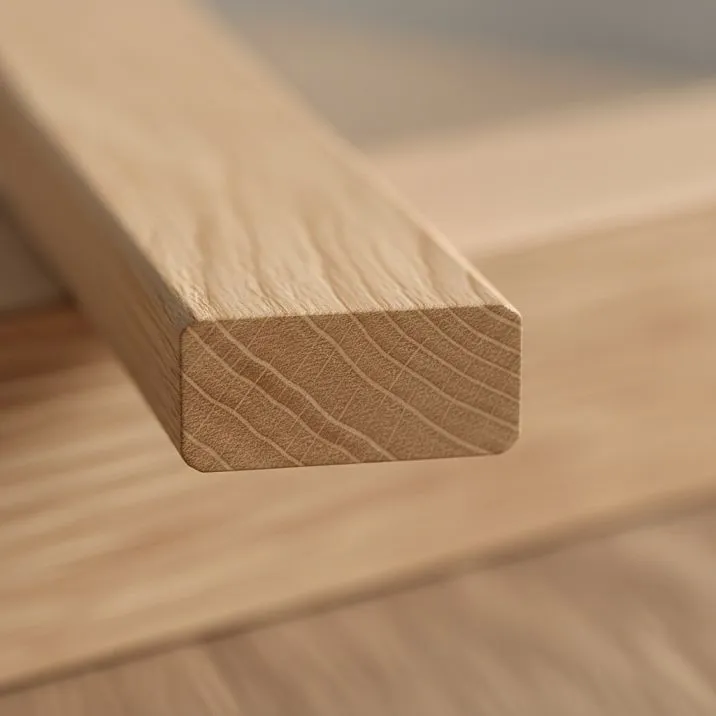
In the sphere of modern furniture industry and interior design, there are elements that seem insignificant at first glance, but play a key role in creating high-quality and aesthetically perfect products.Narrow profile framerefers precisely to such details — it is a high-tech element that determines not only the appearance of the finished product, but also its functionality, durability, and overall quality of execution.
What makes the narrow profile frame so popular among professional furniture makers, interior designers, and architects? The answer lies in the unique combination of technical characteristics, aesthetic possibilities, and practical applicability of this element. Minimalist dimensions do not mean limited capabilities — on the contrary, it is precisely the compactness of the narrow profile that opens up vast horizons for creative implementation.
Engineering philosophy of narrow profiling




Geometric precision as the basis of functionality
The development and production of narrow profile frames require a special approach to engineering calculations and technological processes. Every millimeter matters, every angle must be precisely set with mathematical accuracy. The narrow profile operates under high precision requirements — even minor deviations from specified parameters can critically affect the quality of the finished product.
Standard sizes of the narrow profile frame vary within the range of 15 to 25 millimeters in main dimensions, allowing the creation of elegant, refined structures without loss of strength and reliability. These parameters are ideally suited for modern interior solutions, where every detail matters, where roughness is unacceptable, and elegance is a priority.
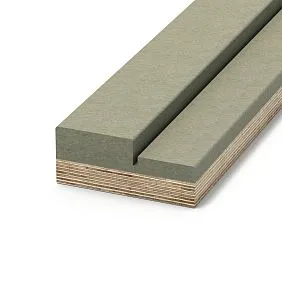
The narrow profile demonstrates the capabilities of modern composite materials. High-density fiberboards of medium density ensure geometric stability, resistance to deformation, and the ability to create complex profiles with thin walls.Material science: selection of optimal raw materials
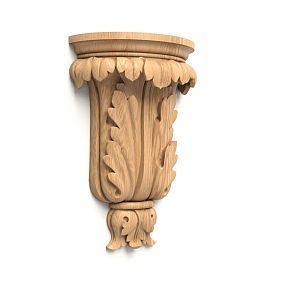
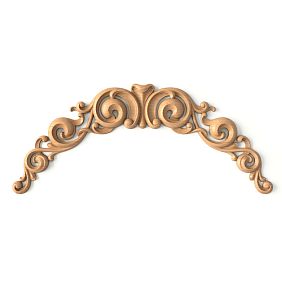
Our factory also produces:


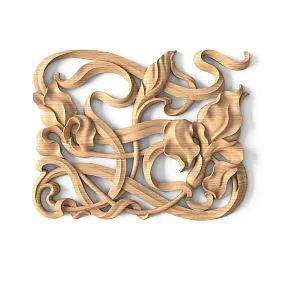


Production of high-quality narrow frame profiles begins with careful selection of raw materials. Natural hardwoods — oak, beech, ash — provide maximum strength and durability at minimal cross-sections. However, working with natural wood requires consideration of its natural properties: anisotropy, moisture-induced deformation, and natural stresses.
Composite materials offer alternative solutions. High-density MDF allows creating profiles with complex internal geometry, unattainable with solid stock. The ability to mill thin elements without risk of chipping or cracking makes MDF ideal for narrow profiles with complex configurations.
Metallic frame profiles — aluminum alloys, stainless steel — open opportunities for creating ultra-thin structures with high load-bearing capacity.
Aluminum frame profileIn narrow profile form, it enables implementing projects where minimizing the visual mass of elements while preserving functionality is critical.Precision milling and shaping
Get Consultation
Technological aspects of production
Manufacturing narrow frame profiles requires the use of high-precision equipment and specialized tools. CNC machines ensure dimensional repeatability accurate to hundredths of a millimeter. Specialized cutters with carbide inserts allow obtaining a clean surface without subsequent finishing.
Special attention is paid to the temperature regime during processing. High cutting speeds may cause material overheating, which is critical for composite materials based on synthetic resins. Systems for supplying cutting fluids and optimizing cutting parameters ensure consistent profile quality along the entire length of the workpiece.
Quality control at every stage of production includes measuring geometric parameters, checking surface roughness, and testing mechanical properties. Only profiles meeting all technical requirements are allowed to proceed to further processing and finishing.
Finishing and protection systems
Narrow frame profiles require a special approach to applying protective-decorative coatings. Small cross-sectional dimensions limit the thickness of applied layers, requiring the use of high-tech compositions with enhanced protective properties.
Powder coating of metal profiles ensures uniform coverage even in hard-to-reach areas. Electrostatic application allows creating thin yet durable protective layers that do not affect the geometric dimensions of the profile.
For wooden and MDF profiles, special lacquers and enamels with high adhesion to the substrate are used. UV curing ensures instant polymerization of the coating, eliminating deformations caused by thermal exposure.
Applications and functional capabilities
Furniture facades: elegance in details
Frame profile for facades
In narrow profile form, it opens new possibilities for creating modern furniture. Minimalist frames for glass inserts, thin frames for decorative panels, elegant mullions — all of this becomes possible thanks to the use of narrow profiles.Modern kitchen furniture especially benefits from the use of narrow frame elements. Facades with thin frames visually increase usable area, creating a sense of lightness and airiness. At the same time, functionality is not compromised — a properly designed narrow profile ensures the required strength and durability.
Premium office furniture also actively uses narrow frame profiles. Glass partitions with minimalist frames, elegant display cases, sophisticated sliding wardrobes — everywhere where visual lightness without loss of functionality is important, narrow profiles find their application.
Interior solutions: architectural expressiveness
In interior design
Narrow frame profiles are used to create thin architectural accents. Framing mirrors, pictures, decorative panels — wherever it is necessary to emphasize form without diverting attention from content, narrow profiles demonstrate their advantages.Narrow profile frameSpace zoning systems using narrow frame elements allow creating light, transparent partitions. Glass blocks in thin frames, lattice structures with minimal cross-sections — all of this contributes to preserving the feeling of a single space while enabling functional division.
Frame profile for glass
Especially in demand in modern design. Glass doors, windows, stained glass — all these elements require reliable yet visually light framing, which narrow profiles provide.Exhibition and retail equipment
The retail design field imposes special requirements on display equipment. Showcases, stands, exhibition systems must present products as effectively as possible without drawing attention away. Narrow frame profiles perfectly handle this task.
Narrow frame profiles are ideal for this purpose.
Museum equipment also actively uses narrow profiles to create protective structures around exhibits. Minimal visual impact with maximum protective function — these are the exact requirements imposed on museum exhibition technology.
Technical Specifications and Standards
Regulatory base and certification
Production of narrow framed profiles is regulated by a complex of technical standards and regulatory documents. GOST, TU, international ISO standards define requirements for geometric parameters, surface quality, mechanical properties of profiles.
Product certification includes tests for strength, resistance to climatic influences, ecological safety.Narrow framed profile 19x20x19is one of the standard sizes widely used in the furniture industry.
Quality control includes checking dimensional parameters, surface roughness, profile straightness. Modern measuring equipment allows controlling parameters with accuracy down to micrometers.
Mechanical properties and load-bearing capacity
Despite their small cross-sectional dimensions, narrow framed profiles must ensure the required strength and rigidity of structures. Load-bearing capacity calculations take into account not only static loads but also dynamic impacts, fatigue strength, and effects of thermal deformations.
Material's modulus of elasticity, yield strength, impact toughness — all these characteristics affect the profile's behavior under various operating conditions. Computer modeling allows optimizing the profile's geometry to achieve maximum performance with minimal material usage.
Durability tests include cyclic loading, temperature effects, influence of aggressive environments. Only profiles that have passed the full set of tests are approved for mass production.
Design possibilities and aesthetic aspects
Color solutions and texturing
Modern finishing technologies allow creating narrow framed profiles in a wide range of color solutions.Narrow framed black profileis particularly popular in minimalist interiors, creating clear graphic accents.
Metallic effects, imitation of various materials, glossy and matte surfaces — all of this is available for narrow profiles. Coatings with tactile properties — soft-touch, anti-fingerprint, antibacterial compositions — are gaining particular popularity.
White framed profileremains a classic choice for most interior projects. White color is universal, visually expands space, and matches any color palette.
Integration with modern technologies
Narrow framed profiles are increasingly integrated with smart home systems and modern technologies. Built-in LED lighting, sensors, control elements — all of this can be seamlessly incorporated into the profile's structure.
Wireless charging, built-in USB ports, climate control systems — integration possibilities are limited only by the designer's imagination and the technical capabilities of the profile.
Economic aspects and market trends
Cost and economic efficiency
Narrow framed profiles, despite the complexity of manufacturing, often prove to be economically advantageous. Reduced material consumption, possibility of creating lightweight structures, lower transportation costs — all of this positively affects the overall project cost.
Buy framed profileis cost-effective in bulk orders, allowing furniture manufacturers to reduce product cost. Standardization of dimensions and profile unification contribute to further cost reduction.
The durability and reliability of narrow profiles ensure low operating costs. A well-made profile serves for decades without requiring replacement or repair.
Market Development Prospects
The market for narrow framed profiles demonstrates steady growth. Trends toward minimalism in design, increased quality requirements, technological advancements — all of these contribute to rising demand for high-quality profile products.
Environmental requirements stimulate the development of new materials and technologies. Biodegradable composites, recycled materials, energy-efficient production technologies — all of this shapes the future of the industry.
Installation and operation
Connection Technology
Quality installation of narrow frame profiles requires the use of specialized connecting elements.Corner for frame profileensures a reliable and aesthetically pleasing connection of elements at a right angle.
Modern connecting systems allow creating disassemblable structures, which is especially important for exhibition and trade equipment. Quick-release elements, snap joints, magnetic connections — all of this makes working with profiles convenient and efficient.
Adhesive connections require the use of special compositions compatible with the profile material and providing the necessary connection strength. Structural adhesives, epoxy compositions, polyurethane sealants — the choice depends on operating conditions and structural requirements.
Features of installation under various conditions
Installation of narrow profiles in high-humidity conditions requires the use of moisture-resistant materials and connections.Frame furniture profilefor kitchen areas must be resistant to steam, condensation, and temperature fluctuations.
Outdoor use of profiles imposes special requirements on the weather resistance of coatings. UV stabilizers, anti-corrosion additives, frost-resistant compositions — all of this must be considered when selecting profiles for outdoor use.
Innovations and Future Developments
New materials and technologies
The development of nanotechnology opens new opportunities for creating narrow frame profiles with unique properties. Nanostructured coatings, self-cleaning surfaces, antibacterial properties — all of this becomes accessible for profile products.
Composites based on natural fibers offer an environmentally friendly alternative to traditional materials. Wood fibers, flax, hemp combined with biodegradable binders create profiles with minimal environmental impact.
3D printing of profiles opens opportunities for creating items with complex geometry unattainable by traditional methods. Custom profiles for specific projects, small-batch production, prototyping — all of this becomes accessible thanks to additive technologies.
Integration with Digital Technologies
The Internet of Things (IoT) is penetrating the field of profile products. Smart profiles with built-in sensors can monitor the condition of the structure, transmit data on loads, temperature, and humidity.
Augmented reality (AR) technologies help in designing and installing structures using narrow profiles. Virtual modeling, step-by-step instructions, quality control — all of this simplifies work with profile systems.
Frequently asked questions
What are the advantages of a narrow frame profile over a standard one?
A narrow profile provides a more elegant appearance of structures, saves material, allows creating light and airy interior solutions. At the same time, modern manufacturing technologies ensure sufficient strength and durability.
What materials are best suited for narrow profiles?
Material selection depends on operating conditions and structural requirements. MDF provides dimensional stability and complex profiling capabilities. Natural wood offers maximum strength. Aluminum allows creating ultra-thin structures.
Can narrow profiles be used in load-bearing structures?
With proper calculation and design, narrow profiles can withstand significant loads. It is important to consider the geometry of the cross-section, material properties, and methods of connecting elements.
How to ensure the longevity of coatings on narrow profiles?
Coating quality depends on surface preparation, correct selection of coating materials, and adherence to application technology. Modern coatings provide a service life of up to 25-30 years when properly applied.
Is it possible to manufacture profiles to custom sizes?
Modern manufacturers offer profile manufacturing according to custom drawings. The minimum order volume depends on profile complexity and may range from 100 to 1000 linear meters.
How to choose the optimal type of connection for narrow profiles?
Connection selection depends on loads, aesthetic requirements, and the possibility of disassembling the structure. For critical structures, mechanical connections are recommended; for decorative elements, adhesive connections may be used.
Conclusion: craftsmanship in every detail
Narrow profile framerepresents a high-tech product that combines engineering excellence, aesthetic appeal, and practical functionality. This element plays a key role in creating modern interior and furniture solutions, where every detail matters, and quality is defined not by bold claims, but by precision of execution.
Advancements in manufacturing technologies, the emergence of new materials, growing demands for quality and eco-friendliness — all of this shapes the future of the profiled products industry. Narrow framed profiles, thanks to their unique characteristics, will occupy a worthy place in this future, providing designers and furniture manufacturers with tools to realize the most daring creative concepts.
Investing in high-quality profiled products is investing in durability, reliability, and aesthetic perfection of finished structures. The right choice of profile during the design phase determines the success of the entire project, its compliance with modern requirements and customer expectations.
STAVROS is a recognized leader in the production of high-quality profiled products and interior decorative elements. Years of experience, application of advanced technologies, and strict quality control at every stage of production enable STAVROS to create products that meet the highest international standards. Every STAVROS profile is the result of deep market understanding, technological innovation, and a commitment to perfection. The STAVROS team continuously works to expand the product range, adopt new materials and technologies, enabling them to offer clients the most modern and effective solutions for any task. Choosing STAVROS products means choosing reliability, quality, and technical superiority that will become the foundation of your project’s success.