Article Contents:
- Conceptual stage: birth of a design idea
- Engineering and technical design: accuracy of calculations
- Static calculations and load analysis
- Production technology preparation
- Raw material preparation: foundations of quality production
- Wood selection and sorting
- Preparation of panel materials
- Technological processes: from blank to semi-finished product
- Material cutting: precision and economy
- Edge banding: protection and decoration
- Mechanical processing: forming structural elements
- Assembly technologies: joining into a single whole
- Preparation operations
- Gluing operations
- Mechanical connections
- Quality control: guarantee of reliability
- Statistical control methods
- Instrumental control methods
- Finishing processes: beauty and protection
- Surface Preparation
- Application of coatings
- Drying and curing
- Packaging and logistics: preservation during delivery
- Packaging materials
- Logistical solutions
- Ecological aspects of production
- Use of renewable resources
- Reduction of emissions and waste
- Innovations and technologies of the future
- Production digitization
- New materials and technologies
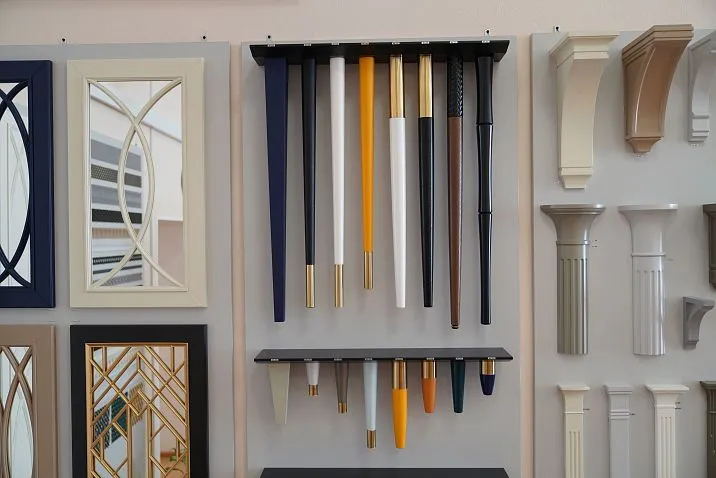
The furniture industry represents a complex ecosystem where traditional woodworking craftsmanship combines with innovative 21st-century technologies. Understanding that how furniture is madeunveils the amazing world where sawdust transforms into works of art, and drawings become functional interior items.
Modern furniture manufacturing differs fundamentally from workshops of previous centuries. Today, it is a high-tech industry using computer-aided design, robotic equipment, and eco-friendly materials. However, the fundamentals remain unchanged: quality raw materials, precision in execution, and attention to detail determine the longevity and beauty of finished products.


Conceptual Stage: Birth of Design Idea
Every piece of furniture begins its existence in the designer's imagination. The creative process includes studying user needs, analyzing spatial solutions, and seeking the optimal balance between functionality and aesthetics.
Professional designers conduct extensive market research, study trends in architecture and interior design. They analyze ergonomic requirements, consider the characteristics of different demographic groups, and forecast changes in consumer lifestyles.
Sketching remains a fundamental stage of the creative process. Quick pencil sketches allow the designer to fix multiple variations and identify the most promising directions for developing the idea. Spontaneity and willingness to experiment are crucial at this stage.
Scale modeling helps assess proportions and interaction of various structural elements. Cardboard or foam models allow for rapid modifications and testing alternative solutions.




Engineering Design: Precision Calculations
Transitioning from artistic concept to technical solution requires deep knowledge in mechanics, materials science, and manufacturing technologies. Engineering designers transform design ideas into realizable projects.
Our factory also produces:


Static Calculations and Load Analysis
Each furniture element must withstand calculated loads with a safety factor. Countertops are designed for distributed loads and concentrated impacts. Chairs and stools are tested under dynamic loads simulating long-term use.
Computer modeling using the finite element method allows optimizing the structure, reducing material usage without compromising strength. Modern programs accurately simulate material behavior under load.
Special attention is given to connection joints — areas of highest stress concentration. Properly designed connections ensure the long-term durability of the entire structure.
Get Consultation
Production Technology Preparation
Design documentation must consider the capabilities of manufacturing equipment. Fillet radii, dimensional tolerances, surface quality requirements — all of these affect the manufacturing technology.
Developing technological cards includes defining operation sequences, selecting processing modes and quality control checkpoints. Optimizing the manufacturing route allows reducing costs and improving product quality.
Normalizing time for each operation is necessary for production planning and calculating product costs. Modern enterprise resource planning systems integrate design and technological information.
Raw Material Preparation: Foundations of Quality Production
The quality of finished furniture is established during material preparation. Modern manufacturers pay special attention to incoming raw material inspection and its proper preparation for processing.
Wood Selection and Sorting
Solid wood requires careful selection by species, moisture content, and quality. Each board undergoes visual inspection for defects: knots, cracks, resin pockets, and other flaws.
Moisture content is measured at various depths of blanks. Uneven moisture can lead to deformations during processing and in use of finished products.
Sorting by grain and color allows creating sets of boards for manufacturing panels with a uniform appearance. This is especially important for furniture's facing surfaces.
Preparation of Panel Materials
MDF, HDF, and other wood-based panels arrive at production in standard sheet form. Incoming inspection includes checking geometric dimensions, density, and surface quality.
Acclimatization of panel materials in production facilities prevents temperature-induced deformations. Materials are held in the workshop for at least one day before processing begins.
Moisture control is especially important for fiber-based panels. Excessive moisture may cause swelling and loss of geometric stability.
Technological Processes: From Blank to Semi-finished Product
Modern furniture production is characterized by high automation and use of high-precision equipment. Each operation is performed with quality parameter control.
Material Cutting: Precision and Economy
Cutting is the first and one of the most important operations in the furniture manufacturing chain. The quality of the cut determines the accuracy of part dimensions and material consumption.
Modern CNC cutting centers provide cutting accuracy of ±0.1 mm. Cutting optimization is performed by specialized software that minimizes waste and takes into account the direction of wood grain.
Edge-cutting saws prevent chipping on the front surfaces of laminated panels. The quality of the edge after cutting affects subsequent processing operations.
Automatic marking of parts with barcodes or laser engraving ensures traceability at all production stages.
Edge banding: protection and decoration
Edge processing of panel materials performs protective and decorative functions. Modern edge banding machines apply adhesive, press the tape, and trim excesses automatically.
PVC edge profiles of various thicknesses and textures allow for diverse design solutions. Thick edges mimic solid wood, while thin edges create minimalist designs.
Control of the adhesive-melt temperature is critically important for bonding quality. Too hot adhesive may damage the decorative coating of the panel, while cold adhesive will not ensure a reliable bond.
Edge profiling after banding creates various profiles: rounded edges, chamfers, decorative grooves. This adds elegance to the product and improves tactile sensation.
Mechanical processing: forming structural elements
Drilling holes for fasteners is performed on multi-spindle CNC machines. The accuracy of hole positioning determines the quality of assembly of finished products.
Milling of grooves, dados, and other structural elements requires high precision and surface quality. Modern carbide-tipped cutters ensure clean processing.
Surface grinding is performed on calibrated grinders. Uniform thickness of parts affects the quality of assembly and the appearance of finished products.
Assembly technologies: joining into a single unit
Assembly is the final stage of the production process, where individual parts are transformed into functional furniture. Assembly quality determines the durability and ease of use of finished products.
Preparation operations
Parts and hardware are supplied according to specifications, eliminating assembly errors. Modern warehouse management systems automatically form kits for each order.
Dry fitting parts without adhesive allows identifying potential defects and making adjustments. This is especially important when manufacturing complex items with multiple joints.
Tool and fixture preparation includes setting up power drills to the required torque, checking the condition of bits and wrenches.
Adhesive operations
Adhesive application must be even and measured. Excess adhesive leads to surface contamination and increased cleaning time. Insufficient adhesive results in weak joints.
Open time of the adhesive affects bond strength. PVA adhesives require immediate assembly after application, while polyurethane adhesives allow for a short open time.
Pressing bonded parts ensures tight contact and removal of air from the adhesive joint. Pressure and dwell time depend on the type of adhesive and material of the parts.
Mechanical connections
Cabinet screws are the primary type of fastener for cabinet furniture. Their advantages: high strength, ability for multiple assembly/disassembly, ease of installation.
Eccentric bolts provide hidden connections and high tensile strength. They are especially effective in areas of high load.
Shanks and dowels provide precise part positioning and additional strength to adhesive joints. Their use requires high drilling accuracy.
Quality control: guarantee of reliability
The quality control system permeates all stages of the production process. From incoming raw material inspection to final inspection of finished products — every operation is subject to control.
Statistical control methods
Sampling inspection is based on statistical methods and allows assessing the quality of the entire batch based on the results of testing a representative sample.
Control charts track process stability over time. Parameters exceeding control limits signal the need for intervention.
Analysis of failure modes and their consequences helps identify critical process points and focus efforts on their control.
Instrumental control methods
Coordinate-measuring machines provide high accuracy in measuring complex geometric shapes. They are indispensable for controlling curved surfaces.
Optical surface inspection methods allow detection of microcracks, scratches, and other defects invisible to the naked eye.
Non-destructive methods for assessing joint strength include ultrasonic testing and vibration testing.
Finishing processes: beauty and protection
Final finishing gives furniture its final appearance and provides protection against external influences. Modern finishing materials combine decorative and protective functions.
Surface preparation
Sanding is the foundation of quality finishing. Sequential application of abrasives of different grits ensures a perfectly smooth surface.
Dust removal is critically important for coating quality. Special sticky cloths and anti-static compounds are used.
Priming equalizes the absorbency of different surface areas and improves the adhesion of the final coating.
Coating application
Spraying is the primary method of applying lacquer and paint materials in industrial settings. Modern equipment ensures uniform coating and minimal material loss.
Dipping is used for small, complex-shaped parts. The method ensures complete coverage of all surfaces, including hard-to-reach areas.
Rolling is used for applying thick coatings on flat surfaces. The method ensures high productivity when finishing panel parts.
Drying and curing
Convection drying is a traditional method based on heating air. Temperature uniformity in the chamber affects coating quality.
UV curing allows obtaining a coating in seconds. The method is especially effective for acrylic systems and provides high coating hardness.
IR drying combines the advantages of speed and energy efficiency. Infrared radiation penetrates the coating thickness, ensuring uniform curing.
Packaging and logistics: preservation during delivery
Quality packaging protects finished furniture from damage during transportation and storage. Modern packaging materials take into account the specific characteristics of different types of furniture.
Packaging materials
Cardboard of various densities is used to create protective boxes. Corrugated cardboard provides cushioning against impacts.
Polyethylene film protects against moisture and dust. Anti-static additives prevent dust attraction to polished surfaces.
Polystyrene and polyurethane foam are molded to specific items, providing maximum protection for critical components.
Logistical solutions
Modular packaging allows optimizing the use of transport vehicles. Standardizing package sizes simplifies warehouse logistics.
Package labeling includes information about contents, handling methods, and orientation during transport. QR codes enable quick product identification.
Real-time cargo tracking allows monitoring transport conditions and timely response to unexpected situations.
Ecological Aspects of Production
The modern furniture industry is increasingly paying attention to ecological issues. Sustainable production has become not only an ethical necessity but also a competitive advantage.
Use of renewable resources
Certified wood from sustainably managed forests ensures forest resource regeneration. FSC and PEFC systems guarantee suppliers' ecological responsibility.
Recycled materials are finding increasing use in furniture manufacturing. Panels made from secondary raw materials do not fall short in quality compared to traditional materials.
Fast-growing tree species, such as bamboo and paulownia, are becoming alternatives to traditional wood types.
Reduction of emissions and waste
Dust collection systems ensure air purity in production areas and reduce emissions into the atmosphere.
Waste wood utilization for energy production allows reduction in fossil fuel consumption.
Water-based coatings replace solvent-based systems, reducing emissions of volatile organic compounds.
Innovations and technologies of the future
The furniture industry actively adopts advanced technologies that fundamentally change traditional approaches to production and design.
Digitalization of production
Industry 4.0 enters furniture manufacturing through integration of all processes into a single digital ecosystem. Sensors on equipment collect performance and quality data in real time.
Artificial intelligence optimizes production processes, predicts equipment maintenance needs, and identifies hidden patterns in quality data.
Digital twins of production lines allow simulating changes and optimizing processes without interrupting production.
New materials and technologies
3D printing opens opportunities to create complex geometric forms inaccessible through traditional processing methods. Printing with wooden filaments produces items indistinguishable from natural wood.
Composite materials based on wood fibers combine lightness with high strength. They are especially promising for mobile and transformable furniture.
Smart materials with variable properties open opportunities to create adaptive furniture that adjusts to user needs.
Understanding furniture manufacturing processes opens new horizons for consumers and industry professionals. Each stage — from conceptual design to final finishing — requires deep knowledge, precision in execution, and attention to detail.
Modern furniture manufacturing is a high-tech industry where traditional craftsmanship combines with innovative solutions. Automation and robotics do not replace the human factor but enhance the capabilities of craftsmen.
The quality of finished furniture is determined by multiple factors: from proper material selection to precision in assembly operations. The quality control system ensures finished products meet the highest standards.
Environmental aspects of production are becoming increasingly important. Use of renewable resources, reduction of emissions, and minimization of waste are priorities of modern industry.
The future of furniture manufacturing is linked to further digitization, adoption of artificial intelligence, and development of new materials. These technologies open boundless opportunities for creating unique and functional furniture.
For many years, STAVROS has been a reliable partner for furniture manufacturers, providing high-quality materials for finishing and protecting wood. Our experience and expertise help create furniture that delights with its beauty and serves for many years. We understand the importance of each stage of the manufacturing process and offer solutions that ensure outstanding results at every stage of furniture production.