Article Contents:
- Oak as a material: why exactly this species won the hearts of craftsmen
- Classification of oak wood in production
- Production stages: from log to work of art
- Raw material selection and preparation
- Drying: a critically important stage
- Cutting and initial processing
- Carpentry processing
- Types of oak furniture: classic and modern
- Cabinet Furniture
- Tables and chairs
- Bedroom furniture
- Finishing and decoration: revealing the beauty of oak
- Sanding: preparation for perfection
- Staining: playing with color
- Protective Coatings
- Modern technologies in oak furniture production
- CNC machines: precision down to the micron
- CAD/CAM systems: from idea to product
- Laser engraving
- Ergonomics and design: furniture for people
- Anthropometric data
- Stylistic directions
- Quality Control: Guarantee of Perfection
- Raw Material Incoming Inspection
- Operational Control
- Final acceptance
- Ecological aspects of production
- Sustainable forestry
- Zero-waste production
- Ecologically clean coatings
- Industry development trends
- Product Personalization
- Integration of smart technologies
- Modular Systems
- Care and Use of Oak Furniture
- Daily care
- Restoration of coatings
- Investment attractiveness of oak furniture
- Preservation and growth in value
- Cost savings on replacement
- Manufacturer selection: quality criteria
- Experience and Reputation
- Warranty Obligations
- Certification
- Conclusion
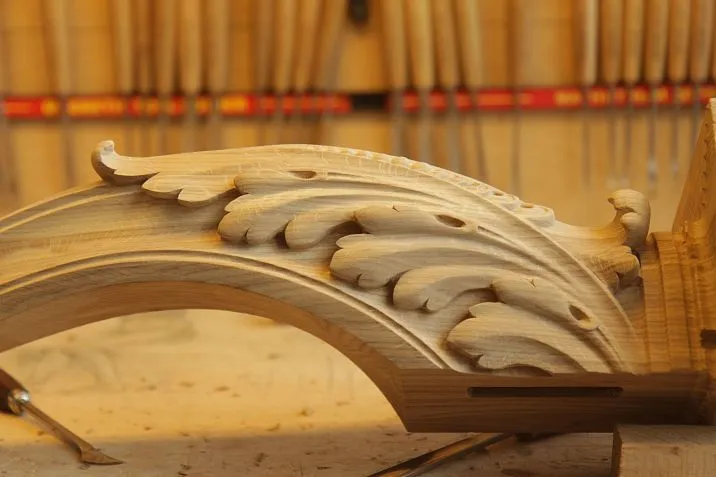
In the world of modern interiors, where synthetic materials often replace natural solutions, production of oak furniture remains an island of true craftsmanship. This is not just a technological process — it is a philosophy of creating objects that will outlive their owners and become family heirlooms.
Oak has always been considered the king among wood species. Its majestic strength, noble texture, and remarkable ability to become even more beautiful over time make it the ideal material for creating elite furniture. But what truly distinguishes quality production from mass production? What secrets lie behind each stage of creating oak masterpieces?


Oak as a material: why exactly this species won the hearts of craftsmen
Oak wood possesses a unique combination of characteristics that makes it practically irreplaceable in furniture production. The density of the material ranges from 680 to 750 kg/m³ — this means exceptional strength and longevity of finished products. At the same time, oak does not lose its plasticity, allowing craftsmen to realize the most daring design solutions.
The structure of oak wood was formed over decades. Large pores create a distinctive pattern that cannot be confused with any other species. These pores do not merely decorate the material — they perform an important function, providing natural ventilation and preventing condensation formation.




Classification of oak wood in production
Professionals distinguish several categories of oak wood, each with its own purpose:
European oak — considered the standard of quality due to its slow growth and dense fiber structure.
American white oak — distinguished by a lighter shade and uniform texture.
Wet oak — wood that has lain for decades in a water environment, acquires a unique dark color and special strength.
The choice of a specific type of wood depends on the intended use of the future product and the customer's aesthetic preferences.
Our factory also produces:


Production stages: from log to work of art
Get Consultation
Raw material selection and preparation
Quality production of oak furniture It begins with careful selection of wood. Masters evaluate not only visible characteristics — color, texture, absence of defects — but also the internal properties of the material.
The age of the tree plays a key role. Ideal is oak aged 80-120 years — during this period, the wood achieves the optimal balance of strength and flexibility. Too young trees yield wood with high sapwood content, while over-aged trees may have internal cracks and rot.
The harvesting season also matters. Traditionally, oak is harvested from November to February, when sap movement is minimal. This ensures better material stability during subsequent drying.
Drying: critically important stage
Proper drying is the foundation of quality for any wooden product. Freshly sawn oak contains up to 50-70% moisture, and for furniture production, this must be reduced to 8-12%.
Natural drying is performed outdoors under shelters. This process may take 2 to 5 years depending on the thickness of the blanks. The advantage of this method is minimal internal stresses in the wood and preservation of all natural qualities of the material.
Kiln drying allows reducing the time to several weeks or months. Modern drying chambers are equipped with systems for precise control of temperature, humidity, and air circulation. Properly conducted kiln drying does not fall short in quality compared to natural drying, but requires high operator skill.
Combined drying combines both methods — preliminary natural drying to 20-25% moisture, followed by finishing in a kiln to desired parameters.
Cutting and initial processing
After achieving optimal moisture content, the wood proceeds to cutting. Modern enterprises use computer-controlled band saws, which allow achieving maximum yield of finished products with minimal waste.
The direction of cutting is of fundamental importance:
- Radial cutting yields the most stable blanks with beautiful silver rays.
- Tangential cutting creates a distinctive wavy pattern of annual rings.
- Mixed cutting is used to obtain blanks with various decorative effects.
Cabinet work
Processing oak blanks requires special equipment and high skill from masters. The hardness of the wood imposes higher requirements on cutting tools — carbide-tipped or diamond-coated cutters are used.
The feed rate of the material must be optimal — too fast processing leads to chips and scratches, while too slow processing causes burns from friction. Experienced masters intuitively determine the correct mode, relying on the sound of the machine and the quality of the shavings.
Types of oak furniture: classic and modern
Cabinet Furniture
Oak cabinets, chests, and shelves — this is an investment for decades. Massive side panels, strong shelves, reliable joints ensure exceptional longevity. Modern technologies allow creating carcass furniture with perfectly fitted parts, without visible gaps or seams.
Special attention is paid to storage systems. Oak cabinets feature drawers on ball-bearing guides, door closers, and built-in lighting. All this harmoniously complements the noble appearance of natural oak.
Tables and chairs
Oak dining groups create a special atmosphere in the home. A massive table can withstand any load, and over time, a noble patina appears on its surface, testifying to many family meals.
Producing oak chairs — a special art. The complex geometry of backs and seats requires virtuoso mastery of cabinetmaking tools. Joint connections are made using mortise and tenon joints — such a construction lasts for centuries.
Bedroom furniture
Oak beds — symbols of stability and reliability. Massive backs, strong sides, reliable fastenings ensure comfortable sleep for many years. Often, oak beds are complemented by matching bedside tables and chests, creating a harmonious ensemble.
Finishing and decoration: revealing the beauty of oak
Sanding: preparation for perfection
Quality sanding is the foundation of beautiful finishing. The process begins with coarse sanding using P80-P100 abrasive to remove processing marks. Gradually, finer grits are used: P150, P220, P320, and for very thin finishes — up to P400.
Oak requires a special approach to sanding. Large pores must be carefully cleaned of dust, otherwise it will show under any finish. For this, brushes with natural bristles or compressed air blowing are used.
Staining: playing with color
The natural color of oak ranges from light yellow to brown, but modern technologies allow achieving any shade. Popular staining options:
White oak — light, almost white tones create a feeling of freshness and spaciousness.
Worn oak — deep dark brown and black shades emphasize solidity and respectability.
Golden oak — warm honey tones create a cozy, homey atmosphere.
Gray oak — a modern trend, perfectly fitting into loft and Scandinavian minimalism styles.
Protective coatings
Finish coating not only protects the wood but also highlights its beauty. Main types of coatings:
Oil-based coatings deeply penetrate the oak structure, emphasizing its natural texture. The surface remains matte and pleasant to the touch. Such coatings require periodic renewal, but this allows maintaining the original furniture appearance for decades.
Varnish coatings create a protective film on the surface. Modern polyurethane varnishes provide high resistance to abrasion and chemical exposure. Matte varnishes preserve the natural oak appearance, while glossy varnishes accentuate its decorative qualities.
Waxing — a traditional finishing method, creating a silk-like surface with a slight sheen. Wax coatings require regular maintenance but provide unparalleled tactile sensations.
Modern technologies in oak furniture production
CNC machines: precision down to the micron
The introduction of CNC machines revolutionized production of oak furnitureModern machining centers are capable of performing the most complex operations with precision down to 0.01 mm.
3D milling allows creating items with curved surfaces, which previously required skilled hand carving. Automatic tool change ensures continuous processing and high-quality finishing.
CAD/CAM systems: from idea to product
Computer-aided design allows creating virtual models of future furniture, calculating loads, and optimizing the structure. The customer can see how their furniture will look before production even begins.
Automated cutting systems minimize wood waste, which is especially important when working with expensive oak. The program calculates optimal placement of parts on a sheet, taking into account grain direction and decorative effects.
Laser engraving
Laser technologies open new possibilities for decorating oak furniture. Complex ornaments, logos, and personalized inscriptions can be applied with micron-level precision. The laser not only creates the design but also slightly chars the wood, creating additional color contrast.
Ergonomics and design: furniture for people
Anthropometric data
Modern furniture production is impossible without considering anthropometric data. Table heights, seat depths, backrest angles — all are calculated based on average human body dimensions.
Oak furniture, due to the strength of the material, allows creating thinner and more elegant structures without losing functionality. This is especially important in modern compact interiors, where every centimeter counts.
Stylistic directions
Classic style implies the use of traditional proportions, carved elements, and rich hardware. Oak in classic furniture is usually stained in dark tones and covered with glossy varnish.
Modern style leans toward simple forms, minimal decoration, and functionality. Oak furniture in modern style often has light tones and matte finishes.
Scandinavian style uses natural oak tones, simple forms, and eco-friendly coatings. Such furniture creates a sense of harmony with nature.
Loft prefers rough textures, deliberate simplicity, and combinations of wood with metal. Oak elements are often left untreated or coated with oil.
Quality Control: Guarantee of Perfection
Incoming Raw Material Control
Each batch of wood undergoes careful inspection. Moisture is measured with electronic moisture meters to an accuracy of 0.1%. Internal defects are checked using ultrasonic defectoscopes.
Geometric parameters of blanks are controlled by laser measurement systems. Dimensional deviations should not exceed 0.5 mm per meter of length.
Operational Control
Intermediate control is performed at each stage of production:
- Accuracy of dimensions after mechanical processing
- Surface quality after sanding
- Uniformity of coating application
- Adhesive joint strength
Final acceptance
Finished products undergo comprehensive inspection according to 50 parameters. Not only appearance but also functionality is controlled: smooth operation of sliding elements, door alignment accuracy, fastener reliability.
Each item receives a quality passport specifying all characteristics and usage recommendations.
Ecological Aspects of Production
Sustainable Forestry
Responsible manufacturers work exclusively with forestry companies holding FSC or PEFC certificates. These organizations guarantee that the wood comes from forests managed according to sustainable development principles.
Selective logging allows preserving forest ecosystems by felling only mature trees and leaving saplings to continue growing. Reforestation is mandatory — several new trees are planted for each felled one.
Waste-free production
Modern enterprises strive for zero-waste production:
- Large offcuts are used to manufacture small items
- Shavings and sawdust are pressed into fuel briquettes
- Wood dust is used to produce MDF
- Bark is processed into mulch for gardening
Ecologically Safe Coatings
Water-based coatings, free of volatile organic compounds, are gaining increasing popularity. These materials are safe for health and do not harm the environment.
Natural oils and waxes derived from plant materials are not only eco-friendly but also enhance the natural beauty of oak.
Industry development trends
Product personalization
Modern consumers increasingly order furniture to custom sizes and designs. Production flexibility allows fulfilling individual orders without significant cost increases.
Digital technologies enable virtual furniture design in collaboration with the client. 3D visualization allows seeing the future product in the interior before production begins.
Integration of smart technologies
Oak furniture is beginning to be equipped with "smart home" elements: built-in lighting with motion sensors, USB charging ports, wireless charging devices. All technical elements are maximally inconspicuous, not compromising the aesthetics of natural wood.
Modular systems
Modular furniture, allowing easy configuration changes according to needs, is gaining popularity. Oak modular systems combine traditional quality with modern functionality.
Oak Furniture Care
Daily Care
Oak furniture requires minimal maintenance, but simple rules must be followed:
- Regular dry cleaning with soft cloth
- Avoiding direct sunlight exposure
- Maintaining stable air humidity at 45-65%
- Using hot plate stands
Restoration of Finishes
With proper care, oak furniture can last for centuries. Oil-based finishes should be renewed every 3-5 years, depending on usage intensity. Lacquer finishes last longer but require professional restoration if damaged.
Minor scratches on oil-based finishes can be fixed by lightly sanding the surface and applying a new layer of oil. Deep damage requires professional intervention.
Investment attractiveness of oak furniture
Preservation and Growth in Value
Quality oak furniture does not lose value over time. Antique oak items often cost more than modern equivalents. This makes purchasing oak furniture not only practical but also a financially sound decision.
Cost savings on replacement
Unlike furniture made of MDF or particleboard, oak items do not require replacement every 10-15 years. Properly manufactured and maintained oak furniture can serve multiple generations, ultimately making it more economical.
Choosing a Manufacturer: Quality Criteria
Experience and reputation
When choosing an oak furniture manufacturer, pay attention to the company’s experience, customer reviews, and portfolio of completed projects. Serious manufacturers do not hide their technological processes and are happy to show their production to potential clients.
Warranty obligations
Quality manufacturers provide extended warranties on their products — from 5 years for carcass furniture to 2 years for finishes. Additionally, a service for maintenance and repair of items must be organized.
Certification
The presence of quality, environmental safety, and international standard compliance certificates indicates the manufacturer's serious approach to their business.
Conclusion
production of oak furniture It is an art that combines centuries-old craftsmanship traditions with modern technologies. Each piece carries a part of the creator's soul, producing not just a piece of furniture, but a work capable of delighting the eye and serving faithfully for many decades.
In an era of mass production and disposable items, oak furniture remains a symbol of constancy, reliability, and impeccable taste. It does not submit to fashion whims, but creates its own timeless aesthetics.
Choosing oak furniture means investing not only in the beauty and functionality of your home, but also in its future. Such furniture will become a family heirloom, passed down from generation to generation, preserving the warmth of human hands that created it.
Modern technologies allow creating oak items of any complexity and style, but the main qualities of this noble material remain unchanged: strength, beauty, and durability. In a world where everything changes at dizzying speed, oak furniture remains an island of stability and confidence for tomorrow.
STAVROS Company continues the best traditions of furniture production, creating items that combine classic quality with modern ergonomic and design requirements. Our long-standing experience and continuous improvement of technologies enable us to offer clients furniture meeting the highest standards of quality and beauty.