Article Contents:
- Antique Origins: Birth of Architectural Classicism
- Medieval Practicality: Function Above All
- Baroque and Rococo: Apotheosis of Decoration
- Renaissance: The Revival of Beauty
- Technology of Creation: From Concept to Realization
- Classicism: strictness and harmony
- Design: The Art of Proportions
- Material Selection: Character of the Future Product
- Preparation Operations: Foundation of Quality
- Mechanical Processing: Precision as the Basis of Beauty
- Decorative Processing: The Soul of the Product
- Stylistic Diversity: Crown Molding for Every Era
- Final finishing: protection and beauty
- Classic Solutions: Eternal Relevance
- Baroque Luxury: When Decoration Becomes the Main Feature
- Empire: Grandeur and Rigor
- Modern: Natural Forms and Asymmetry
- Ceiling Molding: Framing the Upper Surface
- Art Deco: Geometry and Luxury
- Modern minimalism: beauty of simplicity
- Functional purpose: more than decoration
- Wall Molding: Vertical Division
- Window and Door Molding: Framing Openings
- Laser Technologies: New Level of Detailing
- Technological innovations in production
- CNC Processing: Precision and Reproducibility
- New Materials: Expanding Possibilities
- Preparation for Installation: Foundation of Quality Installation
- Installation and Operation: Practical Aspects
- Jointing Elements: Art of Invisible Connections
- Mounting Methods: Reliability and Aesthetics
- Crown Molding in Various Interior Types
- Maintenance and servicing: preserving beauty
- Residential Spaces: Comfort and Warmth
- Public Interiors: Representativeness and Status
- Historical Interiors: Precision of Recreation
- Pricing: Influencing Factors
- Economic Aspects of Production
- Market and Competition: Struggle for Quality
- Market and Competition: Struggle for Quality
- Ecological aspects of production
- Sustainable Development: Responsibility to Nature
- Energy Efficiency: Reducing Environmental Load
- The Future of Cornice Production
- Digitalization: Smart Production
- Customization: A Cornice for Each
- Preparation for Installation: Foundation of Quality Installation
- Frequently Asked Questions
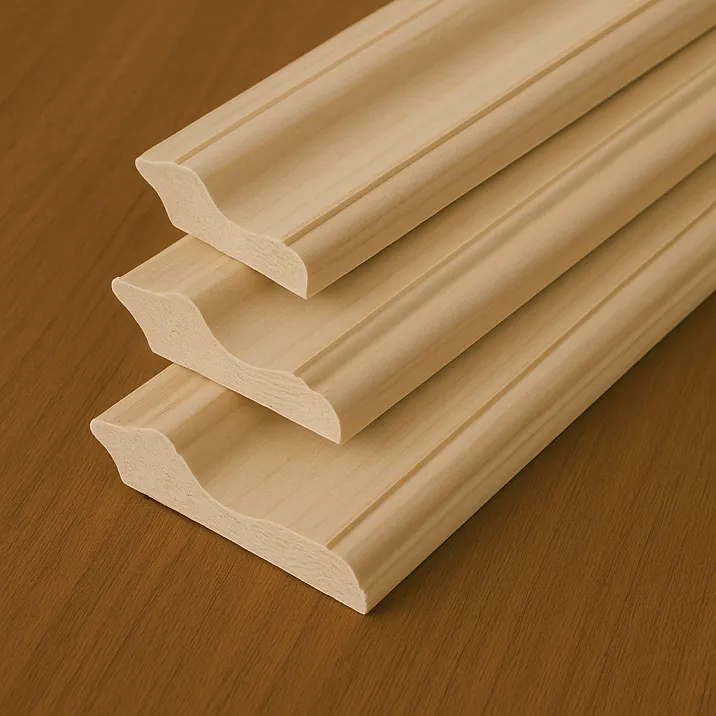
In the symphony of interior design, every note matters, but some resonate as the final chord, imparting completeness and perfection to the composition. The cornice is precisely such a note. It does not shout for attention, does not demand focus, yet its absence is instantly noticeable even to the untrained eye. Like an elegant signature of the artist beneath a painting, the cornice concludes the architectural composition, transforming a collection of functional elements into a harmonious whole.
What makes a space truly elegant? Why do some interiors captivate the soul from the first glance, while others leave one indifferent, despite expensive materials and fashionable furniture? The secret often lies in the details — precisely those cornices that create smooth transitions between planes, conceal technical elements, and add nobility to the space.
Cornice ProductionThis is not merely the manufacture of functional strips. It is the art of creating elements capable of elevating the most modest interior to the level of a work of designer art. Each cornice embodies the spirit of an era, the philosophy of a style, the craftsmanship of its creator.


Cornices Through the Ages: From Antiquity to the Present Day




Ancient Origins: The Birth of Architectural Classicism
The cornice was born in ancient temples as a necessity — to protect walls from rainwater dripping from the roof. But even then, masters understood: a functional element must also be beautiful. Ancient architects created a system of orders, where each cornice had its own proportions, character, and soul.
The Doric cornice embodies masculine simplicity. No excess, only pure geometry and noble proportions. The Ionic is more elegant, with a subtle play of shadows. The Corinthian is luxurious, richly decorated, showcasing the skill of the carver.
These principles, laid down two and a half millennia ago, remain alive to this day. Modern cornice production largely relies on ancient canons, adapting them to new materials and technologies.
Our factory also produces:


Medieval Practicality: Function Above All
The Middle Ages brought new architectural challenges. Castles and cathedrals required different solutions than ancient temples. Cornices become more massive, robust. Their primary task — protection — takes precedence over beauty.
Yet even in the harshest times, masters found ways to adorn functional elements. Carved mascarons, vegetal ornamentation, heraldry — all this transformed simple protective strips into elements of artistic decoration.
Get Consultation
Renaissance: The Revival of Beauty
The Renaissance returned ancient ideals to architecture, enriching them with new content. Cornices become more complex, multi-elemental. Italian palazzi demonstrate an unprecedented refinement of decoration.
Cornice ManufacturingIn the Renaissance era, cornice production becomes a high art. Every master strives to surpass predecessors in the elegance of form and richness of decoration. New carving techniques, methods of wood processing, and ways of creating complex profiles emerge.
Baroque and Rococo: The Apotheosis of Decoration
The 17th–18th centuries — the era of triumph of decorative art. Cornices become an indispensable part of the luxurious furnishings of palaces and mansions. They are lavishly adorned with gilding, painting, and intricate carving.
French masters perfect the art of cornice decoration. The interiors of Versailles astonish not only by scale but also by the refinement of details. Each cornice is a work of art requiring months of meticulous labor.
Classicism: strictness and harmony
The late 18th — early 19th centuries bring a return to classical ideals. Cornices become more restrained, yet no less expressive. The primary criteria of beauty become proportion and harmony, rather than excessive decoration.
Russian Classicism creates its own interpretation of classical forms. Petersburg and Moscow mansions demonstrate a unique understanding of the cornice’s role in architectural composition.
Technology of Creation: From Concept to Realization
Design: The Art of Proportions
Cornice creation begins long before the material comes under the master’s tools. It all starts with understanding the task — for what interior is the cornice intended, what role should it play in the overall composition.
The architect or designer creates a sketch where every line, every curve has meaning. Proportions are calculated with mathematical precision — this determines whether the cornice will harmoniously fit into the space or disrupt its balance.
Modern CAD systems allow creating precise three-dimensional models of future cornices. The designer can visualize how it will look in the interior, select optimal dimensions, and evaluate the visual effect.
Material selection: the character of the future item
The material determines not only the appearance of the cornice, but also its character, the mood it will create in the interior. Each material dictates its own possibilities and limitations.
Natural woodOak remains a classic choice for cornices. Oak gives the item nobility and solidity, beech — elegant restraint, walnut — warm sophistication. Each species has its own character, its own aesthetics.
High-density MDF— a modern alternative to solid wood. This material allows creating complex profiles that would require enormous time and craftsmanship in natural wood.
Polyurethane— opens new possibilities for designers. Lightweight, moisture-resistant, it can imitate any material — from wood to marble. Moreover, polyurethane cornices are easy to install and require no special maintenance.
Preparatory operations: quality embedding
Cornice productionHigh-quality production begins with careful material preparation. Wood undergoes kiln drying to an optimal moisture content of 8–12%. This ensures the geometric stability of the finished products.
Sorting material by quality allows using each board as efficiently as possible. Defect-free material goes to visible surfaces, boards with minor flaws — to hidden parts of the structure.
Pre-treatment with protective compounds ensures biological protection of the wood. This is especially important for cornices, often installed in areas with high humidity.
Mechanical processing: precision as the basis of beauty
Creating a cornice is a chain of precise operations, where each affects the quality of the final result. Primary processing includes planing, calibrating, and creating basic surfaces.
Modern machines ensure processing accuracy with tolerances in tenths of a millimeter. This is critical for cornices, where even minor deviations can disrupt the geometry of the entire structure.
Profiling is the key operation where the blank becomes a cornice. Special knives, manufactured according to individual drawings, create complex profile geometry in a few passes.
Decorative processing: the soul of the item
Simple profiles are ready after mechanical processing, but many cornices require additional decorative work. Carving, embossing, inlay — all this gives the item individuality and artistic value.
Hand carving remains the pinnacle of craftsmanship. An experienced carver can create true works of art on the cornice surface — botanical ornaments, geometric patterns, complex compositions.
Modern CNC machines allow reproducing complex carved elements with high precision. However, final finishing, giving the carving liveliness and expressiveness, is still performed by the master’s hand.
Finish Processing: Protection and Beauty
Sanding is an important stage determining the quality of the finished item’s surface. Multi-stage abrasive processing with different grits refines the surface to perfect smoothness.
Priming provides a reliable base for finish coatings. Modern primers contain antiseptic additives protecting the wood from biological damage.
Staining allows giving the cornice the desired shade, emphasizing wood texture or creating imitation of valuable species. Multi-layer staining enables creating complex color effects.
Lacquering or painting completes the manufacturing process. Modern coatings provide not only protection but also give the item the desired gloss, highlighting its aesthetic qualities.
Stylistic diversity: cornices for every era
Classic solutions: eternal relevance
Classic cornices never go out of fashion. They embody time-tested principles of beauty and harmony. Strict proportions, noble restraint of decoration, perfect execution — these characterize a classic cornice.
Doric cornice with its minimalist profile suits interiors where simplicity and masculinity are valued. Ionic — for more elegant spaces. Corinthian — for luxurious interiors where every detail should emphasize the owner’s status and taste.
Manufacturing wooden cornicesIn classical style requires deep understanding of ancient canons. Each element must be executed according to traditional proportions, but adapted to modern conditions.
Baroque luxury: when decoration becomes the main focus
Baroque cornices are a triumph of decorative art. Rich carving, complex profiles, abundance of decorative elements create a sense of luxury and grandeur.
Plant motifs are the hallmark of baroque decoration. Grapevines, acanthus leaves, rosettes, and palmettes intertwine into complex compositions. Each element is meticulously crafted, every detail holds significance.
Gilding is an essential part of baroque cornices. It emphasizes the relief of carving, creates play of highlights, and lends the interior a sense of grandeur. Modern technologies allow creating finishes indistinguishable from real gold.
Empire: grandeur and strictness
The Empire style brought new motifs to cornice art — military symbolism, ancient attributes of power. Eagles, laurel wreaths, fasces, swords — all of this finds reflection in cornice decoration.
Empire cornices are distinguished by monumentality and solemnity. They create a sense of significance, emphasize the status of the interior. The color palette is restrained — white, gold, dark green.
Modern: natural forms and asymmetry
The Modern style revolutionized cornice art. Abandonment of canonical forms, turn to natural motifs, use of asymmetry — all this fundamentally changed the perception of beauty.
Modern cornices often include images of flowers, leaves, even animals. Smooth lines, soft transitions create a sense of organic, natural form. This is not the frozen beauty of classicism in stone, but a living, breathing form.
Art Deco: geometry and luxury
The Art Deco style of the 1920s-30s introduced geometric strictness into cornice art, without depriving it of luxury. Straight lines, stepped profiles, contrasting material combinations created an image of modernity and technological progress.
Art Deco cornices often include elements made of different materials — wood, metal, glass. Such combinations create interesting visual effects, emphasize the innovative character of the style.
Modern minimalism: beauty of simplicity
Modern cornices impress with their apparent simplicity. Clean lines, absence of decoration, emphasis on material quality and flawless execution. But behind this simplicity lies a deep understanding of space and form.
A minimalist cornice must be perfect in every detail. There is no room for chance, every millimeter is precisely calibrated. Such cornices create a sense of lightness, airiness, and modernity.
Hidden cornices — the latest trend in modern design. They create a "floating" ceiling effect, where the light source is invisible and the illumination appears magical.
Functional purpose: more than decoration
Ceiling cornices: framing the upper plane
A ceiling cornice is not just a decorative element, but an architectural detail that visually separates the wall from the ceiling, creating a clear boundary between vertical and horizontal planes.
Production of ceiling cornicesrequires special attention to proportions. A too thin cornice will disappear against a high ceiling, while an overly massive one will "weigh down" the space, visually reducing the room's height.
Light cornices — a modern solution combining decorative and lighting functions. A hidden LED strip in the cornice creates soft, diffused lighting, visually expanding the space.
Wall cornices: vertical division
Wall cornices serve to horizontally divide walls, create proportions, and highlight functional zones. They can be placed at different heights, creating rhythm and dynamism in the interior.
The classic three-part division of a wall — plinth, main section, cornice — is created precisely with the help of wall cornices. Such division gives the interior a sense of scale and nobility.
Window and door cornices: framing openings
Cornices above windows and doors serve not only decorative but also protective functions. They divert water from openings, protect from direct sunlight, and create shade.
But the main purpose of such cornices is architectural framing of openings. A properly designed cornice can visually enlarge a window, making it a more significant element of the facade or interior.
Technological innovations in production
CNC Processing: Precision and Reproducibility
CNC machines revolutionized cornice production. Now it is possible to reproduce the most complex classical profiles with precision unattainable by hand.
Programming CNC machines is a complex task requiring high qualification. Each element of the profile must be converted into digital code, and the specific characteristics of processing a particular material must be taken into account.
3D milling opens new possibilities for creating volumetric decorative elements. Reliefs that previously required hours of manual labor can now be manufactured in minutes.
Laser technologies: a new level of detail
Laser processing allows creating the finest patterns, inscriptions, even photographic images on cornice surfaces. The laser beam can work with precision down to microns, creating details invisible to the naked eye.
Laser cutting opens new possibilities for creating ornate cornices. Any complexity of through patterns, delicate interweavings — all this becomes possible thanks to laser technologies.
New Materials: Expanding Possibilities
Composite materials of the new generation combine the best properties of various components. Wood fibers provide a natural appearance, polymers — stability and durability.
Nanotechnologies allow creating coatings with unique properties — self-cleaning, antibacterial, color-changing depending on lighting.
Installation and Operation: Practical Aspects
Preparation for installation: basis of quality mounting
A quality cornice requires professional installation. Preparation includes checking the room's geometry, leveling surfaces, marking mounting locations.
Wall and ceiling irregularities are the main problem during cornice installation. Deviations exceeding 3-5 mm may lead to gaps and structural misalignment.
Mounting methods: reliability and aesthetics
The choice of mounting method depends on the cornice material, wall type, and operating conditions. Hidden mounting provides the best appearance but requires more precise marking.
Adhesive mounting is suitable for lightweight cornices made of polyurethane or MDF. Modern adhesives ensure a reliable connection but complicate removal if needed.
Mechanical mounting with screws or anchors is the most reliable method for heavy wooden cornices. Fastener heads are concealed with putty or decorative caps.
Jointing elements: the art of invisible connections
Quality jointing is a sign of professional installation. Joints must be tight, without gaps or steps. For complex profiles, precise trimming is done on a saw or circular saw.
Corner joints are the most critical areas. For internal corners, a 45-degree "on the nose" cut is used. External corners can be finished with special corner elements.
Maintenance and care: preserving beauty
Proper care extends the lifespan of cornices and preserves their aesthetic qualities. Regular dry cleaning removes dust, preventing its accumulation in screw recesses.
Wet cleaning is permissible only with special agents that do not damage the finish. Abrasive materials and aggressive chemicals may damage the cornice's appearance.
Periodic renewal of protective coating is the key to the longevity of wooden cornices. The intervals depend on operating conditions and coating type.
Cornices in various interior types
Residential spaces: comfort and coziness
In residential interiors, cornices play a special role — they create a sense of home coziness and comfort. Here, softer, rounded shapes, warm colors, and natural materials are appropriate.
Living room — the main room of the house, where cornices can be more expressive, even luxurious. Bedroom requires a calmer solution. Children's room — cheerful and lively.
Public interiors: prestige and status
Offices, hotels, restaurants have special requirements for cornices. They must highlight the establishment's status, create the desired atmosphere, and be practical to maintain.
Classic forms remain favorites in prestigious interiors. They create a sense of stability, reliability, and tradition.
Historical interiors: precision reproduction
Restoration of historical buildings requires precise reproduction of original cornices. This is a complex task requiring deep study of archival materials and application of traditional technologies.
Custom cornice manufacturingFor historical objects — a special direction requiring the highest qualification of craftsmen.
Economic Aspects of Production
Pricing: Influencing Factors
The cost of cornices depends on many factors. Material is one of the main pricing elements. Items made from valuable wood species cost significantly more.
Profile complexity and presence of decorative elements significantly affect labor costs and price. Hand carving may increase the cost several times.
Order volume also affects the price. Large batches are produced more cheaply due to savings on equipment setup.
Market and competition: battle for quality
The cornice market is highly competitive. Manufacturers compete not only on price but also on quality, service, and innovation. Consumers are becoming increasingly demanding of quality and design.
Imported valances compete with domestic ones. However, Russian manufacturers have advantages — knowledge of the local market, ability to quickly respond to changes in demand, lower logistics costs.
Ecological Aspects of Production
Sustainable Development: Responsibility Toward Nature
Modern valance production must consider ecological requirements. Using wood from certified forests, applying non-toxic coatings, waste disposal — all of this is part of a responsible approach.
The FSC system guarantees that forests regenerate faster than they are harvested. This ensures sustainable forestry development.
Energy Efficiency: Reducing Environmental Load
Modern technologies allow reducing energy consumption in production. Energy-saving drying chambers, heat recovery, using waste as fuel — all of this reduces the ecological footprint of production.
The Future of Valance Production
Digitalization: Smart Production
Internet of Things, artificial intelligence, robotics — these technologies are already changing the appearance of valance production today. Machines exchange information, optimize processes, and warn of malfunctions.
Individualization: A Valance for Each
The development of flexible production systems makes mass customization possible. Each customer can get a unique valance, specially created for their project, but at the price of a serial product.
New Materials: Expanding Possibilities
Bio-composites, nanomaterials, "smart" coatings — all of this opens new horizons for valance art. Perhaps in the future, valances will be able to change color, react to lighting, even generate electricity.
Frequently asked questions
Which material is better to choose for valances in a residential interior?
For residential spaces, valances made of natural wood or high-quality MDF are optimal. Wood creates a cozy atmosphere, is eco-friendly and long-lasting. MDF is more geometrically stable and cheaper. For humid areas, valances made of polyurethane or specially treated wood are recommended.
How to properly calculate valance sizes for a room?
The valance size should match the room's proportions. For standard rooms with ceilings 2.5–2.7 m, valances 80–150 mm wide are suitable. In high-ceilinged rooms, wider valances can be used. The main rule — the valance should be proportional to the room size and not overwhelm the space.
Can valances be installed by oneself?
Simple valances made of lightweight materials can be installed by oneself with basic tool-handling skills. However, for complex multi-component structures or heavy material valances, it is better to consult professionals. Incorrect installation may damage the appearance and reduce the lifespan of the product.
How often should wooden valances be serviced?
Regular care for wooden valances includes dry cleaning once a month and wet cleaning once every six months. Reapplying protective coating is recommended every 5–7 years depending on usage conditions. In rooms with high humidity or intensive use, more frequent maintenance may be required.
Which valances are suitable for a classic interior?
Classic interiors suit valances with traditional profiles — Doric, Ionic, or Corinthian. Proper proportions and quality craftsmanship are important. Material — natural wood or quality wood-grain MDF. Color is usually white, ivory, or natural wood tone.
Can valances be made according to an individual project?
Yes, most manufacturers offer custom valance production based on individual drawings. This allows creating a unique interior fully matching your taste and project requirements. The cost of custom items is higher than serial ones, but the result justifies the expense.
How to choose valance color?
Valance color should harmonize with the overall color scheme of the interior. A classic option — white or light-colored valances, which visually increase ceiling height. Valances in wall color create a monolithic effect, in ceiling color — a sense of height. Contrasting valances become an active decorative element.
Which valances are better for a modern interior?
Modern interiors require minimalist valances with simple geometry. Hidden valances, creating a "floating" ceiling effect, are popular. Materials — MDF, polyurethane, sometimes metal. Colors are usually neutral — white, gray, black. Clear lines and flawless craftsmanship are important.
ModernCornice ProductionRepresents a harmonious blend of centuries-old traditions and advanced technologies. In each item, the spirit of the era and the craftsmanship of human hands live, creating elements capable of transforming any space into a work of architectural art.
From classical antique profiles to ultra-modern minimalist forms, from mass production to individual artist-made pieces — modern industry is capable of meeting the most demanding requirements. The valance has ceased to be merely a functional element; it has become a tool for creating atmosphere, mood, and style.
CompanySTAVROSembodies exactly such an approach to curtain rod production. Over a quarter of a century of work has created a unique ecosystem where traditional craftsmanship harmoniously combines with innovative technologies. Each curtain rodSTAVROS— is not just a decorative element, but a carrier of culture and traditions, capable of making your home truly special. Choosing the productSTAVROS, you invest in beauty, quality, and durability, receiving not just a curtain rod, but an elegant finishing touch for your interior.