Article Contents:
- Philosophy of modern production: from raw material to masterpiece
- Integrated approach to production
- Technological revolution in woodworking
- Automation of production processes
- Raw material base: foundation of quality production
- Raw material preparation and sorting
- Drying technologies: the art of moisture removal
- Drying quality control
- Routing and profiling: creating shape
- Multi-pass processing of complex profiles
- Quality control systems: guarantee of perfection
- Statistical process control
- Final processing: imparting a finished appearance
- Coating application technologies
- Ecological Aspects of Modern Production
- Energy efficiency of production
- Digitalization of Production Processes
- Production management systems
- Ensuring labor safety
- Ergonomics of workstations
- Staff preparation and development
- Motivation and retention of staff
- Logistics and inventory management
- Automated warehouses
- Innovative Development Directions
- Integration with smart buildings
- Frequently Asked Questions
- Conclusion
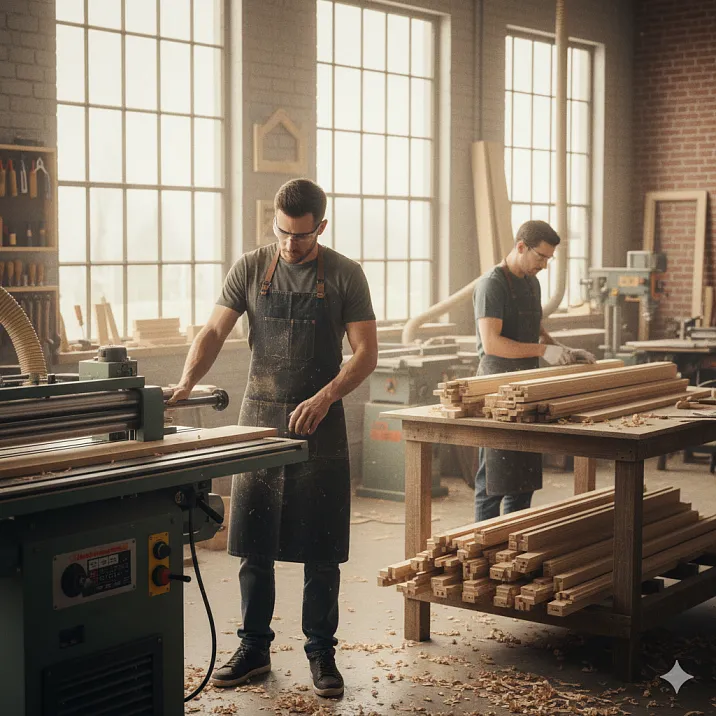
What transforms a plain piece of wood into an exquisite interior element capable of radically changing the appearance of a room? The secret lies in the technological processesmolding production– a complex and multi-stage industry where each operation affects the quality of the final product. From the moment raw boards arrive until the packaging of finished items, numerous technological operations take place, each requiring precision, professionalism, and modern equipment.
Modern production of trim items represents a high-tech process where traditional woodworking methods combine with innovative solutions. Automated lines, computer control, quality control systems – all serve one purpose: creating products that will delight consumers with their flawless quality and durability for decades.
But behind the apparent simplicity of finished items lies an entire universe of engineering solutions, technological processes, and professional secrets. Each stage of the production chain has its own characteristics, requires special equipment and skilled personnel. Understanding these processes helps appreciate the true value of quality trim and explains the differences in product pricing among various manufacturers.


Philosophy of modern production: from raw material to masterpiece
The production philosophy of modern enterprises manufacturing trim items is based on the understanding that quality is established at the earliest stages. It is impossible to create an outstanding product from mediocre raw material, just as it is impossible to achieve a stable result without well-tuned technological processes.
Each log arriving at the production facility undergoes careful selection. Experienced specialists evaluate the wood species, moisture content, presence of defects, and grain direction. This initial selection determines the intended use of the material – will it become the basis for a premiummolding for furnitureor will be directed to the manufacture of technical components.
Modern manufacturers understand that the consumer has become more demanding and educated. The days when one could sell questionable-quality products are over. Today, only those enterprises survive that invest in quality at all levels — from staff training to equipment modernization.




Integrated approach to production
Modern trends in organizing the production of trim items are aimed at creating integrated complexes, where all stages of the technological chain are under unified control. This allows controlling quality at each stage and minimizing losses during the transportation of semi-finished products between different production facilities.
Vertical integration starts with logging and ends with packaging of finished products. Some large manufacturers have their own forest areas, which guarantees a stable supply of quality raw material and allows planning harvesting in accordance with production needs.
Horizontal integration implies expanding the range of products produced within the same technological base. An enterprise producingWooden baseboardcan easily adopt the production of baseboards or moldings, using the same equipment and technological processes.
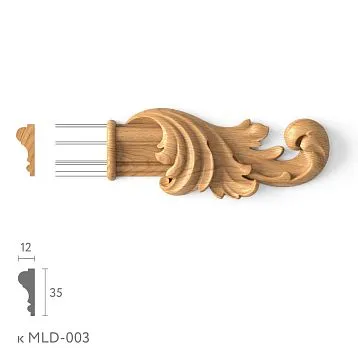
Our factory also produces:


Technological Revolution in Woodworking
The last two decades have radically changed the appearance of the woodworking industry. What once required high skill and years of experience from a craftsman is now performed by automated systems under computer control. But this does not mean that the human factor has lost its value — only the nature of requirements for personnel has changed.
CNC machines have brought a true revolution to the production of trim items. Now it is possible to reproduce the most complex profiles with accuracy down to tenths of a millimeter, and most importantly — to do so consistently, item after item. Programmable setup allows quickly switching from one profile to another, which is critically important under the diverse assortment of modern production.
3D modeling has changed the approach to developing new products. Now a designer can create a virtual model of the future item, check its manufacturability, optimize its shape for production, and only then launch the manufacturing of the real tool. This saves time and resources, reduces the risk of errors during the introduction of new products.
Get Consultation
Production process automation
Industrial robots are gradually taking their place in the production of trim items. While they do not fully replace humans, they take on the most routine and heavy operations. Automated systems for loading and unloading blanks work tirelessly, ensuring stable equipment performance.
Machine vision systems monitor product quality in real time. They can detect defects invisible to the human eye and automatically reject substandard products. This is especially important at high processing speeds, when a human cannot physically inspect each item.
Robotic packaging lines ensure neat arrangement of finished items, eliminating damage during packaging. Programmable packaging parameters allow adapting to different sizes and shapes of items without retooling equipment.
Raw material base: the foundation of quality production
The quality of trim items is established even in the forest, at the stage of timber harvesting. The time of felling, transportation and storage conditions, and the correctness of primary processing — all these factors affect the characteristics of the finished product.Production of trim elementsrequires understanding of the entire chain from the forest to the consumer.
The seasonality of harvesting plays a critical role in the quality of timber. Winter felling is preferable for most species, as during this time the movement of sap in the tree is minimal. Timber harvested in winter is less prone to cracking and warping, and has more stable dimensions after drying.
The species composition of raw material determines the production capabilities and the range of products manufactured. Coniferous species — spruce, fir, larch — form the basis of mass trim production. Broadleaf species — oak, beech, ash — are used for premium items and special applications.
Raw material preparation and sorting
Primary processing of raw material includes sawing logs into blanks of required dimensions, sorting by quality and size, and preliminary drying. At this stage, the foundation for future quality is formed — poor-quality raw material cannot produce quality products, no matter how advanced the equipment is used.
Automatic sorting systems analyze each blank according to multiple parameters: dimensions, moisture content, presence of defects, direction of grain. Computer algorithms determine the optimal use of each board, minimizing waste and maximizing the output of quality products.
X-ray scanners detect hidden defects in wood — internal cracks, rot, metal inclusions. This allows eliminating problematic areas at an early stage, preventing defects in the finished product.
Drying technologies: the art of moisture removal
Drying timber is one of the most critical stages in the production of trim items. Incorrect drying can nullify all efforts to ensure quality. Modern drying complexes use programmable modes, allowing optimization of the process for different wood species and blank sizes.
Chamber drying allows precise control of temperature, humidity, and air circulation. Gradient drying prevents the formation of internal stresses that can lead to warping of finished items. Programs for gentle drying ensure even moisture removal from the wood thickness.
Condensation dryers use the principle of heat pumps for maximum energy efficiency. Heat recovery allows reducing energy consumption by 40-60% compared to traditional steam dryers. This is especially important under rising energy carrier tariffs.
Drying quality control
Modern monitoring systems allow tracking the drying process in real time. Moisture sensors embedded in blanks transmit information about the dynamics of moisture removal. This allows adjusting the drying mode to achieve the optimal result.
Moisture gradients are controlled throughout the entire drying process. Too rapid removal of surface moisture may lead to surface cracking, while uneven drying may cause warping of blanks. Modern control systems maintain the optimal balance between process speed and result quality.
Wood conditioning after drying equalizes residual stresses and stabilizes the geometric dimensions of blanks. This additional stage requires time, but is critically important for producing stable linear products.
Routing and profiling: creating shape
The heart of any linear product manufacturing is routing equipment. It is here that the blank acquires its final shape, transforming from a simple board intoWooden moldingsa complex configuration. Modern four-sided planers can process all surfaces of the blank in a single pass.
Cutting tools are a critically important element of quality routing. Carbide inserts ensure clean processing and durability, but require precise sharpening and correct installation. Diamond cutters are used for processing particularly hard species and provide mirror-like surface finish.
Cutting speeds are optimized for each wood species and profile type. Too high speeds may cause burns and chipping, too low speeds result in unsatisfactory surface quality. Modern control systems automatically select optimal processing modes.
Multi-pass processing of complex profiles
Especially complex profiles require multi-pass processing using specialized tools for each profile element. This increases processing time, but allows achieving the highest surface quality and geometric accuracy.
Coordinating the work of multiple machines in a line requires precise synchronization and quality control at each stage. Workpiece transfer systems between machines prevent damage to already processed surfaces. Intermediate dimensional control allows adjusting settings of subsequent operations.
Flexible production systems allow rapid retooling from one profile to another. Automatic tool change and programmable settings reduce setup time from several hours to several minutes. This is critically important for efficient production of diverse product ranges.
Quality control systems: guarantee of perfection
Modern linear product manufacturing is unthinkable without comprehensive quality control systems. Each stage of the technological process is controlled by specialized measuring systems, ensuring compliance of finished products with specified parameters.
Laser measuring systems control the geometric dimensions of products with micron accuracy. They operate in real-time, allowing immediate adjustment of equipment settings upon detecting deviations. Such a system is especially important for producingcasingswhere dimensional accuracy is critically important for quality assembly.
Optical surface inspection systems detect defects invisible to the human eye. They analyze wood texture, detect microcracks, chips, color changes. Automatic sorting directs defective items to rework or disposal.
Moisture control systems operate without contact, not damaging products. They ensure compliance of finished product moisture levels with established norms, which is critically important for product stability during operation.
Statistical process control
Modern quality systems use statistical control methods to monitor production process stability. Trend analysis allows predicting possible deviations and taking preventive measures before defects occur.
Traceability systems enable tracking the history of each product from raw material to finished product. This allows quickly identifying possible problem causes and taking corrective actions. Barcoding and RFID tags ensure accurate inventory and control.
Quality management systems are integrated with production systems, enabling automatic adjustment of technological parameters upon detecting deviations. This minimizes the production of defective products and reduces scrap losses.
Final finishing: imparting a commercial appearance
Final finishing of linear products includes sanding, application of protective-decorative coatings, and packaging. Each of these stages affects the quality and commercial appearance of the finished product, determining its competitiveness in the market.
Sanding is performed in several stages with gradually decreasing abrasive grit size. Primary sanding removes tool marks and levels the surface. Final sanding creates a perfectly smooth surface, ready for coating application.
Automatic sanding lines ensure uniform processing of the entire product surface. Control of clamping pressure and feed speed is optimized for each profile type. Dust removal systems maintain cleanliness of the working zone and prevent abrasive clogging.
Coating application technologies
Modern coating lines use various coating application technologies depending on material type and requirements for the finished product. Spraying ensures uniform coating of complex profiles, dipping guarantees full protection of all surfaces, and roll coating is economical for flat surfaces.
UV-curable coatings allow instant polymerization of the applied layer under ultraviolet radiation. This drastically reduces the technological cycle time and enables obtaining coatings with unique properties — high hardness, chemical resistance, and wear resistance.
Water-based coatings meet modern environmental requirements, contain no volatile organic compounds, are safe for personnel and the environment. Modern formulations provide coating quality not inferior to traditional solvents.
Ecological aspects of modern production
Environmental responsibility has become a key factor in the development of modern linear product manufacturing. Consumers are increasingly attentive to the ecological properties of materials used, and regulatory bodies are tightening requirements for industrial enterprises.
Waste-free technologies convert waste from main production into additional products. Sawdust and shavings are used to produce fuel briquettes, technical wood chips, and bedding materials. Large waste is processed into technical products or serves as raw material for producing particleboard.
Closed water circulation cycles minimize fresh water consumption and prevent discharge of polluted wastewater. Water purification systems remove impurities and return clean water to the production cycle. This is especially important for enterprises located in water protection zones.
Production energy efficiency
Modern technologies allow significantly reducing energy consumption in production. Heat recovered from drying units is used for heating production areas. Heat recovery systems from compressor units preheat process water.
Variable frequency drives adjust energy consumption to the actual load of equipment. This allows saving up to 30% of electricity without reducing productivity. Automatic shutdown systems for unused equipment eliminate idle energy losses.
Renewable energy sources are gradually integrated into the energy balance of industrial enterprises. Solar panels, wind generators, and biogas installations reduce dependence on traditional energy carriers and improve the enterprise's ecological profile.
Digitalization of Production Processes
Digital transformation fundamentally changes the appearance of modern production of linear products. Integration of information technologies into production processes opens new opportunities for optimization, quality control, and production planning.
Industrial Internet of Things (IIoT) connects all elements of the production system into a single network. Sensors on equipment transmit information about the condition of mechanisms, parameters of technological processes, and product quality. Analysis of these data allows optimizing the operation of the entire system.
Predictive analytics predicts possible equipment failures based on analysis of historical data and current parameters. This allows planning maintenance and avoiding unplanned downtime. The savings from preventing a single major failure can pay for the entire monitoring system.
Production management systems
ERP systems integrate all aspects of enterprise activity—from production planning to finished goods accounting. They ensure transparency of all processes, allow optimizing resource use, and plan equipment loading.
MES systems manage production processes in real time. They coordinate the work of different production areas, ensure compliance with technological regimes, and control product quality at each stage.
CAD/CAM systems integrate product design with programming of processing equipment. This eliminates errors in information transfer from designers to technologists and significantly reduces the time to introduce new products.
Occupational safety assurance
Employee safety is a priority of any modern production. Woodworking equipment poses potential hazards, so safety systems are continuously improved and modernized.
Light curtains and laser scanners instantly stop equipment upon detecting a person in a hazardous zone. These systems operate faster than human reaction and can prevent serious injuries. Two-hand control eliminates accidental activation of hazardous equipment.
Exhaust systems remove wood dust from work areas, preventing the development of respiratory occupational diseases. Modern filters ensure air purification to sanitary standards. Explosion-proof design of exhaust systems prevents dust ignition.
Ergonomics of workstations
Modern production equipment is designed with ergonomic requirements. Control elements are located within the operator's comfortable reach. Adjustable-height workstations adapt to the anthropometric data of a specific worker.
Automation of the most strenuous operations reduces physical load on personnel. Pneumatic and hydraulic systems for moving workpieces eliminate manual lifting of heavy loads. Robotic systems take over monotonous operations, reducing psychological stress.
Production lighting systems provide comfortable conditions for visual work. LED lamps create uniform lighting without shadows or glare. Lighting control systems adjust light intensity according to natural illumination.
Staff preparation and development
Modern production of linear products requires highly qualified personnel capable of working with complex automated equipment. Staff training systems must match the level of technological development of the enterprise.
Training complexes allow operators to learn to operate expensive equipment without risking damage. Virtual reality creates a realistic environment for skill practice under safe conditions. Such systems are especially effective for training onwooden plankscomplex configurations.
Distance learning systems allow staff to improve qualifications without leaving production. Online courses, webinars, and e-textbooks make the learning process more flexible and accessible. Knowledge assessment systems provide objective evaluation of learning outcomes.
Staff motivation and retention
Modern staff motivation systems consider not only material incentives but also needs for professional development, recognition of achievements, and comfortable working conditions. Career ladders provide opportunities for growth within the enterprise.
Rationalization activity systems involve staff in the process of improving production. Encouraging initiative and creative approaches create an atmosphere of shared success. Prizes for rationalization proposals motivate active participation in process improvement.
Social programs include medical insurance, organizing rest, sports events, corporate holidays. Such programs create a corporate culture and contribute to forming a stable team.
Logistics and Inventory Management
An effective logistics system is critically important for uninterrupted production of trim items. Modern enterprises use lean production principles to optimize material flows and minimize inventory.
Material Requirements Planning (MRP) systems calculate optimal order sizes based on production plans, delivery lead times, and safety stock. This helps avoid both material shortages and excessive inventory that ties up working capital.
Just-in-time deliveries synchronize material arrival with production needs. This requires high supplier reliability and precise planning, but allows minimizing warehouse inventory and accelerating working capital turnover.
Automated Warehouses
Automated storage and picking systems increase inventory accuracy and order processing speed. Robotic material handling systems operate 24/7 without breaks, ensuring high warehouse operational efficiency.
RFID technologies provide automatic tracking of material and finished goods movement. This eliminates manual accounting errors and ensures high warehouse accuracy. Real-time tracking systems provide up-to-date information on product availability.
Warehouse Management Systems (WMS) optimize product placement based on usage frequency, product compatibility, and storage requirements. This reduces order picking time and improves warehouse space utilization efficiency.
Innovative Development Directions
The future of trim item production is linked to the adoption of advanced technologies and new materials. Additive technologies open possibilities for creating items with complex shapes unattainable through traditional processing methods.
3D printing with wood composites allows creating items with variable density, internal cavities, and gradient properties. Such technologies are especially promising for producing decorative elements with complex geometry and unique functional properties.
Biotechnology opens possibilities for creating wood materials with specified properties. Genetic modification can provide increased density, pest resistance, and improved decorative qualities. Growing wood in bioreactors eliminates dependence on natural factors.
Integration with Smart Buildings
Future trim items will integrate with smart home systems. Built-in sensors will monitor indoor microclimate, detect leaks, and record human movement. LED lighting integrated into decorative elements will create new design possibilities for interiors.
Wireless technologies will allow creating networks of decorative elements controlled by a common system. Such systems will adapt to changing conditions, optimize energy consumption, and provide information on building status.
Artificial intelligence will manage complex decorative element systems, adapting their operation to user needs. Machine learning will allow systems to autonomously optimize their operation based on accumulated experience.
Frequently asked questions
What equipment is essential in trim item production?
The production is based on four-sided planers that process all surfaces of the blank in one pass. Additionally, milling machines are used to create complex profiles, grinding machines for finishing, drying chambers for preparing raw material. Modern enterprises are equipped with CNC machines to ensure high precision and repeatability of results.
What is the sequence of technological operations in trim production?
The technological process includes the following stages: raw material selection and sorting, kiln drying to 8-12% moisture content, cutting blanks to size, profiling, surface sanding, application of protective-decorative coatings, quality control, trimming to size, and packaging. Each stage is controlled by quality systems to ensure result stability.
How is quality controlled in modern production?
Quality control is performed at all production stages using automated systems. Laser measurement systems control geometric dimensions, optical scanners detect surface defects, moisture meters check wood moisture. Statistical control methods allow predicting quality and preventing defects.
What environmental requirements are imposed on modern production?
Modern enterprises must comply with strict environmental standards: ensure emissions cleaning into the atmosphere, dispose of production waste, minimize water and energy consumption. Zero-waste technologies convert sawdust and shavings into additional products. Closed-loop water systems prevent discharge of contaminated wastewater.
What is the role of automation in modern trim production?
Automation increases productivity, ensures quality stability, and improves working conditions for personnel. Robotic systems perform heavy and monotonous operations, CNC systems ensure high processing accuracy, and automated control systems prevent defective product output. Process digitization opens new opportunities for production optimization.
What are the prospects for development of trim item production?
Main development directions include further automation and robotics, adoption of additive technologies, use of artificial intelligence for process management, integration with smart home systems. Environmental requirements stimulate development of zero-waste technologies and use of renewable energy sources.
How is workplace safety ensured in production?
Safety is ensured by a complex of measures: installation of protective devices on equipment, dust extraction systems, personal protective equipment, training personnel in safe work methods. Light curtains and laser scanners instantly stop equipment if a person enters a hazardous zone. Ergonomic workstations reduce physical strain on personnel.
What qualifications are required for personnel?
Modern production requires highly skilled personnel proficient in operating automated equipment. Operators must understand the principles of CNC machine operation, be able to program processing modes, and diagnose malfunctions. Continuous training and qualification improvement are mandatory conditions for effective enterprise operation.
Conclusion
molding productionIt is a complex, high-tech industry where each element of the production chain affects the quality of the final product. From the moment of wood blanking in the forest to the packaging of finished items, numerous technological operations take place, each requiring a professional approach and modern equipment.
Current industry development trends are oriented towards automating production processes, implementing digital technologies, and enhancing production environmental safety. Robotics and artificial intelligence gradually occupy their place in production processes, not fully replacing humans, but significantly improving efficiency and product quality.
The quality of joinery products is established at the earliest stages of the production process — during raw material selection, proper drying, and precise equipment setup. Modern quality control systems ensure the stability of characteristics of finished products and compliance with the strictest consumer requirements.
Environmental responsibility has become an indispensable part of modern production. Waste-free technologies, energy-efficient equipment, and use of renewable energy sources define the future development of the industry. Consumers are increasingly attentive to the ecological properties of materials used, which encourages manufacturers to adopt clean technologies.
Innovative development directions include additive technologies, biotechnology, and integration with smart home systems. These technologies open new opportunities for creating products with unique properties and functions, expanding the application areas of joinery items.
The future of joinery production is linked to further digitization and automation of processes, development of new materials and technologies, and increased environmental safety. Enterprises that manage to adapt to these challenges will gain competitive advantages and occupy leading positions in the market.
Investments in modern equipment, personnel training, and quality systems pay off through increased product competitiveness and expanded markets. High-quality joinery made from natural wood remains a sought-after material for creating exclusive interiors, and demand for such products will continue to grow.
The company STAVROS is a bright example of a modern, high-tech enterprise producing joinery items. Our production is equipped with advanced equipment from leading global manufacturers, enabling us to consistently deliver high-quality products at competitive prices.
STAVROS's technological processes are based on long-term experience working with various wood species and a deep understanding of modern market requirements. We continuously invest in equipment modernization, implementation of new technologies, and training and development of personnel. This allows us to offer clients products of world-class quality.
STAVROS's quality control systems ensure our products meet the strictest standards. Each item undergoes multi-stage inspection at all stages of the production process. We guarantee the stability of our product characteristics and compliance with declared parameters.
Choosing STAVROS joinery items, clients receive not only high-quality products but also a reliable partner ready to provide comprehensive project support. Our specialists will help select optimal solutions, calculate material requirements, and provide recommendations for installation and use of the items.