Article Contents:
- 1. Introduction: Why Wooden Handles Remain Popular
- 2.1. Natural Beauty and Uniqueness
- 2.2. Ecological Safety and Environmental Friendliness
- 2.3. Durability and Longevity
- 2.4. Possibility of Restoration and Renewal
- 4.1. Drying and Sorting of Wood
- 4.2. Shaping (Milling, Carving)
- 4.3. Sanding and Final Finishing
- 6. Variety of Designs and Stylistic Approaches
- 7. How to Choose Handles for Furniture: Detailed Analysis
- 7.1. Purpose and Load Capacity
- 7.2. Ergonomics
- 7.3. Color and Style Coordination with Furniture
- 7.4. Mounting Details
- 9. Environmental Aspect and Role of Responsible Manufacturers
- 12. Conclusions and Recommendations


1. Introduction: Why Wooden Handles Remain Popular
In today's world, where synthetic materials often replace natural wood, wood still retains its position. Wooden products are used in various areas — from solid furniture to decorative elements. And when it comes to hardware, the choice often falls on wooden handles.
What makes wooden handles so attractive to people? Firstly, it's organic aesthetics: texture, shades, growth rings, and natural wood grain patterns convey a sense of warmth and uniqueness. Moreover, wood is an eco-friendly material that, when processed according to technological standards, serves for years while retaining its original appeal. That's why more and more people prefer to search for 'wooden handle manufacturers' not only to save money by avoiding intermediaries but also to get quality products directly from the production site.
In this article, we will thoroughly examine the advantages of wooden hardware, what to pay attention to when choosing, which technologies modern companies use, why it is worth trusting well-known brands such as STAVROS, and how to properly care for finished products.




Our factory also produces:


2. Advantages of Wooden Handles
Get Consultation
2.1. Natural Beauty and Uniqueness
The main reason people choose wooden handles is their 'living' design. Each piece of wood has a unique grain pattern, natural color, and texture. Unlike plastic or metal, wood gives the item individuality that is difficult to reproduce artificially. Such a handle on a cabinet or dresser can become an interior accent.
2.2. Ecological and safety aspects
When properly prepared, wood does not contain toxic impurities and does not emit harmful vapors, thus preserving human health. This is especially important in children's rooms and kitchens, where one wants to avoid foreign chemicals.
Moreover, with responsible forestry practices, wood is a renewable resource, making such handles more eco-friendly than plastic alternatives.
2.3. Strength and durability
Many mistakenly believe that wood is fragile. However, with proper selection of species, correct drying, and processing, a solid wooden handle withstands significant loads, and with careful handling, it can serve for years without losing its appearance.
2.4. Possibility of restoration and updating
Unlike plastic or thin metal models, if scratches or scuffs appear on wood, the handle can be restored. A little sanding, reapplication of oil, varnish, or wax — and the item returns to its original appearance. This allows maintaining the furniture set intact without purchasing new parts.
3. Wood Species and Their Characteristics
Wooden handle manufacturers offer a variety of species, each with its own 'advantages':
- Pine, spruce
○ Most budget-friendly option.
○ Soft structure, therefore easy to process.
○ May develop dents over time with strong impacts.
- Birch, alder, aspen
○ Considered medium density.
○ Hold stain well, easily paint, and are not overly expensive.
○ Quite versatile: suitable for both classic and modern furniture.
- Beech, ash
○ Dense species, distinguished by wear resistance.
○ Distinctive texture, usually light shade, can be stained.
○ Common choice for door handles in homes with high loads.
- Oak
○ Premium segment, characterized by solidity, beauty of rings, and longevity.
○ Price noticeably higher, but prestige and elegance are at a high level.
○ Ideal for vintage and classic furniture.
- Exotic species
○ Teak, rosewood, mahogany, and others.
○ Unique shades and extremely high resistance to moisture and rot, but higher cost.
○ More often used in exclusive projects, less common on mass-market.
4. Manufacturing technology and what determines quality
4.1. Drying and sorting of wood
To prevent the handle from cracking or changing shape, the wood must be dried to 8–12% moisture. Poor drying leads to deformations even after use. After drying, blanks are sorted into classes to exclude significant knots, cracks, and mold.
4.2. Shaping (milling, carving)
Modern CNC machines allow creating shaped handles or even carving fine patterns, whereas traditional methods provide room for hand carving and personal design. Reliable manufacturers avoid abrupt thickness changes to ensure the product remains strong throughout.
4.3. Sanding and final finishing
Final stage — finishing. Sanding provides a smooth and safe-to-touch surface. Next, if designed, stain, oil-based finishes, varnish, or paint are applied to highlight the texture. Quality finishing protects against moisture, abrasion, and scratches.
5. "Wooden Handle Manufacturers": How to find a reliable supplier
- Reputation and reviews: study what customers say, check ratings on social networks or forums. Recommendations from acquaintances are also valuable.
- Documentation: ask for certificates confirming the safety of finishes, antiseptics, and compliance with standards.
- Catalog and flexibility: serious companies offer various shapes, sizes, and options for wood species and finishes. Often, they have showrooms or photos of completed projects.
- Service: inquire whether the company offers warranty, repair or replacement services for defective items, convenient logistics and packaging.
One such supplier can be STAVROS, whose products are presented onwooden handle manufacturers – here a wide range and responsible approach to each production stage.
6. Variety of designs and style
- Classic: often have shaped or teardrop bases, may be adorned with carving. Suitable for traditional and vintage interiors.
- Modern: minimalist forms, straight lines, sometimes a combination of wood and metal. Suitable for minimalism, scandi, and loft styles.
- Rustic and country: rough finish preserving natural roughness or brushing (combing soft fibers). Adds a warm, slightly rustic note to the interior.
- Exotic: rare species with rich, often contrasting patterns, for enthusiasts of exclusive solutions.
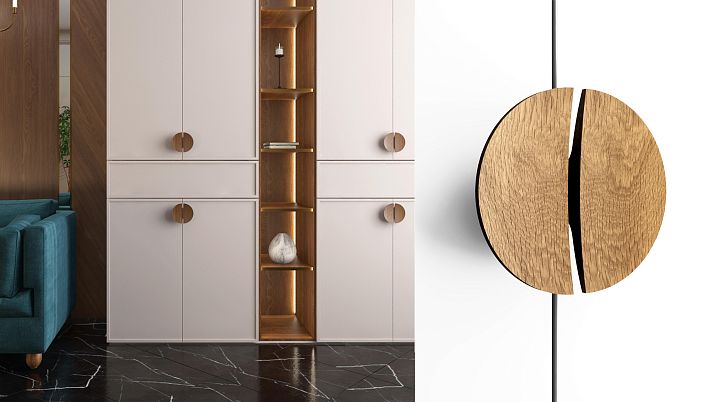
- Custom models: hand-carved details, decorative inserts of ceramic, stone, or glass, create a unique accent on furniture.
7. How to choose handles for furniture: detailed analysis
7.1. Purpose and load
● Kitchen cabinets: handles are subjected to frequent opening/closing and exposure to moisture and grease. Choose dense species (oak, ash), reliable mounting joints, and stain-resistant finishes.
● Wardrobes, sliding closet doors: can be more decorative, as the load on the handle is lower. It is important to match with the facade color.
● Children's: smooth surface, absence of sharp corners, durable and safe finish, non-toxic.
● Office spaces: if the furniture is heavily used, consider the intensity of use; models with wear-resistant finishes are preferable.
7.2. Ergonomics
The handle should fit comfortably in the hand, not pinch the fingers, and have sufficient clearance for gripping. This is especially important if the inhabitants of the home have different finger lengths or prefer different ways of opening doors.
7.3. Coordination with color and style of furniture
If the furniture is dark, choose contrasting light or shaped handles. In light color schemes, it may be appropriate to emphasize details with rich textures. Ensure that the wood grain of the handles and the furniture itself do not clash.
7.4. Mounting details
Measure the center-to-center distance (distance between screw holes) if the handles are mounted with two bolts. For single-point mounting, ensure that the facade thickness and screw length match.
8. How to care for wooden handles
- Regular cleaning. Wipe dust and dirt with a soft cloth. If the handle on the kitchen gets greasy, use a slightly damp cloth and neutral detergent.
- Prevent moisture ingress. If a sink is nearby, try to avoid constant splashing.
- Avoid abrasive agents. Hard sponges or powders may leave scratches on the finish.
- Refresh protective layer. If scratches or microcracks appear, lightly sand and reapply varnish (oil, wax).
9. Environmental aspect and role of responsible manufacturers
In modern society, more attention is being paid to environmental responsibility. Manufacturers of wooden furniture and hardware who strive for sustainable development monitor rational timber harvesting, use certified raw materials, and non-toxic finishes. Such an approach not only helps preserve unique forest resources but also meets the growing demand for eco-friendly products. Companies that consciously approach this issue gain customer trust and high reputation.
10. Where to buy: link towooden handle manufacturers
If you are ready to choose an option suitable for your furniture, we recommend paying attention towooden handle manufacturers from STAVROS. Here you will find a rich assortment with descriptions, photos, and indication of wood species. STAVROS specializes in creating high-quality solid wood products, adhering to high standards. You can consult, learn about finishing options, delivery, and service — everything needed for a successful purchase.
11. Examples of use in various interiors
- Classic kitchen: pastel-colored facades, warm beige or coffee tones, decorative baseboards, and handles — shaped, carved, made of solid oak or ash, finished with dark lacquer. Creates chic and elegance.
- Scandinavian living room: minimal decor, light walls and floor, simple birch or pine furniture, and handles that are narrow, geometrically simple, emphasizing naturalness. Comfortable and not distracting, yet adding a 'warm' detail.
- Loft in an urban apartment: combination of dark solid wood (oak) with a metal base for furniture. Handles can be voluminous, rugged, with a light brushed finish. Looks bold and stylish.
- Provence: for cabinets in Provence or shabby chic style, handles with artificially aged surfaces, patinated or bleached, will create an authentic rustic charm.
12. Conclusions and Recommendations
Wooden handles are not just a functional detail, but a full decorative element that shapes the furniture's appearance. If manufactured using proper technology, they enhance the interior, highlight the owner's taste, and last for many years. It is extremely important to choose a reliable manufacturer who strictly adheres to quality standards and honestly discloses the material, coatings, and processing methods.
Let’s summarize the main points:
- Natural wood — beauty, warmth, durability, and eco-friendliness.
- Learn about the wood species. For frequently used areas (kitchen, office), more durable options (beech, oak, maple) are suitable. For children’s rooms or cottages, softer but more budget-friendly options (pine, spruce, birch) can be used.
- Look at the technology. Good drying, sorting, sanding, and application of protective coatings — signs of professional production.
- Work with reputable companies that have a good reputation, warranties, and certifications. They will help you choose the right design and comfortable delivery conditions.
- Care. Regular cleaning without aggressive substances, avoiding excessive humidity, and possible light restoration if needed.
Explore offerswooden handle manufacturers From STAVROS to see a wide range of models crafted from high-quality solid wood. Then confidently choose handles that can become a beautiful and reliable accent on your doors and fronts. After all, aesthetics and functionality always go hand in hand when it comes to wood — one of the noblest materials, tested by time and experience of many generations.