Article Contents:
- Evolution of wooden profile: from craft to high technology
- Material science: the soul of wooden profile
- Technological process: from blank to finished product
- Classification of wooden profiles by purpose
- Functional capabilities of modern wooden profiles
- Aesthetic functions and design possibilities
- Application of wooden profiles in various fields
- Innovative application directions
- Technical specifications and quality requirements
- Strength characteristics and durability
- Mounting and fastening systems
- Features of installation under various conditions
- Final finishing and protective coatings
- Decorative effects and special coatings
- Quality Control and Standardization
- Competition Among Wooden Materials
- Economic Aspects and Pricing
- Factors of cost optimization
- Innovations and development prospects
- Ecological Trends and Sustainable Development
- Regional application specifics
- Architectural traditions and stylistic features
- Custom solutions and customization
- Designer Collections and Design Solutions
- Frequently Asked Questions
- Conclusion
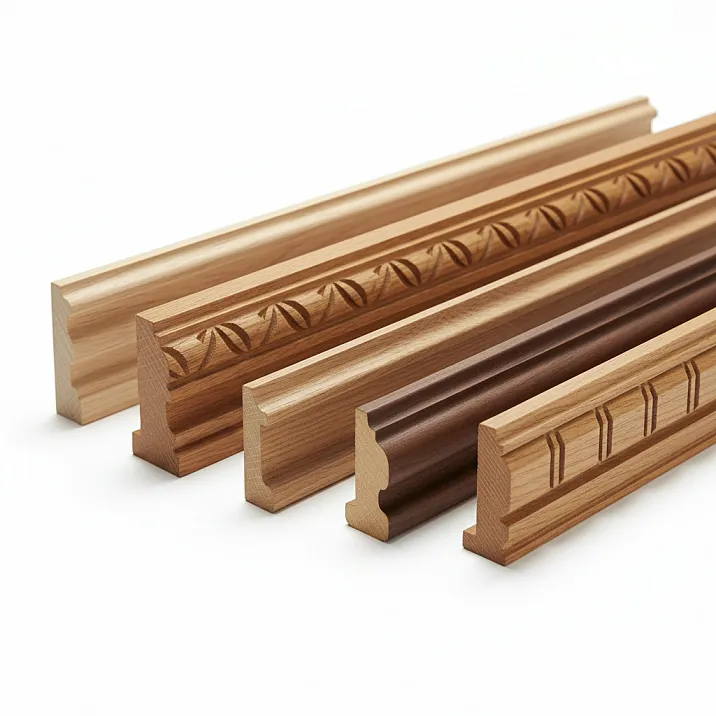
In the world of modern construction and interior design, there are elements that play a key role in creating a finished and professional look for any project.Profile made of woodIt is precisely such a universal tool capable of transforming the most ordinary structures into works of architectural art. What makes wooden profiles so indispensable in the arsenal of professional builders, designers, and furniture makers?
The secret to the popularity of wooden profiles lies in their unique ability to combine functionality and aesthetics. Each element carries not only decorative load but also performs important technical functions — from concealing joints to creating structural rigidity of constructions. In an era when the quality of details determines the overall impression of a project, wooden profiles become the very link between technical perfection and artistic vision.
Modern production technologies open up boundless creative opportunities for craftsmen. From the simplest rectangular cross-sections to the most complex multi-level profiles — every shape can be embodied in natural wood with flawless accuracy and surface quality. However, it is important to understand that behind the apparent simplicity lies a complex technological chain, each link of which affects the final result.


Evolution of wooden profile: from craft to high technology
The history of using wooden profiles goes back to ancient times, when master carpenters created complex decorative elements exclusively with hand tools. Each profile was a unique work, bearing the mark of individual craftsmanship. Today we observe a remarkable synthesis of traditions and innovations, where age-old woodworking techniques are complemented by the capabilities of modern high-tech equipment.
The Industrial Revolution of the 19th century radically changed the approach to producing wooden profiles. The introduction of machine tools allowed standardization of processes and significantly increased production volumes. However, a true revolution occurred with the introduction of computer numerical control into the woodworking industry.
Modern CNC machines are capable of reproducing the most complex profiles with accuracy down to hundredths of a millimeter, ensuring identical elements in each batch.Trimming ItemsToday, it is the result of precise calculations, high-quality raw material, and flawless technological process.




Material science: the soul of wooden profile
Choosing the type of wood for manufacturing profiles is an art requiring deep understanding of the characteristics of each material. Oak profiles symbolize strength and durability. The density of oak, reaching 900 kg/m³, allows creating profiles with the finest details that remain undamaged during transportation and installation.
The unique structure of oak wood with clearly visible annual rings creates an irreplaceable play of light and shadow on profiled surfaces. Natural tannins provide inherent protection against biological damage, which is especially important for profiles used in high-humidity environments.
Beech profiles attract craftsmen with their exceptional structural uniformity and excellent workability. The fine-grained beech wood ensures a perfectly smooth surface after mechanical processing, which is critically important for profiles intended for transparent coatings.Wooden trimBeech is often chosen for projects where dimensional stability and absence of deformation are crucial.
Our factory also produces:


Technological process: from blank to finished product
The production of high-quality wooden profiles begins long before the wood comes under cutting tools. Careful selection of raw material, proper drying, preparation of blanks — each stage affects the quality of the final product and requires a professional approach.
Drying of wood for profiles is carried out in special chambers with programmable temperature and humidity regimes. The final moisture content should be 8±2% — this indicator ensures the stability of finished products under various operating conditions. Gradual drying prevents the formation of internal stresses that may manifest as deformation of profiles after manufacturing.
Modern four-sided planers process blanks on all four sides in one pass, ensuring ideal geometry and surface cleanliness. The quality of cutting tools directly affects the result — carbide-tipped blades guarantee the absence of chips and scratches even when processing the hardest wood species.
Get Consultation
Classification of wooden profiles by purpose
The world of wooden profiles is astonishing in its variety of forms and purposes. Structural profiles ensure the strength and rigidity of various structures. They may have simple rectangular cross-sections or complex composite shapes, optimized for specific load conditions.
Wooden moldingsThey represent a decorative profile category designed to create aesthetic effects in interiors. Their profiles are developed according to optical perception laws, creating the desired play of light and shadow, visually altering room proportions.
Specialized profiles solve narrow-specific tasks. Door frames, window frames, furniture manufacturing elements – each area of application requires an individual approach to profile design, taking into account specific operational requirements.
Functional capabilities of modern wooden profiles
ModernProfile made of woodIt is a multifunctional element capable of solving complex tasks simultaneously. The primary function of most profiles is to create transitions between different surfaces and materials. Well-executed transitions not only improve the appearance of the structure but also ensure its durability.
Masking technological gaps is another crucial function of wooden profiles. During construction and finishing, inevitable joints between different materials arise, and profiles transform these technical necessities into decorative advantages.
The protective function of profiles is manifested in protecting corners and edges from mechanical damage.Wooden baseboardProtects the lower part of walls from impacts of furniture and cleaning equipment, extending the service life of wall coverings.
Aesthetic functions and design possibilities
The influence of wooden profiles on the perception of space is difficult to overestimate. Horizontal profiles visually expand the room, making it more grounded and cozy. Vertical elements, on the contrary, create a sense of height and grandeur.
The play of light and shadow created by profiled surfaces animates flat walls and ceilings, giving them volume and expressiveness. Properly designed profiles can radically change the perception of architectural proportions, conceal shortcomings, and highlight the strengths of the space.
Furniture corniceNot only completes the composition of a furniture item, but also creates a smooth transition from vertical to horizontal surfaces, which is especially important for the perception of large furniture.
Application of wooden profiles in various fields
The construction industry represents one of the largest segments of wooden profile application. From frame construction to finishing of luxury projects – various types of wooden profiles are used everywhere. Structural profiles ensure the strength of load-bearing elements, decorative profiles create a unique appearance of buildings.
Window and door manufacturing traditionally uses specialized profiles developed according to specific requirements of this industry. Multi-stage window frame profiles ensure the airtightness of the sash, create grooves for installing glass units, and form water-draining channels.
The furniture industry consumes a large amount of wooden profiles of various purposes. From simple joints to complex decorative elements – profiles determine the style and quality of furniture items.CasingsFor interior doors, they create a complete image of the door opening, harmoniously integrating it with the overall interior of the room.
Innovative application directions
Modern technologies open new areas of application for wooden profiles. Integration of LED lighting into specially designed profiles creates striking architectural lighting systems. Concealed lighting embedded in ceiling profiles visually increases room height and creates a cozy atmosphere.
Acoustic profiles use specific properties of wood to improve sound characteristics in rooms. Specifically designed shapes disrupt standing sound waves, reduce reverberation levels, and improve speech intelligibility in conference halls and concert venues.
Wooden planksThey are used in creating natural ventilation systems. Special profiles with built-in channels ensure air circulation, maintaining a healthy microclimate in rooms.
Technical specifications and quality requirements
A high-quality wooden profile must meet strict technical requirements ensuring its reliable operation throughout its service life. Geometric accuracy is the main quality criterion – deviations in dimensions should not exceed ±0.2 mm for non-critical parameters and ±0.1 mm for dimensions affecting element connections.
The moisture content of finished products is strictly controlled and should be within 8±2%. Exceeding this indicator may lead to profile deformation after installation, especially during the heating season, when indoor air humidity significantly decreases.
Surface quality is assessed according to special standards. For profiles intended for transparent coatings, roughness should not exceed Ra 1.25 micrometers, ensuring ideal finish quality. Scratches, dents, or processing marks on the front surfaces are not permitted.
Strength characteristics and durability
Mechanical properties of wooden profiles must correspond to the loads they will bear during operation. The static bending strength for oak profiles is at least 100 MPa, and for coniferous species – at least 80 MPa.
The durability of wooden profiles largely depends on the quality of protective coatings. Modern lacquer systems provide protection against moisture, UV radiation, and mechanical damage for many years of operation.
Biological resistance is achieved both through the natural properties of wood (for oak, larch) and by applying special protective compounds. Properly treated profiles are not susceptible to fungal, mold, or insect damage.
Mounting Systems and Fastening
Quality installation of wooden profiles requires understanding the specific behavior of wood and proper selection of fastening elements. Different fastening systems are used depending on the profile type, base material, and operating conditions.
Adhesive joints provide the most aesthetic result, hiding all fastening elements. Modern polyurethane adhesives create bonds stronger than the wood itself. It is important to properly prepare the surfaces to be bonded and ensure the necessary pressure during adhesive curing.
Mechanical fastening is used for profiles that may require disassembly or in cases of significant loads. Countersunk screws, finish nails, and special fastening systems ensure secure fixation with minimal disruption to the external appearance.
Features of installation under various conditions
Outdoor work imposes special requirements on the installation of wooden profiles. It is necessary to consider thermal deformation, effects of atmospheric precipitation, and UV radiation. Compensatory gaps, elastic sealants, and special coatings ensure the longevity of structures.
Interior work also has its own characteristics. In rooms with variable humidity (bathrooms, kitchens), additional moisture protection is required. In heated rooms, it is important to consider seasonal changes in air humidity and the associated wood deformation.
Profile made of woodFor special operating conditions, a tailored approach to selecting the mounting system may be required. High temperatures, aggressive environments, vibrational loads — each factor must be considered during the design of the mounting system.
Finishing and protective coatings
The choice of finishing system determines not only the appearance of wooden profiles but also their performance characteristics. Transparent coatings preserve the natural beauty of wood, highlighting its texture and color. Different types of varnish provide varying degrees of gloss and protection.
Oil-based coatings create the most natural appearance, emphasizing the tactile qualities of wood. Such coatings require periodic renewal but allow for localized repair of damaged areas.
Covering coatings allow for a radical change in profile color, creating uniform surfaces and hiding wood imperfections. Modern paints provide long-lasting coatings with excellent decorative and protective properties.
Decorative effects and special coatings
Patination creates an effect of noble antiquity, especially popular in classical interiors. Various patination techniques allow for simulating natural wood aging or creating stylized decorative effects.
Staining allows changing the color of wood while preserving its textural expressiveness. Water-based and alcohol-based stains provide even coloring and a wide color palette. Penetration depth can reach 2-3 mm, ensuring color durability against minor damage.
Special effects — metallization, pearlescent coatings, fluorescent compounds — open new possibilities for designers. Such coatings require high skill from installers but create unique decorative effects.
Quality control and standardization
The quality control system for wooden profiles includes multiple inspections at all production stages. Incoming raw material inspection evaluates moisture content, density, and presence of wood defects. Automated sorting systems reject materials that do not meet technical requirements.
Operational control is performed during processing. Laser measurement systems monitor profile geometric parameters in real time, automatically adjusting equipment settings upon detecting deviations.
Final inspection includes a comprehensive check of all parameters of finished profiles. Selective tests confirm compliance of mechanical characteristics with calculated values. Each batch is accompanied by a quality certificate listing all controlled parameters.
International Standards and Certification
Modern production of wooden profiles is oriented toward international quality standards. ISO 9001 regulates the quality management system, ISO 14001 — ecological aspects of production. Compliance with these standards is confirmed by regular audits by independent organizations.
FSC and PEFC ecological certification guarantees that wood originates from responsibly managed forests. Such certification is becoming increasingly important for consumers concerned about the ecological aspects of their projects.
CE marking confirms compliance of products with European safety standards. For export products, such marking is mandatory and grants access to European markets.
Economic aspects and pricing
The cost of wooden profiles is composed of multiple components; understanding them helps make informed decisions when selecting a supplier. The raw material component may account for 30% to 50% of the total cost depending on the wood species and its quality.
Technological costs include equipment depreciation, energy consumption, costs for cutting tools and consumables. Profile complexity directly affects processing time — a simple rectangular profile can be produced 5-10 times faster than a complex decorative one.
Logistical costs are especially important for long-length profiles requiring special transport. Optimizing logistics can significantly reduce the overall project cost, particularly for large volumes of deliveries.
Factors for optimizing costs
Order volumes significantly affect the unit cost of profiles. Mass production allows reducing the share of fixed costs in product cost. The optimal batch size depends on profile complexity and may range from several hundreds to several thousand linear meters.
Standardization of profiles reduces costs for production preparation and equipment retooling. Using standard solutions instead of custom profiles can save up to 30-40% of the total order cost.
Planning deliveries with consideration of seasonal factors allows taking advantage of low-demand periods to build inventory. Winter months traditionally feature lower prices for wood products.
Innovations and development prospects
Digitalization of design fundamentally changes approaches to creating wooden profiles. Parametric modeling allows automatically generating families of profiles with specified characteristics. BIM technologies integrate design, production, and construction processes into a single digital environment.
3D printing with wooden composites is in an active development stage. Although this technology currently cannot compete with traditional processing in terms of productivity, it opens fundamentally new possibilities for creating profiles of complex shapes.
The Internet of Things is penetrating wooden profile production. Machines connected into a single network exchange information about tool condition, processing quality, and maintenance needs. Predictive analytics allows preventing equipment failures and optimizing production processes.
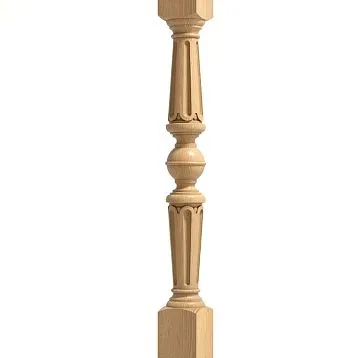
Growing attention to ecological issues makes wooden balusters even more attractive. Wood is a renewable resource, and its production does not harm the environment when managed sustainably.
Principles of circular economy are reflected in wooden profile production. Waste from main production is recycled into lower-grade products, sawdust and shavings are used to produce fuel briquettes or composite materials.
Biotechnology opens new possibilities for wood modification. Enzymatic treatment can improve dimensional stability, acetylation increases biological resistance, and thermal treatment alters color and physical-mechanical properties.
Local production reduces the product’s carbon footprint by minimizing transportation costs. Using local wood species supports regional economies and reduces dependence on imports.
Regional application specifics
Climate conditions in different regions impose specific requirements on wooden profiles. In areas with a sharply continental climate, dimensional stability of products is critically important during large temperature and humidity fluctuations.
Marine climate with high salt content in the air requires additional protection of wooden profiles against corrosion of metal fasteners. Special coatings and stainless steel fasteners become mandatory in coastal areas.
Northern regions with long heating seasons create special operating conditions. Low air humidity in heated rooms may cause cracking in products made from unstable wood species.
Architectural traditions and stylistic features
Regional architectural traditions influence demand for specific types of wooden profiles. Russian style prefers massive profiles with rich carving, while Scandinavian style favors minimalist forms made from light-colored woods.
Restoration work requires precise reproduction of historical profiles.Production of trim elementsFor restoration, work is often carried out according to old drawings using authentic wood species and traditional processing methods.
Modern architecture tends toward simple geometric forms and natural materials. Wooden profiles in such projects serve more of a functional role, highlighting the structural features of buildings.
Custom solutions and customization
The capabilities of modern equipment allow manufacturing profiles according to individual projects without significant cost increase. The minimum order volume for non-standard profiles is usually 100-200 linear meters, making individual solutions accessible even for private projects.
CAD systems provide accurate modeling of future profiles, taking into account all technological constraints. Parametric design allows quickly adapting basic profiles to specific project requirements.
Manufacturing special tools for unique profiles requires significant time and financial investment, but modern technologies substantially reduce these costs. CNC machines for making blades provide high precision and shorten production preparation time.
Author collections and designer solutions
Cooperation between manufacturers and renowned designers and architects leads to the creation of exclusive collections of wooden profiles. Such collections become recognizable brands, adding value to projects.
Limited editions for exclusive objects use rare wood species and complex processing technologies. Such items often become investment objects, preserving and increasing their value over time.
Profile customization may include engraving, inlay, special coatings. Modern technologies allow applying complex images with photographic accuracy, creating unique works of decorative art.
Frequently asked questions
What advantages do wooden profiles have over analogs made from other materials?
Wooden profiles possess a unique combination of aesthetic and functional qualities. The natural beauty of wood, the possibility of repair upon damage, eco-friendliness, and the ability to regulate air humidity make them a preferred choice for quality projects. When properly processed, they serve for decades, retaining their original appearance.
How to properly choose a wood species for a specific application?
The choice depends on the conditions of use, requirements for appearance, and project budget. For outdoor applications, durable species such as oak, larch, and teak are preferred. For indoor applications, beech, ash, and pine are suitable. Moist environments require additional protection for any wood species.
Can profiles be manufactured according to an individual drawing?
Yes, modern technologies allow manufacturing profiles of any complexity according to individual projects. The minimum order volume is usually 100-200 linear meters. The cost of individual profiles is higher than standard ones, but this enables implementing unique design solutions.
What requirements are imposed on the quality of wooden profiles?
Main requirements include dimensional accuracy (±0.1-0.2 mm), moisture content 8±2%, absence of defects on visible surfaces, quality surface treatment. Mechanical properties must meet calculated load requirements. Each batch must be accompanied by a quality certificate.
How to ensure the longevity of wooden profiles?
Longevity is ensured by proper selection of wood species, quality drying, precise processing, quality coating, and correct installation. It is important to protect against moisture, regularly maintain coatings, and promptly address damages.
What is the cost of wooden profiles and what factors influence it?
The cost depends on the wood species, profile complexity, order volume, and coating type. Simple pine profiles may cost from 200 rubles per linear meter, complex oak profiles from 1500 rubles. Individual profiles are 1.5-2 times more expensive than standard ones.
How to properly install wooden profiles?
Installation requires consideration of wood properties and operating conditions. Compensatory gaps must be provided, appropriate fasteners used, and protection against moisture ensured. Special installation instructions are developed for each profile type.
What trends characterize the market for wooden profiles?
Main trends include digitalization of production, ecological certification, product customization, integration with smart technologies. Demand for products made from local wood species is growing, and technologies for processing waste are developing.
Conclusion
Profile made of woodWooden profiles remain one of the most in-demand elements in modern construction and interior design. The combination of functionality, aesthetic appeal, and eco-friendliness makes wooden profiles indispensable in creating quality, durable, and beautiful projects.
Modern production technologies open boundless creative opportunities for architects and designers, enabling the realization of the most daring ideas in natural materials. From the simplest structural elements to the most complex decorative compositions — every project can find an optimal solution among the variety of wooden profiles.
The future of the industry is linked to further development of wood processing technologies, creation of new composite materials based on wood fibers, integration of digital technologies into production processes. Ecological trends stimulate the development of sustainable production and utilization technologies for renewable resources.
Investments in quality wooden profiles are always justified due to their longevity, repairability and restorability, and ability to preserve and increase the value of real estate. Proper selection and professional application of wooden profiles become a guarantee of success for any construction or design project.
Understanding technological specifics, quality requirements, and operating rules helps make informed decisions and achieve optimal results. A professional approach to supplier selection, quality control, and organization of installation work ensures long-term effectiveness of investments in wooden profiles.
STAVROS company presents on the Russian market a full range of high-quality wooden profiles for various applications. Our extensive experience in woodworking, modern production equipment, and deep understanding of customer needs allow us to offer optimal solutions for the most complex projects.
STAVROS production facilities include a complete technological cycle from raw material preparation to final finishing of finished products. Multi-stage quality control at all production stages ensures the stability of our product characteristics and compliance with the strictest customer requirements.
STAVROS technical support includes assistance in selecting optimal solutions, development of custom profiles, installation and operation consultations. Our specialists are ready to share their long-term experience working with wood and help implement projects of any complexity.
STAVROS logistics capabilities ensure timely delivery of products to any point in Russia. Our own fleet of specialized transport guarantees the preservation of long-profiled items during transit. Flexible delivery terms are adapted to the needs of various customer categories.
Choosing STAVROS wooden profiles, customers invest in reliability, quality, and durability. Our products will become a strong foundation for creating objects that will delight owners and users for many years, confirming the correctness of the chosen decision.