Article Contents:
- Architectural Philosophy of Stair Railing
- Historical Heritage in Modern Interpretation
- Psychology of Perceiving Stair Space
- Material Science: Foundation of Quality Solutions
- Natural Wood — Timeless Classic
- Coniferous species: economy without compromise
- Alternative Materials in Modern Design
- Manufacturing Technologies
- Precision Woodworking
- Artistic Finishing and Decoration
- Criteria for Professional Selection
- Assessment of Manufacturing Quality
- Compliance with Regulatory Requirements
- Stylistic Directions and Design Solutions
- Classic elegance
- Modern minimalism
- Ethnic Motifs in Modern Interpretation
- Economic Aspects of Purchase
- Cost of Ownership Analysis
- Pricing factors
- Installation and Technical Maintenance
- Professional Installation
- Regular Maintenance and Care
- Trends and innovations
- Ecological Materials and Technologies
- Digital technologies in production
- Regional market characteristics
- Moscow Region: Center of Innovation
- Regional Manufacturers
- Conclusion
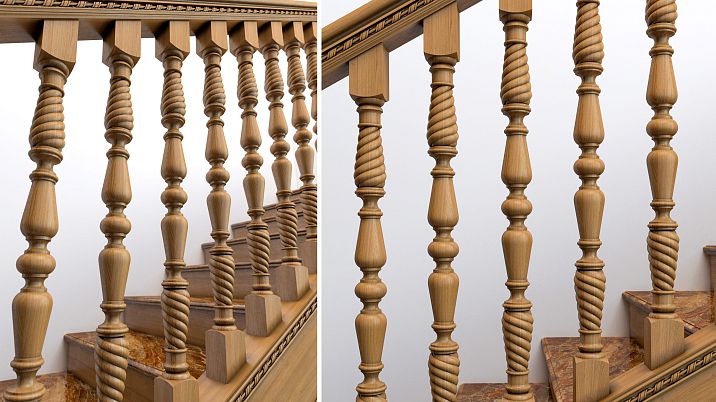
Imagine a staircase without elegant vertical supports — it's like a symphony without melody, a house without soul. Solution buy stair balusters The art of creating stair railings traces its roots to ancient times, when masters of antiquity first recognized the potential of vertical supports as elements of artistic decoration. Modern technologies have allowed us to preserve the best traditions of the past, complementing them with innovative solutions and materials of the new generation.
Every homeowner eventually faces the need to furnish stair space, and it is precisely at this moment that the true value of professionally manufactured elements becomes apparent. Quality railings and balusters are an investment in the safety, beauty, and longevity of your home, which pays off not only functionally but also aesthetically for decades.




Architectural Philosophy of Stair Railing




Historical Heritage in Modern Interpretation
The art of creating stair railings traces its roots to ancient times, when masters of antiquity first recognized the potential of vertical supports as elements of artistic decoration. Modern technologies have allowed us to preserve the best traditions of the past, complementing them with innovative solutions and materials of the new generation.
The evolution of staircase design has progressed from simple functional structures to complex architectural compositions, where each element plays a role in creating a harmonious whole. Today's masters combine classical proportions with modern requirements for safety and ergonomics, creating pieces that satisfy the most discerning tastes.
The cultural heritage of various epochs is reflected in the diversity of stylistic solutions — from the strict geometry of minimalism to the refined carving of classicism. Each style requires an individual approach to material selection, proportions, and decorative elements.
Our factory also produces:




Psychology of staircase space perception
The staircase occupies a special place in the architectural composition of a house, serving as a connecting link between floors not only physically but also emotionally. Properly designed railings create a sense of safety and comfort, influencing the psychological state of people using the staircase.
The visual perception of staircase space depends on numerous factors: proportions of elements, their rhythmic arrangement, play of light and shadow, color solutions. Professional designers take these aspects into account when creating projects, striving to achieve an ideal balance between functionality and aesthetics.
Ergonomic characteristics of railings directly affect the convenience of staircase use. The height of handrails, spacing between balusters, shape and size of elements — all these parameters must correspond to anthropometric data and ensure maximum comfort for all family members.
Get Consultation
Material science: the foundation of quality solutions
Natural wood — classic beyond time
Wood remains an unmatched material for creating staircase railings due to its unique combination of strength, beauty, and eco-friendliness. Each species possesses individual characteristics determining its application area and processing methods.
Oak is rightfully considered the king among hardwood species. Its density of 700-800 kg/m³ ensures exceptional strength and durability of products. Expressive texture with clearly defined growth rings creates a unique decorative effect, especially with radial cutting. Natural resistance to moisture and biological damage makes oak an ideal choice for any operating conditions.
Ash is characterized by high impact toughness and flexibility, allowing the creation of elements with complex curved shapes without the risk of cracking. Contrastive structure with alternating light and dark stripes creates an eye-catching visual pattern. Ash density of 650-750 kg/m³ ensures excellent workability and dimensional stability.
Beech is characterized by a uniform fine-pored structure and neutral coloration, offering wide possibilities for staining and decorative finishing. Its density of 680-750 kg/m³ guarantees high strength at a relatively affordable cost. Beech is well-suited for all types of mechanical processing and gluing.
Coniferous species: economical without compromise
Common spruce offers an optimal price-to-quality ratio for mass production of staircase elements. Modern drying and protective treatment technologies allow achieving high performance characteristics while maintaining an affordable cost. Natural resin content provides additional protection against moisture and insects.
Siberian larch surpasses most coniferous species in strength and durability. Its density of 650-800 kg/m³ is comparable to hardwoods, and its natural resistance to rot has no analogues among domestic species. Beautiful texture with pronounced growth rings creates an attractive decorative effect.
Siberian cedar is valued for its ease of processing, dimensional stability, and pleasant aroma with phytocidal properties. Its soft structure allows creating intricate carved compositions that are inaccessible when working with hardwoods.
Alternative materials in modern design
Metallic structures open new horizons for creative expression in staircase design. Stainless steel combines strength with corrosion resistance, and processing possibilities are virtually limitless — from mirror polishing to decorative etching.
Wrought elements allow creating incredibly complex and elegant compositions. Hand-forging gives each item uniqueness and irreplicable character, unattainable through machine production. Modern protective coating technologies ensure the longevity of wrought elements under any operating conditions.
Glass in modern interpretations demonstrates remarkable strength and safety. Tempered and laminated glass withstands significant loads, and decorative options include sandblasting, photo printing, and colored tinting.
Manufacturing Technologies
Precision wood processing
Modern production of staircase elements is based on high-precision equipment with numerical control. CNC lathes enable reproducing the most complex profiles with accuracy down to hundredths of a millimeter, ensuring identical elements in a series.
Material preparation begins with careful selection of blanks free of wood defects. Moisture content should not exceed 8-10% to ensure dimensional stability of the finished product. Blanks undergo acclimatization in production rooms to equalize internal stresses.
Rough machining is performed with feed of 0.8-1.2 mm/rev at cutting speed of 180-220 m/min. Finish machining requires reducing feed to 0.15-0.25 mm/rev while increasing speed to 280-320 m/min. Such modes ensure high surface quality and minimal roughness.
Artistic processing and decoration
Milling allows creating complex profiles and decorative elements with high productivity. Modern machining centers can perform five-axis machining, creating volumetric compositions of any complexity.
Hand carving remains an unmatched method for creating unique artistic works. Master carvers use a rich arsenal of specialized tools, each designed for specific operations and creating specific ornamental elements.
Laser engraving enables creating the finest ornamental details with precision down to fractions of a millimeter. Non-contact processing eliminates mechanical damage to the material and allows working with the most delicate decorative elements.
Criteria for professional selection
Assessment of manufacturing quality
Geometric accuracy of elements is the first criterion for evaluating product quality. Deviations in linear dimensions must not exceed ±0.5 mm for elements up to 1000 mm in length and ±0.8 mm for longer parts. Deviations from straightness are controlled using inspection rulers and must not exceed 0.3 mm per meter of length.
Surface quality is determined by the roughness parameter Ra, which must not exceed 1.25 μm for surfaces intended for transparent finish. The absence of chips, tears, and other processing defects indicates a professional level of production.
The moisture content of finished products must be within the range of 8–12% to ensure dimensional stability during operation. Exceeding these values may lead to deformation and cracking of elements.
Compliance with regulatory requirements
Safety of stair railings is regulated by building codes and regulations. The height of the railing must be at least 900 mm for residential buildings and at least 1200 mm for public buildings. The distance between vertical elements must not exceed 100 mm to prevent children from slipping through.
The strength characteristics of railings must ensure the ability to withstand specified loads without failure or residual deformation. The horizontal load on the handrail is 0.8 kN/m for residential buildings and 1.5 kN/m for public buildings.
The fire resistance of wooden elements can be enhanced by special impregnation with fire retardants. The fire resistance class must comply with project requirements and building purpose.
Stylistic directions and design solutions
Classic elegance
The classical style in stair railing design is based on principles of ancient architecture — proportionality, symmetry, and harmony. Classical balusters are characterized by complex profiling with alternating convex and concave elements, creating play of light and shadow.
The composition is based on the central part — the body of the baluster, which may have cylindrical, oval, or polygonal shape. The upper and lower parts are resolved as complex profiled elements with cornices, moldings, and fluting.
Decorative motifs include plant ornaments — acanthus, palmettes, rosettes. Geometric elements are represented by meanders, braids, and shell patterns. Color solution implies use of natural wood tones with possible application of patina and gilding.
Modern minimalism
Minimalist approach implies maximum simplification of forms while preserving functionality and aesthetic expressiveness. Minimalist balusters are characterized by geometric purity of lines and absence of decorative excesses.
Rectangular, square, cylindrical sections create a strict rhythm of vertical elements. Surfaces remain smooth, emphasizing the natural beauty of the material. Color palette is limited to natural tones or monochromatic solutions.
Modern technologies allow achieving ideal dimensional accuracy and flawless surface quality. Laser cutting, CNC milling, robotic polishing ensure repeatability of results and high quality standards.
Ethnic motifs in modern interpretation
Russian style is characterized by use of traditional motifs of domestic carving — plant ornaments, geometric patterns, zoomorphic elements. Modern interpretation preserves basic principles of folk art, adapting them to requirements of contemporary architecture.
Scandinavian style is distinguished by simplicity of forms and functionality. Simple geometric elements, light wood species, minimal decoration create an atmosphere of northern restraint and coziness.
Eastern motifs introduce into stair design philosophy of harmony with nature. Smooth lines, natural forms, symbolic elements create a meditative atmosphere of peace and tranquility.
Economic aspects of acquisition
Analysis of ownership cost
When making a decision buy stair balusters It is important to consider not only the initial cost, but also operating expenses throughout the entire service life. High-quality items require larger initial investments, but provide significant savings on maintenance and repairs.
Inexpensive materials often require frequent repairs and replacements, ultimately leading to high cumulative costs. Quality wood treated with modern protective compounds can serve for decades without loss of appearance or functional characteristics.
Energy-efficient production technologies reduce the cost of products while maintaining high quality. Automation of processes, optimization of material consumption, use of renewable energy sources — all this affects the final price of the product.
Pricing Factors
The cost of stair elements depends on multiple factors — complexity of shape, quality of material, processing technology, batch size. Simple geometric shapes are cheaper than complex carved compositions, which require high skill of craftsmen and significant time investment.
Handmade work always costs more than machine-made, but ensures uniqueness and highest quality execution. Master carver creates not just a functional element, but a work of art that will delight the owner for many years.
Mass production allows reducing cost through savings on preparatory operations and optimization of technological processes. Standard sizes and shapes ensure predictable quality and manufacturing timelines.
Installation and technical maintenance
Professional installation
Quality of installation determines the longevity and safety of stair railing. Professional installers possess necessary knowledge and experience for correct installation of elements of various construction and materials.
Foundation preparation includes checking the strength of fastening, leveling the surface, marking installation locations. Accuracy of marking is critically important for ensuring correct geometry of the railing and even load distribution.
Fastening elements must correspond to the material of balusters and foundation. Stainless steel screws, anchor bolts, special adhesives ensure reliable connection of elements. Hidden fastening preserves the aesthetic of the structure and prevents corrosion.
Regular maintenance and care
Wooden elements require periodic renewal of protective coatings to maintain their appearance and protect against adverse effects. The frequency of maintenance depends on operating conditions — humidity, temperature, and usage intensity.
Daily care includes dry cleaning with a vacuum cleaner or soft brush to remove dust and prevent its accumulation in screw recesses. Wet cleaning is performed with slightly damp cloth without using aggressive cleaning agents.
Seasonal maintenance includes checking the tightness of fasteners, inspecting the condition of the coating, and, if necessary, local restoration of damaged areas. Timely maintenance extends the service life of items and preserves their original appearance.
Trends in development and innovation
Ecological materials and technologies
Modern requirements for construction ecology influence the selection of materials and manufacturing technologies for stair elements. Preference is given to renewable materials — wood from sustainably managed forests, recycled metal, and composite materials based on natural fibers.
FSC certification guarantees the manufacturer's ecological responsibility and compliance with strict ecological standards for raw material harvesting. Water-based varnishes and paints do not contain volatile organic compounds, making them safe for human health and the environment.
Secondary recycling technologies allow creating high-quality materials from wood waste. Modern pressing and bonding methods provide high strength characteristics at an affordable cost.
Digital technologies in production
Parametric design using computer programs allows quickly calculating multiple options and selecting optimal solutions. Three-dimensional modeling enables visualizing the future project and making adjustments during the design stage.
CNC machines ensure high productivity and stable product quality. Program-controlled operation eliminates human factor influence and allows working in automatic mode with minimal operator involvement.
Automatic quality control systems detect defects at early production stages, preventing defective product release. Laser scanners check the geometry of items with accuracy down to hundredths of a millimeter.
Regional market specifics
Moscow Region: Center of Innovation
The capital region traditionally leads in adopting new technologies and materials. High customer requirements stimulate manufacturers to continuously improve their products and enter new market niches.
Competition among manufacturers contributes to improved product quality and lower prices. Consumers gain access to a wide range of products across various price categories — from economy to premium segments.
Developed logistics infrastructure ensures rapid delivery of products to any point in the region. Many manufacturers offer professional installation and after-sales service.
Regional manufacturers
Local manufacturers often specialize in specific product types, enabling them to achieve high levels of expertise in their field. Proximity to consumers ensures prompt feedback and rapid response to changes in demand.
Using local raw materials reduces transportation costs and positively impacts the environment. Regional manufacturers often offer more flexible cooperation terms and individualized approaches to each client.
Supporting local manufacturers contributes to regional economic development and job creation. Many regional companies actively participate in social programs and charitable initiatives.
Conclusion
Choosing quality stair railings is an investment in the safety, beauty, and comfort of your home for many years. The modern market offers a wide range of solutions for any needs and budgets, from classic wooden structures to ultra-modern composite materials.
When making a decision buy stair balustersIt is important to consider not only the initial cost but also the long-term prospects of use. Quality products from reputable manufacturers provide the optimal price-to-quality ratio, guaranteeing durability and safety of the structure.
A professional approach to selecting materials, manufacturing technologies, and installation determines the success of the entire project. Collaboration with experienced specialists helps avoid typical mistakes and achieve an ideal result that will delight the owner for many years.
The future of stair construction lies in integrating traditional craftsmanship with innovative technologies, ecological materials, and personalized approaches to each project. Stair railings remain and will continue to be an interior element that combines functionality with beauty, safety with aesthetics.
STAVROS Company embodies the best traditions of carpentry craftsmanship, enhanced by modern technologies and innovative solutions. Our rich experience and deep understanding of customer needs enable us to create stair elements that surpass the highest expectations in terms of quality, beauty, and durability. Choosing STAVROS products means investing in the future of your home and the well-being of your family, with a guarantee of quality and professional support at every stage of cooperation.