Article Contents:
- Psychology of the Ceiling: Why a Flat Surface Doesn't Work
- Visual Weight and Pressure
- Lack of Visual Interest Points
- Acoustic Discomfort of Smooth Surfaces
- Thermal Perception of Space
- Polyurethane Moldings: Ease of Creating Volume
- Crown Molding: Framing the Ceiling Plane
- Rosettes: central accents
- Coffers: Mimicking Architectural Recesses
- Architectural Elements: Pilasters, Cantilevers, Arches
- Wooden Planks: Rhythm and Natural Warmth
- Wood Species: Choosing for the Ceiling
- Plank Geometry: Cross-Section and Rhythm
- Finishing and treatment of planks
- Installation: Frame and Mounting
- Material Synthesis: Creating a Unified Composition
- Framing and Filling: Basic Scheme
- Ceiling Zoning: Dividing into Areas
- Multi-Level Compositions: Playing with Height
- Light Integration: Light as a Composition Element
- Installation Errors: How to Avoid Failure
- Inconsistent Scales
- Ignoring Light Direction
- Insufficient Ventilation
- Incorrect Mounting: Sagging and Detachment
- Lack of Wood Acclimatization
- Conclusion: Ceiling as the Fifth Dimension

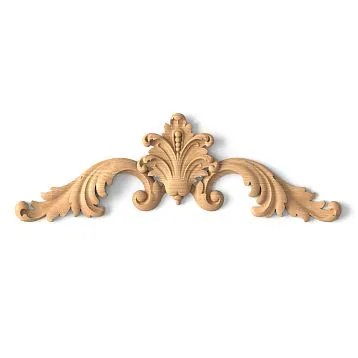
The ceiling is the fifth wall of a room, its area equal to the floor area, but perceived differently. A flat painted ceiling psychologically presses down, creating a sense of low space even at a height of 2.8–3 meters.Ceiling moldingscreate architectural depth, structure the plane, clearly separate the ceiling from walls with a visual boundary.Wooden planksadd rhythm, natural warmth, visual dynamism.Ceiling stripsFrom natural wood, a horizontal plane transforms into a volumetric composition. The combination of polyurethane framing and wooden filling creates ceilings that do not press down but float, are not dull but visually interesting, not cold but warm thanks to natural wood. From minimalist modern to classic coffered — ceiling solutions shape the character of space from above.


Psychology of the ceiling: why a flat surface doesn't work
Perception of the ceiling fundamentally affects the sense of comfort in space. Evolutionarily, humans are accustomed to natural shelters — caves, tree canopies — with complex, non-uniform upper surfaces. An ideally flat white ceiling is subconsciously perceived as artificial and lacking organic qualities.




Visual weight and pressure
A flat ceiling is psychologically heavy — a solid mass overhead creates a sensation of pressure, especially in rooms with ceilings below 2.7 meters. This pressure is subconscious; people do not consciously recognize the cause of discomfort, but they feel tension, a desire to go outside, where the sky overhead is infinitely vast.
A structured ceiling with moldings and beams appears visually lighter. The geometry of elements creates an illusion of architectural complexity, load-bearing structures that support the ceiling — the subconscious interprets this as reliability and safety. Relief breaks up the solid mass into parts, each perceived as a separate element rather than an overwhelming whole.
Color differentiation enhances the effect. A white ceiling with white moldings and natural wooden beams is perceived as a multi-layered structure. The contrast between warm wood and cool white creates depth, volume, and structure instead of a monolithic plane.
Our factory also produces:


Absence of visual interest points
An empty ceiling does not provide the eye with anything to focus on. A glance upward immediately returns to the level of walls and furniture — the ceiling visually does not exist and is ignored by perception. This creates incompleteness in the spatial experience — four sides are interesting, the fifth is empty.
A decorated ceiling invites the gaze. The geometry of molding frames, the rhythm of wooden beams, the play of light and shadow on relief elements create visual interest. People periodically look upward, notice details, and receive aesthetic pleasure. The space is perceived more fully and richly.
Perceptual dynamism increases. Beams create direction — the gaze follows lines, rhythm creates visual movement. Moldings structure — frames define zones, rosettes draw attention to centers. The ceiling transforms from a passive background into an active participant in shaping the spatial experience.
Get Consultation
Acoustic discomfort of smooth surfaces
A flat solid ceiling reflects sound, creating echo and reverberation, especially in large rooms with minimal furniture. Conversations, music, footsteps reflect off the ceiling, creating acoustic discomfort. This is particularly noticeable in modern open-plan layouts — kitchens-living rooms, studios.
A relief ceiling with beams disperses sound. Gaps between beams, porous structure of natural wood partially absorb sound waves. Reflection occurs at various angles from multiple surfaces, preventing sound focus. Room acoustics become more comfortable without special sound-absorbing materials.
The psychoacoustic effect of wood warmth is also important. Sound reflected from a wooden surface is perceived as warmer and softer compared to sound from gypsum board or concrete. For rooms where sound quality matters — living rooms with audio systems, music rooms — wooden ceiling decoration improves acoustic perception.
Thermal perception of space
A white ceiling is psychologically cold — associated with ice, snow, cold sky. This creates a sensation of coolness even at comfortable air temperature. In winter in northern latitudes, such a ceiling intensifies seasonal melancholy and depression.
Wooden elements on the ceiling introduce visual warmth. Golden, honey, brown tones of wood are associated with warmth, coziness, protection. Even with the same paint color on walls, a room with wooden ceiling beams is perceived as warmer. This is critical for northern rooms, children's rooms, bedrooms.
Tactile memory also works. Humans know that wood feels warm to the touch (low thermal conductivity), even without touching the ceiling, the subconscious projects this experience. A room with wooden decor seems warmer not only visually but also at the level of tactile associations.
Polyurethane moldings: ease of creating volume
Ceiling moldingsFrom polyurethane — a technological solution for creating architectural depth in ceilings without significant time, money, or effort. Lightweight, moisture-resistant, and capable of complex shapes, polyurethane is optimal for ceiling decoration.
Cornices: framing the ceiling plane
A ceiling cornice — a basic decorative element running along the perimeter of the room at the junction of ceiling and walls. Creates a clear visual boundary, structures transitions, can conceal LED strip for hidden lighting. Cornice width from 5 to 30 centimeters is determined by room height and interior style.
For rooms of standard height 2.5–2.7 meters, a cornice 8–12 centimeters wide is optimal — sufficiently noticeable, not overwhelming. Profile ranges from simple single-oval for modern interiors to complex multi-tiered for classic styles. Simple cornice works as a contour, complex creates relief play of light and shadow.
For high rooms 3–3.5 meters, a cornice 15–25 centimeters wide is proportional to scale. Complex profile with ornament — botanical motifs, geometric patterns — creates luxury. Baroque cornices with multi-level relief transform the ceiling perimeter into a sculptural composition.
Cornice installation is simple — a polyurethane element weighing 1.5–3 kg per linear meter is glued with special adhesive. Cornice corners are joined at 45 degrees using a miter saw. Joints are filled with acrylic putty, becoming invisible after painting. One person can install a room’s cornice in one day.
Recesses: central accents
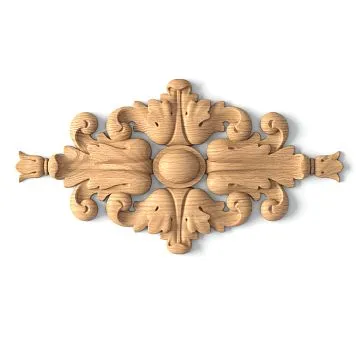
Polyurethane ceiling decorationIn the form of rosettes — round or oval elements with ornament — creates a central accent around a chandelier or geometric center of a zone. Diameter from 40 to 150 centimeters is determined by room size and chandelier scale.
For rooms 15–20 square meters, a rosette 60–80 centimeters in diameter is proportional. Design ranges from simple concentric circles to elaborate multi-figure compositions. A simple rosette creates a clear contour, accentuates the center. A complex rosette transforms the ceiling into a decorative panel.
For large halls 40–60 square meters, a rosette 120–150 centimeters becomes an architectural element. Multi-level relief with deep shadows, botanical ornamentation, possibly figurative compositions create palace-style luxury. Weight of large rosettes 5–15 kg requires secure mounting, but polyurethane is still 3–4 times lighter than gypsum molding.
Socket installation - centering on the ceiling, applying adhesive, pressing, and securing with painter's tape until the adhesive sets. The chandelier's wiring passes through the central hole of the socket. Painting the socket with acrylic paint - white, gold, or patina - completes the installation.
Coffers: imitation of architectural recesses
Coffers - rectangular or square recesses in the ceiling, framed by beams - a classic architectural element that adds depth, volume, and monumentality to the ceiling. True coffered ceilings require complex construction; polyurethane moldings replicate them in one day of installation.
A grid of polyurethane moldings 10-15 cm wide divides the ceiling into rectangles or squares measuring 80x80, 100x100, or 120x80 cm. Moldings are glued to a flat ceiling, creating the illusion of beams. Inside each 'coffer,' the ceiling is painted slightly darker or in contrast, enhancing the illusion of depth.
Additional elements - smaller sockets centered in the coffered recesses, corner overlays at the corners - enhance the decorative effect. LED strip lighting along the inner perimeter of the moldings creates a realistic illusion of recesses - light appears to flow from the depth of the coffer.
For modern interiors, coffered ceilings are simplified - simple rectangular moldings without ornamentation, minimal decoration. For classic interiors - complex profiles, ornamental elements, rich detailing. A coffered ceiling creates a sense of height even at standard 2.7 meters - structure deceives perception.
Architectural elements: pilasters, consoles, arches
Vertical elements on the ceiling are rare, but in certain cases create a unique effect. Polyurethane pilasters running from walls to the ceiling create the illusion of architectural columns supporting the vault. For rooms with high ceilings of 3.5-4 meters, such a solution is architecturally logical.
Consoles - short protruding elements imitating beam supports - are placed at the junction of walls and ceiling. They create the illusion of heavy structural elements, although a polyurethane console weighs only 500-1500 grams. When painted to resemble wood or patinated, consoles combined with wooden beams on the ceiling create visual logic - consoles support the beams.
Architectural elements for ceilings with complex geometry - bay windows, niches, level transitions - frame curved sections. Flexible polyurethane is soaked, bent to the required radius, creating smooth transitions. Such shapes are difficult for wood; polyurethane solves this easily.
Wooden beams: rhythm and natural warmth
Wooden planksCreate what polyurethane cannot - the texture of a living material, natural color variation, tactile warmth (visual).Ceiling stripsForm rhythmic structure, visual dynamics, direction.
Wood species: selection for ceiling
Spruce - the most affordable species for ceiling beams. Density 500-550 kg/m³, color from yellowish-white to pinkish-brown. For ceilings where mechanical loads are minimal, spruce's softness is not critical. Cost 200-400 rubles per linear meter of 40x20 mm beams makes spruce a choice for budget projects.
Ash - dense light-colored species with expressive texture. Density 650-700 kg/m³, color from light beige to grayish-white. Ash beams create a modern light aesthetic. Contrasting annual rings form expressive stripes. Cost 800-1500 rubles per meter - mid-price segment.
Oak - hard species with prestigious reputation. Density 690-750 kg/m³, color from golden-brown to dark brown. Oak ceiling beams - choice for high-end classic interiors. Texture with large vessels creates visual activity. Cost 1500-3000 rubles per meter - premium segment.
Thermowood - wood treated by heating to 180-230°C in an oxygen-free environment. Color is uniform dark brown, dimensional stability is increased, hygroscopicity is reduced. Thermowood spruce matches oak in color but costs closer to regular spruce - 400-700 rubles per meter. For ceilings where humidity may fluctuate, thermowood is optimal.
Beam geometry: cross-section and rhythm
Narrow beams 20x40, 30x40 mm create a frequent rhythm - with a spacing of 100-150 mm, the ceiling appears as a grid structure. Visual lightness, airiness, modernity. For rooms with low ceilings, narrow beams are preferable - they do not exert mass.
Wide beams 40x60, 50x80 mm create a more sparse rhythm at the same spacing. Visual massiveness, solidity, closeness to beam structures. For high rooms 3+ meters, wide beams are proportionate. A 50x100 mm cross-section imitates real beams.
Spacing between beams determines the density of ceiling coverage. Spacing 50-80 mm with narrow beams creates nearly solid wooden coverage - 60-70% of ceiling is wood, 30-40% gaps. Spacing 150-200 mm creates a sparse structure - beams as accent lines, main ceiling white. Spacing 300-500 mm - individual beams, not solid coverage.
Beam direction is critical for perception. Beams along the long side of the room emphasize length. Beams across the long side visually shorten and widen. Diagonal beams at 45 degrees create dynamism, movement, modernity. Cross beams in two directions form a grid, coffered structure.
Rail Processing and Finishing
Sanding beams to smoothness removes irregularities, protrusions, prepares surface for finishing. Grit of sandpaper progressively decreases - 80, 120, 180, 240. Final sanding to 240 gives a silky finish. For ceilings where beams are not touched, 180 grit may suffice.
Brushing - removing soft fibers with a brush, emphasizing hard annual rings - enhances texture. Brushed beams have a relief surface, expressive play of light and shadow. Brushing is effective for oak and ash with contrasting structure. For spruce, the result is more modest.
Staining with stains changes color while preserving visible texture. Light species are stained to darker tones - walnut, wenge. Oak and ash acquire noble depth of color. Thermowood does not stain - already has uniform dark color.
Oil finish - application of natural or synthetic oil - protects wood, highlights texture, leaves surface breathable. Oil penetrates wood, does not form a surface film. For ceilings with no wear, oil is optimal. No refreshment needed for decades.
Lacquering creates a glossy or matte film on the surface. Lacquer protects more strongly than oil, but alters tactile feel - surface becomes colder, harder. For residential ceilings, lacquer is excessive; for commercial spaces where maximum protection is needed, it is justified.
Painting with opaque paint hides texture, creates uniform color. Beams painted white, gray, or black become graphic elements where geometry matters more than material. For modern interiors, painted beams are relevant. For interiors valuing naturalness, hiding texture is questionable.
Installation: frame and mounting
Wooden planks are mounted on a frame made of beams or metal profiles attached to the ceiling. The frame runs perpendicular to the direction of the planks. For planks running along the room, the frame runs across with a spacing of 60-80 centimeters. The frame is secured to the ceiling with anchors and aligned to lie in a single plane.
Planks are attached to the frame using screws, nails, or adhesive. Visible screw attachment is the simplest method. A screw is driven through the plank into the frame, the head is recessed, and the hole is filled with a wooden plug or left visible (acceptable for loft style). The attachment spacing is 60-80 centimeters.
Hidden mounting using clips — metal brackets that hook into grooves in the planks — provides a perfectly clean surface without visible fasteners. Requires routing grooves into the planks or purchasing planks with pre-cut grooves. Installation is more complex, but the result is more aesthetically pleasing.
Adhesive mounting — planks are glued to the frame using construction adhesive — is fast but less reliable. Suitable for lightweight, narrow planks; risky for heavy ones. Removal is difficult — planks break when taken off.
Material synthesis: creating a unified composition
Combining polyurethane moldings and wooden planks on the ceiling creates a multi-layered solution where each material performs its role. Success depends on proper distribution, scale coordination, and color harmony.
Framing and filling: basic scheme
Classic scheme — a polyurethane cornice around the perimeter creates a frame, while wooden planks fill the central ceiling area. A 10-15 cm wide white cornice separates the ceiling from the walls. Planks with a 30x40 mm cross-section, spaced 150 mm apart, fill the remaining area. A white frame with natural wood inside — contrast creates structure.
Plank direction is chosen based on the room’s geometry. In a long, narrow room — planks run across to visually expand the space. In a square room — planks run along or diagonally to create directionality. The cornice framing remains unchanged, while planks adapt to the space.
Color coordination is critical. A white cornice with light natural planks (pine, beech) creates a Scandinavian freshness. A white cornice with dark planks (thermowood, stained oak) — modern contrast. A cornice painted to match the wood tone — monochromatic harmony without contrast.
Ceiling zoning: dividing into areas
For large rooms over 30 square meters, ceiling zoning structures the space. The dining area under a chandelier is highlighted by an 80 cm diameter polyurethane rosette, around which wooden planks form a square or circle. The rest of the ceiling is white with a simple cornice around the perimeter.
The living room area receives a solid plank covering — planks with small spacing create almost a wooden ceiling. The kitchen area remains white — practicality is more important than aesthetics, as grease vapors on wood are problematic. Polyurethane moldings 8-10 cm wide at the zone boundaries emphasize the division.
The sleeping area in a studio is highlighted by a wooden ceiling above the bed — a 2x3 meter rectangular plank section. Framing with polyurethane molding creates a border separating the sleeping zone from the rest of the space. The ceiling above the bed becomes a cozy overhang, creating a sense of protection.
Multi-level compositions: playing with height
A suspended gypsum ceiling allows creating level differences. The central ceiling section is lowered by 15-20 cm, while the perimeter remains at the main level. The lowered section is covered with wooden planks, while the perimeter remains white with a polyurethane cornice at the level boundary.
The coffer effect is created without imitation — a real recess with wooden filling is framed by polyurethane molding. LED strip lighting along the inner perimeter of the molding creates a glowing effect from within. Wooden planks within the recess are illuminated, maximizing texture visibility.
Inverted scheme — the central ceiling area is white at the main level, while a lowered box with wooden planks runs around the perimeter. The box, 60-80 cm wide, runs along the walls, with planks and lighting inside. This creates an effect of a floating central ceiling — the white plane visually detaches from the walls due to the glow emanating from the wooden box.
Integrating lighting: light as a compositional element
Hidden backlighting behind the cornice — LED strip is glued to the ceiling 5-10 cm from the wall, while a 10-15 cm wide cornice hides the strip. Light is directed upward, reflects off the ceiling, creating soft, diffused illumination. The cornice visually floats, making the ceiling appear higher.
Backlighting between planks — LED strip placed between wooden planks every second or third interval creates rhythmic lighting. Planks alternate — dark, light, dark, light. The effect is futuristic and suitable for modern interiors. Adjustable brightness allows changing intensity.
Spotlights are integrated between planks. Spotlights are mounted in intervals, with direction adjustable. Planks remain continuous, and spotlights do not disrupt the rhythm, integrating into the structure. For functional lighting, spotlights are more effective than decorative backlighting.
A central chandelier in a polyurethane rosette remains a classic solution. A rosette with a 60-80 cm diameter frames the chandelier, creating an accent. Wooden planks run around the rosette without intersecting it — the rosette becomes the compositional center, from which wooden rays radiate.
Installation errors: how to avoid failure
Ceiling decoration requires precision — errors at a height of 2.5-3 meters are noticeable, difficult to correct, and expensive. Knowing typical errors prevents them.
Inconsistent scale
A massive 20 cm wide polyurethane cornice with thin 20x30 mm planks creates imbalance — the cornice suppresses the planks. Optimal — 12-15 cm cornice with 30x40 or 40x50 mm planks. Proportional correspondence of elements is critical.
Too frequent planks with small cross-section
Too frequent planks with small cross-section create visual clutter. 20x30 mm planks spaced 50 mm apart turn the ceiling into a grid — the eye cannot rest, perception is strained. Optimal — spacing 3-5 times the plank cross-section. A 40 mm plank — spacing 120-200 mm.
Ignoring light direction
When installed parallel to the window, the beams do not cast shadows under natural lighting — light falls along the beams, and the relief is not visible. The ceiling appears flat. Beams installed perpendicular to the window create maximum shadows — each beam casts a shadow, emphasizing the relief. Planning with regard to the direction of natural light is critical.
Artificial lighting is also important. A central chandelier creates even light — shadows are minimal. Directional spotlights or wall sconces, lighting along the ceiling at an angle, highlight the relief. Planning lighting in coordination with decor, not after installation — correct sequence.
Insufficient ventilation
Wooden beams tightly covering the ceiling (spacing less than 50 mm) disrupt ventilation in the space above them. Moisture accumulates in the space between the ceiling and the beams, potentially leading to mold. A minimum spacing of 80–100 mm ensures air circulation.
In bathrooms and kitchens with high humidity, wooden beams on the ceiling are risky without forced ventilation. An exhaust fan is mandatory. Beams made of moisture-resistant wood or thermowood are preferable. Polyurethane decorative panels are absolutely moisture-resistant — for humid rooms, polyurethane coffered panels without wood are safer.
Incorrect mounting: sagging and peeling
A polyurethane cornice glued only with adhesive without additional fixation may peel off under vibrations or temperature fluctuations. Heavy cornices wider than 15 cm require additional fixation with finish nails without heads spaced every 50–60 cm. The nails are countersunk, spackled, and after painting, they are invisible.
Wooden beams mounted with spacing greater than 80 cm sag under their own weight, especially thin and long ones. A sag of 2–3 mm per meter is noticeable and creates waviness. Maximum spacing for mounting is 60–80 cm. For long spans over 3 meters, intermediate mounting points are mandatory.
Lack of wood acclimatization
Wooden beams installed immediately after delivery change dimensions within 2–3 weeks — they swell or shrink depending on room humidity. Gaps appear between beams or, conversely, they compress. Acclimatization for at least one week in the installation room is mandatory. Beams are unpacked, laid horizontally, and humidity is balanced.
Installation during cold seasons when heating is not on is risky. After turning on the heating, humidity drops, wood shrinks, and gaps increase. Installation during stable climate conditions — heating season with heating on or summer with average humidity — prevents unexpected changes.
Conclusion: ceiling as the fifth dimension
ceiling withceiling moldingsfrom polyurethane andwooden plankstransforms from a passive plane into an active participant in shaping the spatial experience. Polyurethane creates architectural framing, structure, classic decor with minimal weight and easy installation.Ceiling stripsNatural wood adds the texture of living material, rhythmic dynamics, and natural warmth.
Material combinations create solutions ranging from minimalist to classic luxury. A simple white cornice with sparse light beams — Scandinavian freshness. An ornate cornice with coffered structure made of beams and polyurethane elements — palace opulence. Multi-level compositions with backlighting — modern technology.
Correct design — coordinating scales, planning lighting, considering acoustics — prevents errors. Quality installation with material acclimatization, secure mounting, and precise fitting ensures longevity.Polyurethane ceiling decorationServes for decades without maintenance; wooden beams, with proper finishing, retain their appearance for centuries.
Investment in quality ceiling decor pays off through daily comfort. Structured ceilings do not weigh down but create volume. Wooden elements bring warmth and coziness. Proper lighting reveals the composition and creates an atmosphere. The ceiling stops being ignored by perception and becomes a source of aesthetic pleasure — the fifth dimension of interior design, equal in importance to the four walls.