






































Article Contents:
- What is a Furniture Hardware Supplier and Why Does a Business Need One
- How a Good Furniture Hardware Supplier Differs from an Ordinary Seller
- What Types of Furniture Hardware Are Most Often Purchased from a Supplier
- Frontal Hardware
- Support and Structural Hardware
- Hardware for Project and Series Furniture
- How to Choose a Furniture Hardware Supplier: 8 Key Criteria
- Assortment
- Product quality
- Availability and Stability of Supplies
- Compatibility and Repeatability
- Terms for Wholesale and Regular Customers
- Logistics
- Expertise
- Company reputation
- Why Low Price Is Not the Main Criterion When Choosing a Supplier
- How to Check a Furniture Hardware Supplier Before Your First Order
- What to Request
- What to Check
- How to Make a Safe Test Order
- When It Is Beneficial for a Business to Work with a Single Furniture Hardware Supplier
- Table of Criteria for Choosing a Furniture Hardware Supplier
- Which business particularly needs a reliable furniture hardware supplier
- Why an integrated supply approach is more convenient for projects
- Common mistakes when choosing a furniture hardware supplier
- Mini-scenarios: how to choose a supplier depending on business type
- Checklist: how to choose a furniture hardware supplier
- Furniture hardware supplier: what else to pay attention to in 2025–2026
- FAQ — Answers to popular questions about choosing a furniture hardware supplier
- STAVROS — a reliable furniture hardware supplier for manufacturing and projects
When it comes to choosing a furniture hardware supplier, most entrepreneurs make the same mistake: they only look at price. They open a price list, find the lowest line — and consider the task solved. But a month later, it turns out the needed item is out of stock, the next batch differs in shade, and the manager isn't answering the phone. And now production is halted, the deadline is missed, and the client is unhappy.
This scenario plays out at furniture companies, design studios, and private workshops with enviable regularity. Not because the market is bad. But because choosing a supplier is a strategic decision, not a one-time purchase. And it needs to be approached systematically: with criteria, a checklist, and an understanding of what exactly makes one supplier a reliable partner and another a source of constant headaches.
This article is a practical guide for those who work with furniture professionally: for manufacturers, workshops, interior designers, procurement specialists, and dealers. We'll break it down step by step: what a furniture hardware supplier is, what criteria to evaluate them by, what mistakes to avoid, and how to build a long-term partnership that works for you, not against you.




What is a furniture hardware supplier and why does a business need one
A furniture hardware supplier is a company or manufacturer that ensures regular deliveries of components for the manufacturing, assembly, and finishing of furniture. Unlike a retail store, a supplier primarily operates in the B2B segment: their clients are not individual buyers, but enterprises that need hardware systematically, in volume, and in stable, recurring batches.
Who specifically needs a reliable furniture hardware supplier?
-
Furniture factories and manufacturers. For the serial production of case goods, upholstered, or custom furniture, stable deliveries of hardware—handles, supports, brackets, fasteners—are necessary in clearly defined quantities and with consistent quality from batch to batch.
-
Private workshops and small shops. Small-scale production also needs a reliable source of components. Flexibility is especially important here: the ability to order non-standard items, receive consultation on selection, and not overpay for volumes that aren't yet needed.
-
Design studios and architectural bureaus. An interior designer often acts not just as the project author, but also as its procurement specialist. Finding hardware that matches a specific style, the required material, and exact dimensions is a task that a good supplier handles significantly better than a random online store.
-
Companies specializing in project procurement. For them, the ability to cover several categories with one partner is important: both front-facing hardware and structural elements, as well as decorative details.
-
Dealers and wholesale buyers. Those who resell furniture hardware in regions are interested in a stable assortment, transparent delivery terms, and the possibility of long-term cooperation.
Here's the essence: a supplier is not just a purchasing point. It's a link that directly affects your cost, your deadlines, and your reputation with the end customer. If hardware arrives late—project handover is disrupted. If the quality of a batch differs from the previous one—the client returns the furniture. If a needed item is out of stock—production halts. All of these are consequences of choosing the wrong furniture hardware supplier.




What distinguishes a good furniture hardware supplier from an ordinary seller
The difference between a good supplier and an ordinary seller is roughly the same as between a doctor and a pharmacist. A pharmacist sells what you ask for. A doctor thinks about what you actually need.
A good supplierfurniture hardwaredoesn't just ship an order — they help form it. They know their assortment so deeply that they can advise: which handle will suit a solid wood front, which support will withstand the load of a specific countertop, which fastener is compatible with the materials you work with. This is expertise that cannot be obtained in an ordinary online store.
Key differences of a reliable supplier:
Systematic assortment. Not a random set of items, but a logically structured catalog where all elements are compatible with each other. This is critically important for production: when different categories of hardware are purchased from one partner, the risk of incompatibility is reduced manifold.
Supply stability. A good furniture hardware supplier maintains a stock program, monitors inventory levels, and promptly informs the client about possible changes. They don't disappear when the product runs out — they offer an alternative or confirm the date of the next delivery.
Item repeatability. For serial production, this is especially important. The ability to reorder the same item in three months — in the same color, same size, with the same finish — is not a minor detail. It's a guarantee that your furniture will look the same from batch to batch.
Consultation support. A personal manager who knows your project, remembers your purchase history, and can promptly answer questions — this is a supplier's competitive advantage that doesn't appear on the price list but is felt in daily work.
Focus on long-term cooperation. A reliable furniture hardware supplier is interested not in a one-time sale, but in building a partnership. This means flexible terms for regular clients, priority in order processing, and willingness to discuss individual delivery conditions.
Our factory also produces:




What types of furniture hardware are most often purchased from suppliers
Before choosing a partner, it is important to understand exactly what and in what volume you plan to purchase. The structure of the need largely determines the requirements for the supplier.
Get Consultation
Front hardware
This is everything the end user sees:Furniture Handlesdecorative overlays, inserts, profiles. Front hardware is the business card of furniture. It is what forms the first impression of the product's quality and its stylistic solution.
For the manufacturer, this means the following: the supplier's range of handles and decorative elements should be wide enough to cover different style directions—from minimalism to classic, from loft to Provence. The stability of finishes is equally important: if you purchase handles in matte gold today, in six months you need exactly the same shade, not an 'approximately similar' one.
Support and structural hardware
This includesfurniture legs and supports, Brackets, fastening and connecting elements. This group is responsible for the strength, stability, and functionality of the product. Here, the requirements for quality are especially high: structural hardware bears loads, operates under conditions of constant use, and must maintain its characteristics throughout the entire service life of the furniture.
When selecting a supplier for structural hardware, pay attention to dimensional accuracy, the quality of metal or plastic, and the compatibility of components. A support whose thread diameter does not match the mounting point is not just an inconvenience. It's a halt in the production process.
Hardware for project-based and series furniture
A special category consists of items that are purchased regularly, in stable volumes, for specific production programs. Here, the key requirement is not only quality but also predictability. A wholesale furniture hardware supplier must guarantee: the item will be in stock, delivery times will not change without notice, and product specifications will remain unchanged.
For project-based furniture, another criterion is added: the ability to assemble batches for a specific project. A 200-room hotel, an office center, or a residential complex—each project requires an exact set of items in precise quantities. Working with a supplier who cannot ensure a complete shipment means manually assembling an order from multiple sources and multiplying the risk of errors.
How to choose a furniture hardware supplier: 8 key criteria
This is where the real work begins. Below are eight criteria by which you should evaluate any candidate for the role of your partner. Do not choose based on one or two points. Look at the whole picture.
Assortment
The first question to ask a potential supplier is: how many items are in the catalog and to what extent do they cover your actual needs? A wide assortment is not just a large number of SKUs. It is the ability to cover several categories with one partner: bothfurniture components, and decorative elements, and structural components.
For production, it's important: does the supplier have a complete line for specific style directions? Can you select compatible items in one place without visiting five different warehouses?
Product quality
The quality of hardware is determined by several parameters: base material, coating thickness, geometric accuracy, resistance to wear and corrosion. Ask the supplier to provide technical specifications for key items. A good supplier will not avoid this conversation—they will either provide documentation or clearly explain the parameters.
Cheap hardware with a beautiful coating that peels off after three months is not savings. It's reputational damage, returns, and rework. Quality needs to be checked before the first major order, not after.
Availability and stability of supplies
A stock program is an indicator of a supplier's seriousness. If a company maintains sufficient stock of key items, it can ensure shipment within reasonable timeframes without waiting for goods to arrive. Ask directly: which items are always in stock? What is the average lead time for an order?
Supply stability is also a matter of predictability. A supplier who gives a 5-day lead time today and says 'wait a month' next time is an unreliable partner for production.
Compatibility and repeatability
For serial production, this criterion can be more important than price. Imagine: you are making a line of kitchen sets where all handles are the same color and size. In six months, you need to produce an additional batch. The supplier says: 'This item is no longer available, there is a similar one.' Similar does not mean the same. That's already different furniture.
A reliable furniture hardware supplier either keeps items in a long-term program or provides advance notice of changes and offers a replacement with comparable characteristics.
Terms for wholesale and regular customers
Wholesale purchasing is not just about volume. It's about the system of work. Does the supplier have clear terms for regular customers: cumulative discounts, priority in shipping, a personal manager, individual payment terms? All of these are elements of partnership that significantly impact your economics in the long term.
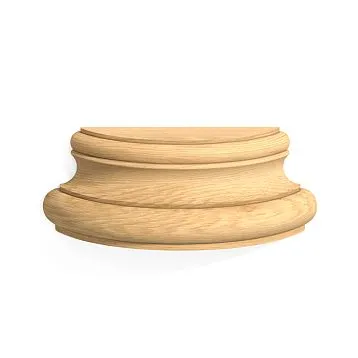
Stavros organizes delivery within Moscow using its own transport or partners with logistics providers for delivery to regions. Packaging ensures the preservation of even delicate carved elements.
A furniture hardware supplier with delivery across Russia is a requirement that is now basic. But logistics is not just about 'will they deliver.' It's also about lead times, packaging, and the safety of goods in transit. Hardware with scratches and dents after transportation means losses and delays.
Clarify: Does the supplier work with shipping carriers that are convenient for you? How are fragile items packaged? What happens in case of damage during delivery?
Expertise
A supplier who can competently advise on selecting hardware for a specific project is a rarity and a great asset. Such a partner can help save not only money but also time: instead of figuring out compatibility nuances yourself, you get a ready-made solution from a specialist.
Assess expertise already at the first contact stage: how competent is the manager? Do they ask clarifying questions about your project or just send a price list?
Company reputation
Market experience is not a guarantee, but a significant indicator. A company that has been working with furniture manufacturers for many years has established processes, a clear catalog, and a real supply history. Find out: does the supplier have its own production or stable direct contracts with manufacturers? This directly affects the stability of the assortment and pricing.
Why low price is not the main criterion when choosing a supplier
This is perhaps the most important thing to understand about choosing a furniture hardware supplier. A low price in the price list is just one variable in an equation with many unknowns. And often this variable turns into the most costly mistake.
Calculate the real cost of cheap hardware.
Hidden costs of low-quality materials. A finish that loses its appearance after a few months of use means returns, complaints, and reputational losses. The cost of one return is not just the price of the hardware. It's the craftsman's time for rework, shipping costs, and a dissatisfied customer who goes to a competitor.
Missed deadlines due to unstable deliveries. The supplier with the lowest price often operates on a 'order upon arrival' basis, without consistent warehouse stock. One time you wait a week, the second time two weeks, the third time a month. Production halts, orders pile up, customers get nervous.
Inconsistent batches. If handles from the second shipment slightly differ in color from the first, it's a problem for serial furniture production. You either stop the line or release furniture with a visual mismatch. Neither option adds to your profit or reputation.
Lack of support. A cheap supplier typically does not invest in expertise and customer support. Any non-trivial question—and you're left to deal with it alone.
Result: The total cost of ownership for cheap hardware from an unstable supplier often exceeds the cost of working with a reliable partner at a higher, but predictable price. Experienced furniture manufacturers know this. Beginners learn from mistakes.
How to check a furniture hardware supplier before the first order
Trust in B2B is built gradually. Before entrusting a supplier with a large order, it's wise to conduct several verification stages.
What to request
Before starting work, request the following from a potential supplier:
-
Full catalog with current prices and availability
-
Technical specifications for key items (material, coating, load-bearing characteristics for structural elements)
-
Product photos are not renders, but real photos with details
-
Delivery terms: timelines, minimum order, delivery options
-
Samples for priority items – if it's about front-facing hardware, this is mandatory
The supplier's reaction to these requests will already say a lot. A company that works systematically will provide everything listed quickly and without unnecessary questions.
What to check
-
Real availability of the items you need – not 'on order', but in stock
-
Clarity and relevance of product cards in the catalog
-
Clarity and transparency of cooperation terms: no hidden fees, unexpected return conditions, vague wording on timelines
-
Contact accessibility: how quickly and competently the manager responds
How to make a safe test order
Start with a small batch of two or three items you regularly need. Evaluate:
-
Product compliance with stated specifications
-
Match with samples, if you requested them
-
Packaging quality and preservation during delivery
-
Timeline accuracy
-
Communication quality at every stage — from order placement to delivery
If the test order passed all parameters — that's a good sign. Move on to regular purchases, gradually increasing volume and expanding the list of items.
When it's beneficial for a business to work with a single furniture hardware supplier
Many companies work with several suppliers at once, believing it reduces dependency and provides flexibility. In some cases, this is justified. But more often — it creates chaos: different terms, different deadlines, different managers, different quality standards.
Working with a single reliable furniture hardware supplier has a number of obvious advantages.
Operational simplicity. One catalog, one manager, one account, one logistics scheme. This saves time and reduces the risk of errors during assembly.
Unified quality standard. When all components—handles, supports, and fasteners—are purchased from a single supplier, the risk of mismatch between items is minimal. You get predictable results from batch to batch.
Convenience of repeat purchases. The manager knows your order history, your priorities, your assortment. A repeat order is processed quickly and without repeated approvals.
Better terms. The larger the volume and the longer the cooperation history, the more leverage for negotiating terms: prices, payment deadlines, priority in shipping.
This does not mean you need to completely abandon alternative sources. But it is more profitable to conduct the main part of purchases through one reliable partner than to scatter efforts among several random sellers.
Table of criteria for selecting a furniture hardware supplier
| Parameter | Why it's important | What to check with the supplier |
|---|---|---|
| Assortment | Ability to cover several categories with one partner | Catalog depth, availability of compatible items |
| In Stock | Determines actual delivery times | Warehouse program, stock relevance |
| Delivery times | Affects the production cycle | Average lead times, behavior during stock shortages |
| Product quality | Determines the reputation of your furniture | Materials, coating, compliance with stated characteristics |
| Batch repeatability | Critical for serial production | Stability of positions in the program |
| Consultations | Save time on selection | Competence of managers, willingness to help with the project |
| Logistics | Affects safety and deadlines | Packaging, transport partners, delivery conditions |
| Conditions for wholesale | Affect procurement economics | Discounts, individual conditions, personal manager |
| Comprehensive Sourcing | Simplifies project work | Ability to order all categories from a single partner |
Which businesses especially need a reliable furniture hardware supplier
The need for a stable supplier is not the same for everyone. But there are several types of businesses for which it is literally a matter of survival.
Furniture manufacturers. For a factory producing furniture in series, interruptions in hardware supplies mean a production line stoppage. There is no room for experimentation here: partners you can trust are needed.
Private workshops. A small production operates under tight deadlines and a limited budget. One unsuccessful hardware order — and the whole month goes down the drain. A reliable supplier here is insurance against chaos.
Interior design studios. A designer managing several projects simultaneously cannot afford to spend time searching for hardware anew for each project. A supplier with a wide range and expertise is a competitive advantage for the designer themselves.
Companies working with project-based furniture. Hotels, restaurants, offices, residential complexes — all these are objects where furniture is made for a specific project. Sourcing for such objects requires precision, speed, and the ability to cover all items with one partner.
Dealers and sourcing companies. Companies that resell hardware or source objects are interested in a stable assortment, transparent terms, and the ability to quickly respond to their clients' requests. This is impossible without a reliable supplier at the base of the chain.
Why an integrated approach to supplies is more convenient for projects
Imagine: you're furnishing an interior turnkey. You need handles for kitchen fronts, legs for the dining table, brackets for shelves, and decorative elements to match the room's style. You could source these from five different suppliers. Or you could get them all from one supplier that offers this entire range in a single catalog.
The second option saves not only money on logistics. It saves what matters most — time. And reduces risk: when all elements are selected within one system, they are compatible in style, quality, and specifications.
For project work, this is especially valuable: you can select Furniture Handles to match a specific style, pair them with supports and legs in a unified material and color, add Brackets of the required type — and all within a single order, with one invoice and one delivery timeframe.
This isn't just convenience. It's a different level of work — systematic, professional, scalable.
Common mistakes when choosing a furniture hardware supplier
Errors in supplier selection are not abstract risks. They are concrete losses: of money, time, reputation. Here are the most common ones.
Focusing only on price. We have already covered this in detail. A low price without considering other parameters is an illusion of savings.
Not checking availability and repeatability of items. Many suppliers list items in their catalog that are not actually in stock or are not consistently reproducible. Check this before starting cooperation.
Not accounting for actual delivery times. A deadline of 'from 5 days' and 'from 5 days, if the item is in stock' are different things. Clarify delivery terms for each product category.
Working with multiple suppliers without a system. Chaotic purchasing from different suppliers creates inconsistencies in quality, style, and hardware parameters. If you work with multiple sources, it should be a conscious strategy, not a random assortment.
Not testing quality on a pilot batch. Starting a large project without a test order is a risk that is easily eliminated. A small pilot batch costs much less than redoing the entire project due to poor-quality hardware.
Ignoring supplier expertise. If a manager cannot answer a basic question about item compatibility — that's a red flag. A good supplier doesn't just sell, they consult.
Not discussing return and replacement terms. Defects happen even with the best suppliers. It's important to know in advance how the company resolves such situations.
Mini-scenarios: how to choose a supplier depending on the type of business
To make the selection criteria even clearer, let's consider three specific scenarios.
Scenario 1: Furniture factory, serial production
You produce 200–500 kitchen sets per month. What's critical for you: stable availability, batch consistency, the ability to order with a one-week planning horizon. Assortment is important, but within your production program. Price matters — but only in combination with stability. You're looking for a supplier with a stock program for your items, a personal manager, and a willingness to work under a contract with fixed terms.
Scenario 2: Private workshop, custom orders
You make furniture to order: different styles, different materials, non-standard sizes. What's critical for you: a wide assortment, the ability to order small batches, fast lead times for popular items, expert consultation. You don't need huge warehouses — you need flexibility and expertise.
Scenario 3: Design studio, project outfitting
You manage 3–5 projects simultaneously, each in its own style. What's critical for you: the ability to select hardware that fits the project concept, comprehensive outfitting of all categories from a single supplier, reliable logistics, reasonable lead times. Price is important, but the supplier's willingness to work with non-standard requests is more important.
Checklist: How to choose a furniture hardware supplier
Use this list as an evaluation tool. Mark each item — and in the end, you'll get an objective picture of each candidate.
-
Broad and systematic assortment covering your needs
-
High product quality, confirmed by specifications and samples
-
Warehouse program for key items
-
Stable and predictable delivery times
-
Consistency of items from batch to batch
-
Clear and transparent terms for wholesale purchases
-
Reliable logistics with good packaging
-
Competent managers ready to advise on selection
-
Experience working with B2B clients of your profile
-
Readiness for test orders and transparent return conditions
-
Ability for comprehensive kitting of multiple categories
-
Reputation and real delivery history in the market
If 10–12 points — the supplier is trustworthy. 7–9 — requires clarification. Less than 7 — a reason to keep looking.
Furniture hardware supplier: what else to pay attention to in 2025–2026
The furniture hardware market is changing. New materials, new finishes, new style trends are emerging. A supplier who keeps up with this is an asset. One stuck with a decade-old assortment is a limitation.
When evaluating a potential partner, pay attention: is the catalog updated? Does the assortment include modern solutions — matte finishes, textured metals, minimalist handle geometry, adjustable supports? Is the supplier ready to work with requests for non-standard solutions?
A separate issue is the eco-friendliness of materials. This criterion is becoming increasingly significant for European and Moscow projects. A supplier who works with certified materials and can confirm their safety is an advantage for your business.
And finally — digitalization of processes. A convenient online catalog with current stock, the ability to place an order through a personal account, electronic document management — all this is no longer a 'nice bonus' but a standard of modern B2B interaction.
FAQ — Answers to popular questions about choosing a furniture hardware supplier
Who is considered a furniture hardware supplier?
A furniture hardware supplier is a company that regularly provides B2B clients (furniture manufacturers, workshops, designers, dealers) with components for manufacturing and finishing furniture. Unlike a retail store, a supplier works with volumes, provides terms for regular clients, and builds long-term partnerships.
How does a supplier differ from a furniture hardware manufacturer?
The manufacturer produces the hardware themselves. A supplier can be a manufacturer, or they can operate as a distributor—purchasing goods from several manufacturers and forming their own product portfolio. For the buyer, what matters more is not the status, but the stability of the assortment, quality, and terms of cooperation.
Is it possible to work with a supplier without large volumes?
Yes. Many furniture hardware suppliers work with both large-scale productions and small workshops. The main thing is to clarify the minimum order quantity for the items of interest and the terms for small batches. Some suppliers offer a flexible start without strict minimums.
What is more important: price or supply stability?
For professional production—stability. Price is important, but it does not compensate for missed deadlines, inconsistencies between batches, and the absence of needed items. The real economics of a project are determined not by a line in a price list, but by the totality of all costs—including losses from downtime and rework.
How to check the reliability of a furniture hardware supplier?
Request a catalog, samples, delivery terms. Assess the speed and quality of responses. Place a small test order. Check if the actual goods match the stated characteristics. Pay attention to how the supplier behaves when questions and non-standard situations arise.
Is a test order needed before starting regular cooperation?
Absolutely yes. A test order is a minimal investment that protects you from larger losses. It allows you to verify the quality of the goods, delivery times, packaging, and the supplier's communication in real conditions, not just in words.
What is better: one supplier or several?
For most manufacturing operations, it is more profitable to work with one main supplier that covers the majority of your needs. This simplifies logistics, reduces operational costs, and allows for establishing privileged cooperation terms. An additional supplier may be justified for highly specialized items not available from the main partner.
What items are typically purchased in bulk from a furniture hardware supplier?
Most often purchased in bulk are: furniture handles (in several variants for different facades), legs and supports (for tables, sofas, armchairs, case furniture), brackets and fastening elements, decorative hardware for finishing products. The specific list depends on the type of production and the product range program.
How to find a furniture hardware supplier in Russia?
Search through professional B2B platforms, thematic exhibitions (MebelMania, Furniture and others), industry communities, as well as directly through search engines using queries like 'furniture hardware supplier wholesale', 'furniture components supplier with delivery across Russia'. Evaluate candidates based on the criteria described in this article.
Is it possible to order samples before a large batch?
With most serious suppliers — yes. The ability to order samples before a major purchase is a sign of a professional approach. Do not work with suppliers who refuse to provide samples for visible hardware.
STAVROS — a reliable supplier of furniture hardware for manufacturing and projects
If you are looking forfurniture hardware supplierthat combines a wide range, own production, and real expertise — pay attention to STAVROS.
STAVROS is a company with its own production and modern equipment, offering a full range offurniture components: fromfurniture handlesin various styles and finishes, fromlegs and supportsfor any type of product, frombracketsand fasteners to decorative details for project furniture.
STAVROS works with furniture manufacturers, private workshops, design studios, and suppliers. The company offers a systematic approach to supply: the ability to cover multiple hardware categories with one partner, a stable range with repeatable items, and professional consultation for project selection.
For those who value not just sales, but true partnership — STAVROS is ready to discuss individual cooperation terms, wholesale purchases, and project outfitting of any complexity.
Learn more about the company, its production, and work approach on theSTAVROS company page.
Choosing a reliable furniture hardware supplier is a decision made once and works for years. Make it consciously.