Article Contents:
- Philosophy of wooden architecture in modern architecture
- Traditions and innovations in wood processing
- Anatomy of perfection: constructive features of the system
- Ergonomic design principles
- Wood species: characteristics and application areas
- Oak — king of staircase structures
- Ash — flexibility and expressiveness
- Beech — uniformity and reliability
- Larch — northern strength
- Manufacturing Technologies
- Raw material preparation: the foundation of quality
- Mechanical Processing: Precision and Mastery
- Assembly and fitting of elements
- Design solutions and stylistic directions
- Classic elegance
- Modern minimalism
- Eco-style and natural harmony
- Methods of mounting and installation
- Traditional joinery
- Modern fastening systems
- Surface treatment and protective coatings
- Preparation operations
- Protective and decorative coatings
- Operation and maintenance
- Regular maintenance
- Preventive Maintenance
- Normative requirements and safety standards
- Building codes and regulations
- Quality Control
- Economic aspects and investment planning
- Pricing factors
- Long-Term Economic Efficiency
- Innovations and development prospects
- New Processing Technologies
- Ecological innovations
- Conclusion
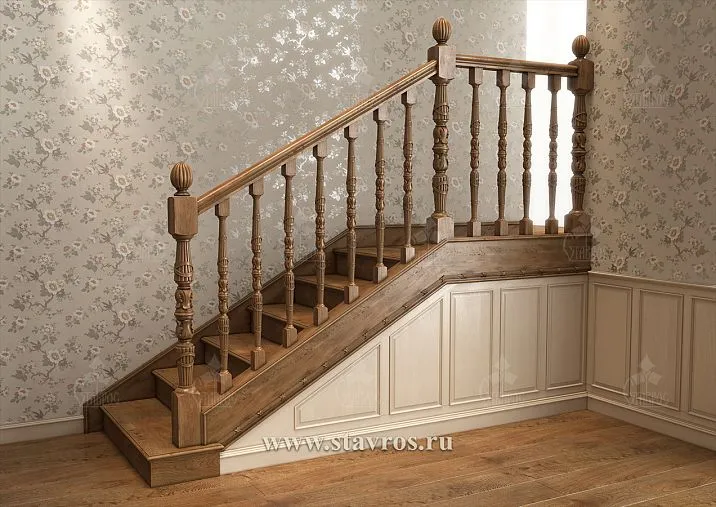
A staircase is not just a means of moving between floors. It is architectural poetry, where each element plays its role in creating a safe and beautiful space. handrails balusters wooden They form an inseparable system, where the beauty of natural wood combines with engineering precision. These elements transform an ordinary staircase structure into a work of art that serves for decades, delighting the eye and ensuring the safety of every step.
In the modern world, where technology is rapidly developing, wood remains a material that cannot be replaced. Its warmth, natural beauty, and unique tactile properties create an atmosphere of comfort and coziness. When it comes to staircase railings, wooden handrails and balusters become not just functional elements, but central interior accents that define the style and character of the entire space.
Choosing quality wooden elements for a staircase is an investment in safety, durability, and aesthetic perfection of the home. Every detail must be carefully considered: from the wood species to the processing method, from constructive features to the final coating. Only a comprehensive approach allows creating a staircase railing that will serve faithfully for many years.


Philosophy of wooden architecture in modern architecture
Wood is a living material that breathes, changes, and develops alongside the house. Unlike cold metal or synthetic materials, wood possesses a unique ability to create an emotional connection with people. When we touch a wooden handrail, we feel not only its smooth surface but also the warmth accumulated in its fibers over years of tree growth.
The ecological component of wooden staircase elements is becoming increasingly important in the modern world. Natural wood does not emit harmful substances; on the contrary, it can purify the air, absorbing carbon dioxide and releasing oxygen even after treatment. Essential oils contained in some wood species create a favorable microclimate in the home.
The energy of wood — a concept that is not mystical but entirely scientific. Wood has the ability to accumulate and release heat, regulate air humidity, and create acoustic comfort. Wooden handrails and balusters not only perform their primary function but also contribute to forming a healthy microclimate in the home.




Traditions and innovations in wood processing
Modern wood processing technologies allow preserving all its natural qualities while simultaneously enhancing its performance characteristics. Thermal modification alters the wood's structure at the molecular level, increasing its stability and biostability. Impregnation with protective compounds creates a reliable barrier against moisture, fungi, and insects.
Selective wood selection is an art requiring deep knowledge and years of experience. Masters can read growth rings, determine fiber direction, and predict material behavior during use. Each board undergoes careful evaluation before becoming part of a staircase railing.
Our factory also produces:


Anatomy of perfection: constructive features of the system
Staircase railing is a complex engineering system where each element performs its function. The handrail is not just a plank for hand support — it is a structural element that unites the entire railing system into a single whole. Its shape, dimensions, and mounting method affect the ease of use and safety of the staircase.
Balusters serve as vertical supports, transferring the load from the handrail to the staircase base. They must be strong enough to withstand lateral loads and sufficiently frequent to prevent accidental falls. The standard distance between balusters is 100–150 millimeters, ensuring an optimal balance of safety and aesthetics.
Support posts are load-bearing elements that bear the main load from the entire railing system. They are installed at the beginning and end of the staircase run, as well as at turns. The dimensions and mounting method of support posts are calculated based on the total load and constructive features of the staircase.
Get Consultation
Ergonomic design principles
Modern requirements for staircase railings are based on a deep study of human biomechanics. A handrail height of 900–1000 millimeters ensures comfortable support for people of different heights. A handrail diameter of 50–70 millimeters allows a secure grip without straining the hand muscles.
The shape of the handrail affects not only aesthetics but also usability. A classic oval profile with dimensions 50×70 millimeters is considered optimal from an ergonomic standpoint. The handrail surface should be smooth, free of burrs and irregularities that could cause discomfort or injury.
Wood Species: Characteristics and Applications
Oak — the king of stair construction
Oak is rightfully considered the benchmark of quality among materials for manufacturing stair components. Its density of 700–800 kg/m³ ensures exceptional strength and durability. Oak’s tangential strength is 94 MPa, allowing it to withstand significant loads without deformation.
Oak’s workability requires a professional approach. The material’s high density and hardness impose special requirements on tools and processing techniques. However, the result justifies all efforts — oak handrails and balusters serve for decades, retaining their original beauty and strength.
Ash attracts craftsmen with its unique combination of strength and flexibility. Its density of 650–750 kg/m³ provides excellent mechanical properties, while its fibrous structure allows creating complex-shaped items without risk of cracking. This is especially important when manufacturing curved handrails for spiral staircases.
Ash — flexibility and expressiveness
Ash’s texture features an expressive pattern of annual rings, creating a dynamic interplay of light and shadow on the finished surface. The contrast between early and late wood makes ash products especially decorative. With proper finishing, ash acquires a silky surface, pleasant to the touch.
Ash’s dimensional stability under humidity changes is higher than that of many other species, making it ideal for handrails subjected to intensive human contact.
Ash has greater dimensional stability when humidity changes compared to many other species, making it ideal for handrails subjected to intensive human contact.
Beech — uniformity and reliability
Beech is distinguished by its exceptional structural uniformity, making it ideal for manufacturing balusters with complex profiles. Its density of 650–700 kg/m³ ensures high strength with relatively easy processing. Beech’s fine-pored structure, after sanding, yields a perfectly smooth surface.
Beech wood’s color varies from light rose to reddish-brown, creating a warm and cozy atmosphere. Beech readily accepts staining and painting, allowing it to be adapted to any interior color scheme. Its uniform density ensures even absorption of coloring agents across the entire surface.
Larch — Northern Strength
Larch combines the beauty of coniferous species with the strength of deciduous ones. Its density of 650–700 kg/m³ and high resin content provide exceptional resistance to moisture and biological damage. This makes larch products ideal for use in variable humidity conditions.
Larch’s natural antiseptic properties are due to its high content of resin — a natural preservative that protects wood from rot and insect damage. Its color palette ranges from golden-yellow to reddish-brown, creating a warm and cozy ambiance.
Manufacturing Technologies
Raw Material Preparation: The Foundation of Quality
The quality of finished products is established during the raw material preparation stage. Wood drying is a complex technological process requiring precise adherence to temperature and humidity regimes. The final moisture content should be 8–12% for internal structures, ensuring dimensional stability during operation.
Selective selection of logs eliminates material with defects — knots, cracks, resin pockets — which may negatively affect the strength and appearance of finished products. The grain direction should be as straight as possible, ensuring uniform processing and minimizing internal stresses.
wooden handrails and balusters
Mechanical Processing: Precision and Craftsmanship
Manufacturing wooden handrails and balusters requires high-precision equipment and professional craftsmanship. Roughing out blanks is performed on four-sided machines, ensuring ideal geometry and surface quality. Dimensional accuracy is ±0.1 mm, which is critically important for subsequent assembly.
Handrail profiling is performed on specialized machines equipped with a set of milling cutters of various configurations. Each profile requires individual machine setup and careful quality control. Feed rate and spindle speed are individually adjusted for each wood species.
Turning balusters is an art requiring not only technical skills but also artistic sensitivity. A master turner must feel the material, understand its behavior under cutting tools. Modern CNC machines allow achieving perfect repeatability of forms, but final finishing still requires manual work.
Assembly and Fitting of Elements
Assembly and fitting of elements
Connection methods are chosen depending on structural features and aesthetic requirements. Dovetail joints provide strength and hidden fasteners, threaded joints allow disassembly if needed, and glued joints create a monolithic structure.
Design Solutions and Stylistic Directions
Classic elegance
Assembly of stair railings is the final stage, where all elements are combined into a single structure. The accuracy of joint fitting affects not only the appearance but also the strength of the entire system. Gaps in joints must not exceed 0.2 mm, requiring high skill from assemblers.
Decorative elements of classical balusters include coves — vertical grooves, astragals — convex ring moldings, entasis — slight thickening in the middle. These elements not only decorate the item but also create a play of light and shadow, adding depth to flat surfaces.
Color solutions for classical railings are traditionally restrained — natural wood tones, enhanced by transparent lacquers. Patination of recesses creates an effect of noble antiquity, while gilding individual elements adds luxury and grandeur.
Modern minimalism
A minimalist approach to stair railing design is characterized by extreme simplicity of forms and absence of decorative excesses. Clean geometric lines and perfect proportions create a sense of modernity and functionality. The beauty of such items lies in the quality of the material and flawless execution.
Monochromatic color solutions emphasize the architectural expressiveness of form. Handrails may have rectangular sections with rounded corners, balusters — simple cylindrical or square shapes. The absence of decoration is compensated by the highest quality surface finishing.
Eco-style implies maximum preservation of the natural beauty of wood. Untrimmed boards with retained bark, slabs with natural edges, branches and knots as decorative elements — all this creates a sense of harmony with nature.
Minimal surface treatment allows preserving the natural texture of wood. Oil finishes highlight the material’s natural beauty without hiding its structure. Combining different wood species creates interesting color and texture contrasts.
Minimal surface treatment preserves the natural wood texture. Oil-based finishes highlight the material's natural beauty without obscuring its structure. Combining different wood species creates interesting color and texture contrasts.
Methods of mounting and installation
Traditional joinery
Notched joints remain the most reliable method for fastening wooden elements of stair railings. Wooden cylindrical rods with a diameter of 8–12 mm create a strong connection without visible metal parts. The installation depth of the notched joint should be at least 40 mm into each component.
Dovetail joints provide maximum strength and durability. The size of the tenon is calculated based on the thickness of the connected parts and expected loads. A conical tenon ensures a tight fit and compensates for wood shrinkage.
Horseshoe joint — a traditional joint that becomes stronger over time due to natural wood shrinkage. This joint is often used to fasten handrails to support posts in classic stair railings.
Modern fastening systems
Metallic threaded rods M8–M10 provide exceptional joint strength. They are especially effective for fastening heavy elements or when disassembly of the structure is required. Concealed fastening ensures aesthetic appearance while maintaining high strength.
Specialized hardware includes various types of connectors allowing elements to be fastened at any angle. Adjustable connectors allow compensation for minor geometric deviations in the structure, which is especially important when installing in already built buildings.
Surface treatment and protective coatings
Preparation operations
Sanding is the foundation of quality finishing for wooden items. The process is performed in several stages, gradually reducing abrasive grit from P120 to P320. Each stage must completely remove traces of the previous one, requiring careful quality control.
Inter-stage dust removal is critically important for the quality of subsequent coatings. Residual sanding dust can cause surface defects and reduce coating adhesion. Degreasing removes traces of technical lubricants and natural resins that may prevent even coating application.
Protective and decorative coatings
Priming is a mandatory preparation stage ensuring reliable adhesion of the finish to the wood. The choice of primer depends on the wood species and type of finish. Antiseptic primers additionally protect wood from biological damage.
Coatings for handrails and balusters made of wood must have high wear resistance and resistance to mechanical impacts. Polyurethane varnishes provide maximum protection while preserving the natural beauty of the wood.
Oil-based coatings create natural protection by penetrating the wood structure. They highlight the natural beauty of the material and create a pleasant-to-touch surface. Wax-based compounds provide additional protection and a noble matte sheen.
Operation and Maintenance
Regular Maintenance
Proper maintenance extends the service life of wooden stair railings and preserves their aesthetic qualities. Daily dry cleaning includes removing dust with a soft cloth or special brush. It is important to avoid abrasive materials that may scratch the surface.
Weekly wet cleaning is performed using special wood care products. Excessive moisture may cause wood deformation, so the surface should be immediately wiped dry. Periodic treatment with special compounds maintains the protective properties of the coating.
Preventive maintenance
Timely detection of minor defects allows their removal with minimal effort. Local sanding and touch-up of scratches prevent them from developing into serious damage. Tightening of fasteners should be performed regularly, especially during the first year of operation.
Renewal of protective coatings is recommended every 5–7 years depending on usage intensity. Full restoration may be required after 15–20 years, but with proper care, quality wooden railings can last significantly longer.
Normative Requirements and Safety Standards
Building codes and regulations
Design and manufacturing of stair railings are regulated by strict normative documents. The height of the railing should be at least 900 mm for residential buildings and 1200 mm for public buildings. The structure must withstand a horizontal load of at least 0.8 kN/m without failure.
The distance between balusters is limited by safety requirements — the gap should not exceed 150 mm in residential buildings and 100 mm in childcare facilities. The handrail must be continuous along the entire length of the stair flight and have safe ends.
Quality control
Incoming material inspection includes checking moisture content, density, and absence of wood defects. Operational control is performed at each production stage, ensuring compliance with technical requirements. Acceptance inspection of finished products includes checking dimensions, surface quality, and joint strength.
Strength tests are conducted on samples of each product batch. Static tests determine load-bearing capacity of elements, while dynamic tests assess resistance to cyclic loads. Durability is evaluated based on results of accelerated aging tests.
Economic aspects and investment planning
Pricing Factors
The cost of wooden stair railings is composed of multiple components. Wood species is the primary pricing factor, influencing 40–60% of the total cost. Processing complexity determines labor costs and may increase the cost by 2–3 times for carved items compared to simple forms.
Order volume significantly affects unit cost — large batches allow optimization of production processes. Production timelines also affect price — urgent orders cost 20–30% more than standard ones. Transportation and installation may account for up to 15% of the project’s total cost.
Long-term economic efficiency
Quality wooden railings represent a long-term investment. The service life of items made from hardwoods, with proper care, is 50–100 years. Maintenance costs are minimal — periodic coating renewal and simple upkeep.
Impact on property value is an important factor in investment planning. Quality stair railings increase the attractiveness of a property to potential buyers and may increase its value by 5–15%. Energy efficiency of wooden structures contributes to creating a comfortable microclimate and reduces heating costs.
Innovations and development prospects
New processing technologies
Laser processing opens new possibilities for creating complex decorative elements. The precision of the laser beam allows creating delicate patterns unattainable by traditional methods. CNC milling ensures perfect repeatability of complex profiles with high productivity.
Thermal modification of wood changes its properties at the molecular level, increasing dimensional stability and biostability. Impregnation with polymer compounds creates a composite material combining the beauty of wood with improved performance characteristics.
Ecological Innovations
Zero-waste technologies allow using all wood processing by-products. Sawdust and shavings are used to produce fuel briquettes, small offcuts — for manufacturing mosaic elements. Renewable energy sources in production reduce the carbon footprint of the product.
FSC certification guarantees that the wood originates from sustainably managed forests. Bio-degradable coatings based on vegetable oils replace synthetic compounds. Local materials reduce transportation costs and support local economies.
Conclusion
The world of wooden architecture will never cease to amaze with its diversity and beauty. Wooden handrails and balusters represent a unique combination of functionality, aesthetics, and eco-friendliness. These elements not only ensure the safety of staircase use — they create an atmosphere of coziness and comfort, transforming ordinary movement between floors into an aesthetic pleasure.
Choosing high-quality wooden elements for staircase railings is an investment in longevity, beauty, and family health. Natural wood creates a favorable microclimate in the home, regulates air humidity, and fills the space with natural energy. Every touch of a wooden handrail reminds one of the connection to nature and the traditions of craftsmanship passed down from generation to generation.
Modern technologies allow creating items that combine the beauty of natural wood with high performance characteristics. Properly designed and manufactured wooden railings will serve for many decades, delighting owners with their beauty and reliability. These are not just structural elements — they are works of applied art that make a home truly cozy and unique.
Investments in high-quality wooden stair railings pay off not only financially, but also in daily enjoyment of admiring beauty. Every detail, every line, every texture contributes to creating a harmonious space where a person feels comfortable and secure. In a world of high-tech and artificial materials, wood remains a symbol of naturalness, reliability, and beauty.
For many years, the company STAVROS has specialized in creating high-quality solid wood products, including exclusive stair railings. By combining traditional wood processing methods with modern technologies, STAVROS creates items distinguished by flawless quality, durability, and unique beauty. Each STAVROS project is the result of careful planning, professional craftsmanship, and strict quality control at every production stage, making STAVROS products a benchmark in the field of wooden stair railings.