Article Contents:
- History of half-columns: from antiquity to the present day
- Birth of Architectural Perfection
- Evolution Through Centuries
- Modern revival
- Half-columns in interior design: functionality and aesthetics
- Space zoning
- Concealing Structural Elements
- Creating architectural accents
- Materials of Manufacture: From Classic to Innovations
- Natural Wood: Eternal Classic
- Polyurethane: Lightness and Practicality
- Gypsum: elegance and plasticity
- Stone and marble: luxury and durability
- Styles and design: half-columns for any interior
- Russian Style: National Traditions in Modern Interpretation
- Neoclassicism: modern interpretation of traditions
- Art Deco: luxury and geometry
- Modern Style: Minimalism and Functionality
- Where to buy half-columns: criteria for choosing a reliable manufacturer
- Quality of Materials and Craftsmanship
- Option for Custom Orders
- Manufacturer's Reputation and Experience
- Service and Warranties
- Technical specifications of half-columns: what to pay attention to
- Sizes and proportions
- Constructive features
- Finishing and Protective Coatings
- Installing half-columns: professional secrets
- Preparatory work
- Mounting to the surface
- Finishing
- Caring for half-columns: preserving beauty for years
- Wooden Half Columns
- Half-columns made of polyurethane and gypsum
- Stone and marble half-columns
- Half-columns in various rooms: ideas and solutions
- Living Room: The Focal Point
- Bedroom: comfort and romance
- Office: solidity and status
- Bathroom: luxury and relaxation
- Innovative solutions: half-columns in modern design
- Integration with lighting
- Multifunctional half-columns
- Experimental materials and forms
- Economic Aspects: Investment in Beauty and Comfort
- Price-to-Quality Ratio
- Impact on property value
- Durability as an Economic Factor
- Half-columns and eco-friendliness: in harmony with nature
- Natural materials: health and ecology
- Sustainable Production
- Second life for vintage half-columns
- Conclusion: half-columns as an investment in beauty and status

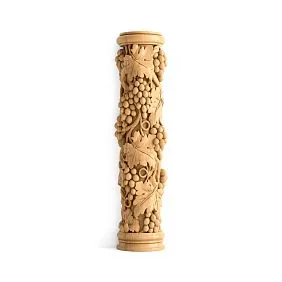
In the world of interior design, there are elements capable of transforming space, giving it a unique charm and elegance. Among such elements, half-columns hold a special place — architectural details whose history spans millennia. Today, we will immerse ourselves in the wonderful world of these exquisite decorative elements, reveal their potential in modern interiors, and tell you where to buy half-columns products of the highest quality.

History of Half-columns: from Antiquity to the Present Day
Half-columns are not just decorative elements. They are the heritage of great civilizations, embodying the architectural genius of generations of masters. Their history begins in ancient Greece and Rome, where columns and half-columns were not only structural elements but also symbols of power, stability, and beauty.




Birth of architectural perfection
In ancient times, half-columns were used as elements visually supporting the entablature—the upper part of an architectural order. They gave buildings monumentality while simultaneously adding lightness. Ancient Greek masters created three main orders: Doric, Ionic, and Corinthian, each with its own characteristics in the design of columns and half-columns.
Our factory also produces:



Evolution Through Centuries
Over time, half-columns evolved, acquiring new forms and meanings in various architectural styles. During the Renaissance, they became symbols of returning to classical ideals of beauty. Baroque added opulence and theatricality. Classicism restored strictness and symmetry. Each era left its mark in the history of this architectural element.
Get Consultation
Modern Revival
Today buy half-columns – it is not merely acquiring a decorative element, but an investment in the beauty and status of your home.
Half-columns in interior design: functionality and aesthetics
Half-columns are a wonderful combination of functionality and aesthetics. They can solve various tasks in interior design while simultaneously serving as decoration.
Space Zoning
One of the key functions of half-columns is visual space division. They can elegantly mark the boundary between the living room and dining room, create a cozy nook for relaxation or reading, or highlight the entrance area. At the same time, unlike solid partitions, half-columns do not clutter the space, preserving its airiness and freedom.
Masking structural elements
Half-columns excel at concealing load-bearing structures, utilities, or other technical elements. A load-bearing column framed by a decorative half-column transforms from a necessary structural element into an exquisite interior detail.
Creating architectural accents
In a modern minimalist interior, half-columns can become the very accent that gives the space individuality and character. They bring a sense of solidity, stability, and nobility into the home.
Materials of manufacture: from classics to innovations
The modern market offers half-columns made from various materials, each with its own advantages and characteristics.
Natural wood: eternal classic
Wooden half-columns are classic, time-tested. They possess natural beauty, warmth, and a unique texture pattern. Solid oak, beech, ash, or exotic wood species—each material imparts its own character and mood to the half-column.
Wooden half-columns can be crafted in various styles—from strict classicism to refined Baroque with carved elements. They fit beautifully into both traditional interiors and modern spaces, where natural materials are especially valued.
Polyurethane: lightness and practicality
Polyurethane half-columns are a modern solution for those who value practicality and affordability. They are significantly lighter than wooden counterparts, resistant to moisture and temperature fluctuations, immune to rot and insect damage.
Modern technologies allow creating polyurethane half-columns that visually resemble wooden or stone ones almost indistinguishably. At the same time, their installation is significantly easier, and their cost is more accessible.
Gypsum: elegance and plasticity
Gypsum half-columns allow realizing the most complex and refined design solutions. The plasticity of the material enables creating delicate details, intricate ornaments, and reliefs. Gypsum is an eco-friendly material that also possesses excellent sound insulation properties.
Stone and marble: luxury and durability
Half-columns made of natural stone or marble are a choice for those who prefer luxury and are willing to invest in durability. Such items become not just decorative elements, but true works of art that will delight generations.
Each stone is unique in its pattern and shade, making every half-column one-of-a-kind. Marble, granite, travertine—the choice of material depends on the overall interior style and personal preferences.
Styles and design: half-columns for any interior
The versatility of half-columns allows using them in interiors of various stylistic directions.
Classic style: grandeur and harmony
In a classic interior, half-columns are one of the key elements. They can be executed in any of the classical orders—Doric, Ionic, or Corinthian. Such half-columns usually feature fluting (vertical grooves) and characteristic capitals.
For a classic interior, half-columns made of natural wood or marble, possibly with gilded elements, would be ideal. They will create an atmosphere of aristocracy and refined taste.
Neoclassicism: modern interpretation of traditions
Neoclassical style offers a more free interpretation of classical elements. Half-columns in such an interior may be more minimalist, with simplified forms, yet retaining the basic proportions and elegance.
Art Deco: luxury and geometry
In an Art Deco interior, half-columns take on more geometric forms. They may be made from contrasting materials, accented with metallic elements or mirrored inserts. Such half-columns become a striking accent, emphasizing the luxury and sophistication of the space.
Modern Style: Minimalism and Functionality
In a modern interior, half-columns can be extremely minimalist, without excessive decoration. They serve more of a functional role—zoning space, concealing structural elements. At the same time, their form and material can be quite unconventional—ranging from concrete to glass.
Where buy half-columnsCriteria for choosing a reliable manufacturer
Choosing half-columns is a responsible step that requires attention to detail and quality. Consider the main criteria to pay attention to when selecting a manufacturer.
Material and Craft Quality
First, pay attention to the quality of materials and finish. Wooden half-columns should be made from high-quality, well-dried wood, free of knots and other defects. Polyurethane items should have uniform density and clear relief.
Pay special attention to the quality of finishing — sanding, painting, or varnishing. The surface should be smooth, without burrs, chips, or other defects.
Option for custom order
The ideal half-column is one that perfectly fits your interior in terms of size, style, and color scheme. Therefore, it is important to choose a manufacturer that offers the possibility of manufacturing half-columns according to individual parameters.
This is especially relevant for non-standard rooms or when implementing unique design projects. The ability to choose the type of wood, finish, dimensions, and proportions will allow you to create half-columns that become an organic part of your interior.
Reputation and experience of the manufacturer
When choosing a half-column manufacturer, pay attention to its reputation and experience. Companies with long-standing experience usually have refined production and quality control technologies, which guarantee a high level of execution.
Review customer feedback, look at the portfolio of completed projects. This will help form an objective view of the product quality and service level.
Service and Guarantees
An important aspect is also the level of service provided by the manufacturer. This includes consultations on choosing half-columns, assistance in design, delivery, and, if necessary, installation.
A reliable manufacturer always provides a warranty on its products and is ready to address any questions or problems that arise.
Technical characteristics of half-columns: what to pay attention to
When choosing half-columns, it is important to consider not only their aesthetic qualities but also their technical characteristics, which determine their durability and functionality.
Dimensions and Proportions
The dimensions of the half-column should correspond to the proportions of the room. Too massive columns in a small space will look bulky, while miniature ones in a spacious hall will disappear and fail to create the desired effect.
Classic proportions of half-columns are based on ancient canons, where the height of a column of a certain order should be proportional to its diameter. However, in modern design, more flexible interpretations are allowed.
Structural Features
Half-columns can be solid or assembled. Assembled models usually consist of a base (foundation), shaft, and capital (upper part). Such a construction simplifies transportation and installation, especially for large items.
It is also important to pay attention to the method of attaching the half-column to the wall or other surface. Reliable attachment ensures the safety and longevity of the structure.
Finishing and protective coatings
The finish of the half-column should match the overall interior style and be resistant to environmental influences. For wooden half-columns, this may include various varnishes, oils, or paints that not only give the item a certain appearance but also protect it from moisture, ultraviolet radiation, and other negative factors.
Half-columns made of polyurethane or plaster are usually delivered with a final finish, but sometimes require additional painting to match the interior color scheme.
Installing half-columns: professional secrets
Correct installation of half-columns is the guarantee of their longevity and aesthetic appearance. Consider the main stages and nuances of this process.
Preparation Work
Before installing half-columns, it is necessary to carefully prepare the surface. The wall should be flat, clean, and dry. If necessary, leveling, priming, or other preparatory work is carried out.
It is also important to accurately mark the installation locations of the half-columns, especially if there are several of them. This ensures symmetry and harmony of the composition.
Mounting to the surface
The method of mounting the half-column depends on its material, weight, and construction. Lightweight polyurethane or plaster half-columns are usually mounted using special adhesive or mounting foam. For heavy wooden or stone items, additional mechanical fastening — anchors, dowels, or special brackets — may be required.
When installing assembled half-columns, the base is installed first, then the shaft, and finally the capital. Each element must be securely fastened and aligned.
Final finishing
After installing half-columns, final finishing may be required — sealing joints, touching up mounting areas, applying protective coatings. This is especially relevant for wooden items, which may require periodic renewal of the protective layer.
Care for half-columns: preserving beauty for many years
Proper care for half-columns will help maintain their attractive appearance and extend their service life.
Wooden half-columns
Wooden half-columns require regular care to preserve their beauty and protect them from adverse influences. Main recommendations:
- Regularly remove dust using a soft dry cloth or a special brush.
- Avoid using abrasive cleaning agents that may damage the surface.
- Periodically renew protective coatings (varnish, oil, wax) according to the manufacturer's recommendations.
- Maintain optimal humidity levels in the room to avoid wood deformation.
Polyurethane and plaster half-columns
Half-columns made of synthetic materials typically require minimal maintenance:
- Regularly remove dust using a soft cloth or vacuum cleaner with a soft attachment.
- If necessary, wipe the surface with a slightly damp cloth, but without using aggressive cleaning agents.
- Avoid mechanical damage, especially for plaster items, which are more fragile.
Stone and marble half-columns
Half-columns made of natural stone require special care:
- Use only specialized stone cleaning agents appropriate for the type of stone.
- Regularly renew protective impregnations that prevent moisture and dirt absorption.
- Avoid contact with acids and alkalis that may damage the stone surface.
Half-columns in various rooms: ideas and solutions
Half-columns can be used in various rooms, giving each one a unique character and style.
Living room: the focal point
In the living room, half-columns can become a central design element. They can frame a fireplace, highlight a seating area, or create an eye-catching portal between adjacent rooms.
In spacious living rooms, large half-columns with rich decoration are suitable, emphasizing the status and taste of the owners. In smaller rooms, it is better to use more minimalist models that do not visually reduce the space.
Bedroom: comfort and romance
In the bedroom, half-columns can create an atmosphere of comfort and romance. They can frame the headboard of the bed, creating the effect of a luxurious bedroom in palace-style interiors. Or they can separate the sleeping area from the wardrobe, providing functional zoning of the space.
For the bedroom, half-columns with soft, smooth lines and no aggressive decorative elements are usually chosen. Materials and color schemes should promote relaxation and rest.
Office: solidity and status
In a home office or library, half-columns give the space a sense of solidity and substance. They can frame bookshelves, highlight a work area, or create an eye-catching entrance portal.
For an office, half-columns in a classic style, made of dark natural wood, are usually chosen, as they are associated with traditions and intellectual activity.
Bathroom: luxury and relaxation
In a spacious bathroom, half-columns can create an atmosphere reminiscent of Roman baths or luxurious spa salons. They can frame a bathtub, highlight a sink area, or create an eye-catching entrance to the shower cabin.
For the bathroom, it is important to choose half-columns made of materials resistant to moisture and temperature fluctuations. These may include specially treated wood, polyurethane with a moisture-resistant coating, or natural stone.
Innovative solutions: half-columns in modern design
Modern design offers new, non-standard approaches to using half-columns in interior design.
Integration with lighting
One interesting solution is integrating half-columns with lighting systems. These may include built-in lights that create dramatic uplighting or downlighting, or translucent half-columns with internal lighting.
Such solutions not only serve a decorative function but also become part of the room's lighting system, creating a cozy, intimate atmosphere.
Multifunctional half-columns
Modern half-columns can be multifunctional. For example, they may include storage niches, built-in bookshelves or decorative item shelves, even integrated audio systems or climate control equipment.
Such solutions are especially relevant for small spaces, where every interior element must be maximally functional.
Experimental materials and forms
Modern designers experiment with materials and forms of half-columns, creating unique, original solutions. These can be half-columns made of glass, metal, concrete, or composite materials, with non-standard shapes and textures.
Such experimental half-columns become not just decorative elements, but true works of art, central to the entire interior concept.
Economic aspects: investment in beauty and comfort
Purchasing half-columns is not just buying a decorative element, but an investment in the beauty, comfort, and status of your home.
Price-to-quality ratio
The cost of half-columns can vary significantly depending on the material, size, complexity of execution, and manufacturer's reputation. However, it is important to understand that cutting corners on quality may lead to disappointment and additional expenses in the future.
Quality half-columns made from natural materials, crafted by professionals, will last for decades, maintaining their attractive appearance and adding value to your interior.
Impact on property value
Quality architectural details, including half-columns, can significantly increase the market value of real estate. They create an impression of luxury, individuality, and high-quality finishing, which is appreciated by potential buyers.
Thus, investments in quality half-columns can not only bring aesthetic pleasure but also prove financially beneficial in the long term.
Durability as an economic factor
Quality half-columns made from natural materials have exceptional durability. With proper care, they can serve for decades without requiring replacement or major repairs.
This makes them more economically advantageous in the long term compared to cheaper, less durable decorative elements that will need to be replaced periodically.
Half-columns and eco-friendliness: in harmony with nature
In today's world, where ecological issues are becoming increasingly relevant, it is important to pay attention to the eco-friendliness of materials used in interiors.
Natural materials: health and ecology
Half-columns made from natural materials — wood, stone, plaster — are environmentally friendly and safe for health. They do not emit harmful substances, do not accumulate static electricity, and create a favorable microclimate in the room.
Wooden half-columns are especially valuable in this regard, as they, in addition to other properties, have the ability to regulate humidity in the room, creating comfortable living conditions.
Sustainable production
When choosing a half-column manufacturer, pay attention to their approach to ecological and sustainable development issues. Responsible manufacturers use wood from certified forests, apply energy-efficient technologies, and minimize production waste.
Such an approach not only contributes to environmental preservation but also guarantees high-quality products made with respect for nature and future generations.
A second life for vintage half-columns
An interesting trend is the restoration and reuse of vintage architectural elements, including half-columns. This is not only eco-friendly but also allows preserving historical heritage, giving the interior uniqueness and depth.
Restored antique half-columns can become a true gem of the interior, telling their unique story and creating an unparalleled atmosphere.
Conclusion: half-columns as an investment in beauty and status
Half-columns are not just decorative elements, but true works of art capable of transforming any interior, giving it nobility and individuality. They combine functionality and aesthetics, practicality and luxury.
Choosing half-columns for your home means investing not only in beauty and comfort, but also in status, a certain lifestyle, and cultural heritage that will delight you and your guests for many years.
If you decided buy half-columns For your interior, pay attention to the offerings of the company STAVROS — a recognized leader in producing high-quality architectural elements from natural materials. Years of experience, master craftsmanship, and attention to every detail guarantee exceptional quality and longevity of products.
The company STAVROS offers a wide range of half-columns in various styles, sizes, and materials, as well as the possibility of custom-made items. This allows finding the perfect solution for any interior — from classic luxury to modern minimalism.
Investing in quality architectural elements from STAVROS means acquiring not just interior items, but true works of art that will delight you and your loved ones for many years, creating an atmosphere of nobility, comfort, and harmony in your home.