Article Contents:
- History and origin of half balusters: from antiquity to the present day
- From pomegranate flower to architectural element
- Evolution of form and application
- Half balusters in various architectural styles
- Functional purpose of half balusters in modern interiors
- Decorative function: creating accents and stylistic unity
- Structural function: reinforcement and support
- Space zoning and creation of architectural compositions
- Variety of forms and styles of half balusters
- Classification of half balusters by shape
- Stylistic solutions: from classic to avant-garde
- Size range and proportions
- Materials for manufacturing half balusters: traditions and innovations
- Wood: nobility and warmth
- Stone and concrete: monumentality and durability
- Modern composite materials: innovations serving design
- Application of half balusters in various interior elements
- Staircase structures: functionality and aesthetics
- Wall panels and decorative elements
- Furniture and interior items: from classic to avant-garde
- Exterior solutions: facades and landscape design
- Technical aspects of selecting and installing half balusters
- Selection criteria: size, material, style
- Installation technology: from surface preparation to final finishing
- Maintenance and Care: Extending Service Life
- Design solutions and stylistic approaches using half balusters
- Classic interiors: symmetry and harmony
- Modern interiors: minimalism and functionality
- Eclecticism and fusion: playing with styles and materials
- Ethnic styles: cultural heritage in modern interpretation
- Economic aspects of choosing half balusters
- Price-to-quality ratio: what to pay attention to
- Long-term benefits of investing in quality items
- Budget solutions without compromising quality
- Innovations and trends in half-baluster design
- Modern manufacturing technologies
- Eco approach: sustainable development in design
- Personalization and individual approach
- Conclusion: half-balusters as expression of individuality and style
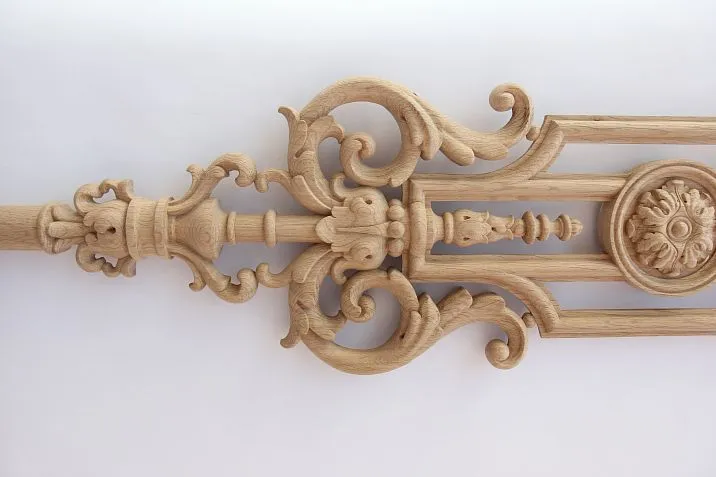
Have you ever wondered why some interiors immediately capture attention, creating a sense of harmony and completeness? The secret often lies in the details—the architectural elements that, like invisible threads, bind space into a unified whole. Among such elements, half-balusters hold a special place half-balusters Elegant vertical supports capable of transforming any interior, lending it nobility and sophistication.
Imagine this: you enter a room, and your gaze involuntarily settles on an elegant staircase adorned with carved wooden elements. Or perhaps you are drawn to a wall decorated with half-columns featuring delicate scrolls. This is the magic of half-balusters—architectural gems capable of turning an ordinary space into a work of art.
In this article, we will delve into the wonderful world of half-balusters, uncovering their history, functional purpose, variety of forms and materials, and sharing secrets for choosing and installing these elegant interior details.


History and origin of half-balusters: from antiquity to modernity
The history of half-balusters traces back to deep antiquity, when architects were just beginning to experiment with forms and proportions. These architectural elements have a rich history closely intertwined with the development of global architecture.




From pomegranate flower to architectural element
Interestingly, the name "baluster" comes from the ancient Greek word βαλαύστιον (balaustion), meaning "pomegranate flower." Indeed, upon closer inspection of the classical form of a baluster, one can notice a resemblance to a partially opened bud of this plant. Another version links the origin of balusters to reduced copies of architectural columns used in ancient architecture.
Surprisingly, half-balusters did not exist in ancient Rome or Greece, despite the widespread use of columns and pilasters. In architecture, they appeared only during the Renaissance and were initially used exclusively for balcony railings.
Our factory also produces:


Evolution of form and application
Half-balusters are, essentially, balusters divided vertically in half and attached to a flat surface. They became a popular architectural element during the Renaissance, when architects began actively using them to decorate building facades and interior spaces.
In the 15th century, balusters were first used for staircases, and by the end of the century, they became an indispensable part of architectural design. Depending on the styles that were in fashion, the decoration of balusters changed, but they had already firmly entered the architectural lexicon, becoming an important and sought-after element still used today.
Get Consultation
Half-balusters in various architectural styles
Throughout different eras, half-balusters acquired distinctive features of the prevailing style:
- Renaissance: symmetrical, harmonious forms with smooth lines
- Baroque: ornate, curvilinear elements resembling several vases stacked one on top of another
- Classicism: strict, minimalist forms inspired by ancient models
- Modern: smooth, flowing lines with botanical motifs
- Contemporary style: minimalist, geometric forms
Today half-balusters are experiencing a new wave of popularity, becoming an indispensable element in both classical and modern interiors.
Functional purpose of half-balusters in modern interior design
Half-balusters are not merely decorative elements. They perform a range of important functions that make them indispensable in modern interior design.
Decorative function: creating focal points and stylistic unity
The primary function of half-balusters is decorative. They are capable of:
- Create visual accents that attract attention
- Emphasize the architectural style of the room
- Add depth and dimension to the interior
- Visually divide space into functional zones
- Mask architectural flaws of the room
Half balusters can be used as a standalone decorative element or in combination with other architectural details, creating cohesive compositions.
Structural function: reinforcement and support
In addition to decorative purposes, half balusters also serve a structural function:
- Serve as support for shelves, cornices, and other protruding elements
- Strengthen the structure of stair railings
- Provide additional rigidity to architectural elements
Due to their shape, half balusters are able to withstand significant loads, making them not only aesthetically pleasing but also practical interior elements.
Space zoning and creation of architectural compositions
Half balusters are actively used for space zoning and creating architectural compositions:
- Decorating arched openings
- Decorating niches and protrusions
- Creating decorative wall panels
- Framing door and window openings
- Decorating fireplace surrounds
Skillfully placed half balusters can visually alter the proportions of a room, making it more harmonious and balanced.
Variety of forms and styles of half balusters
The modern market offers a vast variety of half balusters, differing in shape, size, and stylistic solution.
Classification of half balusters by shape
By shape, half balusters can be divided into several main types:
- Classic: have a symmetrical shape with a characteristic expansion in the central part
- Figurative: feature complex shapes with multiple decorative elements
- Twisted: have a spiral shape, creating a sense of movement
- Smooth: characterized by a minimalist shape without excessive ornamentation
- Carved: adorned with relief ornamentation or pattern
Each type of half baluster creates its own atmosphere and interacts differently with space.
Stylistic Solutions: From Classic to Avant-Garde
Depending on the stylistic solution, half balusters may have different characteristics:
- Classical: characterized by harmonious proportions and symmetry
- Baroque: characterized by opulence and rich decoration
- Gothic: have elongated proportions and sharp angles
- Modern: characterized by smooth, flowing lines
- Minimalist: have simple, geometric forms
- Ethnic: inspired by folk motifs of various cultures
The choice of stylistic solution depends on the overall interior concept and the owner's personal preferences.
Size range and proportions
half-balusters They are produced in various sizes, allowing to select the optimal variant for a specific room:
- Miniature: up to 30 cm in height, used for decorating furniture and small architectural elements
- Medium: from 30 to 60 cm in height, most versatile and widely used in interiors
- Large: over 60 cm in height, used for decorating spacious rooms with high ceilings
Properly selected proportions of half balusters play a key role in creating a harmonious interior. They should match the scale of the room and complement other architectural elements.
Materials for manufacturing half balusters: traditions and innovations
The choice of material for manufacturing half balusters largely determines their appearance, durability, and cost.
Wood: nobility and warmth
Wood is a traditional and most popular material for manufacturing half balusters. It has a number of advantages:
- Ecological: natural material, does not emit harmful substances
- Aesthetic appeal: unique texture and warm tone
- Ease of processing: possibility of creating complex shapes and patterns
- Tactile comfort: pleasant to the touch, creates a feeling of coziness
- Durability: with proper processing, lasts for decades
Various types of wood are used to manufacture wooden half balusters, each with its own characteristics:
- Oak: distinguished by exceptional strength and durability, has beautiful texture and noble color
- Beech: hard wood with uniform structure, easily processed
- Ash: strong and elastic wood with distinct texture
- Spruce: affordable and easy-to-process wood, suitable for creating both simple and complex shapes
- Birch: has light tone and uniform structure, easily painted
- Larch: distinguished by high density and moisture resistance
Stone and concrete: monumentality and durability
Stone and concrete half balusters are distinguished by their particular monumentality and durability:
- Marble: a noble material with a unique pattern
- Granite: an exceptionally strong and durable material
- Limestone: easily workable, with a warm tone
- Concrete: a modern material allowing for diverse shapes
Advantages of stone and concrete half balusters:
- Extreme strength: withstand significant loads
- Resistance to aggressive influences: not afraid of moisture, UV, or chemicals
- Fire safety: non-combustible material
- Minimal maintenance: no need for painting or sealing
Modern composite materials: innovations serving design
The modern industry offers innovative composite materials for manufacturing half balusters:
- Polyurethane: lightweight, strong material enabling complex shapes
- Fiberglass: strong, moisture-resistant material with wide decorative possibilities
- Fiber concrete: fiber-reinforced concrete combining strength and lightness
Advantages of composite materials:
- Lightweight: significantly lighter than stone and concrete
- Easy installation: no special equipment or skills required
- Resistance to moisture and temperature fluctuations: does not deform or crack
- Wide decorative possibilities: can imitate various materials
Applications of half balusters in various interior elements
Half balusters are a universal decorative element used in various parts of the interior.
Staircase structures: functionality and aesthetics
Stairs are a traditional application area for half balusters. They are used for:
- Decorating the ends of steps
- Decorating the risers
- Decorating side surfaces of stair treads
- Creating decorative elements on landings
half-balusters On stairs, they not only serve a decorative function but also enhance safety by creating visual markers when ascending and descending.
Wall panels and decorative elements
Walls - another popular area of application for half balusters:
- Creating decorative panels
- Decorating niches and protrusions
- Decorating pilasters between windows
- Creating imitations of columns and pilasters
- Framing door and window openings
Half balusters on walls can visually alter the proportions of a room, making it more harmonious and balanced.
Furniture and interior items: from classic to avant-garde
Half balusters are actively used in furniture design:
- Decorative elements on cabinet and chest facades
- Legs of tables and chairs
- Supports for shelves and consoles
- Decorative elements on bed backs
- Decorations for mirror and picture frames
In furniture, half balusters can serve as both a functional element and a purely decorative detail, emphasizing the style of the item.
Exterior solutions: facades and landscape design
Half balusters have found application in the exterior design of buildings:
- Decorating facades
- Designing entrance areas
- Decorating balconies and terraces
- Decorative elements in landscape design
- Designing gazebos and garden pavilions
In exterior design, durability and resistance to atmospheric conditions are especially important, so for exterior solutions, half balusters made of stone, concrete, or special composite materials are more commonly used.
Technical aspects of selecting and installing half balusters
Correct selection and installation of half balusters is the key to their longevity and aesthetic appeal.
Selection criteria: size, material, style
When selecting half balusters, several key factors must be considered:
- Size: should match the scale of the room and other architectural elements
- Material: selected based on functional purpose, operating conditions, and stylistic solution
- Style: should harmonize with the overall interior style
- Color and texture: chosen to match the room's color palette
- Manufacturing quality: affects durability and aesthetic appeal
It is also important to consider practical aspects: weight of half-bullnoses, method of their mounting, need for additional processing.
Installation technology: from surface preparation to final finishing
Installing half-bullnoses requires certain skills and attention to detail. The process includes the following stages:
- Surface preparation: cleaning, leveling, priming
- Marking: determining the exact position of each half-bullnose
- Mounting: depending on the material of the half-bullnoses and the surface, various mounting methods may be used (adhesive, self-tapping screws, anchors, dowels)
- Final finishing: filling joints, painting, varnishing, or other surface treatments
For wooden half-bullnoses, proper preparation and treatment of the material is especially important: sanding, priming, protective coating.
Maintenance and Care: Extending Service Life
The longevity of half-bullnoses largely depends on proper care:
- Wooden half-bullnoses: regular dust cleaning, refreshing protective coating (varnish, oil, wax)
- Stone and concrete half-bullnoses: cleaning from dirt, periodic treatment with hydrophobic compounds
- Composite material half-bullnoses: cleaning from dust and dirt, protection from direct sunlight
With proper care, half-bullnoses retain their beauty and functionality for many years.
Design solutions and stylistic approaches using half-bullnoses
half-balusters offer wide opportunities for design experiments and creating unique interiors.
Classic interiors: symmetry and harmony
In classic interiors, half-bullnoses are used to create symmetrical, harmonious compositions:
- Symmetrical placement of half-bullnoses on walls
- Using half-bullnoses in combination with other classic elements (moldings, cornices, rosettes)
- Creating rhythmic compositions with even alternation of elements
- Highlighting architectural features of the room
Classic half-bullnoses are characterized by harmonious proportions, symmetry, and restrained decoration.
Modern interiors: minimalism and functionality
In modern interiors, half-bullnoses are used more sparingly:
- Minimalist forms without excessive decoration
- Unusual materials and textures
- Asymmetrical compositions
- Contrasting color solutions
- Combination with modern materials (glass, metal)
Modern half-bullnoses may have non-standard shapes, unusual colors or textures, creating interesting visual effects.
Eclecticism and fusion: playing with styles and materials
Eclectic interiors allow experimenting with forms, styles, and materials:
- Combining classic half-bullnoses with modern elements
- Using contrasting colors and textures
- Creating unexpected compositions
- Combining various materials
- Playing with scale and proportions
Eclecticism provides freedom for creativity and allows creating unique, memorable interiors.
Ethnic styles: cultural heritage in a modern interpretation
Half-balconies can reflect the cultural traditions of various peoples:
- Eastern motifs with characteristic ornamentation
- Mediterranean style with its simplicity and naturalness
- Scandinavian minimalism with an emphasis on natural materials
- Russian style with rich carving and ornamentation
Ethnic half-balconies add character and individuality to the interior, creating an atmosphere of a specific culture.
Economic aspects of choosing half-balconies
The cost of half-balconies depends on many factors and can vary over a wide range.
Price-to-quality ratio: what to pay attention to
When choosing half-balconies, it is important to consider the price-to-quality ratio:
- Material: natural materials (wood, stone) are usually more expensive than artificial analogs
- Complexity of shape: the more complex the shape and the richer the decoration, the higher the cost
- Size: larger half-balconies cost more than miniature ones
- Manufacturing quality: handcrafted items are valued higher than machine-made ones
- Brand and manufacturer: well-known manufacturers usually set higher prices
It is important to remember that saving on quality may lead to additional expenses in the future, related to repairing or replacing low-quality items.
Long-term benefits of investing in quality items
Quality half-balconies are a long-term investment that offers several advantages:
- Durability: serve for decades without losing functionality or aesthetic appeal
- Resistance to damage: less susceptible to mechanical damage, fading, deformation
- Stability of shape and size: do not change their parameters under the influence of moisture and temperature
- Ecological safety: quality materials do not emit harmful substances
- Increase in property value: quality architectural details increase the market value of the space
Budget-friendly solutions without loss of quality
For those with limited budgets, there are solutions that allow achieving an aesthetic result without excessive costs:
- Use of modern composite materials that imitate wood or stone
- Choosing simpler forms with minimal decoration
- Accent use of expensive half-balconies in key areas combined with more affordable options in less noticeable places
- Self-installation (if you have the necessary skills)
- Purchase during seasonal sales or special promotions
Innovations and trends in half-balcony design
The world of design is not standing still, and half-balconies are also subject to the influence of modern trends and technological innovations.
Modern manufacturing technologies
Modern technologies open up new possibilities in half-balcony production:
- 3D modeling: allows creating complex, unique shapes
- CNC machines: ensure high manufacturing accuracy
- Laser cutting: enables creating delicate patterns and ornaments
- New material processing methods: increase product durability and aesthetic qualities
- Innovative coatings: protect against moisture, UV, and mechanical damage
Ecological approach: sustainable development in design
Modern design increasingly focuses on eco-friendliness and sustainable development:
- Use of renewable materials: wood from responsibly managed forests
- Use of recycled materials: composites based on recycled plastic or glass
- Eco-friendly coatings: water-based varnishes and paints that do not emit harmful substances
- Energy-efficient production technologies: reducing carbon footprint
- Product durability: resisting the culture of single-use consumption
Personalization and Individual Approach
Modern consumers increasingly value individuality and uniqueness:
- Custom manufacturing: taking into account all client preferences
- Customization of ready-made solutions: adapting standard items to specific requirements
- Combining traditional techniques with modern technologies: creating unique design solutions
- Integration of personal history or symbolism: reflecting the owner's individuality
- Interaction with other interior elements: creating a cohesive, harmonious composition
Conclusion: half-balconies as an expression of individuality and style
half-balusters - it is not just an architectural element, but a way to express your individuality and create a unique space that reflects your character and taste.
These elegant details can transform any interior, giving it completeness and harmony. They combine functionality and aesthetics, tradition and innovation, creating a bridge between the past and the future.
Choosing half-balconies for your interior, you are not just purchasing a decorative element — you are investing in the beauty, comfort, and individuality of your space. The variety of forms, materials, and stylistic solutions allows you to find the perfect option for any interior, from classic to ultra-modern.
STAVROS Company offers a wide range of high-quality half-balconies and other architectural elements that will help bring the most daring design ideas to life. Years of experience, use of premium materials, and modern technologies enable the creation of products that combine beauty, reliability, and durability.
Trust STAVROS professionals to create your unique interior — and the result will exceed all your expectations!