Article Contents:
- Scientific and Technical Foundations: Material of the Third Millennium
- Technological Advantages of Production
- Aesthetic Possibilities: Imitation of Any Material
- Practical Advantages in Operation
- Applications: From Classic to Avant-Garde
- Installation and Mounting: Simplicity and Reliability
- Economic Efficiency of Projects
- Ecological Aspects of Use
- Modern Trends in Development
- Comparative Analysis with Traditional Materials
- Innovative Design Solutions
- Frequently Asked Questions
- Conclusion: STAVROS — Leader in Polyurethane Technologies
Time changes everything — our habits, technologies, materials. But there are things that remain unchanged: the pursuit of beauty, the desire to create a cozy space, the need for durability and practicality. It is precisely these eternal values that are embodied in modern innovative solutions, among which polyurethane products occupy a special placemade of polyurethane.
Imagine a material of the future that combines the beauty of classical moldings with the practicality of the 21st century. A material that does not fear moisture, does not crack over time, does not attract insects, yet looks indistinguishable from classic plaster or wood. Sounds like science fiction? Not at all! This is the reality of modern polyurethane industry, which has fundamentally changed approaches to interior decorative finishing.
Polyurethane is not just a synthetic material. It is the result of decades of scientific research, technological progress, and understanding of modern human needs. In an era when every minute counts, when beauty is not enough — practicality, ecological safety, and economic efficiency matter — polyurethane products become the optimal choice for those who value quality and think about the future.
But what makes polyurethane so special? Why are architects, designers, and ordinary people increasingly choosing this material? How can it transform your home and make it not only beautiful, but also more comfortable for living?


Scientific and Technical Foundations: Material of the Third Millennium
The revolutionary properties of polyurethane are based on a unique molecular structure created by human genius and refined over years of research. Polyurethane belongs to the family of polymers, but its uniqueness lies in its ability to form a three-dimensional network structure, which provides exceptional mechanical and operational characteristics.
The polyurethane polymerization process occurs at room temperature, allowing the production of items of any complexity without high-temperature processes. The molecular chains of polyurethane form strong hydrogen bonds, creating a material that is simultaneously rigid and elastic. This unique combination of properties is unattainable for traditional materials — neither plaster nor wood can boast such versatility.
The density of polyurethane products ranges from 50 to 700 kg/m³, which is significantly less than the density of plaster (1200-1500 kg/m³) or natural wood (400-900 kg/m³). This drastically reduces the load on building structures and simplifies installation. At the same time, compressive strength can reach 70 MPa, comparable to some types of natural stone.
The coefficient of thermal expansion of polyurethane is only 8-12×10⁻⁵ 1/°C, which is 2-3 times less than that of wood. This means thatPolyurethane moldingsit practically does not change its dimensions with temperature fluctuations, eliminating the appearance of cracks and gaps at joints.
The moisture absorption of polyurethane does not exceed 1-3% by volume, whereas plaster can reach 15-20%. This makes polyurethane products an ideal choice for rooms with high humidity — bathrooms, kitchens, pools, saunas.
The chemical resistance of polyurethane allows it to retain its properties in aggressive environments. It does not degrade under detergents, does not react with paints and varnishes, and is resistant to UV radiation when special stabilizers are used.
The unique rheological properties of polyurethane during molding allow the production of items with the finest relief details. The viscosity of liquid polyurethane can be adjusted over a wide range, ensuring complete filling of all areas of the mold, including the thinnest ornamental elements.




Technological Advantages of Production
The manufacturing process of polyurethane products fundamentally differs from traditional methods of creating decorative elements. Modern technologies enable achieving a level of detail and surface quality unattainable when working with classic materials.
Injection molding — the primary method for producing complex polyurethane items. Liquid polyurethane components are mixed in precise proportions and injected into a sealed mold under pressure of 5-50 atmospheres. This ensures complete filling of all the finest relief details and eliminates the formation of voids and bubbles.
The polymerization time ranges from several minutes to several hours depending on the type of polyurethane and the size of the item. During this time, the material fully polymerizes, forms its final structure, and achieves the calculated mechanical properties.
The accuracy of detail reproduction during polyurethane molding reaches 0.1 mm, enabling the creation of items with finely detailed ornamentation. Such precision is unattainable with hand carving in wood or plaster molding, where human factors inevitably introduce deviations.
The ability for mass production is an important advantage of polyurethane technologies. One mold can be used to manufacture thousands of identical items without loss of quality or geometric accuracy. This ensures stability of characteristics at large production volumes.
Waste-free production is achieved through the possibility of recycling defective items and technological waste. Polyurethane can undergo chemical or mechanical recycling to obtain secondary raw materials for producing new items.
Automation of production processes allows minimizing the influence of human factors on product quality. Modern polyurethane production lines operate according to preset programs with minimal operator involvement, ensuring parameter stability and eliminating defects.
Quality control is performed at all stages of the production cycle — from incoming inspection of raw materials to testing of finished products. Computerized control systems allow monitoring all process parameters in real time and immediately responding to any deviations.
Our factory also produces:


Aesthetic possibilities: imitation of any materials
One of the main advantages of polyurethane is its ability to imitate almost any natural or artificial materials with remarkable accuracy. Modern coloring and texturing technologies allow creating items that are visually and tactilely indistinguishable from original materials.
Wood imitation is one of the most popular directions in decorative polyurethane processing. Special dyes and pigments allow recreating the color range of any wood species — from light birch to exotic wenge. Surface texturing reproduces the pattern of annual rings, pore structure, and natural wood irregularities.
Multi-layer coloring creates an effect of depth and volume characteristic of natural wood. The base tone is applied first, followed by intermediate shades, and the finish layer with surface texture imitation completes the composition. This technology allows achieving an astonishing resemblance to the original.
Patinaing polyurethane items recreates the effect of natural material aging. Special compositions are applied to raised relief areas, imitating wear and color changes occurring over time. This is especially effective when creatingdecorative elementsin a classical style.
Metal imitation is achieved using metallic paints and special coating application techniques. Polyurethane items can imitate bronze, copper, silver, gold, and patinated metals. This looks especially effective on relief surfaces, where light play creates additional visual effects.
Stone texture is reproduced using special fillers and texturing additives. Polyurethane can imitate various types of marble, granite, travertine, sandstone, and other natural stones. At the same time, the items remain lightweight and do not impose additional load on structures.
Creating unique custom textures is another possibility of polyurethane technologies. Combining various coloring and texturing techniques allows creating original surfaces that cannot be achieved using traditional materials.
Get Consultation
Practical advantages in operation
Operational characteristics of polyurethane items significantly exceed those of traditional materials on most critical parameters. This makes them the preferred choice for modern construction and renovation.
The durability of polyurethane items is measured in decades without loss of initial characteristics. Unlike gypsum moldings, which may crack and crumble, or wooden elements susceptible to deformation and biological damage, polyurethane maintains stability throughout the entire building's service life.
Resistance to mechanical damage is an important advantage of polyurethane. Due to the material's elasticity, items can withstand impacts and deformations without cracking. While traditional gypsum moldings may shatter from a random impact, polyurethane only slightly deforms and restores its shape.
Moisture resistance makes polyurethane items universally suitable for any rooms. They do not swell from humidity, do not deform, and are not susceptible to mold or fungi. This allows their use in bathrooms, kitchens, swimming pools, and other high-humidity areas.
Fire safety of modern polyurethane compositions meets the strictest requirements. Self-extinguishing grades of polyurethane do not support combustion and do not spread flames. Upon exposure to high temperatures, the material chars but does not burn with an open flame.
Biological resistance of polyurethane eliminates damage from wood-boring insects, rodents, and microorganisms. Unlike wooden items, polyurethane elements do not require periodic treatment with antiseptics and insecticides.
Ease of cleaning and maintenance is another practical advantage of polyurethane items. Smooth surfaces do not accumulate dust and dirt, and are easily cleaned with a damp cloth or cleaning agents. This is especially important for ceiling elements and hard-to-reach areas.
Stability of geometric dimensions eliminates the need for periodic adjustments and regulation of elements. Polyurethane practically does not change dimensions with temperature and humidity fluctuations, ensuring tight joints and absence of gaps throughout the service life.
Application areas: from classic to avant-garde
The versatility of polyurethane items opens practically unlimited possibilities for their application in modern architecture and interior design. From precise reproduction of historical architectural styles to creating avant-garde design solutions — polyurethane can realize any creative concept.
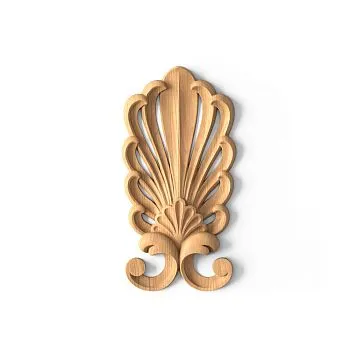
Restoration of historical buildings is one of the most important application areas of polyurethane technologies. Many architectural monuments have lost their original decoration due to destructive effects of time and external factors.Polyurethane appliquésThese allow precisely recreating lost elements while ensuring their durability for many decades ahead.
Classic interiors regain new life thanks to polyurethane decorative elements. Cornices, moldings, rosettes, pilasters made of polyurethane are indistinguishable from historical counterparts but surpass them in operational characteristics. The ability to create elements of any complexity allows realizing the most ambitious projects in Baroque, Rococo, and Empire styles.
Modern architecture finds polyurethane an ideal material for creating complex geometric forms and non-standard solutions. Parametric architecture with its complex curved surfaces would be practically impossible without the use of polymer materials.
Commercial interiors — hotels, restaurants, offices — require a combination of aesthetic appeal with practicality and durability. Polyurethane items perfectly meet these requirements, providing a respectable appearance at minimal maintenance costs.
Private construction increasingly turns to polyurethane solutions as the optimal way to create a unique architectural appearance of a house. The possibility of manufacturing elements according to individual projects allows creating unique facades and interiors.
Theatrical and film studios use polyurethane to create sets and props. The material's lightness, ability to quickly manufacture complex shapes, and safety in use make it ideal for these purposes.
Exhibition activities require materials that can be quickly assembled and dismantled while ensuring high visual quality. Polyurethane products fully meet these requirements, allowing the creation of impressive displays with minimal time and cost.
Installation and mounting: simplicity and reliability
The installation technology of polyurethane products is developed with maximum convenience for installers and guarantee of long-term durability. The simplicity of installation does not require highly skilled installers, significantly reducing labor costs.
Surface preparation before mounting polyurethane elements is minimal. The surface must be dry, clean, and relatively flat. Unlike gypsum products, which require an ideally flat base, polyurethane elements, due to their elasticity, can compensate for minor irregularities.
Adhesive bonding is the primary method for attaching lightweight polyurethane elements. Modern polyurethane adhesives provide bond strength exceeding the material's own strength. The curing time is 10-15 minutes, allowing adjustment of the element's position during installation.
Mechanical fastening is used for heavy elements or when particularly secure fixation is required. Hidden self-tapping screws are installed in pre-drilled holes and masked with putty or decorative elements.
Element joints are made using special adhesive sealants that not only ensure strong connections but also compensate for possible thermal deformations. The elasticity of the joint prevents cracking during operation.
Joint finishing includes sanding, filling, and painting to ensure joints are not noticeable. Due to the material's uniformity, finished joints are practically invisible on the final surface.
The installation time for polyurethane elements is 3-5 times less compared to installing similar items made from traditional materials. This is achieved due to the lightness of the elements, ease of processing, and rapid curing of adhesive compositions.
Tools for installing polyurethane products are available and easy to use. A standard drill, wood saw, and sander are sufficient for most installation tasks. Special tools are required only when working with particularly complex elements.
Economic efficiency of projects
The economic advantages of using polyurethane products become evident through a comprehensive analysis of all costs throughout the project's lifecycle. Although the initial cost may be higher than traditional materials, overall expenses are significantly lower.
The cost of polyurethane products is comparable to high-quality natural wood items, but significantly lower than natural stone or decorative gypsum molding. At the same time, their operational characteristics surpass all traditional analogs.
Labor costs for installation are reduced by 2-3 times due to the lightness of the products and ease of processing. One worker can install a 10-meter polyurethane cornice in a day, whereas installing a similar gypsum element would require a team of 3-4 workers.
The absence of special requirements for installer qualifications allows using less expensive labor without compromising result quality. This is especially important in regions with a shortage of highly skilled specialists.
Transportation costs are minimal due to the low weight of polyurethane products. A standard truck can carry 5-10 times more polyurethane elements compared to gypsum analogs, proportionally reducing delivery costs.
Storage costs are also reduced due to compact packaging and lack of special storage requirements. Polyurethane products do not require protection from moisture or temperature fluctuations, simplifying logistics.
Operational costs are virtually nonexistent throughout the product's lifespan. Polyurethane products do not require periodic repairs, painting, or protective treatments, unlike wooden or metal analogs.
Insurance payouts are reduced due to fire safety and resistance to damage. Many insurance companies offer discounts when non-combustible materials are used for finishing.
The payback period for polyurethane solutions is 3-5 years, considering all factors of economic efficiency. Meanwhile, the service life of the products exceeds 25-30 years, ensuring long-term economic benefits.
Ecological aspects of use
The ecological safety of modern polyurethane products meets the strictest international standards. Technological advancements have enabled the creation of materials that are not only safe for humans and the environment but also contribute to improving building energy efficiency.
The absence of toxic emissions during operation is a key characteristic of quality polyurethane products. After complete polymerization, the material becomes chemically inert and does not emit harmful substances even when heated to 80-100°C.
Certification according to international standards confirms the safety of polyurethane products for use in residential buildings, childcare facilities, and medical facilities. Certificates such as GREENGUARD, OEKO-TEX, and CE guarantee compliance with the strictest ecological safety requirements.
The energy efficiency of polyurethane products is demonstrated by their thermal insulation properties. The thermal conductivity coefficient of polyurethane is 2-3 times lower than that of traditional materials, which helps reduce building heat loss and saves energy on heating.
The recycling of polyurethane products is becoming an increasingly relevant topic. Modern technologies allow polyurethane waste to be recycled into raw materials for producing new items or used as a filler for other materials.
Reducing pressure on natural resources is another ecological aspect of polyurethane use. Replacing natural wood products with polyurethane analogs contributes to preserving forest resources, especially valuable and rare tree species.
The longevity of polyurethane products means reduced need for regular replacement of decorative elements, which reduces construction waste volume and lowers the ecological impact of construction activities.
The absence of need for chemical treatment during operation eliminates pollution of the environment by antiseptics, insecticides, paints, and other chemicals required for maintaining traditional material products.
Modern Development Trends
The polyurethane industry is in a state of continuous development, constantly offering new solutions and improving existing technologies. Main development trends are aimed at increasing eco-friendliness, expanding functional capabilities, and creating "smart" materials.
Bio-polyurethanes obtained from renewable plant sources represent a new generation of eco-friendly materials. Using soybean oil, castor oil, and other natural polyols allows creating polyurethanes with improved ecological properties.
Nanotechnology opens up fundamentally new possibilities for modifying polyurethane properties. Incorporating nanoparticles allows obtaining materials with self-cleaning surfaces, antibacterial properties, and increased resistance to UV radiation.
3D printing with polyurethane has become a reality thanks to the development of special compositions and layer-by-layer application technologies. This opens up opportunities to create items of any complexity without using molds, which is especially relevant for individual projects.
Smart polyurethane materials can change their properties under the influence of external factors. Thermochromic additives allow creating surfaces that change color depending on temperature. Piezoelectric fillers make it possible to create sensor surfaces.
Hybrid materials combine the advantages of polyurethane with the properties of other polymers or inorganic materials. Polyurethane-silicone composites have increased heat resistance, polyurethane-ceramic composites — increased hardness and wear resistance.
Digitalization of production includes implementing systems of automated design, robotic production lines, and quality control systems based on artificial intelligence. This increases manufacturing accuracy and reduces product cost.
Personalization of products becomes accessible thanks to the flexibility of polyurethane technologies. Clients can order items with unique designs, individual sizes, and personalized decorative elements without significant cost increase.
Comparative Analysis with Traditional Materials
An objective assessment of the advantages and disadvantages of polyurethane products requires detailed comparison with traditional materials across all significant parameters. Such an analysis will help make a reasoned decision on material selection for a specific project.
| Parameter | Polyurethane | Gypsum | Natural Wood | Natural Stone |
|---|---|---|---|---|
| Weight (kg/m²) | 0,5-3 | 8-15 | 4-8 | 30-80 |
| Moisture resistance | Excellent | Poor | Satisfactory | Excellent |
| Durability (years) | 30+ | 10-15 | 15-25 | 50+ |
| Ease of Installation | Excellent | Satisfactory | Good | Difficult |
| Material Cost | Medium | Low | High | Very High |
| Repairability | Good | Poor | Excellent | Satisfactory |
Weight characteristics are a critically important parameter for many projects. Polyurethane products are 3-10 times lighter than traditional material analogs, reducing load on structural elements and simplifying installation. This is especially relevant during the reconstruction of historical buildings, where increased loads are unacceptable.
Polyurethane's water resistance surpasses all organic materials and is not inferior to inorganic ones. Unlike wood, which may deform and rot in a humid environment, or gypsum, which disintegrates in water, polyurethane maintains stable properties.
The installation speed of polyurethane products is several times faster than that of traditional analogs. Ease of processing, possibility of using simple tools, rapid adhesive curing — all these factors reduce project completion time.
Polyurethane's ability to reproduce details reaches a level unattainable by manual processing of traditional materials. Each item is identical to others in the series, ensuring uniformity of decorative elements on large-scale projects.
The tinting and decorating possibilities of polyurethane are virtually unlimited. Unlike natural materials with their inherent limitations in color and texture, polyurethane can imitate any surface or create entirely new decorative effects.
The repairability of polyurethane products is higher than that of brittle materials such as plaster, but lower than that of natural wood. However, considering its high resistance to damage, the need for repair arises significantly less often.
Innovative Design Solutions
Polyurethane technologies open up possibilities for designers and architects that were once only dreams. The combination of traditional aesthetic solutions with modern functional capabilities creates a new paradigm in decorative art.
Integrating lighting into polyurethane elements is one of the most popular innovative solutions. Cornices with built-in LED lighting create a floating ceiling effect, moldings with internal lighting provide soft ambient illumination, and decorative panels with spotlights become functional art objects.
Multi-functional elements combine decorative and practical functions. Polyurethane moldings can conceal cable runs, decorative panels can mask ventilation or air conditioning systems, and ceiling outlets can integrate acoustic systems.
Modular systems allow creating complex compositions from standard elements. A basic set of profiles, connectors, and corner transitions enables implementing projects of any complexity with minimal costs for custom manufacturing.
Interactive surfaces are a promising direction for the development of polyurethane technologies. Introducing special additives into the material composition allows creating surfaces that respond to touch, temperature, or lighting changes.
Biomimetic forms reproduce natural structures with precision unattainable through traditional processing. Complex organic shapes, fractal patterns, and imitation of natural textures become possible thanks to the unique molding properties of polyurethane.
Gradient effects are created using special coloring technologies that allow achieving smooth transitions of color or texture across the product's surface. Such effects are practically impossible to achieve using traditional materials and decorative techniques.
Kinetic elements include movable parts driven by hidden mechanisms. Rotating outlets, sliding panels, transformable structures — polyurethane provides the necessary strength while maintaining minimal weight for movable elements.
Frequently asked questions
Are polyurethane products safe for health?
Modern polyurethane products, after complete polymerization, are absolutely safe for health. They do not emit toxic substances, do not cause allergic reactions, and are certified for use in residential spaces. It is important to choose products from reputable manufacturers with appropriate quality certifications.
How long do polyurethane decorative elements last?
The service life of quality polyurethane products exceeds 30 years without loss of initial characteristics. Unlike plaster or wood, polyurethane does not crack, deform, or suffer from pests. Warranty periods from reliable manufacturers typically range from 15 to 20 years.
Can polyurethane products be painted?
Yes, polyurethane products paint excellently with any type of paint — water-based emulsions, acrylics, alkyds. The polyurethane surface ensures excellent adhesion of coatings. If necessary, products can be repainted unlimited times.
Are polyurethane products suitable for humid environments?
Polyurethane is ideally suited for humid environments — bathrooms, kitchens, swimming pools. The material does not absorb moisture, does not deform, and does not develop mold. This is one of the main advantages of polyurethane over wood and plaster.
Is it difficult to install polyurethane elements?
Installing polyurethane products is significantly easier compared to traditional materials. The lightweight nature of the elements, ease of processing, and use of standard tools and adhesives make installation accessible even for non-professionals. Detailed instructions are usually included with each product.
What is the cost of polyurethane products compared to alternatives?
The initial cost of polyurethane products is comparable to high-quality wooden alternatives, but significantly lower than products made from natural stone or artistic plaster. Considering their longevity and minimal maintenance costs, polyurethane proves to be the most economically advantageous solution.
Can products be made according to an individual project?
Modern manufacturing technologies allow producing polyurethane products of virtually any complexity according to individual sketches. Creating a unique shape requires additional costs, but the cost remains reasonable due to the possibility of manufacturing a series of products with the same shape.
Conclusion: STAVROS — leader in polyurethane technologies
In an era of rapid technological progress, STAVROS remains at the forefront in the development and production of innovative polyurethane products. Our long-standing experience with polymer materials, investments in modern technologies, and deep understanding of customer needs enable us to create world-class products.
STAVROS offers a full range ofwooden productsand modern polymer materials, providing clients with the opportunity to choose optimal solutions for any project. Our product line includes both time-tested classic solutions and innovative developments that open up new possibilities in interior design.
STAVROS’s production facilities are equipped with the most modern European equipment, ensuring the highest product quality and the ability to fulfill orders of any complexity. Our team includes experienced technicians, designers, and craftsmen, each of whom is a professional of the highest level.
The STAVROS quality control system complies with international ISO standards and covers all stages of the production process. Each product undergoes careful inspection before shipment, ensuring compliance with all stated characteristics.
The STAVROS Research Center continuously works on improving existing technologies and developing new materials. We collaborate with leading scientific institutes and universities, monitoring global trends in polymer materials and architectural design.
Environmental responsibility is an integral part of STAVROS' corporate philosophy. We use only materials safe for humans and the environment, implement energy-saving technologies, and minimize production waste. Our products are certified according to international environmental standards.
STAVROS' client-oriented approach is reflected in individualized project handling, flexible pricing, and professional technical support. Our specialists are ready to consult on any questions, assist with selecting optimal solutions, ensure quality installation, and provide after-sales service.
Choosing STAVROS polyurethane products means you are not just getting decorative elements, but a comprehensive solution for creating a modern, beautiful, and functional interior. Our products will become a long-lasting decoration of your home, highlighting your impeccable taste and attention to innovative solutions.