Article Contents:
- The essence of trimming items in modern architecture
- Historical development and cultural significance
- Classification of trimming items: variety of forms and functions
- Wooden molding: versatility and elegance
- MDF molding: modern technologies at the service of design
- Wooden baseboard: functionality and aesthetics at the base of walls
- MDF baseboard: stability and practicality
- MDF Skirting Boards: Stability and Practicality
- Wooden cornice: majestic completion of architectural compositions
- MDF cornice: precision and reliability of modern technologies
- Wooden casing: framing openings as an art
- MDF casing: practicality and versatility
- Wooden rail: simplicity of form, limitless application
- Wooden corner: protection and decoration of corner joints
- Materials and production technologies for trimming items
- Solid wood: traditions of quality and natural beauty
- MDF: revolution in the production of trimming items
- Production technologies: from traditional methods to digital technologies
- Application areas and design solutions
- Residential interiors: creating home comfort and elegance
- Commercial spaces: prestige and functionality
- Suburban construction: space for creativity
- Modern Trends and Innovations
- Ecological solutions and sustainable development
- Digital technologies in design and production
- Selection and installation of trimming items
- Criteria for selection based on specific tasks
- Professional installation: guarantee of quality
- Maintenance and operation
- Rules of operation for maximum longevity
- Frequently Asked Questions
- Conclusion
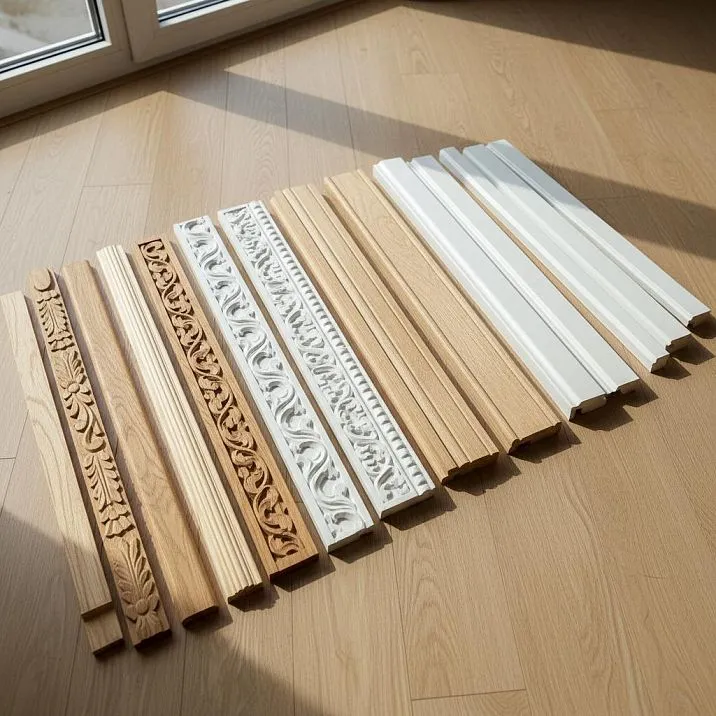


There is a special magic in howTrimming Itemsthey can transform the most ordinary room into a work of architectural art. These elements, measured in linear meters, are the secret weapon of professional designers and architects, capable of creating wonders in any space.
What do they represent in modern understanding?Trimming ItemsThis is a universe of decorative and functional elements, each carrying centuries-old craftsmanship traditions and innovative manufacturing technologies. From an elegant molding framing a picture to a powerful cornice crowning the walls of a living room — all these elements are united by a common mission: to create harmony and perfection in interior design.


Molding Products: Definition and Philosophy of Perfection




The Essence of Molding Products in Modern Architecture
Trimming ItemsThey are elongated elements of constant cross-section, manufactured by continuous profiling of material. The name derives from the unit of measurement 'linear meter,' which emphasizes the main characteristic of these products — their linear extent while maintaining an unchanged cross-sectional shape.
In a broad sense, the termrefers to a wide range of elements: from the simplest planks and beams to the most complex multi-profile cornices with intricate carving. Each element in this group performs its unique function, whether protecting vulnerable structural areas, decorating transitions between surfaces, or creating accent elements in interior design.They combine traditional forms developed over centuries of architectural evolution with innovative manufacturing technologies. This enables the creation of elements of any complexity with jewel-like precision, ensuring ideal surface quality and dimensional stability.
ModernTrimming ItemsThey combine traditional forms developed over centuries of architectural evolution with innovative manufacturing technologies. This enables the creation of elements of any complexity with jewel-like precision, ensuring perfect surface quality and dimensional stability.
Our factory also produces:


Historical Development and Cultural Significance
Historymolding productsis inseparably linked to the development of architecture and decorative-applied arts. Even in ancient Egypt and Mesopotamia, masters created complex profiles to adorn temples and palaces. Ancient Greece gifted the world with classical orders, where each element had strictly defined proportions and purpose.
The Roman Empire developed and refined Greek traditions, creating more complex and diverse forms. The Middle Ages introduced its own modifications, giving rise to the Gothic style with its aspiration toward height and exquisite stone carving. The Renaissance revived interest in ancient forms but enriched them with a new understanding of proportions and harmony.
Baroque and Rococo pushed the art of creating decorative elements to unprecedented heights of complexity and refinement. Classicism returned strictness and noble simplicity of forms. Each era left its mark on the developmentmolding productsof styles, creating a rich palette of stylistic solutions accessible to modern designers.
Get Consultation
Classification of Molding Products: Diversity of Forms and Functions
Wooden Molding: Universality and Elegance
Wooden moldingIt occupies a central place in the family of molding products due to its exceptional universality and decorative capabilities. This profiled element can solve the most diverse tasks in interior design: from simple surface framing to creating complex architectural compositions.
Wooden molding is classified by multiple criteria. By profile complexity, they are divided into simple moldings with minimal processing, medium ones with several relief levels, and complex multi-profile items with rich detailing. Simple moldings are ideal for modern minimalist interiors, where clean lines and concise forms are valued.
Medium-complexity moldings represent an optimal solution for most interior styles. They possess sufficient expressiveness to create interesting compositions, yet do not overload space with excessive decoration. Complex multi-profile moldings become true works of art, capable of transforming an ordinary wall into a masterpiece of design skill.
By functional purpose, wooden molding can be wall, ceiling, furniture, or architectural. Wall moldings are used to create panels, frame pictures and mirrors, divide large surfaces into proportional parts. Ceiling moldings form transitions between walls and ceilings, visually altering the room's geometry.
MDF Molding: Modern Technologies Serving Design
Parallel to traditional wooden molding, MDF molding has gained wide popularity, combining the advantages of modern technologies with classic aesthetics. MDF moldings have exceptional dimensional stability, are not prone to deformation due to changes in humidity and temperature — which is critically important for long elements.
Manufacturing moldings from MDF allows creating profiles of any complexity with jewel-like precision. Modern milling equipment can reproduce the finest details of classical profiles or create entirely new, avant-garde forms. Meanwhile, the surface quality of MDF moldings often surpasses that of solid wood products.
Wooden Skirting Board: Functionality and Aesthetics at the Base of Walls
Wooden baseboardIt is one of the most important elements in the systemmolding productsThis element performs a critically important protective function, safeguarding the lower part of the wall from mechanical damage, moisture, and dirt during cleaning. Simultaneously, a wooden skirting board creates a decorative finish to the floor covering, forming a harmonious transition from floor to wall.
The height of wooden skirting boards varies widely — from compact 40-50 millimeters to impressive 200-250 millimeters. The choice of height is determined by numerous factors: interior style, room proportions, type of floor covering, ceiling height. Low skirting boards create a sense of lightness and modernity, ideal for studio apartments and minimalist-style spaces.
Skirting boards of medium height (80-120 mm) are a universal solution suitable for most interiors. They provide reliable wall protection without creating a sense of bulkiness. High skirting boards impart a sense of solidity and elegance, typical of classical styles and spacious rooms with high ceilings.
MDF Skirting Board: Stability and Practicality
MDF skirting board is a modern alternative to traditional wooden skirting, offering several unique advantages. The main one is exceptional dimensional stability. Unlike solid wood, MDF skirting does not deform due to humidity changes, does not crack, and does not shrink. This is especially important for long sections, where even minor deformations can lead to gaps and compromise the integrity of the finish.
Manufacturing skirting boards from MDF allows creating items with an ideally smooth surface, ensuring the highest quality of finish. MDF skirting boards can be covered with veneer of precious wood species, laminate, paint, or special decorative films that imitate various materials and textures.
Wooden cornice: majestic completion of architectural compositions
Wooden corniceis a horizontal protruding element that crowns a wall or creates a transition to the ceiling. In the systemmolding productscornice occupies a special place due to its ability to radically change the perception of space and impart a sense of grandeur to the room.
Wooden cornices are classified by size, configuration, and stylistic solution. Miniature cornices, 30-60 millimeters high, are suitable for small rooms and modern interiors, where simplicity of form is important. Cornices of medium size (80-150 mm) are a universal solution for most interiors, providing an optimal balance of functionality and decor.
Massive cornices over 200 millimeters high create a sense of palace luxury and monumentality. Such cornices require spacious rooms with high ceilings and are primarily used in representative interiors of classical styles.
MDF cornice: precision and reliability of modern technologies
MDF cornice combines classic aesthetics with the advantages of modern material. Manufacturing cornices from MDF allows achieving exceptional profile accuracy and ideal surface quality. This is especially important for complex multi-level cornices, where minor inaccuracies can disrupt the harmony of the entire composition.
MDF cornices have increased strength and stability, allowing to create extended sections without visible joints. Modern connection technologies ensure perfect invisibility of transitions even on the most critical sections.
Wooden casing: framing openings as an art
Wooden casingis used for decorative and functional finishing of door and window openings. In the systemmolding productscasings play the role of a connecting element between different spaces, creating harmonious transitions and accents.
Wooden door casings differ by width, thickness, and profile complexity. Narrow casings (50-70 mm) are suitable for modern minimalist interiors, where restraint and simplicity are important. Casings of medium width (80-120 mm) represent a universal solution suitable for most stylistic directions.
Wide casings (over 150 mm) create a majestic framing of openings and are characteristic of classical interiors. They may have a complex multi-level profile with rich detailing, transforming an ordinary door opening into an architectural element.
MDF casing: practicality and universality
MDF casing combines the aesthetic merits of natural wood with the practicality of modern material. MDF casings are not subject to deformation, have ideal geometry, and are easy to finish. This makes them an ideal choice for mass construction and renovation.
Manufacturing casings from MDF allows creating items with any surface finish: from imitation of precious wood species to modern matte and glossy coatings. At the same time, the cost of MDF casings is significantly lower than those made of solid wood.
Wooden rail: simplicity of form, unlimited application
Wooden plankis a simple-profile molding item — usually rectangular in cross-section with small dimensions. Despite its apparent simplicity, wooden rail is one of the most versatile elements in the familymolding products.
In decorative applications, wooden rail is used to create modern interior solutions: slatted wall panels, ceiling structures, partition elements. A modern trend is using rails to create accent surfaces with interesting play of light and shadow. Rails can be installed vertically, horizontally, or at various angles, creating dynamic geometric compositions.
Structural applications of rail include creating frames, substructures for finishing materials, guides for various systems. In this case, the material's strength characteristics, dimensional stability, and absence of wood defects are paramount.
Wooden angle: protection and decoration of corner joints
Wooden corner bracketis a specialized element with a Г-shaped cross-section, designed for protecting and decorating corner joints. In the systemmolding productsangles play an important role, ensuring the durability of the finish in the most vulnerable areas.
External wooden angles are installed on protruding corners of walls, columns, pilasters, and other architectural elements. They take on mechanical impacts, preventing chipping and damage to the finish. A properly selected angle not only protects the structure but also becomes a decorative element.
Internal angles are used to create clear lines of junction between different surfaces, to finish niches, built-in furniture, and other interior elements. They are especially important in modern interiors, where geometric precision and minimalism of forms are valued.
Materials and technologies for manufacturing molding
Solid wood: traditions of quality and natural beauty
Natural wood remains the benchmark of quality and prestige in manufacturingmolding productsEach tree species has a unique set of properties: texture, color, density, strength, workability. The choice of wood species is determined by usage conditions, stylistic requirements, and project budget.
Oak is rightfully considered the king among species for productionmolding productsIts exceptional hardness, strength, and beautiful expressive texture make oak elements practically eternal. Oak has high resistance to moisture, mechanical impacts, and temperature fluctuations. The noble texture with clearly defined growth rings creates a unique pattern.
Ash is distinguished by exceptional strength relative to its relatively low weight, making it ideal for long trim elements. The light-colored ash wood with contrasting texture is popular in modern interiors. Ash is well-suited for staining, allowing a wide range of shades.
Beech is characterized by a uniform fine-pored structure and a light pinkish hue. This species is ideal for creating complex profiles with fine details. BeechTrimming Itemsdistinguished by ideal surface finish and profile clarity.
MDF: Revolution in the production of trim items
MDF (Medium Density Fiberboard) material has brought a true revolution in the productionmolding productsThis composite material, made from finely dispersed wood shavings under high pressure and temperature, combines the best properties of natural wood with the advantages of modern technologies.
The main advantage of MDF is exceptional dimensional stability. Unlike solid wood, MDF does not deform due to changes in humidity and temperature, does not crack, and does not shrink. This is critically important for long trim elements, which must maintain their geometry throughout their service life.
MDF allows creating profiles of any complexity with jewel-like precision. Modern milling equipment can reproduce the finest details of classic profiles or create avant-garde shapes. At the same time, the surface quality of MDF often surpasses that of solid wood products.
Production technologies: from traditional methods to digital technologies
Modern productionmolding productsrepresents a complex multi-stage process combining traditional carpentry methods with high-tech equipment. The process begins with careful selection and preparation of raw materials. For solid wood items, boards undergo multi-stage drying to an optimal moisture content of 8-12%.
Primary processing on four-sided planers gives the blank precise dimensions and an ideally smooth surface. Modern machines provide accuracy down to tenths of a millimeter, which is critically important for quality installationmolding products.
Profiling is performed on specialized milling machines with tool sets developed for each specific profile. Modern CNC machines allow creating the most complex profiles with reproducible accuracy, eliminating human factor influence.
Areas of application and design solutions
Residential interiors: creating home coziness and elegance
In residential spacesTrimming Itemsplay a key role in creating an atmosphere of coziness, comfort, and stylistic coherence. Each room in a house has its own usage specificity, which determines the choice of trim element types and characteristics.
The living room, as the main reception space, requires special attention to details. HereTrimming Itemsshould create a sense of grandeur and hospitality. Wooden ceiling moldings add majesty to the room, especially when combined with high ceilings. Wall moldings allow creating classic panels, dividing large surfaces, framing artworks.
The bedroom requires a softer, more soothing approach.Trimming Itemshere should create a sense of calm and relaxation. Wooden baseboards with soft rounded profiles, door casings with delicate detailing contribute to creating a cozy atmosphere.
Commercial spaces: prestige and functionality
In commercial interiorsTrimming Itemssolve the tasks of creating an attractive appearance and ensuring the durability of finishes. Office spaces require strict, minimalist forms that emphasize the business character of the space. Here, preference is given to simple profiles with clear geometric lines.
Hotel interiors useTrimming Itemsto create a unique atmosphere corresponding to the establishment's concept. Luxurious wooden moldings in a classic hotel, modern minimalist profiles in a business hotel, ethnic motifs in a boutique hotel — each project requires an individual approach.
Rural construction: space for creativity
Rural homes provide maximum opportunities for usingmolding productsHere, there are no limitations of city apartments; you can use massive elements, create complex multi-level compositions, experiment with shapes and sizes.
FacadeTrimming ItemsPlay an important role in forming the architectural appearance of the house. Wooden window casings, cornices, pilasters create the individual style of the building. Each architectural direction has its characteristic elements and proportions.
Modern trends and innovations
Ecological solutions and sustainable development
Modern trends in productionmolding productsare increasingly oriented towards principles of ecological safety and sustainable development. Producers implement zero-waste technologies, use wood from certified forests, develop water-based coatings without harmful solvents.
Secondary processing of wood waste allows creating high-quality composite materials formolding products. Modern technologies ensure high operational characteristics with minimal environmental impact.
Digital technologies in design and production
The introduction of digital technologies has revolutionized the process of creatingmolding products. Automated design systems allow creating three-dimensional models of complex profiles, checking their compatibility with room architecture, calculating required material quantities with millimeter precision.
Virtual reality technologies allow clients to see the future interior even before production begins. One can evaluate how different variantsmolding productswill look in a specific room, choose the optimal solution from multiple alternatives.
Selection and installation of trim items
Criteria for selection for specific tasks
Choosingmolding productsbegins with analyzing specific conditions and project tasks. It is necessary to consider interior style, room characteristics, operating conditions, project budget. Each of these factors affects material selection, dimensions, and profile complexity.
for rooms with high humidity should be chosenTrimming Itemsfrom moisture-resistant materials or provided with additional protection. MDF with moisture-resistant coatings is often preferable to solid wood in such conditions.
Professional installation: quality guarantee
Quality of installationmolding productsis critically important for the final result. Even the highest quality materials can be ruined by improper installation. Professional installers use specialized tools and proven technologies.
Surface preparation, accurate marking, proper fastening, quality joint processing – each stage requires a professional approach and adherence to technological requirements.
Care and Maintenance
Rules for operation for maximum longevity
Durabilitymolding productsdepends largely on proper operation and timely maintenance. Maintaining a stable microclimate in the room, regular cleaning, periodic renewal of protective coatings extend the service life of elements for decades.
Special attention should be paid torefers to a wide range of elements: from the simplest planks and beams to the most complex multi-profile cornices with intricate carving. Each element in this group performs its unique function, whether protecting vulnerable structural areas, decorating transitions between surfaces, or creating accent elements in interior design.solid wood, which are sensitive to changes in humidity and temperature. Proper care allows maintaining the original appearance and functionality for many years.
Frequently asked questions
What trim items are better to choose for humid rooms?
For rooms with high humidity, it is recommended to useTrimming ItemsMDF with moisture-resistant coatings or items made from moisture-resistant wood species with additional protection.
What are the advantages of MDF over solid wood?
MDF has dimensional stability, does not deform from humidity, allows creating complex profiles with ideal surface quality. The cost of MDF items is significantly lower.
Can wooden trim items be installed by oneself?
Simple elements can be installed by oneself if tools and skills are available. Complex profiles and critical areas are better entrusted to professionals.
How to properly care for trim items?
Regular dry cleaning, periodic wet cleaning with mild cleaners, and timely renewal of protective coatings ensure longevity.molding products.
What is the service life of quality trim items?
When properly used, high-qualityTrimming Itemscan serve for several decades, preserving their functional and aesthetic properties.
Conclusion
Trimming ItemsThey are an indispensable part of modern interior and architectural design. These elements, combining functionality with aesthetic appeal, can radically transform any space, create a unique atmosphere, and highlight the individuality of the interior.
Modern diversity of materials, technologies, and stylistic solutions opens up boundless creative possibilities. From classic forms proven over centuries to avant-garde solutions—Trimming Itemsallow realizing any design idea.
Investments in high-qualityTrimming ItemsThey pay for themselves multiple times due to increased property value, reduced operating costs, and the creation of a comfortable and prestigious living environment. Proper material selection, professional installation, and correct usage ensure decades of flawless service.
STAVROS Company, with years of experience in producing high-qualitymolding productsoffers a full range of solutions for any interior tasks. Modern manufacturing technologies, strict quality control, and a wide product range allow creating items fully meeting the highest requirements of professional designers and architects. Choosing STAVROS products means investing in beauty, quality, and durability, creating interiors that will delight with their perfection for many years.