Article Contents:
- Evolution of furniture supports: from utilitarianism to work of art
- Historical development of constructive solutions
- Scientific principles of modern design
- Wood science: science of strength and beauty
- Premium wood species for premium solutions
- Modern wood processing technologies
- Engineering solutions: architecture of reliability
- Geometric principles of leg design
- Mounting methods: reliability of connections
- Production technologies: from raw material to masterpiece
- Raw material selection and preparation
- Precision mechanical processing
- Final surface finishing
- Design directions: style in every detail
- Classic solutions: eternal elegance
- Modern minimalism: beauty of simplicity
- Eco-Style: Harmony with Nature
- Avant-garde solutions: challenging traditions
- Ergonomic aspects: science of comfort
- Anthropometric foundations of design
- Structural stability
- Quality Control: Guarantee of Perfection
- Strength Testing
- Visual inspection
- Assembly and installation: art of precise assembly
- Preparation operations
- Assembly sequence
- Adjustment and setup
- Care and maintenance: Preserving beauty for years
- Daily care
- Periodic maintenance
- Restoration and repair
- Economic aspects: investment in quality
- Cost of Ownership Analysis
- Comparative analysis of materials
- Impact on property value
- Trends in development: looking into the future
- Technological Innovations
- Ecological trends
- Personalization and customization
- Application in various interiors
- Home interiors
- Commercial spaces
- Outdoor furniture
- Competition Among Wooden Materials
- European quality standards
- Russian GOST and TU standards
- Ecological certifications

Every piece of furniture has its own secret — a hidden force that determines its character and longevity. In the case of tables, this secret lies in the quality and design of their supporting elements. Table legs are not just functional parts, but foundational elements, whose quality determines the stability, aesthetics, and lifespan of the entire structure. In the world of modern furniture industry, choosing the right supporting elements has become an art requiring deep understanding of wood science, engineering solutions, and design principles.
An experienced buyer understands: quality table legs are an investment in the future, a guarantee that furniture will serve for decades, preserving its original beauty and functionality. Modern wood processing technologies and innovative structural solutions open up limitless possibilities for creating unique furniture compositions capable of transforming any space.


Evolution of Furniture Legs: From Utility to Art




Historical Development of Constructive Solutions
The history of furniture leg development spans millennia of evolution — from primitive wooden logs to sophisticated modern engineering solutions. Each era contributed its own refinements to the understanding of what constitutes the ideal leg for a table.
Medieval masters created massive table bases capable of supporting colossal feudal feasts. The Renaissance introduced elegance of proportions and decorative elements. Baroque and Rococo transformed furniture legs into true sculptural masterpieces. Classicism standardized forms, subordinating them to strict canons of beauty.
The modern era synthesized all previous achievements, adding a scientific approach to design and revolutionary materials. Today, each leg is calculated using computer modeling, subjected to strength tests, and created with ergonomic requirements in mind.
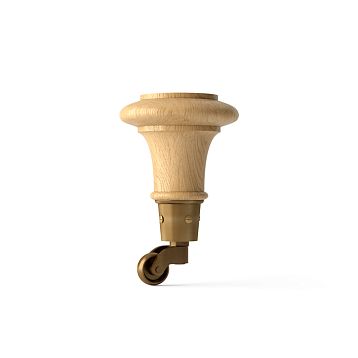
Our factory also produces:


Scientific Principles of Modern Design
The creation of modern furniture legs is based on fundamental laws of physics and materials science. Load-bearing capacity calculations take into account static and dynamic loads, safety factors, and specific characteristics of particular wood species.
Key parameters determining leg quality:
- Compressive strength of the material
- Modulus of elasticity of wood
- Stability coefficient of the structure
- Resistance to bending moments
- Resistance to cyclic loads
Each of these parameters is carefully calculated to ensure maximum reliability and longevity of the product.
Get Consultation
Materials Science: The Science of Strength and Beauty
Premium Wood Species for Premium Solutions
Oak — the King of Furniture Materials
Oak wood is rightfully considered the benchmark of quality in the furniture industry. Its density of 600-900 kg/m³ ensures exceptional mechanical strength, while its high content of tannins provides natural protection against biological damage.
Unique characteristics of oak:
- Compressive strength: up to 64 MPa
- Janka hardness: 6000 N
- Dimensional stability under humidity changes
- Resistance to abrasion
- Ability to be restored multiple times
Ash — Northern Strength
Ash wood combines high strength with remarkable elasticity. This quality makes ash legs ideal for manufacturing curved elements and structures subjected to variable loads.
Technical advantages of ash:
- Density: 650-750 kg/m³
- Excellent machinability with all types of tools
- Minimal tendency to crack
- Beautiful contrasting texture
- High wood viscosity
Walnut — aristocratic elegance
American walnut represents the ideal combination of strength and decorativeness. Its rich color palette, ranging from light sapwood to dark heartwood, allows for creating unique visual effects.
Modern wood processing technologies
Thermo-modification of wood opens new horizons in the production of furniture legs. Processing at 160-240°C in an oxygen-free environment significantly improves the material's performance characteristics.
Advantages of thermo-treatment:
- Reduction of hygroscopicity by 50-80%
- Increased biostability
- Geometric size stabilization
- Improved decorative properties
- Service life increased by 2-3 times
Cryo-treatment — an innovative technology borrowed from metallurgy. Wood held at -196°C undergoes molecular-level structural changes, significantly enhancing strength properties.
Engineering solutions: architecture of reliability
Geometric principles of leg design
The shape of a furniture leg is determined not only by aesthetic preferences but also by strict engineering calculations. Every curve, every taper or expansion has a specific functional purpose.
Conical legs
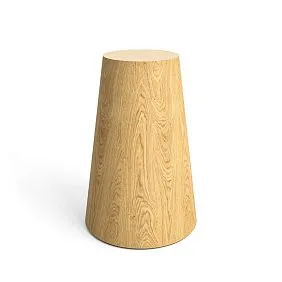
Conical shape ensures optimal load distribution from the mounting point to the base. The upper diameter is calculated based on maximum load, while the lower diameter is determined by stability requirements.
Optimal proportions:
- Ratio of upper diameter to lower diameter: 1.2-1.5:1
- Cone height: 600-800 mm for dining tables
- Cone angle: 2-4 degrees
Figured legs
Complex profiles require a special approach to design. Each taper must be calculated considering stress concentration, and each expansion — considering load distribution.
Mounting methods: reliability of connections
The quality of the leg-to-top connection determines the longevity of the entire structure. Modern technologies offer numerous solutions for various operating conditions.
Threaded connections
Metallic threaded rods provide detachable connections and adjustability. Thread diameter is selected based on load: M8 for light tables, M12-M16 for heavy structures.
Adhesive connections
Modern polyurethane adhesives create bonds stronger than the wood itself. These connections are non-detachable but provide maximum reliability.
Dowel connections
Traditional joinery types such as "birdsmouth" or "dowel-and-slot" create mechanical interlocking of parts. A properly executed dowel joint can withstand loads for decades.
Production technologies: from raw material to masterpiece
Raw material selection and preparation
Quality of finished legs of the table base is established at the stage of initial material selection. Each blank undergoes careful visual and instrumental evaluation.
Criteria for selecting wood:
- Absence of knots with diameter exceeding 10 mm
- Straightness of grain (deviation not exceeding 5%)
- Uniform density along the length of the blank
- Absence of hidden defects (checked by ultrasound)
- Moisture content compliance with technical requirements (8-12%)
Precision mechanical processing
Modern CNC-controlled equipment ensures manufacturing precision unattainable by hand methods. Multi-spindle turning machines can process legs with complex profiles with deviations no more than ±0.1 mm.
Stages of mechanical processing:
- Rough turning with allowance of 2-3 mm
- Intermediate drying and geometric stabilization
- Semi-finish processing with allowance of 0.5 mm
- Final turning to final dimensions
- Abrasive grinding with varying grit sizes
Surface finish largely determines the appearance of the finished skirting board. The process includes multi-stage sanding with gradually decreasing abrasive grit from P100 to P320.
The quality of leg surfaces determines not only the appearance but also the longevity of the product. Modern finishing technologies provide reliable protection for wood while preserving its natural beauty.
Oil finishes
Natural and modified oils penetrate into the wood structure, enhancing its texture and creating a water-repellent effect. Multi-layer application with intermediate sanding yields a perfectly smooth surface.
Lacquering
Polyurethane lacquers create a durable protective film resistant to mechanical damage and moisture. Modern formulations do not yellow over time and retain their original gloss for years.
Wax finish
Natural waxes impart a silky sheen and pleasant tactile sensations to wood. Wax finishes are easily restorable and develop a noble patina over time.
Design directions: style in every detail
Classic solutions: eternal elegance
Classic legs are characterized by strict proportions, symmetrical forms, and use of traditional decorative elements. Grooves, capitals, bases — architectural details transferred into furniture design.
Distinctive features of classic style:
- Strict geometric proportions
- Symmetry relative to a vertical axis
- Use of classical architectural elements
- Subdued color palette
- High-quality execution of details
Modern minimalism: beauty of simplicity
Minimalist legs differ by extreme simplicity of form and maximum functionality. The absence of excessive decoration is compensated by flawless surface finish and ideal proportions.
Principles of minimalist design:
- Simple geometric forms
- Clean lines without decoration
- Natural material texture
- Functionality of each element
- Visual lightness of the structure
Eco-style: Harmony with Nature
Eco-design in furniture implies maximum preservation of natural wood properties. Legs in eco-style may retain natural trunk bends, bark texture, and knot marks.
Avant-garde solutions: challenging traditions
Modern designers are not afraid to experiment with forms, creating legs of previously unseen configurations. Asymmetry, biomorphic shapes, unexpected color solutions — all of this characterizes the avant-garde direction.
Ergonomic aspects: science of comfort
Anthropometric foundations of design
Table height directly affects user comfort and is determined by anthropometric characteristics of a person. Standard height 750-760 mm suits people 165-175 cm tall, but may be adjusted for specific conditions.
Calculation of optimal height:
- User's height × 0.43 = seat height
- Seat height + 290-310 mm = table height
- Adjustment for tabletop thickness
Structural stability
Base and legs for the table must ensure absolute stability under any usage scenario. Calculation takes into account maximum loads and adverse factors.
Factors affecting stability:
- Distance between supports
- Height of the structure's center of gravity
- Mass of the tabletop and its contents
- Possible lateral loads
- Uneven surface loading
Quality Control: Guarantee of Perfection
Strength tests
Each batch of legs undergoes comprehensive testing on specialized equipment. Tested load capacity, resistance to bending, fatigue strength under cyclic loads.
Standard tests include:
- Static load 150% of nominal
- Cyclic tests (100,000 cycles)
- Impact toughness tests
- Test for resistance to humidity changes
- Connection quality check
Visual inspection
Expert inspectors evaluate each item against aesthetic standards. Surface finish quality, color and texture match, and absence of defects are checked.
Visual evaluation criteria:
- Surface smoothness (Ra roughness class 1.25)
- Uniformity of coating color and gloss
- Absence of scratches, dents, chips
- Geometric parameter compliance
- Detail mating quality
Assembly and installation: the art of precise assembly
Preparation operations
Quality assembly begins with careful preparation. Delivery completeness, dimensional accuracy, and condition of fasteners are checked.
Required tools:
- Construction level (accuracy 0.5 mm/m)
- Metal tape measure
- Drill with drill bit set
- Screwdrivers or power drill
- Fastener connection wrenches
Assembly Sequence
Correct operation sequence ensures assembly quality and prevents damage to parts:
- Marking mounting locations on the countertop
- Drilling holes for fasteners
- Initial installation of legs without tightening
- Structural geometry check
- Final tightening of connections
- Stability and functionality check
Adjustment and setup
After main assembly, the structure undergoes fine-tuning. Adjustable legs are set to compensate for floor unevenness, and table wobbling is checked for absence.
Care and Maintenance: Preserving Beauty for Years
Daily Care
Proper daily care extends the lifespan of legs and preserves their original appearance. Basic rules are simple, but their adherence is critically important.
Care Recommendations:
- Regular dust cleaning with soft cloth
- Avoiding moisture contact with wooden surfaces
- Immediate removal of stains and dirt
- Use of stands under hot items
- Protection from direct sunlight
Periodic maintenance
Preventive inspection and maintenance are recommended every 6-12 months. The condition of the coating, strength of connections, and structural geometry are checked.
Preventive measures:
- Tightening weakened connections
- Updating protective coating (if necessary)
- Checking structural stability
- Cleaning hard-to-reach areas
- Lubricating moving parts
Restoration and repair
When damage occurs, high-quality legs can be repaired or restored. Modern restoration technologies allow eliminating almost any defects.
Types of restoration work:
- Local coating restoration
- Removing scratches and dents
- Replacement of damaged elements
- Surface re-coating
- Restoring detail geometry
Economic Aspects: Investment in Quality
Analysis of ownership cost
When selecting furniture legs, one should consider not only the initial cost but also the total expenses over the entire service life. High-quality items are more expensive to purchase but cheaper to operate.
Components of total cost:
- Initial product cost
- Installation and mounting costs
- Periodic maintenance costs
- Possible repair cost
- Depreciation over service period
Material comparison analysis
Different wood species have different price-to-quality ratios. The choice of optimal material depends on operating conditions, aesthetic requirements, and budget.
|
Species |
Cost |
Strength |
Durability |
Decorativeness |
|
Pine |
Low |
Medium |
15-20 years |
Good |
|
Birch |
Medium |
Good |
20-25 years |
Excellent |
|
Oak |
High |
Excellent |
50+ years |
Outstanding |
|
Walnut |
MDF with film |
Excellent |
40+ years |
Outstanding |
Impact on property value
Quality furniture, including tables with exclusive legs, increases the overall cost of interior design and real estate. This is especially relevant for luxury housing and commercial spaces.
Trends in development: looking toward the future
Technological Innovations
The furniture industry actively implements new technologies, opening previously unseen possibilities. 3D printing of wood composites, laser surface processing, robotic assembly — all of this is already reality.
Promising directions:
- Use of nanomaterials for protective coatings
- Introduction of "smart" materials with variable properties
- Development of additive manufacturing technologies
- Application of artificial intelligence in design
- Creation of self-healing surfaces
Ecological trends
Growing consumer environmental awareness stimulates the development of "green" technologies in the furniture industry. Only certified materials are used, waste-free production is implemented, and biodegradable coatings are developed.
Environmental initiatives:
- FSC certification for all used materials
- Implementation of a closed-loop production cycle
- Use of renewable energy sources
- Development of eco-friendly adhesives and coatings
- Programs for disposal of used furniture
Personalization and Customization
Modern consumers increasingly demand individual solutions. Technologies for mass customization are developing, allowing to create unique items without increasing the cost.
Personalization options:
- Choice of wood species and type of finish
- Individual dimensions and proportions
- Unique decorative elements
- Personal engraving and marking
- Designer's original solutions
Application in various interiors
Home interiors
Legs for table base In home settings, they should combine functionality with aesthetic appeal. It is important to consider the interior style, room size, and usage intensity.
Recommendations for selection:
- For classic interiors — carved legs made of oak or walnut
- For modern styles — minimalist forms made of ash or beech
- For children's rooms — safe constructions without sharp corners
- For kitchens — moisture-resistant finishes and reinforced joints
Commercial spaces
In offices, restaurants, and hotels, furniture must meet higher requirements for strength, durability, and appearance. Only materials of the highest quality with reinforced structural solutions are used.
Special requirements:
- Increased load-bearing capacity (up to 200 kg per leg)
- Resistance to intensive use
- Ease of maintenance and repair
- Compliance with sanitary norms
- Fire safety of materials
Outdoor furniture
Legs for outdoor tables must withstand exposure to atmospheric precipitation, ultraviolet radiation, and temperature fluctuations. Special protective coatings and structural solutions are used.
Features of outdoor furniture:
- Water-resistant adhesives and coatings
- UV-stabilized materials
- Drainage holes for moisture removal
- Anti-corrosion coatings for metal parts
- Ability to disassemble for winter storage
International Standards and Certification
European quality standards
The European market imposes strict requirements on furniture quality. Standards EN 12521 and EN 15372 regulate the strength characteristics, safety, and ecological properties of furniture items.
Main requirements:
- Structural strength (static load test)
- Resistance to cyclic loads
- Material safety (absence of toxic substances)
- Flame-retardant coatings
- Ergonomic characteristics
Russian GOST and TU
Domestic regulatory standards also establish requirements for furniture. GOST R 70754-2023 defines technical specifications for seating furniture and tables.
Requirements of Russian standards:
- Mechanical strength and durability
- Structural safety
- Material durability
- Compliance with sanitary and hygienic norms
- Marking and Documentation
Ecological certifications
International ecological standards FSC, PEFC guarantee responsible forestry and eco-friendly production. Such certification becomes mandatory for operating in the European market.
Advantages of certification:
- Guarantee of legal origin of wood
- Compliance with ecological standards
- Enhancement of product competitiveness
- Access to international markets
- Improvement of corporate image
The art of creating ideal furniture legs combines thousand-year-old craftsmanship traditions with modern technological achievements. Table base with legs from leading manufacturers represents not just a functional furniture element, but a piece of applied art capable of transforming any space.
In the era of mass production and standardization, items created with soul and attention to every detail acquire special value. Quality furniture legs are an investment in beauty, comfort, and longevity, which pays off through years of flawless service.
When choosing support elements for your tables, remember: saving on quality today will result in additional expenses tomorrow. It is better to purchase a truly quality product once than repeatedly replace cheap alternatives.
Modern production technologies have reached such a level that they allow creating items combining traditional beauty of natural materials with innovative technical solutions. Each leg undergoes strict quality control and meets the highest international standards.
STAVROS Company embodies the best traditions of furniture craftsmanship, creating table legs that will become a decoration for any interior. Decades of experience working with elite wood species, use of advanced processing technologies, and strict adherence to quality standards allow STAVROS to offer world-class products. Every STAVROS item is a guarantee of reliability, durability, and refined taste. Choosing STAVROS means choosing perfection in every detail, quality proven by time, and beauty that will delight for many years.