Article Contents:
- Significance of profiles and transitions in interior architecture
- Three-part wall system
- Profiles and their significance
- Transitions between planes
- Proportional systems
- How baseboards and moldings form visual boundaries
- Horizontal boundaries
- Vertical boundaries
- Opening framing
- Color boundaries
- Combination with other elements - casings, rails, appliqués
- Profile unity
- Scale coordination
- Material unity
- Decorative accents
- Integration with Furniture
- Material and finish: beech, oak, ash
- Oak - classic nobility
- Ash - aristocratic expressiveness
- Beech - European tradition
- Combined Solutions
- Protective Coatings
- Advice on selecting height and proportions
- Baseboard height depending on room height
- Molding width for panels
- Ceiling cornice size
- Moulding Width
- Element thickness
- Distances and intervals
- Conclusion
- Frequently Asked Questions

Classic interior is above all else the architecture of lines, proportions, and transitions between planes.moldings, cornices, baseboardsMade from solid wood, they form a visual framework of space, creating the grandeur and respectability that distinguishes classic style from all other styles. These elements are not merely decorative—they carry deep architectural function, organizing space, controlling proportions, and creating visual hierarchy of surfaces. Understanding their role and application rules is key to creating an authentic classic interior.


The modular system is based on repeating the basic unit.
The architecture of classical interior is built on a clear structure of horizontal and vertical divisions.Wooden baseboardforms the visual base of the room, separating the vertical walls from the horizontal floor.Wooden moldingson the walls create a panel structure, dividing the height into proportional parts. Ceiling cornices crown the composition, forming a transition from wall to ceiling.




Three-part wall system
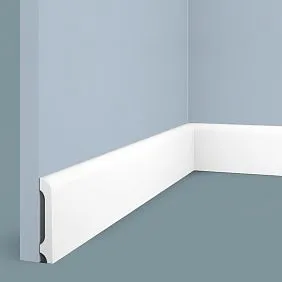
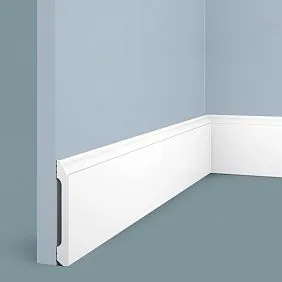
Classical architecture uses a three-part division of the wall analogous to architectural orders. The lower part—the base—is formedwooden skirting board buyat a height of 120-200 millimeters. This zone visually grounds the interior, creating a sense of solidity and stability.Wide wooden floor skirting boardemphasizes the significance of the base section.
The middle part of the wall—the main plane—can be smooth or decorated with panels.Decorative wooden moldingscreate frames within which the finishing material—wallpaper, fabric, painted surface—is placed. The height of the middle section is usually 1.8 to 2.2 meters, depending on the overall room height.
The upper part—the frieze and cornice—forms a transition to the ceiling.wooden corniceat a width of 100-200 millimeters creates an expressive horizontal line in the upper zone.Ceiling baseboard woodencompletes the wall composition, visually separating the vertical plane from the horizontal ceiling.
Our factory also produces:


Profiles and their significance
The shape of the molding profile carries semantic meaning. Classical profiles are based on the geometry of a circle and include elements—ovolo, ogee, cove, and astragal.Solid wood moldingswith pronounced relief create a play of light and shadow, adding depth to the wall plane.
Each element of the profile has a function. The upper cove creates a clear boundary of the molding. The ovolo—a convex element—draws the eye and creates an accent. The ogee—a concave element—forms a soft transition between planes. The astragal—an S-shaped element—connects different parts of the profile with a smooth curve.
Wooden baseboardA classical profile usually has a high upper part with an ovolo, a middle plane, and a lower ogee. This shape visually lightens the upper part of the skirting board, creating the impression that the wall rests on a slender base.Wide Wooden Skirting Boardmay have a more complex profile with multiple tiers.
Get Consultation
Transitions between planes
Moldings mark the places where one plane transitions into another.moldings, cornices, baseboardscreate visual boundaries that structure the perception of space. Without these elements, the room appears as an empty box lacking architectural expressiveness.
Horizontal moldings on the wall divide it into panels. Lower panels, 90-120 centimeters high, form the traditional boiserie—a panelled wall finish characteristic of classical interiors.Wooden moldingruns along the upper edge of the panel, creating a clear horizontal line that unifies all walls of the room into a single system.
Vertical moldings create a rhythmic structure.Wooden plankcan be used as a vertical divider within panels.Blockof square section forms a strict geometric grid on the wall.
Proportional systems
Classical architecture uses mathematical proportions to create harmonious compositions. The golden ratio—1:1.618—lies at the foundation of many solutions. The height of the skirting board relates to the height to the first horizontal molding as 1 to 1.618. The width of panels relates to their height by the same principle.
The width of the casing is usually 70-120 millimeters, proportional to the width of the opening.Floor wooden skirtingA height of 150 millimeters sets the module. Horizontal moldings are placed at heights that are multiples of this module — 900 mm (6 modules), 1500 mm (10 modules), 2250 mm (15 modules). This system creates visual harmony through mathematical logic.
Symmetry is the foundational principle of classic design. Panels on the wall are arranged symmetrically relative to the central axis.Wooden moldingsThey form frames of identical size to the left and right of the center. This symmetry creates a sense of order, stability, and respectability.
How baseboards and moldings form visual boundaries
Visual organization of space is built on a clear definition of boundaries between different surfaces and zones.wooden skirting board purchaseIt should be understood as a visual separator of planes.Wooden moldingsThey create frames that structure surfaces and direct attention.
Horizontal boundaries
The baseboard forms the most important horizontal boundary in the interior.wooden baseboardIt visually separates the vertical plane of the wall from the horizontal plane of the floor. This boundary is critical for perceiving the architecture of the room. Without a baseboard, the wall seems to grow directly from the floor, creating a sense of incompleteness.
The height of the baseboard determines the scale of the entire interior.Wide wooden floor skirting boardA height of 150–200 millimeters creates monumentality, suitable for spacious rooms with high ceilings. Such a baseboard forms a powerful plinth, visually lifting the walls.Buy wooden baseboard for ceilingOf the same height, it creates a symmetrical frame for the space.
Intermediate horizontal moldings divide the wall height. The classic height of paneling — 90–120 centimeters from the floor — creates a visual boundary between the lower and upper zones of the wall.Buy wooden moldingFor this purpose, a profiled molding, 50–80 millimeters wide, should be used to create an expressive horizontal line.
The ceiling cornice forms the upper boundary of the wall.Wooden cornice for curtainsIt performs a dual function — architectural and utilitarian. As an architectural element, it completes the wall composition, creating a transition to the ceiling. As a functional element, it serves for hanging curtains.
Vertical boundaries
Vertical moldings create a rhythmic structure on the wall.Planed wooden stripIt is installed vertically, dividing the wall into segments. In classical interiors, these segments often have a rectangular shape with a height-to-width ratio of 1.5:1 or 2:1.
Wooden beamA square-sectioned molding of 30x30 or 40x40 millimeters is used to create strict geometric frames. These frames frame areas of the wall with different finishes — wallpaper, fabric, painted surfaces.Buy wooden beamIt should be made of the same wood species as the horizontal moldings for visual unity.
Corner moldings form vertical boundaries at the intersections of walls.Corner moldingIt can be internal — for internal corners of the room, or external — for external corners and columns. Profiled corner moldings conceal joints between finishing materials and create a clear vertical line.
Opening framing
Doors and window openings require special framing.Wooden casings create a frame around the opening, visually highlighting it from the wall plane. A classic casing has a profiled section that corresponds to the profiles of baseboards and moldings.The width of the casing is usually 70-120 millimeters, proportional to the width of the opening.
The width of the casing is usually 70-120 millimeters, proportional to the width of the opening.Wooden door casingFor a standard door opening of 80-90 centimeters, the casing width is 80-100 millimeters. Wider casings are used for grand openings and portals.
The upper part of the casing may be horizontal or have a decorative finish — a pediment, a sanderik, or a keystone. These elements enhance the architectural expressiveness of the opening.Carved wooden appliquésUsed to create decorative accents at the top of casings.
Color boundaries
Moldings often serve as color boundaries, separating surfaces of different shades.White Wooden BaseboardAgainst painted walls, it creates a clear white line that visually separates the wall from the floor. This solution is typical for classical interiors with colored walls.
White moldingsOn walls, they create white frames around panels. Inside the frames, the wall can be painted in saturated shades — emerald, burgundy, blue. White moldings contrast with colored surfaces, creating a clear structure and emphasizing the geometry of the panels.
Moldings can be painted to match the wall color, creating a monochromatic composition. In this case, boundaries are formed not by color, but by relief — the play of light and shadow on the profiled surface of the molding.Decorative wooden moldingsEven with pronounced relief, they are effective in monochromatic solutions.
Combination with other elements — casings, rails, appliqués
A harmonious classical interior is built on the consistency of all architectural elements.moldings, cornices, baseboardsThey must match casings, rails, and decorative appliqués in profile, scale, and material. This combination creates the integrity of the architectural solution.
Profile Unity
The profiles of all elements must correspond, creating visual kinship.Wooden baseboardWith a classic profile including a cove and a return, it requires casings with similar elements.Wooden casings create a frame around the opening, visually highlighting it from the wall plane. A classic casing has a profiled section that corresponds to the profiles of baseboards and moldings.They repeat the main elements of the baseboard profile, but on a smaller scale.
wooden corniceAt the top of the wall, it has a more complex profile than the baseboard, but basic elements — coves and returns — are repeated. This repetition creates a visual connection between the top and bottom of the wall.Ceiling baseboard woodenIt serves as a transition between the wall and the cornice.
Solid wood moldingsFor panels, it has a simplified profile compared to the baseboard and cornice. Usually, it consists of one or two elements — a cove and a shelf, or a bead and a shelf. This simplification prevents excessive ornamentation, preserving the clarity of the panel geometry.
Scale coordination
The size of elements must be proportional to each other.Wide wooden floor skirting boardAt a height of 150 millimeters, it requires proportionally sized casings with a width of 100-120 millimeters. Thin casings of 60-70 millimeters will look disproportionate next to a thick baseboard.
Wooden moldingFor panels, it usually has a width of 40-60 millimeters — less than the baseboard and casings. This creates a hierarchy of elements, where baseboards and casings, as primary architectural details, are more substantial, while panel moldings are more delicate.
Wooden plankFor vertical division of panels, it has a width of 20-40 millimeters — the smallest in the hierarchy.Wooden rail 20x40optimal size for creating vertical accents within panels.
Material Unity
Using one wood species for all elements creates material unity.Oak baseboardcoordinated with oak casings, moldings, and rails. A single species ensures consistency in texture and tone even with different finishes.
Combining similar species with comparable textures is acceptable. Oak pairs with ash—both have pronounced textures with large pores. Beech pairs with maple—fine-grained species with delicate textures.Oak skirting boardharmonizes with maple casings.
Contrasting species are used to create accents.Floor wooden skirtingmade of dark walnut contrasts with light ash casings. This solution highlights architectural elements, making them more noticeable. However, contrast should be intentional and supported by other interior elements.
Decorative accents
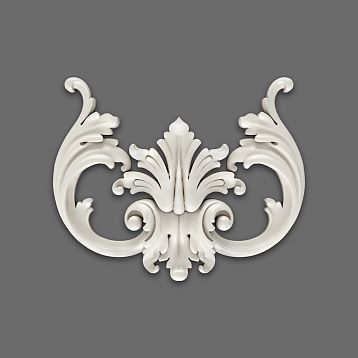
Carved wooden appliquésused to create decorative accents on architectural elements. Carved appliqués are placed at molding intersections, panel corners, and centers of horizontal moldings.Carved appliqués for furniturecan repeat motifs from architectural elements, creating a link between architecture and furniture.
ornamental motifs of appliqués should match the interior style. Classicism uses vegetal motifs—acanthus leaves, palmettes, rosettes. Baroque adds volutes, mascarons, garlands. Empire introduces laurel wreaths, military trophies, eagles.Carved Mouldingswith corresponding motifs complete stylistic unity.
corner elementshide molding joints at panel corners. A carved corner element with vegetal ornament transforms a functional detail into a decorative accent.Decorative wooden corner pieceserves as the final touch of panel composition.
Integration with furniture
Architectural elements must coordinate with furniture. Classical furniture features profiled elements—cabinet cornices, chest bases, facade moldings. These profiles should echo architectural molding profiles.Wooden baseboardwith a rounded top matches furniture cornices of similar shape.
The height of furniture bases usually matches or closely matches the baseboard height.Wide wooden floor skirting board150 mm matches furniture bases 120–150 mm. This creates visual continuity between fixed architecture and movable furniture.
Carved appliqués on furniture repeat architectural appliqué motifs.Carved appliquéwith acanthus leaves on the molding corresponds to similar appliqués on cabinet facades. This repetition creates stylistic unity among all interior elements.
Material and Finish: Beech, Oak, Ash
The choice of wood species determines the character of the interior. Each species has a unique texture, color, and physical properties.moldings, cornices, baseboardsfrom different species create different atmospheres—ranging from warm and cozy to strict and formal.
Oak—classic elegance
Oak—standard species for classic interiors.Oak skirtinghas a pronounced texture with large growth rings and open pores. This texture creates visual depth and richness of surface. The natural color of oak ranges from light straw to brown with a golden hue.
Physical properties of oak are ideal for architectural elements. High hardness—3.7–3.9 on the Brinell scale—ensures resistance to mechanical damage.Oak baseboardin high-contact zones serves for decades without noticeable wear. Stability of dimensions under humidity fluctuations prevents deformation.
Oak holds its profile excellently.Oak moldingsWith small decorative elements, they preserve line clarity. Carving into oak creates an expressive relief with deep shadows.Carved oak inlaysThey possess monumentality and detail simultaneously.
Oak finishing is diverse. Natural oil highlights the texture while preserving the natural tone. Stain allows color change from golden to dark brown or black. Lacquer creates a smooth protective surface with varying gloss levels—from matte to glossy.Oak skirting board priceIt is higher than other species, but the investment is justified by longevity and prestige.
Ash - aristocratic expressiveness
Ash is similar to oak in texture and properties, but has a lighter tone and finer texture.Ash skirting boardIt creates a light, airy interior. The natural color of ash varies from cream-white to light brown with pink or olive undertones.
Ash texture is expressive but more delicate than oak. Annual rings are clearly visible, but pores are finer. This creates a balance between expressiveness and restraint.Ash moldingsThey are suitable for interiors where natural texture without excessive ornamentation is important.
Ash hardness is comparable to oak—4.0–4.1 on the Brinell scale.Ash floor skirting boardIt withstands intensive use. Ash has higher elasticity than oak, reducing the risk of chipping during cutting and processing. Profiled ash elements have sharp edges without scratches.
Ash stains beautifully, accepting various shades. White staining creates a Scandinavian aesthetic. Gray staining adds a modern touch. Dark staining mimics exotic species—wenge, padauk.Ash casingsWith staining, they create elegant door frame casings.
Beech - European tradition
Beech - a traditional European species for furniture and architectural elements.Oak skirting boardIt has a uniform fine-pored texture without distinct annual rings. The natural color of beech is pale pink or yellow-pink, creating a warm atmosphere.
Uniformity of beech texture—its advantage for profiled elements.Beech moldingsWith fine decorative grooves, they have perfectly clear lines. Carving into beech creates a smooth surface without directional texture.Carved beech inlaysThey are suitable for miniature ornaments with fine details.
Beech hardness is moderate—3.4–3.8 on the Brinell scale—sufficient for most applications.Beech floor skirting boardIt lasts long under normal use. Beech is sensitive to moisture and requires protective coating in high-humidity rooms.
Beech stains easily, taking an even color due to its uniform structure.White beech skirting boardCombining different species creates interesting effects.
Combined Solutions
The combination of different species creates interesting effects.Oak skirtingin the lower zone ensures strength and prestige.Ash moldingson walls create a lighter tone.Beech skirting boardswith coloring unifies the composition with a single color.
Contrast of textures highlights different elements. The pronounced oak texture in the skirting board contrasts with the uniform beech texture in the moldings. This creates a visual hierarchy where the skirting board, as the main element, is more prominent.Wooden plankfrom ash adds an intermediate texture to the composition.
A unified finish unites different species. All elements are painted in one color — white, gray, cream. Differences in texture are subtly expressed, creating a delicate play of surfaces.White wooden skirting boardfrom oak,White moldingsfrom beech — different species under a single enamel.
Protective coatings
Lacquer creates a durable protective film on the surface of wood. Alkyd lacquer provides high hardness and wear resistance. Polyurethane lacquer is resistant to moisture and chemical exposure. Acrylic lacquer is eco-friendly and does not yellow over time.Lacquered wooden skirting boardwith matte or glossy lacquer emphasizes the wood texture.
Oil penetrates into the wood structure, highlighting the texture and preserving tactile quality. Oil finish is breathable, allowing the wood to regulate humidity.Moldings with oil finishhave a natural appearance without a film on the surface. Oil requires periodic renewal — every 2-3 years.
Wax creates a soft matte sheen and a water-repellent surface. Wax finish is suitable for elements not subjected to intensive contact.Wooden cornicewith wax finish has a noble soft sheen. Wax is applied to a surface previously treated with oil or stain.
Enamel completely hides the wood texture, creating a smooth painted surface. White enamel is a classic solution for formal interiors.White Wooden Baseboardwith enamel creates clear lines without visible texture. Colored enamels allow creating bright accents or pastel tones.
Tips for choosing height and proportions
The correct choice of architectural element sizes is critical for interior harmony.Wooden baseboardincorrect height destroys the room's proportions.Wooden moldingsinappropriate scale either disappears or overloads the composition.
Skirting board height depending on room height
Classic proportion — skirting board height is 1/20 - 1/25 of room height. For standard 2.7-meter ceilings, optimal height is 120-135 millimeters.Floor wooden skirtingsuch height creates a balanced proportion for the plinth zone.
For high rooms 3.0-3.5 meters, useWide wooden floor skirting boardHeight of 150-200 millimeters. This height is proportional to the room's volume and furniture scale. A too-low skirting in a high room looks disproportionate and disappears into the space.
For low rooms 2.4-2.5 meters, a moderate skirting 80-100 millimeters is used.wooden skirting board purchaseA lower height visually does not further reduce the room. A too-high skirting in a low room creates a sense of being low to the ground, reducing the visible height of the walls.
Molding width for panels
For panels 60-80 centimeters wide, useWooden moldingmolding 40-50 millimeters wide. For large panels 100-120 centimeters wide - molding 60-80 millimeters.
The ratio of molding width to panel width is usually 1:15 - 1:20. A 900-millimeter wide panel is framed by molding 45-60 millimeters. This ratio creates a visible frame without overloading the composition. Too wide molding eats up panel area, too narrow molding disappears, failing to create a clear frame.
Panel height also affects molding selection. Tall narrow panels (height-to-width ratio 2:1 or 3:1) require more elegant moldings. Square panels allow for more substantial framing.Wooden plankWithin the panel, it further structures it, requiring a corresponding molding width.
Ceiling cornice size
Ceiling cornice is chosen proportionally to room height and skirting size. Classic ratio - cornice 20-30% wider than skirting.Floor skirting 120 mmcombines withcornice 150-160 mmThis creates a visual crown of the room, more expressive than the base.
For rooms up to 3 meters high, cornice width 100-150 millimeters is used. For high rooms 3.5-4 meters - cornice 180-250 millimeters.Wooden cornice for curtainsSuch a size creates a monumental wall finish.
Cornice profile is more complex than skirting profile. Cornice includes several decorative elements - scrolls, rosettes, shelves. This complexity corresponds to its position in the upper, most visible part of the wall.Buy wooden ceiling skirtingProfiled creates a smooth transition from wall to cornice.
Molding width
For a standard door 80-90 centimeters wide, usedoor casing 80-100 mmFor wide openings 100-120 centimeters - casing 100-120 millimeters. For narrow openings up to 70 centimeters - casing 60-80 millimeters.
The ratio of casing width to opening width is usually 1:8 - 1:10. An opening 900 millimeters wide is framed by casing 90-110 millimeters. This creates a noticeable, but not dominant, frame.Wooden door casingIt should be proportionate to the opening scale.
Opening height also affects the perception of casing width. Tall narrow openings require narrower casings to maintain proportions. Wide low openings allow for more substantial framing. A portal 2.4-2.7 meters high and 1.5-2 meters wide is framed by casing 120-150 millimeters.
Element thickness
Thickness (projection from wall) of architectural elements affects their relief.Wooden baseboardIt has a thickness of 15-25 millimeters. This creates a noticeable relief, well-read in play of light and shadow. Too flat skirting 8-10 millimeters disappears on the wall, failing to create architectural expressiveness.
Wooden moldingFor panels, it has a thickness of 12-18 millimeters - less than skirting, but sufficient for forming relief.Wooden plankIt can be thinner - 8-15 millimeters, creating a delicate vertical division.
The cornice has a maximum projection - 100-200 millimeters. This creates an expressive crown at the top of the wall.wooden corniceA large projection forms deep shadows, enhancing architectural drama.
Distances and Intervals
The distance between horizontal moldings is determined by the proportions of the panels. The classical height of the lower panel is 90-120 centimeters from the floor to the horizontal molding. This is approximately one-third of the wall height in rooms with ceilings of 2.7-3.0 meters.Wooden moldingsAt this height, they create a classical boiserie.
The upper panel between the horizontal molding and the ceiling cornice has a height of 1.5-1.8 meters. The ratio of the height of the lower panel to the upper panel is approximately 1:1.618 - the golden section. This creates a harmonious division of the wall into unequal but proportional parts.
The distances between vertical rails in the panel are determined by the width of the panel.Wooden plankIt divides the panel into 2-4 parts. A panel 80 centimeters wide may have one central rail dividing it in half, or two rails dividing it into three equal parts of 27 centimeters.
Conclusion
A classical interior is unthinkable without a thoughtfully designed system of architectural elements.moldings, cornices, baseboardsMade from solid wood, they form a visual framework of space, creating a hierarchy of surfaces and controlling proportions.Wooden baseboardIt serves as an architectural base from which the entire wall composition is built.
Wooden moldingsThey create a panel structure characteristic of classical interiors. Combined withplinth, railsandbeamsIt forms a cohesive architectural system where each element is connected to others through unity of profiles, scale, and material.
The choice of wood species - oak, ash, or beech - determines the character of the interior. Oak creates monumentality and prestige, ash - a light elegance, beech - a warm European tradition. Proper finishing - lacquer, oil, wax, or enamel - highlights the material's qualities and ensures longevity.
Adhering to proportions is critical for the harmony of a classical interior. The height of the skirting board should relate to the room's height as 1:20 - 1:25. The width of moldings is proportional to the size of the panels. Cornices are 20-30 percent wider than skirting boards. These mathematical relationships create visual harmony through the logic of proportions.
Company STAVROS offers a full range ofbaseboards, molding, crown moldingsandcasingsMade from solid oak, ash, and beech. A wide range of profiles - from minimalist modern to richly decorated classical - allows for implementing any interior concept. High-quality processing, precise dimensions, and diverse finishing options ensure the creation of authentic classical interiors. Professional consultation with specialists helps select the optimal combination of elements, taking into account the architectural features of the room, stylistic preferences, and project budget. Using solid natural wood guarantees longevity, ecological safety, and enduring aesthetic value of a classical interior.
Frequently asked questions
What height of skirting board is optimal for a classical interior?
For standard rooms 2.7 meters high, an optimal skirting board height is 120-135 millimeters.Floor wooden skirtingAt this height, it creates a proportion of 1:20-1:22 to the room's height. For high ceilings, useWide wooden floor skirting board150-200 millimeters.
How to combine skirting boards and moldings by profile?
Profiles should correspond through the repetition of basic elements.Wooden baseboardWith a cove, it requiresmoldingSimilar elements. The cornice has a more complex profile, but basic forms repeat, creating visual kinship.
Which wood species to choose for a classic interior?
Oak is the standard choice for prestigious interiors.Oak skirtingIt has a distinct texture and high hardness. Ash creates a lighter tone. Beech is suitable for painted elements due to its uniform texture.
Is it necessary to use one species for all elements?
Using one species creates material unity. However, combining similar species with similar texture is permissible.Wooden moldingsAsh combines with oak skirting. A unified finish — painting in one color — unifies different species.
What distance should be between moldings on the wall?
The classic height of the lower panel is 90–120 centimeters from the floor. This is approximately one-third of the wall height.Decorative wooden moldingsThey are placed at this height, dividing the wall into proportional parts. The ratio of the lower panel to the upper part approaches the golden section 1:1.618.
Can wooden skirting be combined with polyurethane moldings?
Combination is possible with careful selection of profiles and color.Wooden baseboardWith natural finish, it requires painted polyurethane moldings. All wooden elements under enamel combine with polyurethane without visible differences when executed with quality.
How to correctly choose the width of molding for framing panels?
The ratio of molding width to panel width is usually 1:15–1:20. A panel 900 millimeters wide is framed bymolding45–60 millimeters. This creates a visible frame without overloading the composition.
What protective coating is better for wooden architectural elements?
Lacquer creates a durable protective film, suitable for elements in contact zones. Oil highlights texture and preserves tactile quality. Enamel completely hides texture, creating a smooth surface.White Wooden BaseboardWith enamel — a classic solution for formal interiors.