Article Contents:
- 1. Baseboard in interior: why its price matters
- 1.1. Role of baseboard in room decoration
- 1.2. Why "price per unit" is an important indicator
- 2.1. Wood species
- 2.2. Processing quality and grade
- 2.3. Size and profile
- 2.4. Brand and manufacturer reputation
- 2.5. Seasonality, logistics, and related costs
- 3.1. Eco-friendliness and natural appearance
- 3.2. Restoration and color change
- 3.3. Durability and longevity
- 4.1. Measuring perimeter
- 4.2. Price per unit and baseboard length
- 4.3. Consider installation nuances
- 5.1. Construction hypermarkets
- 5.2. Specialized stores for flooring
- 5.3. Online stores
- 5.4. Directly from the manufacturer
- 6.1. With adhesive
- 6.2. With self-tapping screws (or nails)
- 6.3. With clips
- 7.1. Wall and floor preparation
- 7.2. Installation recommendations
- 7.3. Regular maintenance
- 8.1. Sample calculation
- 8.2. Long-term benefits
- 9.1. Color options
- 9.2. Baseboard height and room proportions
- 9.3. Combination with Furniture and Doors
- 10. Answers to Frequently Asked Questions
- 11. Conclusion: Why 'per piece' price is not the only indicator

When starting renovation or updating the interior, many focus on major aspects: choosing flooring, wall color, furniture design. However, in creating a cohesive, harmonious space, details play a key role — including baseboards, which not only cover the junction between wall and floor but also emphasize the room's style. One of the most popular options —wooden baseboard price per piecewhich combines aesthetic appeal and practicality. But what is included in the product's cost, how are prices formed, and what should be considered when choosing? In this article, we will examine all nuances related to purchasing wooden baseboards and their pricing, as well as provide useful tips on selection and installation.


1. Baseboard in interior: why its price matters




1.1. Role of baseboard in room decoration
Baseboard serves not only to cover the gap between floor and wall. It protects the lower part of the wall from damage during cleaning, moving furniture, and water splashes. Moreover, baseboard complements the design: the right choice of this element can give the room an elegant, neat, and finished look.
Our factory also produces:
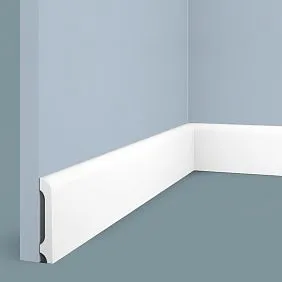
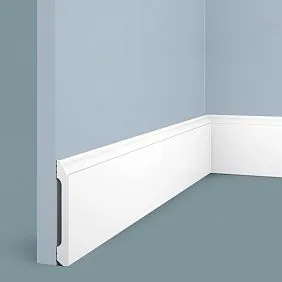
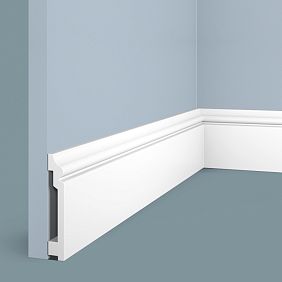
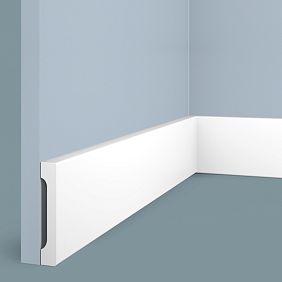
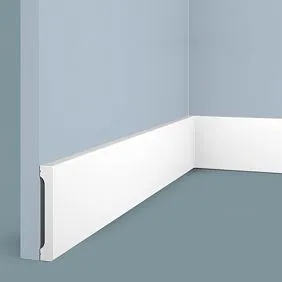
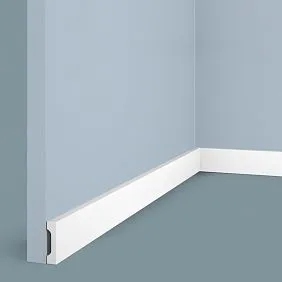
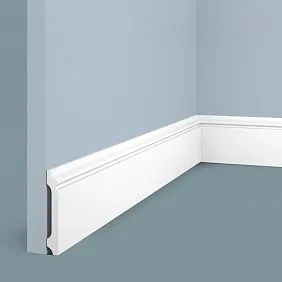

1.2. Why 'per piece' price is an important indicator
In stores and online catalogs, you often encounter different ways of indicating price: per linear meter, per box (if referring to modular systems), or 'per piece' — that is, per unit of a finished item of a certain length. For many consumers, it is more convenient to see a specific price immediately 'per piece', as it simplifies calculating the number of baseboards needed for the room and the overall renovation budget. However, it is important to consider that the total cost depends not only on the price of one plank but also on additional expenses (fasteners, delivery, installation).
2. Factors affecting the price of wooden baseboard
Get Consultation
2.1. Wood species
- Spruce
Considered one of the most affordable options. Soft in structure, easy to process, but may develop minor dents over time.
- Larch
Distinguished by higher resistance to moisture and mechanical loads, which makes its price higher than that of pine, but it is also more durable.
- Oak
Often positioned as a premium material. It is dense, wear-resistant, not afraid of temperature fluctuations, and can serve for decades without significant deformation. The price per piece is accordingly higher than the average segment.
- Ash, beech, and other species
Ash is similar in properties to oak, but often costs slightly less. Beech has a dense structure but requires stable humidity conditions.
The more valuable and harder the wood, the higher the price of the baseboard. If longevity is important, it may be worth investing in more expensive species.
2.2. Quality of processing and grade
● Wood grade: 'Extra' (without knots or defects) costs more, 'A', 'AB', or 'B' may have small knots that do not affect functionality but reduce the price.
● Final finish: Baseboards may be sold 'raw' (without coating), primed, painted, or factory-lacquered. Each additional processing stage increases the price.
2.3. Size and profile
- Height (or width) of the baseboard. Standard sizes are 5–6 cm, but wider planks of 7–10 cm and above are increasingly in demand. The more wood consumed, the more expensive the product.
- Thickness. Baseboards with cable channels are usually thicker and more complex to manufacture, which also affects the price.
- Profile complexity. Decorative, carved, or intricately milled planks are more expensive than simple straight ones.
2.4. Brand and manufacturer reputation
Companies with a long history and positive reviews may set higher 'per piece' prices, but they also guarantee stable quality, compliance with international standards, reliable service, and often provide additional services (installation, warranty, repair).
2.5. Seasonality, logistics, and related expenses
- Seasonal dynamics
In summer and autumn, when construction and repair seasons are in full swing, prices may be higher, while in winter some stores offer discounts on warehouse stock.
- Delivery
If you are purchasing baseboards in large quantities and require delivery, its cost may significantly affect your overall renovation budget.
- Fasteners and finishing materials
When calculating, consider adhesives, self-tapping screws, putty, angles, and possibly moldings and other decorative elements.
3. Advantages of wooden baseboards compared to other materials
3.1. Ecological and natural appearance
Unlike plastic or MDF analogs, wood does not emit toxic substances, and its texture cannot be fully replicated by synthetic coatings. This gives the interior a sense of warmth and individuality.
3.2. Restoration and color change
Wooden baseboards can be sanded, painted, and varnished multiple times. If you wish to refresh the interior, you do not need to buy new baseboards — simply repaint the old ones or lightly sand them.
3.3. Strength and durability
Properly dried and treated wood lasts for decades, especially if it is hardwood. With careful handling and proper maintenance (regular cleaning, maintaining optimal humidity), the baseboard will not crack and retain its original appearance.
4. How to determine how many baseboards you need to buy
4.1. Measuring the perimeter
● Measure the perimeter of all room walls with a tape measure, excluding doorways (if baseboards are not required in these areas).
● Add 5–10% extra for trimming and joints (especially if the room has external and internal corners).
4.2. Price per unit and baseboard length
Wooden baseboards are often produced in standard lengths of 2.2–3.0 m (depending on the manufacturer). Ask the seller about their 'step' length to easily calculate how many units you need based on the total area.
4.3. Consider installation nuances
● If walls are significantly curved, you may need more planks for precise trimming.
● Do not forget about additional costs: adhesives, self-tapping screws, clips (if this method of mounting is chosen), putty, plugs, etc.
5. Where to buy wooden baseboards and how to compare prices
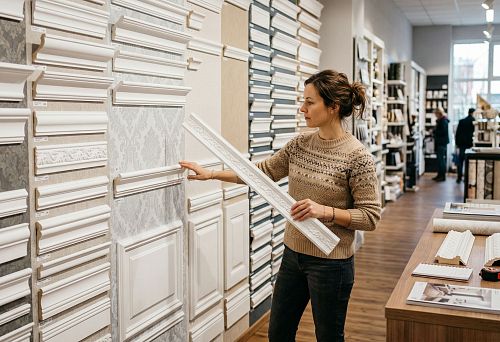
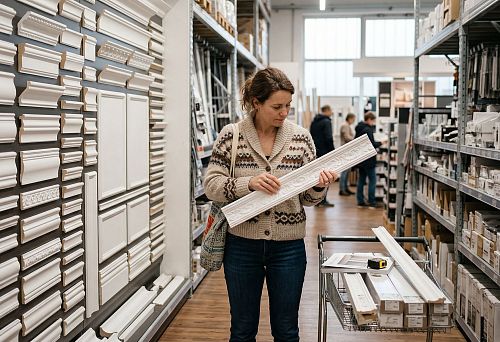
5.1. Construction hypermarkets
Advantages:
● Wide assortment.
● You can inspect the quality of baseboards in person.
Disadvantages:
● Prices may not be the lowest.
● Staff may not always be sufficiently knowledgeable about wood specifics.
5.2. Specialized stores for flooring
Advantages:
● Wide selection of wood species, grades, and profiles.
● Consultations with specialists to help choose the optimal option.
Disadvantages:
● Prices may be higher (due to quality and narrow specialization).
● Fewer popular brands, but more rare and premium items.
5.3. Online stores
Advantages:
● Easy to compare different brands and prices per unit without traveling around the city.
● Often you can find discounts, promo codes, and free shipping for large orders.
Disadvantages:
● Cannot touch or see the skirting board in person before purchase.
● It is important to check the seller's reputation and return conditions.
5.4. Directly from the manufacturer
Advantages:
● Often this is the most advantageous offer, bypassing middlemen.
● Ability to order non-standard sizes and profiles.
Disadvantages:
● Not all manufacturers work with private customers.
● May involve a long manufacturing time and require an advance payment.
6. Methods of mounting and their impact on price
6.1. Using adhesive
● Fast and neat, if the wall is flat.
● No need to buy screws or anchors, but you will need to spend on quality adhesive ("liquid nails").
● Removal is problematic, which may result in damage to the walls and the skirting board itself.
6.2. Using screws (or nails)
● Universal and reliable method, especially with uneven walls.
● Additional costs for screws, and possibly decorative caps or putty to cover screw heads.
● If needed, the skirting board is easier to remove when screwed compared to adhesive-mounted ones.
6.3. Using clips
● Allows for easy removal in the future (for example, to access wiring).
● Clips cost extra, but the final look will be very neat (fasteners are not visible).
● Walls should be relatively flat for accurate clip installation.
7. Installing and caring for wooden skirting boards: how to extend their service life
7.1. Wall and floor preparation
● Before installation, ensure walls are level and free of sharp protrusions.
● The wood itself should acclimate in the room (1–2 days) to avoid humidity fluctuations and warping.
7.2. Installation recommendations
- Square corners
For cutting, use a try square or a circular saw — even a small deviation may be noticeable at the joint.
- Level control
Ensure the skirting board is installed level horizontally (especially on curved walls).
- Putty and touch-up
If necessary (especially when using screws), fill the screw heads with wood putty and touch up.
7.3. Regular care
● Dry or slightly damp cleaning: use a soft cloth or brush.
● Avoid abrasive cleaners: they may scratch or remove varnish/paint.
● Humidity control: if the room is too dry, wood may crack; at high humidity, swelling may occur.
8. Comparing skirting board price and total costs
8.1. Approximate calculation
Suppose you have a 4 × 5 m room, perimeter (excluding door opening) ~ 18 meters. If one skirting board is 2.2 m long, you will need approximately 9 pieces (with a small reserve).
● If the "price per piece" is 500 rubles, total cost will be 4500 rubles.
● Add adhesive (or screws + putty) 300–400 rubles, possibly delivery 500–1000 rubles.
● Total ~ 5300–5900 rubles plus your labor or installation fee if hiring professionals.
8.2. Long-term benefit
Although wooden skirting boards may cost more than plastic alternatives, they retain their attractiveness for a long time, are easy to restore, and look prestigious with careful care. Plus, wood increases the property’s value when selling or renting.
9. How to "blend" skirting board into overall design
9.1. Color solutions
- Matching wall color
Skirting board blends with the wall, visually "extending" the room’s height.
- Matching floor color
Creates an effect of "continuation" of the floor covering, which often suits classic or Scandinavian interiors.
- Contrast
If you want to highlight the room’s perimeter, choose a skirting board in a bright or dark color compared to the floor and walls — this adds geometry and expressiveness.
9.2. Skirting board height and room proportions
● For standard ceilings (2.5–2.6 m), a 6–8 cm skirting board is optimal.
● For high ceilings (2.8 m and above), options of 9–12 cm, or even higher, are possible.
● In small rooms, an overly tall skirting board may "consume" visual space.
9.3. Coordination with furniture and doors
● If doors and door frames are wooden (or painted in a specific shade), logically choose a skirting board matching them in color and texture.
For modern interiors, a "unified" color solution is often used so that all wooden elements (baseboards, doors, window casings) form a harmonious ensemble.
10. Frequently Asked Questions
Question: Can wooden baseboards be installed on a heated floor?
Answer: Yes, if the floor was initially correctly installed and does not deform, and the wood has normal moisture. It is important to maintain gaps and not block the floor's deformation expansion.
Question: What to do if the wall width in the room is not divisible by the baseboard length?
Answer: Almost always, trimming and joints are required during installation. The key is to leave a small reserve of planks in case of errors or hidden defects.
Question: Which paint is better to choose for wooden baseboards in a hallway?
Answer: Wear-resistant compositions (alkyd enamel, polyurethane or acrylic paint) are recommended, which withstand frequent cleaning and mechanical impacts.
11. Conclusion: Why "per piece" price is not the only indicator
When purchasingwooden baseboard price per piece — a convenient reference point that allows quickly assess the cost of room finishing. But do not forget to consider the overall context:
● Wood species
● Processing quality (grade, moisture, finish)
● Additional costs (delivery, fasteners, installation)
● Degree of match with the chosen interior style
A properly selected wooden baseboard will not only provide beauty and harmony in the room, but also practical benefits: protect walls, conceal wires, and serve for many years. At the same time, its cost will be recovered over a long service life and the possibility of restoration or color change if you wish to update the interior. Choosing a quality product from reliable sellers protects you from future problems and provides an aesthetic result that will delight you for decades.
Thus, if you are looking for an option that combines style, naturalness, and durability, pay attention to wooden baseboards and do not hesitate to compare "per piece" prices among different manufacturers and retail outlets. Making a thoughtful choice, you invest in the comfort and beauty of your home — and save on future repairs, as wooden baseboards are easy to update or replace as desired.