Article Contents:
- Why baseboard is important in interior design
- Advantages of wooden baseboard
- Wooden baseboard: aesthetic and functional components
- Aesthetics and play of light
- Functionality and Comfort
- By wood species
- By profile and shape
- By installation method
- Consider color and wood species
- Stylistic features of the interior
- Baseboard height
- Surface Preparation
- Baseboard installation
- Final finishing
- Contrasting solutions
- Combining with moldings and cornices
- Creating a 'floating' wall effect
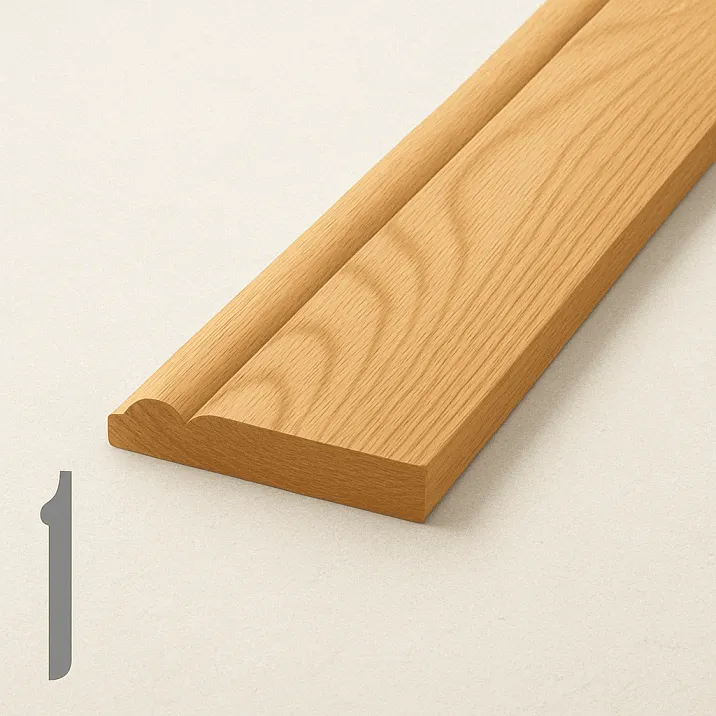


Why baseboard is important in interior design
When it comes to decorating residential or office spaces, many tend to focus only on choosing furniture, wall color schemes, and flooring materials. However, even the most beautiful parquet can look unfinished without a properly selected baseboard. It is precisely this seemingly insignificant element that often becomes the connecting link that gives the entire room coherence and completeness. In the end, a wooden baseboard can not only hide the junction between the floor and the wall, but also add a touch of authenticity, coziness, and, let's be honest, a certain status.
But let's not approach the issue simplistically and one-sidedly: a properly chosen baseboard is also practicality, protection of walls from minor damage, and possibly the best friend of those striving for perfect order. Yes, you heard right: a wooden baseboard helps conceal small gaps and technical nuances of repair, as well as prevents dust and dirt from accumulating in corners.
In our time, there are countless options — from plastic strips to complex multi-level constructions made of various metals. However, most designers, professional builders, and users who value warmth and eco-friendliness in interiors will choose wood. Is it worth 'complicating' and risking the integrity of the design when natural, traditional materials are always an option?
Don't think that wood is an outdated solution, unworthy of modern interiors. Of course, it sounds slightly conservative, but classic design is often the best investment. Moreover, the variety of wood species, processing technologies, colors, and stylistic solutions allows you to 'play' with decorative elements without compromising functionality.




Advantages of wooden baseboard
- Natural material. A wooden baseboard not only looks great but is also completely safe for health, as it does not emit harmful chemicals.
- High strength and durability. Properly treated wood can retain its original appearance for many years without visible deformation or color loss.
- Easy restoration. In case of minor damage, a wooden baseboard can be sanded, varnished, or oiled to restore its former beauty. Plastic, for example, would need to be replaced entirely.
- Refined appearance. The structure of wood, its texture, and the wide range of shades (from light pine to deep walnut) allow it to harmonize with any interior, whether classic or ultra-modern.
And the most pleasant thing nowadays: diversewooden baseboard Options are available not only for professional designers but also for private homeowners wishing to transform their homes.
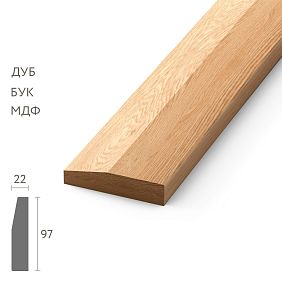
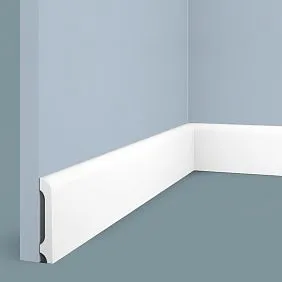
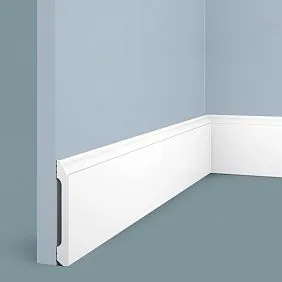
Our factory also produces:




Wooden skirting board: aesthetic and functional components
Get Consultation
Aesthetics and play of light
Many people think that skirting is simply a strip between the floor and the wall. But don't let its external simplicity mislead you! A wooden skirting board can serve as a kind of frame surrounding the room's space. If your flooring has warm tones, a wooden strip in matching color will give the room harmony. If you want to create contrast, you can choose a darker or lighter wood tone, adding expressiveness to the interior.
When diffused daylight falls into a room, the natural wood texture begins to play new colors. Sunlight reflecting off different fiber areas creates a soft glow effect. This is not some plastic surface with a uniform embossing, but a living material that 'breathes' and transforms depending on the time of day and lighting conditions.
Functionality and comfort
“So what’s the big deal?” you may ask. “What matters to me is practicality and no unnecessary complications.” And you will be right in your own way. After all, besides aesthetics, a wooden floor skirting board performs purely practical functions:
● Protection of walls from mechanical damage (for example, during cleaning or furniture rearrangement).
● Concealed wiring. Some skirting board models have cavities or channels for neat cable installation, freeing you from cable chaos.
● Easier cleaning. When there are no gaps between the wall and the floor, dust and dirt slide toward easily accessible surfaces, from which they are easier and faster to remove.
Thus, a wooden skirting board takes on several important tasks. And if you are still unsure about its usefulness, consider how much time and nerves you can save in the future by investing in quality materials from the very beginning of renovation or interior update.
Varieties of wooden skirting boards
By wood species
Wooden skirting boards can be made from the most diverse species: from classic pine and spruce to expensive and rare ones (oak, beech, ash, walnut). Each has unique properties:
- Pine — budget-friendly and popular option, characterized by softness and easy processing. Suitable for rooms with low traffic.
- Oak — one of the most reliable materials with excellent texture and high wear resistance. Oak skirting boards are often recommended for living rooms, hallways, or offices.
- Beech — can boast an interesting pattern and beautiful shades. It is approximately as strong as oak, but usually costs slightly less.
- Walnut — noble species that adds elegance and richness of color to the interior. Suitable for luxury projects.
- Larch — resistant to moisture, less afraid of temperature fluctuations, and often used in country houses with inconsistent heating.
By profile and shape
Even if you are ready to bet that you have seen all possible skirting board variants, in practice, choosing one may pleasantly surprise you. There is a classic profile without special cuts, but there are also luxurious decorative models resembling expensive moldings. It all depends on the interior style and personal preferences:
● Simple (straight) profile — ideally suited for minimalist and modern styles, does not draw attention to itself.
● Decorative profile — with one or several smooth or, conversely, sharp curves. Perfectly matches classic, vintage, and richly decorated rooms.
● High skirting — often chosen for spacious rooms with high ceilings. Visually makes walls appear taller and more impressive.
● Narrow skirting — looks neat in small rooms, does not 'steal' space, but still performs the same protective and decorative functions.
By installation method
Several mounting methods are distinguished:
- On clips or clamps — allows removing the skirting board if necessary (for example, if you need to replace wiring).
- On liquid nails or mounting adhesive — simple and fast method for flat walls, but more difficult to remove without damage.
- On self-tapping screws — more 'traditional' mounting, strong and reliable. The only 'but': you will need to carefully cover the screw heads.
Choose the mounting method based on wall flatness, convenience of future use, and your own repair skills.
The key to harmony: how to choose 'the right' skirting board
Consider the color and species of wood
In this task, as banal as it may sound, the main thing is to achieve harmony between the floor, walls, and skirting board. If you already have a wooden floor, it's easiest to choose skirting boards of the same or similar species. This will result in the most natural overall look. Alternatively, if you want contrast, the skirting board can be several tones darker or lighter than the floor.
Light wood, such as beech or larch, visually 'expands' the space, making it feel more airy. Darker species like oak or walnut give the room a sense of solidity, but may visually reduce the room's size.
Stylistic features of interior design
In modern interiors, skirting boards are often painted to match the wall color, creating an effect of 'blending' and emphasizing the contrast of the floor covering. In classic designs, however, the skirting board plays an independent decorative role, especially if it is shaped and made from a noble wood species.
Want your wooden floor skirting board to be a striking accent? Then choose a model with an expressive texture and non-standard shades (e.g., aged or whitewashed oak). On the other hand, minimalist enthusiasts will appreciate simple forms without unnecessary details.
Skirting board height
● Standard (about 5–7 cm) — a universal option suitable for most apartments.
● High (8 cm and above) — look more natural in spacious rooms with high ceilings. Such a skirting board gives the interior a more aristocratic feel.
● Low (3–4 cm) — seem to 'hide' along the wall and are suitable for low rooms or if you want to emphasize other interior details.
Installation and care: what to know?
Surface preparation
Before installing the skirting board, carefully level the wall and floor surfaces. If your wall 'waves' with unevenness, installation will be difficult, and the appearance may suffer. Sometimes it makes sense to pre-spackle and sand the wall to ensure the skirting board lies flat and looks neat.
Skirting board installation
Choose the mounting method (clips, adhesive, or screws) and plan the joint placement. It's best to install the skirting board starting from the door frame and moving around the room's perimeter. Be careful at corner joints — improper trimming often results in gaps.
To achieve a perfect joint, it's recommended to use a miter saw or a circular saw at a 45-degree angle. If you're new to this type of work, practice on scraps before making the final cut.
Final finishing
After installation, a wooden skirting board can be coated with varnish, oil, or wax (if it wasn't pre-treated). This not only protects the wood from moisture and dirt but also highlights its natural texture. If needed, the wood can be periodically refreshed by lightly sanding and applying a new layer of protective finish.
Care for natural wood skirting boards involves regular dry and damp cleaning without aggressive chemical agents. Notably, wooden skirting boards do not attract dust as strongly as synthetic materials.
Design techniques involving skirting boards
Contrasting solutions
If you're tired of the 'standard' interior and want to add a unique touch, consider a skirting board in a bright color or sharp contrast with other elements. For example, white walls and a dark, almost black skirting board. Or, conversely, rich dark walls with a light strip right at the floor. This is a risky solution, but with the right combination, it creates a striking effect.
Combining with moldings and cornices
When discussing classic and luxurious interiors, various moldings and cornices come into play. They can serve as decorative wall trim, visually highlighting zones or transforming an ordinary room into grand chambers. In this case, the wooden skirting board becomes part of the overall ensemble and supports the stylistic line. If you wish to explore detailed options for such combinations, we recommend looking atmoldings, cornices, and skirting boardswhere various wood species and forms are collected.
Creating a 'floating' wall effect
An interesting design trick — use LED lighting placed in a special groove behind the skirting board or slightly above it. Then, in the dark, walls seem to 'float' above the floor, and soft lighting creates an atmosphere of coziness and relaxation. In such a solution, quality installation is especially important to ensure the skirting board lies flat and doesn't leak light, exposing internal structures.
Ecological aspects and advantages of natural materials
Against the backdrop of the global trend toward eco-friendly lifestyles, more people are choosing natural materials. Wood, as a renewable resource, contributes to maintaining ecological balance if raw material extraction and production adhere to environmental standards. A quality wooden floor skirting board serves for decades and, at the end of its lifespan, can be recycled or biodegraded without harming the environment.
Moreover, wood has the property of 'breathing' — it regulates humidity in the room and helps create a comfortable microclimate. Plastic analogs cannot boast of this: they merely cover gaps without participating in air and moisture exchange.
Where to buy and what to pay attention to when choosing a manufacturer
Once you've decided on the wood species, shape, and color of the skirting boards, an important question arises: 'Where, exactly, can I purchase them?'. The market is full of options, but not all suppliers and manufacturers are equally reliable.
- Brand reputation. Find out how many years the manufacturer has been on the market, read reviews from real customers. If the company values its reputation, then the product quality will be accordingly.
- Assortment. It's convenient when you can find not only baseboards but also related items: moldings, cornices, corners, etc. This saves time and guarantees stylistic compatibility.
- Warranties and certificates. Honest manufacturers have documents confirming the quality of wood and its compliance with ecological standards.
- Option for custom orders. Sometimes room parameters require non-standard sizes, profiles, or shades. It's good if the manufacturer can adapt the product to your needs.
For example, on the siteStavros you will find various types of baseboards, among which it is easy to select exactly what suits your design idea. The manufacturer specializes in solid natural wood products, so if you are looking for quality and durability, you definitely should visit them.
Conclusion: responsible approach to details
Choosingwooden baseboardYou are not just solving a utilitarian task of protecting the junction between the floor and the wall. You are literally setting the tone for the entire room. Since you have started renovation or decided to refresh the interior, it is worth doing so thoughtfully, consciously selecting materials that will truly bring comfort, aesthetics, and pleasure for many years.
Yes, sometimes you want to 'be a bit wild' and try something extraordinary — a bright contrast, an unusual profile, or even an experiment with lighting. But in most cases, a classic wooden baseboard turns out to be a winning solution, as natural wood never goes out of style. It can be combined with any style — from strict minimalism to refined classicism.
Do not treat the baseboard as a secondary detail — it is a reliable companion to your floor and walls, shaping the overall impression of the room, house, or office. Remember that durability, eco-friendliness, and beauty are components of a well-thought-out solution. And if you are looking for inspiration and want to explore various options, be sure to visit the manufacturer's page, where baseboards are presented in a wide assortment.
In the end, you will get an interior that not only pleases the eye but also matches your ideas of comfort and quality of life. Wood thanks you for care and proper maintenance: it is ready to serve and decorate your home, creating a warm atmosphere for decades. Be bolder and more attentive in choosing each element of interior finishing — because great beauty is often hidden precisely in the details!