Article Contents:
- Philosophy of Wooden Baseboard in Modern Interior
- Anatomy of Quality Wooden Baseboard
- Wood Species Selection — Foundation of Durability
- Production Technology — Guarantee of Quality
- Classification by Sizes and Profiles
- Baseboard Height — Impact on Spatial Perception
- Profiles — From Classic to Modern
- Color Solutions and Finish Coatings
- Natural Tones — Beauty Without Embellishment
- Staining — Adaptation to Interior
- Protective Coatings — Beauty and Longevity
- Installation and Mounting: Professional Secrets
- Preparation Work — Foundation of Quality Result
- Mounting Methods — Choice Based on Wall Type
- Corner Joints — Mastery in Details
- Functional Capabilities of Modern Baseboards
- Cable Channels — Technology in Details
- Built-in Lighting — Light in Details
- Care and Maintenance of Wooden Baseboards
- Daily Care — Simplicity and Efficiency
- Periodic Refresh — Investment in Longevity
- Repair of Damage — Preservation of Beauty
- Economic aspects of selection
- Cost Comparison of Different Materials
- Calculation of Total Ownership Cost
- Ecological Aspects and Health
- Naturalness as Foundation of Healthy Home
- Antibacterial Properties
- Modern Trends and Innovations
- Integration with Smart Home Systems
- New Processing Technologies
- Regional application specifics
- Climate Conditions in Russia
- Architectural traditions
- Combination with Other Interior Elements
- Harmony with Floor Coverings
- Connection with Door Casings
- Integration with Furniture
- Special Applications
- Staircases
- Curved Surfaces
- Wet Areas
- Frequently Asked Questions
- Conclusion

What makes us pause at the sight of a perfectly designed interior? Why do some rooms appear complete and harmonious, while others seem unfinished? The secret lies in the details, and one of the most important of these details iswooden baseboardThis element, connecting the floor to the wall, can radically change the perception of space, giving it nobility and completeness.
The modern world of interior design is experiencing a true renaissance of natural materials. People are tired of plastic, MDF, and other synthetic materials that not only look artificial but can also negatively affect health.wooden baseboardIt brings us back to the roots, to materials with which humanity has worked for millennia, creating architectural and design masterpieces.


Philosophy of Wooden Skirting Boards in Modern Interiors
Why is skirting board even needed? Many consider it a decorative detail, but this is a deep misconception.with a classic profile creates a sense of solidity, reliability.It performs numerous important functions, without which the interior loses its integrity and functionality.
The first and most obvious function is protective. The lower part of the wall is constantly subjected to mechanical impacts: vacuum cleaner hits, furniture scraping, cleaning splashes. A quality wooden skirting board takes these impacts, preserving the wall in its original state. But this is only the tip of the iceberg.
The second function is masking. When laying floor coverings, a technological gap is left between the floor and the wall to compensate for material thermal expansion.Wooden baseboardsIt elegantly hides these gaps, creating an impression of structural monolithism.
The third function is aesthetic. The skirting board creates a visual boundary between the floor and the wall, emphasizes architectural lines of the room, and can visually alter the proportions of the room. A high skirting board makes ceilings appear higher, a wide one creates a sense of solidity and stability.




Anatomy of a Quality Wooden Skirting Board
Our factory also produces:
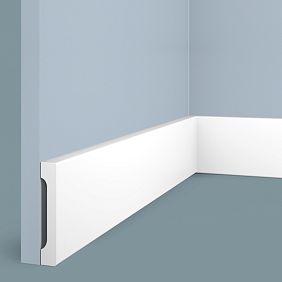
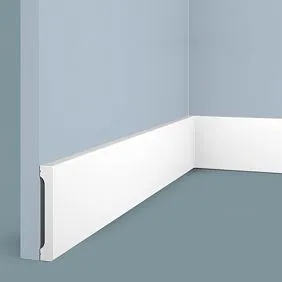
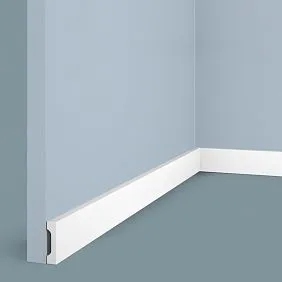
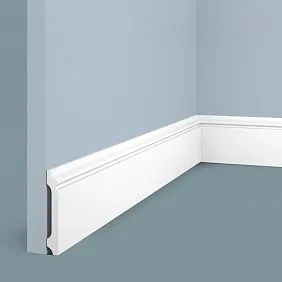

Choosing the Wood Species — the Foundation of Durability
Not all wood species are equally suitable for making skirting boards.wooden baseboardIt must possess certain characteristics: dimensional stability, moisture resistance, strength, and attractive grain.
Oak — the king among wood species for skirting boards. Its density of about 700 kg/m³ ensures exceptional strength. Oak hardly deforms, has natural resistance to moisture and pests. The characteristic grain with medullary rays creates a unique play of light and shadow. The color ranges from light golden to dark brown, allowing you to match the tone to any interior.
Ash — a worthy alternative to oak. It is equally strong, but has a lighter tone and more pronounced grain. Ash is easier to stain, expanding design possibilities.
Beech — a classic of European furniture production. Uniform structure, warm honey tones, excellent workability. Beech skirting boards are especially popular in Scandinavian and minimalist design.
Larch — a coniferous species with unique properties. High resin content provides natural protection against moisture and biological influences. Larch does not rot even under high humidity, making it ideal for country houses and cottages.
Get Consultation
Production Technology — Guarantee of Quality
Manufacturing a quality wooden skirting board is a complex technological process involving multiple stages.Production of trim elementsIt begins with careful selection of raw material. The wood must be free of knots, cracks, resin pockets, and biological damage.
The next stage is kiln drying. The wood is placed in special chambers where, over several weeks, the moisture content is reduced to 8-12%. This process cannot be accelerated — only gradual moisture removal guarantees dimensional stability of the finished product.
Profiling is performed on high-precision milling machines. Each profile requires special cutter heads and individual machine setup. Modern CNC machines ensure accuracy down to tenths of a millimeter.
Final sanding is performed in several stages with gradually decreasing abrasive grit. A properly sanded surface is not only beautiful but also the foundation for applying protective coatings.
Classification by Size and Profiles
Skirting Board Height — Its Impact on Spatial Perception
Choosing the height of the skirting board is an art requiring an understanding of proportions and the laws of visual perception. Incorrectly selected height can spoil even the most expensive interior.
Low skirting boards (40-60 mm) are suitable for small rooms with low ceilings. They do not visually reduce the room's height, preserving the feeling of coziness and human scale. Such skirting boards are popular in Scandinavian style and minimalism.
Standard skirting boards (70-100 mm) are a universal solution for most residential spaces. They provide sufficient wall protection without visually overloading the space. Suitable for apartments with standard layouts and ceilings 2.5-3 meters high.
High skirting boards (120-200 mm) create a sense of grandeur and elegance. They visually increase ceiling height and emphasize the status of the interior. Such skirting boards are appropriate for large rooms with high ceilings, in classical and neoclassical interiors.
Profiles — from classic to modern
The skirting board profile determines the interior's style and should harmonize with the architectural features of the room.Wooden moldingsand skirting boards are often executed in a unified stylistic key.
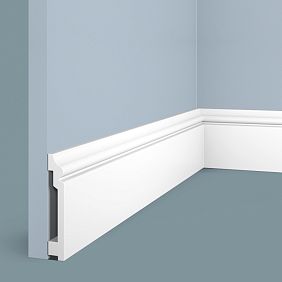
Classic profiles with smooth transitions and elegant curves are suitable for traditional interiors. Multi-step profiles create play of light and shadow, adding volume and expressiveness.
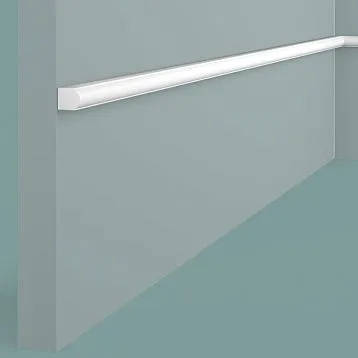
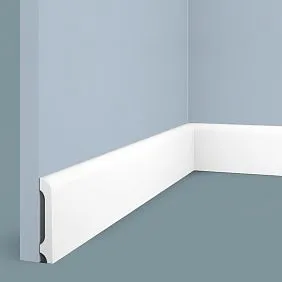
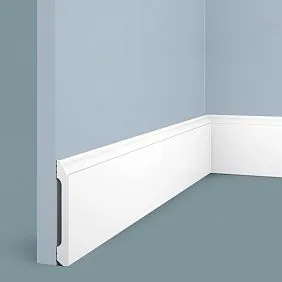
Modern minimalist profiles are simple geometric shapes — rectangle or slightly rounded profile. They emphasize the purity of lines characteristic of modern styles.
Functional profiles include cable channels for concealed electrical wiring. A removable cover provides access to wires for maintenance.
Color Solutions and Finish Coatings
Natural shades — beauty without embellishment
Modern trend — use ofof wooden floor skirting boardin natural color without aggressive staining. Each species has its unique color palette.
Oak ranges from light golden (young oak) to dark brown with greenish tint (washed oak). Ash — from cream-white to light brown. Beech — warm honey tones. Larch — from light yellow to reddish-brown.
Staining — adaptation to interior
Modern staining compositions allow changing the wood color while preserving its natural texture. Oil stains penetrate deeply into the wood, creating an even color and highlighting the structure.
Popular Staining Directions:
-
Scandinavian style — whitening wood to achieve light, almost white shades
-
Loft — dark, almost black tones with emphasized texture
-
Classic — rich brown tones imitating noble species
-
Modern — various intensity gray tones
Protective coatings — beauty and durability
Choosing the finish coating determines not only the appearance but also the operational characteristics of the skirting board.
Oil coatings preserve the natural beauty of wood and its tactile properties. Oil penetrates into the wood pores, protecting from within. Such coatings are easy to renew, allowing wood to 'breathe', but require periodic maintenance.
Varnish coatings create a durable protective film on the surface. Modern polyurethane varnishes provide high wear resistance, moisture resistance, and ease of maintenance. The downside — inability to perform local repairs.
Wax coatings give wood a silky sheen and special tactile appeal. Wax highlights the natural beauty of wood, but requires regular renewal.
Installation and mounting: professional secrets
Preparation work — foundation for quality result
The quality of skirting board installation largely depends on proper preparation. Walls must be flat — allowable deviations no more than 3-5 mm over the length of the skirting board. Large irregularities will result in gaps.
The floor must be fully prepared — final finish installed and secured. An 8-12 mm technological gap should remain between the floor and wall to compensate for thermal expansion.
Before installation, the skirting board must adapt to the room's microclimate. Items are unpacked and kept horizontally for 2-3 days at room temperature.
Mounting methods — choice based on wall type
Wall mounting is the most common method. Self-tapping screws with anchors are used, screwed into the wall through the baseboard. Mounting points are concealed with putty or decorative caps.
Hidden mounting is a more aesthetic solution. Special clips are used, which are attached to the wall, and the baseboard clicks onto them. Fasteners are completely concealed, and the baseboard can be removed if necessary.
Adhesive mounting is suitable for flat walls and lightweight baseboards. Special wood adhesives are used. This method is fast, but does not allow removal of the baseboard without damage.
Corner joints — craftsmanship in details
The quality of corner joints is a measure of the installer's professionalism. Internal corners are usually mitered at 45°. The cut must be perfectly precise — even minor inaccuracies will be noticeable.
For complex profiles, ready-made corner elements — internal and external corners, made from the same wood species — are used. This ensures perfect geometry and color matching.
Functional capabilities of modern baseboards
Cable channels — technology in details
Modern homes are filled with electronics: internet, television, security systems, 'smart home'. All these systems require wires that need to be neatly concealed.Wooden Skirting BoardsCable channels elegantly solve this problem.
A cable channel is a cavity in the back of the baseboard, covered by a removable lid. The channel size must accommodate the number of wires with allowance for future expansion. The lid must be easily removable for access to the wiring.
Built-in lighting — light in details
LED lighting transforms the baseboard into an architectural lighting element. Soft diffused light creates a cozy atmosphere, highlights the beauty of the flooring, and can serve as night lighting.
The LED strip is placed in a special channel within the baseboard, protected by a transparent or matte diffuser. The system must be energy-efficient, long-lasting, and capable of brightness adjustment.
Care and maintenance of wooden baseboards
Daily care — simplicity and efficiency
Proper care extends the lifespan of the wooden baseboard and preserves its original beauty. Daily care includes dry wiping with a soft cloth to remove dust.
Weekly wet cleaning is performed with a slightly damp cloth using special wood cleaning agents. Avoid excessive moisture — excess water may damage the wood and finish.
Periodic renewal — an investment in longevity
Wooden baseboards require periodic renewal of protective coatings. Oil-based coatings are renewed every 2-3 years, varnish-based coatings every 5-7 years depending on usage intensity.
Before renewal, the surface is cleaned, minor defects are filled with putty, and light sanding is performed to improve adhesion of the new coating.
Repair of damage — preserving beauty
The advantage of solid wood is the possibility of repair. Minor scratches and dents are removed by sanding and re-finishing. More serious damage requires professional restoration.
Local repair allows eliminating defects without replacing the entire baseboard. This is cost-effective and preserves the color harmony of the entire system.
Economic aspects of selection
Comparison of the cost of different materials
When choosing baseboards, many focus only on the initial cost, ignoring long-term expenses.Wooden baseboards pricewhich, despite being higher than synthetic analogs, prove more cost-effective in the long run.
Cheap MDF baseboard costing 150-300 rubles per meter will need replacement after 5-7 years. Medium-quality baseboard at 400-600 rubles will last 8-12 years. High-quality wooden baseboard costing 1500-3000 rubles will serve 30-50 years.
Calculation of total ownership cost
Total cost includes not only material price but also installation, maintenance, repair, dismantling, and disposal costs. With this approach, wooden baseboards prove economically advantageous.
Additional advantages: possibility of repair, updating the finish, changing color without full replacement. High-quality wooden baseboard can withstand several repairs, adapting to changing design trends.
Ecological aspects and health
Naturalness as the foundation of a healthy home
In an era of growing attention to ecology and health, choosing natural materials becomes a conscious necessity.wooden baseboardSolid wood does not contain formaldehyde, phenols, or other harmful substances.
Wood has a unique ability to regulate air humidity, creating a healthy microclimate. This is especially important for children's rooms and spaces where people with allergies spend a lot of time.
Antibacterial properties
Many wood species possess natural antibacterial properties. Oak contains tannins that suppress the growth of pathogenic microorganisms. Coniferous species release phytoncides that purify the air.
These properties are especially valuable during periods of heightened attention to hygiene and safety in residential spaces.
Modern trends and innovations
Integration with "smart home" systems
Baseboards of the new generation can integrate various technologies: motion sensors for automatic lighting, temperature and humidity sensors for climate control, built-in USB ports for device charging.
Such integration transforms a simple finishing element into part of a smart home control system, without compromising interior aesthetics.
New processing technologies
Thermal modification of wood increases its stability and resistance to biological influences. Wood processed at high temperatures acquires a beautiful dark tone and improved performance characteristics.
Impregnation with special compositions can impart fire resistance, water-repellency, and UV resistance to wood.
Regional application specifics
Russian climate conditions
Russia's climate, with large temperature and humidity fluctuations, imposes special requirements on finishing materials.Trimming ItemsThey must be stable and resistant to climatic influences.
Proper kiln drying is especially important for Russian conditions. The moisture content of finished products should not exceed 8-10% to ensure stability under central heating.
Architectural traditions
Different regions of Russia have their own architectural traditions, influencing the choice of finishing materials. Petersburg classicism requires complex profiles and noble woods. Moscow modernism prefers minimalist forms and quality materials.
Knowledge and respect for local traditions help create a harmonious interior that corresponds to the cultural context.
Combination with other interior elements
Harmony with floor coverings
Baseboard should harmonize with floor covering, but does not necessarily need to match exactly in color and texture. A contrasting combination can be very effective if professionally executed.
With parquet, baseboard made of the same wood species is best. With laminate — matching or contrasting. With tiles — any option depending on interior style.
Connection with door casings
CasingsCasings and baseboards should be made in a unified style, from the same wood species, with identical finish. This creates interior cohesion and emphasizes attention to detail.
Integration with furniture
Baseboard can visually connect built-in furniture with room architecture. This is especially important for kitchen sets, built-in cabinets, and bookshelves.
Special applications
Staircases
Baseboards for staircases require a special approach. They must account for step inclines, ensure safety, harmonize with handrails and balusters.
Manufacturing staircase baseboards is a complex task requiring precise measurements and professional installation.
Curved surfaces
Modern architecture often includes curved elements. Creating baseboards for such surfaces requires special technologies: sawing, steaming, molding.
Flexible baseboards made of thin strips allow decorating almost any curved surfaces while preserving the aesthetics of natural wood.
Wet rooms
Using wooden baseboards in bathrooms and saunas requires special preparation. Wood must be treated with moisture-resistant compounds, and ventilation systems must ensure rapid moisture removal.
Best wood species for wet rooms — larch, teak, thermally modified wood.
Frequently asked questions
What is the optimal height of baseboard for a standard apartment?
For rooms with ceilings 2.5-3 meters, optimal height is 80-120 mm. It provides good wall protection and harmonizes well with proportions of a standard apartment.
Can wooden baseboard be used in a bathroom?
Yes, provided it is properly treated with moisture-resistant compounds and good ventilation is ensured. It is better to choose moisture-resistant species — larch or thermally modified wood.
How to choose baseboard color to match interior?
Baseboard can match floor, wall, or contrast. Classic solution — baseboard 1-2 tones darker than floor. For visual space expansion, choose baseboard matching wall color.
How long does a high-quality wooden baseboard last?
With proper care — 30-50 years. Solid wood can be restored, extending service life to 100 years and more.
Is it necessary to prime baseboard before painting?
Yes, priming ensures better paint adhesion and more even application of paint or varnish. Especially important for resinous wood species.
Can baseboard be installed on uneven walls?
Minor irregularities (up to 5 mm) are compensated during installation. Major irregularities require preliminary wall leveling or use of special installation techniques.
How to care for wooden baseboard?
Daily — dry dusting. Weekly — wet cleaning with special wood cleaning agents. Periodically — renewal of protective coating according to manufacturer recommendations.
What type of fasteners to use?
For brick and concrete walls — screw anchors. For gypsum board — special anchors for hollow structures. For wooden walls — wood screws.
Can wooden baseboard be painted any color?
Yes, modern paints allow achieving any color. However, opaque paints hide the natural wood texture. To preserve texture, use stains and transparent coatings.
How to calculate baseboard quantity?
Measure room perimeter, subtract door opening widths, add 5-10% for trimming and potential errors. Consider standard plank lengths (usually 2-3 meters) to minimize waste.
Conclusion
wooden baseboardIt is not just a decorative element, but an important component in creating a harmonious and comfortable interior. The correct choice of wood species, dimensions, profile, and processing method determines not only the beauty of the room but also the durability of the entire finishing.
Investments in high-quality wooden skirting boards pay off over years of flawless service, the possibility of restoration and renewal, and a positive impact on the health and well-being of the home's occupants. In a world of synthetic materials, natural wood remains a symbol of genuine quality, ecological responsibility, and connection to natural traditions.
Modern manufacturing technologies allow creating products of exceptional quality, combining the traditional advantages of natural wood with innovative functional capabilities. Integration of cable channels, lighting systems, and "smart home" sensors transforms skirting boards into a high-tech element of modern interior design.
Choosing wooden skirting boards is choosing in favor of durability, eco-friendliness, beauty, and functionality. It is an investment in creating a space that will delight with beauty and comfort for many decades.
STAVROS Company, possessing extensive experience in producing premium solid wood items, offers a full range of solutions for the most discerning clients. Our production uses only premium raw materials and advanced technologies, ensuring unparalleled quality of each item.
STAVROS specialists are ready to provide professional consultations on choosing optimal solutions, assist with calculating the required amount of material, ensure quality logistics and after-sales service. Choosing STAVROS products means choosing reliability proven over time, innovation, and flawless quality — qualities highly valued by professionals and demanding customers.