Article Contents:
- What is MDF Skirting Board: Technology and Construction
- Advantages of MDF Skirting Board over Plastic: Naturalness vs. Cheapness
- Types of MDF Skirting Board Coatings: From Budget Film to Elite Veneer
- Film Coating: Variety of Designs
- Veneer Coating: Naturalness on MDF Base
- Painted MDF Skirting Boards: Enamel Smoothness
- Height of MDF Skirting Boards: From Compact 50 mm to Expressive 150 mm
- Low Skirting Boards 50-70 mm: Modern Minimalism
- Medium Skirting Boards 80-100 mm: Universal Classic
- High Skirting Boards 120-150 mm: Monumentality and Status
- MDF Skirting Boards with Cable Channel: Hidden Wiring of Communications
- Color Range of MDF Skirting Boards: From Classic Wood Imitations to Bold Colors
- Imitations of Natural Wood
- Solid Colors
- Modern Designs
- Installation of MDF Skirting Board: Mounting Systems for Any Skill Level
- Mounting on Clips (Hidden Installation)
- Mounting on Glue: For Perfectly Smooth Walls
- Mounting on Self-tapping Screws: Reliability for Uneven Walls
- Corner Processing: Precision Joining
- Comparison of MDF Skirting Board with Solid Wood: Rational Choice
- Moisture-resistant MDF Skirting Boards: Water Protection Technology
- Care and Operation of MDF Skirting Boards: Ease of Maintaining Cleanliness
- Prices for MDF Skirting Boards per Linear Meter in 2026
- Frequently Asked Questions about MDF Skirting Boards
- Can MDF Skirting Board be Used in the Bathroom?
- Why is MDF Better than Plastic Skirting Board?
- How to Cut MDF Skirting Board at 45° without a Miter Saw?
- Can MDF Skirting Board be Painted?
- How long does MDF baseboard last?
- How to choose the height of skirting boards?
- What to do if baseboard pulls away from an uneven wall?
- MDF baseboard or wooden — which is better?
- Where to buy quality MDF baseboards?
- Company STAVROS: woodworking technologies serving your comfort

Why pay three times more for solid oak when you can get a visually identical result for a third of the price? MDF floor baseboard is a case where technology works for the consumer, offering a reasonable balance between the aesthetics of natural wood and the practicality of modern materials. MDF baseboard doesn't claim to be an elite solution, but honestly performs its task: frames the space, protects walls, hides utilities, and serves for decades without the whims of solid wood.
In 2026, the MDF baseboard market is experiencing a technological boom. New coatings imitate wood texture with photographic precision, moisture-resistant compositions allow the material to be used even in bathrooms, and hidden mounting systems make installation accessible to any DIYer.Floor MDF skirting boardhas ceased to be a compromise — it's an independent solution with its own advantages that in certain situations make it preferable to natural wood.


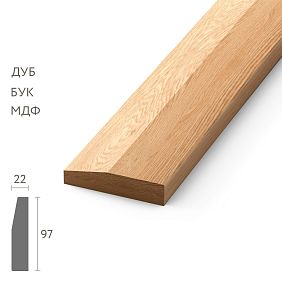


What is MDF baseboard: technology and construction
MDF (Medium Density Fiberboard) is a composite material created from wood fibers compressed under high pressure and temperature with the addition of binding resins. Unlike particleboard, which uses large wood particles, MDF is made from fine-dispersed fibers, ensuring a homogeneous dense structure without voids or delamination.
The production technology of MDF baseboard begins with forming a base strip of the required cross-section from an MDF board with a density of 700-850 kg/m³. The strip is milled on CNC machines to create the profile — from simple rectangular to complex shaped with coves and protrusions. Milling accuracy is ±0.2 mm, ensuring perfect geometry without the warps and bends characteristic of natural wood.
After milling, the base strip receives a decorative coating. This can be melamine or PVC film imitating wood texture, natural veneer 0.5-1 mm thick, or opaque paint (usually white or colored enamel). The coating is applied under a press at 140-180°C, creating a monolithic bond with the base.
Final operations include trimming the strips to standard length (usually 2.4 or 2.6 meters), packaging in shrink film. Some manufacturers equip MDF baseboards with cable channels — milling a cavity on the back side or creating a structure from the main strip and a removable back part.




Advantages of MDF baseboard over plastic: naturalness versus cheapness
Plastic baseboard seems like a practical choice: not afraid of water, cheap, easy to install. But let's be honest: plastic looks cheap. The glossy surface of PVC baseboard reveals artificiality at first glance, imitation of wood texture on plastic resembles a child's toy, and after 3-5 years plastic yellows from ultraviolet light and loses its appearance.
MDF baseboard has significant advantages:
Visual naturalness. Even with film coating, MDF looks more convincing than plastic. Matte surface, embossed film stamping conveying wood pores, absence of plastic shine — all this creates the illusion of natural material. Andveneered MDF baseboardwith natural oak or ash veneer is visually indistinguishable from solid wood — the texture is real.
Eco-friendliness. MDF consists of 85-90% natural wood fibers. Binding resins (usually urea-formaldehyde) constitute 10-15% and comply with emission class E1 (low formaldehyde emission, safe for living spaces). Plastic is 100% synthetic, when heated (underfloor heating) may release phthalates and other volatile compounds.
Strength. MDF with density of 750-850 kg/m³ is stronger than plastic. A vacuum cleaner or furniture leg impact will leave a dent in plastic baseboard, MDF will withstand without damage. MDF doesn't crack from temperature changes, doesn't warp in sunlight.
Acoustic properties. MDF partially absorbs sound, reducing room echo. Plastic reflects sound waves, increasing acoustic discomfort.
Paintability. MDF baseboard can be repainted any color with regular wood paints. Painting plastic is useless — paint will peel at the first touch.
The only advantage of plastic is absolute moisture resistance. But modern moisture-resistant MDF baseboards (more on this below) neutralize even this difference.
Our factory also produces:


Types of MDF baseboard coatings: from budget film to elite veneer
Get Consultation
Film coating: variety of designs
Melamine or PVC film is the most common type of MDF baseboard coating. The film is a thin (0.2-0.4 mm) layer of decorative plastic with printed pattern imitating wood texture, stone, solid colors.
Types of films:
Melamine film — paper impregnated with melamine resin, thermally bonded to MDF. Advantages: low price, variety of designs, matte surface. Disadvantages: low resistance to abrasion, scratches, moisture (edges may delaminate).
PVC film (polyvinyl chloride) — more durable coating, thermoformed by vacuum press. Advantages: high abrasion resistance, moisture resistance, possibility of embossing (3D texture imitating wood pores), durability 10-15 years. Disadvantages: price 20-30% higher than melamine, glossy surface of some films looks artificial.
Eco-veneer (CPL film) is a modern development, a multi-layer film with high-resolution photo printing and a protective polymer layer. The imitation of wood texture is maximally realistic — annual rings, knots, and pores are visible. Advantages: outstanding visual naturalness, high wear resistance, UV resistance (does not fade). Disadvantages: price comparable to veneered skirting boards.
The color palette of film skirting boards is vast: imitations of all wood species (light oak, rustic oak, wenge oak, walnut, ash, beech, cherry, mahogany), solid colors (white, black, gray, beige, all shades of brown), imitations of exotic species (zebrano, rosewood, teak), modern decors (concrete, metal, patina).
Veneered coating: naturalness on an MDF base
Veneered MDF skirting board is an MDF base covered with a thin layer (0.5-1.5 mm) of natural veneer from oak, ash, walnut, beech. Veneer is a slice of natural wood, preserving the living texture, unique pattern, and tactile properties of wood.
Advantages of veneered MDF skirting board: visual and tactile naturalness (indistinguishable from solid wood), possibility of staining with wood stains, coating with oils and varnishes like natural wood, geometric stability (MDF base does not react to humidity like solid wood), price 30-40% lower than solid wood with comparable appearance.
Disadvantages: limited repairability (deep sanding can remove the veneer down to the MDF), price 1.5-2 times higher than film analogues, smaller selection of decors (only natural textures of available wood species).
Painted MDF skirting boards: enamel smoothness
Painted skirting boards are an MDF base coated with several layers of primer and opaque paint (usually polyurethane enamel). The surface is perfectly smooth, the MDF texture is completely hidden.
Most often, painted skirting boards are produced in white — a universal solution for modern interiors, neoclassical, Scandinavian style. White skirting board matches white doors, architraves, creating a unified architectural ensemble. Black, gray, and colored enamels are also available.
Advantages of painted skirting boards: perfect smoothness without texture (a plus for minimalist interiors), coating resistance to washing and abrasion, possibility of repainting in another color. Disadvantages: any scratches and dirt are visible on the smooth light surface, price higher than film ones.
Height of MDF skirting boards: from compact 50 mm to expressive 150 mm
The height of the skirting board determines the visual perception of space and functional capabilities.
Low skirting boards 50-70 mm: modern minimalism
Skirting boards with a height of 50-70 mm are the choice for minimalist interiors, modern style, rooms with low ceilings (2.4-2.5 meters). A narrow skirting board visually continues the wall to the floor, does not break up the space with a horizontal line, and creates a sense of lightness.
Functionally, low skirting boards cover the joint between the floor and wall, protecting the lower 5-7 cm of the wall from dirt and damage. The cable channel in such skirting boards is minimal — usually for 1-2 cables.
Medium skirting boards 80-100 mm: universal classic
Height 80-100 mm is the most popular range, suitable for 90% of residential premises.buy MDF skirting boardSkirting boards with a height of 80 or 100 mm are a fail-safe solution for apartments with ceilings of 2.6-2.8 meters.
Such skirting boards create a harmonious proportion, protect the wall well, and accommodate a cable channel for 3-5 wires. Visually, they rhyme with the standard width of door architraves (90-100 mm), creating stylistic unity.
High skirting boards 120-150 mm: monumentality and status
Skirting boards with a height of 120-150 mm are for rooms with high ceilings (from 3 meters), classic interiors, spaces with massive furniture. A high skirting board creates a sense of solidity, balances wide ceiling cornices and tall doors.
Functionally, high skirting boards accommodate wide cable channels for dozens of wires and protect the wall well at a significant height. In classic interiors, high skirting boards with a shaped profile (beads, rolls) create a ceremonial look.
MDF skirting boards with cable channel: hidden routing of utilities
A modern home is saturated with electronics: internet cables, TV antennas, speaker wires, additional sockets. Routing utilities over skirting boards spoils aesthetics, chasing walls is expensive and dusty. A skirting board with a cable channel is an elegant solution.
Construction of MDF skirting board with cable channel:
Type 1 — with a removable back strip. The main decorative strip is attached to the wall, leaving a gap of 10-20 mm behind it. Wires are laid in the gap, after which it is closed with a narrow strip on clips. Advantage: easy access for adding wires. Disadvantage: visible joint line of the strips.
Type 2 — with a milled groove. Longitudinal grooves for 3-5 cables are milled on the back side of the solid strip. Wires are laid before installation. Advantage: seamless appearance without joints. Disadvantage: inability to add wires after installation.
Type 3 — with a plastic insert. The wooden or MDF strip has a groove where a plastic cable channel is inserted. Advantage: greater capacity (up to 10-15 cables). Disadvantage: the plastic insert is visible.
The size of the cable channel is important. For 2-3 cables, a gap of 10x15 mm is sufficient; for 5-7 cables, 15x20 mm is needed; for complex systems (home theater) — up to 25x30 mm.
Color palette of MDF skirting boards: from classic wood imitations to bold colors
Imitations of natural wood
The most extensive category. Films replicate the textures of all popular wood species:
Oak — dozens of options from light bleached oak (Scandinavian interiors) to dark wenge oak (contemporary). Intermediate shades: natural oak, rustic oak (with knots), antique oak (patinated).
Ash — light wood with a pronounced striped grain, popular in modern interiors.
Walnut — dark brown wood with chocolate tones, suitable for classic studies, libraries.
Beech — light wood with a pinkish tint, creates a warm atmosphere.
Cherry, mahogany — reddish tones for traditional interiors.
Wenge, zebrano — exotic dark wood species for modern dramatic interiors.
Solid colors
White — a universal choice for 50% of modern interiors. White skirting board matches any walls and floors, visually raises the ceiling, creates lightness. White shades: cool white (with a bluish tint), warm white (creamy), milk, ivory.
Black — a dramatic choice for lofts, minimalism, contemporary. Black skirting board on light walls creates a graphic contrast.
Gray — a neutral modern color, dozens of shades from light gray to anthracite. Gray skirting board is ideal for Scandinavian interiors, high-tech.
Colored enamels — beige, brown, blue, green for eclectic interiors, accent solutions.
Modern decors
Concrete imitation — a popular trend for lofts, industrial interiors.
Stone imitation — marble, granite for luxurious interiors.
Metallic — silver, gold, bronze for art deco, glamorous styles.
MDF skirting board installation: mounting systems for any skill level
Mounting on clips (hidden installation)
The most modern and aesthetic method. Plastic or metal clips (clamps) are attached to the wall with dowels or screws at 40-50 cm intervals. The skirting board has a groove on the back side that snaps onto the clip protrusions. The connection is mechanical, sturdy, and the skirting board can be easily removed if necessary (for cable access, repairs).
Clip mounting technology:
-
Marking: along the wall, 2-3 cm from the floor, mark clip mounting points at 40-50 cm intervals.
-
Clip installation: drill holes for dowels (for concrete/brick) or without dowels (for wood) at the marked points, attach clips with screws.
-
Cutting corners: skirting boards are cut at 45° angles in room corners using a miter saw or miter box.
-
Skirting board installation: the plank is placed against the wall, the groove is fitted onto the clips, a light press with the palm — the latch secures the skirting board.
Advantages: completely hidden fastening, easy removal, quick installation. Disadvantages: requires a skirting board with a groove (not all models have it), cost of clips (50-150 rubles per set for 2.5 meters).
Mounting on adhesive: for perfectly even walls
Mounting adhesive (liquid nails, polyurethane adhesive) is applied to the back of the skirting board in a zigzag line or dots. The skirting board is pressed against the wall, held for 30-60 seconds, secured with painter's tape for 12-24 hours until the adhesive fully dries.
Advantages: no visible fasteners, no need to drill walls. Disadvantages: impossible to remove, requires perfectly even walls (gaps form on uneven surfaces), the skirting board is destroyed if re-glued.
Mounting on screws: reliability for uneven walls
Pre-drill 2-3 mm diameter holes in the skirting board at 50-70 cm intervals. Place the skirting board against the wall, drill through the holes into the wall, insert dowels, screw in screws. Sink screw heads 2 mm, cover holes with plastic plugs matching the skirting board color or fill with putty.
Advantages: maximum strength, suitable for curved walls (screws pull the skirting board to the surface), possibility of dismantling. Disadvantages: visible fastening points (even with caps), labor-intensive.
Corner processing: precision of joining
A perfect 45° corner joint requires precision. Room corners are rarely exactly 90° — usually 88-92°. The angle is measured with a protractor and halved. The required angle is set on a miter saw, and the skirting board is cut. The joint is checked dry and adjusted if necessary.
Alternative — ready-made corner elements (internal and external corners, connectors). Skirting boards are cut at 90° and inserted into the corner element. Simpler, but corner elements are visible and disrupt the monolithic appearance.
Comparison of MDF skirting board with solid wood: a rational choice
| Parameter | MDF (film) | MDF (veneer) | Solid wood |
|---|---|---|---|
| Ecological | Medium | High | Maximum |
| Geometry stability | Good | Good | Medium* |
| Durability | 15-20 years | 20-25 years | 30-50 years |
| Moisture resistance | Medium** | Medium** | Low*** |
| Visual naturalness | Medium | High | Maximum |
| Repairability | Low | Medium | High |
| Variety of decors | Maximum | Medium | Low |
| Price | Low | Medium | High |
| Weight | Medium | Medium | Heavy |
| Ease of Installation | Good | Good | Medium |
*Solid wood reacts to humidity and may slightly shrink/swell.
**Moisture-resistant MDF skirting boards have high moisture resistance.
***With protective coating, the moisture resistance of solid wood increases.
When to choose MDF: limited budget, modern interior (where perfect geometry is important), need for a specific color/decor (unavailable in solid wood), wet rooms (moisture-resistant MDF), DIY installation.
When to choose solid wood: premium interior (where the status of natural wood is important), classic style (where the tactile feel of wood is critical), planning for 30+ years durability, desire to restore skirting boards after years.
Moisture-resistant MDF skirting boards: water protection technology
Standard MDF is afraid of water: upon direct contact, it swells, deforms, and delaminates. But modern moisture-resistant MDF skirting boards solve this problem.
Moisture resistance technologies:
Impregnation with paraffin or waxes — wood fibers are impregnated with hydrophobic compounds during MDF board production. Water does not penetrate the structure, and the board does not swell. The density of moisture-resistant MDF is usually higher (850-900 kg/m³).
Moisture-resistant binders — instead of standard urea-formaldehyde resins, melamine-urea or polyurethane resins are used, which are not afraid of moisture.
Protective coating — PVC film or polyurethane enamel creates a waterproof barrier on the surface. It is critical to seal the ends with special mastics.
Moisture-resistant MDF skirting boards are used in bathrooms, toilets, kitchens, hallways (where water drips from shoes in winter), basements. They withstand direct contact with water for up to 4-6 hours without consequences and daily wet cleaning.
Marking: moisture-resistant MDF is labeled HDF (High Density Fiberboard) or has a greenish tint on the end (from impregnation).
Care and maintenance of MDF skirting boards: ease of keeping clean
MDF skirting board is low-maintenance. Regular dry cleaning: once a week wipe with a dry soft cloth or vacuum with a brush attachment. Wet cleaning: every 2-4 weeks wipe with a slightly damp (not wet) cloth with a mild furniture detergent.
What not to use: abrasive powders and hard sponges (scratch the coating), aggressive chemicals (solvents, acetone, chlorine — may damage the film), steam cleaners (high temperature and humidity may peel off the film).
How to remove stains: fresh stains are removed with a damp cloth immediately, old ones — with a mild soapy solution by blotting (not rubbing), grease stains — with dishwashing liquid, marker/pen — with alcohol (carefully, do not rub).
Scratches on the film: minor scratches are polished with felt and furniture polish, deep ones (down to the MDF base) are irreparable — require replacement of the plank or masking with a furniture marker of matching color.
Film peeling: if the film has peeled off at corners or joints, it is re-glued with contact adhesive (e.g., 'Moment') or superglue and pressed with a weight for 24 hours.
Prices for MDF skirting boards per linear meter in 2026
Prices depend on the type of coating, height, presence of cable channel, brand.
MDF with melamine film:
-
Height 60-80 mm, simple profile: 80-150 rub/m
-
Height 100 mm, simple profile: 120-200 rub/m
-
Height 120-150 mm, figured profile: 200-350 rub/m
MDF with PVC film:
-
Height 60-80 mm: 150-250 rub/m
-
Height 100 mm: 200-350 rub/m
-
Height 120-150 mm: 300-500 rub/m
MDF with eco-veneer (CPL):
-
Height 80-100 mm: 300-500 rub/m
-
Height 120 mm: 450-700 rub/m
Laminated MDF:
-
Oak, height 80-100 mm: 500-800 rub/m
-
Oak, height 120 mm: 700-1200 rub/m
-
Ash, beech, height 100 mm: 600-1000 rub/m
Painted with enamel (white):
-
Height 80-100 mm: 250-450 rub/m
-
Height 120-150 mm: 400-700 rub/m
Moisture-resistant MDF:
-
Surcharge of 20-40% to standard prices
Installation cost: 150-400 rub/m depending on the method (cheaper on clips, more expensive on self-tapping screws with sealing).
Frequently asked questions about MDF skirting boards
Can MDF skirting be used in the bathroom?
Yes, but only moisture-resistant (HDF) with sealed ends. Regular MDF in the bathroom will swell from moisture in a few months. Moisture-resistant withstands a humid environment for years.
What makes MDF better than plastic skirting?
MDF looks more natural (especially with high-quality film or veneer), stronger (does not crack from impacts), more environmentally friendly (90% natural wood fibers), better acoustically (absorbs sound). Plastic is cheaper and more moisture-resistant.
How to cut MDF skirting at 45° without a miter saw?
Use a miter box — a device with slots for 45° and 90° angles. The skirting is placed in the miter box, a fine-toothed saw (for metal) is inserted into the 45° slot, and carefully cut. The cut becomes even with some practice.
Can MDF skirting be painted?
Yes. Skirting boards with film need to be pre-sanded with fine sandpaper (P220-P320) for adhesion, primed, and painted with acrylic paint in 2-3 coats. Painted and veneered skirting boards are painted like regular wood.
How long does MDF skirting last?
Under normal conditions (living rooms, regular cleaning): skirting boards with melamine film — 10-12 years, with PVC film — 15-18 years, veneered — 20-25 years, painted with enamel — 15-20 years.
How to choose the height of skirting board?
Rule: skirting board height should be 3-5% of wall height. For a 2.7 m ceiling: 81-135 mm, practically — 80, 100 or 120 mm. Low ceilings — narrow skirting (60-80 mm), high ceilings — tall skirting (100-150 mm).
What to do if skirting board pulls away from uneven wall?
Gaps up to 5 mm are filled with acrylic sealant (clear or matching skirting color), smoothed with a wet finger. Gaps 5-10 mm are first packed with foam backer rod, then sealed. Gaps over 10 mm indicate need for wall leveling.
MDF skirting or wooden — which is better?
For budget and modern interiors — MDF (more stable, cheaper, more decor options). For premium interiors and classic style — solid wood (more prestigious, durable, natural tactile feel). Veneered MDF — compromise: appearance of solid wood, stability of MDF.
Where to buy quality MDF skirting boards?
From specialized manufacturers of wood and composite products. Company STAVROS offers MDF skirting boards of various heights, profiles, decors — from oak and ash imitations to white enamels.
Company STAVROS: woodworking technologies serving your comfort
A quarter century of experience — not just a number. It's thousands of projects, millions of meters of installed skirting, hundreds of thousands of satisfied clients. STAVROS started with solid wood product manufacturing but always monitored technological innovations. When MDF technologies reached a level enabling premium-class products, STAVROS implemented them in production.
STAVROS production base in Moscow region is equipped with modern equipment for processing both solid wood and composite materials. High-precision CNC milling machines form skirting profiles with ±0.2 mm accuracy. Press lines apply decorative coatings under pressure and temperature, creating monolithic bonding of film or veneer to MDF base. Multi-stage quality control filters defective products during production.
STAVROS skirting range covers full spectrum of needs: from budget MDF with melamine film to elite solid oak skirting. MDF skirting boards feature dozens of decors — imitations of all popular wood species, white enamels, colored options. Heights from compact 60 mm to monumental 150 mm, profiles from simple to complex shaped.
STAVROS pays special attention to veneered MDF skirting — product combining naturalness of solid wood with composite stability. Natural oak, ash, walnut veneer 0.6-1 mm thick is glued to perfectly milled MDF base. Result is visually and tactilely indistinguishable from solid wood, but price is 30-40% lower, and geometry remains stable under any conditions.
Logistics is impeccably refined: delivery in Moscow and region — same day or next day with own transport, to regions — via reliable transport companies. Skirting boards are packed in shrink film protecting from scratches and dirt, ends covered with cardboard corners.
Consultation support — STAVROS hallmark. Specialists help select skirting matching your flooring (laminate, parquet, tile), interior style, budget. Calculate required quantity considering all corners, openings, cutting allowance. Suggest optimal installation method for your walls. Showroom displays samples of all decors, can be matched to your floor and door samples.
For professional builders and designers STAVROS offers special conditions: wholesale discounts from 15%, payment deferral, delivery to site at convenient time, technical support at all project stages.
Choosing STAVROS, you get not just skirting boards, but full service package: from consultation to delivery, from wide assortment to quality guarantee. Create interiors where every detail is considered, where beauty combines with functionality, where modern technologies serve your comfort. With STAVROS products, your home achieves completeness and harmony.