Article Contents:
- 1. Why Skirting Board is Important in Design
- 2. Features and Advantages of MDF as a Material
- 2.1. What is MDF
- 2.2. Advantages of MDF baseboards
- 3.1. Main Feature of the "Paintable" Variant
- 3.2. Who Is Suitable for MDF Skirting Board for Painting
- 4.1. Material Quality
- 4.2. Shape and Height
- 4.3. Price
- 4.4. Accessories and Mounting System
- 6.1. Types of Paint
- 6.2. Color Selection
- 6.3. Painting Technique
- 7.1. Work Sequence
- 7.2. Installation "Before" or "After" Wall Painting
- 9.1. Floor
- 9.2. Walls
- 9.3. Ceiling and Doorways
- 10.1. Classic
- 10.2. Modern
- 10.3. Minimalism and High-Tech
- 10.4. Loft
- 10.5. Provence and Country
- Myth 1: "MDF is not durable"
- Myth 2: "Paintable is too troublesome"
- Myth 3: "Cheap looks good"
- Myth 4: "Hard to install"
- Key Points:
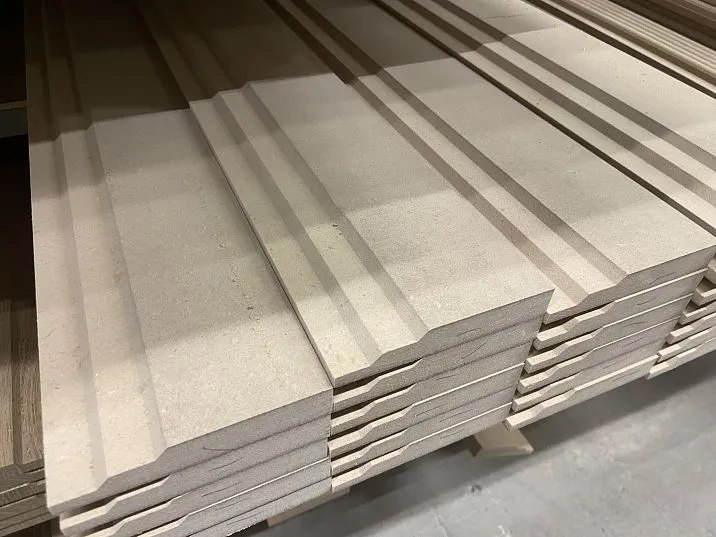
Modern renovation is hard to imagine without skirting. This element performs not only a decorative, but also a practical function: it covers the junction between the floor and the wall, protects the lower part of the walls from damage, and gives the room a finished look. There are many materials from which skirting boards are made: wood, plastic, polyurethane, aluminum. However, in recent years, MDF has been gaining increasing popularity— is a horizontal element that frames the room at the bottom of the walls where the wall meets the floor. Skirting boards perform several functions: they hide the technological gap between the wall and floor covering (necessary for thermal expansion), protect the lower part of the wall from mechanical damage, create visual completion, and may conceal wiring.allowing to create an ideal finish, perfectly adapted to the individual style of the room. In this article, we will examine the features of MDF skirting boards, explain why the "paintable" option is so popular, consider aspects of selection, installation, maintenance, and share recommendations on combining with other interior elements.


1. Why skirting is so important in design
Many perceive skirting as a detail that merely completes the floor finish and serves as a transition to the wall. But in reality, its role is much broader:
- Wall protection: the lower part of the wall is often subjected to impacts during cleaning, floor mopping, and furniture rearrangement. Skirting takes on these loads, preventing scratches and chips on wall finishes.
- Cable concealment: modern models (including MDF) feature channels that allow hiding cables and wires while maintaining the room's aesthetic appeal.
- Unified style: a well-chosenSkirting emphasizes the interior's stylistic direction, making the space more harmonious and complete.
- Proportional correction: the right height and color of skirting can visually expand a room or "raise" the ceiling, influencing the perception of the room's size.
Thus, skirting performs not only a functional, but also an important decorative role, making its selection one of the key stages in the renovation process.




2. Features and advantages of MDF as a material
Our factory also produces:


2.1. What is MDF
MDF (Medium Density Fiberboard) is a medium-density wood fiberboard obtained by pressing wood fibers at high temperature and pressure with the addition of binding agents. The result is a homogeneous and sufficiently strong material with characteristics close to natural wood, but without its main drawbacks (knots, cracks, and other defects).
Get Consultation
2.2. Advantages of MDF skirting boards
- Homogeneous structure. Unlike wood, MDF does not contain knots, voids, or inconsistencies, ensuring dimensional and shape stability.
- Strength and durability. Under normal operating conditions, MDF skirting board does not deform or crack, especially if it is coated with a protective layer.
- Ecological safety. Modern MDF production technologies allow the content of formaldehyde resins to be minimized. Many well-known manufacturers comply with European standards (E1, E0).
- Ease of processing. MDF is easy to cut, sand, and paint or veneer, making it an excellent choice for those who enjoy experimenting with design.
- Optimal price-to-quality ratio. MDF skirting board is more cost-effective than solid wood alternatives, while its appearance and performance properties often match or exceed more expensive solutions.
3. MDF skirting board for painting: what it is and how it differs
When we talk about MDF skirting boards, we have several finishing options:
- Laminated: covered with a special film imitating wood or other materials.
- Veneered: covered with a thin layer of natural veneer, giving the skirting board the appearance of solid wood.
- Painted: coated with paint or enamel at the factory, with a specific color.
- For painting: lacks a final finish, allowing you to choose and apply any color yourself.
3.1. Main feature of the "for painting" variant
— is a horizontal element that frames the room at the bottom of the walls where the wall meets the floor. Skirting boards perform several functions: they hide the technological gap between the wall and floor covering (necessary for thermal expansion), protect the lower part of the wall from mechanical damage, create visual completion, and may conceal wiring. This is an item with only a primer layer or special coating applied to its surface, preparing it for further painting. Such skirting board allows the owner to:
● Choose the paint color and texture independently.
● Match the skirting board's shade to an existing or future interior (e.g., to match wall, door, or furniture colors).
● Experiment with design techniques (apply patterns, use different types of paint, etc.).
● Refresh the skirting board's appearance when changing the interior, without replacing the item itself.
3.2. Who is suitable for MDF skirting board for painting
- For experimenters. If you frequently change wallpaper, wall paint, or decor, skirting board for painting allows you to adapt to new solutions without full replacement.
- For professional designers. Such skirting board offers maximum creative freedom, as you can combine shades, create vintage effects, or make contrasting inserts.
- For detail-oriented owners. Sometimes it is difficult to find skirting board that exactly matches the floor or wall color. "For painting" is the ideal solution in such cases.
4. Criteria for choosing MDF skirting board for painting
4.1. Material quality
● Smooth and even surface. The item must not have chips, cracks, or noticeable deformations.
● Density. The higher the MDF density, the better it withstands mechanical loads.
● Environmental standards. Ask the seller which formaldehyde emission class the product belongs to (E1, E0).
4.2. Shape and height
- Low skirting board (40–60 mm) – suitable for small rooms with low ceilings, where it is important not to "weigh down" the space.
- Medium (60–80 mm) – universal option, suitable for most apartments and houses.
- High (80–120 mm and above) – ideal for spacious rooms with high ceilings, where a substantial skirting board creates an effect of elegance and sophistication.
Also pay attention to the skirting board profile: it can be completely flat (minimalist) or decorative (classic, with relief). The choice depends on interior style and personal preferences.
4.3. Price
Formed from several factors:
● Thickness and density of MDF.
● Manufacturer and brand.
● Additional stains and primer layers.
● Height and complexity of the profile.
To avoid overpaying, compare offers from several stores and keep in mind that bulk purchases (e.g., for an entire house) may offer a favorable discount.
4.4. Accessories and mounting system
Check what mounting options the manufacturer offers:
● Mounting with adhesive (liquid nails) – quick and simple method, but may present difficulties on uneven walls.
● Mounting with clips – allows for quick removal of the skirting board (e.g., to run new wires) if needed.
● Screws or nails – traditional method providing strong connection, but requires additional masking of screw heads.
Also pay attention to the presence of corner pieces, caps, and other accessories that simplify installation and make the appearance more neat.
5. Preparing skirting board for painting
If you have purchased a skirting board already primed, no special preparation is required. However, in some cases additional treatment may be needed:
- Sanding. If there are minor irregularities or roughness, lightly sand with fine-grit sandpaper (e.g., P180–P240) to achieve a perfectly smooth surface.
- Degreasing. Before painting, wipe the skirting board with a damp cloth soaked in a mild soap solution, then dry it thoroughly. This removes dust, grease stains, and other contaminants.
- Priming. Some skirting boards are already primed, but if not, apply a special primer for MDF. This improves paint adhesion and extends the lifespan of the finish.
6. Choosing paint and painting technique
6.1. Types of paint
- Acrylic. Water-based, virtually odorless, dries quickly, and has high elasticity. Popular choice for residential spaces.
- Alkyd. Forms a durable coating resistant to abrasion, but has a stronger odor and longer drying time.
- Polyurethane. Used when an exceptionally strong and wear-resistant surface is required. Typically used in commercial or public spaces.
When choosing paint, consider the room’s usage conditions: humidity level, load intensity, and cleaning frequency. Acrylic paints are most commonly chosen for living rooms due to their eco-friendliness and ease of use.
6.2. Color selection
● Matched to walls. Visually expands space, smooths boundaries, creates a sense of continuity.
● Matched to floor. Draws attention to the flooring, may visually expand the room.
● Contrast. The skirting board becomes a striking interior detail, stands out against walls and floor. Especially effective in modern minimalist styles.
6.3. Painting technique
- Brush. Suitable for decorative profiles with many relief elements. However, may leave bristle marks and streaks.
- Caulk. Fast way to apply paint, provides even coverage. Ideal for smooth-surfaced baseboards.
- Sprayer. Provides even and thin coverage, but requires certain skills and additional equipment.
Before applying paint, it is recommended to test it on a small area to ensure the correct shade and application method.
7. Installing MDF baseboard for painting
7.1. Work sequence
- Room preparation. Clean walls and floor of dust, remove all unnecessary items.
- Marking. Measure the room's perimeter, determine the number of baseboards, accounting for corner and cut allowances (about 5–10%).
- Cutting. Using a miter saw or miter box, cut baseboards to the required angle. Pay special attention to external and internal corners.
- Painting (if necessary). If it is more convenient to paint baseboards before installation (especially when processing all relief elements), do so in advance. However, some prefer to paint baseboards after installation to perfectly match them to wall color.
- Mounting. Depending on the chosen method (adhesive, clips, screws), fix the baseboards along the walls. Ensure they fit as tightly as possible.
- Joint sealing. If necessary, use putty or paint-matched sealant to cover gaps and fastening points.
7.2. Installing baseboard before or after wall painting
There is no strict rule here, but there are two main strategies:
● Baseboard first, then walls. Baseboard is installed and painted, then walls are painted, covering baseboard with painter’s tape.
● Walls first, then baseboard. Walls are painted first, then baseboard is installed and painted (if not yet painted).
Both options are viable. It all depends on convenience and project specifics. If walls are already painted or wallpapered, you can paint baseboard before installation and then carefully mount it.
8. Care for MDF baseboard for painting
Painted MDF baseboard surface is usually low-maintenance, but it is advisable to follow a few recommendations:
- Regular cleaning. Wipe baseboard with dry or slightly damp soft cloth to remove dust and minor dirt.
- Avoid aggressive cleaners. Abrasive powders or stiff brushes may damage the paint layer.
- Water resistance. MDF poorly withstands prolonged contact with water, so when cleaning floors, avoid leaving puddles at wall base. If a leak or flood occurs, after resolving the issue, be sure to dry the baseboards thoroughly.
- Touch-up. If baseboard has chips or scratches, they can easily be repainted with the same paint used initially. If full repainting is needed, simply sand off the top paint layer, re-prime (if necessary), and apply a new coat.
9. Combining baseboard with other interior elements
9.1. Floor
- Parquet, laminate, engineered wood. Baseboard painted to match floor color creates an effect of floor continuation on walls. Conversely, a contrasting option highlights the boundary.
- Tile. If you have tiled flooring (e.g., in kitchen or bathroom), baseboard can be painted to match tile or wall color. It is important that the paint’s water resistance matches the usage conditions.
9.2. Walls
● Wallpaper. If wallpaper has an active pattern, baseboard is better to be single-colored to avoid overloading the interior.
● Paint. Here you can play with contrast or choose matching tone. If desired, baseboard can be painted with the same paint as walls, achieving perfect match.
9.3. Ceiling and door openings
● Ceiling skirting: sometimes designers prefer to use MDF forCeiling skirtingto paint the ceiling skirting in the color of the ceiling or make it contrasting, if this corresponds to the concept.
● Door casings: if the doors and casings are painted, thenMDF Skirting Board can be painted the same color to create a visual 'frame' around the perimeter of the room.
10. Interior styles and the role of skirting
10.1. Classic
Here, high skirting with decorative profiles are often used, painted white or cream. They emphasize the elegance and respectability of the room, especially when combined with heavy door casings and moldings.
10.2. Modern
Smooth lines and natural motifs. The skirting can be painted with a soft satin finish, highlighting the elegant shapes of furniture and the overall 'flowing' character of the space.
10.3. Minimalism and high-tech
For minimalist interiors, straight lines and monochromatic surfaces are characteristic. Here, a flat skirting painted in the color of the walls or floor (usually white, gray, black) is ideal. This solution creates a visual lightness and spaciousness.
10.4. Loft
A style combining rough surfaces (brick, concrete, metal) with elements of industrial aesthetics. The skirting can be painted in gray, black, or metallic shades. In some cases, conversely, a white skirting is used to contrast with dark walls and emphasize the rawness of the environment.
10.5. Provence and country
Warm pastel shades, weathered surfaces, floral motifs. The skirting can be painted in soft beige, blue, or greenish tones, using patina or brushwork techniques to give it the appearance of aged wood.
11. Common misconceptions about MDF skirting for painting
Myth 1: 'MDF is not durable'
Modern MDF panels are produced using high-tech processes and impregnations, making them quite resistant to deformation and moisture. When installed and maintained properly, MDF skirting can last for many years.
Myth 2: 'Painting is too troublesome'
In fact, painting skirting is no more complicated than painting walls. If you follow the recommendations for priming and paint selection, the result will delight you with its aesthetics and durability. Moreover, 'paintable' offers more creative freedom.
Myth 3: 'Cheap-looking'
A quality MDF skirting, properly installed and coated with good paint, can look no worse than expensive wooden counterparts. The issue is only in the quality of execution and material.
Myth 4: 'Hard to install'
Installing MDF skirting is little different from installing skirting from other materials. If the walls are reasonably flat, there will be no problems. And if necessary, you can use professional services.
12. Saving without sacrificing quality
For those who wantBuy skirting board and save, but without wanting to sacrifice quality, there are several recommendations:
- Seasonal sales. Retailers and online stores regularly hold promotions where skirting can be purchased at a reduced price.
- Domestic manufacturers. Often offer products comparable in quality to foreign brands, but at a more affordable price.
- Bulk purchase. If a large area is to be renovated, it is better to buy all the required skirting at once — this can provide an additional discount.
- Choosing the optimal height and profile. Complex profiles and large height increase material consumption and, accordingly, cost.
13. Painting and restoration options
One of the main advantagesPaintable skirting board – the ability to update its appearance without changing the item:
● Color change. If you decide to replace wallpaper or repaint walls, you can easily repaint the skirting board to a new shade without removing it (just protect the floor and walls with painter’s tape).
● Restoration of damage. In case of chips or scratches, it is enough to fill the defect with putty and repaint the area. This is especially relevant for families with children or pets, where the risk of mechanical damage is higher.
14. Installation in non-standard rooms
Not all rooms have perfectly flat walls and straight angles. In older houses, as well as in modern spaces with complex geometry (bay windows, arched openings), additional techniques may be required:
- Custom fitting. Use a try square, a circular saw, and measuring tools to accurately measure each angle. Sometimes angles may differ from 90° (or 45°), so a more flexible approach will be needed.
- Use of flexible skirting boards. On the market, there are MDF skirting boards with special grooves that allow them to bend to a certain radius. However, their cost is usually higher, and the range of shapes is limited.
- Combining materials. In particularly complex areas (for example, curved wall sections), you can use polyurethane inserts, painting them the same color as the MDF skirting board.
15. Paintable MDF skirting board and the modern market
Today, the market of finishing materials is constantly evolving. New technologies are emerging that allow improving the operational characteristics of MDF skirting boards:
● Moisture-resistant impregnations. Increase resistance to humidity, which is especially relevant for kitchens, hallways, and even bathrooms (provided proper sealing is applied).
● Antibacterial additives. Help combat mold and fungi, maintaining hygiene in rooms with high humidity.
● Integrated lighting. Some modern models feature special grooves for LED strip lights, allowing for original design solutions.
All this indicates thatMDF Skirting Board, including the paintable variant, – is not just a practical, but also a technologically advanced product that will remain relevant for a long time.
16. How to avoid mistakes when selecting and installing
- Incorrect height. A too-high skirting board in a small room 'steals' space, while a too-low one disappears in a spacious hall with high ceilings.
- Incorrect color selection. Choose the shade taking into account the color of the floor, walls, and doors. If unsure, opt for neutral options (white, gray).
- Poor wall preparation. Uneven walls complicate installation, causing the skirting board to detach and form gaps. If necessary, level the walls with putty or plaster.
- Too sharp fluctuations in humidity and temperature. MDF does not like extreme conditions. If the room is not heated in winter or, conversely, is too humid, use special moisture-resistant models and sealants.
17. Answers to frequently asked questions
Question: Can paintable MDF skirting boards be used in a bathroom?
Answer: Provided that humidity does not constantly exceed normal levels, and the skirting board receives proper protection (primer, water-resistant paint, sealing of joints), this is possible. However, it should be remembered that prolonged contact with water may damage MDF.
Question: How many layers of paint are needed?
Answer: Usually, two layers (after priming) are sufficient. If the skirting board’s color differs radically from the original or the coating is translucent, a third layer may be required.
Question: How often should the skirting board be repainted?
Answer: It depends on the conditions of use and the quality of paint. On average, a painted finish can last 5–7 years without significant changes.
Question: Can the skirting board be painted after installation on the wall?
Answer: Yes, many prefer this method to match the skirting board color with the wall color or to adjust the shade more precisely.
18. Advantages of paintable MDF skirting boards compared to other types
- Design flexibility. Ability to choose and change color, combine with any wall coverings.
- Repairability. In case of damage, it is enough to repaint the affected area, rather than replace the entire skirting board.
- Cost-effectiveness. Compared to solid wood, MDF is cheaper, and in terms of performance characteristics, it is largely similar.
- Wide variety. Diversity of shapes, profiles, and heights.
19. Conclusion: why paintable MDF skirting boards are an excellent solution
In conclusion, it should be emphasized that— is a horizontal element that frames the room at the bottom of the walls where the wall meets the floor. Skirting boards perform several functions: they hide the technological gap between the wall and floor covering (necessary for thermal expansion), protect the lower part of the wall from mechanical damage, create visual completion, and may conceal wiring. – ideal choice for those who value individuality and wish to fully customize the interior to their taste. The ability to choose the shade yourself and easily change it when needed provides great design freedom. Moreover, MDF skirting boards are characterized by strength, resistance to deformation, affordable price, and ease of installation.
With proper installation and careful maintenance, such a skirting board will serve for many years, maintaining its flawless appearance and protecting walls from damage. If you love experimenting with colors and textures, plan to change the interior without major expenses, then the paintable option is exactly what you need.
Key points:
- Paintable MDF skirting board – a combination of functionality and design freedom.
- Before purchasing, it is important to consider the material quality, height, shape, and installation method.
- Preparation for painting involves light sanding, degreasing, and (if necessary) priming.
- For painting, you can use various types of paint, selecting them according to the conditions of use.
- Installing the skirting board is not difficult, but requires care during cutting and joining.
- Care for painted skirting boards is simple: regular cleaning and timely repair of damage.
- Paintable MDF skirting boards combine well with any interior style – from classic to loft.
- The ability to repaint the skirting board when changing the design saves money and time.
Thus, if you aim for an interior that looks finished yet allows for creativity, confidently choose paintable MDF skirting boards. This solution combines practicality, durability, and incredible versatility, allowing each person to feel like a designer of their own space.