Article Contents:
- Which MDF Skirting Board to Choose for the Task
- MDF Skirting Board for Floor: A Classic Task
- Skirting Board for Interior with MDF Panels
- Skirting Board for Painted Walls
- Skirting Board for Door Frames and Doors
- Main Types of MDF Skirting Boards: From White to Hidden
- White MDF Skirting Board
- Paint-Ready MDF Skirting Board
- MDF Skirting Board in Wood and Oak Color
- MDF skirting board with cable channel
- Straight MDF skirting board
- Wide MDF skirting board
- Hidden MDF skirting board
- MDF skirting board dimensions: how to choose the right profile
- Height is the main parameter
- Thickness and length
- MDF skirting board 80 and 100 mm: when to switch to wide formats
- How to match MDF skirting board with different finishes
- With MDF panels and wall decorative panels
- With architraves and door frames
- With laminate and quartz vinyl
- With parquet and engineered board
- MDF skirting board price: what it depends on
- Density and quality of MDF base
- Type of finish
- Profile height
- Constructive features
- Length of the strip
- MDF, duropolymer, polystyrene or wood: which is better
- How to buy skirting board for MDF without mistakes: step-by-step algorithm
- Step 1: Determine the height to the ceiling
- Step 2: Determine the finish coating
- Step 3: Select a profile by style
- Step 4: Check compatibility with architraves and doors
- Step 5: Calculate the volume
- Step 6: Order from the catalog
- Installing MDF skirting boards: basic principles
- About the Company STAVROS
- FAQ: Answers to Popular Questions

Some things seem simple right up until you have to make a choice. Skirting boards are one of them. While renovations are underway, they're hardly thought about. But when everything is ready and you need to put the finishing touch—it turns out there are dozens of options, and which one to choose for a specific interior, specific floor, and specific walls with MDF finishing—is completely unclear.
Skirting board for MDF—is not just a skirting board made of MDF. It's a profile that works organically in interiors with MDF finishing: with panels, architraves, doors, and painted surfaces made from this material. It creates a unified system where the lower horizontal line of the space harmonizes with all the other decor.
This article is a complete practical breakdown. Which MDF Skirting Board to choose for the floor, for an interior with panels, for painting, in white or a specific shade. How to read the size range, what affects the price, how MDF differs from wood and duropolymer—and where buy MDF skirting board so that the result meets expectations.




Which MDF skirting board to choose for the task
Let's start not with the material or color, but with the question that is actually primary: why do you need this skirting board? The answer to it determines everything else.




MDF floor skirting board: a classic task
The most common scenario isMDF skirting for flooras a finishing element of the floor covering. Technically, it covers the expansion gap between the floor and the wall and simultaneously creates a horizontal visual line at the bottom of the room.
The key parameters here are: height (depends on ceiling height), tint (to match the floor, wall, or doors), profile (smooth or with relief). No technical complexities — if chosen correctly.
Requirement for MDF skirting board at the floor: thickness of at least 14–16 mm for mechanical strength at the lower edge. Thinner profiles easily deform upon lateral impact. Material density — from 750 kg/m³, otherwise the end will swell when wet after the first damp cleaning.
Our factory also produces:


Skirting board for interiors with MDF panels
When walls are finished with MDF panels, a skirting board made of the same material is a logical paired solution. Uniform nature, uniform surface for painting, identical behavior under temperature and humidity changes.
Installation peculiarity: the MDF panel protrudes beyond the wall plane by the thickness of the panel itself — usually 12–18 mm. The skirting board must either overlap the lower end of the panel or be attached to the wall flush with it. If this point is not considered — an unsightly step will form at the base of the wall.
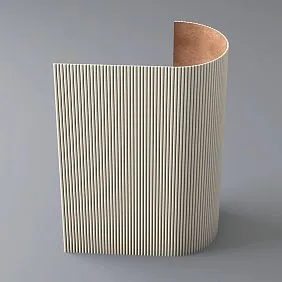
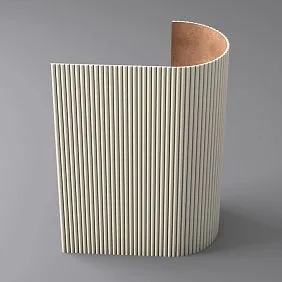
Combinationslatted panels made of MDFwith wall finishing and skirting board made of the same material for unified painting — is one of the cleanest and most professional modern solutions.
Get Consultation
Baseboard for painted walls
In interiors with painted walls — without panels, with clean planes — MDF baseboard for painting to match the wall color becomes an architectural element that works to increase height. A white baseboard on a white wall — the lower boundary 'disappears,' the space appears taller.
Or — a contrasting baseboard matching the floor color on a white wall: a horizontal accent that ties the space to the floor, creating a visual 'foundation' for the room.
Both approaches are workable. But both require the skirting board to be prepared for final paint—that is, primed, with a smooth, fine-pored surface.
Skirting board for architraves and doors
MDF skirting board harmonizes organically with MDF architraves and door frames made of the same material. This is called a 'system': skirting board and architrave—made from one material, in one tint, with coordinated profiles. Such a system creates a sense of an expensive, cohesive interior.
Important:MDF moldingsis produced in several style groups—modern, transitional, classic. Skirting board and architraves should be from the same group, otherwise the profiles conflict visually even with the same color.
Main types of MDF skirting boards: from white to concealed
The MDF skirting board market offers several fundamentally different categories. Let's examine each honestly—without unnecessary words, but without oversimplification.
White MDF skirting board
A white MDF baseboard creates visual continuity with white door casings, white ceiling cornices, and white window frames. When all architectural details are executed in the same color, they form a unified system, a spatial framework that connects disparate elements — floor, walls, ceiling, furniture — into an integral composition. This technique is fundamental to Scandinavian design, where white architectural decor creates a light shell within which the most diverse colors and textures can coexist.—the most mass category. Produced with factory white coating: PVC film, acrylic enamel, or powder coating. Ready for installation without additional painting.
Technical characteristics: MDF board with density 750–820 kg/m³, finish coating—PVC film 0.2–0.3 mm or two-component enamel. Standard plank length—2400 mm, less often 2800 mm.
Advantage: fast, predictable, does not require additional work. Limitation: color strictly white, without the possibility of precise color customization for a specific interior.
For modern white interiors with light walls — the perfect choice. For design projects requiring precise color matching — a paintable skirting board is better.
MDF skirting board for painting
— is a horizontal element that frames the room at the bottom of the walls where the wall meets the floor. Skirting boards perform several functions: they hide the technological gap between the wall and floor covering (necessary for thermal expansion), protect the lower part of the wall from mechanical damage, create visual completion, and may conceal wiring.— a primed blank without a finish coat. The surface is prepared for applying acrylic or water-based paint. The fine-porous MDF structure, when properly primed, accepts enamel without soaking the substrate — resulting in a smooth finish without texture showing through.
The main advantage is customization. Any color from the RAL, NCS, Pantone catalog. This is precisely what cannot be achieved with a factory-white or wooden skirting board.
Usage scenario: a design project with an exact wall color. The primed skirting board is painted the same shade as the wall — the horizontal line dissolves. Or in a contrasting color — the horizontal line is emphasized. Either of these approaches specifically requires a paintable skirting board.
MDF skirting board with wood effect and in oak color
Skirting board with a laminated coating imitating wood texture — oak, walnut, ash, beech. The embossed surface of the PVC film reproduces the wood grain pattern.
Application: with laminate flooring imitating wood. The visual effect is convincing enough from a distance. Upon close inspection — film is film, and it does not resemble natural wood in any way.
An alternative with a fundamentally different visual result —Skirting made of solid woodoak or beech. Real texture, oil or stain tinting, expressive wood grain pattern — this is a completely different experience in an interior.
MDF skirting board with cable channel
Design feature: a hidden channel for routing electrical cables, twisted pair, or coaxial cables is built into the skirting board profile. Remove the decorative cover—and the cable is laid in a concealed niche.
Application: when concealed wiring is needed for LED furniture lighting, outlet lines, or signal cables without wall chasing.
Limitation: the cable channel cross-section is usually small—16×10 mm or 20×12 mm. For 2.5 mm² power cables—a maximum of 2–3 wires. For installing high-power lines, specialized cable skirting boards with a larger channel cross-section are required.
Straight MDF skirting board
A 'straight' skirting board is a rectangular profile with no relief on the front plane. An absolutely smooth surface, clean straight angles, no decorations.
This is an architectural element of a modern minimalist interior. The straight profile doesn't distract the eye, working as a clean geometric line. In Scandinavian style, loft, modern classic—exactly this one.
Installation nuance: a straight profile requires a perfectly level floor and wall. The slightest unevenness—and the gap at the straight skirting board is much more noticeable than with a profile with a rounded base.
Wide MDF skirting board
Height from 100 mm—category 'wide'. It creates a distinct horizontal architectural line, scales the space, in combination withslatted wall panelsworks as a lower framing element.
A tall, wide MDF skirting board 120–150 mm is already a serious design tool. In rooms with ceilings from 3 meters, it creates a sense of a rich architectural interior at a relatively low linear meter cost.
Hidden MDF skirting board
Hidden (shadow, floating) skirting board — a special construction that visually creates a 'floating wall' effect. The profile is mounted with a gap from the wall, forming a shadow gap of 10–20 mm between the wall and the skirting board. The eye perceives this as a gap between the wall and the floor.
Popular in modern minimalist projects. Technically demanding regarding the quality of walls and floors — irregularities become noticeable.
MDF skirting board dimensions: how to choose the right profile
Height is the main parameter
Height of MDF skirting board— it is an architectural proportion that cannot be chosen arbitrarily. It is always tied to the ceiling height.
| Ceiling Height | Recommended MDF baseboard height |
|---|---|
| Up to 2.5 m | 55–70 mm |
| 2.5–2.7 m | 70–80 mm |
| 2.7–3.0 m | 80–100 mm |
| 3.0–3.5 m | 100–120 mm |
| over 3.5 m | from 120 mm |
MDF skirting board 60 mm — a standard solution for a standard apartment with a 2.5-meter ceiling. Neutral, neat, not claiming a decorative role.
MDF skirting board 80 mm — already more noticeable, suitable for apartments with a ceiling of 2.7–2.8 meters. Pairs well with modern MDF architraves with a height from 60 mm.
MDF skirting board 100 mm — an architectural solution. Creates a pronounced horizontal line. In rooms with a ceiling below 2.8 meters, it looks heavy — too substantial for a small space.
MDF skirting board 120 mm — for rooms from 3 meters. In neoclassical and modern interiors with rich finishes.
Thickness and length
Standard thickness of MDF skirting board is 14–18 mm. Less than 14 mm risks sagging during installation without frequent fastening. Optimal is 16 mm.
Standard length is 2400 mm (2.4 meters per strip). Some manufacturers produce 2800 mm strips — convenient for spacious rooms, reduces the number of joints.
MDF skirting board dimensionsWhen ordering, check not only the height but also the thickness — this determines how well the skirting board will adhere to the wall with its irregularities.
MDF skirting board 80 and 100 mm: when to switch to wide formats
MDF skirting board 80 mm — optimal format for most modern Russian apartments with ceilings 2.7–2.8 meters. It is expressive enough to create a horizontal line, and neat enough not to overwhelm the space.
Switch to the 100 mm format when:
-
ceiling is higher than 2.8 meters;
-
interior is richly finished — wooden panels, slatted walls, expensive doors;
-
A pronounced architectural accent is needed at the base of the wall;
-
Classical or neoclassical style is used.
How to combine MDF skirting with different finishes
With MDF panels and wall decorative panels
MDF skirting with MDF panels is an organic paired solution. Same material, same painting, same geometry. When applying the same enamel, the surfaces are practically indistinguishable in texture.
Tip: It's better to paint the skirting and panels simultaneously — from the same can of the same batch of paint. Even minor differences in pigmentation between different batches can cause a noticeable color shift.
Wall slatted panels+ MDF skirting at the base is a popular solution for modern interiors. The battens create a vertical rhythm, the skirting holds the lower horizontal. When everything is painted the same color — the wall looks like a complex architectural surface, not just a finish.
With architraves and door frames
Skirting and architrave should be stylistically coordinated. If the architrave has a truncated 'modern' profile — the skirting should have a straight or minimal profile. If the architrave has a figured relief — the skirting should have a similar relief character.
MDF moldingsis produced in stylistic lines where skirting, architrave, cornice, and molding form a coordinated ensemble. Ordering everything from the same line is a rule that eliminates most design errors.
With laminate and quartz vinyl
MDF skirting board for laminate is the most common combination. Color balance is important here:
-
for light laminate oak/ash — white or light beige skirting board;
-
for dark laminate wenge/walnut — skirting board in a dark tone or white as an intentional contrast;
-
for gray laminate under concrete — gray skirting board or white for light walls.
The installation technique is unchanged: skirting board — to the wall, not to the laminate. The gap between the lower edge of the skirting board and the surface of the laminate is 3–5 mm for free movement of the floating floor.
For quartz vinyl — the same logic.Primed MDF slatted panelson the wall + MDF skirting board at the floor + quartz vinyl in tone — this is a modern combination that is actively used in residential interiors today.
With parquet and engineered board
Here, MDF skirting is a compromise. It can work with parquet in white or neutral tones, but natural wood parquet with MDF skirting always creates slight tension—the materials are inherently different. The best choice for parquet is—Skirting made of solid woodfrom the same breed.
Exception: white MDF skirting with bleached parquet or engineered board with a light finish—here the contrast is intentional and justified.
Price of MDF skirting: what it depends on
The cost of MDF skirting is formed from several components, and understanding this helps avoid overpaying—and not skimping where saving backfires.
Density and quality of the MDF base
MDF varies. Budget—density 650–700 kg/m³, loose structure, moisture-prone edges. Quality—750–850 kg/m³, dense structure, mills well, edges swell slower when wet.
The price per linear meter for quality MDF skirting is higher. But it's the dense base that determines whether the skirting will last 10 years or need replacement in 3.
Type of finish coating
PVC film—the cheapest option. Single-color acrylic enamel—more expensive. Two-component enamel—twice as expensive, but durability is different. Primer without finish coating—cheaper than ready-made options but requires painting.
Custom painting to RAL—adds cost for the work itself but provides an exact color from the catalog.
Profile Height
Direct correlation: a 60 mm MDF skirting board is cheaper than a 100 mm skirting board made from the same material because more raw material is used per linear meter. The difference in linear price between 60 mm and 120 mm is typically 30–50%.
Structural Features
A skirting board with a cable channel is more complex to produce and more expensive. A concealed skirting board with a shadow gap requires a special mounting system, so the price is higher. A skirting board made to a non-standard order (profile according to an individual drawing) is 1.5–2 times more expensive than a standard one.
Length of the plank
Standard 2400 mm vs 2800 mm — the price difference is insignificant, but the difference in installation convenience is noticeable in large rooms. Fewer joints mean a neater result.
MDF, duropolymer, polystyrene, or wood: which is better
This question is often asked. And the correct answer — 'it depends on the task' — is not evasiveness here, but honesty.
MDF or duropolymer skirting board— a frequent question when choosing. Let's break it down by key parameters:
| Parameter | MDF | Duropolymer | Polystyrene | Wood (solid wood) |
|---|---|---|---|---|
| Impact strength | Medium | High | Low | High |
| For painting | Excellent | Good | Poor | Excellent |
| Moisture resistance | Medium | High | High | Depends on coating |
| Price | Medium | High | Low | High |
| Restoration | No | No | No | Yes |
| Durability | 7–15 years | 15–25 years | 3–7 years | 30–50 years |
| For wet rooms | No | Yes | Conditionally | No (unprotected) |
Clear conclusion: MDF is the optimal choice for dry living spaces with a moderate budget. Duropolymer — if moisture resistance or increased mechanical strength is needed. Polystyrene — only temporarily or for budget options without loads. Wood — for long-term renovation, classic interiors, and parquet floors.
Comparison of MDF with wooden and plastic skirting boards— a separate large topic with nuances for each type of room.
How to buy MDF skirting boards without mistakes: a step-by-step algorithm
Buying skirting boards is not one decision, but a sequence of several interrelated ones. If you skip even one — you'll have to redo it later.
Step 1: Determine the height to the ceiling
Measure the ceiling height in each room. Choose the skirting board height according to the proportion table — it's above in this article. If rooms with different ceiling heights transition into one another — choose a uniform height for the entire apartment, focusing on the most characteristic ceiling.
Step 2: Determine the finish coating
White ready-made or paintable — this is the first choice. If the walls are already painted a specific color and you need a match — only paintable skirting boards. If the walls will be white or you want a standard white without exact matching — ready-made white.
Step 3: Choose a profile by style
Smooth straight — modern interior, minimalism, Scandinavian style. With rounding or bevel — transitional, universal. Figurative relief — neoclassical, classic. The logic is simple: profile complexity = interior decor complexity.
Step 4: Check compatibility with architraves and doors
Baseboard and architrave are a unified system. Check that they are from the same line or at least from the same style group. Order samples and compare side by side.
Step 5: Calculate the volume
Room perimeter minus door opening width × 1.10 (allowance for cutting and corner trimming). For a 4×5 m room with a 90 cm door: (18 − 0.9) × 1.1 ≈ 19 linear meters.
Step 6: Order from the catalog
buy MDF skirting boardis better from a manufacturer who:
-
provides samples for comparison with the actual interior;
-
can paint the baseboard according to the RAL/NCS catalog in an exact color;
-
ensures tint uniformity within the batch for reorders;
-
offers a full range of moldings for systematic purchasing.
to buy MDF skirting boardthe full assortment of heights, profiles, and finishes is available in the STAVROS catalog — with delivery across Russia.
MDF Skirting Board Installation: Key Principles
A detailed installation guide is available in a separate article on the website. Here are the key principles without which even a high-quality skirting board will be installed incorrectly.
How to install MDF skirting board— two main methods:
On a mounting rail. The rail is fixed to the wall with dowels, and the skirting board snaps onto it. Advantages: disassembly (the skirting board can be removed without damage), a straight line. Wall requirement: the surface must be sufficiently even for the rail.
On adhesive (liquid nails). Zigzag application of adhesive along the entire length of the skirting board, pressing it against the wall. Advantages: no drilling or dowels needed, tight fit to an uneven wall. Limitation: non-removable installation.
For a straight skirting board — a mounting rail is preferable: it guarantees a perfect horizontal line. For a profiled molding on uneven walls — adhesive provides a tighter fit.
Corner joints: internal corners — a 45° miter cut using a miter box or miter saw. External corners — the same, but mirrored. Cutting precision is the key condition for a beautiful joint.
About the company STAVROS
STAVROS is a Russian manufacturer of wooden architectural moldings and MDF profiles for interiors. Production in Saint Petersburg since 2002.
STAVROS specializes in wooden and MDF profiles for residential and commercial interiors: baseboards, door surrounds, moldings, cornices, slatted panels. Full production cycle — from raw material preparation to finishing — at its own facility. This means controlled quality, uniform tinting within a batch, and the ability to manufacture custom profiles according to individual drawings.
Among completed projects are the Konstantinovsky Palace in Strelna, the Alexander Palace, and interiors of the State Hermitage Museum. Experience with federally significant sites is not marketing rhetoric, but confirmation of a production standard applied to every order.
Showrooms in Saint Petersburg and Moscow. Partner programs for designers and architects. Delivery across all of Russia.
FAQ: Answers to popular questions
Which MDF baseboard is best to choose for the floor?
MDF density — from 750 kg/m³, thickness — 14–16 mm, height — according to the proportion table relative to the ceiling. Coating — white ready-made for standard interiors, primed for painting — for precise color customization. Profile — smooth for modern style, with relief — for classic.
How does an MDF baseboard differ from a wooden one?
MDF is an engineered material based on wood fibers. Advantages: even geometry, precise milling, good surface for painting, lower price. Limitations: not restorable, sensitive to moisture at the ends, shorter service life. Wooden baseboard made of solid wood — more durable (30–50 years), restorable, natural texture, higher price.
Is an MDF baseboard suitable for painting?
Yes — this is one of the main advantages of MDF. The fine-porous surface, when properly primed, accepts acrylic enamel without revealing texture. The result is a smooth, even coating in any color according to RAL, NCS, or Pantone.
How to choose the height of MDF skirting boards?
Based on ceiling height. Ceiling up to 2.5 m — 55–70 mm. 2.5–2.7 m — 70–80 mm. 2.7–3.0 m — 80–100 mm. Above 3 meters — from 100 mm. When choosing between two adjacent sizes — it's better to take the larger one.
Is there MDF skirting board with cable channel?
Yes, this is a separate structural category. Behind the profile, there is a closed channel for cables — electrical, twisted pair, coaxial. The cover can be removed and closed without tools. Typical channel cross-section — 16×10 or 20×12 mm.
What is better: MDF, polystyrene, or duropolymer?
MDF is the optimal choice for dry living spaces with a medium budget. Duropolymer — if increased moisture resistance or strength is needed. Polystyrene — only a budget temporary solution.
Which MDF skirting board is suitable for wall panels?
MDF skirting board in the same tint or under the same paint as the panels. Height — corresponding to the ceiling. Profile — coordinated in style with the panel profile. Ideally — from the same molding line.
What determines the price of MDF skirting board?
From the density of the MDF base, type of finish coating (film, enamel, primer), profile height, presence of a cable channel, length of the plank, and individual painting according to RAL. A quality skirting board with good coating costs more — and justifies it with service life and result.
Can you match an MDF skirting board to the color of the floor or doors?
Yes, if you choose a skirting board for painting. A primed skirting board can be painted any color from the catalog. For an exact match with laminate or a door—have it color-matched to a sample at the point of sale or by the manufacturer.