Article Contents:
- 1. Baseboard as an important part of interior design
- 1.1. Utility and decorative functions
- 1.2. Why wood is chosen?
- 2.1. Flexibility in color choice
- 2.2. Possibility of updating the design
- 2.3. Concealing defects and matching any style
- 2.4. Saving on materials and finishing
- 3.1. Solid wood baseboards
- 3.2. Veneered models
- 3.3. MDF with wooden veneer
- 4.1. Surface preparation
- 4.2. Mounting options
- 4.3. Painting on-site or in advance?
- 5.1. Types of paint
- 5.2. Choosing finish (gloss, semi-gloss, matte)
- 5.3. Primer and additional protection
- 6.1. Baseboard in wall color
- 6.2. Baseboard in floor tone
- 6.3. Contrasting shades
- 6.4. Gradient and artistic painting
- 7. In which interiors is 'paintable' baseboard optimal?
- 8. Step-by-step project implementation example
- 9. Possible mistakes and how to avoid them
- Conclusion

When planning the arrangement of a space, whether an apartment, house, or office, we often feel that all attention should be given to large elements: choosing flooring, wall finishes, and furniture placement. However, in a harmonious interior, it is the details that matter — they complete the overall picture and give the space a 'finished' look. Such details include baseboards. In recent times, 'paintable' baseboards are gaining increasing popularitywooden baseboard, paintable, floor-levelIn this article, we will examine the advantages of such a solution, how to properly choose and install a paintable baseboard, and how it can change the perception of space.


1. Skirting board as an important part of interior design




1.1. Utility and decorative functions
For many people, skirting board remains merely a 'strip' between the wall and the floor, which 'needs to be placed somewhere'. Nevertheless, it plays two key roles:
- Practical:
○ Closes the gap between the floor and the wall, protecting the lower part of the walls from moisture and dirt during cleaning.
○ Prevents mechanical damage and chipping at the edge of the flooring.
○ Sometimes equipped with a cable channel, allowing wires to be hidden from view.
- Decorative:
○ Adds completeness to the room, making the transition from floor to wall smoother.
○ Can become a true 'accessory', highlighting the chosen interior style.
Our factory also produces:


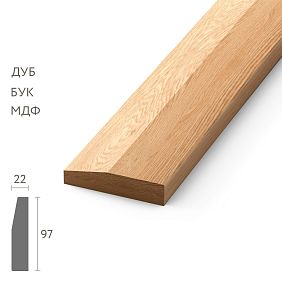
1.2. Why choose wood?
● Naturalness. Wood is a living natural material capable of bringing warmth and coziness to the interior.
● Universality. Wood can easily be matched to different designs, processed, painted, or stained to desired shades.
● Durability. A well-made solid wood skirting board (oak, beech, pine, etc.) can last for decades. Minor scratches can be easily restored.
2. What are the advantages of paintable skirting boards?
Get Consultation
2.1. Color choice flexibility
Paintable wooden floor skirting boards offer great creative freedom. You don't need to match an exact shade of existing finish — you can choose paint that matches:
- The wall color, if you want to create a 'seamless' effect and visually increase the room's height.
- The floor color, if you wish to 'extend' the flooring, emphasizing its tone.
- A contrasting color, to highlight the skirting board as an accent, adding bold stylistic touches to the interior.
2.2. Ability to update design
If, after a few years, you decide to repaint the walls or change the room's decor, simply changing the skirting board's color is enough. You won't need to buy new ones — you remove the old finish (or simply repaint over it) — and voila, the interior is refreshed! This is especially valuable for those who love experimenting with decor.
2.3. Concealing defects and matching any style
Paintable skirting boards are often sold in a basic 'white primer' that hides minor surface irregularities on the wood. After applying the final paint, the item looks impeccably neat and fits perfectly with classic, minimalist, Scandinavian styles, or any other interior format.
2.4. Material and finishing cost savings
Depending on the wood species and the quality of the raw material, paintable skirting boards can be a more budget-friendly solution, as their surface does not require perfect 'luxury' finishing (the natural wood grain is often covered by paint). Moreover, you choose the paint or varnish yourself, based on your preferences and financial possibilities.
3. Types of paintable wooden skirting boards
3.1. Solid wood skirting boards
Made from solid wood (oak, beech, larch, pine). They are characterized by high strength and durability. However, if you plan to change the color multiple times, choose grades with fewer knots to ensure a smoother surface.
3.2. Veneered models
They have a base made of less expensive wood (e.g., pine), covered with a thin layer of veneer from expensive wood (oak, beech, walnut). Veneered skirting boards are suitable for painting, but consider that the veneer is thin, and aggressive sanding may damage the decorative layer.
3.3. MDF with wooden veneer
Although these are not strictly 'solid wood', such items are sometimes classified as 'wooden' if they have a final veneer finish made of natural veneer on the outside. They also suit painting well, but they are less durable and less resistant to impacts compared to solid wood.
4. Features of installing paintable skirting boards
4.1. Surface Preparation
- Level the walls. If there are significant unevenness, defects under paint will become more noticeable.
- Leave expansion gaps. If the floor (parquet or solid wood) 'moves', the skirting board should not rigidly press against the finish — this will protect the boards from warping.
- Consider that painting will be the final stage. It's better to attach the skirting board before the final wall finish (or at least before the second coat of paint), so you can carefully 'seal' the joints later.
4.2. Mounting options
● On adhesive: quick method if the wall is perfectly flat. But removal may be difficult.
● On self-tapping screws or nails: traditional method requiring covering of fastener heads.
● On clips: modern convenient option allowing removal of skirting board without damage (useful if wires run underneath).
4.3. Painting on-site or in advance?
● Painting before installation: easier to paint all edges (especially the bottom) and ends. But scratches and chips may occur during installation, requiring touch-ups.
● Painting after installation: allows the skirting board to blend seamlessly with walls, fill joints and gaps. But you must carefully protect the floor and already painted walls with painter’s tape.
5. Choosing paint: what to know?
5.1. Types of paint
- Acrylic. Popular due to quick drying, easy application, and lack of strong odor. Suitable for living areas.
- Alkyd enamels. Provide durable finish and higher gloss, but may have strong odor and take longer to dry.
- Polyurethane. Creates wear-resistant finish, resistant to moisture and mechanical stress. Optimal for hallways and kitchens.
5.2. Choosing finish (gloss, semi-gloss, matte)
● Gloss finish highlights all wood grain irregularities but gives a 'lacquered' effect.
● Matte paints hide minor defects, creating a softer visual effect.
● Semi-gloss (satin) — 'golden middle ground', providing sufficient sheen but not overly bright, while also helping to mask minor surface imperfections.
5.3. Primer and additional protection
Sometimes wood is primed with special compounds that improve paint adhesion and protect against moisture. If the house is humid (bathroom, kitchen), it makes sense to additionally treat the bottom of the skirting board with water-repellent agents.
6. Design tricks with paintable skirting boards
6.1. Skirting board in wall color
This approach visually 'raises' the ceiling, especially if the skirting board is tall (from 8 cm). For modern and Scandinavian interiors, this is one of the most popular tricks. Walls and skirting board appear as one whole unit, creating a sense of lightness.
6.2. Skirting board in floor tone
When choosing flooring, people often look for a matching skirting board to create a unified floor. If no suitable color option is found, take a paintable wooden skirting board and paint it in a shade as close as possible to the floor (or directly in contrast, if that was the intention).
6.3. Contrasting shades
Want to highlight the room's geometry? Choose a skirting board with a color dramatically different from walls and floor. For example, with light walls and floor — black or dark gray skirting board, or vice versa, with dark flooring — snowy white strip. Such contrast adds dynamism and character to the interior.
6.4. Gradient and artistic painting
For creative individuals not afraid of experimenting, it is possible to create a smooth gradient: for example, the lower part of the skirting board is darker, and the upper part is lighter. Or applying geometric patterns, stripes, or stencil motifs, transforming a functional element into an artistic accent.
7. In which interiors is 'paintable' skirting board optimal?
● Minimalism and Scandi: simple forms, light tones, eco-design — a painted skirting board in wall color or slightly contrasting shade perfectly emphasizes the philosophy of 'less is more'.
● Loft: the combination of rough finishes (brick, concrete) and 'clean' lines of the skirting board in an interesting color (black, graphite, whitewashed) creates a striking contrast.
● Classic: although traditionally shaped wooden skirting boards are used in classic interiors, nothing prevents you from painting them in the appropriate color if you seek a more modern interpretation.
● Modern and Eclectic: in bold projects where colors and textures mix, a painted skirting board can become a 'unifying' detail or, conversely, a striking contrast.
8. Step-by-step project implementation example
Suppose you decided to refresh the interior and chosewooden baseboard, paintable, floor-level.
- Determine the dimensions. Measure the room's perimeter, account for allowance for joints and trimming — about 5–10%.
- Choose the wood species. For an affordable option, pine or spruce will do; for a more premium look, oak or beech. Remember that the wood must be well-dried.
- Decide how you will install it. Screws, adhesive, or clips. For uneven walls, screws are more reliable; for flat walls, adhesive may suffice. If you plan to conceal wires, look for models with cable channels.
- Install the skirting boards. Pay attention to corners — make cuts using a circular saw or a jigsaw. Screw or glue the boards along the perimeter.
- Fill and sand. Cover screw heads and minor defects. Sand if necessary to achieve a smooth surface.
- Apply primer. This improves adhesion to paint and extends service life. Allow to dry.
- Paint the surface. Work with a brush or roller, evenly distributing the paint. Sometimes 2–3 coats are needed, each layer must dry according to the paint manufacturer's recommendations.
- If desired, apply a finish. For example, varnish, if you want additional protection or special gloss.
9. Possible mistakes and how to avoid them
● Insufficient wood preparation. If dust is not removed, the surface is not leveled, and no primer is applied, paint may settle unevenly or peel quickly.
● Incorrect paint selection. Using low-quality coatings or coatings unsuitable for conditions (e.g., moisture-resistant in hallways or kitchens) will lead to rapid deterioration of appearance.
● Rushing during installation. Errors in measurements and angles will result in gaps and misalignments.
● Ignoring the 'acclimatization' stage. Wooden skirting boards must 'adapt' to the room's humidity and temperature (sometimes 1–2 days) before installation.
10. Where to buy paintable skirting boards?
The market offers sufficient options, but it's worth seeking out specialized manufacturers that guarantee wood quality and proper processing. When choosing a wooden paintable skirting board, pay attention to:
- Brand reputation: presence of certifications, years on the market, customer reviews.
- Product range: several height and profile options, wood species.
- Finish treatment: is there factory-applied primer, or is the product sold 'raw'?
- Delivery and service options: leading companies often have convenient online catalogs, discounts, and offer installation services.
11. Conclusion
Paintable skirting board is not just a functional detail, but a full-fledged design element. It offers freedom of self-expression, allowing you to change the color and style of the interior without costly replacement of the item. If you want your home or office to look modern, stylish, and harmonious, considerwooden baseboard, paintable, floor-level.
Thanks to its advantages — color choice flexibility, easy refreshment capability, and natural eco-friendliness — such a skirting board becomes one of the most rational finishing options. The variety of wood species and profile types allows selecting a variant suitable for any budget and design concept. Moreover, proper installation and correct preparation for painting ensure your interior will delight your eyes for many years.
Don't be afraid to experiment: the skirting board can either blend into the interior, matching the wall tones, or, conversely, stand out as a bright accent and highlight the uniqueness of your style. The key is to approach selection and installation seriously, and then the creative space is open! Let your home reflect your individuality, and the paintable skirting board will help achieve complete harmony in every corner of the room.