Article Contents:
- 1. What is a wide wooden baseboard?
- 1.1. Role of a wide baseboard in interior design
- 2.1. Natural beauty
- 2.2. Durability and restoration
- 2.3. Ecological safety
- 2.4. Prestige
- 3.1. Effect of 'high walls'
- 3.2. Expanding the perimeter
- 3.3. Emphasizing style
- 4.1. Wood species
- 4.2. Wood grade and quality
- 4.3. Surface treatment
- 4.4. Dimensions and profile
- 7. Installation options
- 7.1. On adhesive or 'liquid nails'
- 7.2. On self-tapping screws or nails
- 7.3. Clips
- 7.4. Corners and joints
- 8. Care for a wide wooden baseboard
- 9. Pricing: why some models cost more than others?
- 10. Design tips: how to integrate a wide baseboard into the interior
- 11. Advantages of buying a wide baseboard online
- 12. Algorithm for successful purchase of a wide wooden baseboard
- 13. Conclusion: why choose a wide wooden baseboard

Any modern interior is composed of many details, each playing its own role in creating a harmonious and cohesive look. Wall color palette, furniture selection, ceiling design — all of this is important, but far from the only aspect of attractive design. Sometimes small details can be decisive in room decoration. One such detail is the baseboard. If previously it was regarded merely as a decorative strip covering the gap between the floor and the wall, today it has become a full-fledged element of style and interior design. A wide wooden baseboard is especially relevant: it not only emphasizes the high status and taste of the owner, but also brings a special coziness to the interior.
In this article, we will examine why you should pay attention towide wooden baseboard, how to properly match it with the interior, what advantages it offers, and what are the specifics of installation and maintenance. Get ready for a deep dive into the world of baseboards: we will cover all the main aspects so you can make a well-considered and rational decision about purchasing.


1. What is a wide wooden skirting board?
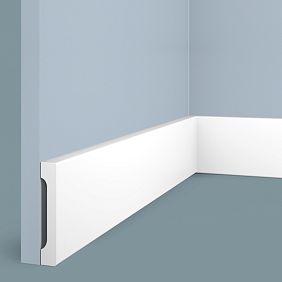
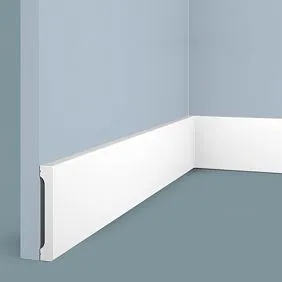
By "wide skirting board" is usually meant a product whose height exceeds the standard 5–7 cm. Wide models can vary from 8–10 cm up to 15–20 cm. They add an additional accent to the room, emphasize wall shapes, and can even visually alter the room’s proportions, "stretching" ceilings or hiding certain wall irregularities.
When the skirting board is made of wood, it possesses several advantages compared to plastic and MDF analogs. Solid wood is not only eco-friendly but also durable, restorable, and offers a unique appearance. Each wood species has its own grain pattern, shades, and texture, which become a true interior decoration when properly processed.




1.1. Role of Wide Skirting Board in Interior Design
- Visual Harmony. A wide skirting board can become an effective transitional element between the wall and floor, smoothing out color and texture contrasts.
- Wall Protection. A solid strip reliably protects the lower part of the wall from potential mechanical damage (e.g., during cleaning, furniture rearrangement, or pet activity).
- Space Modernization. A large skirting board gives the room a solid, "luxurious" look, emphasizing attention to detail and quality finishing.
2. Main Advantages of Wide Wooden Skirting Board
Why is solid wood the optimal choice for those striving for a flawless interior?
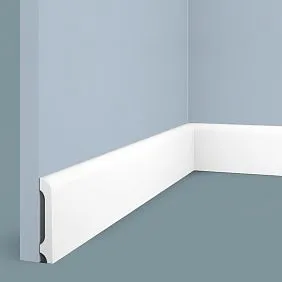
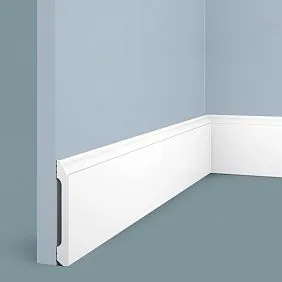
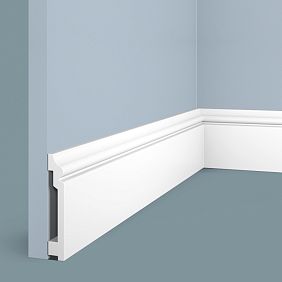
Our factory also produces:

2.1. Natural Beauty
No other material can convey the cozy warmth emanating from wood. Rich texture, natural shades, and variety of species allow selecting a skirting board almost for any design — from classic to modern minimalism.
Get Consultation
2.2. Durability and Restoration
Unlike plastic or MDF models, wooden skirting boards can be easily sanded and re-coated with oil or varnish when minor scratches occur during use. It will serve for decades without losing its aesthetic appeal or undergoing significant deformation (provided proper drying and quality installation).
2.3. Eco-friendliness
Wood is a natural material that does not emit harmful substances. In an era when the trend toward eco-friendly lifestyles has become especially prominent, a wooden skirting board harmoniously fits into the "care for nature and surroundings" concept.
2.4. Prestige
A wide skirting board made of solid wood is associated with status and quality. It is often used in luxurious interiors to highlight the owner's taste and financial capabilities. This is not merely a convenient detail, but a luxury element that distinguishes the space from others.
3. Impact of Skirting Board Width on Design and Space
3.1. "High Wall" Effect
If the room has low ceilings and you wish to visually "raise" them, a wide skirting board can help — but only with proper color coordination. For example, if the skirting board matches the wall color, it visually elongates the walls; if it strongly contrasts with the floor, it may instead "ground" the space. It is important to select an optimal shade that smoothly transitions from floor to wall, avoiding sharp lines.
3.2. Expanding Perimeter
In spacious rooms, a high skirting board looks ideal and does not appear overly bulky. However, in smaller rooms, it may "consume" part of the area or look out of place if the rest of the space is modestly decorated. Therefore, it is necessary to weigh all pros and cons: sometimes a height of 10–12 cm is sufficient to make the room appear refined.
3.3. Emphasizing Style
● Classic and Neoclassic. Wide, ornate skirting boards with carved elements fit perfectly into interiors dominated by moldings, stucco, and authentic furniture.
● Modern Minimalism. Smooth, flat boards without excess. Often painted to match wall color or made with barely noticeable tonal differences.
● Loft and Industrial Style. Exposed brick walls can be effectively "framed" by wide wooden skirting boards in dark or grayish tones, creating a contrast between rough texture and natural wood.
4. Criteria for Choosing a Wide Wooden Skirting Board
4.1. Wood species
- Oak. One of the most popular options: strong, noble, wear-resistant. A wide oak skirting board gives the room a solid and respectable appearance.
- Ash. Has an expressive grain pattern, light shades, and high hardness. Well-suited for modern interiors.
- Walnut. An expensive species with a deep natural color. Ideal for those who appreciate rich texture and premium quality.
- Larch. Tolerates temperature fluctuations and high humidity well. Often used in country houses, though suitable for city apartments as well.
- Spruce. A budget option that, however, can look quite respectable with proper processing. Spruce skirting board is softer than oak, thus requiring more careful handling.
4.2. Type and quality of wood
● Extra (or A): minimum number of knots and defects. Surface is smooth, texture uniform and attractive.
● Category B and C: may contain knots, some irregularities and color inconsistencies. Price is lower, but appearance may be less ideal.
Ask the seller which category the skirting board belongs to. If you prioritize flawless appearance and uniform color, it’s worth paying extra for the highest grade.
4.3. Surface treatment
- Unfinished (raw). You can choose your desired color or tone, but you’ll need to spend time and effort on painting, varnishing, or oiling.
- With factory finish. The skirting board is already sanded and coated with varnish, oil, or paint. It can be installed immediately, saving time on finishing work.
- Toned. Sometimes manufacturers use stains to give wood deeper or non-standard shades (grayish, bleached, walnut). Ideal if you want to match the color of doors or flooring.
4.4. Dimensions and profile
● Height. If room ceilings are 2.5–2.7 m, skirting boards 8–10 cm are optimal. For ceilings above 3 m, you can confidently install boards 12 cm and above.
● Thickness. Important if you plan to hide wires or account for wall curvature. For flush installation, a thicker strip may be required.
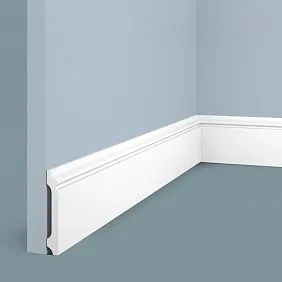
● Profile. Can be rectangular, decorative, with routed grooves and cable channels. When choosing, consider overall style and practical needs.
5. What to pay attention to when purchasing
- Origin of material. It’s better to choose skirting boards from manufacturers who follow proper wood drying and finishing technology, to prevent warping or cracking over time.
- Uniformity of batch. Ideally, the entire batch of skirting boards should be made from the same wood species and have the same level of processing, so color and texture match.
- Documentation. Quality certificates, compliance with standards, customer reviews — all indicate the manufacturer’s integrity.
- Storage conditions. If the skirting board was stored under improper temperature and humidity conditions, it may become damp, warp, or crack. Don’t hesitate to ask the seller how the product was stored.
6. Where to buy wide wooden skirting boards
If you are considering where towide wooden baseboard, then there are various options:
- Specialized stores for flooring and finishing materials. The plus is that you can examine samples, feel them, and compare different species and profiles. The minus is higher prices compared to online platforms.
- Construction hypermarkets. Convenient in terms of accessibility and variety, but not always offer specialist consultations, and not every chain provides a wide selection of high-quality solid wood.
- Online stores and manufacturer websites. Offer detailed catalogs with descriptions and photos, allow you to compare prices and select the right combination of species, height, and profile. For large orders, significant discounts and free delivery are often available.
- Direct manufacturers or private workshops. Excellent choice if you need something exclusive, such as skirting boards of non-standard height or with specific carving. Sometimes direct cooperation may be cheaper, but be prepared that custom production lead times may increase.
7. Installation options
7.1. On adhesive or 'liquid nails'
The simplest method, provided walls are straight. The skirting board is pressed firmly against the wall for several minutes and securely fixed. However, if the wall is curved, gaps may appear. Also, during removal (e.g., when replacing flooring), there is a risk of damaging the skirting board.
7.2. With self-tapping screws or nails
Classic method. Important to carefully conceal screw heads — use wood-colored putty or special wooden plugs. Suitable if especially secure fixation is required (e.g., in high-traffic areas).
7.3. Clips
The system allows you to "snap" and remove the skirting board without damaging the wall or the product itself. Very convenient for laying wires and for temporary removal (for example, for wall repairs). However, installing clips requires more even walls and careful calculation of the distances between them.
7.4. Corners and joints
● For external and internal corners, the skirting board is cut using a miter box or a circular saw at a 45-degree angle (or another angle corresponding to the actual room angle).
● Sometimes manufacturers produce ready-made corner pieces and caps, simplifying the task. However, they may be limited in design.
8. Care for a wide wooden skirting board
Proper maintenance is the key to a long life of the skirting board:
- Regular cleaning. Wipe the skirting board with a soft cloth to remove dust. If wet cleaning is needed, use a slightly damp cloth and neutral cleaning agents. Excess water is harmful to wood.
- Avoid aggressive chemicals. Alkaline and abrasive substances may damage the finish, cause dullness, or even result in scratches.
- Prevent mechanical damage. Protect the skirting board from strong impacts and sharp objects. If damage occurs, you can carefully sand it and reapply varnish or oil.
- Maintain normal humidity levels. Wood "breathes" and may react to fluctuations in humidity and temperature. The optimal range is 40–60% humidity at a temperature of 18–24 °C.
9. Pricing: why some models cost more than others?
- Wood species. Exotic types (walnut, merbau, wenge) will cost more than pine or spruce.
- Selection and grade. The highest grade, free of knots and defects, is valued higher than grades with uneven texture or visible irregularities.
- Finish type. Factory painting or varnishing adds to the price. Raw skirting board will be cheaper, but will require time and materials for self-processing.
- Profile complexity. Decorative elements, cable grooves, carved patterns automatically make the product more expensive.
- Brand or manufacturer. Companies with a long history and good reputation usually set higher prices, guaranteeing stable quality and compliance with standards.
At the same time, if you wantwide wooden baseboard without overpaying, it is worth studying several offers, comparing conditions, checking for promotions or discounts. Often, you can find an ideal option in the mid-price segment.
10. Design tips: how to incorporate a wide skirting board into the interior
- Color combinations. If the floor is dark and the walls are light, you can choose a skirting board in a tone slightly lighter than the floor or darker than the walls, making it a striking contrasting element. If you want to increase the perceived height of the room, paint the skirting board in the same color as the walls, blending it seamlessly with the wall surface.
- Proportions and balance. Wide skirting boards look luxurious in spacious rooms with high ceilings. In small rooms, they may visually overwhelm the space.
- Style support. For classic interiors, skirting boards with decorative profiles and ornamental elements are appropriate. For minimalism and Scandinavian styles, a simple straight skirting board without embellishments is ideal.
- Consistent design. Often, for harmony, the skirting board is made in the same tone as doors, door casings, or other wooden elements in the room.
11. Advantages of buying a wide skirting board online
In the era of digitization, many prefer to purchase finishing materials online. And there are reasons for this:
- Convenience and time-saving. You don’t need to drive around the city and get stuck in traffic to find the right option. Online catalogs allow you to quickly compare several models and brands.
- Wide selection. Specialized online stores usually offer a greater variety of wood species, profiles, and colors than regular physical stores.
- Descriptions and specifications. Manufacturers and sellers place detailed specifications, photos, and installation tips on their websites. This simplifies decision-making.
- Great deals and discounts. Online stores often hold sales, offer promo codes, or free shipping for large orders.
- Opportunity for consultations. Many websites offer online consultants who will answer questions, help calculate the amount of skirting board needed, and recommend suitable accessories.
However, when purchasing online, it is important to pay attention to the seller's reputation and return policies, as the quality of wood is difficult to assess from photos. If the store is verified, offers samples, has positive reviews, and has a well-designed website, the risk of purchasing unsuitable material is minimal.
12. Algorithm for successful purchase of a wide wooden skirting board
- Define your goals and style. You need to understand what effect you expect from the skirting board: will it create contrast or blend with the floor/walls, classic or modern, accent or background detail.
- Measure the room's perimeter. Determine the length of walls (including all openings and niches). Add a 5–10% allowance for trimming and possible errors.
- Calculate the skirting board height. Assess the room's proportions and ceiling height. For standard apartments, 8–10 cm is sufficient; for luxury spaces with high ceilings, 12–15 cm or more may be appropriate.
- Choose the wood species and grade. Consider your budget and desired appearance. Oak, beech, walnut — reliable and versatile options; pine — budget-friendly but requires careful handling.
- Decide on the mounting method. Depends on wall curvature and the need to conceal wires. Clips and self-tapping screws are more flexible; adhesive is faster but harder to remove.
- Research prices and offers. Compare different stores, look for discounts, and don't forget about delivery costs and payment methods.
- Check reviews. If a store or manufacturer has many negative comments about quality, consider looking for an alternative.
- Place your order. Before purchasing, double-check the information regarding quantity, color, grade, and warranty availability.
- Installation and maintenance. When installing, follow instructions, use appropriate fasteners, and monitor humidity levels.
By following these simple steps, you will obtain a beautiful, reliable, and long-lasting element that adds elegance and sophistication to your interior.
13. Conclusion: why choose a wide wooden skirting board
A wide skirting board made of natural wood is more than just a decorative strip. It is a harmonious blend of functionality and aesthetics that can transform any room. It not only protects the lower part of walls and covers the junction with the floor, but also adds a unique 'touch' to the space. As previously mentioned, solid wood boards excel in durability, resistance to damage, and the possibility of restoration. Solid wood products combine the luxury, warmth of natural material, and an impressive appearance that is virtually impossible to replicate with artificial alternatives.
wide wooden baseboard It makes sense if you aim for an interior that will delight and evoke a sense of comfort for both family members and guests. Such a solution is favored not only for prestige and natural beauty, but also for practical aspects: reliability, absence of toxic substances, and the ability to choose among many species and shades. The key is to determine which specific type and profile of skirting board suits your space, taking into account its purpose, dimensions, design direction, and personal preferences.
Choose thoughtfully, consult with specialists, and don't cut corners on quality: when it comes to interior elements meant to last for years, a well-informed investment will pay off handsomely. A wise choice and proper installation of a wide wooden skirting board will turn an ordinary room into a space where every detail exudes harmony, luxury, and the warmth of natural materials.