Article Contents:
- 1. Why is a baseboard needed and why it's important to pay attention to it
- 1.1. Functional purpose
- 1.2. Decorative role
- 2.1. What does "wide" mean?
- 2.2. Advantages of "paintable" type
- 4.1. Humidity and acclimatization
- 4.2. Primer and sanding
- 4.3. Choosing the final finish
- 5.1. Ways to install a wide baseboard
- 5.2. Corners and joints
- 5.3. Painting sequence and installation order
- 6.1. Baseboard in wall color
- 6.2. Contrast with the floor
- 6.3. "Antique" effects
- 6.4. Bold colors and patterns
- 7.1. Regular cleaning
- 7.2. Restoring scratches and chips
- 7.3. Protection from moisture
- 10. Conclusion

When creating or updating an interior, many focus on selecting furniture, flooring, and wall finishes. But when the work is nearly complete, attention shifts to finishing details, without which it's hard to imagine a harmonious picture. One such important final element is the baseboard — a component that creates a smooth transition between the floor and the wall and emphasizes the overall style of the room. Especially effective in modern interiors is a wide wooden baseboard for painting, capable of simultaneously solving practical tasks and serving as a design accent. In this article, we will explore its advantages, how to choose it, and how to use it properly.


1. Why is a baseboard needed and why it's important to pay attention to it




1.1. Functional purpose
- Wall protection. The baseboard prevents moisture, dust, and small contaminants from reaching the lower part of the walls, especially during cleaning.
- Sealing joints. Even if the floor is perfectly laid, deformation gaps are often left between the flooring and the wall. The baseboard hides these gaps, creating a smooth and neat transition.
- Hidden wiring. Some models come with cable channels, allowing for neat cable management.
Our factory also produces:


1.2. Decorative role
● Visual "assembly" of the interior. The baseboard helps connect the floor and walls, creating a cohesive and finished look for the room.
● Impact on proportions. A wide model can visually "push" walls toward the floor (if contrasting in color) or, conversely, "extend" the room's height if it blends with wall color.
● Individuality. By painting the baseboard in a specific tone, we give the room a unique look and can support the overall color scheme or style.
2. Features of wide wooden skirting board for painting
Get Consultation
What does 'wide' mean?
Such a format:
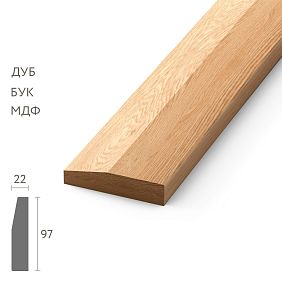
- Stands out from the general background. Unlike standard 5–6 cm, wide options are eye-catching and can become a key design detail.
- Protects a larger area of walls. Especially relevant for rooms with high foot traffic (entryway, hallway, living room).
- Suitable for large rooms. In high ceilings (over 2.7 m), low-profile skirting boards may appear insignificant, whereas wide ones look harmonious and substantial.
2.2. Advantages of 'paintable' skirting boards
- Flexibility in design. You can paint the item in any color (or multiple colors), depending on interior design goals. When changing the design or renovating, you can repaint without buying new skirting boards.
- Defect masking. A wide wooden plank may have small knots or irregularities — painting it (and pre-priming) smooths them out, creating a flat and aesthetically pleasing surface.
- Ease of restoration. If scratches or scuffs appear, it's easy to repaint just that spot without affecting the rest of the surface.
- Economic benefit. Paintable skirting boards often cost less than 'finished' items with pre-applied decorative layers. Plus, you save money if you need to change the design in the future.
3. Wood species: what to choose?
Although paintable items do not require an ideal natural grain, it's important to pay attention to the quality of the wood and its technical characteristics:
- Spruce. Budget option, easy to process, but may develop dents under strong mechanical impact.
- Larch. Resistant to moisture and deformation, has high density, but is slightly more expensive than spruce.
- Oak. Considered the standard for strength and durability, rarely warps with changes in humidity. Price is above average segment.
- Ash. Close in hardness to oak, but with a lighter texture. Accepts various types of paints and coatings well.
When choosing a species, consider the microclimate of the room: in high humidity or temperature fluctuations (e.g., in a country house), larch or oak will behave more reliably, while spruce and ash are suitable for 'calm' conditions.
4. How to prepare a wide skirting board for painting
4.1. Humidity and acclimatization
When purchasing, check that the skirting boards' moisture content does not exceed 8–12%. Before installation and painting, it is recommended to let the item 'rest' in the room where it will be installed for 1–2 days to acclimate to the local humidity and temperature levels.
4.2. Priming and sanding
- Initial sanding. If the surface is too rough, sand it with fine-grit sandpaper (grit 180–240). This will eliminate minor defects and improve adhesion to paint.
- Priming. Special wood-based compositions (acrylic, alkyd, or universal) penetrate the surface, equalize its absorption, and reduce paint consumption.
- Filling with putty. If there are knots or small chips, cracks, they can be carefully filled with wood putty. After drying, sand the repaired area again.
4.3. Choosing the final coating
Decide which paint suits you:
● Acrylic paints (water-based) dry quickly, have no strong odor, suitable for living spaces.
● Alkyd enamels provide high gloss and wear resistance, but their odor may linger longer.
● Polyurethane compositions are the most durable and are often used in commercial spaces.
5. How to properly install skirting boards
5.1. Ways to mount wide baseboard
- On adhesive (liquid nails)
○ Suitable if walls are flat.
○ Quickly and cleanly installed, but wall damage may occur during removal.
- With Screws or Nails
○ Most reliable method even with uneven walls.
○ Requires covering fastener heads (with putty or caps).
- On clips (hooks)
○ Allows easy removal of baseboard if wiring needs to be hidden/replaced.
○ Requires flat walls, difficult to install for inexperienced users, but provides neat appearance without extra holes.
5.2. Corners and joints
● For neat corner joints, use a miter saw or a saw with adjustable angle cutting (often 45°, but actual room angles may differ).
● Apply a small amount of adhesive or sealant to both external and internal corners for maximum tightness.
● When joining multiple baseboards on long walls, make the joint at an angle (like a 'tenon') — this will be less visually noticeable.
5.3. Painting sequence and installation
● Method A: First paint the baseboard (2–3 coats), let it dry, then mount it on the wall. In this case, touch-up may be needed at fastener locations.
● Method B: First install, then fill joints with putty, then paint the already-mounted baseboard. But protect the floor and walls with painter’s tape to avoid paint stains.
6. Design ideas for using wide baseboard
6.1. Skirting board in wall color
If you paint a wide wooden baseboard to match the wall color, it visually increases room height. Especially effective in small rooms and with high baseboards (8–10 cm and above).
6.2. Contrast with floor
When you want to highlight room geometry, choose a baseboard several tones lighter or darker than the floor. For example, a dark gray baseboard with light oak parquet — this creates an expressive 'frame' and adds elegance.
6.3. 'Antique' effects
Some interiors (Provence, shabby chic, country) look great with aged paint finishes. Special techniques (patina, brushing, craquelure) help achieve vintage charm, giving the baseboard artistic uniqueness.
6.4. Bold colors and patterns
In minimalist interiors, bright baseboards (red, turquoise, yellow) can be used as accents. Also possible: hand-painted designs or stencils, especially if the baseboard is tall and highly visible.
7. Maintenance and operation
7.1. Regular cleaning
● Wipe baseboard with dry or slightly damp cloth, avoiding excessive water to prevent damage to wood and paint.
● Use mild cleaning agents that do not damage the paint finish.
7.2. Restoring scratches and chips
● For shallow damage, lightly sand with fine-grit sandpaper and touch up with leftover paint.
● For more serious chips or cracks, use wood putty or special wax pencil, then repaint.
7.3. Moisture Protection
In rooms with high humidity (bathroom, kitchen, private house with intermittent heating), choose moisture-resistant paints or varnishes, and additionally treat the wooden base with hydrophobic impregnations.
8. Common Mistakes and How to Avoid Them
- Too high a profile in a small room. In rooms with low ceilings (2.5 m) and narrow spaces, a skirting board 12–15 cm wide may appear oppressive and distort proportions.
- Incorrect painting technique. If primer is not used or paint layers are not allowed to dry properly, streaks and peeling may occur.
- Installation on damp walls or floors. Wood may absorb moisture and deform, especially if initially poorly dried.
- Saving on finishing materials. Cheap paint may quickly lose color and crack, while low-quality skirting boards made from warped wood can ruin the overall impression of the renovation.
9. Where to Buy Skirting Boards for Painting
It is better to consult specialists: stores or online platforms specializing in wooden finishing materials. At the same time, it is important to find out:
● Manufacturer. Is there a reputation, certificates, quality guarantees?
● Sorting and moisture content. Confirm how drying was performed and whether there is a warranty against major defects.
● Availability of consultations. Honest sellers usually assist with calculating quantities, selecting height, wood species, and mounting methods.
One way to familiarize yourself with the assortment is to study the offerswooden floor skirting board wide for painting on manufacturers' specialized websites, compare prices and descriptions, and read customer reviews.
10. Conclusion
Choosing a wide wooden floor skirting board for painting is an excellent solution for those who want to add originality to their interior, maintain functionality, and have the option to change the color scheme in the future without significant expenses. Natural wood adds coziness, while the wide profile of the skirting board provides an expressive appearance, highlights the architecture of the room, and performs protective functions exceptionally well.
The key is to approach the task professionally: determine the wood species, thickness, and height, consider the interior style, choose a reliable mounting method, and use quality paints. As a result, you will get a stylish element that will become the "highlight" of your home or office and serve for many years. Do not be afraid to experiment, as with painting, you can boldly play with shades, keeping up with fashion trends and responding to changing tastes without initiating a major renovation.