Article Contents:
- History and evolution of wooden baseboards
- From functionality to aesthetics
- Evolution of shapes and sizes
- Advantages of a wooden baseboard
- Ecological and natural properties
- Aesthetics and uniqueness
- Durability and practicality
- Sound and thermal insulation
- Types of wooden baseboards
- By wood species
- Oak — classic for all time
- Ash — elegance and flexibility
- Oak — versatility and warmth
- Spruce — accessibility and naturalness
- Exotic species — for connoisseurs of uniqueness
- By type of finish
- Solid wood — naturalness without compromise
- Veneered — balance of price and quality
- Laminated — practicality and variety
- By profile and size
- High skirting boards (from 100 mm)
- Medium skirting boards (60-80 mm)
- Decorative profiles
- Straight profiles
- How to choose the perfect skirting board for your interior
- Considering the room's style
- Matching with flooring
- Considering room proportions
- Practical aspects
- Where to buy quality wooden baseboard
- Specialized stores
- Online stores
- Direct from manufacturers
- Installation of wooden baseboard
- Preparatory work
- Mounting methods
- Using self-tapping screws
- Using clips
- Using adhesive
- Processing corners and joints
- Internal corners
- External corners
- Joints by length
- Final finishing
- Caring for wooden skirting boards
- Regular maintenance
- Periodic refreshment
- Repairing damage
- Trends and innovations in the world of wooden baseboards
- Ecological level of new standard
- Technological and functional
- Individualization and customization
- Answers to Frequently Asked Questions
- Can wooden skirting board be installed in a bathroom?
- How to choose skirting board to match laminate?
- How much skirting board do you need to buy?
- Can wooden skirting board be painted?
- How to install skirting board on uneven walls?
- Conclusion: why choose a wide wooden baseboard
- Investment in quality and longevity
- Ecological and health benefits
- Aesthetics and Individuality
- Practicality and versatility

In the world of finishing materials, there are elements that, despite their seemingly minor role, can dramatically transform the interior, giving it completeness and a unique charm. One such element is the baseboard. A special place in this category is occupied by wide wooden baseboard which becomes not just a functional detail, but an important design accent in the room. In this article, we will thoroughly examine all aspects of choosing, purchasing, installing, and using wide wooden baseboards, so you can make an informed decision and create a truly harmonious interior.


History and evolution of wooden baseboards




From functionality to aesthetics
As an element of finishing, the baseboard has a multi-century history. Initially, its function was purely practical — to hide the unevenness at the junction between the wall and floor, and to protect walls from dirt during cleaning. However, over time, the baseboard evolved into an important decorative element, emphasizing the style and status of the room.
In the aristocratic mansions and palaces of the 18th-19th centuries, one could see luxurious wide wooden baseboards with carved ornamentation, which became a continuation of parquet floors and emphasized the aristocratic character of the interior. With the advent of modernism and constructivism, baseboards became more minimalist, but did not lose their significance.
Today, in the era of returning to natural materials and eco-friendliness, wide wooden baseboard — is a conscious choice in favor of tradition, quality, and aesthetics.
Our factory also produces:
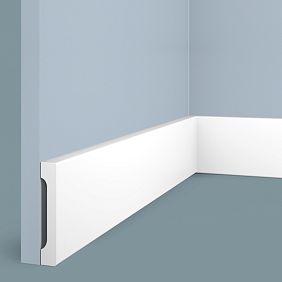
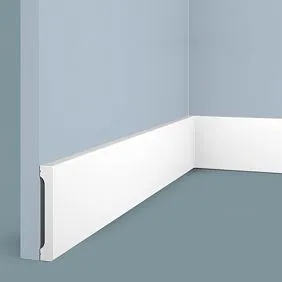
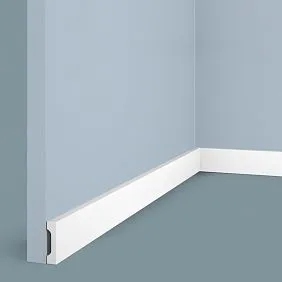
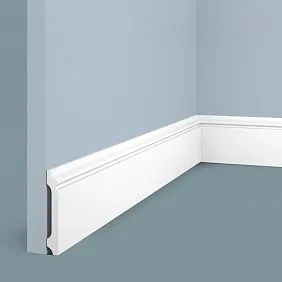

Evolution of Forms and Sizes
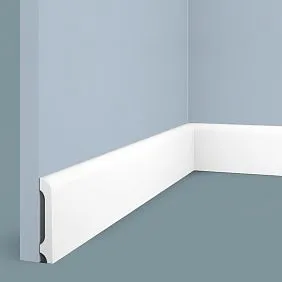
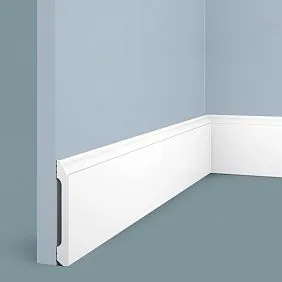
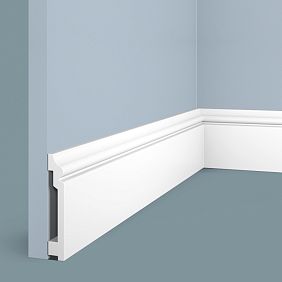
If previously the standard height of a baseboard rarely exceeded 5-7 cm, today wide models can reach 15-20 cm in height. Such dimensions allow creating a striking accent in the interior, visually correcting the proportions of the room, as well as hiding various utilities.
The profile of skirting boards has also undergone significant changes: from simple rectangular forms to complex decorative profiles with multiple decorative elements. Modern woodworking technologies allow creating skirting boards of practically any shape and complexity, opening up wide possibilities for designers and architects.
Get Consultation
Advantages of a wooden baseboard
Ecological and natural
In an era when more and more people pay attention to the eco-friendliness of materials in their homes, wide wooden baseboard becomes a conscious choice. Natural wood does not emit harmful substances, creates a favorable microclimate in the room, regulates humidity, and has anti-static properties.
Unlike plastic analogs, wooden skirting boards 'breathe', which is especially important for people suffering from allergies or asthma. Moreover, it is a renewable resource, making its choice an ecologically responsible solution.
Aesthetics and uniqueness
Each wooden skirting board is unique due to the natural grain pattern. Even items from the same batch will differ slightly from each other, giving the interior a special charm and uniqueness.
A wide wooden baseboard becomes a noticeable design element that can either harmoniously complement the overall concept of the room or serve as a striking accent that draws attention. Such baseboards look especially advantageous in classical and neoclassical interiors, as well as in country, Provence, and chalet styles.
Durability and practicality
With proper care, a wooden skirting board can serve for decades without losing its appeal. Moreover, over time, natural wood develops a noble patina, which only adds to its charm.
In case of mechanical damage, a wooden skirting board can be restored — sanded, coated with a new layer of varnish or paint. This makes it more cost-effective in the long run compared to plastic analogs, which must be completely replaced upon damage.
Sound and thermal insulation
Wooden skirting boards have good sound insulation properties, helping to reduce noise levels in the room. In addition, they serve as an additional barrier against drafts, improving the room's thermal insulation.
This is especially relevant for old houses with uneven walls and floors, where gaps may form between them. A wide wooden baseboard effectively masks these shortcomings and creates a more comfortable microclimate.
Types of Wooden Baseboard Molding
By wood species
Oak — classic for all times
Oak is one of the most popular wood species for making skirting boards due to its strength, durability, and beautiful texture. Oak skirting boards are characterized by:
● High resistance to mechanical damage
● Stability of dimensions with changes in humidity
● Elegant wood grain pattern
Wide color range (from light gold to dark brown)
Oak skirting board is ideal for classic interiors, English-style interiors, as well as for modern spaces where naturalness and quality are valued.
Oak — elegance and flexibility
Ash — a wood with beautiful texture and high strength. It is characterized by:
Light tone with a slight pink or yellow undertone
Expressive wood grain pattern
Good workability
Resistance to deformation
Ash skirting boards look great in modern interiors, Scandinavian style, minimalism.
Beech — versatility and warmth
Beech has a uniform structure and a pleasant light-brown shade. Beech baseboards are versatile; they match well with various floor coverings and interior color schemes. If you cannot decide on a choice, wide wooden baseboard made of beech — a safe option.
Pine — accessibility and naturalness
Spruce — the most affordable option from solid wood. Spruce skirting boards have a distinct ring pattern and are easy to process. They suit Scandinavian, eco-friendly, and rustic interiors. Spruce requires more careful protection from moisture and mechanical damage, but with proper care, it will last for many years.
Exotic species — for admirers of uniqueness
For those seeking something special, there are skirting boards made from exotic species: wenge, merbau, teak, palisander. They feature unusual shades, unique textures, and high density. Such a choice will highlight the individuality of the interior and the status of the owner.
By type of treatment
Solid wood — naturalness without compromise
Solid wood skirting boards are made from a single piece of wood. This is the most expensive, but also the highest quality option. Such skirting boards have all the advantages of natural wood, high strength, and durability.
Veneered — balance of price and quality
The base of such skirting boards is MDF or inexpensive wood, covered with a thin layer of veneer from valuable species. They are visually indistinguishable from solid wood, but cost less and are less prone to deformation when humidity changes.
Laminated — practicality and variety
Skirting boards with a laminated finish have an MDF base and a top layer of special film imitating various wood species. They are resistant to moisture, easy to clean, and available in a wide color range.
By profile and size
High skirting (from 100 mm)
High skirting boards create a sense of luxury and solidity. They are ideal for rooms with high ceilings (from 3 meters), spacious living rooms, halls, offices. Such skirting boards become a noticeable interior element, emphasizing its status.
Medium skirting (60-80 mm)
Medium-height skirting boards are the most universal option. They look proportionally in rooms with standard ceiling heights (2.5–2.8 m), do not overwhelm the space, but still perform all necessary functions.
Decorative profiles
Skirting boards with decorative profiles have complex shapes with various decorative elements: recesses, protrusions, carvings. They are ideal for classic and neoclassical interiors, emphasizing their elegance and status.
Straight profiles
Skirting boards with straight profiles have a minimalist shape without unnecessary details. They are versatile, suitable for modern interiors, minimalism, Scandinavian style. Such skirting boards do not attract excessive attention but create clear lines and a finished look.
How to choose the ideal skirting board for your interior
Consider the room’s style
The choice of skirting board should match the overall interior style:
● Classic style — high baseboards with decorative profiles, made of noble wood species (oak, walnut).
Modern style — medium or low baseboards with straight or beveled profile.
Scandinavian style — light baseboards made of pine, ash, with minimal finishing.
Loft — low baseboards with simple shape, possibly with weathered effect.
Provence — medium-height baseboards, often painted white or pastel tones.
Coordination with flooring
The skirting board should harmonize with the floor — this is the main rule. The ideal option is wide wooden baseboard made from the same wood species as the parquet or solid plank. If the floor is made of another material (laminate, linoleum, tile), choose skirting that matches the floor color or contrasts with it, but harmonizes with other interior elements.
For rooms with high ceilings (from 3 m), baseboards 10-15 cm high are suitable, whose cost will be higher than average.
The height of the skirting board should be proportional to the ceiling height and room area:
● For rooms with high ceilings (from 3 m), baseboards 10-15 cm high are suitable.
● For standard ceilings (2.5-2.8 m), baseboards 6-8 cm are optimal.
● For low rooms, it is better to choose baseboards 4-5 cm.
Also consider the room's area: in spacious rooms, wide skirting boards look harmonious, while in small rooms they may visually 'consume' space.
Practical aspects
When choosing skirting boards, consider not only aesthetic but also practical aspects:
● Humidity of the room — for kitchens and bathrooms, choose baseboards with moisture-resistant treatment.
● Presence of children and pets — prefer durable species with protective coating.
● Need to run utilities — check for cable channels.
● Mounting method — for DIY installation, baseboards with clips or special grooves are more convenient.
Where to buy quality wooden baseboard
Specialized stores
One of the best places to buy quality wooden baseboard is specialized stores such as STAVROS. Here you can wide wooden baseboard with a warranty of quality and professional consultation.
Advantages of buying in a specialized store:
● Wide variety of wood species, profiles, and sizes
● Opportunity to see samples in person, assess quality and color
● Professional consultation on selection and installation
● Warranty of quality and after-sales service
● Ability to order non-standard sizes or profiles
Online stores
Modern technologies allow wide wooden baseboard without leaving home. Online stores offer a wide selection, convenient search by parameters, and doorstep delivery.
Advantages of online shopping:
● Time-saving
● Ability to compare prices and characteristics of different manufacturers
● Delivery at a convenient time
● Often lower prices than in offline stores
● Ability to order samples before purchase
Direct from manufacturers
Some manufacturers offer the opportunity to order skirting boards directly from the factory. This may be advantageous for large volumes or when custom-made items are required.
Advantages of working directly with the manufacturer:
● Absence of middleman markup
● Possibility of custom manufacturing by size and design
● Manufacturer's warranty
● Consultation with technical specialists
● Opportunity to visit the production facility and see the manufacturing process
Installation of wooden baseboard
Preparation Work
Before installing the skirting board, a series of preparatory works must be carried out:
- Acclimatization — skirting boards must adapt to the temperature and humidity of the room. To do this, unpack them and leave them in the room for 48-72 hours.
- Wall preparation — walls must be flat, dry, and free of dust and dirt. If necessary, level the walls with putty.
- Tool preparation — you will need:
● Miter saw and fine-toothed saw for angled cutting
● Screwdriver or drill
● Screws, wall plugs, or special clips
● Level
● Tape measure and pencil
● Wood filler matching the baseboard color
● Fine-grit sandpaper
● Protective coating (varnish, oil, wax)
- Marking — measure the perimeter of the room, mark the locations of joints and corners.
Methods of mounting
There are several ways to mount wooden skirting boards:
For screws
This is a classic and reliable method:
- Drill holes in the skirting board at intervals of 40-60 cm.
- Attach the skirting board to the wall, mark the locations for anchors.
- Drill holes in the wall, install anchors.
- Screw the skirting board with self-tapping screws.
- Mask the screw heads with wood putty in the color of the skirting board or with special caps.
For clips
A modern and convenient method, allowing easy disassembly of the skirting board if necessary:
- Mount the clips on the wall at intervals of 40-60 cm.
- Snap the skirting board onto the clips.
This method is especially convenient if cables run under the skirting board, requiring access.
For adhesive
Suitable for lightweight skirting boards and perfectly flat walls:
- Apply construction adhesive to the back of the skirting board in a zigzag pattern.
- Press the skirting board against the wall and hold for 1-2 minutes.
- If necessary, secure with painter's tape until the adhesive dries completely.
Corner and joint processing
Special attention should be paid to corners and joints during skirting board installation:
Internal angles
For internal corners (90 degrees), use a 45-degree miter saw. Two skirting boards, mitered at 45 degrees, form a neat joint in the corner.
If the angle is not 90 degrees (which often occurs in older homes), use a protractor to determine the exact angle and adjust the miter cut accordingly.
External corners
For external corners, a 45-degree miter cut is also used, but in the opposite direction. External corners require special precision, so it is recommended to make test cuts on offcuts.
Length joints
If the wall length exceeds the skirting board length, a joint must be made:
- Miter the ends of the skirting boards to be joined at 45 degrees in opposite directions.
- Apply adhesive to the cut edges.
- Join the skirting boards and hold until the adhesive sets.
- If necessary, fill and sand the joint.
Final finishing
After installing the skirting board, perform the final finishing:
- Spackle — fill all gaps, joints, and mounting areas with wood putty.
- Sanding — after the putty dries, sand the treated areas with fine-grit sandpaper.
- Coating — apply protective coating (varnish, oil, wax) according to the manufacturer's instructions.
Care for wooden skirting boards
Regular Maintenance
Proper care for wooden skirting boards will extend its service life and maintain its attractive appearance:
- Dry cleaning — regularly remove dust with a soft brush or a vacuum cleaner attachment with soft bristles.
- Wet cleaning — if necessary, wipe skirting boards with slightly damp (not wet!) cloth. Wipe dry immediately.
- Special care products — use wood care products suitable for the type of finish on your skirting boards (for varnished, oiled, or waxed finishes).
- Avoid aggressive chemicals — do not use abrasive cleaners, solvents, or bleach. They may damage the protective coating and the wood itself.
Periodic Renewal
Depending on usage intensity and finish type, wooden skirting boards may require periodic renewal:
- Varnished skirting boards — every 3-5 years, the varnish coating may need renewal. Carefully sand the old varnish and apply a new layer.
- Oiled skirting boards — oil needs to be renewed more frequently (every 1-2 years), but the process is simpler — simply apply a new layer of oil without sanding.
- Painted skirting boards — if chips or scratches appear, touch up the affected areas with paint matching the original color.
Damage Repair
Even with careful handling, skirting boards may sustain damage. Here’s how to repair them:
- Minor scratches — sand with fine-grit sandpaper and apply protective finish.
- Deep damage — fill with wood putty in matching tone, let dry, sand, and apply protective finish.
- Cracks — may appear with significant humidity changes. Fill with flexible wood filler, then treat as usual.
- Loose sections — if the skirting board has detached from the wall in places, reattach it using adhesive or screws.
Trends and innovations in the world of wooden baseboards
New level of eco-friendliness
Modern manufacturers pay special attention to the eco-friendliness not only of the wood itself but also of all processing materials. Baseboards with water-based coatings, free of formaldehyde and other harmful substances, are emerging.
Baseboards made from wood sourced from responsibly managed forests, certified by FSC (Forest Stewardship Council) standards, are gaining popularity.
Technological and functional
Innovations concern not only materials but also baseboard construction:
- Integrated lighting — baseboards with built-in LED strips create dramatic lighting and visually expand the space.
- Improved cable channels — modern baseboards feature thoughtfully designed systems for concealing wiring.
- Quick-installation systems — new solutions are appearing that allow installing baseboards without visible fasteners.
- Modular systems — baseboards composed of several parts that can be combined depending on needs.
Individualization and customization
The trend toward individuality is also evident in the world of baseboards. More manufacturers are offering services to create unique profiles, non-standard sizes, and exclusive finishes.
Baseboards with the ability to change decorative inserts are appearing, allowing you to alter the appearance without fully replacing the item.
Frequently Asked Questions
Can a wooden skirting board be installed in a bathroom?
Yes, but under certain conditions. Choose baseboards made from dense wood species (oak, teak) with quality moisture-resistant treatment. Ensure good room ventilation. Regularly inspect the baseboard condition and renew the protective coating as needed.
How to choose skirting board for laminate?
Ideal option — baseboard in the same tone as laminate or 1–2 tones darker/lighter. Pay attention to texture — if laminate imitates a specific wood species, it’s better to choose baseboard from the same species or the most similar one.
How much skirting board do you need to buy?
Measure the room’s perimeter (length of all walls) and add 10–15% for trimming, especially if the room has many corners. Baseboards are usually sold by the linear meter or in fixed lengths (most commonly 2.5 or 3 meters).
Can wooden skirting boards be painted?
Yes, but it's better to choose unfinished skirting boards or those with primer. If the skirting board is already coated with varnish or oil, sand it before painting. Use paints designed for wooden surfaces.
How to install skirting boards on uneven walls?
If walls have minor unevenness, use elastic acrylic sealant to fill gaps between the skirting board and the wall. For significant unevenness, it's better to level the wall or choose a flexible skirting board (e.g., PVC).
Conclusion: Why choose a wide wooden baseboard
Investment in quality and durability
Choosing wide wooden baseboardYou are investing not just in finishing material, but in quality of life, health, and the aesthetics of your home. Wood is a material proven over centuries, never going out of style. It creates a unique atmosphere, fills the space with warmth and coziness, and becomes part of your home’s history.
Ecological and Health Benefits
In a world where naturalness and eco-friendliness are increasingly valued, wooden skirting boards represent a conscious choice for health. Natural wood does not emit harmful substances, creates a favorable microclimate, and regulates indoor humidity.
Aesthetics and individuality
A wide wooden baseboard is not just a functional element, but also an important design detail that can either harmoniously complement the overall room concept or become a striking accent. Thanks to the variety of wood species, profiles, and finishes, you can create a truly unique interior that reflects your individuality.
Practicality and versatility
Wooden skirting boards pair with any floor covering — from parquet and laminate to tile and carpet. They can serve as a unifying element in interior design, bringing together different materials and textures into a cohesive composition.
In a world where everything changes too quickly, natural wood remains a symbol of stability, reliability, and timeless values. wide wooden baseboard — means choosing not just decoration, but a lifestyle philosophy based on respect for nature, traditions, and personal comfort.
Don’t skimp on details — it’s precisely these details that create harmony, that transform your home into a place you want to return to. Choose the best, choose natural, choose wood!