Article Contents:
- Why wooden skirting board
- Main advantages of wooden skirting board
- Ecological purity and safety
- Strength and durability
- Thermal and sound insulation
- Aesthetic value
- Restoration possibility
- Ecological and hygiene aspects
- Certificates and safety standards
- Hypoallergenic properties and maintenance
- Types of materials and their features
- Solid wood
- MDF with veneer finish
- Combined profiles
- Flexible solutions
- Baseboards with cable channels
- Features of wood species
- Oak
- Ash
- Oak
- Walnut
- Birch and pine (veneer)
- Sizes and profiles: how to choose
- Width
- Thickness and depth
- Profile
- Compensatory gaps
- Calculating the required quantity
- Where and how to buy skirting board in Nizhny Novgorod
- Specialized stores and showrooms
- Online stores
- Hardware store hypermarkets
- How to choose a reliable supplier
- Checking certificates and licenses
- Review analysis and portfolio
- Terms of warranty and return
- Price list transparency
- Step-by-step guide to installing wide skirting board
- 1. Surface preparation
- 2. Marking
- 3. Dry fitting
- 4. Cutting
- 5. Installation
- 6. Final finishing
- 7. Installation on heated floor
- Caring for wooden skirting boards
- Daily cleaning
- Regular restoration
- Controlling microclimate
- Professional Maintenance
- Design techniques and ideas
- Contrast Frame
- Monochromatic solution
- Integrated lighting
- Space zoning
- Transition Masking
- Frequently Asked Questions
- Conclusion

Choosing baseboard is not just a final touch in renovation, but a key interior element that unites aesthetics, functionality, and durability. Especially this applies to wooden models, which have a range of unique properties: ecological purity, pleasant tactile quality, excellent thermal and sound insulation. In the climatic conditions of Nizhny Novgorod, where winters are cold and summers are humid, a proper choice and professional installation of solid wood baseboard can significantly extend the service life not only of the baseboard itself, but also of the flooring. In this guide, we will thoroughly examine all stages of work — from defining requirements to purchasing and maintenance, as well as share practical tips and design techniques. If you are looking for a reliable place where you canwooden skirting board buy in Nizhny Novgorod with a quality guarantee and professional service, at the end of the article we will tell you about the best options.


Why Wooden Baseboard
Wood is a material that has long been valued for its naturalness, beauty, and versatility. Wooden baseboard:
● Provides a smooth aesthetic transition from floor to walls;
● Protects the lower part of walls and edges of flooring from mechanical damage;
● Breathes through its pores, regulating humidity levels in the room;
● Provides a sense of coziness and warmth unattainable by synthetic analogs.
Unlike cheaper MDF or PVC variants, wooden baseboard does not emit harmful substances when heated, is resistant to fading, and is easily restorable when needed.




Main Advantages of Wooden Baseboard
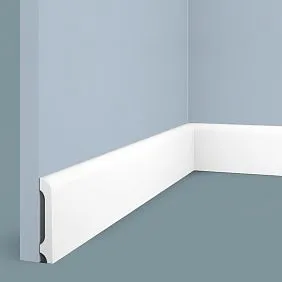
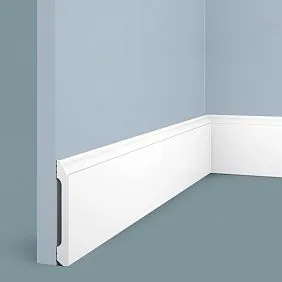
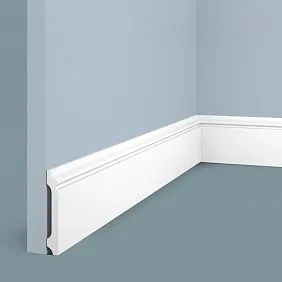
Our factory also produces:
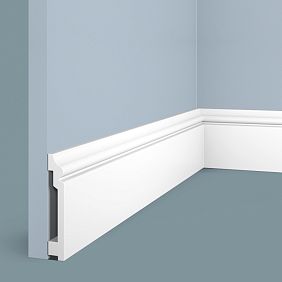
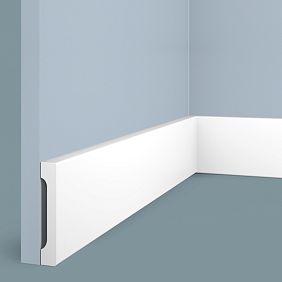
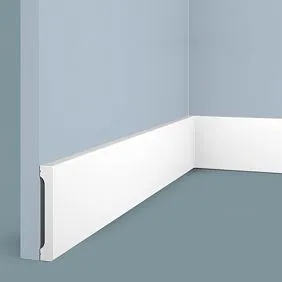
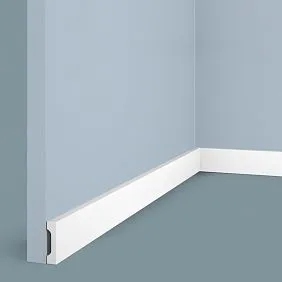

Ecological purity and safety
Natural wood is a hypoallergenic material, especially if European E0/E1 formaldehyde standards are followed during production. This means that by choosing solid wood or natural veneer, you get a finish that cannot harm health. Such baseboard does not emit toxic vapors, does not degrade indoor air quality, and is suitable for bedrooms, children's rooms, and medical facilities.
Get Consultation
Strength and durability
Wide wooden baseboard, 18 to 30 mm thick, can withstand significant mechanical loads: furniture impacts, scratches from household appliances, high foot traffic in hallways and entryways. Solid wood can be sanded multiple times and re-coated, allowing you to "refresh" its appearance without replacing the entire strip.
Thermal and Sound Insulation
The structure of natural wood is porous: it naturally absorbs sound and slows down the transmission of sound waves. In addition, wood has low thermal conductivity, so a wide baseboard creates an additional barrier zone at the junction of floor and wall, retaining heat inside the room and reducing heat loss.
Aesthetic value
Wood is a unique pattern of annual rings, tones ranging from light gold to rich coffee, play of light and shadow on the fiber texture. A wide profile seems to "reveal" the beauty of the natural surface and becomes a standalone decorative element, emphasizing the interior style — from Scandinavian minimalism to classic luxury.
Possibility of Restoration
For minor damage, scratches, or scuffs, local sanding and application of a new protective coating are sufficient. For solid strips, this means decades of life with minimal maintenance costs.
Ecological and Hygienic Aspects
Certificates and Safety Standards
When purchasing wooden baseboard, pay attention to the presence of:
● E0/E1 formaldehyde certificates, guaranteeing minimal levels of volatile organic compounds;
● FSC or PEFC certificates, confirming sustainable forestry and legal origin of wood;
● Sanitary-hygienic certificates and test protocols, confirming the absence of toxic resins and adhesive compositions.
These documents guarantee that the material will not harm your health and will not be a source of allergies.
Hypoallergenicity and Maintenance
Natural baseboard does not accumulate dust, is easily cleaned with a soft dry or slightly damp cloth without aggressive cleaning agents. This is especially important for people suffering from allergies and for children's facilities, where a high level of hygiene is required. Wood does not attract dust into cracks and does not support mold growth under normal microclimate conditions.
Types of materials and their features
Solid wood
Description: made from solid boards of hardwood species: oak, beech, ash, walnut.
Advantages:
Absolute naturalness and ecological purity;
Maximum strength and ability to be restored multiple times;
Exclusive wood grain pattern.
Disadvantages:
High cost (30–50% higher than veneered analogs);
Sensitivity to humidity fluctuations (recommended relative humidity 40–60%);
Need for compensatory gaps during installation.
MDF with veneer finish
Description: body made of moisture-resistant MDF, front surface — natural veneer 1–3 mm thick.
Advantages:
Stable geometry — minimal warping with humidity changes;
Wide selection of natural veneer shades and textures;
Price 30–40% lower than solid wood.
Disadvantages:
Veneer is susceptible to scratches and chips during improper installation or use;
No possibility of local restoration — severe damage requires full replacement of the element.
Combined Profiles
Description: lower part made of MDF, front panel — solid wood or veneer.
Advantages:
Natural surface appearance;
Increased moisture resistance and dimensional stability;
More affordable price compared to solid wood.
Disadvantages:
Installation requires high precision due to multi-layered construction;
In case of front panel damage, the entire element must be replaced.
Flexible solutions
Description: made from flexible composite materials with added wood fibers.
Advantages:
Replicate wall curvature and conceal unevenness up to 10 mm;
Suitable for arches, niches, and non-standard architectural forms.
Disadvantages:
Fewer natural shade options;
Possible changes in elasticity and fading over time.
Skirting boards with cable channel
Description: internal hollow profile for wiring.
Advantages:
Neat concealed routing for power, TV, and internet cables;
Easy access to wires for repair or modernization.
Disadvantages:
Limitations on number and thickness of wires;
Slightly higher cost.
Wood species characteristics
Oak
● Color: from light beige to deep brown.
● Hardness: high (on the Janka scale).
● Application: ideal for high-traffic areas (hallways, living rooms).
● Cost: one of the most expensive species, but also the most durable.
Ash
● Color: light gray, cream, sometimes with a slight green undertone.
● Hardness: high, but slightly lower than oak.
● Application: modern interiors, Scandinavian style.
● Cost: medium, more affordable than oak.
Beech
● Color: warm rose-brown.
● Hardness: medium.
● Application: living rooms, bedrooms.
● Cost: more economical than oak and ash.
Walnut
● Color: chocolate-brown, sometimes with black streaks.
● Hardness: high, but softer than oak.
● Application: luxury interiors, offices, living rooms.
● Cost: very high, exclusive.
Birch and pine (veneer)
● Color: light, yellowish.
● Hardness: low to medium.
● Application: budget solutions, paintable baseboards.
● Cost: the most affordable.
Sizes and profiles: how to choose
Width
● 80–100 mm — universal baseboards for ceilings up to 2.8 m.
● 100–120 mm — optimal for ceilings 2.8–3.2 m.
● 120–150 mm and above — stylish solutions for high halls and studios with ceilings over 3.2 m.
Thickness and depth
● Thickness (from wall to surface) — 18–30 mm. The greater the thickness, the higher the strength and durability.
● Depth (projection from wall) — 15–24 mm. Affects the contact area with the floor and protective properties.
Profile
● Straight — minimalism, loft, high-tech.
● With bevel — universal, suitable for most interiors.
● With grooves — classic, baroque, neoclassical.
● With a recess for lighting — modern design, floating floor effect.
Compensatory gaps
Any wooden floor and skirting board are subject to seasonal changes in humidity and temperature, so during installation, a gap of 8–10 mm is left between the bottom edge of the skirting board and the floor covering. A wide profile hides this gap, but it is mandatory to compensate for natural expansion.
Calculation of required quantity
To avoid shortages or surpluses, follow the step-by-step algorithm:
- Measure the perimeter of the room along the inner corner (for example, 5 m + 4 m + 5 m + 4 m = 18 m).
- Subtract large openings of doors/windows (for example, 18 m − 0.8 m = 17.2 m).
- Add a 10% allowance for cutting corners and defects (17.2 m × 1.10 ≈ 18.92 m).
- Confirm the package length (2.5 m).
- Divide the total length by the package length (18.92 ÷ 2.5 ≈ 7.568 → 8 packages).
Always round up to avoid running short of material at the final stage of installation.
Where and how to buy skirting boards in Nizhny Novgorod
Specialized stores and showrooms
● Advantages:
○ Wide selection of species and profiles;
○ Opportunity for live sample fitting under different lighting;
○ Professional consultations from designers and technicians;
○ On-site measurer visit and precise calculation.
● Disadvantages:
○ Prices 10–20% higher than market rates;
○ Often requires advance payment or deposits.
Online stores
● Advantages:
○ Convenient search and filters by material, size, and price;
○ Promotions, discounts, free delivery for orders above a certain amount;
○ Opportunity to order sample veneer or demo skirting board pieces.
● Disadvantages:
○ No in-person color control without samples;
○ Delivery times may vary depending on stock availability.
For convenience and reliability, we recommendwooden skirting board buy in Nizhny Novgorod through verified online suppliers offering free samples and guaranteed exact match to ordered specifications.
Construction Material Hypermarkets
● Advantages:
○ Affordable prices and wholesale discounts;
○ Option for self-pickup at any time;
○ All necessary accompanying materials (angles, clips, fasteners).
● Disadvantages:
○ Minimal selection of wood species and profiles;
○ No design and technical support;
○ No measurement and installation services.
How to choose a reliable supplier
Certificate and license verification
○ GOST for manufacturing wooden skirting boards;
○ E0/E1 and sanitary-hygienic certificates;
○ FSC/PEFC or similar international environmental certifications.
Review analysis and portfolio
○ Read reviews on independent platforms (Yandex Market, Otzovik, Google Reviews);
○ Request photos of real projects in Nizhny Novgorod;
○ Review reports on completed projects on the company's website.
Warranty and return conditions
○ Confirm production lead times (usually 3 to 14 days);
○ Check conditions for free replacement of defective items and return of unnecessary leftovers;
○ Learn about warranty and post-warranty service (sandblasting, restoration).
Price list transparency
○ Price of profiled strips, decorative angles, and accessories;
○ Price of fastening elements (clips, clip guides, self-tapping screws);
○ Installation rates — per meter or per volume of work;
○ Possible additional costs (delivery, surveyor’s travel).
Step-by-step installation guide for wide skirting boards
1. Surface Preparation
○ Remove old skirting and clean wall from accumulated dust and mounting residue;
○ Level wall deviations over 5 mm per 2 m using putty or decorative overlays;
○ Prime surface for better adhesion of adhesives and mounting glue.
2. Marking
○ Draw a straight reference line using a painter’s line at height matching skirting board width;
○ Mark wall locations of joints and corners, as well as clip or screw mounting points.
3. "Dry" fitting
○ Lay out all skirting board segments along the walls, previously placing them at the level of the baseboards;
○ Check angular joints accuracy and length of each cut piece;
● Adjust cutting marks if necessary.
4. Cutting
● Use a circular saw or a high-precision miter saw to cut 45° angles;
● For non-standard angles (e.g., 135°), use a universal adjustable template;
● Treat ends with protective varnish or oil immediately after cutting.
5. Mounting
● Clips and guides: mount the guide to the wall according to marks, snap the strips until they click;
● Liquid nails: apply the compound in a continuous bead or dot pattern, press the strip against the wall, and use temporary supports;
● Screws with caps: pre-drill holes, drive in the screws, and install decorative caps.
6. Final finishing
● Remove glue residue and dust with a dry cloth;
● Wipe the baseboard with an anti-static cleaner or protective wax;
● Check the level of installation and the tightness of the strip joints.
7. Installation on 'warm floor'
● Ensure the selected profile is certified for use at surface temperatures up to +27 °C;
● Maintain a compensatory gap of at least 10 mm between the bottom edge of the baseboard and the floor covering;
● For adhesive compounds, confirm with the manufacturer the allowable temperature and humidity conditions.
Care for wooden skirting boards
Daily cleaning
● Wipe the surface with a soft dry or slightly damp cloth;
● Avoid abrasive cleaners and solvents that damage the protective layer;
● Regularly remove dust and sand from the base to prevent micro-damage.
Regular restoration
● Apply the manufacturer-recommended varnish or oil every 6–12 months;
● For solid baseboards, periodic full sanding followed by reapplication of a new protective coating may be necessary;
● Remove minor scratches with fine-grit sandpaper and reapply the finish layer.
Controlling microclimate
● Maintain relative air humidity at 40–60 % and temperature +18…+24 °C;
● Use humidifiers during heating season and dehumidifiers in summer with excessive humidity;
● Avoid sharp and frequent temperature and humidity fluctuations, which may cause warping or cracking.
Professional maintenance
● For severe wear and multiple damages, hire professionals for major restoration: sanding and application of a new protective coating;
● After the warranty period, inquire with your supplier about paid service maintenance terms.
Design Techniques and Ideas
Contrasting Trim
Use a dark, wide baseboard on a light floor to create a striking accent and emphasize the room's geometry. Contrast enhances perception depth and visually 'raises' the ceiling.
Monochromatic solution
Choose a baseboard matching the wall or floor color to create a seamless, unified space. This technique visually expands the room and gives the interior a minimalist sense of openness.
Integrated Lighting
In models with niches for LED strips, place the LED strip and arrange soft ambient lighting along the room's perimeter. This solution gives the interior a modern 'floating' effect and convenient night lighting.
Space zoning
In large studios or open floor plans, use different types of baseboards (solid wood in the living room, veneered in the bedroom, flexible in hallways) to visually separate zones without walls or heavy structures.
Transition Masking
On platforms and stairs, a wide baseboard conceals technical gaps and unevenness, giving the interior a finished, professional look. This technique is especially relevant in multi-level spaces and lofts.
Frequently Asked Questions
Can wooden skirting boards be painted?
Yes. For MDF veneer, acrylic and alkyd paints are suitable; solid wood is better treated with stain and varnish to preserve the texture.
Is it necessary to prime the wall before installation?
Primer improves the adhesion of adhesive compounds and 'liquid nails,' especially on porous or dusty surfaces.
What is the minimum thickness of baseboard for 'warm floors'?
It is recommended to be at least 18 mm, with a mandatory compensatory gap of 10 mm.
How long does installation take?
A professional crew will install baseboards in a room up to 25 m² in 3–5 hours, including preparation and finishing touches.
How to store baseboards until installation?
In horizontal position, in a dry room, away from direct sunlight and heating appliances, in factory packaging.
Conclusion
A wide wooden baseboard is not just a decorative trim, but a comprehensive engineering and design solution. It gives the interior a finished look, protects walls and floors, creates a microclimate, and ensures aesthetic harmony. When choosing, pay attention to the material type, wood species, dimensions, profile, and do not neglect certificates and installation conditions. To avoid risks and extra costs,wooden skirting board buy in Nizhny Novgorod with quality assurance and professional service, contact trusted suppliers offering the full cycle: from measurements and samples to delivery, installation, and maintenance. Let your home shine with natural wood tones in every detail!