Article Contents:
- Evolution of balcony architecture: from utility to art
- Modern trends in balcony design
- Regulatory requirements: safety above all
- Climate factors and their impact on construction
- Materials science: choosing the foundation for longevity
- Wood: traditions and modernity
- Metal constructions: strength and durability
- Composite materials: technologies of the future
- Constructive solutions and types of railings
- Classic balustrades
- Modern panel systems
- Combined Constructions
- Design and calculation of railings
- Architectural design
- Structural calculation
- Manufacturing and installation technologies
- Production processes
- Installation work
- Protective Treatment and Finishing
- Surface Preparation
- Protective Coatings
- Stylistic solutions for various architectural styles
- Classical architecture
- Modern Architecture
- Regional styles
- Integration with landscape design
- Greening balcony space
- Seasonal decoration
- Economic aspects and budget planning
- Pricing factors
- Long-Term Economic Efficiency
- Technological innovations and development trends
- Smart technologies
- Ecological innovations
- New Materials
- Quality control and certification
- Quality standards
- Warranty Obligations
- Operation and maintenance
- Regular maintenance
- Preventive Maintenance
- Conclusion
The balcony is a special world between home and street, a place where architecture meets the sky. Here, every element must be thought out in detail, because it’s not only about beauty, but also about the safety of people at height. Balcony balustrade railings represent a unified system where each detail plays its role in creating a reliable and aesthetically perfect railing. This triad of elements forms not just a protective barrier, but a true work of architectural art capable of transforming the building’s exterior appearance and creating a comfortable space for relaxation.
Modern requirements for balcony railings go far beyond simple functionality. Today, this is a complex engineering system that must withstand significant loads, resist natural influences, and at the same time harmoniously integrate into the building’s architectural concept. Balustrades have become not just supporting elements, but artistic accents that define the style and character of the entire facade.
Selecting materials, structural solutions, and decorative elements for balcony railings requires a deep understanding not only of aesthetic principles but also of technical regulations, regional climatic characteristics, and specific usage conditions. Each project is unique and requires an individual approach, taking into account numerous factors — from the building’s architectural style to the owners’ personal preferences.


Evolution of balcony architecture: from utility to art
The history of balconies goes back to ancient times, when the first projecting platforms appeared on the facades of medieval castles and fortresses. Then they served exclusively defensive purposes, allowing defenders to observe and repel attacks. Decorative elements were minimal — the main requirement was strength and functionality.
The Renaissance revolution fundamentally changed the approach to balcony design. Architects of the Renaissance era first began to view balconies as elements of facade composition requiring artistic treatment. The first balustrades — miniature columns replicating the proportions and decoration of large architectural orders — appeared.
Baroque opulence of the 17th-18th centuries turned balconies into true works of art. Complex curved forms, abundance of decorative elements, play of light and shadow — all of this found expression in balcony railing design. Balustrades acquired complex profiles adorned with carving and gilding.
Classicism restored the strictness of proportions and restrained elegance to balcony architecture. The order system established canons still used today. Balustrades became more minimalist, yet no less expressive, emphasizing the building’s nobility and respectability.




Modern trends in balcony design
Modern balcony architecture is characterized by a variety of stylistic directions and technological solutions. Minimalist trends simplify forms, focusing on material quality and flawless execution. Eco-design integrates natural elements, creating harmony between architecture and the surrounding environment.
Technological innovations open up new possibilities for creating unique balcony spaces. Using composite materials, smart home systems, and energy-efficient solutions transform the balcony into a high-tech space for comfortable living.
Our factory also produces:


Regulatory requirements: safety comes first
Balcony railing design is regulated by strict regulatory documents that define minimum safety requirements. The height of the railing should be at least 1200 millimeters for multi-story buildings and 900 millimeters for low-rise structures. These parameters ensure protection against accidental falls of people of different heights and ages.
The strength characteristics of railings are regulated according to possible loads. The structure must withstand a horizontal load of at least 100 kilograms per linear meter without failure or residual deformation. Dynamic loads from wind, thermal deformation, and seismic activity are also considered in the calculation.
The distance between balusters is limited by safety requirements — the gap should not exceed 150 millimeters in residential buildings and 100 millimeters in childcare facilities. This prevents the possibility of children slipping through the railing.
Get Consultation
Climate factors and their impact on the structure
Balcony railings are subjected to intense natural factor impacts. Temperature fluctuations can reach 80-100 degrees Celsius over the year, requiring materials with low thermal expansion coefficients or special compensating devices.
Humidity and precipitation create conditions for corrosion of metal elements and biological damage to wooden structures. Quality protective treatment becomes critically important for the longevity of the railing.
Wind loads on high-rise buildings can be significant, especially in corner zones and upper floors. The railing structure must be designed to withstand these loads without losing stability.
Materials science: choosing the foundation for longevity
Wood: traditions and modernity
Wood remains one of the most popular materials for manufacturing balcony railings due to its unique properties. Oak provides maximum durability and prestige. Its density of 700-800 kg/m³ and high tannin content create natural protection against biological damage.
Larch is an ideal choice for outdoor use. High resin content and density of 650-700 kg/m³ provide excellent resistance to moisture and temperature fluctuations. The natural color of larch ranges from golden to reddish-brown, creating a warm and cozy atmosphere.
Thermally modified wood is an innovative solution combining the beauty of natural wood with improved performance characteristics. Treatment at 180-230°C alters the wood structure, enhancing its stability and biostability.
Metal structures: strength and longevity
Stainless steel provides maximum corrosion resistance and longevity. Different steel grades (AISI 304, 316, 316L) are intended for various operating conditions. Coastal and industrial areas require the use of more resistant alloys.
Aluminum alloys combine lightness with high corrosion resistance. Anodized coating additionally protects the surface and allows for various color options. Powder coating provides a wide range of colors and textures.
Wrought elements create a unique artistic effect but require quality anti-corrosion protection. Hot-dip galvanizing followed by powder coating provides long-term corrosion protection.
Composite Materials: Technologies of the Future
Wood-polymer composites combine the beauty of natural wood with the practicality of synthetic materials. They require no complex maintenance, do not rot, and do not change dimensions with humidity fluctuations.
Glass-polymer structures have high strength at low weight. They are not susceptible to corrosion, have low thermal conductivity, and can be colored in any hue. The service life of such structures exceeds 50 years.
Structural solutions and types of railings
Classic balustrades
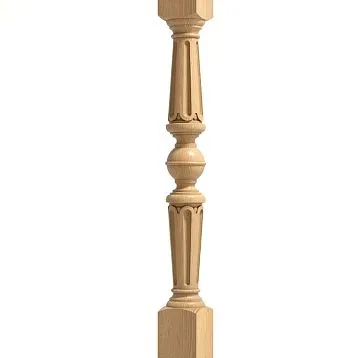
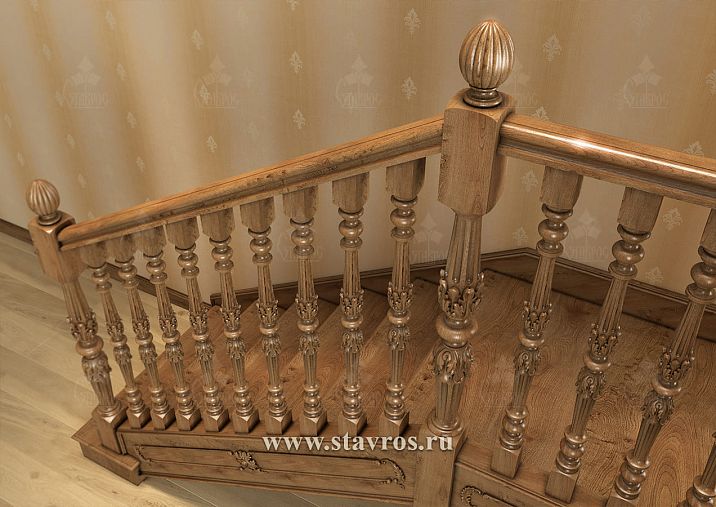
Classic balustrades consist of a series of balusters connected by horizontal rails. Element proportions are based on the golden ratio, creating a harmonious perception. Baluster height is usually 800-900 millimeters, diameter — 80-120 millimeters.
Rhythmic arrangement of balusters creates visual dynamics of the facade. Even spacing of elements with a 150-200 millimeter step ensures optimal combination of safety and aesthetics. Corner solutions require special attention to details of element connections.
Modern panel systems
Panel railings use solid or perforated panels between support posts. Glass panels create a sense of openness and do not obstruct views. Tempered glass 10-12 millimeters thick provides the necessary strength.
Metal panels can have various perforations, creating interesting light effects. Laser cutting allows creating complex decorative patterns. Wooden panels create a sense of privacy and coziness.
Combined constructions
Combined railings combine different materials and structural solutions. A metal frame with wooden infill creates a strong and beautiful structure. Glass inserts in a wooden frame combine privacy with openness.
Balusters for balconies can be integrated into panel systems, creating unique architectural solutions. This approach allows combining traditional forms with modern technologies. Design and calculation of railings
Architectural design
Architectural Design
Balcony railing design begins with analyzing the building's architectural style and surrounding construction. Stylistic unity of the facade requires careful selection of proportions, materials, and decorative elements. The scale of the railing should correspond to the overall building dimensions.
Color solutions affect the perception of the entire facade. Contrasting combinations create bright accents, monochromatic solutions emphasize compositional unity. Material textures add tactile qualities and visual depth.
Lighting of balcony space requires integrating lighting fixtures into the railing structure. Built-in lighting of balusters creates an impressive evening facade illumination.
Structural calculation
Railing calculations are performed in accordance with current construction codes. Static loads include the structure's self-weight and useful loads from people and equipment. Dynamic loads account for wind, thermal deformation, and seismic impacts.
Strength calculation determines required cross-sections of elements and types of connections. Stability calculation is especially important for tall and slender elements, such as balusters. Fatigue calculation accounts for cyclic loads from wind and thermal deformations.
Manufacturing and Installation Technologies
Production processes
Manufacturing high-quality balcony railings requires modern technological equipment and highly skilled specialists. Turning of balusters is performed on CNC machines, ensuring ideal repeatability of shapes and high surface quality.
Milling decorative elements allows creating complex profiles and ornaments. Multi-axis machining centers can perform 3D processing, creating three-dimensional decorative elements.
Welding work requires high qualifications of operators and strict quality control. TIG welding ensures strong and aesthetic connections of stainless steel. Quality control includes visual inspection, dimensional control, and non-destructive testing of welds.
Installation works
Installing balcony railings requires special care and adherence to safety rules when working at height. Preparation work includes marking mounting locations, preparing mounting holes, and installing anchor parts.
Installation sequence is determined by the structural features of the railing. Typically, support elements are installed first, then intermediate balusters, and the final stage involves handrails and decorative elements.
Quality control of installation includes checking the geometry of the structure, reliability of connections, and compliance with project dimensions. Acceptance tests confirm that the installed structure meets project requirements.
Protective treatment and finishing
Surface preparation
Quality protective treatment begins with careful surface preparation. Sanding wooden elements is performed in several stages with gradually decreasing abrasive grit. Final abrasive treatment P240-P320 ensures ideal surface smoothness.
Degreasing metal surfaces removes traces of technical lubricants and contaminants. Sandblasting creates a rough surface, improving adhesion of protective coatings.
Priming is a mandatory preparation stage ensuring reliable adhesion of the finish coating to the substrate. Primer selection depends on the substrate material and type of finish coating.
Protective coatings
Outdoor coatings must have high weather resistance and durability. Polyurethane enamels provide excellent protection and retain color for many years. Powder coatings create exceptionally strong and durable protection for metal structures.
Oil-based coatings for wood penetrate the material structure, providing reliable moisture protection. They highlight the natural beauty of wood and create a pleasant tactile surface. Wax-based compounds additionally protect against moisture and impart a noble matte sheen to the surface.
Antiseptic compounds protect wood from biological damage — fungi, mold, insects. Modern compounds provide long-term protection without altering the material's appearance.
Stylistic solutions for various architectural styles
Classical architecture
Classical buildings require appropriate balcony railing design. The order system determines proportions and decorative elements. Doric order is characterized by strictness and simplicity, Ionic by elegance and refinement, Corinthian by richness and ornamentation.
Materials for classical railings traditionally include natural stone, quality wood, wrought metal. Color solutions are usually restrained — white, cream, gray, natural wood tones.
Decorative elements include carved rosettes, palmettes, meanders, acanthus leaves. Each element has symbolic meaning and must correspond to the overall style of the building.
Modern architecture
Modern buildings provide greater freedom in material and form selection. Minimalist solutions use simple geometric forms and modern materials. Glass, metal, composites create a sense of lightness and technological sophistication.
Color solutions can be monochromatic or contrasting. Bright accents create dynamic compositions that attract attention. Lighting is integrated into the structure, creating an impressive evening illumination.
Modern railing functionality may include integrated plant irrigation systems, solar panels, and "smart home" elements. Balcony railings and balusters become part of a high-tech living environment.
Regional styles
Regional architectural traditions influence balcony railing design. The Russian style uses carved wooden elements, bright colors, folk ornaments. The Alpine style is characterized by massive wooden structures, natural materials, and a connection to nature.
The Mediterranean style uses wrought iron elements, terracotta colors, and plant motifs. The Scandinavian style is distinguished by simple forms, light colors, and eco-friendly materials.
Integration with landscape design
Balcony space greening
Modern balconies are often transformed into miniature gardens, requiring a special approach to railing design. Integrated planters become part of the railing structure, creating a unified composition.
Vertical greening uses the railing as support for climbing plants. Special guides and supports are integrated into baluster construction. Automatic irrigation systems can be discreetly installed within railing elements.
The microclimate of the balcony space is created through proper plant placement, water features, and shading systems. The railing plays an important role in shaping air flow and lighting.
Seasonal decoration
The ability to seasonally change balcony decoration requires flexible structural solutions. Removable elements allow adapting the railing to different seasons and events. Mounting systems for temporary decorative elements are integrated into the main structure.
Winter glazing can be incorporated into the railing structure, converting an open balcony into a closed loggia. Heating systems are integrated into railing elements to create a comfortable microclimate.
Economic aspects and budget planning
Pricing Factors
The cost of balcony railings depends on many factors. Materials are the main component of cost. Natural stone and premium wood are significantly more expensive than composite materials and standard steel.
Construction complexity affects manufacturing and installation labor costs. Simple panel systems are cheaper than complex railings with carved elements. Custom design increases cost compared to standard solutions.
The volume of work significantly affects unit cost. Large projects allow optimizing production processes and reducing cost. Delivery time also affects cost — urgent orders are more expensive.
Long-term economic efficiency
Quality materials and professional execution ensure the longevity of railings. The service life of quality structures is 25–50 years, significantly exceeding that of budget alternatives.
The maintenance cost of quality railings is minimal. They require only periodic renewal of protective coatings and simple care. Repairability allows replacing individual elements without dismantling the entire structure.
Impact on property value is an important factor in investment planning. Quality balcony railings increase building attractiveness and may raise its market value by 5–15%.
Technological innovations and development trends
Smart Technologies
Integrating "smart" technologies into balcony railings opens new opportunities for comfort and safety. Motion sensors automatically turn on lighting when people appear on the balcony. Monitoring systems control the condition of the structure and alert users to maintenance needs.
Automatic systems for lighting, plant irrigation, and shading create a comfortable environment without human intervention. Integration with "smart home" systems allows controlling all balcony functions via a mobile app.
Ecological Innovations
Solar panels are integrated into railing structures, providing autonomous power for balcony space. Rainwater collection systems use railing surfaces to collect and purify precipitation.
Biodegradable materials replace traditional synthetic compositions. Recycling of production waste reduces environmental impact. Carbon-neutral production is becoming a standard for responsible manufacturers.
New materials
Nanocomposites have unique properties — self-cleaning surfaces, color change depending on temperature, antibacterial properties. Smart glass can change transparency depending on lighting or by user command.
Bio-composites based on natural fibers combine eco-friendliness with high performance. Self-repairing coatings automatically remove minor surface damage.
Quality control and certification
Quality standards
Production of balcony railings is regulated by national and international standards. ISO 9001 sets requirements for quality management systems. Building codes define minimum requirements for strength and safety.
Material certification confirms their compliance with stated characteristics. Test protocols document results of strength, durability, and safety checks for structures.
Production control includes incoming inspection of materials, operational control of technological processes, and outgoing inspection of finished products. Traceability ensures the ability to track the origin of each structural element.
Warranty obligations
The warranty period for quality railings is 5-10 years depending on materials and operating conditions. Warranty service includes defect elimination, replacement of failed components, and consultation on operation.
Extended warranty may be provided upon compliance with operating and maintenance recommendations. Liability insurance protects the client from potential risks associated with railing operation.
Operation and Maintenance
Regular Maintenance
Proper care extends the service life of balcony railings and maintains their aesthetic qualities. Daily cleaning includes removing dust, leaves, and other contaminants. Weekly wet cleaning is performed using specialized agents suitable for specific materials.
Seasonal maintenance includes more thorough cleaning, inspection of protective coatings, lubrication of moving parts. Fastener inspection prevents loosening of connections and ensures structural safety.
Preventive maintenance
Timely detection of defects allows for their elimination with minimal effort. Local coating repairs prevent corrosion and other damage development. Replacement of worn elements maintains railing functionality and appearance.
Modernization of outdated systems allows integrating new technologies without full railing replacement. Seasonal preparation includes winter protection and preparation of irrigation systems for freezing temperatures.
Conclusion
Creating quality balcony railings is a complex process requiring deep knowledge in architecture, design, materials science, and technology. Balcony with railings and balusters becomes not just a functional element of the building, but a full-fledged living space that expands the possibilities of comfortable living.
Modern technologies and materials open boundless opportunities for creativity, but the foundation of quality remains a professional approach to design, manufacturing, and installation. Each project is unique and requires an individual solution, taking into account the architectural features of the building, climatic conditions, and client preferences.
Investments in quality balcony railings pay off through longevity, safety, and aesthetic excellence. They become an inseparable part of the building's architectural appearance, creating a comfortable environment for living and relaxation. Properly designed and executed railings will serve for many decades, delighting owners with their beauty and functionality.
The future of balcony architecture is linked to the development of eco-friendly technologies, integration of "smart" systems, and use of innovative materials. However, no matter how advanced the technologies, the foundation will remain the desire to create a safe, comfortable, and beautiful space for people.
For many years, the company STAVROS has specialized in creating high-quality architectural elements from natural wood, including exclusive balcony railings. By combining traditional wood processing methods with modern technologies, STAVROS creates products distinguished by flawless quality, durability, and unique beauty. Each STAVROS project is the result of careful planning, professional craftsmanship, and strict quality control at every production stage, making STAVROS products a benchmark in the field of balcony railing creation, capable of transforming any building and becoming a source of pride for their owners.