Article Contents:
- What is a wooden slat panel: a definition without fluff
- Ready-made panel or individual slats: what's the real difference
- Structural types: rigid and flexible panels — what's the fundamental difference
- Rigid wooden slat panels on MDF backing
- Flexible wooden slat panels on fabric backing
- Comparison table of types
- Slat material: solid oak, MDF, or beech — how to choose
- Wooden slatted panels made of solid oak
- Wooden slat panels made of MDF for painting
- Solid beech
- Comparison of three materials
- Where to use wooden slat panels: breakdown by zones
- Living room: accent wall, TV zone, zoning
- Bedroom: headboard and accent wall
- Hallway and corridor
- Kitchen: island, bar counter, dining area
- Study and home office
- Commercial interiors: offices, restaurants, boutiques, hotels
- Wooden slat panels for curved surfaces: when flexible solutions are needed
- Slat Orientation: Vertical, Horizontal, Diagonal
- Vertical Planks
- Horizontal battens
- Diagonal battens
- Installation of wooden slat panels: practical breakdown of methods
- Foundation Preparation
- Adhesive mounting
- Frame Installation
- How to install wooden slat panels: joining and corners
- Installing flexible panels on curved surfaces
- How to choose wooden slat panels: a systematic algorithm
- Finishing wooden slat panels: oil, varnish, stain, enamel
- Oil for oak
- Varnish for oak
- Oak toning: stains and pigmented oils
- Enamel and paint for MDF panels
- Wooden slat panels in different styles: quick navigation
- Caring for wooden slat panels: simple and long-lasting
- FAQ: Answers to Specific Questions
- About the Company STAVROS

You already know what it looks like. Enter a room — and immediately feel that every detail was considered here. The wall lives: shadows move with the light, the material is warm, natural, authentic. This is exactly the effect created bywooden lath panels— not because it's 'trendy,' but because the rhythm of parallel wooden slats engages deep human spatial perception.
But between 'I want a wall like that' and 'I order a specific material' lies a path that often leads to mistakes: the wrong material, the wrong format, the wrong structural type. The result is either an unsuitable panel or unexpected costs for rework.
This article is a practical guide to selection. Not a general overview of 'what exists,' but a specific breakdown: how exactly to choose wooden slat panels for a specific surface, a specific room, and a specific task. With an analysis of materials, structural types, application areas, installation solutions, and typical mistakes that are easy to avoid if you know what you're talking about.


What is a wooden slat panel: a definition without fluff
Clear concepts at the beginning are the key to ensuring the subsequent conversation is about real things, not vague images.
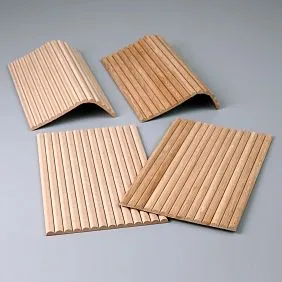
A wooden slat panel is a modular finishing element in which parallel slats of the same cross-section are fixed at equal intervals on a backing: rigid (MDF) or flexible (fabric-based). The entire module is installed as a single element. No manual spacing layout, no risk of errors, no individual fastening of each slat.
This is precisely what distinguishes a ready-made module from manually nailing individual slats. You can nail slats 'in a row'—but that's a different process, a different speed, and a different potential for errors. A ready-madewooden slat panelis factory-precision spacing, predictable seamless joining, and the ability to work with surfaces that manual nailing simply cannot cover: arches, columns, radius niches, curved furniture fronts.
The result on the surface is a rhythmic decorative relief with an expressive play of light and shadow. With side or directional lighting, each slat casts a soft shadow on the adjacent one, and the wall ceases to be flat: it gains volume, depth, an almost sculptural character.




Ready-made panel or individual slats: what's the real difference
The question 'to take a modular panel or to nail battens manually' is one of the most common when designing a batten surface. The answer depends on the surface, the volume of work, and the requirements for the result.
A detailed breakdown of this choice with practical examples can be found in the article Wooden slat panel: how to choose slatted panels for walls, zoning and stylish interior. Here, we will formulate the main principle.
Individual battens are justified where non-standard rhythm geometry, an author's step, or custom dimensions for a specific object are needed. This is a tool for specific tasks.
A ready-made modular panel is the optimal choice for most practical scenarios:
-
Installation speed: the module is mounted as a single element—without manual marking and step setting
-
Factory precision: the batten spacing is guaranteed by the production process—no accumulation of errors is possible
-
Seamless joining: precise factory spacing ensures perfect rhythm continuation from one module to the next
-
Radius surfaces: flexible fabric-based modules work with arches, columns, rounded corners—which with manual nailing require complex preparatory operations
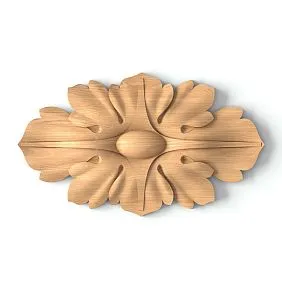
Our factory also produces:



Structural types: rigid and flexible panels—what is the fundamental difference
This distinction is more important than it might seem at first glance. The panel's construction type determines which surfaces it works on, how it is installed, and what result it guarantees.
Get Consultation
Rigid panels made of wooden slats on an MDF backing
This is a classic construction: slats are fixed to a rigid, flat MDF backing. Maximum geometric precision, even rhythm, stable module shape.
The ideal area of application is flat surfaces: walls, straight-line furniture fronts, ceiling constructions on a flat base. The rigid base eliminates any deformation due to humidity fluctuations (within normal room conditions) and ensures a predictable result.
Limitation — inability to work with radius surfaces. The rigid MDF backing cannot be bent without breaking.
Flexible panels made of wooden slats on a fabric base
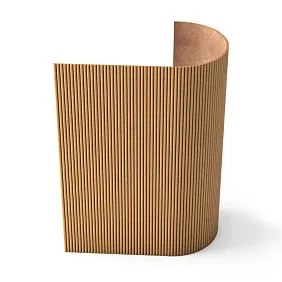
An innovative format that has opened up fundamentally new areas of application for slatted panels. The slats are attached not to a rigid base, but to a reinforced fabric mesh. This allows the module to bend to any radius — wrapping around columns, arches, rounded niches, curved furniture fronts.
When bent, the slats do not crack, separate, or deform. The spacing remains perfect along the entire length of the bend.Flexible panels made of wooden slatsare mounted with contact adhesive directly to the shape of the surface: applied, formed to the contour, fixed.
Seamless joining of adjacent modules is a key property ensured by factory precision of the pitch. The transition from one panel to another disappears visually: the surface is perceived as a single continuous slatted canvas.
For transportation, flexible panels are rolled into rolls—which is more convenient for delivering large batches than transporting rigid slabs.
Comparison table of types
| Parameter | Rigid (MDF backing) | Flexible (fabric base) |
|---|---|---|
| Flat walls | Ideally | Yes |
| Radius surfaces | Impossible | Ideally |
| Straight furniture fronts | Yes | Yes |
| Radius furniture fronts | No | Yes |
| Seamless joining | Yes | Yes |
| Transportation | Rigid slabs | Rolls |
| Installation | Glue / frame / nails | Contact adhesive |
Slat material: solid oak, MDF, or beech — how to choose
The right material is not a question of 'what looks prettier.' It's a question of suitability for the task, operating conditions, and design code.
Solid oak wooden slat panels
Solid oak is a material with a density of 700–750 kg/m³, a natural wood grain pattern, and a centuries-proven reputation. Each slat is unique: growth rings, tonal transitions, and grain direction create a living, never-repeating surface.
Under clear varnish — a warm golden tone with a pronounced texture. Under tinted oil — an endless range from Scandinavian cool gray to dark wenge and cognac brown, while the natural wood grain pattern is preserved and only changes its hue.
Oak wood slat panels— choice for:
-
interiors where natural aesthetics are dominant
-
commercial facilities with high load — the dense oak fiber is mechanically resistant to scratches and abrasion
-
projects where repairability without panel replacement is important — local damage is repaired by sanding and local oil application
-
premium housing, restaurants, hotels, showrooms where the status of the material matters
Oak does not imitate wood. It is wood — with all the properties that cannot be artificially reproduced.
Wooden slatted MDF panels for painting
MDF is a high-density fiberboard (750–850 kg/m³), pressed without visible fiber structure. Homogeneous, free of knots and resin pockets, with a smooth surface that perfectly accepts any paint coating.
This material is for those who work with color as the main design tool. Any shade of RAL, NCS, Pantone. Matte, satin, semi-gloss finish. MDF ensures absolute predictability of color results — no surprises from uneven paint absorption.
Primed slatted panelPAN-002 arrives with a pre-applied two-layer factory primer-isolator. The surface is ready for final painting immediately after installation — without self-priming. This is a fundamental advantage in tight project timelines: one production stage has already been completed at the factory.
MDF panels are the choice for:
-
projects where a specific color in an exact shade is important
-
interiors built around a color accent
-
objects with limited budgets and high demands for visual results
-
fast-paced projects where speed and predictability at every stage are important
Solid beech
Beech is a dense, non-porous wood, structurally similar to oak but with a more uniform and neutral grain pattern. Traditionally used for opaque finishes: enamels apply well to beech surfaces without revealing unwanted texture.
For interiors requiring a natural base with opaque enamel finishes, beech represents a rational choice between the price of oak and the sterility of MDF.
Comparison of three materials
| Parameter | Oak | MDF | Beech |
|---|---|---|---|
| Natural texture | Living, unique | Absent | Neutral |
| Painting | Toning + lacquer/oil | Any RAL/NCS | Opaque enamels |
| Mechanical resistance | Good | Good | Good |
| Repairability | High | Repainting | High |
| Cost | Higher | Below | Medium |
| Application | All zones, commercial | All zones, residential | All zones |
Where to use wooden slat panels: breakdown by zones
Each zone has its own requirements for the material. Let's examine them without generalities.
Living room: accent wall, TV zone, zoning
The living room is a space where slat panels realize their maximum potential. Three established scenarios:
Wall behind the TV. A screen against a slatted background becomes a full-fledged architectural composition, not a technical object on a bare wall. Backlighting along the TV panel with vertical slats creates a volumetric lighting effect—the so-called 'depth effect'—where the wall ceases to be a flat plane. Wooden slat panels behind the TV work best with dark-toned oak or rich-colored MDF finishes: the contrast with the main interior makes the TV zone cinematic.
Wall behind the sofa. A visual anchor for the relaxation area. The vertical rhythm of the slats 'holds' the entire living room space, giving it scale and structure. With a directed floor lamp or spotlight, the slats cast parallel shadows—and the wall begins to function as a sculptural backdrop.
Zoning an open layout. A slatted partition or accent wall visually separates the relaxation area from the dining or work area without constructing permanent walls. The gaps between the slats maintain airiness and light exchange between zones.
Bedroom: headboard and accent wall
In the bedroom, slatted panels carry a special psychological load. Natural materials and the rhythmic structure of the slats are not just beautiful; they are physiologically comfortable: the brain interprets natural patterns as neutral, reducing anxiety.
Wooden slat panels at the head of the bed are the most common scenario. The height of the slatted panel: from pillow level to the ceiling for maximum vertical emphasis; from the headboard to a height of 1.2–1.5 meters above for a delicate framing of the sleeping area.
Background lighting — a strip behind a suspended ceiling, an LED strip at the base of the slatted panel — creates light dynamics that turn the bedroom into a personal space with character.
Hallway and corridor
The hallway is the first thing a guest sees and the last thing the owner sees when leaving home. It is the space of first and last impressions. It is here that a small investment in quality finishes yields the greatest visual 'return'.
For a narrow corridor: horizontal slats visually expand the space — the eye glides along the horizontal lines and perceives the volume as wider. For a hallway with a low ceiling — vertical slats raise it visually.
Practical note:wooden slat panels in the hallwaymade of solid oak are resistant to mechanical impacts — dense oak fiber does not leave dents from accidental hits with a bag or umbrella.
Kitchen: island, bar counter, dining area
In the kitchen, slatted panels are used outside the work zone. Direct contact with steam from the stove or splashes near the sink is unacceptable for standard MDF. But on the side facades of a kitchen island, bar counter, in the dining area, or on the wall opposite the stove — slatted panels work flawlessly.
A kitchen island with slatted side facades is one of the most striking techniques in modern kitchen design. The vertical rhythm of the slats visually lightens the massive volume of the island and gives it the character of a professional kitchen.
For kitchen applications, solid oak with an oil finish is recommended: the oil coating creates protection from within, repelling incidental moisture, and renewal every 2–3 years maintains the protective properties.
Office and home office
A workspace with wooden slatted panels is an environment that simultaneously stimulates and calms. The natural material reduces psychological tension during prolonged concentration. The rhythm of the slats on the wall behind the desk or around the video conferencing area creates a professional backdrop—without excessive decor, without distracting elements.
For a home office, a warm-toned oak wall slatted panel is organic: the natural warmth of the material creates a sense of coziness without reducing work focus. Read more about applications in offices and living spaces in the article Wooden slatted wall panel: a living surface that speaks with space.
Commercial interiors: offices, restaurants, boutiques, hotels
Commercial spaces are a special area where material requirements are stricter and the cost of error is higher.
Restaurant and cafe: slatted panels reduce reverberation (echo), create atmosphere, and mark project quality. Oak in a natural tone or dark stain is the standard for premium segment restaurants.
Meeting room and office reception: slatted panels shape the professional image of a space. A reception desk facade with vertical oak slats is not decor for decor's sake, but a material expression of corporate values.
Boutique and showroom: a slatted backdrop works as a display system—a neutral or accent surface against which the product 'sounds' right.
Wooden slatted panels for curved surfaces: when flexible solutions are needed
This is a separate and independent discussion. Because it is precisely here that most projects encounter an unexpected obstacle.
A rigid, straight panel will not fit on a column. It will not fit on an arched slope. Nor will it fit on a rounded corner or a curved furniture front. This is where the options begin: milling slats to a radius, steam bending, nailing separate short planks—all of this is labor-intensive, expensive, and prone to visible seams.
Wooden slat panels for radius wallson a fabric base solve the problem differently. The fabric carrier allows the module to take the shape of any radius without special operations. The slats do not deform—they retain the perfect geometry of the profile and precise factory spacing along the entire length of the bend.
Installation: contact adhesive is applied to the fabric base, the panel is applied to the surface and formed to its contour. For columns—it wraps around the circumference. For arched slopes—it follows the arc. For rounded niches—it takes the shape of the radius ends.
Seamless module joining: adjacent flexible panels are joined butt-to-butt, and the factory spacing of the slats ensures a perfect continuation of the rhythm without interruption.
A detailed breakdown of the application of flexible panels on radius surfaces—in the articlehow to choose panels for radius walls, columns, niches, and complex interior surfaces.
Slat orientation: vertical, horizontal, diagonal
Orientation is one of the first decisions in a slat panel project. It might seem like a detail. In reality—it is a decision about the proportions of the space.
Vertical battens
They work with height. A vertical rhythm stretches the space upward, adding solemnity and scale to the room. In apartments with standard ceilings of 2.5–2.7 m—this is one of the most accessible and effective ways to change the perception of proportions.
With side lighting, vertical battens create long parallel shadows that enhance the effect of height. With floor accent lighting, the light 'pulls' the battens upward—the wall acquires a theatrical character.
Horizontal battens
They work with width. A horizontal rhythm visually expands the space and reduces the perceived height—which is useful in narrow corridors and rooms with disproportionately high ceilings.
In the hallway, horizontal battens 'propel' the gaze along the space. On a wide living room TV wall—they create a cinematic horizontal in a 'widescreen' format.
Diagonal battens
Dynamics and movement instead of stasis. A diagonal rhythm turns the wall into an independent design object—not a background, but a statement. Used in unconventional, authorial projects where the surface must speak its own language.
Diagonal installation requires jeweler-like precision of the angle: any deviation is immediately visible. Here, factory precision of the module is fundamentally important—any error in the step is visually amplified many times over with a diagonal layout.
Installation of wooden batten panels: a practical breakdown of methods
Foundation Preparation
The first and mandatory condition: the substrate is clean, dry, without crumbling fragments. Primed drywall, leveled plaster with primer, MDF of a furniture carcass—all these surfaces are suitable.
Plane irregularities: up to 3 mm—acceptable for adhesive installation. More than 3 mm—installation on a metal frame with leveling using a laser level. On the ceiling, frame installation is mandatory regardless of the slab's condition.
Adhesive mounting
The most common method for residential interiors on flat walls. Mounting adhesive ('liquid nails' or contact adhesive for wood and MDF) is applied to the panel backing in parallel strips with a 150–200 mm spacing, the panel is pressed against the surface, and leveled.
Additional fixation with finishing nails or micro-pins—around the perimeter of the fabric backing (for flexible panels) or through the backing onto the load-bearing profiles—increases reliability and prevents deformation under load.
The final strength of the adhesive bond is achieved after 24 hours. During this period, physical stress on the panel is undesirable.
Frame installation
Used for significant wall irregularities, when it is necessary to run utilities behind panels, when creating an acoustic system with filler, or for ceiling installation. The metal profile is attached to the base surface and leveled with a laser level; panels are secured to the profile with self-tapping screws.
Advantage: perfectly flat surface result regardless of the initial wall condition. Disadvantage: higher labor costs and loss of 30–50 mm of depth behind the panel.
How to install wooden slat panels: joining and corners
Joining adjacent modules – butt joint. The factory-precise pitch ensures the rhythm continues without shifting. Before final fixing of the second panel – place it against the first and ensure the rhythm matches. Only then – fix it.
Internal corner: the outermost slats are cut at 45° on a miter saw with fine teeth. External corner: similar cutting or a corner overlay profile. Cuts on MDF panels are primed manually before final painting.
Installing a flexible panel on a curved surface
Contact adhesive is applied to the fabric backing. The panel is applied to the surface and shaped to its contour sequentially – section by section. On cylindrical surfaces (columns) – it is wrapped around. Additional fixation with micro-pins if necessary.
Rule: the adhesive must achieve initial tack (usually 5–10 minutes depending on the composition) before full pressing. This prevents the panel from slipping on the curved surface until polymerization.
How to choose a wooden slat panel: a systematic algorithm
This is not 'follow your intuition.' It's a specific sequence of decisions.
Decision 1: Surface. Flat or radius? Flat — rigid or flexible. Radius — only flexible on a fabric base.
Decision 2: Material. Natural aesthetics are important → oak. Exact color is important → MDF for painting. Opaque enamel with a natural base → beech.
Decision 3: Readiness for finishing. Have time and resources for priming → PAN-001 in MDF. No time or need predictability → PAN-002 with factory two-layer primer.
Decision 4: Orientation. Need height → vertical. Need width → horizontal. Need dynamism → diagonal.
Decision 5: Format. Local accent → 950 mm format. Continuous cladding → 2700 mm.
Decision 6: Sample. Before ordering a batch — always a sample. A photo on a screen conveys neither the tactility nor the play of light and shadow in real lighting.
Decision 7: Calculation. Panel width 1010 mm. Zone width ÷ 1010 = number of panels (round up) + 10–15% margin for trimming.
Finishing of wooden slat panels: oil, varnish, stain, enamel
Finishing is not the final step, but part of the design decision. It determines both the color, the degree of protection, and the durability of the result.
Oak Oil
Oil penetrates the fiber structure and creates protection from within — unlike varnish, which forms a protective film on the surface. Result: the surface remains tactilely 'alive,' preserving the natural feel of the wood.
Rubio Monocoat Oil — the recommended choice for oak slat panels in residential and commercial interiors. One coat covers everything. Wide range of tinting options.
Refresh: every 2–3 years under normal use. Local damage: sand with P240–P320 sandpaper, spot application of oil — without replacing the panel.
Oak Varnish
Forms a transparent or tinted protective film on the surface. Matte varnish — for a natural aesthetic without shine. Semi-gloss — for a subtle visual activation of the texture. Glossy — rarely used on slat panels, can create excessive reflections.
Varnish coating refresh — every 5–7 years under normal use.
Oak Tinting: Stains and Pigmented Oils
Scandinavian gray, cold linen, tobacco cognac, anthracite — all these tones are achieved using tinting oils or water-based stains. Important: the natural grain pattern is preserved, only the shade changes. This is precisely what distinguishes tinted solid wood from painted MDF.
Enamel and Paint for MDF Panels
For MDF finish — polyurethane and acrylic enamels (for furniture scenarios) or water-based paints (for interior scenarios). Applied with a spray gun or short-nap roller. Primed MDF (PAN-002) accepts paint without additional preparation.
Wooden slatted panels in different styles: quick navigation
Specifics without general words.
Scandinavian minimalism: light oak or white MDF. Few details — lots of texture. The panel carries the main tactile and visual note of the interior.
Japanese minimalism: natural non-uniformity of oak grain, neutral tint tones. The surface is the essence of the space, not an accent. Read more about the living natural surface of oak in the article Wooden Slat Panels: A Living Surface That Speaks.
Neoclassicism: white or cream slats combined with classic moldings. A multi-layered architectural environment with a modern character.
Biophilic design: natural oak as the main material of the space. Psychologically proven effect of reducing anxiety through contact with natural patterns.
Loft: dark oak slats against a backdrop of exposed concrete or brick. Natural material softens the harshness of industrial aesthetics without destroying its character.
Care for wooden slatted panels: simple and long-lasting
No complex care required. A few clear rules.
MDF under paint/enamel: dry or slightly damp soft cloth. No abrasives, no aggressive solvents. Scratches and chips – local repainting with matching shade.
Oak under varnish: soft damp cloth, neutral cleaners if needed. Varnish renewal – every 5–7 years.
Oak under oil: every 2–3 years – apply fresh oil. This is not a complex operation: wipe the surface with a clean cloth and oil, let it absorb, remove excess. Local damage – sanding and spot oil application.
FAQ: answers to specific questions
What is a wooden slat panel?
Ready factory module: parallel wooden slats fixed on a backing (MDF or fabric base) with precise spacing. Mounted as a single element on walls, ceilings, furniture fronts, or curved surfaces.
Which wooden slat panels are better: oak or MDF?
Depends on the task. Oak – for natural aesthetics and durability. MDF – for color solutions and predictable painting in any shade.
Why is a ready-made panel better than nailing individual slats?
Factory spacing eliminates errors. Flexible fabric backing allows work with curved surfaces. Installation speed is significantly higher. Seamless joining is guaranteed.
How to install wooden slat panels?
For smooth walls — mounting adhesive. For uneven walls and ceilings — metal frame. For curved surfaces — flexible fabric-backed panels, installed with contact adhesive.
Do MDF panels need to be primed before painting?
Primed panel PAN-002 comes with a factory two-layer primer and is ready for final painting without additional preparation.
Can a column be clad with wooden slat panels?
Yes. For columns and any curved surfaces, fabric-backed wooden slat panels PAN-001 are designed — they wrap around any radius without slat deformation.
Which panel format to choose for a bedroom?
For a headboard — 950 mm format. For full-height cladding from floor to ceiling — 2700 mm.
Do wooden slat panels affect acoustics?
Yes. The slats scatter sound waves and reduce reverberation. When acoustic absorber is installed behind the panel, the effect is multiplied.
How to calculate the number of panels?
Panel width is 1010 mm. Zone width ÷ 1010 = number of panels (round up) + 10–15% reserve for trimming.
Is it possible to order a sample?
Yes. The panel sample is available on the website as a separate item — it allows you to evaluate the actual profile, slat spacing, and surface finish quality.
About the company STAVROS
The finishing materials market has many manufacturers selling 'something wooden'. Among them are companies with history, technology, and an understanding of what precision means in an architectural product.
STAVROS is a Russian manufacturer of wood and MDF products, founded in Saint Petersburg in 2002. The company started as a small workshop of two artists — Andrey Ragozin and Evgeny Tsapko. Already in 2003, the workshop participated in the reconstruction of the Konstantinovsky Palace in Strelna. Then — the Hermitage, Alexander Palace, Trinity-Izmailovsky Cathedral, Sheremetev Mansion. This is not a marketing list — it's context explaining why geometry requirements and surface quality standards here cannot be achieved in production without control.
STAVROS production operates in Saint Petersburg under strictly controlled conditions: temperature 20–24°C, humidity not less than 40%. This eliminates warping, shrinkage, and geometry instability — problems often encountered by buyers of cheap slatted panels 'from the market'.
In the STAVROS catalog — buy wooden slatted panelsare available in two material versions (oak and MDF), two structural formats (rigid and flexible on fabric backing), and a wide stock program. Shipping from one unit. Delivery across Russia and CIS countries.
STAVROS showrooms operate in Saint Petersburg and Moscow. There you can evaluate live material samples, see how the slatted surface works under different lighting, and make an informed decision before ordering. The manager team will help calculate volume, choose format, and place an order.wooden slat wall panelsfor a specific project — apartment, office, restaurant, or commercial showroom.Wooden Slat Panels: How to Choose Wall Panels for Walls and Interiors— additional material for those who want to delve deeper into the topic before making a final choice.