












































































Article Contents:
- What is a slat panel: precise definition
- Why slat panels became a trend and will remain so for a long time
- Where to use slat panels: detailed breakdown of zones
- Slat panel for living room wall
- Slat panel behind TV: TV zone
- Slat panel in bedroom at headboard
- Slat panel in hallway
- Slat panel for ceiling
- Slatted panel for furniture fronts
- Slatted panel for niches
- Slatted panel for columns and arches
- Slatted panel for kitchens
- Slatted panel for reception desks and commercial interiors
- Material for slatted panel: MDF or solid oak
- MDF slatted panel for painting
- Solid oak panel
- Comparison table of MDF and solid oak
- Slatted panel formats: rigid, flexible, and beaded
- Rigid slat panel on MDF backing
- Flexible slat panel on fabric base
- Panel made of half-round molding strips
- Vertical or horizontal: choosing slat orientation
- Vertical orientation
- Horizontal Orientation
- Diagonal and non-standard solutions
- How to install a slat panel: methods and technology
- Foundation Preparation
- Slat panel on adhesive: fast and clean
- Installation on a metal frame
- Flexible slat panel on adhesive: working with radius
- Panel joining and corners
- Slat panel and acoustics: a function that is often underestimated
- Style compatibility: what design does a slat panel work with
- Scandinavian minimalism and Nordic style
- Modern classic and neoclassic
- Japanese minimalism, wabi-sabi
- Industrial loft
- Biophilic design
- How to choose a slat panel: step-by-step algorithm
- Slat panel care: how to maintain the result
- FAQ: Answers to Popular Questions
- About the Company STAVROS

Look at a modern interior — and you will almost certainly find it. Slat panels are present today in living rooms and bedrooms, in restaurants and offices, on furniture facades and ceilings. Rhythmic parallel slats have become almost the main visual language of modern finishing. But what explains such pervasiveness? And how not to get lost in the variety of formats, materials, and installation methods when the choice is specific, and the price of a mistake is the entire appearance of the room?
This article provides a detailed practical breakdown: from what a slat panel is and how it differs from ordinary wall panels, to a detailed algorithm for choosing for a specific task. MDF or solid wood, vertical or horizontal, adhesive or frame — there is an answer to each of these questions here.


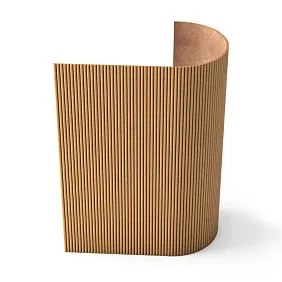

What is a slatted panel: precise definition
Let's start with the main thing — terminology. Because the ambiguity of concepts in this topic leads to people ordering one thing, receiving another, and ending up disappointed.
A slatted panel is a ready-made factory module where parallel slats of identical cross-section are fixed to a backing with precise and uniform spacing. The backing can be rigid (MDF) or flexible (fabric base). The slats can be made from solid wood or paintable MDF. The entire module is installed as a single element: without manually marking each slat, without the risk of disrupting the rhythm, and without the need to individually adjust the spacing.
This fundamentally distinguishes a slatted panel from the manual installation of individual slats. Individual slats are a custom solution with variable spacing, manual marking, high labor costs, and certain risks of inaccuracies. Ready-madeslatted panels for walls— is factory precision, guaranteed rhythm, predictable results, and significantly lower labor costs.
How does a slatted panel differ from a regular wall panel? A regular wall panel is a flat or textured slab without a pronounced linear rhythm. A slatted panel is precisely a row of parallel slats with gaps between them. The gap is not a defect but a structural and aesthetic part of the product: it creates light and shadow, forms depth, and gives the surface volume.




Why slatted panels became a trend and will remain one for a long time
Fashion in interiors comes and goes. But slatted aesthetics have already been part of design for several decades—and show no sign of giving way to the next fad. Why?
Firstly, it works with what is fundamentally timeless: natural material and architectural rhythm. Wood is not a trend; it is a basic human desire for warmth and natural texture. The rhythm of parallel lines is a graphic foundation that is organic in minimalist, classic, Scandinavian, and biophilic interiors simultaneously.
Secondly, a decorative slatted panel solves several tasks in one solution: it creates texture, accentuates a zone, improves acoustics, and simplifies installation compared to other types of finishes. Few finishing materials can boast such multifunctionality.
Thirdly—scalability. The same format looks organic both in a small bedroom, a double-height living room, and a restaurant hall with 200 seats. The scale of the task does not limit its application.
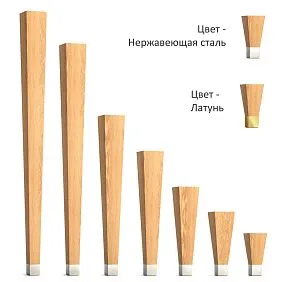
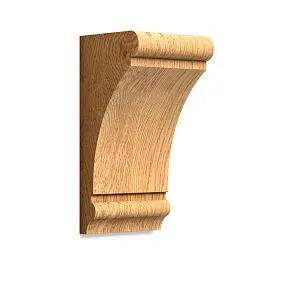
Our factory also produces:


Where to use slatted panels: a detailed breakdown of zones
Let's explore the application in detail and concretely—not limited to a list of rooms, but examining each zone from a practical perspective.
Get Consultation
Slatted wall panel for the living room
The living room is a space where an accent wall works for the entire interior. A slatted wall panel here takes the position of the main decorative element: it forms the visual center of the room, maintains its scale, and sets the tone for the entire space.
Most often, a slatted panel is placed on the wall behind the sofa or on the wall you see immediately upon entering. The vertical orientation of the slats elongates the room upward—which is especially valuable in apartments with standard ceilings of 2.5–2.7 m. With directed lighting—a floor lamp, spotlight, or built-in lighting—the slats cast parallel shadows, and the wall acquires an almost sculptural character.
The material is chosen according to the design code: natural oak—for warm, natural interiors; primed MDF for painting—for a color accent in the desired RAL shade; tinted oak—for modern classic or Nordic minimalism.
Slatted panel behind the TV: TV zone
A TV wall with a slatted panel is one of the most enduring designer requests in recent years. A screen 'hanging' on a bare wall without context is perceived as a technical object. The same screen against a slatted surface becomes part of a cohesive composition.
Practical aspect: the slats conceal cables and wires—they get lost in the rhythm of shadows between the planks. Lighting along the TV panel combined with the slatted texture creates a light volume commonly referred to as the 'depth effect': the wall ceases to be flat and begins to 'breathe'.
For the TV zone, both dark-tinted oak slats and rich-colored MDF—anthracite, dark blue, deep green—work well. The contrast between the dark background and the light interior of the living room helps create a cinematic atmosphere.
Slatted panel in the bedroom at the headboard
In the bedroom, the tactility and visual warmth of the material are felt more acutely than anywhere else. The slatted panel at the head of the bed serves as both a decorative accent and a functional backdrop, transforming the bedroom into a personal space rather than just a room with a bed.
The height of the slatted panel at the headboard varies: from floor to ceiling for maximum architectural statement, from headboard to ceiling to accentuate the bed area, or partially for delicate decor without dominance.
Soft ambient lighting—such as a strip behind a suspended ceiling or at the base of the slatted panel—transforms the wall into a luminous object with vertical slats. This solution has long been a hallmark of professional bedroom interiors.
Slatted panel in the hallway
The hallway is the first and last room seen by both the homeowner and guests. Here, the interior slatted panel serves a special function: it creates the first impression of the entire space.
For a narrow corridor, horizontal slat orientation visually expands the space—the eye glides along horizontal lines, perceiving the volume as wider. For a hallway with a low ceiling, vertical orientation is the obvious choice. In both cases, even a small slatted surface area dramatically alters the perception of the entire space.
Durability is a separate advantage for the hallway. A wooden slatted panel, especially one made of solid oak, is resistant to accidental impacts and mechanical stress. The dense structure of oak fiber does not dent from a carelessly tossed backpack or brushed bag.
Slatted panel for the ceiling
Ceiling application is both spectacular and functionally rich. A slatted panel on the ceiling simultaneously creates atmosphere, provides acoustic effects, and conceals utilities—all in one installation solution.
The slats are mounted on a metal frame with an adjustable gap between it and the base ceiling. This gap conveniently accommodates electrical wiring, conceals acoustic fillers, and houses LED strips. Light passes through the gaps between the slats in soft bands, creating a distinctive slatted light pattern on the surface.
In restaurants, cafes, meeting rooms, and hotel lobbies, slatted ceilings are the standard for quality interior design. In residential interiors, they are rapidly gaining popularity as a way to create 'ceiling architecture' without major structural interventions.
Slatted panel for furniture fronts
Furniture application opens a special chapter in the history of slatted panels. A standard smooth front of a wardrobe, cabinet, or kitchen island with an applied slatted panel transforms into a full-fledged architectural object.
Vertical slats on a furniture front visually lighten the volume: even a large sliding wardrobe with slatted cladding is perceived as lighter than a similar one with a smooth surface. On a kitchen island, side slatted fronts create the feel of a professional kitchen from expensive custom projects.
For furniture application, geometric precision is critically important—uniform slat spacing without the slightest errors. This is precisely what makes factorypanels made of MDF and solid oakthe ideal choice for furniture fronts: dimensional accuracy is ensured by the manufacturing process, not by manual fitting.
Slatted panel for a niche
A niche with slatted finishing is one of those design techniques that create the impression of significant investment with relatively modest costs. The end and side walls of a niche, finished with a slatted panel, create a 'box' effect with emphasized depth.
Built-in perimeter lighting in the niche, combined with the slatted texture, enhances this volume to the point where the niche begins to be perceived as a separate architectural stage. Whether it's a TV, decorative objects, bookshelves, or a home bar—whatever is inside, the slatted background works to present it.
Slat panel for columns and arches
Columns and arches are traditionally challenging areas for finishing. A rigid, straight slat will not lay properly on a curved surface without special preparation: milling, thermal bending, or radius fitting.
Flexibleslat panelon a fabric base solves this problem in a fundamentally different way. The fabric backing allows the module to conform to any curved surface—columns, arches, rounded corners. The slats themselves do not deform, the spacing remains perfect, and seams are invisible. This is a revolutionary solution for commercial interiors where curvilinear architecture is the norm.
Slat panel for the kitchen
In the kitchen, a slatted panel is used where there is no direct contact with steam and splashes: in the dining area, on the wall opposite the work surface, on the side facades of the kitchen island or bar counter.
Solid oak with oil finish is a deliberate choice for the kitchen: the oil coating protects the wood from within, repelling incidental splashes and moist vapors. Painted MDF with moisture-resistant enamel is an alternative if a specific color and easy surface maintenance are important.
Slat panel for reception desks and commercial interiors
The reception desk is the company's face in physical space. A wooden slat panel on the desk's facade instantly communicates: quality and attention to detail are valued here.
In commercial interiors—offices, boutiques, restaurants, hotels—slat panels serve a triple function: decorative, acoustic, and branding. The texture and color of the material become part of the space's design code, alongside the logo and fonts.
Material for slatted panel: MDF or solid oak
Choosing a material isn't a question of 'the more expensive, the better.' It's a question of suitability for a specific task. Let's examine both options in detail.
Panel made of MDF slats for painting
MDF is a high-density fiberboard (750–850 kg/m³), pressed without a visible fiber structure. It is homogeneous, without knots or resin pockets, with a smooth surface that perfectly accepts any paint and varnish coating.
The main advantage of a panel made of MDF slats is absolute freedom in color design. Any shade from RAL, NCS, Pantone systems. Matte enamel for delicate relief. Satin for a soft sheen. Semi-gloss for a bright color accent. The color range is practically limitless.
Primed MDF arrives to the customer already prepared for final painting—without additional on-site sanding and priming operations. This reduces the installation cycle time and lowers the risk of errors during the application of the final coating.
A limitation of MDF is its sensitivity to constant moisture. Standard MDF is not used in unventilated rooms with consistently high humidity levels. For kitchen and bathroom areas, moisture-resistant options or alternative materials are used.
A panel made of MDF slats is the ideal choice if:
-
a specific color and precise shade matching are important;
-
the interior is built around a color accent;
-
The project budget is limited, but the result must be high-quality;
-
A uniform surface without a natural grain pattern is required.
Solid oak panel
Solid oak is a material with a density of 700–750 kg/m³ and a natural wood grain pattern, unique to each plank. No veneer, film, or paint can replicate the living play of annual rings and tonal transitions in solid wood. This is that very 'living' material that transforms the appearance of a space simply by its presence.
A panel made of oak planks under clear varnish reveals a warm golden hue with a pronounced texture. Under tinting oil, you can achieve a cool Scandinavian gray, rich cognac, graphite, or classic wenge—while preserving the natural wood grain pattern, which only changes in tone but does not disappear.
The mechanical durability of oak is a serious argument for commercial facilities and high-traffic areas. Dense oak fiber is resistant to scratches, dents, and abrasion. Local damage can be repaired by sanding and reapplying a protective coating—without replacing the entire panel.
A panel made of solid oak planks is the ideal choice if:
-
natural aesthetics are a priority;
-
the tactile warmth of a natural material is needed;
-
durability and repairability are important;
-
Commercial object with high load
Comparison table of MDF and solid oak
| Parameter | MDF for painting | Solid oak |
|---|---|---|
| Color options | Any RAL/NCS/Pantone shade | Natural + oil tints |
| Surface texture | Uniform, without pattern | Live natural pattern |
| Moisture resistance | Medium (standard) | High when treated with oil |
| Mechanical resistance | Good | Good |
| Repairability | Repainting | Sanding + oil/varnish |
| Ecological | Neutral | Natural material |
| Price range | Below | Higher |
| Ready for finishing | Primed, ready for painting | For oil/varnish application on site |
Panel formats from slats: rigid, flexible, and beaded
In addition to material selection, the panel's shape and construction determine its applicability to specific surfaces. The catalog features three fundamentally different structural solutions.
Rigid panel from slats on MDF backing
The classic and most common format. Slats are fixed to a flat MDF backing with precise factory spacing. The module is installed as a single element: with adhesive, finishing nails, screws on guides, or a combination thereof.
The advantages of the rigid format are obvious: maximum geometric precision, stable rhythm, predictable joint between adjacent modules. This is the best solution for flat walls, straight-line furniture fronts, and ceiling structures.
The limitation of the rigid format is the inability to work with radius surfaces without special operations. The rigid MDF backing cannot be bent without risk of damage.
Flexible slat panel on a fabric base
An innovative and most technically complex format. The slats are attached not to a rigid base, but to an elastic fabric backing. This allows the panel to conform to the shape of any curved surface: columns, arches, rounded corners, curved furniture fronts.
During installation, the flexible slat panel is simply applied to the surface and fixed with adhesive, taking its shape without deforming the slats. The slat spacing remains perfect along the entire length of the panel—something fundamentally impossible to achieve when manually laying individual slats along a curve.
Seamless joining of adjacent modules is a key property ensured by factory precision of the spacing. The surface is perceived as a single continuous slat fabric, not a set of separate sections.
Panel of half-round molding slats
A separate format with a distinct aesthetic. Slats with a rounded, rather than rectangular, profile create a different play of light and shadow: light glides gradually over the rounded surface, without a sharp transition between the illuminated and shaded edge. The effect is softer, more 'alive,' almost sculptural.
This format works well in bedrooms, children's rooms, living rooms with a soft and warm character. Where strict geometry is less important than tactility and coziness—the panel with half-round profile slats creates a special atmosphere.
Vertical or Horizontal: Choosing the Slat Orientation
The orientation of the slats is a decision made at the very beginning of the project and influences the visual result no less than the choice of material.
Vertical orientation
Vertical is the undisputed leader in frequency of use. Vertical slats work with height: they stretch the space upward, adding solemnity and scale. In standard apartments with ceilings of 2.5–2.7 m, this is one of the most accessible and effective ways to change the perception of a room's proportions.
With directed side lighting, vertical battens create elongated parallel shadows that emphasize height. With floor accent lighting, the effect is enhanced: the light 'pulls' the battens upward, and the wall acquires an almost theatrical character.
Horizontal orientation
Horizontal orientation works with width. Horizontal battens on a wall visually expand a space and reduce the perception of height—which is useful in narrow corridors, elongated living rooms, and rooms with disproportionately high ceilings.
A long horizontal rhythm in an entryway 'propels' the gaze along the space, creating a sense of greater width than actually exists. On a wide TV wall, horizontality emphasizes length and creates a cinematic, widescreen-format horizontality.
Diagonal and non-standard solutions
Diagonal installation is a bold choice that creates dynamism and a non-standard perception of the surface. Diagonal battens turn a wall into an independent design object, not just a background. They work well in spaces where the interior is built on movement and contrast.
Important: diagonal installation requires jeweler-like precision of the angle. Any deviation from a uniform diagonal is immediately visible. A factory-made module with perfect spacing in this case is not an option, but a requirement.
How to install a batten panel: methods and technology
Installation is the final stage where everything that was selected and ordered either materializes into the intended result or loses quality due to errors. Let's examine the key methods.
Foundation Preparation
Any installation method requires a clean, dry, and stable substrate. Crumbling plaster, damp concrete, or surfaces with grease contamination are unacceptable conditions. The ideal base is puttied and primed drywall or leveled plaster with primer.
Wall surface deviations up to 3 mm are permissible for adhesive installation. For deviations exceeding 3 mm — frame installation with leveling using a laser level.
Slat panel on adhesive: fast and clean
Adhesive installation is the most common method for residential interiors with even walls. Mounting adhesive ('liquid nails') or a specialized compound for MDF and wood is used.
The technology is simple: adhesive is applied to the panel backing in parallel strips spaced 150–200 mm apart, the panel is pressed against the wall and held for 60–90 seconds until initial setting, and leveled. Additional fixation with finishing nails around the perimeter — under molding or baseboard — enhances connection reliability.
Final adhesive bond strength is achieved after 24 hours. Physical stress on the panel is undesirable until this point.
Limitation of adhesive installation: removal without damaging the wall is significantly difficult. If future panel removal is planned — it is better to use the frame option.
Installation on a metal frame
Frame installation is used for significant wall irregularities, when laying utilities is necessary, or when creating an acoustic system behind the panels. Metal profiles are attached to the wall and leveled using a laser level. Panels are fixed to the profile with screws through the backing or with hidden clips.
On the ceiling, frame installation is the only correct solution. The weight of an oak panel measuring 0.6 × 2.4 m is 7–9 kg — this is a significant load requiring a reliable frame. Additional mounting adhesive on the profile surface creates a double fixation, preventing sagging.
Flexible slat panel on adhesive: working with a radius
For flexible fabric-based panels, adhesive installation is the only and most suitable method. The adhesive is applied to the fabric backing, the panel is applied to the surface and formed to its contour — be it a column, arch, or any other radius. The fabric backing ensures tight and even adhesion along the entire length of the bend.
Panel joining and corners
In seamless installation, adjacent modules are joined butt-to-butt: factory precision of slat spacing ensures perfect rhythm alignment without visible gaps. Permissible spacing deviation is no more than 0.5 mm. With unstable spacing, the joint between panels is visible to the naked eye.
Internal corners: the slats of the outermost module are cut at 45° with a miter saw. External corners: similar trimming of opposing panels or use of corner profiles. Both options provide a clean and professional result with careful work.
Slat panel and acoustics: an often underestimated function
The acoustic properties of a slatted surface are not a marketing exaggeration, but a physically justified effect. Parallel slats with gaps between them scatter incoming sound waves in different directions, disrupting uniform reflection from a flat hard wall. This reduces reverberation — the echo in a room.
In residential interiors, the effect is felt as a reduction in the 'ringing' of an open-plan living or dining room. In spaces with predominantly hard surfaces — marble, glass, concrete — slat panels become an important acoustic balancer.
When placing an acoustic absorber — mineral wool, acoustic foam — behind the panel, the effect is multiplied. The panel works as a perforated screen, allowing part of the sound waves to pass through to the absorbing layer and scattering the rest.
In professional spaces — meeting rooms, conference halls, restaurants, home theaters — the acoustic function of slat panels becomes one of the key design parameters alongside aesthetics.
Style compatibility: what design does a slat panel work with
One reason for the enduring popularity of slatted panels is their ability to organically exist in different stylistic contexts.
Scandinavian minimalism and Nordic style
Light oak slats or white MDF, linen textiles, ceramics, live plants — this is the classic Scandinavian look. Here, the slatted panel carries the main textural note of the interior with a minimum of other decorative elements.
Modern Classicism and Neoclassicism
In a neoclassical interior, a slatted panel works as a modern interpretation of classic wall panels. In combination withwooden pilasters and columnsa rich, multi-layered architectural environment is created, without losing its contemporary character.
Japanese minimalism, wabi-sabi
The natural irregularity of oak grain, warm or neutral tint tones, a minimal amount of decor — all this resonates with the Japanese aesthetic of accepting imperfection. A wooden slatted panel in such an interior is not an accent, but the essence.
Industrial loft
Dark slats with pronounced texture — against a backdrop of exposed concrete, metal beams, brickwork. The slatted surface brings natural warmth into the harsh industrial context, softening it without violating the style.
Biophilic Design
Natural solid oak combined with live plants, natural stone, and views of nature — this is biophilic design in its purest manifestation. It is psychologically proven: contact with natural materials reduces stress levels and increases the subjective feeling of comfort. A decorative slatted panel in a biophilic interior carries not only an aesthetic but also a psychological function.
How to Choose a Slatted Panel: Step-by-Step Algorithm
The choice should not be intuitive guesswork. Here is a systematic approach.
Step 1. Determine the surface. Flat wall, ceiling, column, radius niche, furniture facade? The constructive format depends on this: rigid or flexible panel.
Step 2. Determine the material. Color accent → MDF for painting. Natural aesthetics and durability → solid oak. Budget as a limiting factor → MDF is preferable.
Step 3. Choose the orientation. Need height → vertical. Need width → horizontal. Need a non-standard accent → diagonal.
Step 4. Determine the installation method. Even wall → adhesive. Uneven wall or ceiling → frame. Radius surface → flexible panel with adhesive.
Step 5. Calculate the area and number of modules. Measure the cladding area, taking openings into account. Add 10–15% for cutting. For complex shapes — request a professional calculation.
Step 6. Order samples. Photos do not replace live material.Samples of slatted panelsallow you to assess the real color, texture, profile, and tactility before the entire batch is ordered.
Slat panel care: how to maintain the result
Proper care is simple and does not require special equipment.
MDF for painting: dry or slightly damp soft cloth, no abrasive or aggressive agents. Scratches and chips are fixed by local repainting—no disassembly required.
Solid oak under varnish: soft damp cloth, neutral agents if needed. The varnish coating is renewed every 5–7 years with intensive use.
Solid oak under oil: renewal of the oil coating every 2–3 years. The surface is wiped with fresh oil, which absorbs and restores the protective layer. Local damage—sanding with fine sandpaper and local application of oil. Replacing the entire panel is not required.
FAQ: Answers to popular questions
What is a slat panel?
It is a ready-made factory module of parallel slats on a backing (MDF or fabric base). Mounted as a single element on a wall, ceiling, or furniture facade.
How does a slat panel differ from regular wall panels?
A regular wall panel is a flat slab. A slat panel is a row of parallel slats with gaps, creating chiaroscuro and volume.
Which slat panel is better: MDF or solid wood?
MDF is better for working with color. Solid oak is better where natural aesthetics and durability are important. Both options are professional — the choice depends on the task.
How to install a slatted panel?
On a flat wall — mounting adhesive. On an uneven wall — a metal frame. On a curved surface — a flexible panel on a fabric base, installed with adhesive.
Is a slatted panel suitable for the kitchen?
Yes, outside the work area. For kitchen islands and fronts — MDF painted with moisture-resistant enamel or solid oak treated with oil.
Can a column be clad with a slatted panel?
Yes. For columns and any curved surfaces, flexible slatted panels on a fabric base are intended.
Does a slatted panel affect acoustics?
Yes. Slats scatter sound waves and reduce reverberation. When filled with acoustic absorber behind the panel, the effect is enhanced.
How to calculate the number of panels for a room?
Measure the wall area minus openings, divide by the area of one module, add 10–15% for cutting. For complex shapes — request a professional calculation.
How much does a slat panel cost?
The cost is determined by the material (MDF or solid wood), format (rigid or flexible), and order volume. For an accurate calculation, contact our managers.
Can slat panels be installed on the ceiling?
Yes, on a metal frame with secure fastening. Rigid panels with MDF backing are used on ceilings, attached with self-tapping screws and mounting adhesive along the profile.
How to care for solid oak panels?
For lacquered — use a soft, damp cloth; renew the lacquer every 5–7 years. For oiled — renew the oil coating every 2–3 years, with local sanding for damage.
About the company STAVROS
Choosing the right material is only half the solution. The other half is finding a manufacturer you can trust.
STAVROS is a Russian manufacturer of solid wood and MDF products with its own production and strict quality control at every stage. Production conditions — temperature 20–24°C, humidity at least 40% — ensure geometric stability of the products: slats do not warp, backing does not delaminate, dimensions match specifications during installation and over years of use.
In the STAVROS catalog — Rafter panelsin two material versions (MDF for painting and solid oak), in three structural formats (rigid on MDF backing, flexible on fabric base, made of semi-round battens) and in a wide stock program — which allows obtaining the material without waiting for the production cycle.
The adjacent STAVROS assortment includeswooden pilasters and columnsand other architectural elements made of solid wood — everything that allows creating a holistic interior concept in a single material and style.
For questions regarding selection, area calculation, format choice, and order placementinterior slatted panelsSTAVROS specialists are ready to consult and help choose the optimal solution for a specific project — be it an apartment, a country house, a restaurant, or a representative office.


