Article Contents:
- Wooden Skirting Boards: Foundation of Visual Architecture
- Role of Skirting in Creating Style
- Wood Species and Color Palette
- Skirting Profile and Ornament
- Wooden Cornices: The Crown of Room Architecture
- Cornice as Composition Finishing
- Echo with Skirting
- Cornices in Furniture
- Wooden Mouldings: Framing Transitions
- Role of Door Trim in Interior
- Coordination with Skirting and Cornices
- Wooden Planks and Laths
- Furniture Handles: Final Chord
- Handles as Style Carriers
- Handle Shapes and Profiles
- Size and Proportions
- Furniture Legs and Supports: Invisible Foundation of Style
- Role of Legs in Perceiving Furniture
- Turned Legs and Balusters
- Furniture Supports and Skirting Supports
- Balusters: Connection Between Architecture and Furniture
- Balusters in Staircase Structures
- Baluster Profile and Its Repetition in Interior
- Staircase Components
- Decorative Elements in Wood and Polyurethane
- Wooden Inlays and Carved Decor
- Polyurethane moldings
- Wooden Beams and Brackets
- Creating a Unified Style: Step-by-Step Algorithm
- Step 1: Choosing the Base Wood Species
- Step 2: Coordinating All Linear Elements
- Step 3: Selecting Furniture Hardware
- Step 4: Additional wooden elements
- Step 5: Integration of polyurethane elements
- Step 6: Final inspection and adjustments
- Examples of applying the concept in different styles
- Classic Interior
- Neoclassical interior
- Modern interior with wooden accents
- Psychology of a unified style
- Common Mistakes and How to Avoid Them
- Mixing incompatible wood species
- Inconsistent profiles
- Ignoring scale
- Cutting costs on key elements
- Popular questions
- Conclusion: Details create space

This is not a collection of disparate items purchased at different times in different places. It is a cohesive story told through materials, forms, textures, and details. In 2026, the concept of a unified style reaches a new level of understanding: fromSolid Wood Skirting Boardthe floor toof the furniture handlethe cabinet, fromwooden corniceunder the ceiling tothe wooden skirting boardaround the door — everythingWooden itemsspeaks the same language, creating visual and emotional harmony in the space.
This is the approach of professional designers who understand: the devil is in the details, and perfection arises from consistency. When every element supports the overall concept, the interior acquires depth, character, and internal logic that is instantly readable and creates a sense of completion.


Wooden skirting boards: the foundation of visual architecture




The role of skirting boards in creating style
Wooden baseboardIt is not just a functional element concealing the junction between wall and floor. It is the visual frame of the room, a horizontal line that sets the scale, proportions, and character of the entire space.wooden baseboards for floorThey establish the stylistic concept from which the entire further logic of decoration is built.
heightof wooden floor skirting boardIt dictates the scale of the room. A low skirting board of 40–60 mm creates a sense of modernity, minimalism, and accessibility. Medium 80–100 mm — a universal solution suitable for most interiors.wide wooden baseboard120–200 mm — a sign of luxury, classic approach, high ceilings.
Our factory also produces:



Wood species and color palette
with a classic profile creates a sense of solidity, reliability.It is made from various species: oak, beech, ash for hardness and durability, pine or birch for budget solutions, exotic species for premium interiors. The wood species of the skirting board sets the tone for all other wooden elements in the room.
If you have chosenwooden skirting board purchasemade of oak with natural light tinting, logically continuing this theme inwooden casings, handle, decorative elementsIf the skirting board is dark, tinted to wenge or mahogany, all other wooden elements must support this color register.
Contrast is permissible but controlled: light floor with dark skirting, light walls with darkplinthThe main thing is to avoid chaotic mixing of incompatible wood tones.
Get Consultation
Skirting board profile and ornament
ProfileSolid Wood Skirting BoardThe profile sets the stylistic code. A simple straight profile with minimal milling — for minimalism and modern interiors. A profile with classical moldings, scrolls, beads — for neoclassicism. An ornately decorated profile with carved elements — for luxurious classical spaces.
When the profileof the floor skirting boardrepeats in the profileof the ceiling corniceit creates a vertical frame of the room, visually unifying the lower and upper parts of the space. This is a classic technique of professional design.
Wooden cornices: the crown of the room's architecture
Cornice as the completion of composition
wooden corniceat the ceiling — it is the finishing touch of the room's architectural composition. It creates a transition between the wall and the ceiling, visually increases height, adds volume, structure, and elegance.buy wooden corniceIt should match or contrast with the wall color, depending on the desired effect.
Ceiling corniceIt can be smooth and minimalist for modern interiors, or richly decorated with carved elements for classical spaces. It is important to observe proportions: the height of the cornice should be approximately 1/20–1/15 of the room's height.
Coordination with skirting board
A professional approach requires that the profileof the ceiling cornicecorresponds to the profileof the floor skirting boardIt does not require complete identity, but similar stylistics, similar milling elements, and overall visual logic. This creates a frame for the room, within which the rest of the interior story unfolds.
Wooden cornicesThey are made from the same wood species as the skirting boards — oak, beech, ash. They are stained or painted in the same color, creating visual unity between the upper and lower parts of the room.
Cornices in furniture
Wooden cornicesare used not only in room architecture but also in furniture construction — they crown buffets, cabinets, kitchen sets. When the furniture cornice repeats the ceiling profile, it creates a powerful visual connection between architecture and furnishings, between the upper part of the room and the upper part of the furniture.
This is a subtle but incredibly effective technique, creating a sense of thoughtfulness, professionalism, and architectural completeness of the interior. Guests may not consciously perceive this detail logically, but they will certainly feel it emotionally.
Wooden casings: framing transitions
Role of casing in interior
Wooden casing— it is the framing of a door or window opening, creating a visual frame that emphasizes the significance of the transition between spaces.Wooden skirting board purchaseIt should be in the same style as skirting boards and cornices.
The casing profile can be simple rectangular for minimalism, classical shaped for neoclassicism, richly decorated with carved elements for luxurious interiors. The width of the casing is usually 60–100 mm, but can reach 150 mm in high rooms with classical decor.
Should match skirting boards and cornices
Wooden casingsmust match in wood species, color, profile withbaseboardsandcornicesWhen all linear interior elements are made of one material in a unified style, it creates a sense of wholeness, architectural logic, and professional approach.
Door DecorationThrough moldings — this is a way to turn an ordinary opening into an architectural detail. Moldings can be complemented by upper horizontal elements — sashings, creating a portal-like effect, which is especially effective in classical interiors.
Wooden planks and strips
Wooden molding— thin strips used for decorative surface division, creating frames on doors, panels on walls.Wooden molding— repeats the species and color of main architectural elements, continuing a unified theme.
wooden planks on the wall— a modern trend creating rhythmic structure, volume, play of light and shadow.Decorative wooden strip— used in accent zones — behind the headboard, on the TV wall, in the hallway.Wooden boards in interiorFrom 2026, they harmonize with other wooden elements in color and texture.
Furniture handles: the final chord
Handles as carriers of style
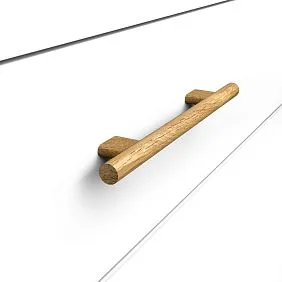
Furniture Handles— these are small but incredibly significant details that a person sees and touches daily, repeatedly.Wooden furniture handle— creates tactile connection with furniture, conveys character, style, and quality level.
In the concept of a unified styleWooden Furniture Handles— must be made of the same wood species or a similar shade as the architectural elements of the room. If the interior is dominated by light oak — handles made of light oak. If dark walnut — handles made of walnut or tinted to a similar color.
Shapes and profiles of handles
Shapeof the furniture handle— should match the overall stylistic approach. For minimalist interiors with simplebaseboardsandcornices— simple cylindrical or rectangular handles without ornamentation are suitable. For neoclassical spaces — polished buttons, elegant brackets with a slight curve. For luxurious classical interiors — carved handles with botanical motifs.
When the profilewooden handles— should correspond to the profilemolding, crown moldings, casings, creating a subtle visual rhyme that the brain interprets as harmony.
Size and proportions
The handle size must correspond to the furniture scale. A miniature button on a large buffet will disappear, while a large bracket on an elegant chest of drawers will look crude. Proportions — the foundation of classical aesthetics — their adherence is critically important for creating a harmonious interior.
Furniture legs and supports: the invisible foundation of style
Role of legs in furniture perception
furniture legs— this is not just a structural element. It is an important stylistic detail defining the character of the object.Furniture legs— create visual lightness, lift furniture above the floor, add elegance.
Buy legs for furniture— should be in the same stylistic approach as other wooden interior elements. If the room features classical profiles with polished details,Table legs— or sofa legs should be polished. If the style is minimalist, legs are simple and geometric.
Polished legs and balusters
furniture legs— in the form of miniature balusters — a classic technique creating a direct reference to architecture.buy legs for a table— in the form of balusters makes sense if there is a staircase withwooden balusters— similar profile — this creates a scaled correspondence between architecture and furniture.
chair legs, Buy chair legs, Chair legs, Legs for countertops, Legs for coffee tablesAll these elements must be executed in a unified style, from the same type of wood or similar shade.
Furniture supports and aprons
Furniture supportA heavier element than a standard leg, used for heavy furniture.Furniture SupportsMay be carved and decorated, becoming noticeable design elements.
buy wooden table baseThis is a frame structure including legs and connecting elements.the base for a tableDefines the style of the entire furniture piece and must harmonize with other wooden interior elements.
Balusters: the link between architecture and furniture
Balusters in staircase structures
Balusters for staircaseVertical balusters of railings, creating a rhythmic structure, visual lightness, decorative richness.Wooden balusterMade from hardwoods — oak, beech, ash — possessing the necessary strength.
Buy wooden balustersShould be of the same wood and color as other wooden elements in the house. IfbaseboardMade from light oak, balusters should also be made from light oak. This creates visual unity.
Baluster profile and its repetition in interior design
ProfileWooden balustersMay repeat in other interior elements:Furniture legsIn turned detailscrown moldingsIn decorative columns or pilasters. This creates a multi-level visual echo, enhancing the sense of thoughtful design.
Flat balustersAn alternative to turned balusters, used in ethnic, rustic, Scandinavian interiors.Flat wooden balustersMay have carved ornamentation, creating a connection withCarved casingsordecorative inlays.
Staircase components
components for wooden staircasesInclude not only balusters, but also posts, handrails, treads, and steps. All of them must be made from the same type of wood, in a unified color, creating a cohesive structure that harmonizes with the rest of the interior.
Decorative elements made of wood and polyurethane
Wooden inlays and carved decoration
Buy decorative elementsMade of wood —carved appliquésRose petals, corner elements — must be of the same wood type as other wooden details. They are used on furniture, doors, walls, creating accents and reinforcing the overall stylistic concept.
Wooden wall decorMay includedecorative rose outletsPanels, carved panels. It is important that the wood species, color, and carving style correspond to the overall interior concept.
Polyurethane Moldings
Polyurethane moldingsA practical solution for ceiling and wall decoration.You can buy ready-made stucco matching the Baroque style. Calculate the quantity: linear meters of cornices and moldings, number of rosettes, pilasters, consoles, corner elements. Add a ten to fifteen percent allowance for trimming.Available in white or can be painted to match the walls and ceiling.— everything must correspond to the chosen era.Crown mouldings, outlets, and trim create the architectural structure of the room.
Moldings made of polyurethaneEasy to install, moisture-resistant, and paintable in any color.Buy polyurethane wall moldingsA sensible solution for upper wall and ceiling sections where the load is minimal.
wall molding, Wall molding, molded decoration made of polyurethaneComplement wooden interior elements if the shapes and ornamentation match, creating a unified style.
Wooden beams and brackets
Wooden beamA powerful decorative element that creates volume on the ceiling. Beams should be made of the same wood species or similar shade asBaseboards, Casings, Crown Molding.
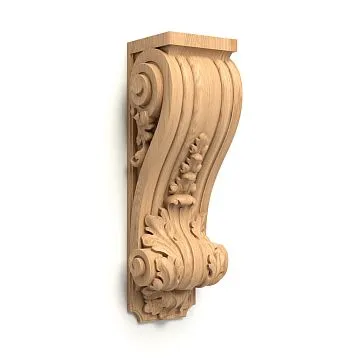
Decorative brackets for shelvesCarved wooden supports that hold shelves and create a decorative accent. Brackets repeat the carving style of otherdecorative elements, enhancing the overall theme.
Creating a unified style: step-by-step algorithm
Step 1: Choosing the base wood species
Determine the primary wood species that will form the basis of the concept. Oak, ash, walnut, beech? Light or dark shade? This decision affects all subsequent choices.buy wooden skirting boardMade from the selected species — the first practical step.
Step 2: Coordinating all linear elements
Wooden baseboard, wooden cornice, Wooden casingMust be made of the same wood species, similar color, and matching profiles. This creates the architectural frame of the room.
Step 3: Selecting furniture hardware
Furniture Handles, furniture legs, furniture legsSelected in the same wood species or similar shade. The style of hardware matches the overall concept — minimalist, classic, carved.
Step 4: Additional wooden elements
Balusters for staircase, wooden planks on the wall, Wooden molding, Decorative bracketsAll must support the base concept in terms of material and style.
Step 5: Integrating polyurethane elements
Polyurethane moldingsOn the ceiling and upper parts of walls, painted in a color harmonizing with wooden elements. Shapes and ornamentationpolyurethane moldingMust match the wooden decor.
Step 6: Final review and adjustments
After installing all elements, evaluate the result. Do all details harmonize? Are colors coordinated? Is the style consistent? Are proportions maintained? If anything stands out, adjust it.
Examples of applying the concept in different styles
Classic interior
wide wooden baseboard150–200 mm from oak with a classic profile.Ceiling corniceOf similar profile.Wooden casings create a frame around the opening, visually highlighting it from the wall plane. A classic casing has a profiled section that corresponds to the profiles of baseboards and moldings.With carved elements.Furniture HandlesPrecision-cut or carved.Legs for tablesin the form of balusters.Balusters of the staircasewith an ornate profile.
Neoclassical interior
Wooden baseboardof medium height 80–100 mm from light-colored ash.wooden cornicewith a restrained profile.Casingsminimalist, without excessive decoration.Wooden Furniture Handlesof classical forms, but without carving.Furniture legselegant, of medium height.
Modern interior with wooden accents
wooden skirting board purchaselow 50–60 mm straight profile.Corniceminimalist or absent.Casingsrectangular cross-section.wooden planks on the wallin accent zones.Furniture Handlesof simple geometric forms.buy furniture legsconical or cylindrical.
Psychology of a unified style
interior built according to the concept of a unified style fromskirting boardstoHandlesA mixed style affects the psyche fundamentally differently. The brain interprets repeating materials, forms, and colors as signals of order, thoughtfulness, and safety. This creates a sense of comfort, completeness, and well-being.
Harmonious space reduces stress, organizes thoughts, and improves mood. This is especially important in today’s world, full of chaos and information overload. Home becomes a refuge, a place to restore energy.
Moreover, a unified style enhances the aesthetic value of the interior. The space is perceived as a work of art, evoking pride and a desire to spend time at home, inviting guests.
Common mistakes and how to avoid them
Mixing incompatible wood species
OakSkirtingwalnutCasingsbeechFurniture Handles— each species is beautiful, but together they create visual chaos. Choose one base species or species with similar shades.
Inconsistent profiles
Classic carvedSkirtingwith minimalist straightcrown molding— profiles conflict. Coordinate the stylistic elements of all linear components.
Ignoring Scale
MassiveWide skirting boardVisually eats up the height in a small room. A low skirting board in a high room disappears. Maintain proportions.
Saving on Key Elements
QualityWooden baseboardand cheap plasticHandlesSaving kills the concept. Better to reduce the number of decorations, but keep the quality of materials.
Popular Questions
Is it necessary to use one type of wood for all elements?
Exact match is not necessary, but similar shades are preferred. Light oak pairs well with light beech, dark walnut with dark oak.
Can wooden and polyurethane elements be combined?
Yes,Polyurethane moldingson the ceiling pairs well withwooden skirting boardsandplinthif the shapes match.
How to choose the color of wooden elements?
Base your choice on the color of the floor and doors.Skirtingusually matches the floor color,Casings— matches the door color,Furniture Handles— similar shade.
How much does implementing a single style concept cost?
It depends on scale and material choice.to buy wooden baseboardSolid wood is more expensive than MDF, but creates a different level of quality.
Where to buy all elements in a single style?
Company STAVROS offers a full rangewooden products: Baseboards, Crown Molding, Casings, Furniture Handles, furniture legs, balusters, decorative elements, polyurethane molding. Possibility of selection within a unified style, wide range of species and profiles.
Conclusion: Details Create Space
fromSolid Wood Skirting Boardthe floor toof the furniture handlethe cabinet, fromwooden corniceunder the ceiling toskirting boardaround the door — every detail matters. The interior of 2026 requires coherence, thoughtfulness, respect for materials and forms.
Wooden itemsUnified by a single concept, they create a space that calms, inspires, and fills you with pride. This is a home you want to live in, becoming an extension of your personality.
Company STAVROS offers all necessary elements to realize a single style concept. Fromwooden floor skirting boardstodecorative brackets—balusters for staircasetofurniture handles— everything for creating your perfect interior.