Article Contents:
- Introduction
- Ancient Traditions and Crafts
- Middle Ages and the Renaissance
- Industrial Revolution and Mechanization
- Digital Revolution
- Digital Revolution
- 1. Wood Carving
- Definition and Significance
- Techniques and Styles of Carving
- Carving Tools
- Tips and Ideas
- 2. Inlay
- Definition and Principles
- Inlay Technology
- Examples of Application
- Tips and Ideas
- 3. Pyrography
- Definition and Essence of the Technique
- Execution Technology
- Examples of Application
- Tips and Ideas
- 4. Wood Fuming
- Definition and Characteristics
- Fuming Technology
- Examples of Application
- Tips and Ideas
- 5. Lacquering and Patination
- Wood Lacquering
- Lacquering Technology
- Patination
- Examples of Application
- Tips and Ideas
- 6. Wood Burning
- Definition and Purposes of Wood Burning
- Wood Burning Technology
- Examples of Application
- Tips and Ideas
- Wood Painting
- Definition and Characteristics
- Painting Technique
- Examples of Application
- Tips and Ideas
- Ecological responsibility
- Economic efficiency
- Work Process Organization
- Training and Experience Exchange
- Creative Approach and Innovations
- Ecological Approach
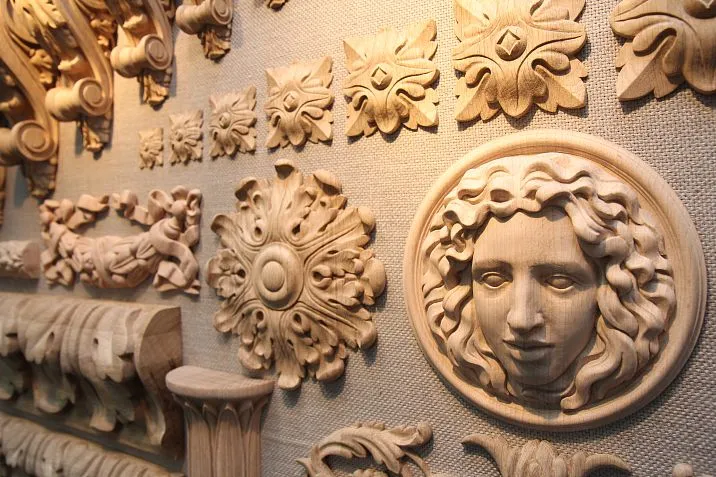
Wood art processing is not just a technological process, but a whole philosophy in which ancient crafts meet modern innovations. Natural wood, possessing unique texture, rich tones, and distinctive fiber structure, has long served as an inspiration for artisans around the world. Today, wood art processing has become an indispensable part of creating exclusive furniture, decorative panels, architectural elements, and interior items that reflect the individuality and refined taste of their owners.
In this article, we will thoroughly examine the main types of wood art processing, provide definitions for key concepts, share practical tips and ideas for craftsmen and designers. We will focus on techniques such as carving, inlay, pyrography, wood staining, lacquering, patination, firing, and wood painting, as well as discuss how modern technologies complement centuries-old traditions. If you wish to delve into the world of natural wood, gain new ideas, and find inspiration for your projects, we recommend visitingSTAVROS website.


Introduction
Wood art processing represents a unique fusion of artisanal craftsmanship and modern technologies. It is a process in which raw, unprocessed material is transformed into an artwork capable not only of fulfilling utilitarian functions but also of pleasing the eye, creating an atmosphere of coziness, and highlighting the individuality of an interior. Today, when ecological, natural, and unique qualities are gaining increasing importance, wooden items remain symbols of strength, warmth, and eternal beauty.
The main types of wood art processing can be conditionally divided into several groups, each with its own unique characteristics and area of application. In this article, we will define the main methods, examine their history, technological features, and practical application tips. We will also touch upon modern innovations that allow craftsmen to combine traditional techniques with digital technologies to achieve the best results.




Historical Overview of Wood Art Processing
Our factory also produces:


Ancient Traditions and Crafts
Since ancient times, wood has served as the primary material for creating household items, tools, weapons, as well as for decorating temples, palaces, and homes of the nobility. Primitive craftsmen, using rudimentary stone and bone tools, were already able to saw, plane, and carve patterns into wood. With the development of crafts, the first techniques of wood art processing emerged:
● Wood Carving. This technique allows creating decorative patterns, ornaments, and sculptural elements. In ancient Egyptian, Greek, and Chinese cultures, wood carving was used to decorate furniture, doors, picture frames, and ritual objects.
● Inlay. Craftsmen inlaid carved elements with other materials — precious woods, stones, mother-of-pearl — giving the items a special luxury and uniqueness.
● Wood Painting. Ancient artisans used natural pigments to create vivid, memorable designs conveying mythological scenes and symbols of that era.
These techniques were passed down from generation to generation, becoming an integral part of cultural heritage and artisanal craftsmanship.
Get Consultation
Middle Ages and the Renaissance
During the Middle Ages, wood art processing reached new heights. Craftsmen created carved doors, altars, decorative panels, and furniture for castles and churches, paying special attention to details and refined carving. Wood carving not only adorned items but also served as a symbol of status and religious affiliation.
The Renaissance introduced classical harmony, symmetry, and elegance into wood processing. Craftsmen actively used carving, inlay, and painting to create items that combined beauty and functionality. This era became the starting point for further development of wood processing technologies.
Industrial Revolution and Mechanization
With the advent of the Industrial Revolution in the 19th century, traditional processing methods gave way to mechanized production. The introduction of machines such as saws, planers, and sanders allowed for significantly increased production volumes and reduced the cost of items. Despite standardization and mass production, many craftsmen continued to use elements of traditional crafts to create exclusive items.
Digital Revolution
In the late 20th — early 21st centuries, digital technologies fundamentally changed the approach to wood processing. Modern CAD systems, 3D modeling, laser cutting, and automated production lines allow creating virtual models of items, optimizing their structures, and implementing complex patterns with high precision. This combination of tradition and innovation has opened new horizons for artists and craftsmen, enabling them to create unique items capable of meeting even the most demanding clients’ requirements.
Main Types of Wood Art Processing
Wood art processing encompasses numerous techniques, each with its own unique characteristics and applied to achieve various aesthetic effects. Let us consider the main types of wood art processing.
1. Wood Carving
Definition and Significance
Wood carving is an artistic technique in which masters carve patterns, ornaments, sculptural elements, and decorative details using hand tools. Carving imparts character, expressiveness, and individuality to wood, transforming each piece into a unique work of art.
Carving Techniques and Styles
● Floral carving. Used to create patterns depicting plants, flowers, and leaves. This technique imparts natural beauty and harmony to objects, reflecting a connection with nature.
● Geometric carving. Used to create strict, symmetrical patterns, often employed in architectural decoration and decorative panels.
● Religious and mythological carving. Patterns dedicated to deities, mythical creatures, and sacred symbols were traditionally used in church architecture and decorative elements of ritual objects.
● Modern experimental styles. Contemporary artists often use carving to create abstract compositions, combining traditional motifs with new ideas and forms.
Tools for Carving
For wood carving, hand tools such as:
● Carving chisels of various shapes and sizes
● Gouges
● Knives and sanding tools
These tools require high precision and the ability to sense the material; the quality of carving depends on the craftsman’s skill and experience.
Tips and Ideas
● Study traditional wood carving motifs and adapt them to modern requirements.
● Experiment with different tools to find the optimal set for your working style.
● To improve the quality of your work, use high-quality wood that is easy to process.
● VisitSTAVROS website for inspiration and to find modern ideas in the field of artistic wood processing.
2. Inlay
Definition and Principles
Inlay is a technique in which other materials, such as precious or semi-precious wood, stones, bone, mother-of-pearl, or metals, are inserted into pre-carved recesses in the wood. This technique allows for the creation of vivid contrasting patterns, giving objects a special luxury and individuality.
Inlay Technology
● Preparation of the blank. First, masters carve the necessary recesses using hand tools or modern machines.
● Selection of inlay material. A material is chosen that harmonizes with the base wood in color, texture, and density.
● Installation and fixation. The material is carefully inserted into the recess, after which the object is carefully sanded and coated with a protective layer to create a unified and harmonious effect.
Examples of Application
Inlay is widely used in the production of:
● Exclusive furniture
● Decorative panels and picture frames
● Architectural elements (doors, carved panels)
● Souvenirs and handmade items
Tips and Ideas
● Experiment with combinations of different materials to create unique patterns.
● Use laser cutting to prepare precise recesses, significantly improving inlay quality.
● Study historical inlay samples to draw inspiration and adapt classic motifs to modern realities.
3. Pyrography
Definition and essence of the technique
Pyrography (wood burning) is an artistic processing method in which a specialized tool or laser heats the surface of wood, creating a design or pattern on it. Pyrography allows achieving both fine lines and deep relief patterns, giving the item an aged or vintage appearance.
Execution technology
● Tool selection. Pyrography uses special torches, pyrographs, or lasers.
● Drawing technique. The artist controls temperature and exposure time to achieve the desired depth and contrast of the design.
● Final processing. After pyrography, the item may be further processed to fix the pattern and protect the wood.
Examples of Application
Pyrography is used for creating:
● Original paintings and installations
● Decorative panels and frames for furniture
● Individual engravings and logos on wooden items
Tips and Ideas
● Practice on test blanks to master the technique and determine optimal working parameters.
● Experiment with different pyrography styles, creating both fine lines and deep textural effects.
● Use pyrography in combination with other finishing methods to achieve a unique artistic effect.
4. Wood Staining
Definition and features
Staining is a wood treatment method in which a composition is applied to the wood surface, penetrating into the fibers and altering its shade. Staining highlights the natural wood texture, creates a sense of depth, and enhances its decorative qualities.
Staining technology
● Surface preparation. Before staining, the blank is carefully sanded and cleaned.
● Applying the stain. Stain is applied evenly with a brush, roller, or spray.
● Fixing the effect. After staining, the item is coated with a protective layer (varnish, wax) to preserve the achieved effect.
Examples of Application
Staining is widely used for:
● Changing the wood's shade
● Creating "aged" or vintage effects
● Emphasizing the texture and patterns of natural wood
Tips and Ideas
● Choose stains that highlight the natural beauty of wood, without hiding its unique texture.
● Experiment with different shades to achieve the desired effect.
● Apply wax in combination with varnishing for protection and longevity of the item.
5. Varnishing and Patination
Lacquering wood
Varnishing is the application of a protective and decorative coating that preserves the natural beauty of wood, gives it a luster, and protects against moisture, ultraviolet rays, and mechanical damage. Varnishes can be either natural or synthetic, and the choice depends on the purpose of the item and its usage conditions.
Varnishing Technology
● Surface preparation. Before varnishing, the wood is sanded to a perfect smoothness.
● Applying varnish. Varnish is applied evenly with a brush, roller, or spray, often in multiple layers with intermediate sanding.
● Final finishing. After varnish application, the item may be additionally polished to create a mirror-like gloss.
Patination
Patination is a method that allows wood to achieve an aged or "antique" appearance. Using special compounds, the color and texture of the surface are altered to create unique decorative effects.
Examples of Application
Varnishing and patination are used for:
● Protection and improvement of furniture appearance
● Creating decorative finishes for doors, tables, and panels
● Achieving an "aged" effect for items in vintage or classical styles
Tips and Ideas
● Select varnishes and patination compounds depending on the wood species and desired effect.
● Experiment with multi-layer application to achieve depth and richness of color.
● Use eco-friendly compounds to preserve the naturalness of the material and minimize harmful impact on the environment.
6. Wood Burning
Definition and Purpose of Wood Burning
Wood burning is a process of thermal treatment of the wood surface, during which special textural patterns and shades are created under high temperatures. Wood burning allows achieving an aged effect, giving wood a distinctive "bronze" tone, and emphasizing its natural structure.
Wood Burning Technology
● Choosing a burning method. Wood burning can be performed manually using special torches or with laser technologies.
● Controlling parameters. It is important to control temperature and exposure time to avoid overheating and damage to the wood.
● Final processing. After wood burning, the item may be further treated with varnishes or oils to fix the effect and protect the material.
Examples of Application
Wood burning is used to create:
● Decorative elements with an "aged" effect
● Furniture and decorative panels with unique texture
● Eye-catching architectural details
Tips and Ideas
● Experiment with intensity and duration of burning to achieve various visual effects.
● Use wood burning in combination with waxing and varnishing to create depth and richness of texture.
● Apply wood burning to create exclusive items that will differ in their uniqueness and artistic value.
Wood Painting
Definition and features
Wood Painting — this is an artistic technique in which paints are applied to the surface of wood to create decorative patterns, ornaments, and images. Painting allows items to have individuality, highlights their artistic value, and turns ordinary wood into a work of art.
Painting Technology
● Surface Preparation. Before painting, the wood is carefully sanded and cleaned to ensure even paint application.
● Applying Paint. Wood painting can be done with brushes, spray cans, or spray guns. Masters use various techniques — from watercolor to oil paints.
● Final Processing. After painting, the item is coated with a transparent varnish to protect and fix the design.
Examples of Application
Wood painting is widely used for creating:
● Original paintings and decorative panels
● Furniture elements with unique patterns
● Individual gifts and souvenirs
Tips and Ideas
● Study classical and modern painting techniques to expand your creative toolkit.
● Experiment with combinations of different styles and techniques to create unique items.
● Use high-quality paints and appropriate application techniques to achieve vibrant and durable colors.
● Try integrating painting with other finishing methods, such as inlay or pyrography, to create a multi-layered and deep decorative effect.
Ecological and Economic Aspects of Artistic Wood Treatment
Ecological responsibility
In today’s modern world, ecological sustainability is becoming an increasingly important aspect of production. Artistic wood treatment using natural materials, eco-friendly paints, oils, and varnishes allows preserving the natural beauty of wood while minimizing negative environmental impact.
Tips for Eco-Friendly Production:
● Use natural and biodegradable finishes.
● Collaborate with suppliers adhering to sustainable forestry principles.
● Use energy-efficient equipment and waste recycling technologies.
Economic Efficiency
Innovative technologies in wood processing allow significantly reducing production time and costs, improving product accuracy and quality, and ensuring consistent quality in mass production. Automation, digital design, and modern quality control systems contribute to increased productivity and reduced production costs.
Tips for Improving Economic Efficiency:
● Invest in modern tools and equipment.
● Optimize work processes using automated lines and digital control systems.
● Regularly audit production processes and implement innovative solutions to improve efficiency.
Practical Recommendations and Tips for Masters
Work Process Organization
● Create a comfortable workspace: Organize tools, equipment, and materials so they are easily accessible and in optimal condition.
● Plan each stage: Plan every process from raw material preparation to final finishing to minimize time loss and ensure high-quality work.
● Control quality: Use measuring instruments and digital control systems to check product parameters at each processing stage.
Training and experience exchange
● Attend masterclasses and seminars: Modern technologies change rapidly, and continuous learning will help you stay up to date with the latest trends.
● Exchange experience with colleagues: Participate in professional forums, exhibitions, and conferences to gain new ideas and solutions for your projects.
● Use online courses and literature: Read specialized publications and take training programs to continuously improve your skills.
Creative approach and innovations
● Experiment with different techniques: Don't be afraid to combine traditional crafts with modern technologies. For example, combine hand carving with laser engraving to create unique decorative elements.
● Develop individual projects: Implement personalized solutions tailored to a specific client to create items reflecting their individuality.
● Introduce new technologies: Use 3D modeling, automated lines, and digital systems to improve accuracy and optimize production processes.
Ecological approach
● Follow sustainable development principles: Use eco-friendly materials and technologies to create environmentally safe products.
● Stay updated: Continuously study the latest research and developments in eco-friendly wood processing methods to integrate them into your work.
Conclusion
Wood art processing is a multifaceted art that combines ancient craft traditions with modern technological innovations. Main types of wood art processing, such as carving, inlay, pyrography, staining, lacquering, patination, firing, and painting, allow artisans to create items possessing unique aesthetic value, individuality, and high functionality.
We reviewed the history of wood art processing, described the main techniques and methods, and shared practical tips and ideas for improving work quality. Modern technologies such as laser cutting, 3D modeling, and automated production lines allow combining traditional crafts with innovative solutions, opening up boundless creative opportunities and meeting the demands of the modern market.
If you aim to create unique, high-quality, and durable wooden items, do not forget the importance of each detail. Choosing the right processing technique, using quality materials, and continuously refining your skills — these are the keys to success in this noble craft.
For additional information, inspiration, and the latest technologies in wood processing, visitSTAVROS website.