Article Contents:
- Technical Expertise: The Anatomy of Quality Framing
- Constructive Principles and Materials Science
- Geometric Parameters and Tolerances
- Mounting Systems and Installation Solutions
- Stylistic Differentiation: From Classic to High-Tech
- Classical Orders Systems
- Historical Styles and Their Modern Interpretation
- Modern Design Directions
- Production technology processes
- Material preparation
- Mechanical processing
- Quality Control
- Installation Technologies and Professional Techniques
- Preparatory work
- Technique of Joint Execution
- Final finishing
- Operational Characteristics and Longevity
- Factors Affecting Service Life
- Protection and Conservation Systems
- Maintenance Regulations
- Economic Aspects of Selection and Operation
- Analysis of total ownership cost
- Pricing factors
- Investment attractiveness
- Innovative solutions and development prospects
- New materials and technologies
- Digital technologies in production
- Ecological trends
- Conclusion: The Craft of Creating Perfection
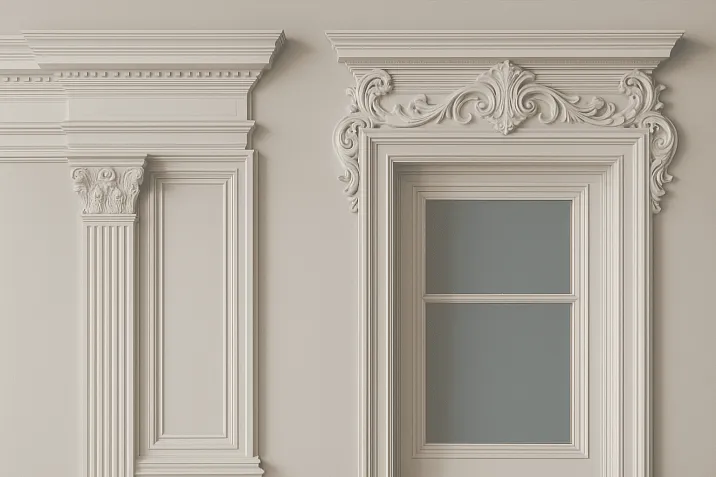
A professional interior designer knows: the devil is in the details. And among these details Window and Door Framing occupy a special place, forming the architectural frame of the space and defining the level of execution of the entire project. These elements can transform an ordinary room into an exquisite interior or, conversely, spoil the impression of the most expensive renovation.
Over half a century of professional activity in the field of interior design, I have come to realize: the quality of framing is an indicator of the executor's professionalism and a measure of the client's taste. Properly selected and correctly installed frames create that very 'luxury' atmosphere, which cannot be bought with money, but can be created through knowledge and skill.
The modern market offers an enormous variety of solutions — from mass-produced plastic items to exclusive carved compositions. But how to distinguish a truly quality product from a beautiful imitation? How to choose frames that will look flawless ten years later, just as they did on the day of installation?
Technical Expertise: The Anatomy of Quality Framing




Constructive Principles and Materials Science
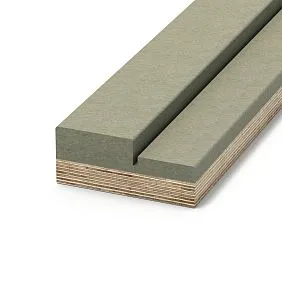
Quality framing is a complex engineering structure, where each element performs a specific function. The base of any frame is a load-bearing profile, which must ensure geometric stability of the entire system throughout its entire service life.
The material of the base determines the durability of the structure. Solid wood provides maximum strength and repairability, but requires stable humidity. High-density MDF demonstrates excellent dimensional stability, but is sensitive to moisture. High-density polyurethane combines lightness with strength, but has limited local repair capabilities.
Moldings and door opening framing Frames must be designed taking into account thermal-humidity deformations. Linear expansion of different materials with changes in temperature and humidity can reach 3-5 mm per linear meter, which is critical for long elements.
Professional frames always have compensating gaps and deformation joints filled with elastic sealants. This ensures freedom of thermal movement without the formation of cracks and gaps.
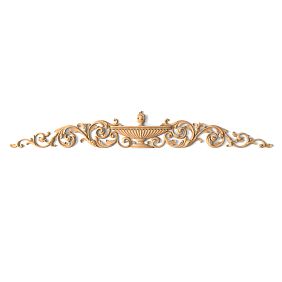
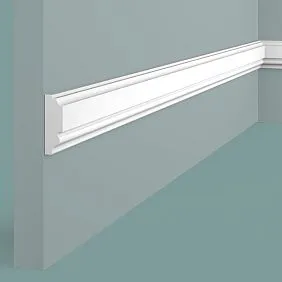
Our factory also produces:





Geometric Parameters and Tolerances
Accuracy of frame manufacturing is a key indicator of quality. Deviations in geometry exceeding 1 mm per linear meter are unacceptable for quality products. The profile must be perfectly straight, and joint angles must be precisely 45 or 90 degrees depending on the construction.
Special attention must be paid to the quality of end surfaces. They must be perfectly perpendicular to the longitudinal axis of the profile and free of chips, scratches, or other defects. The quality of ends determines the tightness of element joints and, consequently, the overall appearance of the structure.
The wall thickness of the profile must correspond to the design loads. For residential spaces, the minimum thickness is 12-15 mm for wooden products, 16-18 mm for MDF, and 8-10 mm for polyurethane. Smaller values lead to deformations and premature failure.
Get Consultation
Fastening Systems and Installation Solutions
Modern Window and Door Framing Use combined fastening systems combining adhesive bonding with mechanical fastening. Adhesive ensures even load distribution, while mechanical fastening guarantees connection strength.
Hidden fastening systems allow maintaining the frame's aesthetics. Special grooves and protrusions in the profile ensure precise positioning and secure fixation without visible fasteners. Such systems require high manufacturing accuracy but deliver a professional result.
Adjustable fasteners compensate for inaccuracies in construction. The ability to adjust the position of elements within 5-8 mm allows achieving an ideal frame geometry even with significant deviations in walls and openings.
Stylistic Differentiation: From Classic to High-Tech
Classical Orders Systems
Classic frames are based on principles of ancient architecture, where each element has its place in the hierarchy of the order. The base provides visual support, the stem sets the main scale, and the capital crowns the composition. door frame trim In the classical style, it must strictly follow proportional canons.
The Doric order is characterized by strictness and simplicity of forms. Profiles are simple, without excess, with clear geometric divisions. The color palette is restrained — white, cream, light gray. Such frames are suitable for serious, representative interiors.
The Ionic order allows for greater decorative detail. Characteristic volutes, plant motifs, more complex profiling create a sense of elegance and refinement. Color solutions may include light toning, imitating noble materials.
The Corinthian order is the most decorative of the classical styles. Rich plasticity, complex plant ornaments, abundance of decorative details require high craftsmanship. Such frames are appropriate for luxurious, formal interiors.
Historical styles and their modern interpretation
Gothic framing is characterized by a striving upward, pointed forms, and delicate details. Modern interpretations of Gothic style use simplified profiles with characteristic pointed finials. Corner decorative elements Gothic style often features complex geometry.
Renaissance frames are distinguished by harmonious proportions, rich but restrained decoration, and the use of classical motifs in a new interpretation. Medallions, cartouches, plant garlands, executed in relief technique, are characteristic.
Baroque frames are a theater of forms and emotions. Curved lines, dynamic plasticity, rich decorative content create a sense of movement and life. Color solutions may be very bright, using gold leaf and polychromy.
Rococo is characterized by even greater decorative detail and refinement. Asymmetric compositions, pastel colors, abundance of plant and marine motifs create an atmosphere of elegance and romance.
Modern design directions
Minimalist frames strive for extreme simplification of forms while preserving functionality. Paintable Molding The simplest profile can create an impressive frame when properly used with color and light.
High-tech uses industrial aesthetics, modern materials, and technological solutions. Metallic profiles, glass inserts, LED lighting transform the frame into an element of modern architecture.
Eco-style returns to natural materials and forms. Unprocessed wood, natural textures, organic silhouettes create a connection with nature in urban interiors.
Loft style deliberately appears rough and industrial. Metal, concrete, brick, minimal processing — such frames emphasize the authenticity of industrial architecture.
Technological production processes
Material preparation
The quality of the final product is established during the raw material preparation stage. Wood must undergo proper drying to a moisture content of 8-12% and be conditioned to relieve internal stresses. Violation of the drying technology leads to warping and cracking of finished products.
High-quality MDF has a density of no less than 750-800 kg/m³ and contains a minimal amount of formaldehyde resins. The surface must be perfectly smooth, without pores or irregularities, ready for final finishing without additional treatment.
Polyurethane components require precise adherence to mixing ratios and temperature regimes. Minor deviations from the technology result in structural defects of the material and reduced operational characteristics.
Mechanical processing
Modern Production of window and door framing Uses high-precision equipment with numerical control. Profiling is performed with accuracy to fractions of a millimeter, ensuring ideal geometric repeatability.
The tool must be properly sharpened and balanced. Dull cutters leave scratches and chips on the surface, reducing the quality of the finished product. Regular replacement and resharpening of tools are mandatory for quality production.
Cutting modes are individually selected for each material and profile type. Feed rate, spindle speed, cutting depth — all these parameters affect surface quality and dimensional accuracy.
Quality control
Multi-stage quality control must cover all stages of the production process. Incoming raw material inspection, intermediate checks during processing, final acceptance of finished products — only a comprehensive approach guarantees consistently high quality.
Measuring equipment must meet the required accuracy. Vernier calipers, micrometers, profilometers, coordinate measuring machines — the entire metrology arsenal is used to control product parameters.
Statistical control methods allow identifying trends in quality changes and taking preventive measures. Shewhart charts, Pareto diagrams, cause-and-effect analysis — these tools help maintain process stability.
Installation technologies and professional techniques
Preparatory Work
Quality installation begins with careful preparation of the base. Walls must be leveled, cleaned of dust and contaminants, and treated with primer to improve adhesive bond strength.
Marking is a critically important stage that determines the quality of the final result. Use laser levels, precise tape measures, and squares. Check the diagonals of rectangular openings — the difference should not exceed 2-3 mm.
Pre-layout of elements allows identifying issues before starting assembly. Door Frame Installation It must be symmetrical, all joints tight, overall geometry flawless.
Technique for executing connections
Joining elements at an angle requires high precision cutting. Use circular saws with fine teeth and dust extraction systems. The cut angle must be perfectly accurate, and the cut surface must be smooth without chips.
Adhesive joints provide the main structural strength. Use adhesives specifically designed for the selected material. Polyurethane adhesives are universal but require precise dosing. PVA adhesives are suitable for wood and MDF but are sensitive to moisture.
Mechanical fastening complements adhesive joints. Use stainless steel or galvanized screws. Screw diameter should not exceed 1/3 of the material thickness to avoid cracking.
Final finishing
Sealing joints and fastening points is the final stage of assembly. Use fillers compatible with the framing material. Acrylic fillers are universal, polyurethane fillers provide maximum elasticity.
Sanding must be performed with abrasives of appropriate grit. Start with coarse grit (P120-P150), gradually moving to fine (P240-P320). Final sanding determines the quality of subsequent painting.
and frames create a home atmosphere, making it truly cozy and individual. This is an investment in beauty, which pays off every day through aesthetic pleasure from admiring the beautiful. Should be installed after completion of main works. Small elements are primarily fastened with adhesive, while larger ones require additional mechanical fastening.
Operational Characteristics and Longevity
Factors affecting service life
Humidity level in the room is critically important for wooden framing. Optimal relative air humidity is 45-55%. At lower levels, wood dries and cracks; at higher levels, it swells and deforms.
Temperature fluctuations cause linear deformation of all materials. Sudden temperature changes are especially dangerous — they create thermal stresses leading to cracking and coating delamination.
Ultraviolet radiation destroys organic materials and coatings. Wooden elements darken and crack, paints fade and blister. Use UV filters as part of protective coatings.
Mechanical impacts are a constant factor of exposure in residential spaces. framing the doorway with a casing Subject to contact, impacts, and vibrations from slamming doors. The material must have sufficient impact resistance.
Protection and Conservation Systems
Primer coatings create a barrier between the base material and the finish coating. They improve adhesion, equalize absorption, and protect against moisture penetration. Choose primers compatible with the base material and finish coating.
Antiseptic impregnations protect wood from biological damage. Modern formulations are effective against fungi, mold, and wood-boring insects. Apply impregnations to clean, dry surfaces strictly according to instructions.
Hydrophobic coatings reduce material water absorption without forming a film on the surface. They are especially effective for porous materials — wood, MDF based on natural fibers.
Technical maintenance schedules
Regular inspection allows identifying problems at an early stage. Inspect frames at least twice a year, paying attention to coating condition, joint tightness, and absence of deformations.
Cleaning must be performed with gentle means that do not damage the coating. Use mild soapy solutions, soft cloths or sponges. Abrasive agents and stiff brushes may damage the finish coating.
Local repair allows extending the service life of frames. Minor chips and scratches are filled with appropriate repair compounds. Peeling coatings are removed and reapplied.
Economic aspects of selection and operation
Analysis of total cost of ownership
Initial cost is only part of the total expenses for framing. buy door frames Cheap may turn out to be expensive in terms of operating costs in the future.
Installation cost depends on the complexity of the structure and the skill level of the installers. Simple profiles can be installed by a DIYer, complex compositions require professional skills. Saving on installation often leads to the need for redoing work.
Operating costs include expenses for maintenance, repair, and periodic coating renewal. High-quality materials and coatings require minimal maintenance, while cheaper alternatives require frequent repairs.
Residual value is considered when calculating economic efficiency. High-quality frames retain their appearance for decades, while cheap ones lose appeal within a few years.
Pricing factors
Material of manufacture is the primary cost-determining factor. Natural wood of premium species costs many times more than MDF, but provides maximum durability and prestige.
Profile complexity affects labor costs and, consequently, price. Simple rectangular profiles are produced on automated equipment, while complex carving requires manual work by skilled craftsmen.
Order volume determines the possibility of receiving discounts. Small orders cost more due to high overheads, while large batches allow optimizing production costs.
Urgency of execution may increase the cost by 25-50%. Plan your orders in advance to avoid additional charges for rush production.
Investment attractiveness
Impact on property value — an important factor when choosing trim. Quality finishing increases the market value of the property, which is especially important for investment projects.
The payback period for quality trim is 3-5 years due to reduced operating expenses and increased property value. Buy door opening framing premium-class — a profitable long-term investment.
The liquidity of the property increases with quality finishing. Apartments and houses with professional design sell faster and at higher prices.
Innovative Solutions and Development Prospects
New materials and technologies
Composite materials based on natural fibers combine the ecological properties of wood with the practicality of synthetic materials. Wood-polymer composites (WPC) are not afraid of moisture, do not crack, and do not require periodic painting.
Smart materials with shape memory can autonomously compensate for thermal deformations. Such materials are currently expensive but promising for use in extreme operating conditions.
Nanomaterials open new possibilities in creating protective coatings. Nanostuctured surfaces have unique properties — self-cleaning, antibacterial effect, increased wear resistance.
Digital Technologies in Production
3D printing allows creating unique decorative elements according to individual projects. The technology has not yet reached mass application due to material and productivity limitations, but it is actively developing.
Parametric design automates the creation of complex profiles and their adaptation to specific dimensions. decorative door opening The opening can be designed individually without increasing the cost.
Artificial intelligence optimizes production processes, predicts defects, and adapts equipment parameters to specific tasks. This improves product quality and reduces production costs.
Ecological Trends
FSC certification guarantees that the wood originates from sustainably managed forests. Consumers are increasingly paying attention to manufacturers' environmental responsibility.
Recycling materials reduces environmental impact. Modern technologies allow creating high-quality materials from wood processing waste, plastics, and other secondary resources.
Biodegradable materials solve the problem of waste disposal. Polymers based on plant raw materials do not fall short of traditional plastics in properties but fully degrade under natural conditions.
Conclusion: the art of creating perfection
Window and Door Framing — these are not just decorative elements, but the foundation of interior architectural literacy. In an era of mass production and standardization, it is especially important to preserve an understanding of quality, craftsmanship traditions, and execution culture.
After half a century of professional activity, I have come to believe: saving on the quality of trim is saving on your own comfort and prestige. Properly selected and professionally installed elements serve for decades, delighting the eye and highlighting the owner's status.
Investments in quality trim pay off multiple times — increased living comfort, increased property value, savings on operating expenses. This is an investment in quality of life, in daily aesthetic pleasure.
When choosing trim, remember: you are creating not just an interior, but a living environment for yourself and your family. Every detail should be thought out, every element — professionally executed. Only then does true design emerge — functional, beautiful, long-lasting.
In a world of abundant choice, it is especially important to find a reliable partner who shares your values of quality and craftsmanship. Professionalism accumulated over decades, traditions passed down from generation to generation, innovations aimed at improving quality — these are the criteria for selecting a supplier.
STAVROS embodies all these principles in its daily work. More than two decades on the architectural decor market, thousands of completed projects, impeccable reputation among professionals — all this makes STAVROS a reliable partner for the most demanding clients.
From classic wooden profiles to innovative composite materials, from standard solutions to exclusive custom works — STAVROS offers a full range of products and services in architectural decor. A professional team of designers, modern production, strict quality control guarantee results exceeding expectations.
Choosing STAVROS means choosing craftsmanship traditions, innovative solutions, and flawless execution quality. Your home deserves the best — and STAVROS is ready to provide it.