Article Contents:
- History of door portals: from antiquity to modernity
- Philosophy of spatial transition
- Evolution of decorative solutions
- Technology of creating surface-mounted decoration for portals
- Material Science: Choosing the Foundation for Creativity
- Engineering solutions for installation
- Stylistic directions in portal design
- Classical tradition: order system in interior design
- Modern interpretations of historical styles
- Ethnic motifs in portal decoration
- Technical implementation of portal structures
- Load calculation and structural solutions
- Integration with engineering systems
- Production Technologies and Manufacturing Quality
- Traditional wood carving
- Modern manufacturing technologies
- Economic aspects of portal decoration projects
- Budgeting and cost planning
- Impact on property value
- Practical aspects of operation and maintenance
- Care for Wooden Elements
- Restoration and repair
- Design solutions for various types of rooms
- Residential interiors
- Commercial spaces
- Innovative approaches and the future of portal decoration
- Integration with smart technologies
- Ecological aspects and sustainable development
- Psychology of perceiving portal space
- Emotional impact of architectural forms
- Cultural codes in portal decoration
- Conclusion
A door opening is not just a functional element of interior design, but a true calling card of the space. It is here that the first impression of the house begins, and through this 'frame' we transition from one world to another. Portal door decoration transforms a mundane passage into a majestic arch, capable of radically changing the perception of the entire interior.
What makes an ordinary door a work of art? The answer lies in the ability to see potential where others see only a standard solution. Surface-mounted decoration is the magic of transformation that does not require wall demolition or major redesign, yet can create the impression that your home was designed by Palladio himself.



History of door portals: from antiquity to modernity




Philosophy of spatial transition
The concept of a door portal traces its roots to deep antiquity. Roman architects understood: the transition between spaces must be marked in a special way. The temple portico, triumphal arch, entrances to patrician homes — all these elements share one idea: the door as a symbol of transition requires worthy framing.
During the Renaissance, this philosophy received new development. Architects of that time created portals that served not merely as decorative elements, but as true manifestos of taste and status of the owner. Every detail — from proportions to ornamental solutions — had deep meaning and artistic value.
Our factory also produces:

Evolution of decorative solutions
Baroque introduced theatricality and emotionality into portal design. Curved lines, complex compositions, play of light and shadow transformed every door opening into a stage decoration. Classicism returned strictness and monumentality, making the portal an embodiment of architectural order.
Modernism freed doorways from canonical restrictions, allowing designers to experiment with forms and materials. It was precisely during this period that the first attempts at creating surface-mounted decoration emerged, enabling impressive effects without radical reconstruction.
Get Consultation
Technology for creating surface-mounted decoration for doorways
Material Science: Choosing the Foundation for Creativity
Modern Decorating door openings with surface-mounted elements It opens unprecedented possibilities for designers. High-density polyurethane allows creating elements of any complexity — from simple geometric forms to intricate floral ornaments.
Natural wood remains a classic choice for those who value authenticity and are willing to invest in longevity. Oak, beech, and ash surface-mounted elements possess not only aesthetic but also tactile appeal. Every touch of such a surface brings true pleasure.
Composite materials occupy an intermediate position, combining the practicality of modern technologies with the visual characteristics of natural materials. High-density MDF, treated with special compounds, can imitate wood texture with remarkable accuracy.
Engineering solutions for installation
Quality Doorway decoration with surface-mounted decoration It depends not only on the beauty of the elements but also on the professionalism of their installation. A hidden mounting system ensures visual purity of the structure — no visible screws or nails, only flawless lines and perfect joints.
Special attention is paid to temperature gaps and compensation for moisture-induced deformations. Wood is a living material — it breathes, expands, and contracts. Professional installation takes these characteristics into account, preventing cracks and gaps during operation.
Stylistic directions in doorway design
Classical tradition: the order system in interior design
The Tuscan order, with its laconic strictness, is ideally suited for creating doorways in modern interiors. Simple proportions, minimal decorative elements, emphasis on the purity of geometric forms — such a solution will never go out of fashion.
The Ionic order offers a more refined solution. Characteristic volutes on capitals, refined profiles, elegant proportions create an atmosphere of aristocratic refinement. Surface-mounted elements for doorways In the Ionic style, they look especially well in interiors of libraries, offices, and music rooms.
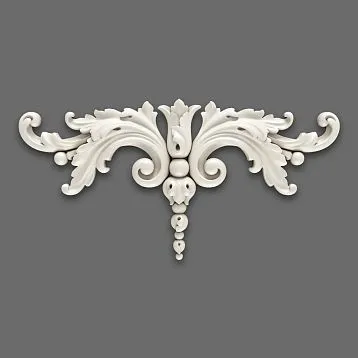
The Corinthian order is the pinnacle of decorative richness in classical architecture. Ornate capitals with acanthus leaves, richly decorated friezes, complex profiles transform a doorway into a true work of art.
Modern interpretations of historical styles
21st-century Neoclassicism reinterprets traditional forms, adapting them to modern needs and aesthetic preferences. Simplified proportions, modern materials, minimalist color palettes — such doorways fit organically into current interiors.
Art Deco offers an alternative approach to decoration. Geometric ornaments, symmetrical compositions, use of contrasting materials create a dynamic and expressive atmosphere. Doorways in the Art Deco style are especially effective in interiors with elements of luxury and glamour.
Ethnic motifs in doorway decoration
Russian style in doorway decoration relies on rich traditions of wooden architecture. Complex carving, floral ornaments, use of natural textures create an atmosphere of connection with historical roots. Such doorways are especially appropriate for country houses and cottages.
Scandinavian aesthetics offer an opposite approach: maximum functionality with minimal decorative elements. Clean lines, light tones, natural materials — Scandinavian doorways embody the philosophy of hygge in architectural forms.
Eastern motifs bring exotic appeal to doorway design. Arabesques, geometric patterns, use of gilding and bright colors create an atmosphere of Eastern fairy tale.
Technical implementation of doorway structures
Load calculations and structural solutions
Doorways with surface-mounted decoration Require precise engineering calculations. The weight of decorative elements, especially those made of natural wood, can be significant. The mounting system must ensure secure fixation for decades of use.
Special attention is paid to joints connecting different elements. Joints between pilasters and capitals, connections between friezes and architraves, transitions from vertical to horizontal elements — each joint requires individual design.
Consideration of operational factors includes analysis of the room's temperature-humidity regime, intensity of door usage, and possible mechanical impacts. In public buildings and commercial spaces, requirements for the strength of doorway structures are significantly higher.
Integration with engineering systems
Modern portals are often integrated with concealed engineering systems. Built-in lighting highlights the relief of decorative elements, creating dramatic lighting effects. Concealed cable channels allow wiring to be run without compromising the structure's aesthetics.
Climate control systems are also reflected in portal construction. Concealed ventilation grilles, integrated temperature and humidity sensors transform decorative elements into functional parts of the building's engineering system.
Production technologies and manufacturing quality
Traditional wood carving
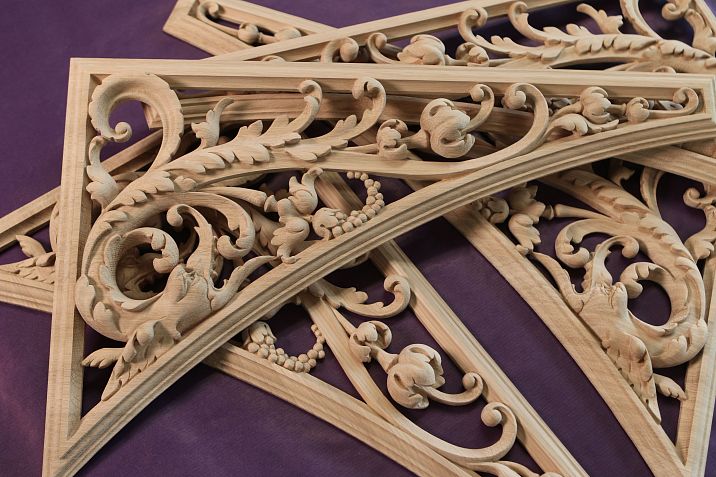
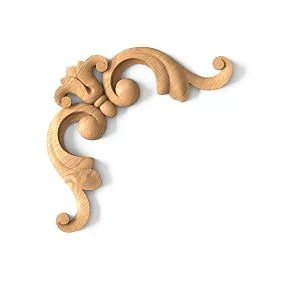
Hand carving remains the pinnacle of craftsmanship in creating wooden decorative elements. Each swirl, each leaf is crafted individually, taking into account the texture and structure of the wood. Such work requires not only technical skills but also artistic sensitivity.
A master carver's toolset includes dozens of specialized tools. Chisels of various widths and curves, gouges for carving complex profiles, and planers for finishing — each tool has its specific purpose and requires skilled handling.
The complexity of ornaments can vary from simple geometric forms to intricate compositions with botanical and zoomorphic motifs. The time required to produce a single element can range from several hours to several weeks, depending on complexity and size.
Modern manufacturing technologies
CNC machines have revolutionized the production of decorative elements. Processing accuracy reaches fractions of a millimeter, enabling the creation of elements with complex geometry that is impossible to achieve by hand.
3D modeling and prototyping allow visualizing the result even before production begins. The client can see the future portal in the interior, make adjustments, and evaluate different finishing options.
Laser cutting provides perfectly clean edges and enables the creation of delicate, intricate elements with fine details. This technology is especially effective when working with thin applied elements made of plywood or MDF.
Economic aspects of portal decoration projects
Budgeting and cost planning
Cost for decorating door portals with applied elements depends on multiple factors: selected material, ornament complexity, construction size, and manufacturing method. Simple geometric elements made of MDF can cost dozens of times less than intricate hand-carved oak details.
Proper budget planning includes not only material and manufacturing costs, but also expenses for delivery, installation, and finishing. Often, installation costs account for 30-50% of the total project budget.
Phased project implementation allows distributing costs over time. One can start with basic elements — moldings and cornices — then gradually add decorative applied elements, capitals, and friezes.
Impact on property value
Well-executed door portals significantly enhance the aesthetic and commercial appeal of real estate. Studies show that investments in architectural decoration yield a return of 150-200% upon property sale.
Portals made of natural wood with hand carving are especially highly valued. Such elements are perceived as signs of exclusivity and high status, which is critically important in the luxury real estate segment.
Practical aspects of operation and maintenance
Care for wooden elements
Natural wood requires regular but simple care. Weekly dry cleaning with a soft brush removes dust from carving recesses. Wet treatment is performed monthly using specialized compositions suitable for the specific type of wood.
Special attention is given to protection from ultraviolet radiation. Direct sunlight can cause fading and cracking of wood. In rooms with large windows, it is recommended to use special UV filters or protective coatings.
Seasonal fluctuations in humidity can cause deformation of wooden elements. Maintaining a stable microclimate in the room is the best way to prevent such problems.
Restoration and Rehabilitation
Even with the most careful handling, applied elements may sustain damage. Minor chips and scratches can be successfully repaired through localized restoration. An experienced craftsman can restore even severely damaged carving areas.
The advantage of applied construction is the ability to replace individual elements without dismantling the entire portal. This significantly reduces the cost and complexity of repair work.
Preventive restoration is performed every 10-15 years and includes complete reassembly of joints, renewal of protective coatings, and elimination of minor defects.
Design solutions for various types of rooms
Residential interiors
In residential spaces, portals serve not only a decorative but also a psychological function. They create a sense of coziness, privacy, and security. Applied decoration for portal design in the bedroom should promote relaxation, in the living room — create an atmosphere of hospitality.
Children's rooms offer unique opportunities for creative solutions. Fairy-tale motifs, bright colors, and playful elements transform the door portal into part of a child's magical world.
Kitchen portals must combine decorative appeal with practicality. Ease of cleaning, resistance to moisture and temperature fluctuations — these are key criteria for selecting materials and finishes.
Commercial spaces
In office spaces, portals serve as elements of corporate style. Strict geometric forms, use of corporate colors, integration of logos — all of this helps create a recognizable company image.
Restaurant interiors offer broad opportunities for thematic decoration. An Italian trattoria, a French bistro, a Japanese restaurant — each concept requires its own approach to doorframe design.
Hotel rooms and public areas — another important sphere of application for portal decoration. Here, it is important to create an atmosphere of luxury and comfort that will contribute to a positive perception of the brand.
Innovative approaches and the future of portal decoration
Integration with smart technologies
Modern portals are increasingly integrated with smart home systems. Motion sensors automatically activate lighting when approaching the door. Hidden speakers can play sound effects or background music.
Access control systems are seamlessly integrated into decorative elements. Fingerprint scanners, card readers, and digital locks become an inseparable part of the portal structure.
Climate systems also find expression in modern portals. Built-in humidifiers, air ionizers, and aroma systems create additional comfort for users.
Ecological aspects and sustainable development
Growing environmental awareness influences material and production technology choices. Using wood from sustainably managed forests, applying eco-friendly coatings, minimizing production waste — these are important trends in modern industry.
Recycling and reuse of materials have become an integral part of the production process. Old decorative elements can be restored and used in new projects.
Energy efficiency in production also plays an important role. Using renewable energy sources, optimizing production processes, reducing transportation costs — all this contributes to creating more eco-friendly products.
Psychology of portal space perception
Emotional impact of architectural forms
The door portal is the first thing a person sees upon entering a room. Psychological studies show that impressions of the interior are formed in the first few seconds, and the portal plays a key role in this process.
Tall portals create a sense of grandeur and significance. Low ones — intimacy and coziness. Wide openings are associated with openness and hospitality, narrow ones — privacy and focus.
The color palette of the portal also affects emotional state. Warm tones promote relaxation, cool tones — concentration. Contrasting combinations create a dramatic effect, subtle ones — harmony and calm.
Cultural codes in portal decoration
Different cultures perceive the symbolism of decorative elements differently. What is associated with luxury in European tradition may be perceived as bad taste in Eastern cultures.
It is important to consider not only aesthetic but also semantic aspects of ornaments. Plant motifs traditionally symbolize vitality and prosperity, geometric ones — order and stability, zoomorphic ones — protection and talismans.
Conclusion
The art of decorating door portals with applied decoration represents a unique synthesis of traditions and innovations, where age-old principles of beauty meet modern technological possibilities. Each portal is not just an architectural element, but a philosophical statement about space, time, and human values.
The mastery of creating portals requires not only technical skills but also a deep understanding of cultural traditions, psychology of perception, and compositional laws. This is an art where there is no room for chance — every line, every ornament swirl must be meaningful and functionally justified.
Modern technologies open unprecedented opportunities for designers, but do not eliminate the need for artistic taste and professional skill. The best portals today are those where advanced technologies serve timeless ideals of beauty and harmony.
For many years, STAVROS has remained a leader in creating exclusive architectural elements. Combining rich traditions of craftsmanship with innovative production technologies, STAVROS creates portals that become family heirlooms, passed down from generation to generation.
Choosing STAVROS means choosing not just decorative elements — you are investing in beauty that will delight you and your loved ones for many years. This is the choice of those who understand the true value of craftsmanship and are not willing to compromise on quality and aesthetics.