Article Contents:
- Historical Context of Wooden Frames
- Aesthetics and Meaning of Framing
- Materials and Their Advantages
- Forms and Structures
- Design Styles
- Functional aspects
- How to Choose Facade Trim
- Installation and Operation
- Mistakes and Tips from the Master
- Examples of Facade Finishing
- Why STAVROS
- Conclusion
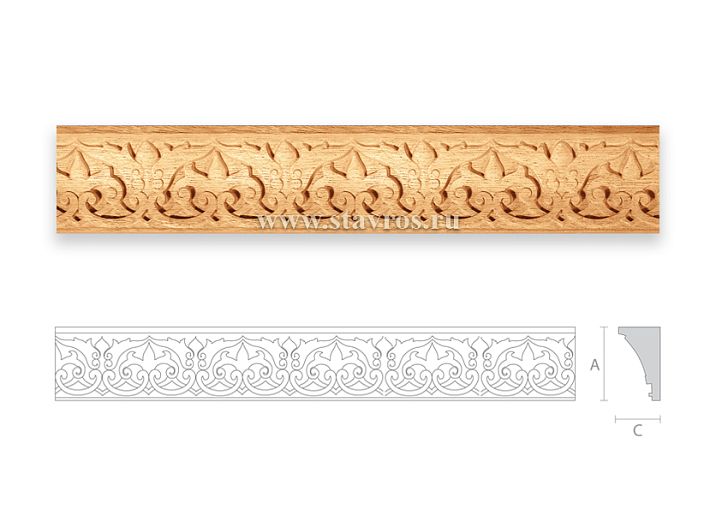
A window is not just an opening in a wall; it is the eyes of the house through which it looks at the world and lets it in. Just as human eyes are framed by eyelids, eyebrows, and lashes that give the gaze expressiveness, windows also require proper framing to give the building facade completeness and character. Wooden Window Frames have become an indispensable part of architectural aesthetics, combining functionality and decoration, tradition and modernity.
Wood as a material for window framing is chosen deliberately. It carries warmth and coziness, history and culture, ecological friendliness and naturalness. In every cross-section of wood, in every growth ring, there is a memory of time, making wooden facade elements not just decorative details, but carriers of special energy and atmosphere.
In a world where mass production often leads to the depersonalization of architecture, STAVROS acts as a guardian of wooden decor culture, combining centuries-old traditions with innovative technologies. By crafting high-quality solid wood products, STAVROS restores individuality and character to homes, allowing each building to speak its own architectural language.


Historical Context of Wooden Frames
The history of window opening decoration in wooden architecture spans many centuries. In traditional Russian izbas, windows were not merely sources of light but also important symbolic elements, marking the boundary between the interior world of the house and the external space. The first window frames appeared as a functional necessity — they protected the joints between the window frame and the wall from atmospheric precipitation and drafts. However, they quickly acquired decorative functions, becoming a kind of house's calling card and its inhabitants.
In peasant izbas, window frames were often adorned with carvings featuring solar symbols, plant motifs, depictions of birds and animals. Each carving element had its own meaning: sun rosettes protected the house from dark forces, plant ornaments symbolized fertility and prosperity, birds brought good news. The upper part of the frame — the ocher — was usually the most richly decorated and symbolized the sky, the side parts — the tethers — connected the sky and earth, and the lower part — the window sill — represented the earth.
In the noble estates of the 18th-19th centuries, window frames became an important element of architectural style. Classicism brought symmetry and formality, Empire — monumentality and imperial grandeur, Modern — flowing, fluid lines and plant motifs. In wealthy homes, wooden frames often imitated stone frames of urban mansions, yet retained the warmth and liveliness inherent only to wood.
Regional carving styles created a remarkable diversity of styles and forms. Northern Russian frames were characterized by strictness and minimalism, with geometric motifs predominating. Volga region craftsmen created lavish, baroque compositions with abundant plant elements. In Siberia, especially in Irkutsk, a distinctive frame style emerged with characteristic volutes and baroque scrolls. The Moscow tradition combined elements from various schools, reflecting the capital's status and the region's multi-ethnic character.
Interestingly, in wooden architecture, the shape of windows and the outer contour of frames were mostly conservative, rectangular. However, the internal divisions of the frame, where glass was inserted, could have more complex shapes. For example, in the Oryol Governorate, frames with a pointed arch motif were popular, where the inner side of the top of the frame, the lower hinged sashes, and even the small windows curved.




Aesthetics and Meaning of Framing
In the architectural composition of the facade, the window plays not just a functional role, but also an important semantic accent. It is a kind of 'gaze' of the house, through which it communicates with the surrounding world. Just as the expressiveness of a human gaze largely depends on the framing of the eyes — the shape of the eyelids, eyebrows, lashes — so too does the character of the window depend on its framing.
Decorative Window Treatment creates a visual frame focusing attention on the opening, emphasizing its shape and proportions. It can visually enlarge or reduce the window, making it more significant or, conversely, a restrained element of the facade. Through window framing, an architect can convey the character of the building — its grandeur or intimacy, tradition or innovation, openness or privacy.
The architectural logic of opening decoration is based on several principles. First, the principle of correspondence — the framing should correspond to the overall style of the building, its scale, proportions. Second, the principle of hierarchy — more significant windows (e.g., in formal rooms) receive richer framing than secondary ones. Third, the principle of rhythm — the framing creates a certain visual rhythm on the facade, organizing its perception.
Wooden window framing can fulfill various aesthetic tasks. It can emphasize horizontal or vertical lines of the building, create contrast with the main wall material, add texture and volume to the facade. In classical architecture, framing often has complex profiling, creating play of light and shadow, which makes the facade more plastic and expressive.
The color of wooden framing plays a special role. Traditionally, window frames were painted in colors contrasting with the main wall tone — white frames on dark log walls or, conversely, dark frames on light backgrounds. This approach allowed highlighting the architectural articulation of the facade, emphasizing windows as important compositional elements. In modern architecture, color solutions may be more diverse, but the principle of contrast or, conversely, nuance remains relevant.
Our factory also produces:


Materials and their advantages
Wood as a material for window frames has several undeniable advantages. Firstly, it offers a living texture that makes each item unique. The pattern of wood fibers, the design of growth rings, natural tones — all of this creates an irreplicable texture that cannot be precisely reproduced artificially.
An important quality of wood is its thermal stability. Wood has low thermal conductivity, making it an ideal material for regions with sharp temperature fluctuations. Wooden frames do not create cold bridges, do not freeze in winter, and do not overheat in summer. This contributes not only to the energy efficiency of buildings but also to the longevity of the frames themselves.
Ecological friendliness is another important advantage of wood. It is a completely natural, renewable material that does not emit harmful substances and creates a favorable microclimate. In an era of growing attention to ecological aspects of construction and finishing, wooden facade elements are becoming increasingly popular.
Solid wood moldings are profiled strips of various cross-sections used for decorating window openings. They can have simple profiles (rectangular, semicircular) or complex, multi-level profiles with various decorative elements. Mouldings create clear lines and shadows on the facade, highlighting the architectural features of the building.
Natural wood casings are more complex constructions consisting of several elements: top board (architrave), side boards (stile) and bottom board (sill). They can be simple and minimalist or richly decorated with carvings, applied elements, and shaped cutouts. Casings not only decorate windows but also protect joints between window frames and walls from atmospheric influences.
The STAVROS company uses three main types of wood for producing its products: beech, oak, and ash, each of which has its own stylistic characteristics.
Beech is characterized by a uniform structure and a pleasant light pink hue. It is easy to work with, allowing for the creation of complex-shaped items with fine detailing. Beech frames are ideally suited for interiors in light tones, in Scandinavian or modern styles.
Oak is a classic material for architectural elements. Its strength, durability, and expressive texture with a distinctive grain make it an ideal choice for traditional and classical facades. Oak frames acquire an even deeper, noble tone over time, further enhancing their aesthetic value.
Ash combines strength and elasticity, making it an excellent material for items requiring high precision. Its light tone with a beautiful wood grain pattern harmonizes well with most architectural solutions, from classic to modern.
Get Consultation
Forms and constructions
The variety of forms and constructions of wooden frames allows selecting the optimal solution for any architectural style and type of window. The main types of window openings found in modern architecture are rectangular and arched.
Rectangular windows are the most common option, for which there are numerous types of frames: from simple frame structures to complex compositions with cornices, pilasters, and sills. Rectangular framing can be symmetrical or asymmetrical, with emphasis on the upper or side parts.
Arched windows require a special approach to framing. Here, it is important to emphasize the smooth curve of the arch and create a harmonious transition from vertical elements to the curved finish. For arched windows, special moldings that replicate the arch shape or combinations of straight and curved elements are often used.
Modular frame constructions consist of several elements, each performing its own function. The upper part (architrave, cornice) protects the window from precipitation and creates an expressive finish to the composition. Side elements (stile, pilaster) form vertical lines of the frame, emphasizing the height of the window. Sill boards complete the composition at the bottom, creating a visual support for the entire structure.
Wooden window moldings can create complex facade patterns, turning windows into true works of art. Carving can be flat relief (with slight recessed patterns), raised relief (with more pronounced volume), through-cut (perforated), or applied (when carved elements are attached to the main surface). Each type of carving creates its own visual effect and interacts differently with light and shadow.
Decorative wooden trim includes various profiled elements: moldings, cornices, pilasters, which can be combined to create diverse compositions. Trim items allow forming both simple, minimalist frames and complex, multi-level constructions with rich play of light and shadow.
An important aspect of wooden frame construction is their connection. Traditionally, "in half-timber" joints and tenon joints were used, ensuring strength and durability of the structure without using metal fasteners. In modern production, more technologically advanced methods are applied, but the principle of reliable element connection remains unchanged.
Design styles
The stylistic diversity of wooden frames allows selecting a solution for any architectural direction, from traditional to ultra-modern. Each style has its own distinctive features reflecting a particular era, culture, and aesthetic preferences.
Classic window styling is characterized by symmetry, proportionality, and use of elements from the order system. Frames often include pilasters with capitals supporting a cornice or architrave. Profiles have clear geometry, creating expressive play of light and shadow. Milling is used to create fine decorative elements — fluting, beads, Ionic, and meanders. The color palette of classic frames is usually restrained — white, cream, light gray — emphasizing the purity of lines and forms.
Russian-style window decoration has deep folk roots. It is characterized by rich carving using traditional symbols and motifs. Solar signs (circles, rosettes, stars) are usually placed at the top of the casing and symbolize the sun and celestial bodies. Wavy lines, "cities," zigzags are associated with water, rain, fertility. Images of birds (especially roosters, swans) have protective significance. The color palette of Russian style can be restrained (white, ochre) or bright and festive (red, blue, green).
Modern window styling is characterized by minimalist forms, minimal decorative elements, and emphasis on the natural beauty of the material. Here, clean lines, precise geometry, and surface finish quality are important. Instead of carving and milling, the focus is on the wood's texture, its natural grain and tone. Profiles become simpler but no less expressive due to precisely balanced proportions and relationships. The color palette of modern frames can include natural wood tones as well as contemporary colors — graphite, anthracite, terracotta.
Wooden window decor should harmoniously complement the overall facade architecture. It is important to consider not only the building's style but also its scale, proportions, and finishing materials. Wooden frames can either complement the main facade material (e.g., on wooden houses) or create a striking contrast with it (e.g., on stone or stucco buildings).
An interesting effect is created by combining wooden frames with other materials — stone, brick, stucco. This approach allows highlighting textural and color differences, creating a multi-layered, volumetric facade composition. For example, wooden casings against brickwork create a warm, cozy image, while against white stucco they appear more graphic and contrasting.
Functional aspects
In addition to decorative roles, wooden frames perform several important functional tasks, ensuring protection of windows and walls from various external influences.
Protection from precipitation is one of the main functions of window framing. The upper part of the casing or cornice diverts rain and meltwater from the window opening, preventing it from entering gaps between the frame and wall. This is especially important for wooden houses, where moisture penetration can lead to structural rot. Properly designed framing creates a kind of "umbrella" over the window, protecting it from direct precipitation.
Protection from wind is also provided by wooden framing. Casings cover gaps and irregularities between window frames and walls, preventing wind from entering these spaces. This improves the window's thermal insulation, reduces heat loss, and increases indoor comfort.
Sunlight, especially direct rays, can be an aggressive factor causing fading of interior finishes and furniture. Projecting elements of window framing — cornices, architraves — create shade, protecting the window from direct sunlight during certain hours of the day. This is natural sun protection that does not require additional devices or energy consumption.
Joint and seam concealment is another important function of trim. In any construction, joints, gaps, and irregularities inevitably occur at the junctions of different elements. Wooden casings and moldings hide these technical details, creating an impression of completeness and finish. This is especially relevant for wooden houses, where gaps may form between the window frame and the wall during settling.
Visual facade completion — a function at the intersection of aesthetics and constructive logic. Trim creates clear boundaries for window openings, emphasizes the facade’s structure, and forms its rhythmic organization. They help "assemble" various facade elements into a unified composition, making it more readable and harmonious.
Facade wooden elements also contribute to improving the acoustic properties of the room. Wood absorbs sound waves well, reducing the penetration of outdoor noise through window openings. This is especially important for houses located near busy streets or other noise sources.
How to choose facade trim
Choosing the right wooden window trim is a task requiring consideration of multiple factors: from the building’s architectural style to regional climatic conditions. Let’s consider the main principles and rules that will help make the right choice.
Color, texture, and contrast — key visual parameters determining the perception of window trim. The color of wooden elements can either harmonize with the main facade tone, creating a nuanced composition, or contrast with it, highlighting windows as accent elements. The wood texture can be emphasized by transparent finishes or, conversely, concealed under opaque paint. Contrast can be created not only by color but also by texture, shape, and size of elements.
Choosing trim to match the house’s style requires understanding the main characteristics of various architectural directions. For a chalet-style house, with its Alpine roots, suitable are massive wooden trimmings with simple yet expressive forms, emphasizing solidity and connection to nature. The color palette usually includes natural wood tones — from golden to dark brown.
A Provence-style house requires lighter, more elegant trimmings, often with plant ornamentation. Characteristic coloring is in light, pastel tones — white, cream, lavender, blue. Important is the effect of wear and a slight aged appearance, creating a sense of time and history.
Modern-style houses feature smooth, flowing lines, asymmetry, and plant motifs. Trim can have complex shapes with wavy elements, stylized flowers and leaves. The color palette includes both natural wood tones and more complex, nuanced colors — olive, terracotta, muted blue.
Russian style implies using traditional casing forms with rich carving, solar symbols, and plant motifs. The color palette can be restrained (white against a dark log wall) or multi-colored and festive, using red, blue, green, and gold.
Window decoration with wood must be harmonious, without excessive decorative elements. It is important to follow the principle "less is more" — better to choose a few high-quality, well-crafted details than many small elements that fragment the composition. This is especially relevant for small houses, where excessive decoration may create a sense of overload and reduce visual space.
When choosing trim, practical aspects must also be considered: regional climatic conditions, facade orientation relative to cardinal directions, proximity to pollution sources. In regions with harsh climates, abundant precipitation, and sharp temperature fluctuations, simpler forms should be chosen, which are less prone to deformation and damage. For southern facades receiving abundant sunlight, it is important to select wood species and finishes resistant to UV radiation.
Installation and operation
Quality installation of wooden trimmings is the guarantee of their longevity and aesthetic appeal. The installation process includes several important stages, each requiring attention and a professional approach.
Surface preparation — the first and most important stage. The wall around the window opening must be flat, clean, dry, and free of protruding elements that could interfere with tight trim fitting. All cracks, gaps, and irregularities must be addressed before installation begins. If the wall is wooden, it should be treated with antiseptic to prevent mold and mildew growth under the trim.
Wooden elements can be attached using various methods depending on the wall material and trim type. On wooden walls, nails, screws, or special fasteners are typically used, ensuring secure fixation while allowing the wood to "breathe" and compensate for natural deformations. On stone or brick walls, anchors, dowels, or special adhesives may be used.
Seam and joint sealing — an important stage ensuring protection against moisture penetration. Various sealants, silicone or acrylic compounds, are used to fill gaps between trim and wall. It is important to choose materials compatible with wood and not causing its degradation or color change.
Protection against moisture and mold — a critically important aspect of facade wooden elements’ operation. Wood, especially on the exterior of a building, is exposed to rain, snow, condensation, which may lead to its deterioration. Protection is provided by various impregnations and antiseptics that penetrate the wood structure and create a barrier against moisture and microorganisms. Special attention should be paid to end-grain cuts, which are most vulnerable to moisture penetration.
Maintenance of wooden trimmings includes regular inspection of their condition, cleaning from dirt, and renewal of protective coatings. Various compounds are used for wood protection:
Oils (linseed, tung) penetrate deeply into the wood structure, highlighting its texture, but require regular renewal (typically every 1-2 years).
Lacquers create a protective film on the wood surface, protecting it from moisture and mechanical damage. Modern lacquers may contain UV filters, preventing wood discoloration under sunlight exposure.
Antiseptics protect wood from biological damage — mold, mildew, insects. They can be standalone compounds or components of comprehensive protective treatments.
Regular maintenance of wooden trimmings extends their service life and preserves their aesthetic appeal. It is recommended to inspect and perform necessary maintenance work no less than twice a year — in spring and autumn, as well as after extreme weather events (heavy rains, snowfalls, storms).
Mistakes and tips from the master
Even the highest-quality wooden trimmings may not achieve the desired effect if errors were made during their selection and installation. Let’s consider the most common problems and how to avoid them.
Over-decorating with ornamental elements — one of the most common mistakes. Seeking to make the facade more expressive, some homeowners choose overly complex, overloaded trimmings for all windows. This may lead to visual overload, especially if the house is small or has many windows. Master’s tip: decorate only the main windows (e.g., in the living room), and use simpler, more restrained forms for the rest, supporting the overall style.
Mismatch with the building’s style — another common problem. Ornate Russian-style trimmings will look inappropriate on a minimalist modern house, just as simple, geometrically strict trimmings will look out of place on a traditional wooden log house. Master’s tip: choose trimmings that match the house’s architectural style, proportions, materials, historical and cultural context.
Lack of symmetry and proportionality can destroy the facade’s harmony. If the house is designed with symmetrical composition, the trimmings for corresponding windows should be identical. Violating this principle creates a sense of randomness and incompleteness. Master’s tip: before ordering trimmings, create a facade scheme indicating all windows and their trim types, to visualize the overall picture and check symmetry and proportions.
Proper selection of trimmings by size, facade, and scale requires consideration of several factors. The width of trimmings should be proportional to the window size: narrower for small windows, wider for large ones. The scale of decorative elements should also correspond to the overall scale of the building: what looks good on a large house may appear bulky on a small one.
Poor installation can spoil the impression even of the highest-quality frames. Uneven joints, visible fasteners, gaps between the frame and the wall — all of this reduces the aesthetic value and functionality of the structure. Master’s advice: entrust installation to professionals experienced in working with wooden architectural elements, or, if doing it yourself, thoroughly study the technology and use quality tools and materials.
It is also important to consider the climatic characteristics of the region and the orientation of the facade. In regions with harsh climates, abundant precipitation, and sharp temperature fluctuations, it is advisable to choose simpler forms that are less prone to deformation and damage. For southern facades receiving abundant sunlight, it is important to select wood species and finishes resistant to UV radiation.
Facade decoration examples
Let us consider several specific examples of using wooden frames in various architectural contexts, demonstrating a variety of stylistic and technical solutions.
A house with arched windows and moldings is an elegant two-story structure in the neoclassical style. The first-floor arched windows are framed by wooden moldings that emphasize the smooth curve of the arch and create a striking contrast with the stuccoed facade. The upper part of the frame has an archivolt — a profiled arch — repeating the arch’s contour. The side parts are designed as pilasters with simple capitals, creating a visual support for the arch. The moldings are painted white, highlighting their shape and creating a clear, graphic pattern on the facade.
Second-floor windows have a rectangular shape and are framed by simpler moldings, but with triangular pediments. This solution creates a hierarchy in the facade’s design: more significant first-floor windows receive more complex, elaborate framing, while secondary upper-level windows are simpler. At the same time, stylistic unity is preserved, creating a cohesive, harmonious appearance.
A cottage with wooden carved casings represents a modern interpretation of traditional Russian wooden architecture. A single-story structure made of round logs with a mansard roof is adorned with casings in the Northern Russian style. The upper part of the casings has the shape of a triangular gable with solar symbols and plant ornamentation. The side parts are decorated with a geometric pattern symbolizing rain and fertility. The lower part has a shaped edge with "drops" — a traditional motif associated with water and life force.
Color solution is classic — white casings against a golden log structure. This contrast not only emphasizes decorative elements but also visually structures the facade, creating a clear rhythm and making it more expressive. Casings harmonize with other carved elements — friezes on the gable, trim on the eaves, balusters on the porch, creating a cohesive, stylistically consistent image.
Modern facade with minimalist decorative window treatment Represents a creative reinterpretation of traditions within the context of current architectural trends. A two-story structure made of glued-laminated timber with a flat roof and large panoramic windows combines characteristics of minimalism and traditional wooden architecture. The frames here have a simple profile with minimal decorative elements, but are made of dark wood, creating a striking contrast with light-colored walls.
The frame profile is simple, rectangular, without complex profiling or carving. The emphasis is on material quality, precision of execution, and clean lines. This approach creates a modern, stylish look while maintaining a connection to traditional wooden construction. The frames look especially striking at night, when lighting creates a dramatic interplay of light and shadow, highlighting the facade’s geometry.
Why STAVROS
Choosing a manufacturer of wooden architectural elements is a decision that affects not only the facade’s aesthetics but also its durability, functionality, and overall impression of the house. The company STAVROS stands out on the market due to several key advantages that make it a choice for professionals and demanding clients.
STAVROS’s extensive collection of trim and facade solutions includes a wide range of items for window decoration — from simple moldings to complex carved casings. This allows selecting the optimal solution for any architectural style, from classic to modern, from traditional Russian to Scandinavian minimalism. All elements in the collection are designed with consideration for architectural traditions, proportions, and functional requirements.
Solid wood products are a distinctive feature of STAVROS. Unlike many manufacturers using composite materials or glued laminated timber, STAVROS works with solid blocks of valuable wood species — beech, oak, ash. This ensures not only the aesthetic perfection of the products but also their durability, eco-friendliness, and restorability. Solid wood retains all the natural qualities of timber — its texture, warmth, ability to "breathe" and regulate humidity.
The geometric precision of STAVROS’s products is achieved through the use of modern CNC-controlled equipment. This ensures perfect conformity of dimensions, angles, and profiles, which is especially important when creating complex architectural compositions where each element must precisely fit with others. Geometric precision also affects the functionality of frames — their ability to protect against precipitation and wind, and effectively channel water.
Clean carving is another important quality of STAVROS’s products. Carved elements are executed with high detail, clear lines, and smooth transitions. This creates a striking interplay of light and shadow, making the decoration more volumetric, lively, and interesting. Clean carving is achieved both through modern technologies and through manual finishing performed by experienced craftsmen.
STAVROS’s individual approach to each project allows creating unique solutions tailored to specific architectural tasks and client preferences. The company can manufacture non-standard elements according to architects’ or designers’ sketches, reproduce historical samples, or develop new forms and profiles. This is especially valuable when working with unique architectural objects, restoring historical buildings, or creating original interiors.
Logistics across Russia makes STAVROS’s products accessible to clients from any region of the country. The company ensures reliable packaging protecting items from damage during transport and prompt delivery, which is especially important for projects with tight deadlines. For large orders, phased delivery according to the schedule of construction or restoration works is possible.
Conclusion
Wooden window frames are not just decorative elements but an important part of the architectural language through which a house "speaks" to the surrounding world. This is a cultural code reflecting history, traditions, aesthetic preferences, linking modern construction with centuries of wooden architecture heritage.
Wood as a material for window frames makes a house warm not only physically but also emotionally. It creates a sense of coziness, naturalness, and connection to nature. The expressive texture, pleasant color, tactile warmth — all these qualities of wood cannot be fully replicated using artificial materials. The uniqueness of each piece of wood makes every frame unique, giving the house individuality and character.
In a world where mass production often leads to standardization and depersonalization of architecture, wooden frames become a way to express individuality, create a home unlike others. They allow embodying personal tastes, cultural preferences, connection to a specific tradition, or, conversely, a desire for innovation.
Choosing Wooden Window FramesIt is important to approach this solution with respect for details and heritage. Each element must be thoughtfully designed not only aesthetically but also functionally. Material quality, precision of manufacture, correct installation — all of this affects the durability and appearance of frames, and thus, the overall look of the house.
Wooden window frames — an architectural poetry of the facade | Company STAVROS