Article Contents:
- Window as an image, opening as an accent
- Wood — the language of architecture
- Framing constructions and decorative detailing
- Styles and approaches to window framing
- Mistakes in framing and professional tips
- Role of STAVROS products in home architecture
- Application examples: visualization in words
- Conclusion
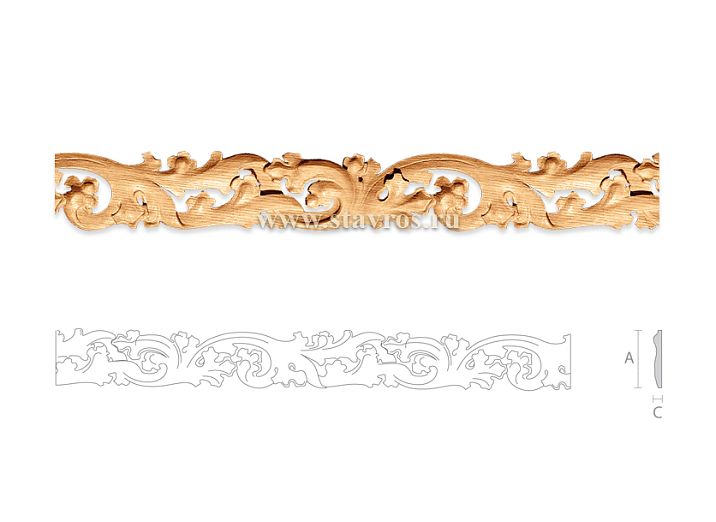
Wooden architecture is a special chapter in the book of world architecture, where windows play not only a functional role but also expressive accents defining the character and individuality of the building. Window framing in wooden houses — is not just a decorative element, but a multifaceted architectural statement, where traditions, aesthetics, functionality, and cultural code intertwine.
In today's world, where mass production often erases individuality, elements created with an understanding of historical context and using high-quality materials become especially valuable. Wooden window framing is an architectural element capable of transforming a house’s appearance, giving it completeness and character, becoming the building’s signature.
The STAVROS factory, combining classical woodworking craftsmanship with modern technologies and standards, offers solutions that allow the realization of the most daring architectural ideas. Premium solid wood products become the finishing touch that transforms a merely good house into an outstanding architectural object, where every detail is thought out and harmonious.


Window as an image, opening as an accent
A window in a wooden house is much more than just a source of light and air. In cultural and architectural contexts, it has always served as a symbolic element, a connecting link between the interior world of the house and the external space. It is no wonder that in Russian tradition there was a concept of 'red window' — the main, ceremonial, facing the street or square.
Historically, the window casing performed not only a protective function, shielding the wooden log structure from atmospheric influences at the point of window frame junction, but also carried significant semiotic weight. Carved patterns on the casings contained symbols associated with the home’s prosperity, protection from evil forces, and fertility. Each ornamental element had its own meaning: solar signs symbolized the sun and warmth, plant motifs — fertility and abundance, geometric patterns — order and harmony of the universe.
Moreover, window casings often became a kind of 'business card' of the house, reflecting the status and taste of its owners, belonging to a certain lineage or local tradition. The way windows were designed allowed one to 'read' the family’s history, their position in society, even the professional affiliation of the owner.
In modern wooden house architecture, the form and content of window framing have transformed, yet have not lost their significance. Today, it is less a carrier of symbolic meanings and more an architectural statement, an element of the facade’s overall composition, expressing the stylistic concept of the house.
The window with its framing has become an instrument of architectural expressiveness, allowing one to emphasize the character of the building, its belonging to a certain tradition or, conversely, an innovative approach. Modern architects use window framing as a means of articulating the facade, creating rhythmic structures, playing with scale and proportions.
It is important to understand that a window in a wooden house is not simply an opening in the wall, but a complex architectural system including the window unit itself, the sash (a special construction compensating for the shrinkage of the log structure), the casings, and other decorative elements. All these components must be coordinated with each other both functionally and aesthetically.




Wood — the language of architecture
Despite the emergence of many modern materials, wood remains the optimal choice for window framing in wooden houses. This is due to a range of factors, both practical and aesthetic.
Firstly, wood possesses unique ecological characteristics. It is a fully natural material, emitting no harmful substances, creating a favorable microclimate in the room. Wooden elements 'breathe,' regulating air humidity, which is especially important for wooden houses as a whole.
The plasticity of wood as a material allows creating elements of practically any shape and complexity. From simple linear profiles to intricate carved compositions — all this is possible thanks to the unique properties of wood, which is amenable to various types of processing: sawing, planing, milling, carving, sanding.
The durability of properly processed wood is also one of its key advantages. With proper care, wooden window framing elements can serve for decades, acquiring an even more noble appearance over time. Unlike many modern materials, wood can be restored, returning it to its original beauty.
The warm aesthetics of wood creates a unique atmosphere of coziness and naturalness. Natural texture, unique wood grain pattern, pleasant color — all this makes wooden elements irreplaceable, giving them character and individuality. Each wooden item is unique, as each tree trunk in the forest is unique.
Among various wood species used for manufacturing window framing elements, beech, oak, and ash are particularly popular.
Beech is characterized by dense, uniform structure, making it an ideal material for creating items with complex profiles. It is well-suited for mechanical processing, allowing the creation of details with fine detailing. Beech color — from light yellow to pinkish — adds warmth and lightness to interiors. Beech readily accepts stains and varnishes, expanding its application possibilities in various stylistic contexts.
Oak is traditionally considered one of the most noble wood species. Its strength, durability, and expressive texture with characteristic ring patterns make it an ideal material for creating status and representative elements. Oak resists moisture and mechanical impacts well, which is especially important for exterior window framing elements. Over time, oak acquires an even more noble tone, further increasing its value.
Ash combines strength and elasticity, making it an excellent material for products requiring high strength at relatively low weight. Its light tone with distinct grain complements modern interiors. Ash is easy to work with and accepts various finishing materials well.
Our factory also produces:


Frame constructions and decorative details
Architectural treatment of window openings in wooden houses represents a complex system of elements, each performing its own function and contributing to the overall composition.
Sills are the main framing element, consisting of decorative boards surrounding the window opening along its perimeter. Traditionally, a sill consists of two vertical side pieces, a top horizontal board (the ocher), and a bottom board (the sill). Depending on regional traditions and house style, sills may be simple or elaborately decorated, featuring carving, applied elements, or shaped edges.
Crown molding in window framing serves as a finishing element, emphasizing the upper part of the opening. It may be simple, in the form of a horizontal board with a profiled edge, or complex, multi-tiered, with decorative brackets, modillions, or cornices. The crown molding is not only decorative but also functional — it protects the upper part of the window from precipitation.
Pilasters are vertical elements imitating columns that may flank the window opening on both sides. They give the window a more imposing, architecturally refined appearance. Pilasters may be smooth or fluted (with vertical grooves), with capitals of various orders — from simple Doric to complex Corinthian.
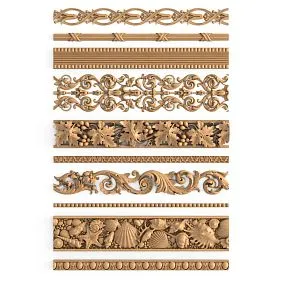
Moldings are profiled strips used to create framed structures, divide planes, and emphasize architectural lines. In window framing, moldings may be used as standalone elements or in combination with other details. The variety of molding profiles allows for creating both simple, minimalist frames and complex, multi-level compositions.
Decorative elements complement the main framing structure, giving it individuality and expressiveness. These may include carved rosettes, keystone stones, consoles, brackets, sash brackets, and pediments. Each of these elements has its place in the overall composition and its stylistic affiliation.
Harmony between the wall, window frame, and decorative framing is achieved through adherence to proportions, stylistic unity, consideration of materials and color solutions. It is important that the framing corresponds to the scale of the window and the house as a whole, not being overly massive for a small opening or, conversely, too light for a large window.
Functionally, window framing performs several tasks. Primarily, it protects the junction between the window frame and the wall from atmospheric influences — rain, snow, wind. This is especially relevant for wooden houses, where proper window opening treatment contributes to the longevity of the entire structure.
The aesthetic function of framing is to give the window a finished, architecturally refined appearance. Framing can emphasize the house’s style, its belonging to a particular architectural tradition, its status, or its individuality.
Finally, window framing plays an important role in creating a rhythmic structure of the facade. Repeating framing elements, their proportions, and placement create a certain visual rhythm, which may be uniform, progressive, or contrapuntal. This rhythm determines the overall perception of the facade, its dynamism or stillness, monumentality or lightness.
Get Consultation
Styles and approaches to window framing
Traditional Russian architecture offers a rich arsenal of solutions for window opening treatment. Carved sills of Russian wooden houses are not merely decorative elements but a kind of cultural code, encoding views on the order of the world, prosperity, and home protection.
Characteristic features of Russian style in window treatment include rich carving, use of plant and geometric ornaments, symbolic imagery (sun, birds, animals). The upper part of the sill (the ocher) often has the shape of a kokoshnik or a teremok, adorned with delicate carving. Side pieces may be decorated with columns, pilasters, twisted posts. The sill board often has a shaped lower edge with a decorative cutout.
Symbolism in the carving of sills has deep roots. Solar signs (circles, rosettes, stars) symbolize the sun and celestial bodies protecting the house. Plant motifs (branches, flowers, ears of grain) are associated with the idea of fertility and abundance. Images of birds (especially roosters) and animals (horses, lions) have protective significance.
Modern log homes are often styled in a more minimalist fashion, corresponding to their technological nature. Here, clear geometric forms prevail, minimal decorative elements, emphasis on material quality and precision of execution.
Sills in such homes usually have a simple rectangular shape with minimal profiling. Instead of carving, geometric ornamentation may be used, or there may be no decoration at all. Color solutions often rely on contrast between wall and framing colors or, conversely, on subtle tonal combinations of a single color.
European styles offer their own options for window treatment in wooden houses. Scandinavian style is characterized by simple forms, light tones, minimalism in decoration. Windows in Scandinavian style usually have simple framing, often painted white, contrasting with darker wall colors. A characteristic feature is wide sills, which may be used as seating areas or decorative shelves.
Alpine motifs in window treatment include carved sills with plant ornamentation, often painted in bright colors (red, green, blue), contrasting with natural wall colors. A characteristic feature is the use of shutters, which may be both functional and decorative.
Neoclassical style in window treatment of wooden houses implies the use of classical architectural elements — pilasters, cornices, pediments — but in a simplified, stylized form. The color palette is usually restrained, with predominance of white, cream, or light gray. Proportions and symmetry play a key role in creating a neoclassical image.
Errors in window framing and professional advice
One of the most common errors in framing windows of wooden houses is stylistic mismatch. Often, owners choose framing that they like on its own, without considering the overall architectural concept of the building. As a result, visual dissonance arises: for example, ornate carved sills on a minimalist modern house, or conversely, overly simple, minimalist framing on a traditionally Russian-style house.
Over-decorating is another frequent error. Seeking to make the house more expressive, some owners choose overly complex, heavily decorated framing for all windows. This may lead to visual overload of the facade, especially if the house is small or has many windows. It is important to remember the principle 'less is more' and use rich decoration selectively, to highlight the most significant windows.
On the other hand, complete absence of decorative framing can also be an error. Even in the most minimalist modern projects, windows require certain framing, which protects the junction between the frame and the wall and gives the facade a finished look. A simple profiled sill or a molding-based frame structure can become the necessary element that makes the house’s appearance cohesive.
When selecting the optimal size, shape, and profile of framing, several principles should be followed. First, the proportions of the window itself and its relationship to the overall facade dimensions must be considered. The width of the sills should be proportional to the window size: narrower for small windows, wider for large ones.
The shape of the framing should correspond to the window shape and house style. For rectangular windows, both straight and shaped sills are suitable, depending on the overall style. For arched windows, framing should either replicate the arch shape or create an interesting contrast with it.
The profile of the framing determines its plastic expressiveness and play of light and shadow. Traditional styles feature more complex profiles with multiple levels, while modern styles favor simpler, more streamlined profiles with clear lines. It is important that the profile is proportionate to the overall scale of the framing: a too small profile on a wide sill may 'disappear,' while a too large profile on a narrow sill may appear disproportionately massive.
Color, texture, and type of finish of wooden framing significantly influence the overall perception of the facade. Traditionally, sills were painted in colors contrasting with wall colors: white sills on dark log walls or, conversely, dark sills on light backgrounds. This approach helps emphasize the architectural articulation of the facade.
In modern projects, a common approach is to use framing colors close to wall colors but slightly different in tone (lighter or darker). This creates a more nuanced, subtle solution, where expressiveness is achieved not through color contrast, but through the play of light and shadow on profiled elements.
The wood texture can be emphasized by transparent finishes (varnishes, oils, waxes) or concealed under opaque paint. The choice depends on the overall concept: if highlighting the natural beauty of the wood, its grain and texture, transparent finishes are chosen. If the focus is on color and form rather than material, opaque paints are used.
The type of finish affects not only aesthetics but also the durability of the trim. For exterior elements, it is important to choose finishes resistant to atmospheric conditions, UV radiation, and temperature fluctuations. Modern technologies offer a wide range of solutions, from traditional oil-based paints to high-tech polyurethane and acrylic formulations.
The role of STAVROS products in the architecture of a house
STAVROS products for framing windows in wooden houses are presented in a wide range of items, each distinguished by high-quality materials and craftsmanship.
Moldings of various profiles allow creating both simple framed structures and complex multi-level compositions. The variety of cross-sections — from simple semi-circular and rectangular to complex profiles with multiple levels — enables selecting the optimal solution for any style.
Trimming items include casings, baseboards, and cornices, which can be used individually or in combination to create a unified stylistic solution for the entire house. Standardized dimensions and profiles ensure compatibility between different elements.
Cornices for framing the upper part of window openings are available in various options — from simple straight to complex multi-tiered designs with decorative elements. They can serve as standalone window finishes or as a basis for more complex compositions with pediments and friezes.
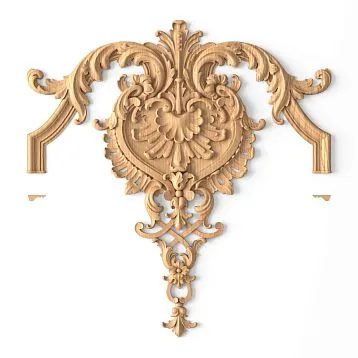
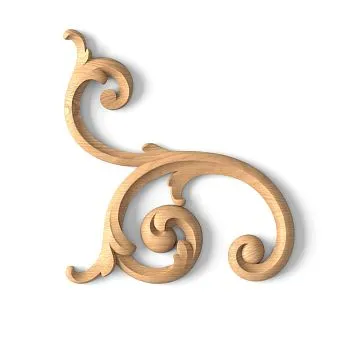
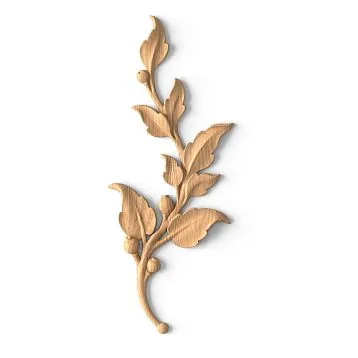
Carved elements — rosettes, brackets, keystone stones, pilasters — allow creating individual, unique solutions for window framing. They can be used as accent details, imparting a distinctive expressiveness and character to the trim.
The advantages of STAVROS products are determined by both material quality and production technology. Precise geometry of items is achieved through the use of modern CNC equipment, which ensures high processing accuracy and repeatability of results.
Manual work remains an important stage of production, especially when creating carved elements and final finishing of items. It is precisely the combination of technological precision and handcraftsmanship that makes STAVROS products unique, blending traditional woodworking traditions with modern quality standards.
The stability of item shapes is ensured by using properly dried wood and gluing technology, which minimizes the risk of deformation. This is especially important for elements that will be used under varying humidity and temperature conditions.
The aesthetic perfection of STAVROS products is manifested in harmonious proportions, meticulous detailing, and high-quality surface finishing. Each item, whether a simple molding or a complex carved element, is distinguished by thoughtful design and flawless execution.
For architects, designers, and builders, working with STAVROS products is simplified by several factors. First, standardization of dimensions and profiles ensures compatibility between different elements. Second, detailed technical documentation, including drawings, specifications, and installation recommendations, is available. Third, the option to order samples allows evaluating material quality and craftsmanship before making a final decision.
Examples of application: visualization in words
Let us consider several specific examples of how properly selected framing transforms the facade of a wooden house.
The house in the Russian Modern style is a two-story structure made of round logs with a mansard roof and an oriel window. Initially, the windows had simple, minimalist framing that did not match the overall style and failed to highlight the architectural features of the building.
To transform the facade, casings with elements of stylized carving, characteristic of modernism — flowing, fluid lines, plant motifs, asymmetrical compositions — were selected. The upper part of the casings was designed as a shaped lintel with carved ornamentation, the sides were adorned with vertical elements featuring plant patterns. The window sill had a shaped lower edge with a decorative cutout.
The color solution was based on the contrast between the dark color of the logs and the light, cream tone of the casings, which emphasized their plasticity and carving pattern. For accent windows — in the oriel and on the pediment — more complex compositions with additional decorative elements were used: carved brackets supporting the cornice, rosettes at the intersection of lines.
The result of the transformation exceeded expectations: the house acquired individuality, character, stylistic coherence. The facade became more expressive and articulated, yet not overloaded with decoration. Especially striking was the framing under side lighting, when the play of light and shadow accentuated the relief of the carving.
The Scandinavian-style wooden cottage is a single-story structure with a mansard roof, constructed from glued timber. The house's minimalist architecture with simple geometric forms required a corresponding approach to window framing.
A minimalist framing was chosen: rectangular casings with a simple profile, without carving or decorative elements. The emphasis was placed on material quality and precision of execution. To create the characteristic Scandinavian contrast, the casings were painted in pure white, which stood out effectively against the natural light-colored wood of the walls.
A distinctive feature of the solution was wide window sills extending beyond the facade plane and creating additional horizontal accents. They not only served a decorative function but also provided a base for arranging floral compositions during warmer months.
The transformation of the facade was achieved with minimal means, yet the effect was significant. The house acquired a characteristic Scandinavian appearance: clean, minimalist, with an emphasis on natural materials and functionality. The white window frames created a rhythmic structure on the facade, emphasized its geometry, and added freshness and lightness.
The classical-style estate is a two-story structure made of glued timber with a symmetrical facade, portico, and columns. The architecture of the house required a corresponding, substantial approach to window framing.
Casings with elements of classical order were selected for framing: vertical pilasters with capitals, horizontal cornices with modillions, window sills with brackets. Triangular pediments were installed above first-floor windows, and friezes with arched finishes were placed above second-floor windows.
The color solution was based on the classic combination of white and ochre: white casings stood out effectively against the warm, golden tone of the walls. To create additional plasticity and play of light and shadow, all profiled elements had complex cross-sections with multiple levels.
The transformation of the facade was striking: the house acquired a majestic, representative appearance characteristic of classical estate architecture. The symmetrical arrangement of windows with identical framing created an orderly, harmonious composition on the facade. Especially expressively, the framing appeared within the context of the overall architectural solution, echoing with the columns of the portico and the roof cornice.
Conclusion
Window framing in a wooden house is the final touch that brings the style to completion, giving the architectural appearance coherence and expressiveness. Like a picture frame, it not only frames the opening but also creates a context for its perception, emphasizing significance and drawing attention.
Wooden houses speak the language of wood — a material that has its own plasticity, texture, character. And each window should harmonize within this chorus, supporting the overall tonality, not standing out from the ensemble, yet not disappearing within it. Properly selected framing becomes the element that unites separate parts into a whole, creating a rhythmic structure of the facade, defining its character.
In a world where individuality and authenticity are increasingly valued, wooden window framing becomes a way to express the uniqueness of a house, its belonging to a particular cultural tradition or, conversely, an innovative approach. It is not merely a decorative element, but an architectural statement, reflecting taste, culture, and understanding of historical context.
When choosing window framing for your wooden house, remember that true quality is always evident in the details. It is precisely the careful crafting of each element, attention to proportions, materials, and manufacturing technology that determines the final result. A professional approach to selecting and installing window framing is an investment in the beauty and longevity of your home, its architectural expressiveness and uniqueness.
For those who value quality, aesthetic perfection, and a professional approach, STAVROS offers a wide range of products for window framing in wooden houses. These are not mere trim pieces, but architectural composition elements created with an understanding of traditional wooden architecture and modern requirements for quality and functionality.