Article Contents:
- Historical Context: From Terem to Palace
- Material as Meaning: Why Wood?
- Types of Decorative Solutions: Architectural Symphony
- Styles of Frames: From Classicism to Eclecticism
- Architectural Logic of Choice: Proportions and Harmony
- Installation, Maintenance, Durability: Practical Aspects
- Mistakes and How to Avoid Them: Professional Perspective
- Examples of Successful Application: Inspiration for Your Interior
- Advantages of STAVROS: Quality Visible in Details
- Conclusion: Door Opening as an Architectural Statement
In the world of architectural details, there are elements capable of transforming space, giving it character and completeness. Wooden Door Frame — precisely such an element that not only performs a practical function but also becomes an important stylistic accent, defining the perception of the entire interior. This architectural solution, rooted in deep antiquity, is experiencing a new flourishing today, combining centuries-old traditions with modern wood processing technologies.
The door opening is not merely a technical hole in the wall, but a symbolic boundary between spaces, a portal connecting different worlds. Since ancient times, people have paid special attention to decorating entrances and passageways, endowing them not only with functional but also sacred meaning. The door frame became a visual signal, foretelling what awaits the person beyond the threshold, setting the tone for the perception of space.
In modern interiors, wooden door frames retain this important role, becoming a focal point of attention, an element structuring space and creating necessary visual accents. The company STAVROS, specializing in the production of high-quality solid wood products, offers a wide range of solutions for creating unique, stylistically refined door frames that will become a true decoration for any interior.


Historical Context: From Terem to Palace
The history of door opening decoration reflects the evolution of architectural styles and cultural traditions. In Russian architecture, wooden door frames and casings hold special significance. In traditional wooden construction, door openings were often adorned with carved casings featuring rich ornamentation, which served not only a decorative but also a symbolic function, protecting the house from evil forces.
In boyar terems and royal palaces of the 17th century, door openings were decorated especially lavishly, using intricate carving, gilding, and painting. The door became a true work of art, demonstrating the status and taste of the house’s owner. Special attention was paid to portals—the architectural framing of the entrance, which often included columns, pilasters, pediments, and cornices.
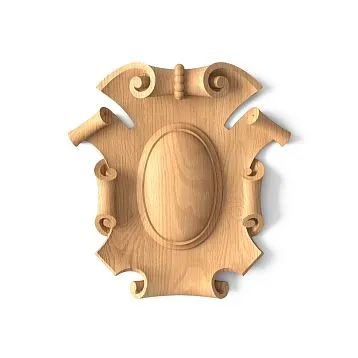
European traditions of door opening decoration developed in parallel but had their own characteristics. During the Renaissance, door portals became an important element of architectural composition, often executed in stone or wood and adorned with sculptural elements, coats of arms, and plant motifs. Baroque brought even greater opulence and theatricality to door decoration, transforming them into complex architectural compositions with curved lines, volutes, and cartouches.
Classicism restored strictness and symmetry in door opening decoration. Portals of this period are characterized by clear proportions and the use of elements of ancient orders—columns, pilasters, and entablatures. Wooden Door Opening Decoration In the classical style, it remains an epitome of elegance and harmony to this day.
Modernism at the turn of the 19th and 20th centuries brought a new understanding of form and decoration. Door frames of this period are characterized by smooth, flowing lines, asymmetry, and the use of plant motifs stylized to resemble natural forms. Wood, as a pliable, living material, was ideally suited to embodying these ideas.
In all epochs, wood played a special role in the architectural composition of interiors. This material, possessing warmth, texture, and the ability to be finely worked, allowed for the creation of both monumental and delicate, filigree forms. Wooden door frames became not merely functional elements but also carriers of a specific style, era, and cultural code.




Material as Meaning: Why Wood?
Choosing a material for decorating a door opening is not only a technical but also an aesthetic and philosophical decision. In this context, wood possesses unique qualities that make it the ideal choice for creating frames imbued with meaning and beauty.
Above all, wood is a material with soul, character, and history. Each species has its unique texture, grain pattern, and color, which cannot be precisely replicated. This makes every wooden item unique, irreplaceable, possessing its own individuality. In a world of standardization and mass production, this feature acquires particular value.
Warmth is another quality of wood that cannot be reproduced artificially. Wooden interior elements create a special atmosphere of coziness, comfort, and connection with nature. They are pleasant to the touch, possess good thermal insulation properties, and do not create a sensation of cold or discomfort upon contact.
Depth – a quality manifested in a tree's ability to play with light, create volume, texture. Depending on surface treatment, angle of light incidence, time of day, wooden elements can appear differently, creating a living, dynamic picture. This is especially important for interior elements at eye level that are constantly within view.
STAVROS Company uses only high-quality solid wood of valuable species – beech, oak, ash. Each of these species has its own unique properties and aesthetic qualities.
Beech – dense, hard wood with uniform structure and beautiful pinkish hue. It is easy to work with, allowing the creation of complex-shaped items with finely detailed craftsmanship. Beech takes stains and varnishes well, expanding its application possibilities in various stylistic contexts.
Oak – a classic material for creating architectural elements. Its strength, durability, expressive texture with distinctive ring patterns make it an ideal choice for creating prestigious, representative interiors. Oak resists moisture and mechanical impacts well, which is especially important for elements subjected to intensive use.
Ash combines strength and elasticity, making it an excellent material for creating items requiring high precision. Its light tone with beautiful wood grain pattern harmonizes well with most interior design solutions.
Solid wood door casings and other framing elements made from natural solid wood possess several indisputable advantages. Foremost, they are eco-friendly – wood does not emit harmful substances, does not accumulate static electricity, and creates a favorable microclimate in the room. Durability – with proper care, wooden elements can last for decades without losing their aesthetic or functional qualities. Restorability – even if a wooden item becomes damaged, it can be restored to its original appearance, which is practically impossible for items made from artificial materials.
Our factory also produces:


Decorative solutions: Architectural Symphony
Doorway framing – this is a complex architectural composition that may include various elements, each performing its own function and contributing to the overall impression. Let us consider the main components that make up this visual symphony.
Door casings – decorative strips framing the doorway perimeter. They can be simple, with minimal profile, or complex, with rich carving, decorative edges, applied elements. Door casings not only decorate the opening but also conceal technological gaps between the door frame and wall, creating a smooth transition between different materials and surfaces.
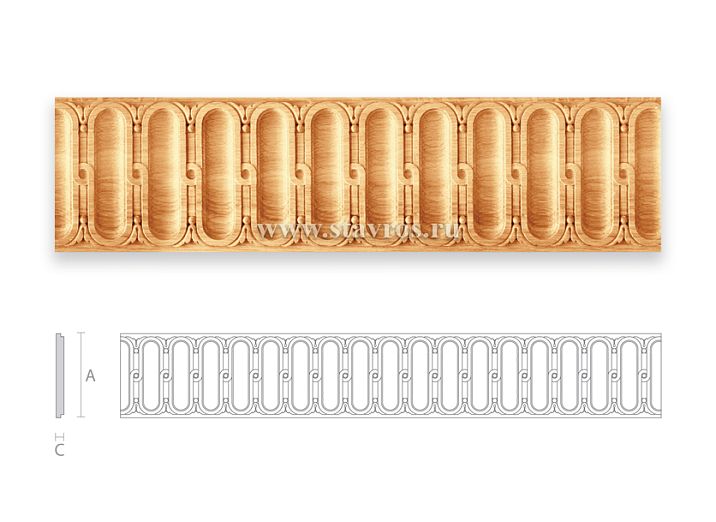
Wooden door moldings – profiled strips that can be used individually or in combination with other elements. They add additional volume, play of light and shadow, emphasize architectural lines. Moldings can have various profiles – from simple semi-circular to complex multi-step, with reeded, bead, leaf motifs.
Friezes – horizontal decorative elements, often placed above the doorway. They can be adorned with carving, inlay, painting. A frieze visually expands the opening, creates an additional accent, may contain symbolic or decorative motifs related to the room’s purpose or overall interior style.
Capitals – crowning elements of columns or pilasters flanking the doorway. In classical architecture, capitals have strictly defined forms depending on the order – Doric, Ionic, Corinthian. In modern interiors, capitals may be stylized or simplified, but they always play an important role in creating the architectural image.
Pilasters – flat columns protruding from the wall surface. They flank the doorway, creating a portal effect, emphasizing its significance and monumentality. Pilasters can be smooth or reeded (with vertical grooves), with or without bases and capitals, depending on the style and overall interior concept.
Wooden door trim – a general term for various profiled elements used in doorway decoration. It includes door casings, moldings, baseboards, corners, strips, and other details necessary to create a finished composition.
Usage carved wooden elements for doors allows creating a visual expansion and enrichment of space. Carving adds depth, texture, play of light and shadow, making the framing more expressive and individual. It can be geometric, floral, zoomorphic, anthropomorphic, depending on the style and overall interior concept.
Correctly selected and arranged framing elements create an effect of architectural integrity, harmony, and completeness. They can visually increase ceiling height, expand space, create a perspective effect, emphasize the status of the room. In this sense, doorway framing is not merely a decorative element, but an important tool of architectural composition.
Get Consultation
Framing styles: from classic to eclectic
Choosing the style of doorway framing is an important decision that should consider the overall interior concept, architectural features of the building, and functional purpose of the room. Let us consider the main stylistic directions and their distinctive features.
Classic doorway framing style is characterized by symmetry, proportionality, and use of elements of ancient orders. Typical classic framing includes casings with profiled edges, pilasters or columns on either side of the opening, an entablature with frieze and cornice above the door. The color palette is usually restrained – white, cream, light gray, with possible use of gold accents for highlighting details. Classic framing creates a sense of solemnity, respectability, timeless elegance.
Modern as a style offers a completely different approach to doorway framing. Here, smooth, flowing lines, asymmetry, and botanical motifs prevail. Doorway framing in the modern style may include curved casings, capitals with floral ornamentation, friezes with wavy patterns. The color palette is more varied – from pastel tones to saturated shades of green, blue, and purple. Modern style evokes a sense of movement, dynamism, and connection with natural forms.
Provence – a style that brings to the interior the atmosphere of a French village, with its informality, lightness, closeness to nature. Doorway framing in the Provence style is characterized by simple forms, use of light, pastel tones, and an aged effect. Casings may have a simple profile but with a light patina, wear marks, cracks that create a sense of time and history. Often, botanical motifs – lavender, olives, grapes, characteristic of Southern France – are used. The Provence style is characterized by simple forms, use of light pastel tones, and an aged effect. The casings may have a simple profile but with a light patina, scratches, and cracks that create a sense of time and history. Often, plant motifs such as lavender, olives, and grapes—typical of Southern France—are used.
Minimalism – a style that prioritizes functionality, purity of lines, absence of unnecessary details. Doorway framing in a minimalist style usually has a simple geometric form, minimal decorative elements, often executed in one color matching the door or wall, creating an effect of continuity and surface unity. Emphasis is placed on material quality, precision of execution, and ideal proportions.
Eclecticism – a style that allows boldly combining elements from different eras and directions, creating unique, individual solutions. Doorway framing in an eclectic style may include classical pilasters with modern capitals, traditional casings with contemporary geometric ornamentation, vintage door handles on minimalist doors. The key in eclecticism is a sense of proportion and taste, the ability to create a harmonious composition from diverse elements.
Choosing the framing style should consider not only personal preferences but also the architectural context, functional purpose of the room, and overall interior concept. It is important that the doorway framing does not appear as an alien element but integrates organically into the space, supporting and developing its stylistic idea.
Architectural Logic of Selection: Proportions and Harmony
Choosing the right frame for a door opening is not only a matter of style, but also architectural logic, understanding of proportions, scale, and interaction of various elements in space. Let us consider the main principles to follow when selecting wooden framing.
The height of the ceiling is another important factor to consider. In rooms with high ceilings, you can afford more complex, vertically oriented framing with pilasters, columns, and high entablatures. In rooms with low ceilings, it is better to choose a more restrained design that does not visually reduce the height.
The interior style should be reflected in the design of door openings. A classical interior implies the use of traditional elements — pilasters, cornices, friezes. A modern minimalist interior requires more restrained, geometrically clear forms. It is important that the door opening framing supports and develops the overall stylistic concept of the space.
Interaction with other interior elements — another aspect to consider.
must harmonize with furniture, flooring, wall finishes, creating a cohesive, harmonious picture. This does not mean that all elements must be executed in the same style or material, but they must engage in dialogue, create interesting combinations, and support each other. wooden decorative elements Correct combination of various framing elements — jambs, moldings, decorative inserts — requires understanding architectural grammar, knowledge of traditions, and a sense of proportion. Jambs must have the correct width and profile, corresponding to the scale of the opening and interior style. Moldings must create a clear, logical structure, emphasize architectural lines, and not overload the space. Decorative inserts must be appropriate, proportional, and support the overall composition.
In classical architecture, there are certain canons, proportions that define the relationship between various elements. For example, the height of the entablature is usually 1/4 or 1/5 of the column height, and the width of the pilaster is 1/6 or 1/7 of the height. These proportions, developed over centuries, create a sense of harmony, correctness, and completeness. Even if you do not follow classical canons literally, understanding these principles will help create a harmonious, balanced composition.
Installation, Maintenance, Durability: Practical Aspects
Even the most beautiful and stylistically accurate framing will not look worthy if it is incorrectly installed or poorly maintained. Let us consider the practical aspects related to installation, maintenance, and ensuring the longevity of wooden framing.
Installation of wooden framing is a responsible process that requires precision, care, and understanding of the material's characteristics. Before beginning work, it is necessary to carefully measure the door opening, take into account all features of the walls, floor, and ceiling. It is important to remember that walls in old houses are rarely perfectly flat, so additional adjustment of framing elements may be required.
Surface preparation — an important stage often underestimated. Walls must be clean, dry, and strong. All irregularities, cracks, and dents must be eliminated before installation. If walls have significant defects, leveling may be required or special mounting structures may be used for the framing.
Framing elements can be mounted using various methods — with nails, screws, glue, or special fastening systems. The choice of method depends on the wall material, weight and size of the framing elements, and aesthetic requirements. It is important that the fastening is secure, but does not compromise the aesthetics of the item. In classical interiors, hidden fasteners are often used, which are not visible after installation.
Gaps between framing elements and walls, as well as between different framing elements, should be minimal but sufficient to compensate for thermal and humidity deformations. Wood is a living material that can expand and contract depending on environmental conditions. If compensatory gaps are not provided, cracks, deformations, and gaps may appear over time.
Final finishing — an important stage that gives the framing a finished look and protects it from external influences. This may involve varnishing, waxing, painting, or patination — depending on the desired effect and overall interior style. It is important to choose quality materials that not only create an attractive surface but also ensure the longevity of the item.
Protection of wooden framing from mechanical damage and moisture — an important aspect, especially for elements located in areas of active use. Door openings are often subjected to impacts, scratches, and dirt. Properly chosen protective coatings will help preserve the beauty and integrity of the framing for many years. Special attention should be paid to the lower part of the jambs, which is most susceptible to damage and dirt.
Maintenance of wooden framing does not require much effort, but must be regular. Dust and dirt can be removed with a soft brush or slightly damp cloth. For deeper cleaning, specialized wood care products can be used, which not only clean but also nourish the wood, preserving its natural beauty. It is important to avoid aggressive cleaning agents, abrasive materials, and excessive moisture.
The longevity of wooden framing depends on the quality of the material, correct installation, and regular maintenance. Following all recommendations, wooden framing can serve for decades without losing its beauty and functionality. If damage appears over time, it can be repaired through restoration — sanding, filling cracks, and renewing the finish. This is another advantage of wood over artificial materials, which are practically impossible to restore after damage.
The longevity of wooden casing depends on the quality of the material, correct installation, and regular maintenance. When all recommendations are followed, wooden casing can serve for decades without losing its beauty or functionality. If damage appears over time, it can be repaired through restoration—sanding, filling cracks, and renewing the finish. This is another advantage of wood over artificial materials, which are practically impossible to restore after damage.
Errors and How to Avoid Them: A Professional Perspective
Even experienced designers and builders sometimes make mistakes when selecting and installing wooden door framing. Let us consider the most common problems and ways to prevent them.
Mismatch of scale and thickness of elements — one of the most common errors. An overly massive frame in a small room will look bulky, inappropriate, and visually reduce the space. Too thin, unexpressive elements in a spacious room with high ceilings will appear insignificant and disappear into the scale of the interior. It is important to observe proportions, consider the size of the room, ceiling height, and opening width.
Poor jointing of parts — a problem that immediately catches the eye and spoils the impression even of the highest quality material. Gaps, gaps, uneven cuts, visible fasteners — all of this indicates a non-professional approach to installation. To avoid these problems, it is necessary to carefully measure all elements, use quality tools for cutting, and fit parts together until they match perfectly.
Ignoring the architectural context of the room — another common mistake. Door opening framing must correspond to the overall interior style and support and develop its architectural concept. Classical framing with columns and cornices will look inappropriate in a minimalist modern interior, just as an ultra-modern, minimalist frame will look out of place in a classical space with moldings and gold leaf.
Incorrect choice of material or its quality may lead to rapid wear, deformation, and loss of aesthetic properties. Saving money on wood quality, hardware, fasteners, and finishing materials ultimately costs more, as it requires more frequent replacement or repair. It is better to choose quality materials from the start, which will last long and continue to delight with their appearance.
Ignoring the specific usage conditions of the room may lead to rapid wear or damage to the framing. In rooms with high traffic, with children or pets, it is better to choose more durable, damage-resistant materials and constructions. In rooms with high humidity, it is necessary to use special moisture-resistant materials and coatings.
Lack of professional approach to design and installation — perhaps the main cause of all the above problems. Door opening framing is a complex architectural element that requires knowledge, experience, understanding of the material, sense of style and proportion. It is better to entrust this work to professionals who will take into account all nuances and create truly high-quality, beautiful, and long-lasting framing.
The lack of a professional approach to design and installation is likely the main cause of all the aforementioned problems. Doorway casing is a complex architectural element that requires knowledge, experience, understanding of the material, sense of style, and proportion. It is better to entrust this work to professionals who will consider all nuances and create truly high-quality, beautiful, and long-lasting casing.
Examples of Successful Application: Inspiration for Your Interior
Let us consider several specific examples of how wooden door opening framing can transform an interior, giving it character, style, and individuality.
Classic interior of an urban apartment in a historic building. High ceilings, spacious rooms, parquet floors create the atmosphere of an old residence. Doorways are framed with massive dark oak wooden portals. The framing includes wide casings with profiled edges, fluted pilasters with Corinthian capitals, an entablature with frieze and cornice. All elements feature rich carving with vegetal motifs — acanthus leaves, rosettes, garlands. Such detailing gives the interior a sense of grandeur, respectability, and evokes a connection to historical traditions. The wooden framing becomes not merely a decorative element, but an important architectural detail, structuring the space and creating a clear hierarchy of rooms.
Modern interior of a country house in a minimalist style. Spacious, light rooms with large windows, neutral color palette, minimal decor. Doorways are framed with simple wooden frames made of light beech. The framing has a simple geometric shape, minimal decorative elements, perfectly smooth surface with matte lacquer finish. The wood color harmonizes with the parquet floor and furniture, creating a unified, cohesive composition. Such detailing emphasizes the modern character of the interior, its functionality, attention to material quality, and purity of lines. The wooden framing does not draw excessive attention, yet creates necessary architectural articulation, highlighting transitions between different functional zones.
Cottage interior in a country style. Small wooden house with low ceilings, cozy rooms, traditional furniture. Doorways are framed with simple yet expressive wooden casings made of pine. The framing has a shaped edge, slight carving with vegetal ornament, aged effect — scratches, cracks, patina. The wood color is warm, honey-toned, with a slight reddish hue. Such detailing creates an atmosphere of rustic coziness, simplicity, closeness to nature. The wooden framing becomes an important element of the style, emphasizing the traditional, handcrafted character of the interior.
In all three examples door trim wood plays a key role in forming the overall impression of the interior. It not only solves practical tasks — protecting the opening, concealing technological gaps — but also creates a certain mood, atmosphere, stylistic direction. Wooden framing becomes the element that unites various parts of the interior into a cohesive whole, creating a sense of completeness, thoughtfulness, harmony.
STAVROS advantages: quality visible in details
Choosing a supplier of wooden elements for door framing — a decision that affects not only the aesthetics of the interior, but also its durability, functionality, and comfort. The company STAVROS stands out on the market due to several key advantages that make it a choice for professionals and demanding clients.
First and foremost, it is the quality of the material. STAVROS uses only high-quality solid wood from valuable species — beech, oak, beech. The wood undergoes careful selection, drying, and treatment, guaranteeing the absence of defects, dimensional stability, and longevity of the products. Unlike many manufacturers using MDF, particleboard, or other composite materials with veneer, STAVROS offers only solid natural wood, which can be restored, refreshed, and which does not lose its beauty and character over time — rather, it gains even greater beauty and character with age.
Geometric precision — another important advantage of STAVROS products. All items have perfectly accurate dimensions, angles, profiles, ensuring precise fitting, absence of gaps, seams, or unevenness. This is especially important for architectural elements that must create a unified, harmonious composition.
Clean cut — a quality immediately noticeable to a professional eye. All elements have perfectly smooth, even cuts, without burrs, chips, or unevenness. This not only improves the appearance of the items but also ensures precise fitting, longevity, and safety during use.
Ideal element fitting is achieved through precise manufacturing, use of modern equipment, and quality control at every stage of production. This is especially important for complex architectural compositions, where several elements must join together seamlessly without visible seams or gaps.
STAVROS products are delivered throughout Russia, making them accessible to clients from any region. The company ensures reliable packaging protecting items from damage during transport and prompt delivery, which is especially important when implementing projects with tight deadlines.
Project-based work — a service that allows creating individual solutions tailored to the specific characteristics of a particular interior, client’s preferences, and architectural features of the space. STAVROS can manufacture non-standard elements according to the client’s drawings, adapt existing models to specific dimensions and proportions, and create unique decorative elements.
STAVROS specialists’ consultations help clients make the right choice, taking into account all nuances of a specific project. The company’s professional designers and technologists are ready to answer all questions, propose optimal solutions, calculate the required amount of materials, and provide samples for evaluating color and texture.
Conclusion: door opening as an architectural statement
A door opening is not merely a functional element ensuring passage from one room to another. It is an architectural statement, a point of transition between different spaces, an element that can convey much about the style, character, and status of the interior. Door framing — it is a frame that focuses attention on this transition, emphasizes its significance, and creates a certain mood and anticipation.
Wood as a material for door framing holds special significance. It is not merely a practical, durable material, but also carries certain cultural, aesthetic, and emotional meanings. Wood — it is warmth, coziness, connection to nature, tradition, history. In a world where naturalness, eco-friendliness, and individuality are increasingly valued, wooden door framing becomes a sign of taste, understanding of quality, and attention to detail.
Choosing Wooden Door Frame Choosing STAVROS, you are not merely selecting a high-quality building material, but also a certain philosophy, attitude toward space, tradition, and the future. You are creating an interior that will delight you for many years, reflecting your individuality, your taste, your understanding of beauty and harmony.
A door opening with properly selected wooden framing becomes not merely a functional element, but an important part of the architectural composition, a focal point of attention, an element structuring space and creating a certain mood. This is an investment not only in the beauty and style of your home, but also in its durability, ecological safety, and comfort of living.
Let every door opening in your home become a true work of art, reflecting your individuality and understanding of beauty. Choose the best — choose wooden framing from STAVROS.