Article Contents:
- Origins and philosophy of wooden framing
- Framing as an architectural element
- Where wooden framing is applied
- Types of wooden trim and their functions
- How to choose framing for interior
- Decorative and structural advantages
- Installation, maintenance and care
- Mistakes in selection and installation
- Recommendations from STAVROS professionals
- Implementation examples
- Advantages of STAVROS products
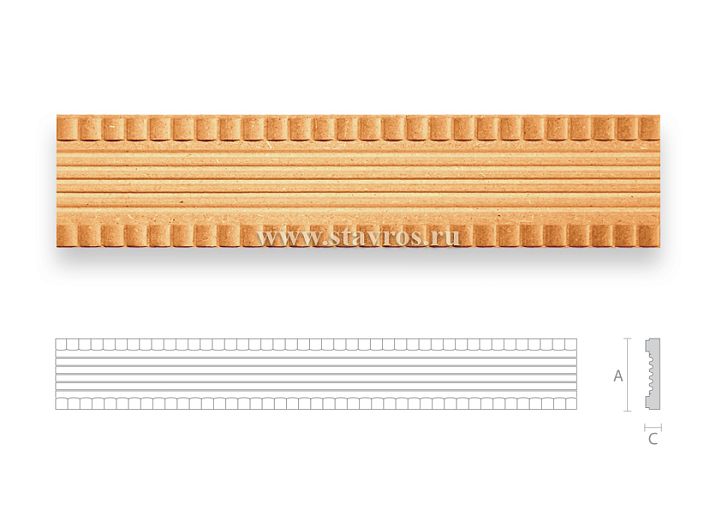
In the world of architecture and interior design, there are elements that, despite their apparent secondary importance, play a key role in forming the overall image of a space. Wooden framing — such an element that has never lost its relevance and significance over the centuries. It is not merely a decorative detail, but a crucial architectural component capable of structuring space, giving it completeness, character, and individuality.
The versatility of wooden framing is truly impressive. It is used in virtually all elements of a building — from facades to interior spaces. Window and door openings, walls, ceilings, furniture — wooden framing can create a harmonious transition between different surfaces, highlight architectural features, and add depth and expressiveness to a space.
In today's world, where mass production often leads to standardization and loss of individuality, companies preserving traditions of quality wood processing and offering products meeting the highest standards are especially valuable. STAVROS is precisely such a quality benchmark in the world of solid wood trim, combining centuries-old woodworking traditions with modern technologies and innovative approaches.


Origins and philosophy of wooden framing
The history of architectural framing goes back to ancient times. Already in ancient architecture, we see carefully crafted frames for openings, niches, and columns. Ancient Greek and Roman architects understood the importance of these elements in creating harmonious, proportionate spaces. They developed an order system, where every detail, including framing, had its place and significance.
In medieval European architecture, wooden framing acquired a new significance. Half-timbered houses with their expressive structure of wooden beams, Gothic interiors with carved details — all these are examples of how wood was used not only as a structural but also as a decorative element, shaping the appearance of buildings.
Russian wooden architecture created its own unique tradition of framing. Carved casings, cornices, and panels — all these elements not only decorated the house but also carried deep symbolic meanings, protecting the dwelling from evil forces, attracting prosperity, and telling about the status and occupation of the owners.
Why has humanity paid such attention to framing spaces throughout its history? The answer lies in the very nature of human perception. We instinctively strive to structure the surrounding world, to create boundaries and transitions between different zones. Framing is a way to organize space, give it logic and meaning. It is also a way to draw attention to important elements, whether it's a window with a view of the garden, a grand entrance door, or a central interior element.
Wood as a framing material has special significance. Unlike stone, metal, or plastic, wood possesses a unique warmth and liveliness. It 'breathes', changes over time, acquiring a noble patina of age. Each piece of wood is unique, with an incomparable grain pattern, making each item made from it individually distinctive.
In a philosophical sense, wood symbolizes a connection with nature, roots, and tradition. Using wooden framing in a modern interior, we not only create an aesthetically pleasing space but also establish this important connection, bringing a touch of natural harmony and warmth into the home.




Framing as an architectural element
In an architectural context, framing performs several key functions. Primarily, it structures space. Framing creates clear boundaries between different zones, emphasizes architectural transitions, and establishes a visual hierarchy of elements. It helps the eye 'read' the space, understand its organization and logic.
Solid wood decorative framing also plays an important role in the aesthetic perception of the interior. Lines, shapes, material texture — all this affects how we emotionally perceive space. Smooth, rounded forms create a sense of softness and coziness, strict geometric forms — order and clarity, intricate carved elements add luxury and refinement.
The material of the framing also has great importance in perception. Wood, with its warm texture and natural grain, creates a sense of naturalness and comfort. Different wood species bring their own nuances: oak, with its pronounced texture, adds solidity and reliability, beech, with its more uniform structure — elegance and restraint, exotic species — extravagance and uniqueness.
Architectural framing is extremely diverse – from minimalist, concise forms to complex decorative compositions in the classical style. Minimalist framing is characterized by clean lines, absence of excessive ornamentation, emphasis on material quality and precision of execution. This approach is ideal for modern interiors, where simplicity and functionality are valued.
Classical decorative framing, on the contrary, is distinguished by richness of details, complexity of profiles, presence of carved elements. It may include pilasters, capitals, rosettes, moldings, and other elements borrowed from ancient architecture. Such framing creates an atmosphere of luxury and solemnity, highlighting the owner's status and taste.
Between these two extremes there are numerous intermediate options – neoclassicism with its restrained elegance, modernism with its flowing, fluid lines, art deco with geometric patterns and contrasting combinations. Each style offers its own approach to framing, its own visual language, its own aesthetics.
Our factory also produces:


Where is wooden framing applied?
The application of wooden framing is truly extensive. One of the most traditional and widespread applications is decorating openings with wood. Window and door openings, arches – all these elements benefit from properly selected framing, which not only protects the edges of the opening from damage, but also gives it a finished, architecturally refined appearance.
Window framing can be either external (sills on the facade) or internal. External framing protects the junction between the window frame and the wall from atmospheric effects, emphasizes the architectural style of the building, and creates a striking accent on the facade. Internal framing forms the transition between the window opening and the wall, can serve as a base for mounting curtains or blinds, and creates a "picture" effect with a view from the window.
Door framing also serves a dual function – practical and aesthetic. It protects the edges of the opening from damage, conceals technical gaps between the door frame and the wall, and emphasizes the importance of entry into the room. Depending on the interior style, door framing can be minimalist and restrained or, conversely, richly decorated, with carved elements, capitals, and pediments.
Arched openings, with their smooth, elegant form, especially benefit from wooden framing, which highlights their architectural expressiveness. Arch framing can replicate its shape or, conversely, create an interesting contrast between straight and curved elements.
Wooden interior finishing is not limited to openings. Walls, niches, ceilings – all these surfaces can be structured and decorated using wooden elements. Wall panels with wooden framing create a "picture" effect on the wall, visually organize space, add depth and expressiveness. Ceiling coffers, cornices, beams not only conceal technical utilities, but also give the ceiling architectural significance, making it an important element of the overall interior composition.
Niches, whether decorative or functional (for placing equipment, books, art objects), also benefit from wooden framing, which emphasizes their shape and creates a clear boundary between the niche and the main wall surface.
Furniture facades, mirrors, vents, portals – all these interior elements can be framed with wood, which gives them completeness and stylistic unity with the overall space solution. Large mirrors in carved wooden frames, especially, look striking, becoming true works of art and focal points of the interior.
In exterior applications, wooden framing is also widely used – from decorating entrance groups and terraces to decorative elements on the facade. Here, it is especially important to use wood species resistant to atmospheric effects and apply special protective coatings that extend the service life of the items.
Get Consultation
Types of wooden trim and their functions
The variety of wooden trim types allows solving the most diverse architectural and design tasks. Wooden moldings – are profiled strips of various cross-sections used for decorative finishing of joints, corners, transitions between different surfaces. They may have a simple profile (semi-circular, rectangular) or complex, with multiple levels and decorative elements.
Moldings are used to create framed structures on walls, to finish transitions between walls and ceilings, to decorate furniture facades. They can be used as standalone decorative elements or in combination with other types of trim, creating complex architectural compositions.
wooden cornices – are elements traditionally used to finish the upper part of walls, transitions between walls and ceilings. They can be simple, with minimal decoration, or complex, multi-level, with carved elements, moldings, brackets. Cornices not only decorate the room, but also visually adjust its proportions – for example, making the ceiling appear higher or, conversely, "lowering" it to create a more cozy atmosphere.
In addition to traditional interior use, cornices are used to finish window and door openings, to create decorative portals, to frame mirrors and paintings. In furniture manufacturing, cornices often crown the upper part of cabinets, display cases, bookshelves, giving them completeness and architectural expressiveness.
Wooden strips for finishing – are simpler in shape but no less important trim elements. They may have rectangular, semi-circular, or triangular cross-sections and are used to mask joints, protect corners, and create decorative accents. Strips are often used in combination with other materials – for example, to finish transitions between wooden panels and painted walls, or between different floor coverings.
Architectural trim from solid wood includes a wide range of profiles and forms developed specifically to solve certain architectural tasks. These may be pilasters (flat columns attached to walls), rosettes (circular decorative elements, often used at the intersection of moldings or in the center of ceiling compositions), brackets, moldings, keystone stones, and many other elements.
An important aspect of working with architectural trim is calibration – ensuring precise, stable dimensions of the items, which is critically important for creating high-quality, professionally executed interiors. Calibrated trim guarantees perfect element connections, absence of gaps and seams, and long-term durability of structures.
Combining different trim elements opens practically limitless possibilities for creating unique architectural solutions. For example, combining moldings of different profiles allows creating complex framed structures on walls, combining cornices and rosettes – expressive ceiling compositions, using pilasters and cornices – striking portals and openings framing.
How to choose framing for an interior
Choosing the right framing for a specific interior is a task requiring understanding of the space's stylistic features, proportions, color palette, and functional purpose. Each architectural style offers its own approach to framing, its own visual language, and its characteristic elements.
The classical style implies using framing based on ancient models – with clear proportions, symmetry, traditional decorative elements (acanthus leaves, egg-and-dart ornament, rosettes, meander). The material is usually noble wood species – oak, walnut, mahogany. The color palette includes natural wood tones, white, gilding, patination.
Neoclassicism, as a modern interpretation of classical style, offers a more restrained approach to framing. Here, the core principles of classicism—symmetry, proportion—are preserved, but decoration becomes less saturated, forms more minimalist. The color palette is also more restrained, dominated by light, neutral tones.
Modern style, inspired by natural forms with its smooth, flowing lines, offers a completely different approach to framing. Here, asymmetrical compositions, botanical motifs, complex curved profiles prevail. Light wood species—beech, maple, ash—are often used and can be stained in various shades.
Scandinavian style, emphasizing simplicity, functionality, and connection with nature, prefers minimalist frames made of light wood species—pine, spruce, birch. Profiles are usually simple, without excessive decoration, focusing on the natural beauty of the material. The color palette includes natural wood tones, white, light gray.
Rustic style, inspired by rural architecture, uses massive frames made of rough-hewn wood, often with visible tool marks, knots, and cracks. This style values authenticity, naturalness, and connection to tradition. The color palette includes warm, earthy tones, natural wood colors, sometimes with an aged effect.
Art Deco, a style of luxury and glamour, prefers striking, expressive frames with geometric patterns, contrasting material and color combinations. Exotic wood species, inlays, and mirror-polished lacquering may be used. The color palette includes contrasting combinations—black and white, black and gold, dark wood and light marble.
When selecting framing, it is important to consider not only style, but also color, texture, and wood species. Each species has its own characteristics that affect the overall perception of the interior. Beech, with its uniform structure and light pink hue, creates a sense of lightness and elegance. Oak, with its pronounced texture and warm golden tone, adds solidity and reliability. Ash, with its beautiful grain pattern and light tone, is versatile and suitable for most styles.
Visual accents created by framing should be logically placed in space, emphasizing its structure and functional zoning. For example, rich framing can highlight the main entrance to a room, grand doors, or a central window overlooking a garden. Meanwhile, secondary elements may have a more modest design, not competing with the main accents.
The proportions of framing should correspond to the scale of the room and the specific element it surrounds. In small rooms with low ceilings, lighter, thinner frames are appropriate, as they do not 'consume' space. In spacious halls with high ceilings, conversely, massive, elaborately decorated elements suitable to the room's scale may be used.
Decorative and structural advantages
Wooden framing possesses a wide range of advantages, both decorative and structural, making it an ideal choice for various architectural and design tasks.
Durability and repairability are among the key advantages of wooden framing. Well-made solid wood items can serve for decades, retaining their aesthetic and functional qualities. In case of damage to individual elements, they can be relatively easily replaced or restored without altering the entire structure.
Wood possesses good sound insulation properties, making wooden framing especially valuable in residential spaces where creating a comfortable acoustic environment is important. Solid wooden elements can absorb sound waves, reducing noise and echo levels in the room.
The thermal insulation properties of wood also deserve attention. Wooden framing of window and door openings creates an additional barrier against cold air, prevents the formation of cold bridges, and helps retain heat in the room. This is especially important in regions with cold climates, where energy efficiency issues are particularly acute.
One of the unique advantages of wooden framing is its ability to be restored, repainted, or stained. Unlike many modern materials that require complete replacement upon damage or aging, wood can be refreshed, given a new appearance, and adapted to changing interiors. This makes wooden framing not only aesthetically appealing but also economically advantageous in the long term.
Wooden decor elements It also possesses a unique ability to 'age beautifully'. Over time, wood develops a noble patina, its color becomes deeper and more saturated, which only increases the aesthetic value of the items. This quality is especially valued in classical interiors, where the atmosphere of history, tradition, and continuity is important.
Ecological safety is another important advantage of wooden framing. Wood is a fully natural, renewable material that does not emit harmful substances, does not accumulate static electricity, and creates a favorable microclimate in the room. In a world where ecological safety of housing is increasingly valued, this quality becomes increasingly significant.
Installation, maintenance, and care
Proper installation of wooden framing is the key to its longevity and aesthetic appeal. There are several installation methods, the choice of which depends on the type of framing, wall material, and specific operating conditions.
Adhesive installation is the most common method for lightweight decorative elements. It involves using special adhesives that ensure reliable bonding of wood to the base—gypsum board, plaster, concrete. The advantage of this method is the absence of visible fasteners, which is especially important for decorative items.
Installation using dowels and screws provides more secure fastening and is recommended for heavy elements—massive cornices, doorways, pilasters. In this case, holes are drilled into the wall, dowels are inserted, and the element is secured with screws. Screw heads can be recessed and masked with wooden plugs or spackling compound matching the wood color.
Installation using spikes is used for particularly heavy elements or when enhanced fastening is required. Spikes are screwed into the wall, and then a wooden element with pre-drilled holes is mounted on them. This method ensures maximum connection strength but requires high precision in marking and drilling.
The clip system involves using special metal clips that are attached to the wall, and then the wooden element is snapped onto them. This method is convenient because it allows easy removal of the framing for repair or replacement without damaging the wall.
Protection of wooden framing from external influences is an important aspect ensuring its longevity and preservation of aesthetic qualities. Moisture is one of the main enemies of wood, so all items must be treated with special water-repellent compounds. This is especially important for elements used in humid areas—bathrooms, pools, saunas—as well as outdoor elements exposed to atmospheric precipitation.
UV rays can also negatively affect wood, causing fading, cracking, and deformation. To protect against ultraviolet radiation, special lacquers and paints with UV filters are used, which preserve the natural color of the wood and prevent premature aging.
Mechanical damage is another threat to wooden framing, especially in high-traffic areas. To protect against scratches, scrapes, and dents, hard lacquers, wax-based compounds, and special protective overlays are used on the most vulnerable areas.
Finish coatings play an important role not only in protecting wood but also in shaping its appearance. Oil highlights the natural beauty of wood, its texture and color, while allowing the material to 'breathe'. It is easily renewed without requiring complete removal of the previous layer, simplifying maintenance of the items.
Lacquer creates a more durable, weather-resistant coating. It can be matte, satin, or glossy, allowing various visual effects. Lacquer is more durable than oil, but its renewal requires complete removal of the previous layer, making the process more labor-intensive.
Wax is a traditional wood finish that creates a soft, silk-like sheen and a pleasant tactile surface. It is less resistant to moisture and mechanical impacts than lacquer, but easily renewable and repairable. Wax is especially suitable for interior elements not subjected to intensive use.
Errors in selection and installation
Even the highest quality wooden framing may not achieve the desired effect if errors were made during its selection and installation. Let's consider the most common ones and how to avoid them.
Violation of proportions and overloading of composition is one of the most common mistakes. An overly massive, bulky frame in a small room will look inappropriate, visually reducing the space. Too many decorative elements, complex profiles, carved details may create a sense of overcrowding, disorder, and lack of taste.
To avoid this error, it is necessary to carefully consider the scale and quantity of decorative elements, relating them to the room's size and overall stylistic concept. Sometimes less is more — one expressive, well-thought-out accent can be more effective than numerous small details.
Mismatch with the room's style is another common mistake. A classical frame with rich carving will look inappropriate in a minimalist modern interior, just as a too simple, laconic frame will look out of place in an ornate classical space. It is important that the frame harmonizes with the overall interior style, supports its concept, and does not contradict it.
To achieve this, it is necessary to clearly define the room's style, study its distinctive features, traditional elements, and color palette. If you are unsure about your choice, it is better to consult a professional designer who will help select a frame appropriate to the interior style.
Poor fitting of elements can completely ruin the impression even of the most expensive and beautiful frame. Gaps, clearances, uneven joints, visible mounting hardware — all of this indicates a non-professional approach to installation and reduces the aesthetic value of the items.
To avoid this problem, it is necessary to entrust the installation of wooden frames only to experienced masters using professional tools and materials. It is also important to consider the characteristics of wood as a material — its ability to expand and contract with changes in temperature and humidity, which requires leaving compensatory gaps during installation.
Ignoring the room's features is another mistake that can lead to unsatisfactory results. Every room has its architectural features that must be considered when selecting and installing frames. These may include uneven walls, non-standard angles, lighting characteristics, presence of architectural protrusions or niches.
Before selecting a frame, it is necessary to carefully study the room, conduct precise measurements, and take into account all its features. In some cases, it may be necessary to manufacture non-standard elements adapted to specific conditions, which is better entrusted to professionals.
Recommendations from STAVROS professionals
Creating a well-thought-out design project is a key stage determining the success of the entire project. STAVROS professionals recommend starting with a clear definition of the interior's style and concept, then moving on to detailed planning of each frame element.
It is important to create a cohesive system where all elements — moldings, cornices, pilasters, rosettes — harmoniously combine with each other, forming a unified architectural ensemble. For this, it is recommended to use elements from the same collection or specially designed for combined use.
The project must include not only sketches and visualizations, but also detailed drawings indicating exact dimensions, mounting methods, and installation sequence. This will help avoid errors and inaccuracies during implementation, ensuring high-quality final results.
Combining functionality and beauty is another important aspect that STAVROS specialists pay attention to. Wooden framing should not only decorate the space but also perform certain practical functions — protect corners and joints, conceal technical elements, structure the space.
For example, cornices can not only decorate the transition between wall and ceiling but also conceal curtain rods, indirect lighting systems, ventilation grilles. Wall moldings can mask joints between different finishing materials, conceal wires and cables. Pilasters can serve not only as decorative elements but also conceal load-bearing columns or engineering communications.
Correct combination of decorative and load-bearing components requires understanding not only aesthetic but also technical aspects of construction. Load-bearing elements must be securely fastened, capable of withstanding expected loads, and not deform over time. Decorative elements must be properly selected by style, scale, color, not overload the composition, and not distract attention from the main focus.
STAVROS specialists recommend involving not only designers but also engineers when designing complex architectural compositions with wooden framing, to help calculate loads, select optimal mounting methods, and ensure the longevity and safety of the structures.
Examples of Implementation
Let us consider several specific examples of using wooden framing in various interiors, demonstrating diverse approaches and stylistic solutions.
A kitchen with carved hood detailing is an example of a classical interior, where wooden framing plays a key role in creating a cohesive, harmonious image. The central element of the composition is the hood, designed as a portal made of solid oak with rich carving. The portal includes pilasters with Corinthian capitals, a frieze with vegetal ornamentation, and a cornice with modillions.
This expressive architectural element is supported by other wooden interior details — moldings on kitchen cabinetry facades, a cornice around the ceiling perimeter, decorative consoles under wall-mounted cabinets. All elements are executed in a unified style and material, creating a sense of completeness and thoughtful design.
The color scheme is built on the contrast between dark wood with patina and light walls, which emphasizes the architectural expressiveness of wooden elements, creating a sense of depth and volume. Carving on wooden details creates an interesting play of light and shadow, adding dynamism and life to the interior.
An office with wooden paneling and moldings is an example of a neoclassical interior, where wooden framing is used more restrainedly but no less effectively. The office walls are finished with panels of solid beech, framed by moldings with a simple, elegant profile. The central wall is accentuated by a wooden panel with inlay, serving as a backdrop for the work desk.
The ceiling is finished with a cornice of the same profile as the wall moldings, creating a sense of completeness and finish. The door opening is framed by casings with a simple yet elegant pattern, echoing the wall finish.
The color palette is built on various shades of light wood, from golden to honey, creating a warm, inviting atmosphere conducive to work. Matte lacquer finish highlights the natural beauty of the wood, avoiding excessive glare and reflections.
A cottage with a classical portal in the living room demonstrates how wooden framing can become a central element of architectural composition, setting the tone for the entire interior. The portal framing the fireplace is made of solid oak in a classical style, with columns, capitals, frieze, and cornice. It creates an expressive architectural accent, drawing attention and organizing the space around it.
The portal is supported by other wooden interior elements — cornices around the ceiling perimeter, moldings framing door and window openings, decorative panels on the walls. All these elements create a cohesive architectural composition, where each detail is in its proper place and contributes to the overall concept.
The color scheme is built on the contrast between dark wood and light walls, which emphasizes the architectural expressiveness of wooden elements. Glossy lacquer finish creates a noble sheen, highlighting the status and respectability of the interior.
Modern studio with minimalist decorative framing in solid This is an example of how wooden elements can organically fit into a modern interior, adding warmth and individuality. Here, minimalist, geometrically precise moldings in light beech are used, creating simple framed structures on the walls.
These minimalist elements are supported by other wooden details — a thin cornice around the ceiling perimeter, casings on door openings, decorative strips framing built-in cabinets. All elements have a simple, laconic form, without excessive decoration, with an emphasis on material quality and precision of execution.
The color scheme is built on the combination of light wood with white walls and gray accents, creating a fresh, modern impression. Matte finish highlights the naturalness of the material, its tactile qualities, and evokes a sense of softness and comfort.
Advantages of STAVROS products
The company STAVROS stands out in the market of wooden architectural elements due to a range of advantages that make its products a choice for professionals and demanding clients.
Control at all stages of production ensures consistently high-quality products. From raw material selection to final finishing, each stage of the manufacturing process undergoes careful inspection. This guarantees the absence of defects, precise dimensions, ideal geometry, and flawless surface quality.
The company uses only high-quality wood from premium species — oak, beech, ash — that has undergone careful drying and selection. This ensures not only the aesthetic appeal of the products but also their durability, resistance to deformation, cracking, and damage from pests.
A wide range of products allows finding the optimal solution for any interior — from classic to ultra-modern. The company’s catalog features various types of moldings, cornices, pilasters, rosettes, brackets, and other architectural elements, crafted in different styles and from various wood species.
For those seeking unique, non-standard solutions, STAVROS offers custom-made product manufacturing. This may include reproducing historical samples, creating elements based on the client’s sketches, or developing entirely original designs. A team of professional designers and master carpenters is ready to bring the most daring ideas to life, crafting unique, one-of-a-kind pieces.
Reliable logistics across Russia ensures timely delivery of products to any region of the country. The company uses trusted transportation companies and provides secure packaging that protects items from damage during transit. This is especially important for delicate wooden elements with carving and complex profiles.
Professional support for designers and architects is another key advantage of STAVROS. The company offers not only high-quality products but also expert advice on their selection and application. Specialists will help choose optimal elements for a specific interior, calculate the required material quantity, and provide recommendations for installation and maintenance.
For professional designers and architects, STAVROS offers special partnership terms — the opportunity to order samples, technical documentation, and assistance with calculations and design. This makes working with the company especially convenient and productive for those who regularly use wooden architectural elements in their projects.